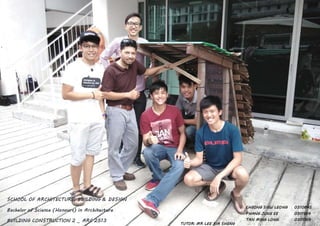
SCHOOL OF ARCHITECTURE, BUILDING & DESIGN 
Bachelor of Science (Honours) in Architecture 
BUILDING CONSTRUCTION 2 _ ARC 2513 
CHEONG SIEW LEONG 0310845 
PHANG JUNE EE 0311954 
TAN MING LONG 0311069 
TAN WEI HOW 
TUTOR: MR LEE XIA SHENG
Introduction 
In this project, we are required to design and build a shelter which can support the weight of a 60kg or heavier person for a s long as possible. Besides that, external forces such as wind and 
rain are in consideration also. Accurate structural joints and skeletal structure based on the selected materials are to show in the construction of the shelter. Load bearing and non-load bearing 
structures are identified before the construction in order for the load to transfer effectively. 
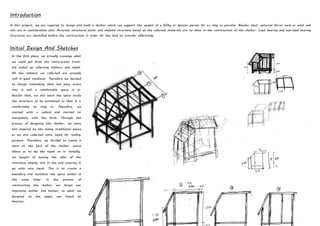
Initial Design And Sketches 
In the first place, we actually scavenge what 
we could get from the construction trash. 
We ended up collecting timbers and nipah. 
All the timbers we collected are actually 
still in good condition. Therefore we decided 
to design something that has easy access 
into it and a comfortable space in it. 
Besides that, we also want the space inside 
the structure to be ventilated so that it is 
comfortable to stay in. Therefore, we 
started with a cubical and started to 
manipulate with the form. Through the 
process of designing this shelter, we were 
also inspired by the malay traditional house 
as we also collected some nipah for roofing 
purpose. Therefore, we decided to create a 
slant at the back of the shelter, which 
allows us to lay the nipah on it. Initially, 
we taught of leaving the sides of the 
structure empty, but in the end covering it 
up with wire mesh. This is to create a 
boundary and ventilate the space within in 
the same time. In the process of 
constructing the shelter, our design was 
improving better and better, as what we 
designed on the paper was based on 
theories.
Skeletal Construction Design 
The material for our skeletal construction is timber. Besides that, we also used wire mesh for the envelope and nipah for the roof. We decided to use bolts and nuts for the timber joints. We 
also used halved joints for the timber bracing. 
Screw 
Bolts and Nuts 
L- Bracket 
Cable Tie 
Nylon Rope 
Halved Joint
Construction Process 
1. Removing the nails and cutting the timber that was collected from the garbage 
dump into designated dimension. 
4. Setting up the whole structure by using bolts and nuts and screws. 
5. Cut the board into designated dimension for platform purpose and 
the wire mesh to act as the skin of the skeletal structure. 
2. Sanding the surface of the timber to create a smooth surface.
3. Drilling holes on the timber to insert bolts and nuts. 
1. Setting up the main structures for 
our shelter. Joining the timbers 
together by using bolts and nuts. 
Timbers are already being cut into 
our designated dimensions. 
6. Folding the nipah leaves to put on top of the roof. 
Construction Steps 
2. Fixing the horizontal structures for 
the shelter by using timber. L-Brackets 
are being used to join the 
timbers together as using bolts and 
nuts are not appropriate in this 
manner. 
3. Fixing the bracing on the 
structure. This is to reinforce the 
structure and preventing it from 
moving left and right. Screws are 
being used to fix the bracing on the 
structure. Halve join is created in the 
middle part of the bracing to join 
both braces together. 
4. Fixing the wood pallet that we 
collected on the shelter acting as the 
structure for the roof of the shelter. 
Brackets, bolts and nuts are being 
used to fix the wood pallet on the 
structure. After that, plastic panels 
are being installed on the wood pallet 
for roofing purpose. The plastic panel 
is being placed against the direction 
of the wood pallet as this is the 
proper way of installing roof panels. 
Due to the lack of material, we 
installed the plastic panel 
horizontally, knowing that it should 
be installed vertically to allow the 
water to flow through.
Load and forces 
Front elevation Side elevation Front elevation Side elevation 
Distribution of dead load towards the ground 
Testing 
In this test, a person weighted 60kg is required to sit inside the shelter in order to test 
the strength of the shelter. The result shows that our shelter is capable of holding a 
person’s weight. Besides that, we also tested our shelter of holding two person’s weight 
in order to see how much weight that can our shelter take. It is also a success. With the 
strength and the material of our shelter, we then assume that our shelter is able to 
carry up to 200kg-300kg. During the testing day, it just happens to rain after our 
presentation. Therefore, we decide to try whether our roofing structure is working or 
not. We moved our shelter under the rain and had a group member of us to sit in the 
shelter. The result was outstanding; our roofing structure is a success. The nipah and 
plastic sheet roofing with insulating layer is able to hold off the rain water from slipping 
through. With the joints that we used in this structure, it allows us to dismantle and 
reassemble the structure easily. Therefore, it is convenience to carry the structure 
around. 
Distribution of live load towards the ground
person’s 
shelter during the rain 
Conclusion 
Overall, we have successfully demonstrated our understanding on the skeletal construction by creating a strong, weather proof and aesthetically beautiful shelter. Besides that, we also learned 
a lot of useful lessons in the process of making the shelter. For example, we learned how to use the drilling machine located in the workshop. Mr.fendi also provided us some practical 
knowledge in this shelter making process. This is important for a future architect as the competitive market of construction industry will require the architect to understand even more 
engineering knowledge besides design knowledge. This is to lead the team in a better way and to produce a more desirable outcome in a project. It is also important for architects to produce 
something that is more sustainable rather than just about designs. Therefore, as an architect student, we must be all around to create sustainable designs. Just as the idiom said, architects 
are jack of all trades but master of none.

Building Construction 2 Report

  • 1.
    SCHOOL OF ARCHITECTURE,BUILDING & DESIGN Bachelor of Science (Honours) in Architecture BUILDING CONSTRUCTION 2 _ ARC 2513 CHEONG SIEW LEONG 0310845 PHANG JUNE EE 0311954 TAN MING LONG 0311069 TAN WEI HOW TUTOR: MR LEE XIA SHENG
  • 2.
    Introduction In thisproject, we are required to design and build a shelter which can support the weight of a 60kg or heavier person for a s long as possible. Besides that, external forces such as wind and rain are in consideration also. Accurate structural joints and skeletal structure based on the selected materials are to show in the construction of the shelter. Load bearing and non-load bearing structures are identified before the construction in order for the load to transfer effectively. Initial Design And Sketches In the first place, we actually scavenge what we could get from the construction trash. We ended up collecting timbers and nipah. All the timbers we collected are actually still in good condition. Therefore we decided to design something that has easy access into it and a comfortable space in it. Besides that, we also want the space inside the structure to be ventilated so that it is comfortable to stay in. Therefore, we started with a cubical and started to manipulate with the form. Through the process of designing this shelter, we were also inspired by the malay traditional house as we also collected some nipah for roofing purpose. Therefore, we decided to create a slant at the back of the shelter, which allows us to lay the nipah on it. Initially, we taught of leaving the sides of the structure empty, but in the end covering it up with wire mesh. This is to create a boundary and ventilate the space within in the same time. In the process of constructing the shelter, our design was improving better and better, as what we designed on the paper was based on theories.
  • 3.
    Skeletal Construction Design The material for our skeletal construction is timber. Besides that, we also used wire mesh for the envelope and nipah for the roof. We decided to use bolts and nuts for the timber joints. We also used halved joints for the timber bracing. Screw Bolts and Nuts L- Bracket Cable Tie Nylon Rope Halved Joint
  • 4.
    Construction Process 1.Removing the nails and cutting the timber that was collected from the garbage dump into designated dimension. 4. Setting up the whole structure by using bolts and nuts and screws. 5. Cut the board into designated dimension for platform purpose and the wire mesh to act as the skin of the skeletal structure. 2. Sanding the surface of the timber to create a smooth surface.
  • 5.
    3. Drilling holeson the timber to insert bolts and nuts. 1. Setting up the main structures for our shelter. Joining the timbers together by using bolts and nuts. Timbers are already being cut into our designated dimensions. 6. Folding the nipah leaves to put on top of the roof. Construction Steps 2. Fixing the horizontal structures for the shelter by using timber. L-Brackets are being used to join the timbers together as using bolts and nuts are not appropriate in this manner. 3. Fixing the bracing on the structure. This is to reinforce the structure and preventing it from moving left and right. Screws are being used to fix the bracing on the structure. Halve join is created in the middle part of the bracing to join both braces together. 4. Fixing the wood pallet that we collected on the shelter acting as the structure for the roof of the shelter. Brackets, bolts and nuts are being used to fix the wood pallet on the structure. After that, plastic panels are being installed on the wood pallet for roofing purpose. The plastic panel is being placed against the direction of the wood pallet as this is the proper way of installing roof panels. Due to the lack of material, we installed the plastic panel horizontally, knowing that it should be installed vertically to allow the water to flow through.
  • 6.
    Load and forces Front elevation Side elevation Front elevation Side elevation Distribution of dead load towards the ground Testing In this test, a person weighted 60kg is required to sit inside the shelter in order to test the strength of the shelter. The result shows that our shelter is capable of holding a person’s weight. Besides that, we also tested our shelter of holding two person’s weight in order to see how much weight that can our shelter take. It is also a success. With the strength and the material of our shelter, we then assume that our shelter is able to carry up to 200kg-300kg. During the testing day, it just happens to rain after our presentation. Therefore, we decide to try whether our roofing structure is working or not. We moved our shelter under the rain and had a group member of us to sit in the shelter. The result was outstanding; our roofing structure is a success. The nipah and plastic sheet roofing with insulating layer is able to hold off the rain water from slipping through. With the joints that we used in this structure, it allows us to dismantle and reassemble the structure easily. Therefore, it is convenience to carry the structure around. Distribution of live load towards the ground
  • 7.
    person’s shelter duringthe rain Conclusion Overall, we have successfully demonstrated our understanding on the skeletal construction by creating a strong, weather proof and aesthetically beautiful shelter. Besides that, we also learned a lot of useful lessons in the process of making the shelter. For example, we learned how to use the drilling machine located in the workshop. Mr.fendi also provided us some practical knowledge in this shelter making process. This is important for a future architect as the competitive market of construction industry will require the architect to understand even more engineering knowledge besides design knowledge. This is to lead the team in a better way and to produce a more desirable outcome in a project. It is also important for architects to produce something that is more sustainable rather than just about designs. Therefore, as an architect student, we must be all around to create sustainable designs. Just as the idiom said, architects are jack of all trades but master of none.