1
Template Innovation Day 2019CONFIDENTIAL
HOW TO BUILD A SUSTAINABLE INNOVATION CULTURE
Mathias Fahy, Strategy and Sustainability Expert
Gert Linthout, Industry Team Lead
mathias.fahy@mobius.eu
gert.linthout@mobius.eu
TRACK 3
MyStartUp
The power of desired behaviour
2
How to build a
sustainable
innovation culture
The power of desired behaviour
Offre remise le 22-03-2018
33
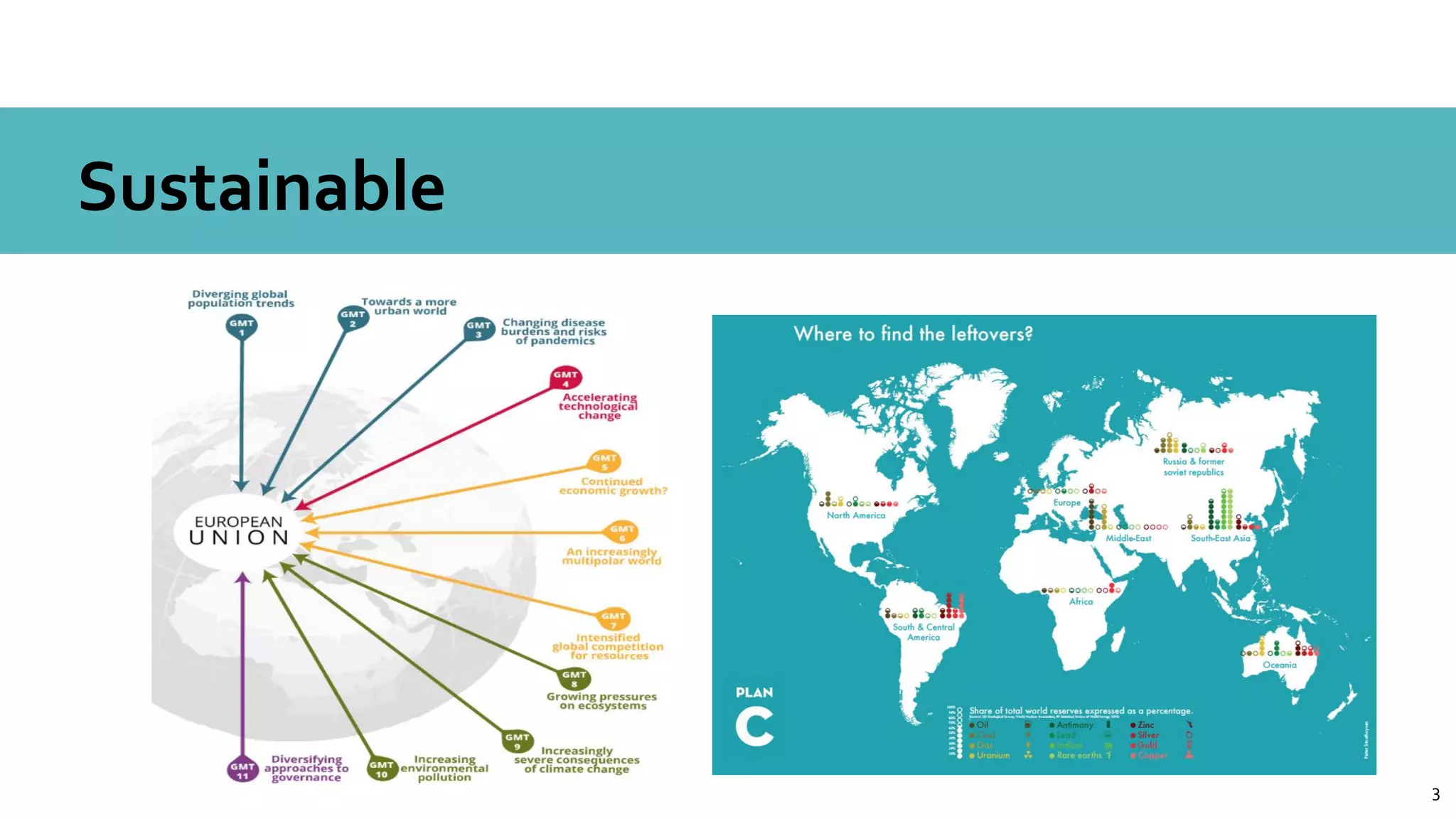
Sustainable
44
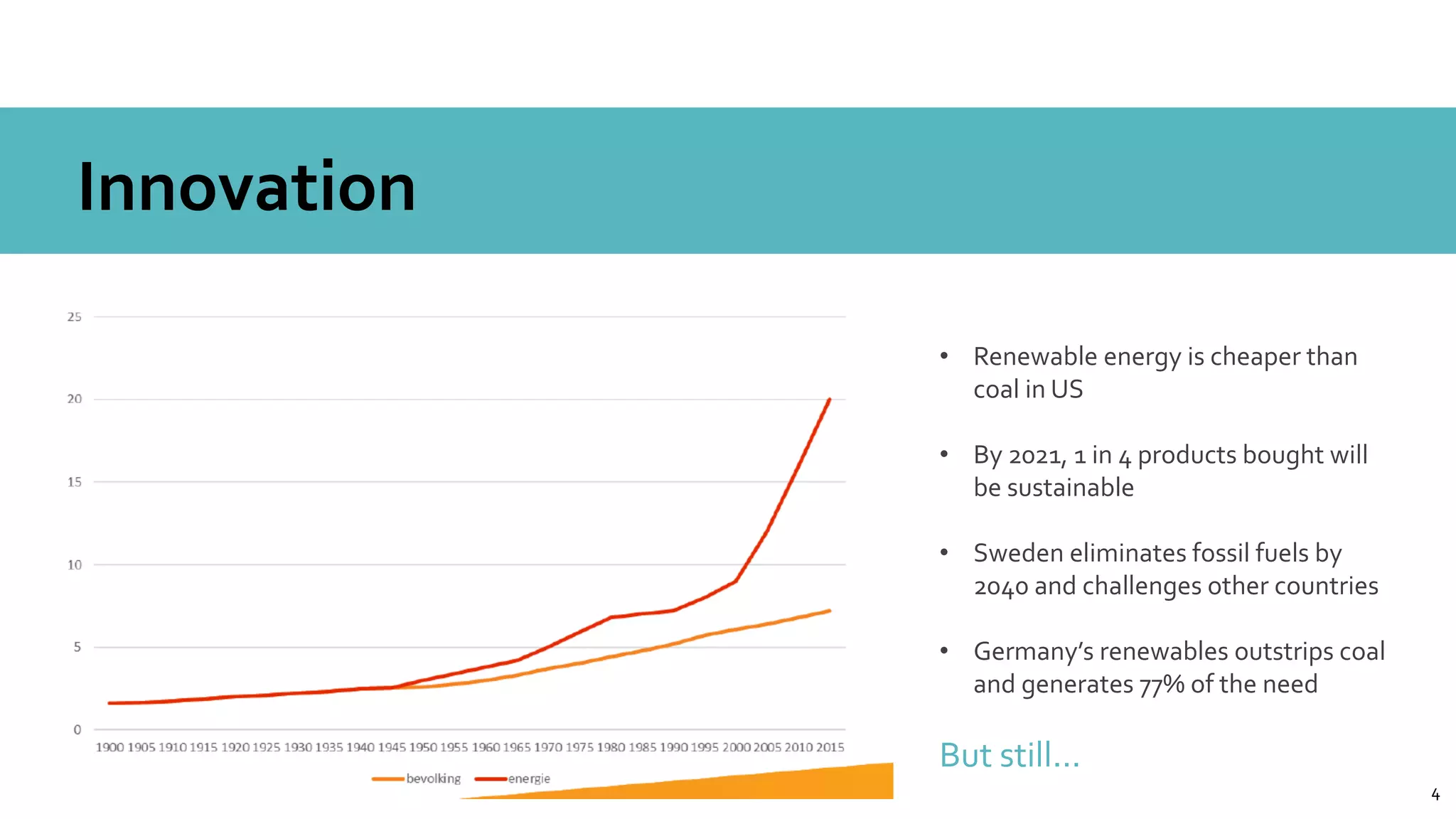
Innovation
• Renewable energy is cheaper than
coal in US
• By 2021, 1 in 4 products bought will
be sustainable
• Sweden eliminates fossil fuels by
2040 and challenges other countries
• Germany’s renewables outstrips coal
and generates 77% of the need
But still...
55
Innovation
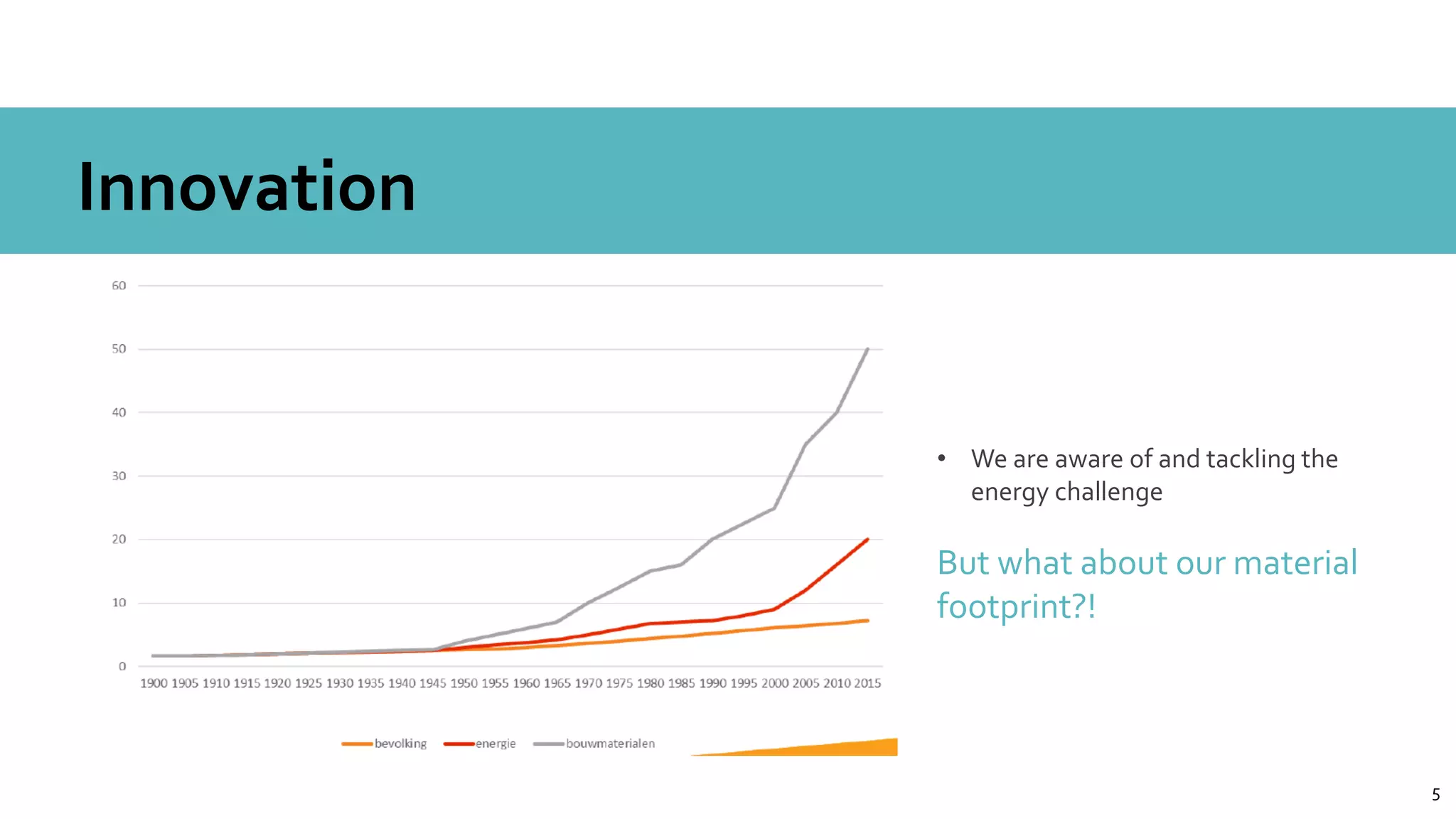
• We are aware of and tackling the
energy challenge
But what about our material
footprint?!
66
Culture
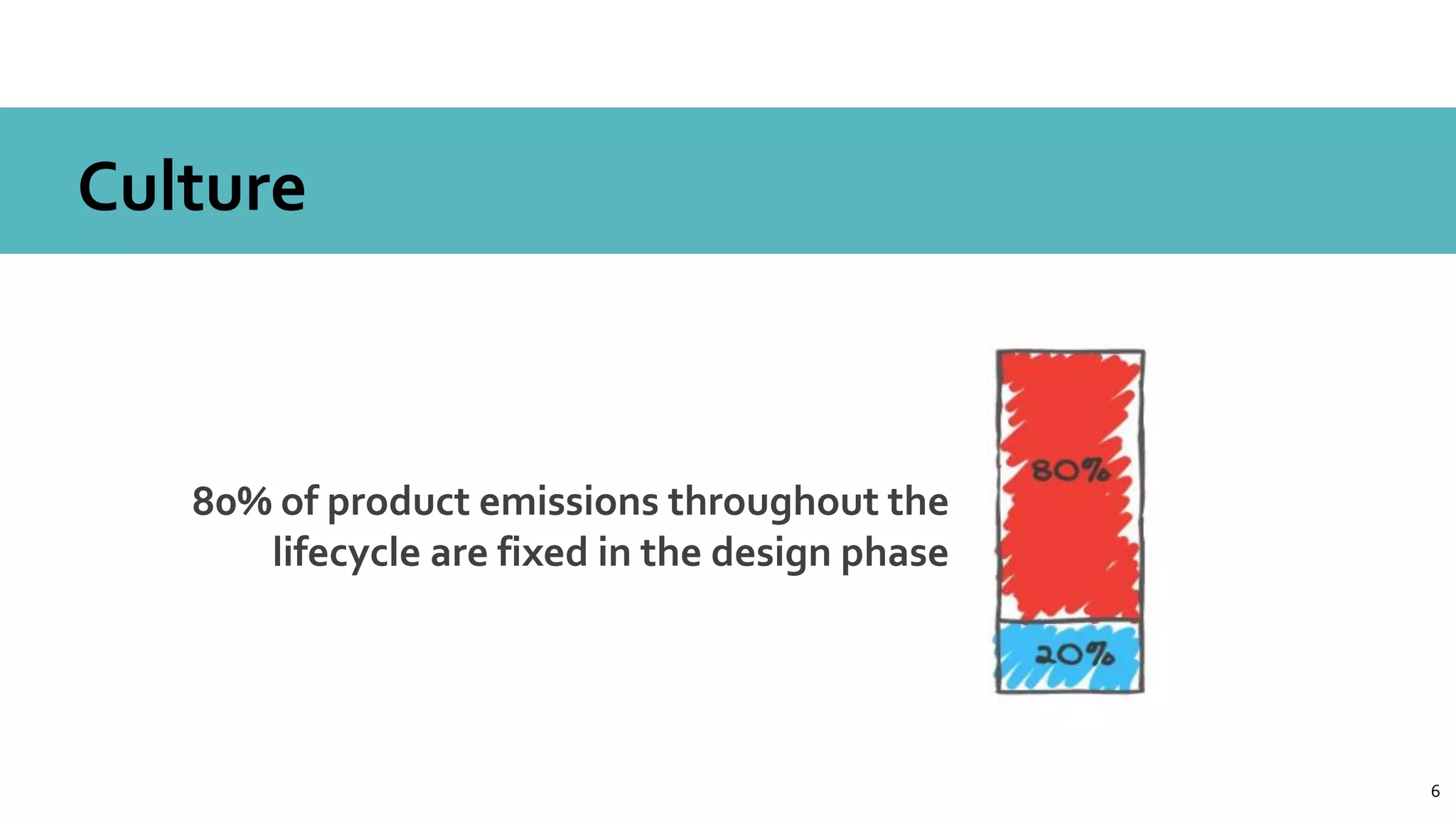
80% of product emissions throughout the
lifecycle are fixed in the design phase
77
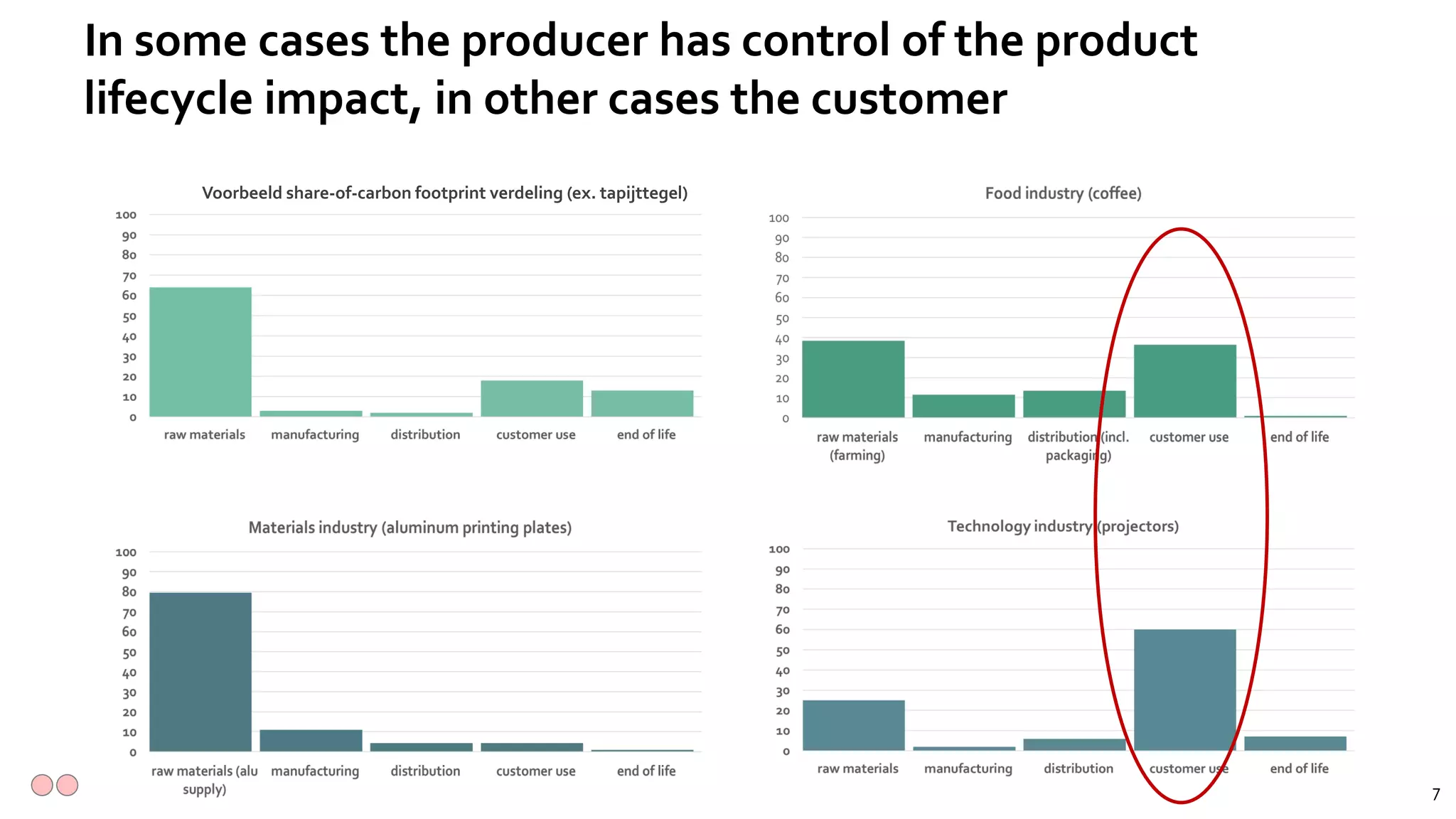
In some cases the producer has control of the product
lifecycle impact, in other cases the customer
Voorbeeld share-of-carbon footprint verdeling (ex. tapijttegel)
88
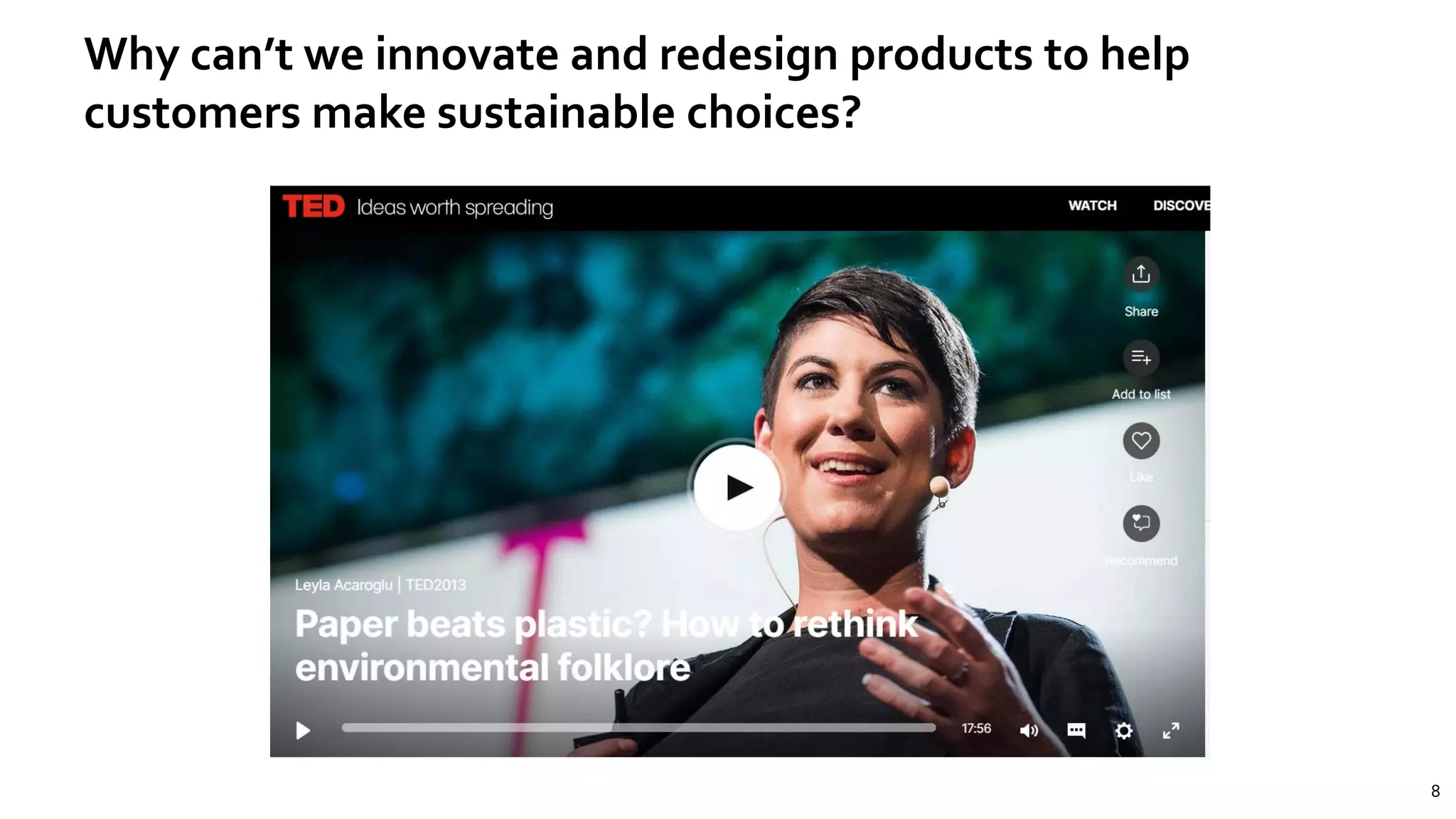
Why can’t we innovate and redesign products to help
customers make sustainable choices?
99
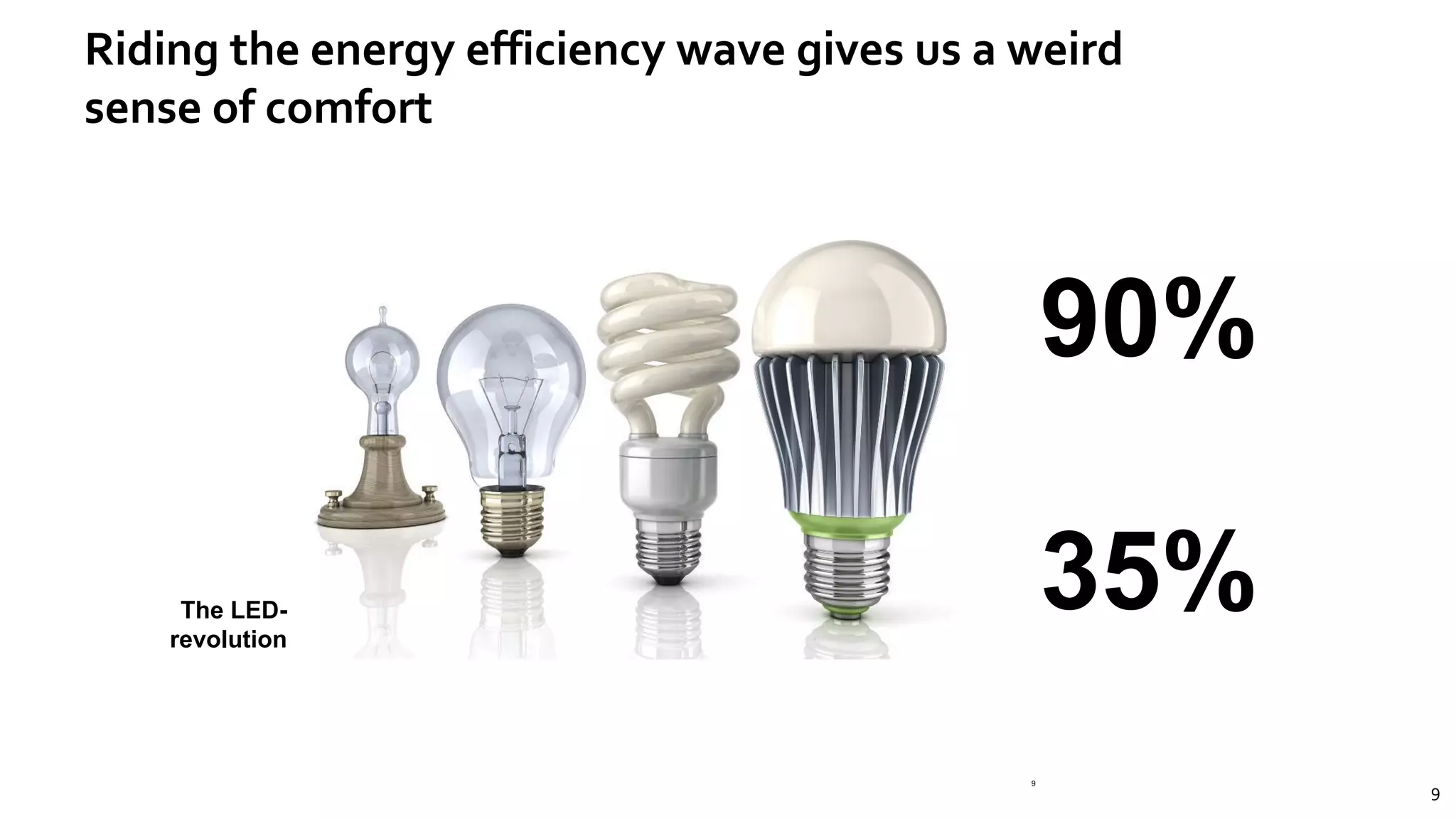
Riding the energy efficiency wave gives us a weird
sense of comfort
9
The LED-
revolution
90%
35%
1010
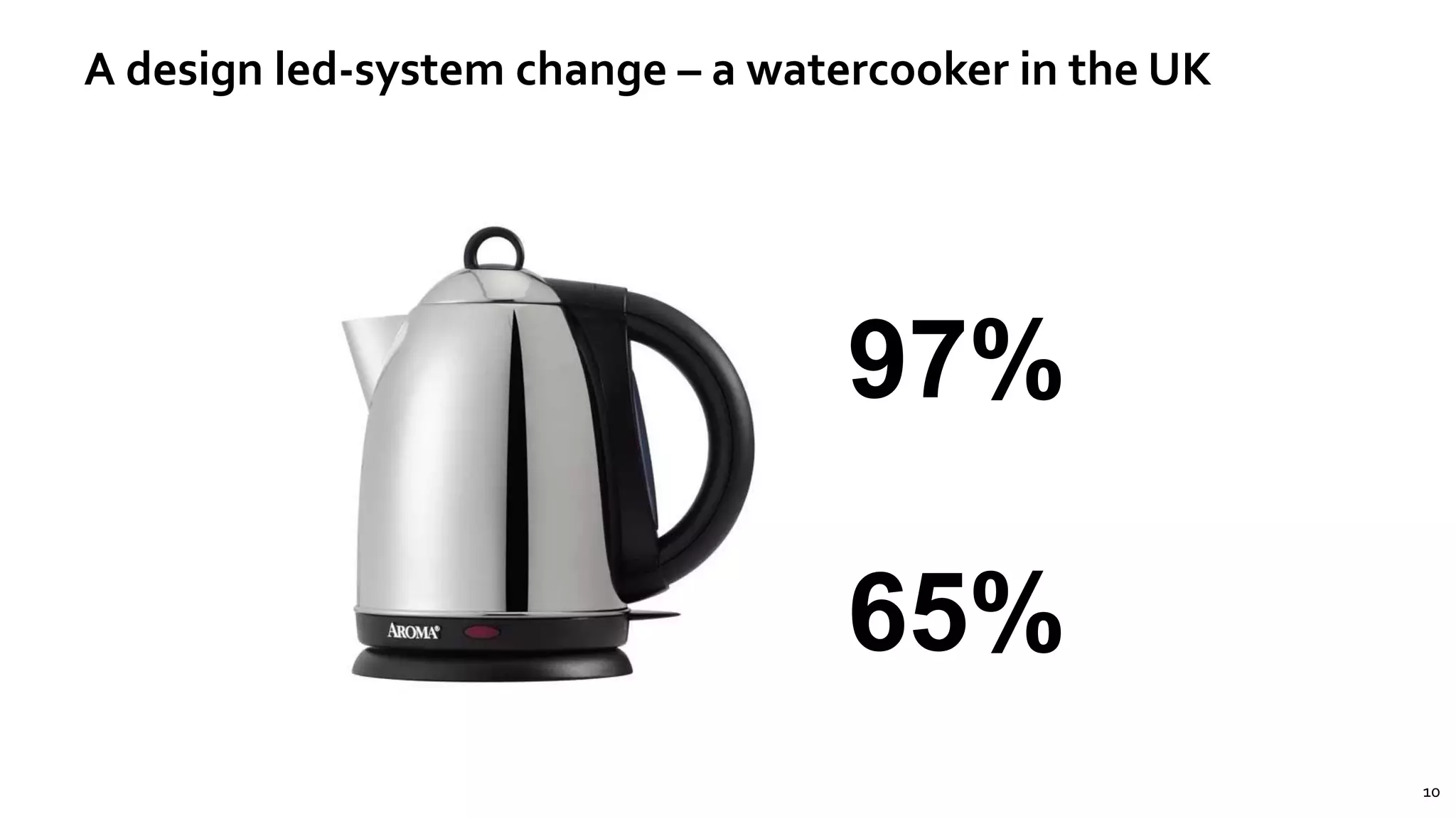
A design led-system change – a watercooker in the UK
97%
65%
1111
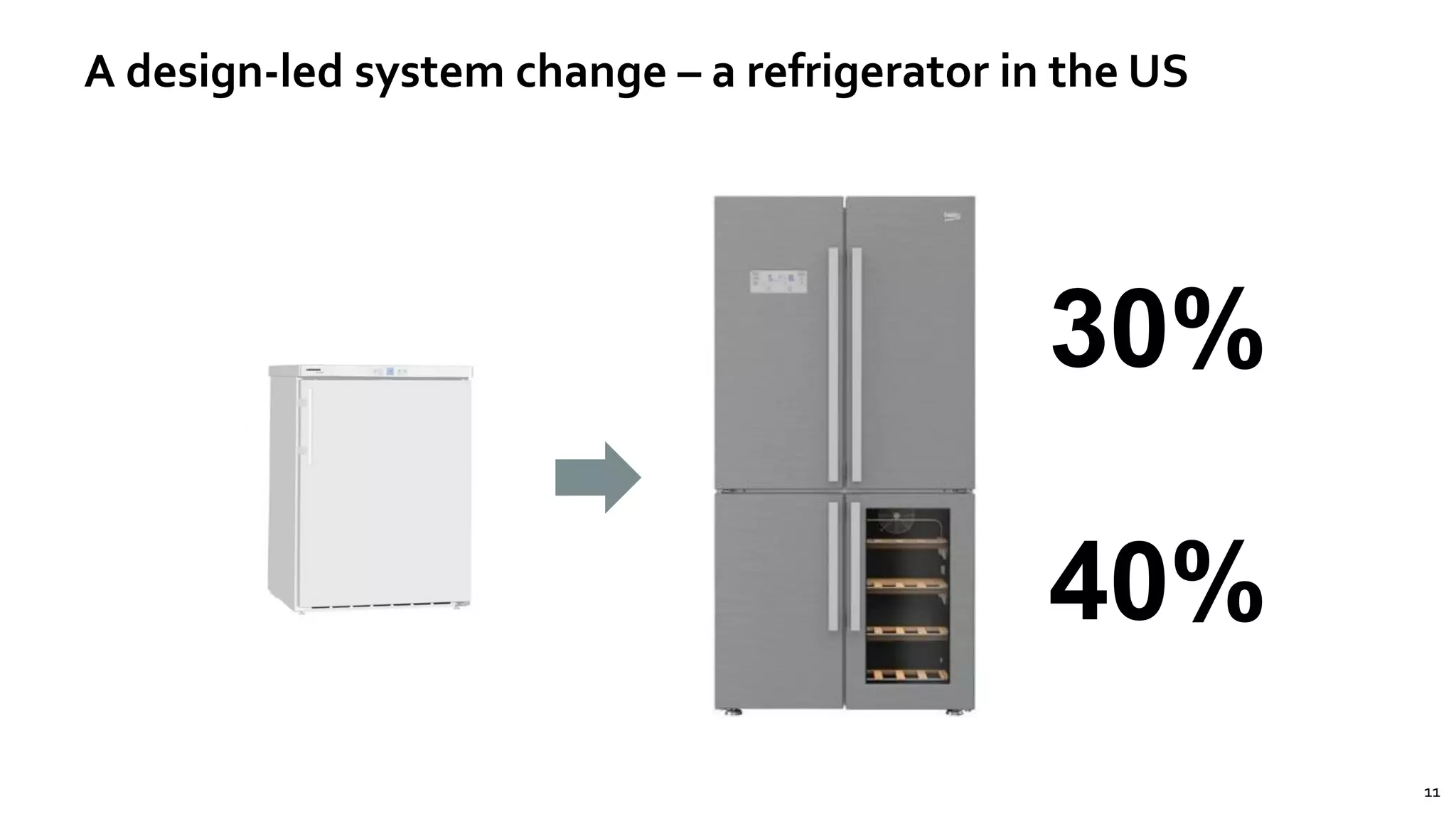
A design-led system change – a refrigerator in the US
30%
40%
1212
Some key points on sustainable product design
• Start from the product lifecycle impact and design to mitigate
• Fool proof design to trigger sustainable behaviour
• Think about the net effect from a systems perspective
• Communicate the customer value your sustainable design brings
• Let this information trickle down onto the design table
1313
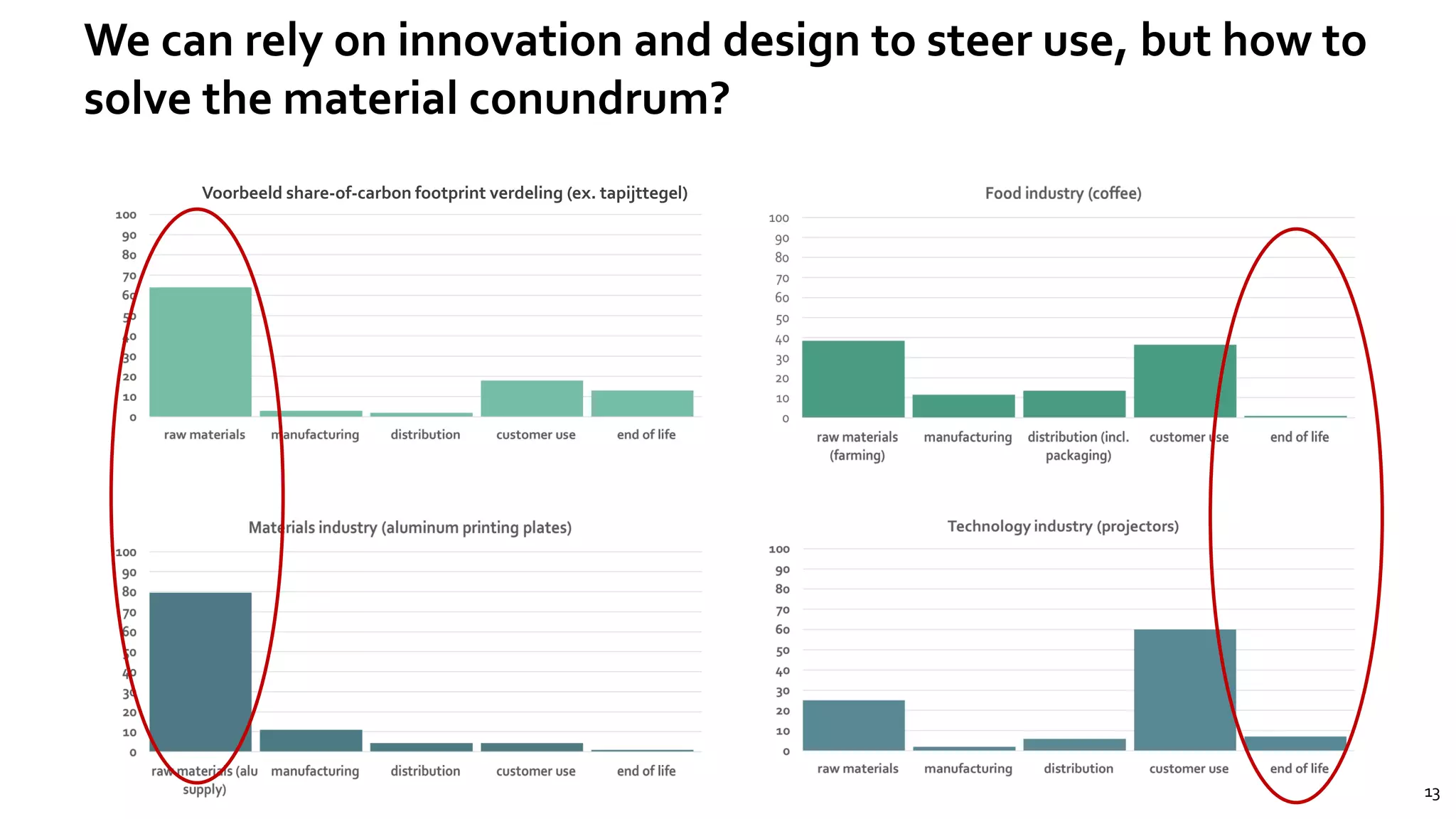
We can rely on innovation and design to steer use, but how to
solve the material conundrum?
Voorbeeld share-of-carbon footprint verdeling (ex. tapijttegel)
1414
The elephant in the room – 45% of emissions are attribute to
how we make products
1515
The circular economy aligns economic and ecological
incentives
Recycled content
Modular designs deliver
parts
Product refurbishment
Extended lifetime /
maximize use (sharing,
mantenance, ...)
Circular
strategy Examples
Profit
potential*
PhilipsSenseo
Philips Pay per Lux
Medical asset sharing
35%
24%
10%
$ 1-2 mio/y on medical
equipment spend
(hospital level)
11%
1616
The product as an “organized problem” – why not offer it as a
service?
Putting power and
responsibility together at the
producer’s side aligns incentives
Moreover: the customer is
“protected” and doesn’t need to
make choices anymore
1717
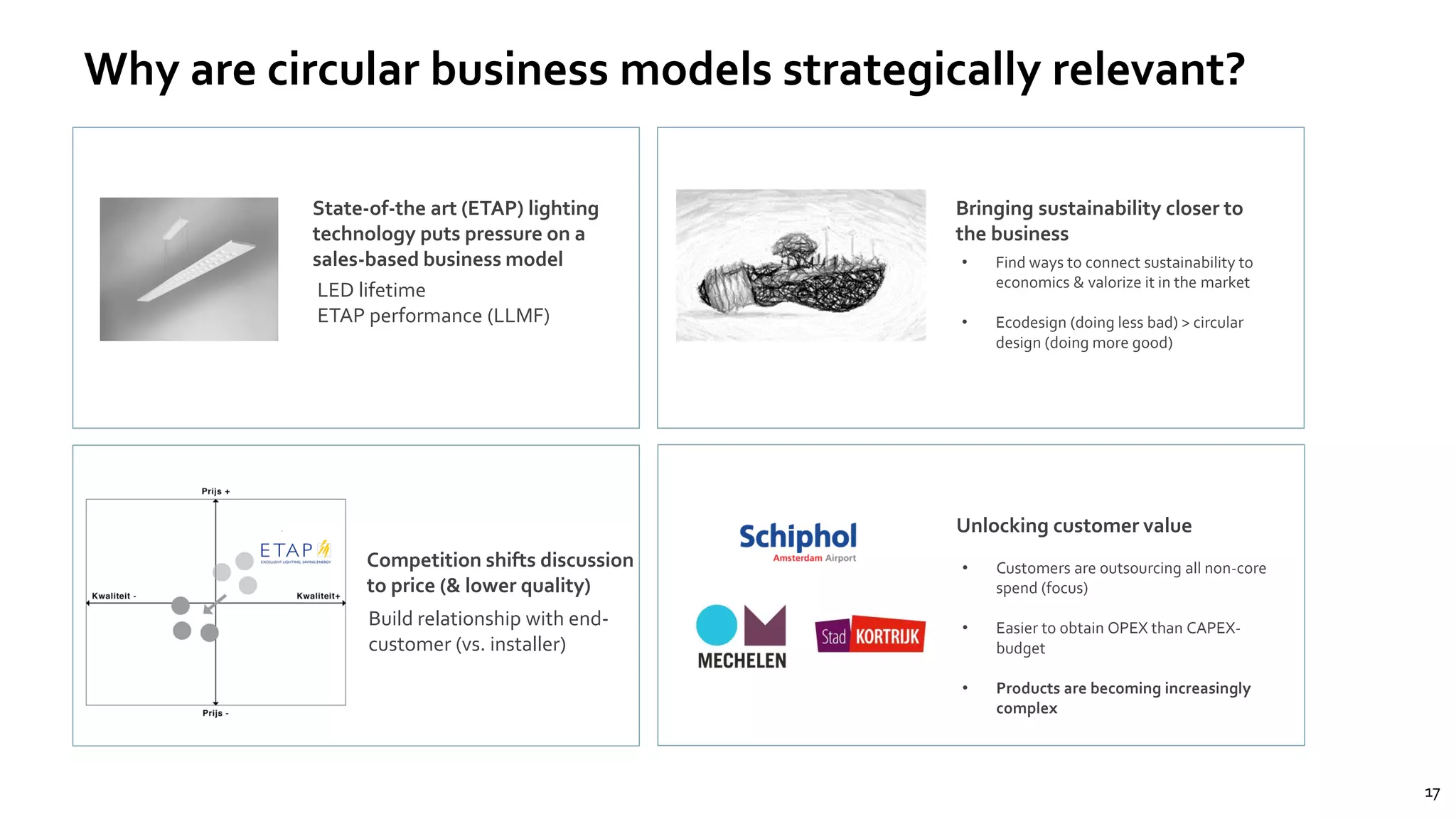
Why are circular business models strategically relevant?
Competition shifts discussion
to price (& lower quality)
State-of-the art (ETAP) lighting
technology puts pressure on a
sales-based business model
LED lifetime
ETAP performance (LLMF)
Bringing sustainability closer to
the business
• Find ways to connect sustainability to
economics & valorize it in the market
• Ecodesign (doing less bad) > circular
design (doing more good)
Build relationship with end-
customer (vs. installer)
Unlocking customer value
• Customers are outsourcing all non-core
spend (focus)
• Easier to obtain OPEX than CAPEX-
budget
• Products are becoming increasingly
complex
1818
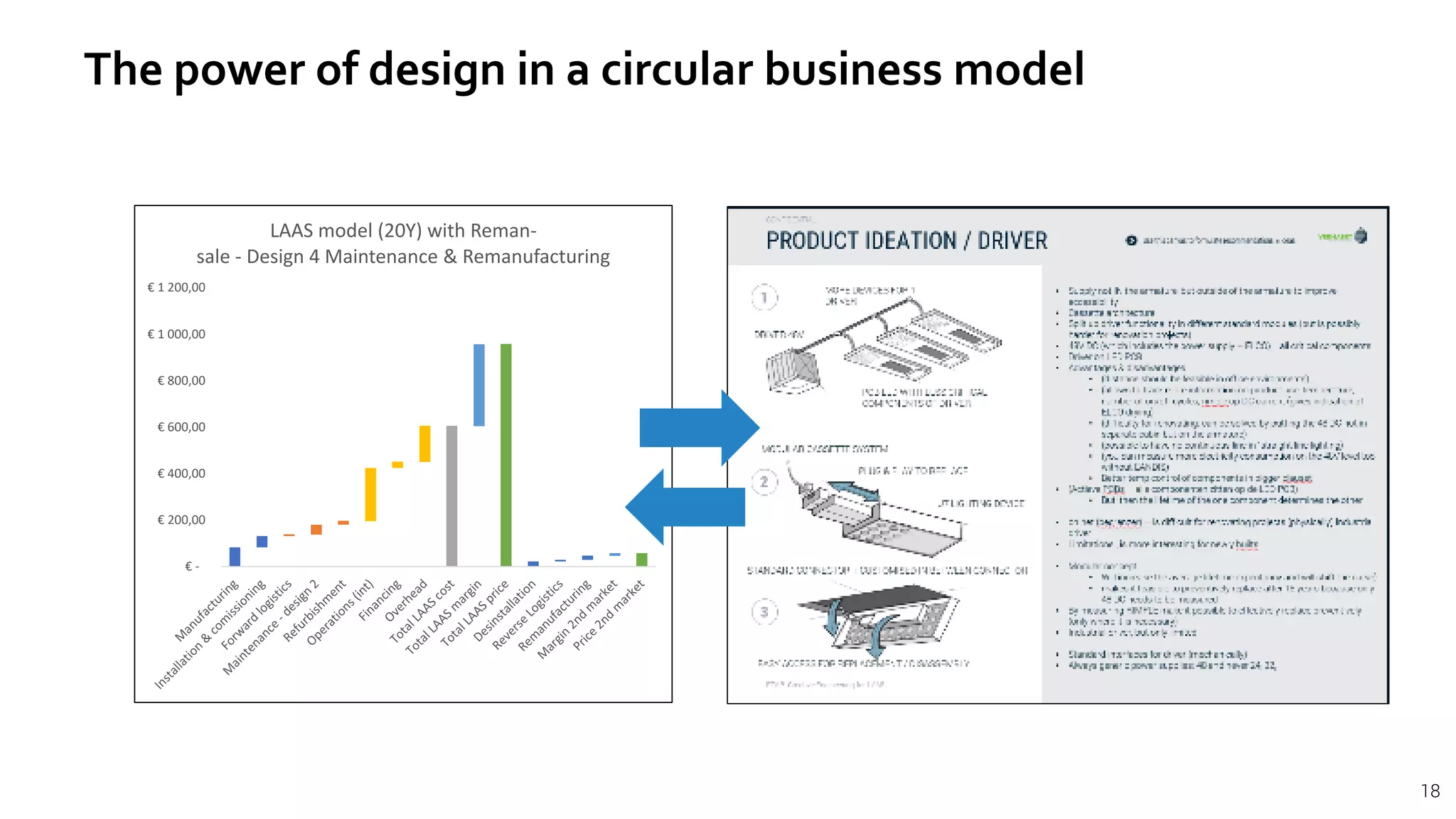
The power of design in a circular business model
€ -
€ 200,00
€ 400,00
€ 600,00
€ 800,00
€ 1 000,00
€ 1 200,00
LAAS model (20Y) with Reman-
sale - Design 4 Maintenance & Remanufacturing
1919
Product-as-a-service systems come in different flavours
“pay per move”“pay per month” “pay per tonne
dried chlorine”
2020
Source McKinsey: Imran Amed, Anita Balchandani, Marco Beltrami, Achim Berg, Saskia Hedrich, and Felix Rölkens
2121
Keeping clothes in use for an extra 9 months can reduce carbon, water and waste
footprints by 20-30%.
2222
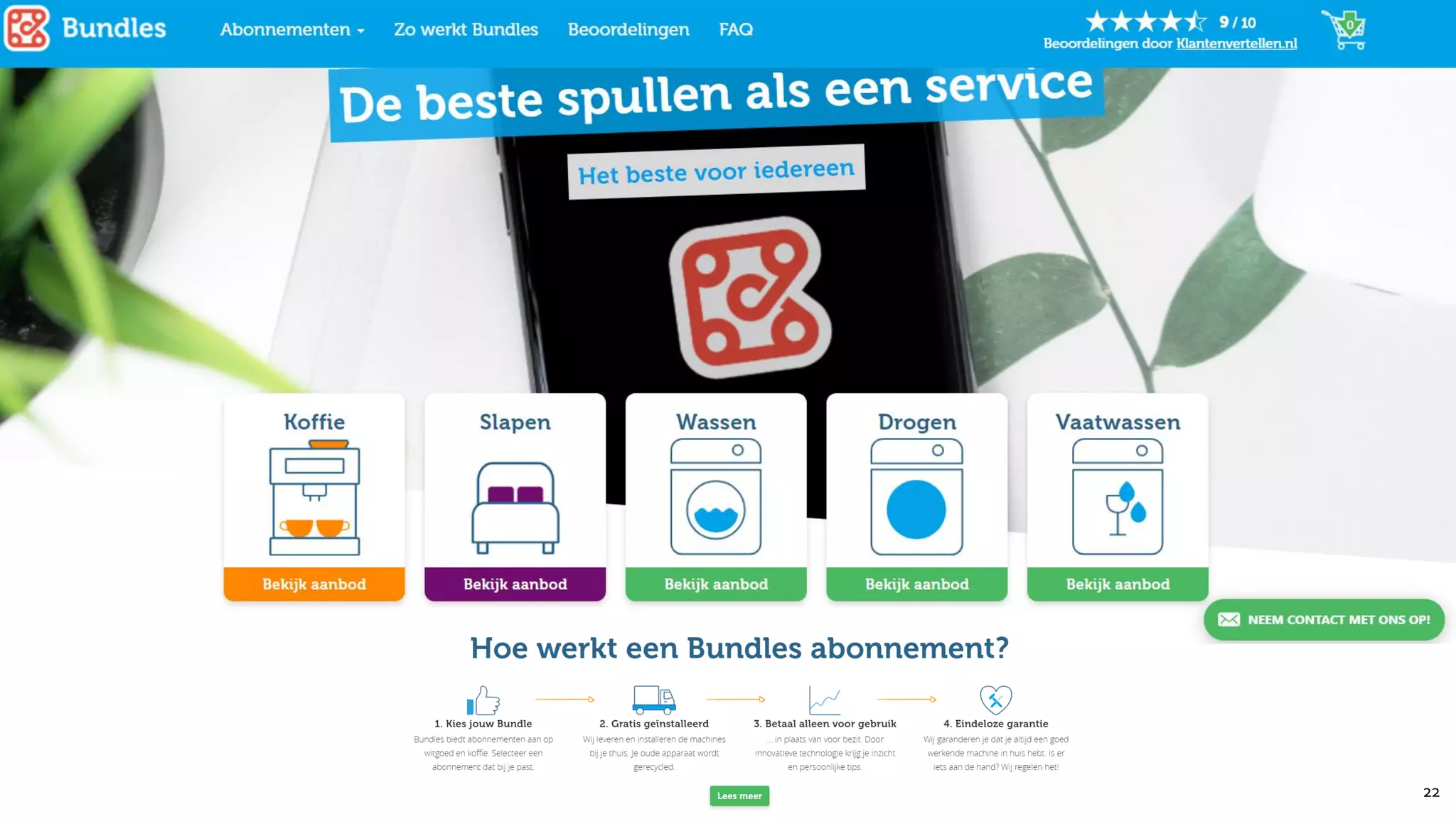
Let the
2323
Some key points on sustainable business design
• Explore circular economy business models to link power and responsibility in
your value chain
• Gauge for strategic signals that the customer is in need of a product instead
of a service
• Use the circular economy and smart product design as a lever under the
economics of your business model
2424

Building an innovation culture, steering individual and team behavior (by Möbius Business Redesign)

  • 1.
    1 Template Innovation Day2019CONFIDENTIAL HOW TO BUILD A SUSTAINABLE INNOVATION CULTURE Mathias Fahy, Strategy and Sustainability Expert Gert Linthout, Industry Team Lead mathias.fahy@mobius.eu gert.linthout@mobius.eu TRACK 3 MyStartUp The power of desired behaviour
  • 2.
    2 How to builda sustainable innovation culture The power of desired behaviour Offre remise le 22-03-2018
  • 3.
  • 4.
    44 Innovation • Renewable energyis cheaper than coal in US • By 2021, 1 in 4 products bought will be sustainable • Sweden eliminates fossil fuels by 2040 and challenges other countries • Germany’s renewables outstrips coal and generates 77% of the need But still...
  • 5.
    55 Innovation • We areaware of and tackling the energy challenge But what about our material footprint?!
  • 6.
    66 Culture 80% of productemissions throughout the lifecycle are fixed in the design phase
  • 7.
    77 In some casesthe producer has control of the product lifecycle impact, in other cases the customer Voorbeeld share-of-carbon footprint verdeling (ex. tapijttegel)
  • 8.
    88 Why can’t weinnovate and redesign products to help customers make sustainable choices?
  • 9.
    99 Riding the energyefficiency wave gives us a weird sense of comfort 9 The LED- revolution 90% 35%
  • 10.
    1010 A design led-systemchange – a watercooker in the UK 97% 65%
  • 11.
    1111 A design-led systemchange – a refrigerator in the US 30% 40%
  • 12.
    1212 Some key pointson sustainable product design • Start from the product lifecycle impact and design to mitigate • Fool proof design to trigger sustainable behaviour • Think about the net effect from a systems perspective • Communicate the customer value your sustainable design brings • Let this information trickle down onto the design table
  • 13.
    1313 We can relyon innovation and design to steer use, but how to solve the material conundrum? Voorbeeld share-of-carbon footprint verdeling (ex. tapijttegel)
  • 14.
    1414 The elephant inthe room – 45% of emissions are attribute to how we make products
  • 15.
    1515 The circular economyaligns economic and ecological incentives Recycled content Modular designs deliver parts Product refurbishment Extended lifetime / maximize use (sharing, mantenance, ...) Circular strategy Examples Profit potential* PhilipsSenseo Philips Pay per Lux Medical asset sharing 35% 24% 10% $ 1-2 mio/y on medical equipment spend (hospital level) 11%
  • 16.
    1616 The product asan “organized problem” – why not offer it as a service? Putting power and responsibility together at the producer’s side aligns incentives Moreover: the customer is “protected” and doesn’t need to make choices anymore
  • 17.
    1717 Why are circularbusiness models strategically relevant? Competition shifts discussion to price (& lower quality) State-of-the art (ETAP) lighting technology puts pressure on a sales-based business model LED lifetime ETAP performance (LLMF) Bringing sustainability closer to the business • Find ways to connect sustainability to economics & valorize it in the market • Ecodesign (doing less bad) > circular design (doing more good) Build relationship with end- customer (vs. installer) Unlocking customer value • Customers are outsourcing all non-core spend (focus) • Easier to obtain OPEX than CAPEX- budget • Products are becoming increasingly complex
  • 18.
    1818 The power ofdesign in a circular business model € - € 200,00 € 400,00 € 600,00 € 800,00 € 1 000,00 € 1 200,00 LAAS model (20Y) with Reman- sale - Design 4 Maintenance & Remanufacturing
  • 19.
    1919 Product-as-a-service systems comein different flavours “pay per move”“pay per month” “pay per tonne dried chlorine”
  • 20.
    2020 Source McKinsey: ImranAmed, Anita Balchandani, Marco Beltrami, Achim Berg, Saskia Hedrich, and Felix Rölkens
  • 21.
    2121 Keeping clothes inuse for an extra 9 months can reduce carbon, water and waste footprints by 20-30%.
  • 22.
  • 23.
    2323 Some key pointson sustainable business design • Explore circular economy business models to link power and responsibility in your value chain • Gauge for strategic signals that the customer is in need of a product instead of a service • Use the circular economy and smart product design as a lever under the economics of your business model
  • 24.