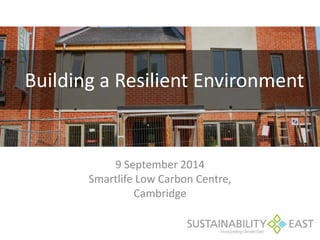
Building a Resilient Environment 
9 September 2014 
Smartlife Low Carbon Centre, 
Cambridge
Building a Resilient Environment 
Agenda 
• SPECIAL Project 
• Building Futures Project
Building a Resilient Environment 
SPECIAL Project
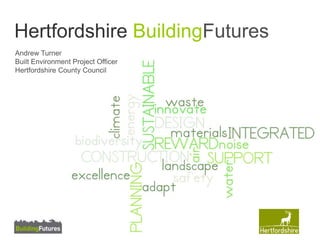
Hertfordshire BuildingFutures 
Andrew Turner 
Built Environment Project Officer 
Hertfordshire County Council
BuildingFutures Partnership 
 Local Planning Authorities 
 Led by Hertfordshire County Council 
 Stakeholder input & engagement 
Aims 
 Place sustainable design at the heart of planning new development 
 Create an integrated and consistent approach to sustainable design 
 Improve the quality of new development 
www.hertslink.org/buildingfutures
Achieving Sustainable Design 
Challenges? 
 The system 
 Priority and weight 
 Clarity & consistency 
(message, purpose/aims, 
decisions) 
 Skills & resource 
Response? 
 Leadership 
 Identify opportunities 
 Business case 
 Resources, training & support 
 Sharing & Coordination 
www.hertslink.org/buildingfutures
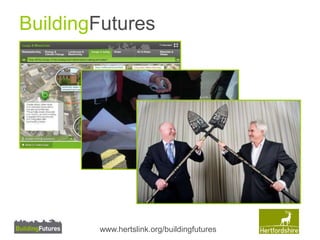
BuildingFutures 
www.hertslink.org/buildingfutures
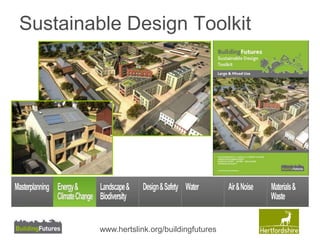
Sustainable Design Toolkit 
www.hertslink.org/buildingfutures
Sustainable Design Toolkit 
Why? 
 Improve communication of best 
practice principles 
 Aid decision making 
How? 
 Framework - targeted Q’s & advice 
 Create clarity and consistency 
 Provoke thought and discussion 
 Allow flexible outcomes 
www.hertslink.org/buildingfutures
Sustainable Design Toolkit 
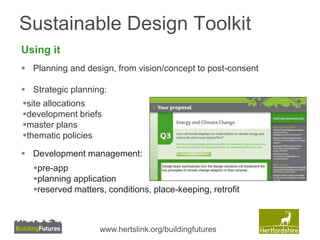
Using it 
 Planning and design, from vision/concept to post-consent 
 Strategic planning: 
site allocations 
development briefs 
master plans 
thematic policies 
 Development management: 
pre-app 
planning application 
reserved matters, conditions, place-keeping, retrofit 
www.hertslink.org/buildingfutures
Sustainable Design Toolkit 
Benefits 
 ‘One-stop-shop’ 
 Simple, clear and consistent framework, flexible to local context 
 Promotes an integrated approach 
Next steps & impact so far 
 Herts LPAs to use as standing guidance to inform pre-app 
 Advocating a policy-led approach (strategic, site specific & thematic) 
 Taking it beyond Hertfordshire 
www.hertslink.org/buildingfutures
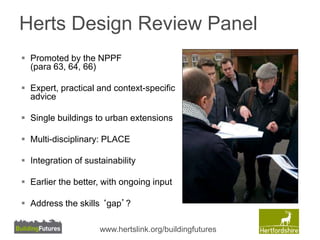
Herts Design Review Panel 
 Promoted by the NPPF 
(para 63, 64, 66) 
 Expert, practical and context-specific 
advice 
 Single buildings to urban extensions 
 Multi-disciplinary: PLACE 
 Integration of sustainability 
 Earlier the better, with ongoing input 
 Address the skills ‘gap’? 
www.hertslink.org/buildingfutures
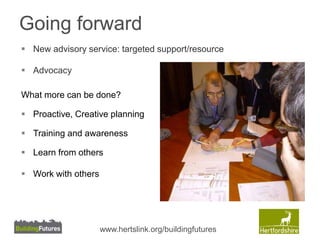
Going forward 
 New advisory service: targeted support/resource 
 Advocacy 
What more can be done? 
 Proactive, Creative planning 
 Training and awareness 
 Learn from others 
 Work with others 
www.hertslink.org/buildingfutures
Thank you 
@sus_dev 
Hertfordshire Building Futures group 
andrew.turner1@hertfordshire.gov.uk 
www.hertslink.org/buildingfutures
Building a Resilient Environment 
Questions and Summary

Building a Resilient Environment - Afternoon Session

  • 1.
    Building a ResilientEnvironment 9 September 2014 Smartlife Low Carbon Centre, Cambridge
  • 2.
    Building a ResilientEnvironment Agenda • SPECIAL Project • Building Futures Project
  • 3.
    Building a ResilientEnvironment SPECIAL Project
  • 4.
    Hertfordshire BuildingFutures AndrewTurner Built Environment Project Officer Hertfordshire County Council
  • 5.
    BuildingFutures Partnership Local Planning Authorities  Led by Hertfordshire County Council  Stakeholder input & engagement Aims  Place sustainable design at the heart of planning new development  Create an integrated and consistent approach to sustainable design  Improve the quality of new development www.hertslink.org/buildingfutures
  • 6.
    Achieving Sustainable Design Challenges?  The system  Priority and weight  Clarity & consistency (message, purpose/aims, decisions)  Skills & resource Response?  Leadership  Identify opportunities  Business case  Resources, training & support  Sharing & Coordination www.hertslink.org/buildingfutures
  • 7.
  • 8.
    Sustainable Design Toolkit www.hertslink.org/buildingfutures
  • 9.
    Sustainable Design Toolkit Why?  Improve communication of best practice principles  Aid decision making How?  Framework - targeted Q’s & advice  Create clarity and consistency  Provoke thought and discussion  Allow flexible outcomes www.hertslink.org/buildingfutures
  • 10.
    Sustainable Design Toolkit Using it  Planning and design, from vision/concept to post-consent  Strategic planning: site allocations development briefs master plans thematic policies  Development management: pre-app planning application reserved matters, conditions, place-keeping, retrofit www.hertslink.org/buildingfutures
  • 11.
    Sustainable Design Toolkit Benefits  ‘One-stop-shop’  Simple, clear and consistent framework, flexible to local context  Promotes an integrated approach Next steps & impact so far  Herts LPAs to use as standing guidance to inform pre-app  Advocating a policy-led approach (strategic, site specific & thematic)  Taking it beyond Hertfordshire www.hertslink.org/buildingfutures
  • 12.
    Herts Design ReviewPanel  Promoted by the NPPF (para 63, 64, 66)  Expert, practical and context-specific advice  Single buildings to urban extensions  Multi-disciplinary: PLACE  Integration of sustainability  Earlier the better, with ongoing input  Address the skills ‘gap’? www.hertslink.org/buildingfutures
  • 14.
    Going forward New advisory service: targeted support/resource  Advocacy What more can be done?  Proactive, Creative planning  Training and awareness  Learn from others  Work with others www.hertslink.org/buildingfutures
  • 15.
    Thank you @sus_dev Hertfordshire Building Futures group andrew.turner1@hertfordshire.gov.uk www.hertslink.org/buildingfutures
  • 16.
    Building a ResilientEnvironment Questions and Summary