Build a Large Language Model From Scratch MEAP Sebastian Raschka
Build a Large Language Model From Scratch MEAP Sebastian Raschka
Build a Large Language Model From Scratch MEAP Sebastian Raschka
Build a Large Language Model From Scratch MEAP Sebastian Raschka
Build a Large Language Model From Scratch MEAP Sebastian Raschka
1.
Build a LargeLanguage Model From Scratch MEAP
Sebastian Raschka pdf download
https://ebookfinal.com/download/build-a-large-language-model-
from-scratch-meap-sebastian-raschka/
Explore and download more ebooks or textbooks
at ebookfinal.com
2.
Here are somerecommended products for you. Click the link to
download, or explore more at ebookfinal
Python Machine Learning Second Edition Sebastian Raschka
https://ebookfinal.com/download/python-machine-learning-second-
edition-sebastian-raschka/
Build a Frontend Web Framework From Scratch 1st Edition
Ángel Sola Orbaiceta
https://ebookfinal.com/download/build-a-frontend-web-framework-from-
scratch-1st-edition-angel-sola-orbaiceta/
How to Build A Small Budget Recording Studio From Scratch
With 12 Tested Designs 3rd ed Edition Michael Shea
https://ebookfinal.com/download/how-to-build-a-small-budget-recording-
studio-from-scratch-with-12-tested-designs-3rd-ed-edition-michael-
shea/
LLMs in Production MEAP V03 From language models to
successful products Christopher Brousseau
https://ebookfinal.com/download/llms-in-production-meap-v03-from-
language-models-to-successful-products-christopher-brousseau/
3.
Fast Python Highperformance techniques for large datasets
MEAP V10 Tiago Rodrigues Antao
https://ebookfinal.com/download/fast-python-high-performance-
techniques-for-large-datasets-meap-v10-tiago-rodrigues-antao/
Web Development with MongoDB and NodeJS 2nd Edition Build
an interactive and full featured web application from
scratch using Node js and MongoDB Mithun Satheesh
https://ebookfinal.com/download/web-development-with-mongodb-and-
nodejs-2nd-edition-build-an-interactive-and-full-featured-web-
application-from-scratch-using-node-js-and-mongodb-mithun-satheesh/
How to Create a New Vegetable Garden Producing a Beautiful
and Fruitful Garden from Scratch 1st Edition Charles
Dowding
https://ebookfinal.com/download/how-to-create-a-new-vegetable-garden-
producing-a-beautiful-and-fruitful-garden-from-scratch-1st-edition-
charles-dowding/
The New Relationship Marketing How to Build a Large Loyal
Profitable Network Using the Social Web 1st Edition Mari
Smith
https://ebookfinal.com/download/the-new-relationship-marketing-how-to-
build-a-large-loyal-profitable-network-using-the-social-web-1st-
edition-mari-smith/
Coding projects in Scratch Woodcock
https://ebookfinal.com/download/coding-projects-in-scratch-woodcock/
5.
Build a LargeLanguage Model From Scratch MEAP
Sebastian Raschka Digital Instant Download
Author(s): Sebastian Raschka
ISBN(s): 9781633437166, 1633437167
Edition: Chapters 1 to 5 of 7
File Details: PDF, 11.62 MB
Year: 2024
Language: english
welcome
Thank you forpurchasing the MEAP edition of Build a Large Language
Model (From Scratch).
In this book, I invite you to embark on an educational journey with me to
learn how to build Large Language Models (LLMs) from the ground up.
Together, we'll delve deep into the LLM training pipeline, starting from data
loading and culminating in finetuning LLMs on custom datasets.
For many years, I've been deeply immersed in the world of deep learning,
coding LLMs, and have found great joy in explaining complex concepts
thoroughly. This book has been a long-standing idea in my mind, and I'm
thrilled to finally have the opportunity to write it and share it with you. Those
of you familiar with my work, especially from my blog, have likely seen
glimpses of my approach to coding from scratch. This method has resonated
well with many readers, and I hope it will be equally effective for you.
I've designed the book to emphasize hands-on learning, primarily using
PyTorch and without relying on pre-existing libraries. With this approach,
coupled with numerous figures and illustrations, I aim to provide you with a
thorough understanding of how LLMs work, their limitations, and
customization methods. Moreover, we'll explore commonly used workflows
and paradigms in pretraining and fine-tuning LLMs, offering insights into
their development and customization.
The book is structured with detailed step-by-step introductions, ensuring no
critical detail is overlooked. To gain the most from this book, you should
have a background in Python programming. Prior experience in deep learning
and a foundational understanding of PyTorch, or familiarity with other deep
learning frameworks like TensorFlow, will be beneficial.
I warmly invite you to engage in the liveBook discussion forum for any
questions, suggestions, or feedback you might have. Your contributions are
immensely valuable and appreciated in enhancing this learning journey.
10.
— Sebastian Raschka
Inthis book
welcome 1 Understanding Large Language Models 2 Working with Text
Data 3 Coding Attention Mechanisms 4 Implementing a GPT model from
Scratch To Generate Text 5 Pretraining on Unlabeled Data
Appendix A. Introduction to PyTorch Appendix B. References and Further
Reading Appendix C. Exercise Solutions Appendix D. Adding Bells and
Whistles to the Training Loop
11.
1 Understanding LargeLanguage
Models
This chapter covers
High-level explanations of the fundamental concepts behind large
language models (LLMs)
Insights into the transformer architecture from which ChatGPT-like
LLMs are derived
A plan for building an LLM from scratch
Large language models (LLMs), such as those offered in OpenAI's ChatGPT,
are deep neural network models that have been developed over the past few
years. They ushered in a new era for Natural Language Processing (NLP).
Before the advent of large language models, traditional methods excelled at
categorization tasks such as email spam classification and straightforward
pattern recognition that could be captured with handcrafted rules or simpler
models. However, they typically underperformed in language tasks that
demanded complex understanding and generation abilities, such as parsing
detailed instructions, conducting contextual analysis, or creating coherent and
contextually appropriate original text. For example, previous generations of
language models could not write an email from a list of keywords—a task
that is trivial for contemporary LLMs.
LLMs have remarkable capabilities to understand, generate, and interpret
human language. However, it's important to clarify that when we say
language models "understand," we mean that they can process and generate
text in ways that appear coherent and contextually relevant, not that they
possess human-like consciousness or comprehension.
Enabled by advancements in deep learning, which is a subset of machine
learning and artificial intelligence (AI) focused on neural networks, LLMs
are trained on vast quantities of text data. This allows LLMs to capture
deeper contextual information and subtleties of human language compared to
12.
previous approaches. Asa result, LLMs have significantly improved
performance in a wide range of NLP tasks, including text translation,
sentiment analysis, question answering, and many more.
Another important distinction between contemporary LLMs and earlier NLP
models is that the latter were typically designed for specific tasks; whereas
those earlier NLP models excelled in their narrow applications, LLMs
demonstrate a broader proficiency across a wide range of NLP tasks.
The success behind LLMs can be attributed to the transformer architecture
which underpins many LLMs, and the vast amounts of data LLMs are trained
on, allowing them to capture a wide variety of linguistic nuances, contexts,
and patterns that would be challenging to manually encode.
This shift towards implementing models based on the transformer
architecture and using large training datasets to train LLMs has
fundamentally transformed NLP, providing more capable tools for
understanding and interacting with human language.
Beginning with this chapter, we set the foundation to accomplish the primary
objective of this book: understanding LLMs by implementing a ChatGPT-
like LLM based on the transformer architecture step by step in code.
1.1 What is an LLM?
An LLM, a large language model, is a neural network designed to
understand, generate, and respond to human-like text. These models are deep
neural networks trained on massive amounts of text data, sometimes
encompassing large portions of the entire publicly available text on the
internet.
The "large" in large language model refers to both the model's size in terms
of parameters and the immense dataset on which it's trained. Models like this
often have tens or even hundreds of billions of parameters, which are the
adjustable weights in the network that are optimized during training to predict
the next word in a sequence. Next-word prediction is sensible because it
harnesses the inherent sequential nature of language to train models on
13.
understanding context, structure,and relationships within text. Yet, it is a
very simple task and so it is surprising to many researchers that it can
produce such capable models. We will discuss and implement the next-word
training procedure in later chapters step by step.
LLMs utilize an architecture called the transformer (covered in more detail in
section 1.4), which allows them to pay selective attention to different parts of
the input when making predictions, making them especially adept at handling
the nuances and complexities of human language.
Since LLMs are capable of generating text, LLMs are also often referred to
as a form of generative artificial intelligence (AI), often abbreviated as
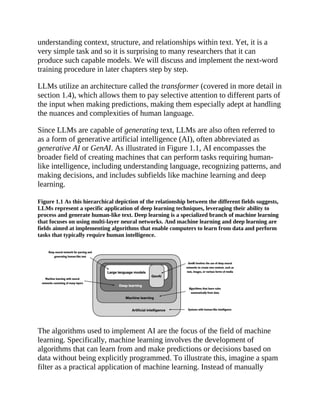
generative AI or GenAI. As illustrated in Figure 1.1, AI encompasses the
broader field of creating machines that can perform tasks requiring human-
like intelligence, including understanding language, recognizing patterns, and
making decisions, and includes subfields like machine learning and deep
learning.
Figure 1.1 As this hierarchical depiction of the relationship between the different fields suggests,
LLMs represent a specific application of deep learning techniques, leveraging their ability to
process and generate human-like text. Deep learning is a specialized branch of machine learning
that focuses on using multi-layer neural networks. And machine learning and deep learning are
fields aimed at implementing algorithms that enable computers to learn from data and perform
tasks that typically require human intelligence.
The algorithms used to implement AI are the focus of the field of machine
learning. Specifically, machine learning involves the development of
algorithms that can learn from and make predictions or decisions based on
data without being explicitly programmed. To illustrate this, imagine a spam
filter as a practical application of machine learning. Instead of manually
14.
writing rules toidentify spam emails, a machine learning algorithm is fed
examples of emails labeled as spam and legitimate emails. By minimizing the
error in its predictions on a training dataset, the model then learns to
recognize patterns and characteristics indicative of spam, enabling it to
classify new emails as either spam or legitimate.
As illustrated in Figure 1.1, deep learning is a subset of machine learning that
focuses on utilizing neural networks with three or more layers (also called
deep neural networks) to model complex patterns and abstractions in data. In
contrast to deep learning, traditional machine learning requires manual
feature extraction. This means that human experts need to identify and select
the most relevant features for the model.
While the field of AI is nowadays dominated by machine learning and deep
learning, it also includes other approaches, for example, using rule-based
systems, genetic algorithms, expert systems, fuzzy logic, or symbolic
reasoning.
Returning to the spam classification example, in traditional machine learning,
human experts might manually extract features from email text such as the
frequency of certain trigger words ("prize," "win," "free"), the number of
exclamation marks, use of all uppercase words, or the presence of suspicious
links. This dataset, created based on these expert-defined features, would then
be used to train the model. In contrast to traditional machine learning, deep
learning does not require manual feature extraction. This means that human
experts do not need to identify and select the most relevant features for a deep
learning model. (However, in both traditional machine learning and deep
learning for spam classification, you still require the collection of labels, such
as spam or non-spam, which need to be gathered either by an expert or users.)
The upcoming sections will cover some of the problems LLMs can solve
today, the challenges that LLMs address, and the general LLM architecture,
which we will implement in this book.
1.2 Applications of LLMs
Owing to their advanced capabilities to parse and understand unstructured
15.
text data, LLMshave a broad range of applications across various domains.
Today, LLMs are employed for machine translation, generation of novel texts
(see Figure 1.2), sentiment analysis, text summarization, and many other
tasks. LLMs have recently been used for content creation, such as writing
fiction, articles, and even computer code.
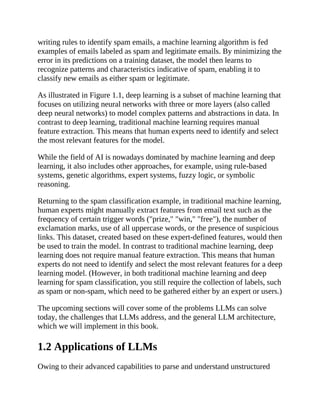
Figure 1.2 LLM interfaces enable natural language communication between users and AI
systems. This screenshot shows ChatGPT writing a poem according to a user's specifications.
LLMs can also power sophisticated chatbots and virtual assistants, such as
OpenAI's ChatGPT or Google's Gemini (formerly called Bard), which can
answer user queries and augment traditional search engines such as Google
Search or Microsoft Bing.
Moreover, LLMs may be used for effective knowledge retrieval from vast
volumes of text in specialized areas such as medicine or law. This includes
sifting through documents, summarizing lengthy passages, and answering
technical questions.
In short, LLMs are invaluable for automating almost any task that involves
parsing and generating text. Their applications are virtually endless, and as
we continue to innovate and explore new ways to use these models, it's clear
16.
that LLMs havethe potential to redefine our relationship with technology,
making it more conversational, intuitive, and accessible.
In this book, we will focus on understanding how LLMs work from the
ground up, coding an LLM that can generate texts. We will also learn about
techniques that allow LLMs to carry out queries, ranging from answering
questions to summarizing text, translating text into different languages, and
more. In other words, in this book, we will learn how complex LLM
assistants such as ChatGPT work by building one step by step.
1.3 Stages of building and using LLMs
Why should we build our own LLMs? Coding an LLM from the ground up is
an excellent exercise to understand its mechanics and limitations. Also, it
equips us with the required knowledge for pretraining or finetuning existing
open-source LLM architectures to our own domain-specific datasets or tasks.
Research has shown that when it comes to modeling performance, custom-
built LLMs—those tailored for specific tasks or domains—can outperform
general-purpose LLMs, such as those provided by ChatGPT, which are
designed for a wide array of applications. Examples of this include
BloombergGPT, which is specialized for finance, and LLMs that are tailored
for medical question answering (please see the Further Reading and
References section in Appendix B for more details).
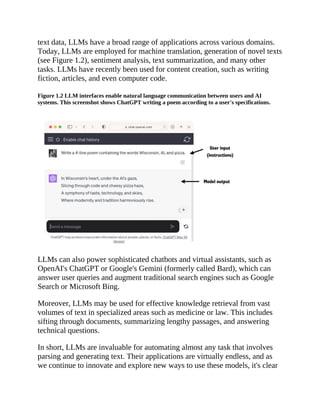
The general process of creating an LLM includes pretraining and finetuning.
The term "pre" in "pretraining" refers to the initial phase where a model like
an LLM is trained on a large, diverse dataset to develop a broad
understanding of language. This pretrained model then serves as a
foundational resource that can be further refined through finetuning, a
process where the model is specifically trained on a narrower dataset that is
more specific to particular tasks or domains. This two-stage training approach
consisting of pretraining and finetuning is depicted in Figure 1.3.
Figure 1.3 Pretraining an LLM involves next-word prediction on large text datasets. A
pretrained LLM can then be finetuned using a smaller labeled dataset.
17.
As illustrated inFigure 1.3, the first step in creating an LLM is to train it in
on a large corpus of text data, sometimes referred to as raw text. Here, "raw"
refers to the fact that this data is just regular text without any labeling
information[1]. (Filtering may be applied, such as removing formatting
characters or documents in unknown languages.)
This first training stage of an LLM is also known as pretraining, creating an
initial pretrained LLM, often called a base or foundation model. A typical
example of such a model is the GPT-3 model (the precursor of the original
model offered in ChatGPT). This model is capable of text completion, that is,
finishing a half-written sentence provided by a user. It also has limited few-
shot capabilities, which means it can learn to perform new tasks based on
only a few examples instead of needing extensive training data. This is
further illustrated in the next section, Using transformers for different tasks.
After obtaining a pretrained LLM from training on large text datasets, where
the LLM is trained to predict the next word in the text, we can further train
the LLM on labeled data, also known as finetuning.
The two most popular categories of finetuning LLMs include instruction-
finetuning and finetuning for classification tasks. In instruction-finetuning,
the labeled dataset consists of instruction and answer pairs, such as a query to
translate a text accompanied by the correctly translated text. In classification
finetuning, the labeled dataset consists of texts and associated class labels, for
example, emails associated with spam and non-spam labels.
18.
In this book,we will cover both code implementations for pretraining and
finetuning LLM, and we will delve deeper into the specifics of instruction-
finetuning and finetuning for classification later in this book after pretraining
a base LLM.
1.4 Using LLMs for different tasks
Most modern LLMs rely on the transformer architecture, which is a deep
neural network architecture introduced in the 2017 paper Attention Is All You
Need. To understand LLMs we briefly have to go over the original
transformer, which was originally developed for machine translation,
translating English texts to German and French. A simplified version of the
transformer architecture is depicted in Figure 1.4.
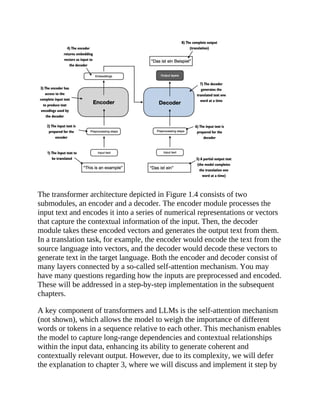
Figure 1.4 A simplified depiction of the original transformer architecture, which is a deep
learning model for language translation. The transformer consists of two parts, an encoder that
processes the input text and produces an embedding representation (a numerical representation
that captures many different factors in different dimensions) of the text that the decoder can use
to generate the translated text one word at a time. Note that this figure shows the final stage of
the translation process where the decoder has to generate only the final word ("Beispiel"), given
the original input text ("This is an example") and a partially translated sentence ("Das ist ein"),
to complete the translation.
19.
The transformer architecturedepicted in Figure 1.4 consists of two
submodules, an encoder and a decoder. The encoder module processes the
input text and encodes it into a series of numerical representations or vectors
that capture the contextual information of the input. Then, the decoder
module takes these encoded vectors and generates the output text from them.
In a translation task, for example, the encoder would encode the text from the
source language into vectors, and the decoder would decode these vectors to
generate text in the target language. Both the encoder and decoder consist of
many layers connected by a so-called self-attention mechanism. You may
have many questions regarding how the inputs are preprocessed and encoded.
These will be addressed in a step-by-step implementation in the subsequent
chapters.
A key component of transformers and LLMs is the self-attention mechanism
(not shown), which allows the model to weigh the importance of different
words or tokens in a sequence relative to each other. This mechanism enables
the model to capture long-range dependencies and contextual relationships
within the input data, enhancing its ability to generate coherent and
contextually relevant output. However, due to its complexity, we will defer
the explanation to chapter 3, where we will discuss and implement it step by
20.
step. Moreover, wewill also discuss and implement the data preprocessing
steps to create the model inputs in chapter 2, Working with Text Data.
Later variants of the transformer architecture, such as the so-called BERT
(short for bidirectional encoder representations from transformers) and the
various GPT models (short for generative pretrained transformers), built on
this concept to adapt this architecture for different tasks. (References can be
found in Appendix B.)
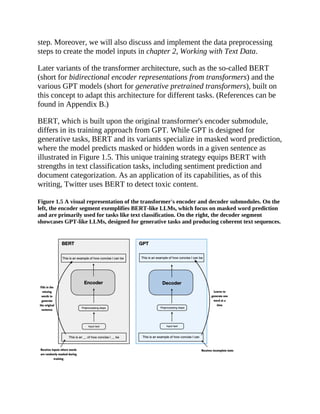
BERT, which is built upon the original transformer's encoder submodule,
differs in its training approach from GPT. While GPT is designed for
generative tasks, BERT and its variants specialize in masked word prediction,
where the model predicts masked or hidden words in a given sentence as
illustrated in Figure 1.5. This unique training strategy equips BERT with
strengths in text classification tasks, including sentiment prediction and
document categorization. As an application of its capabilities, as of this
writing, Twitter uses BERT to detect toxic content.
Figure 1.5 A visual representation of the transformer's encoder and decoder submodules. On the
left, the encoder segment exemplifies BERT-like LLMs, which focus on masked word prediction
and are primarily used for tasks like text classification. On the right, the decoder segment
showcases GPT-like LLMs, designed for generative tasks and producing coherent text sequences.
21.
GPT, on theother hand, focuses on the decoder portion of the original
transformer architecture and is designed for tasks that require generating
texts. This includes machine translation, text summarization, fiction writing,
writing computer code, and more. We will discuss the GPT architecture in
more detail in the remaining sections of this chapter and implement it from
scratch in this book.
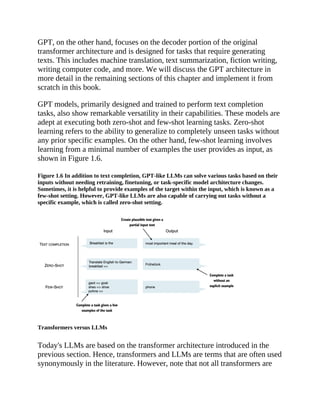
GPT models, primarily designed and trained to perform text completion
tasks, also show remarkable versatility in their capabilities. These models are
adept at executing both zero-shot and few-shot learning tasks. Zero-shot
learning refers to the ability to generalize to completely unseen tasks without
any prior specific examples. On the other hand, few-shot learning involves
learning from a minimal number of examples the user provides as input, as
shown in Figure 1.6.
Figure 1.6 In addition to text completion, GPT-like LLMs can solve various tasks based on their
inputs without needing retraining, finetuning, or task-specific model architecture changes.
Sometimes, it is helpful to provide examples of the target within the input, which is known as a
few-shot setting. However, GPT-like LLMs are also capable of carrying out tasks without a
specific example, which is called zero-shot setting.
Transformers versus LLMs
Today's LLMs are based on the transformer architecture introduced in the
previous section. Hence, transformers and LLMs are terms that are often used
synonymously in the literature. However, note that not all transformers are
22.
LLMs since transformerscan also be used for computer vision. Also, not all
LLMs are transformers, as there are large language models based on recurrent
and convolutional architectures. The main motivation behind these alternative
approaches is to improve the computational efficiency of LLMs. However,
whether these alternative LLM architectures can compete with the
capabilities of transformer-based LLMs and whether they are going to be
adopted in practice remains to be seen. (Interested readers can find literature
references describing these architectures in the Further Reading section at the
end of this chapter.)
1.5 Utilizing large datasets
The large training datasets for popular GPT- and BERT-like models represent
diverse and comprehensive text corpora encompassing billions of words,
which include a vast array of topics and natural and computer languages. To
provide a concrete example, Table 1.1 summarizes the dataset used for
pretraining GPT-3, which served as the base model for the first version of
ChatGPT.
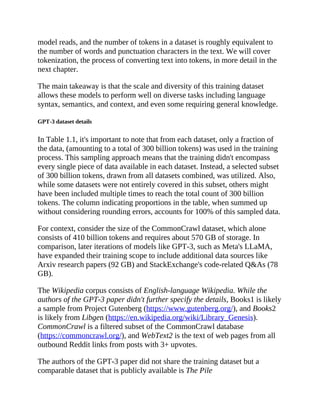
Table 1.1 The pretraining dataset of the popular GPT-3 LLM
Dataset name Dataset description Number of
tokens
Proportion in
training data
CommonCrawl
(filtered)
Web crawl data 410 billion 60%
WebText2 Web crawl data 19 billion 22%
Books1 Internet-based book
corpus
12 billion 8%
Books2 Internet-based book
corpus
55 billion 8%
Wikipedia High-quality text 3 billion 3%
Table 1.1 reports the number of tokens, where a token is a unit of text that a
23.
model reads, andthe number of tokens in a dataset is roughly equivalent to
the number of words and punctuation characters in the text. We will cover
tokenization, the process of converting text into tokens, in more detail in the
next chapter.
The main takeaway is that the scale and diversity of this training dataset
allows these models to perform well on diverse tasks including language
syntax, semantics, and context, and even some requiring general knowledge.
GPT-3 dataset details
In Table 1.1, it's important to note that from each dataset, only a fraction of
the data, (amounting to a total of 300 billion tokens) was used in the training
process. This sampling approach means that the training didn't encompass
every single piece of data available in each dataset. Instead, a selected subset
of 300 billion tokens, drawn from all datasets combined, was utilized. Also,
while some datasets were not entirely covered in this subset, others might
have been included multiple times to reach the total count of 300 billion
tokens. The column indicating proportions in the table, when summed up
without considering rounding errors, accounts for 100% of this sampled data.
For context, consider the size of the CommonCrawl dataset, which alone
consists of 410 billion tokens and requires about 570 GB of storage. In
comparison, later iterations of models like GPT-3, such as Meta's LLaMA,
have expanded their training scope to include additional data sources like
Arxiv research papers (92 GB) and StackExchange's code-related Q&As (78
GB).
The Wikipedia corpus consists of English-language Wikipedia. While the
authors of the GPT-3 paper didn't further specify the details, Books1 is likely
a sample from Project Gutenberg (https://www.gutenberg.org/), and Books2
is likely from Libgen (https://en.wikipedia.org/wiki/Library_Genesis).
CommonCrawl is a filtered subset of the CommonCrawl database
(https://commoncrawl.org/), and WebText2 is the text of web pages from all
outbound Reddit links from posts with 3+ upvotes.
The authors of the GPT-3 paper did not share the training dataset but a
comparable dataset that is publicly available is The Pile
24.
(https://pile.eleuther.ai/). However, thecollection may contain copyrighted
works, and the exact usage terms may depend on the intended use case and
country. For more information, see the HackerNews discussion at
https://news.ycombinator.com/item?id=25607809.
The pretrained nature of these models makes them incredibly versatile for
further finetuning on downstream tasks, which is why they are also known as
base or foundation models. Pretraining LLMs requires access to significant
resources and is very expensive. For example, the GPT-3 pretraining cost is
estimated to be $4.6 million in terms of cloud computing credits[2].
The good news is that many pretrained LLMs, available as open-source
models, can be used as general purpose tools to write, extract, and edit texts
that were not part of the training data. Also, LLMs can be finetuned on
specific tasks with relatively smaller datasets, reducing the computational
resources needed and improving performance on the specific task.
In this book, we will implement the code for pretraining and use it to pretrain
an LLM for educational purposes. All computations will be executable on
consumer hardware. After implementing the pretraining code we will learn
how to reuse openly available model weights and load them into the
architecture we will implement, allowing us to skip the expensive pretraining
stage when we finetune LLMs later in this book.
1.6 A closer look at the GPT architecture
Previously in this chapter, we mentioned the terms GPT-like models, GPT-3,
and ChatGPT. Let's now take a closer look at the general GPT architecture.
First, GPT stands for Generative Pretrained Transformer and was originally
introduced in the following paper:
Improving Language Understanding by Generative Pre-Training (2018)
by Radford et al. from OpenAI, http://cdn.openai.com/research-
covers/language-unsupervised/language_understanding_paper.pdf
GPT-3 is a scaled-up version of this model that has more parameters and was
trained on a larger dataset. And the original model offered in ChatGPT was
25.
created by finetuningGPT-3 on a large instruction dataset using a method
from OpenAI's InstructGPT paper, which we will cover in more detail in
chapter 7, Finetuning with Human Feedback To Follow Instructions. As we
have seen earlier in Figure 1.6, these models are competent text completion
models and can carry out other tasks such as spelling correction,
classification, or language translation. This is actually very remarkable given
that GPT models are pretrained on a relatively simple next-word prediction
task, as illustrated in Figure 1.7.
Figure 1.7 In the next-word pretraining task for GPT models, the system learns to predict the
upcoming word in a sentence by looking at the words that have come before it. This approach
helps the model understand how words and phrases typically fit together in language, forming a
foundation that can be applied to various other tasks.
The next-word prediction task is a form of self-supervised learning, which is
a form of self-labeling. This means that we don't need to collect labels for the
training data explicitly but can leverage the structure of the data itself: we can
use the next word in a sentence or document as the label that the model is
supposed to predict. Since this next-word prediction task allows us to create
labels "on the fly," it is possible to leverage massive unlabeled text datasets to
train LLMs as previously discussed in section 1.5, Utilizing large datasets.
Compared to the original transformer architecture we covered in section 1.4,
Using LLMs for different tasks, the general GPT architecture is relatively
simple. Essentially, it's just the decoder part without the encoder as illustrated
in Figure 1.8. Since decoder-style models like GPT generate text by
predicting text one word at a time, they are considered a type of
autoregressive model. Autoregressive models incorporate their previous
outputs as inputs for future predictions. Consequently, in GPT, each new
word is chosen based on the sequence that precedes it, which improves
coherence of the resulting text.
“He Shall Be
Satisfied”
ways,Thou King of the ages. Who shall not fear, O Lord, and glorify
Thy name? for Thou only art holy.”
In our life here, earthly, sin-restricted, though it is, the greatest
joy and the highest education are in service. And in the future state,
untrammeled by the limitations of sinful humanity, it is in service
that our greatest joy and our highest education will be found;—
witnessing, and ever as we witness learning anew “the riches of the
glory of this mystery;” “which is Christ in you, the hope of glory.”
“It doth not yet appear what we shall be; but we know that,
when He shall appear, we shall be like Him; for we shall see Him as
He is.”
Then, in the results of His work, Christ
will behold its recompense. In that great
multitude which no man could number, presented “faultless before
the presence of His glory with exceeding joy,” He whose blood has
redeemed and whose life has taught us, “shall see of the travail of
His soul, and shall be satisfied.”
25 286
Philippians
3:7, 8,R. V. 68
8–10 192
4:8 235
13 70, 256
Colossians
1:16, 17, R. V. 132
19, R. V. 30
27 172, 309
2:3 13
10 257
3:23, 24 226
1 Thessalonians
2:19, 20 70
2 Thessalonians
1:11 134
1 Timothy
4:8 145
47.
2 Timothy
2:15 61
3:16,17 171
4:7 68
Hebrews
1:3 132
14 103
2:7 20
18 78
4:3 131
13 255
15, R. V. 78
5:2 294
6:7, 8 216
11:3 134
27 63
32–40 158
James
1:5 191, 231
17 50
1 Peter
1:10–12 183
12 127
4:8, R. V. 114
10 286
11 226
48.
1 John
1:2 84
3:1–388
2 309
Jude
24 309
Revelation
1:1, 3 191
17, R. V. 83
2:7 302
3:4 249
8 282
7:14–17 303
15:3, 4, R. V. 309
19:8 249
21:1, 2, 23 301
3, 4 302
6, R. V. 83
22:1; 22:2, R. V. 302
3 307
4 125, 303
49.
General Index
Abraham asa teacher, 187.
Accounts, teaching, 238, 239.
Accuracy, through manual training, 222.
Adam, education of, 14–17, 20–22, 25–27;
temptation, 23–25.
Aged, respect for, 244.
Agrarian laws of Israel, 43, 44.
Agriculture, 34, 43, 219, 220;
lessons from, 111, 112;
see Seed-sowing;
development of character, 112;
opportunity for the unemployed, 220.
Aim, the true, 13, 18, 145, 222, 262, 267, 297;
lack of, 190, 202.
Amusement, dangers in, 207, 210.
Anarchy, 228.
Angels, in Eden, 21;
songs, 168;
agency in human affairs, 179, 304, 305;
our companions, 127;
protectors, 255, 256, 304, 305;
co-workers, teachers, 271.
Apostles, training, 84–96;
50.
diversity, 85.
Application, 232.
Athleticsports, 210.
Babylon, rise and fall of, 175, 176, 183.
Beatitudes, 79.
Beauty, 41;
of the Bible, 188;
all, a reflection of Christ, 192;
through obedience to law, 198;
the highest, 249.
Bible, as an educator, 17, 47, 52, 55, 65, 123–192;
a perfect whole, 123;
range of style and subjects, 125;
stories, 185;
as literature, 188, 189;
the rule of life, 189, 260;
its own expositor, 190;
reverence for, 244.
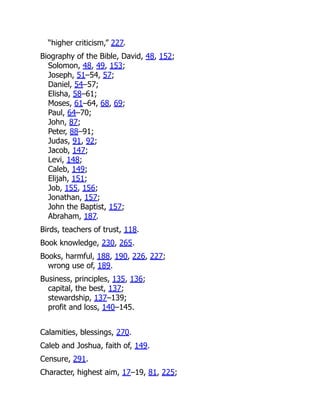
Bible illustrations from nature, 102, 104–110, 113–120, 175.
Bible teaching and study, example of Jesus, 76, 77, 81, 82, 85, 102,
185;
Abraham, 187; mental culture, 123, 124, 171, 188, 189;
spiritual, 124–127, 171, 188, 192;
purpose in, 189, 254;
original study, 188;
verse-by-verse, 189;
comprehensive, 190;
opportunities for, 191;
family, 185, 186;
Sabbath, 251;
results, 192, 252–256;
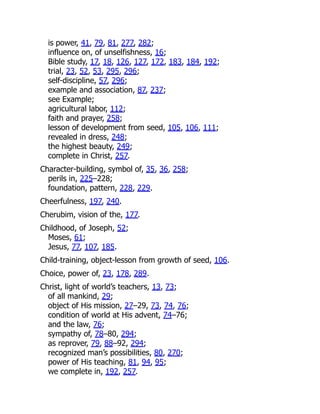
is power, 41,79, 81, 277, 282;
influence on, of unselfishness, 16;
Bible study, 17, 18, 126, 127, 172, 183, 184, 192;
trial, 23, 52, 53, 295, 296;
self-discipline, 57, 296;
example and association, 87, 237;
see Example;
agricultural labor, 112;
faith and prayer, 258;
lesson of development from seed, 105, 106, 111;
revealed in dress, 248;
the highest beauty, 249;
complete in Christ, 257.
Character-building, symbol of, 35, 36, 258;
perils in, 225–228;
foundation, pattern, 228, 229.
Cheerfulness, 197, 240.
Cherubim, vision of the, 177.
Childhood, of Joseph, 52;
Moses, 61;
Jesus, 77, 107, 185.
Child-training, object-lesson from growth of seed, 106.
Choice, power of, 23, 178, 289.
Christ, light of world’s teachers, 13, 73;
of all mankind, 29;
object of His mission, 27–29, 73, 74, 76;
condition of world at His advent, 74–76;
and the law, 76;
sympathy of, 78–80, 294;
as reprover, 79, 88–92, 294;
recognized man’s possibilities, 80, 270;
power of His teaching, 81, 94, 95;
we complete in, 192, 257.
53.
Welcome to ourwebsite – the ideal destination for book lovers and
knowledge seekers. With a mission to inspire endlessly, we offer a
vast collection of books, ranging from classic literary works to
specialized publications, self-development books, and children's
literature. Each book is a new journey of discovery, expanding
knowledge and enriching the soul of the reade
Our website is not just a platform for buying books, but a bridge
connecting readers to the timeless values of culture and wisdom. With
an elegant, user-friendly interface and an intelligent search system,
we are committed to providing a quick and convenient shopping
experience. Additionally, our special promotions and home delivery
services ensure that you save time and fully enjoy the joy of reading.
Let us accompany you on the journey of exploring knowledge and
personal growth!
ebookfinal.com

![As illustrated in Figure 1.3, the first step in creating an LLM is to train it in
on a large corpus of text data, sometimes referred to as raw text. Here, "raw"
refers to the fact that this data is just regular text without any labeling
information[1]. (Filtering may be applied, such as removing formatting
characters or documents in unknown languages.)
This first training stage of an LLM is also known as pretraining, creating an
initial pretrained LLM, often called a base or foundation model. A typical
example of such a model is the GPT-3 model (the precursor of the original
model offered in ChatGPT). This model is capable of text completion, that is,
finishing a half-written sentence provided by a user. It also has limited few-
shot capabilities, which means it can learn to perform new tasks based on
only a few examples instead of needing extensive training data. This is
further illustrated in the next section, Using transformers for different tasks.
After obtaining a pretrained LLM from training on large text datasets, where
the LLM is trained to predict the next word in the text, we can further train
the LLM on labeled data, also known as finetuning.
The two most popular categories of finetuning LLMs include instruction-
finetuning and finetuning for classification tasks. In instruction-finetuning,
the labeled dataset consists of instruction and answer pairs, such as a query to
translate a text accompanied by the correctly translated text. In classification
finetuning, the labeled dataset consists of texts and associated class labels, for
example, emails associated with spam and non-spam labels.](https://image.slidesharecdn.com/5766-250415184502-dcd35a96/85/Build-a-Large-Language-Model-From-Scratch-MEAP-Sebastian-Raschka-17-320.jpg)
![(https://pile.eleuther.ai/). However, the collection may contain copyrighted
works, and the exact usage terms may depend on the intended use case and
country. For more information, see the HackerNews discussion at
https://news.ycombinator.com/item?id=25607809.
The pretrained nature of these models makes them incredibly versatile for
further finetuning on downstream tasks, which is why they are also known as
base or foundation models. Pretraining LLMs requires access to significant
resources and is very expensive. For example, the GPT-3 pretraining cost is
estimated to be $4.6 million in terms of cloud computing credits[2].
The good news is that many pretrained LLMs, available as open-source
models, can be used as general purpose tools to write, extract, and edit texts
that were not part of the training data. Also, LLMs can be finetuned on
specific tasks with relatively smaller datasets, reducing the computational
resources needed and improving performance on the specific task.
In this book, we will implement the code for pretraining and use it to pretrain
an LLM for educational purposes. All computations will be executable on
consumer hardware. After implementing the pretraining code we will learn
how to reuse openly available model weights and load them into the
architecture we will implement, allowing us to skip the expensive pretraining
stage when we finetune LLMs later in this book.
1.6 A closer look at the GPT architecture
Previously in this chapter, we mentioned the terms GPT-like models, GPT-3,
and ChatGPT. Let's now take a closer look at the general GPT architecture.
First, GPT stands for Generative Pretrained Transformer and was originally
introduced in the following paper:
Improving Language Understanding by Generative Pre-Training (2018)
by Radford et al. from OpenAI, http://cdn.openai.com/research-
covers/language-unsupervised/language_understanding_paper.pdf
GPT-3 is a scaled-up version of this model that has more parameters and was
trained on a larger dataset. And the original model offered in ChatGPT was](https://image.slidesharecdn.com/5766-250415184502-dcd35a96/85/Build-a-Large-Language-Model-From-Scratch-MEAP-Sebastian-Raschka-24-320.jpg)



![[GEMINI EXTERNAL DECK] Introduction to Gemini.pptx](https://cdn.slidesharecdn.com/ss_thumbnails/geminiexternaldeckintroductiontogemini-240507183804-614e2404-thumbnail.jpg?width=640&height=640&fit=bounds)


