BUDDH INTERNATIONAL CIRCUIT
PRESENTED BY: CHANDRADARSHAN JAIN
M.PHARM + MBA (P’CEUTICS)
P007
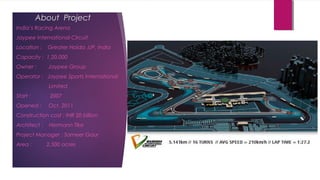
About Project
India’s Racing Arena
Jaypee International Circuit
Location : Greater Noida ,UP, India
Capacity : 1,20,000
Owner : Jaypee Group
Operator : Jaypee Sports International
Limited
Start : 2007
Opened : Oct. 2011
Construction cost : INR 20 billion
Architect : Hermann Tike
Project Manager : Sameer Gaur
Area : 2,500 acres
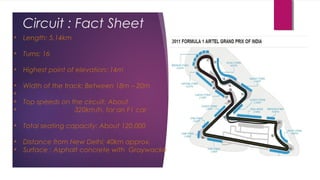
Circuit : Fact Sheet
• Length: 5.14km
• Turns: 16
• Highest point of elevation: 14m
• Width of the track: Between 18m – 20m
•
• Top speeds on the circuit: About
• 320km/h, for an F1 car
• Total seating capacity: About 120,000
• Distance from New Delhi: 40km approx.
• Surface : Asphalt concrete with Graywacke
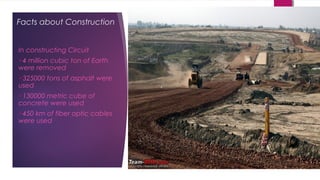
Facts about Construction
In constructing Circuit
4 million cubic ton of Earth
were removed
325000 tons of asphalt were
used
130000 metric cube of
concrete were used
450 km of fiber optic cables
were used
Project Objectives
 Bring the F1 closerto the fans and the indian masses
 Make india a multi-sport country
 Boost to the hotel and tourism industry
 Lift to the country profile
 Potential to generate huge revenues and employment opportunities
Stake
holder
• IOA ( Indian Olympic Association )
• FIA (Federation Internationale de l’Automobile )
• FOA (Formula One Administration )
• JPSK Sports Pvt Ltd
• Participating Teams
• Fans
Tilke GmbH of Aachen, Germany (Design partner)
L & T (General contractor)
Kimley-Horn & Associates (Transportation and urban planning )
Walter P Moore & Associates (Traffic planning and transportation engineering)
Terracon Consultants (Geotechnical engineering & material quality)
Carlson Brigance & Doering inc. (Surveying & infrastructure expertise)
Miro Rivera Architects (Specific designs for structures & facilities)
Siemens (Race control management system)
Teracom + BSNL (Modems)
Airtel (Communication)
BHEL (Power)
BEL (Surveillance equipment)
ESPN-STAR (Telecasting)
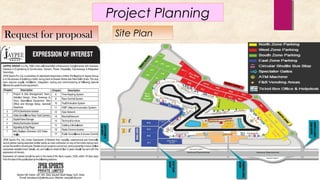
Request for proposalRequest for proposal Site Plan
Project Planning
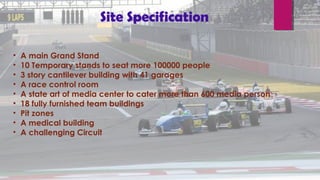
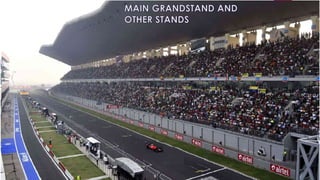
• A main Grand Stand
• 10 Temporary stands to seat more 100000 people
• 3 story cantilever building with 41 garages
• A race control room
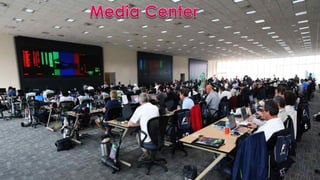
• A state art of media center to cater more than 600 media person
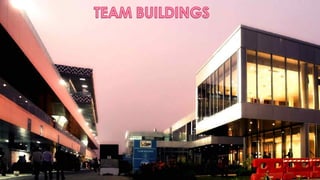
• 18 fully furnished team buildings
• Pit zones
• A medical building
• A challenging Circuit
Site Specification
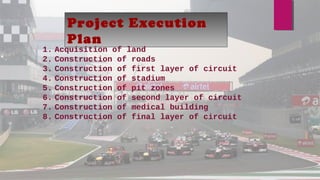
Project Execution
Plan
1. Acquisition of land
2. Construction of roads
3. Construction of first layer of circuit
4. Construction of stadium
5. Construction of pit zones
6. Construction of second layer of circuit
7. Construction of medical building
8. Construction of final layer of circuit
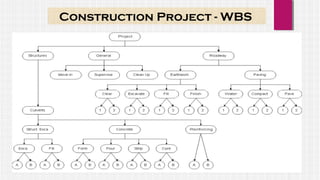
Construction Project - WBS
Work process
In October 2009 Earthwork was started
to build the track
Earth to a layer of 25 cm were compacted to a degree of
97% to make an embankment which will not sink
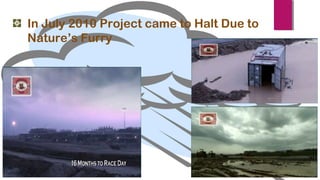
In July 2010 Project came to Halt Due to
Nature’s Furry
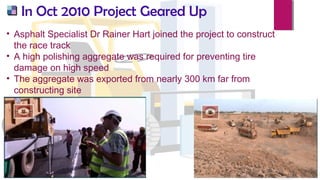
In Oct 2010 Project Geared Up
• Asphalt Specialist Dr Rainer Hart joined the project to construct
the race track
• A high polishing aggregate was required for preventing tire
damage on high speed
• The aggregate was exported from nearly 300 km far from
constructing site
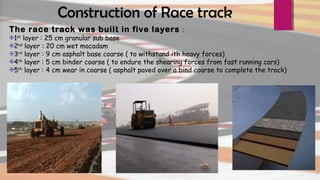
Construction of Race track
The race track was built in five layers :
1st
layer : 25 cm granular sub base
2nd
layer : 20 cm wet macadam
3rd
layer : 9 cm asphalt base coarse ( to withstand ith heavy forces)
4th
layer : 5 cm binder coarse ( to endure the shearing forces from fast running cars)
5th
layer : 4 cm wear in coarse ( asphalt paved over a bind coarse to complete the track)
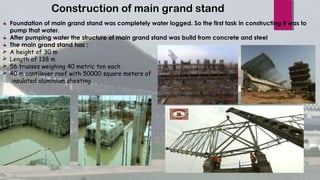
Construction of main grand stand
Foundation of main grand stand was completely water logged. So the first task in constructing it was to
pump that water.
After pumping water the structure of main grand stand was build from concrete and steel
The main grand stand has :
 A height of 30 m
 Length of 138 m
 56 trusses weighing 40 metric ton each
 40 m cantilever roof with 50000 square meters of
insulated aluminium sheeting
Aluminium sheets were chosen for roofing the main
grand stand due to its durability flexibility and
light weight.
50000 square meter aluminium sheets of 0.9 cm
thickness and 55 m length were used for roofing
the main grand stand.
150 km of fiber optical cables and 450 km of data and electric cables were spread beneath
the track connecting various hi-tech equipment to control room.
This includes :
 Real time video surveillance of race track
 Digital signalling system
 Electronic time keeping system
 50 race track cameras
 33 marshal post
 32 digiflags
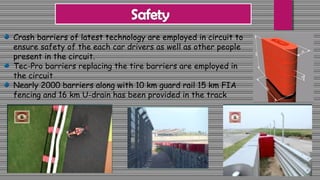
Crash barriers of latest technology are employed in circuit to
ensure safety of the each car drivers as well as other people
present in the circuit.
Tec-Pro barriers replacing the tire barriers are employed in
the circuit
Nearly 2000 barriers along with 10 km guard rail 15 km FIA
fencing and 16 km U-drain has been provided in the track
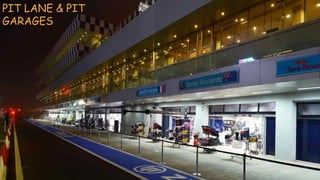
PIT LANE & PIT
GARAGES
Get ready for virtual tour !!!
Buddh international circuit

Buddh international circuit

  • 1.
    BUDDH INTERNATIONAL CIRCUIT PRESENTEDBY: CHANDRADARSHAN JAIN M.PHARM + MBA (P’CEUTICS) P007
  • 2.
    About Project India’s RacingArena Jaypee International Circuit Location : Greater Noida ,UP, India Capacity : 1,20,000 Owner : Jaypee Group Operator : Jaypee Sports International Limited Start : 2007 Opened : Oct. 2011 Construction cost : INR 20 billion Architect : Hermann Tike Project Manager : Sameer Gaur Area : 2,500 acres
  • 3.
    Circuit : FactSheet • Length: 5.14km • Turns: 16 • Highest point of elevation: 14m • Width of the track: Between 18m – 20m • • Top speeds on the circuit: About • 320km/h, for an F1 car • Total seating capacity: About 120,000 • Distance from New Delhi: 40km approx. • Surface : Asphalt concrete with Graywacke
  • 4.
    Facts about Construction Inconstructing Circuit 4 million cubic ton of Earth were removed 325000 tons of asphalt were used 130000 metric cube of concrete were used 450 km of fiber optic cables were used
  • 5.
    Project Objectives  Bringthe F1 closerto the fans and the indian masses  Make india a multi-sport country  Boost to the hotel and tourism industry  Lift to the country profile  Potential to generate huge revenues and employment opportunities
  • 6.
    Stake holder • IOA (Indian Olympic Association ) • FIA (Federation Internationale de l’Automobile ) • FOA (Formula One Administration ) • JPSK Sports Pvt Ltd • Participating Teams • Fans
  • 7.
    Tilke GmbH ofAachen, Germany (Design partner) L & T (General contractor) Kimley-Horn & Associates (Transportation and urban planning ) Walter P Moore & Associates (Traffic planning and transportation engineering) Terracon Consultants (Geotechnical engineering & material quality) Carlson Brigance & Doering inc. (Surveying & infrastructure expertise) Miro Rivera Architects (Specific designs for structures & facilities) Siemens (Race control management system) Teracom + BSNL (Modems) Airtel (Communication) BHEL (Power) BEL (Surveillance equipment) ESPN-STAR (Telecasting)
  • 8.
    Request for proposalRequestfor proposal Site Plan Project Planning
  • 9.
    • A mainGrand Stand • 10 Temporary stands to seat more 100000 people • 3 story cantilever building with 41 garages • A race control room • A state art of media center to cater more than 600 media person • 18 fully furnished team buildings • Pit zones • A medical building • A challenging Circuit Site Specification
  • 10.
    Project Execution Plan 1. Acquisitionof land 2. Construction of roads 3. Construction of first layer of circuit 4. Construction of stadium 5. Construction of pit zones 6. Construction of second layer of circuit 7. Construction of medical building 8. Construction of final layer of circuit
  • 11.
  • 12.
    Work process In October2009 Earthwork was started to build the track Earth to a layer of 25 cm were compacted to a degree of 97% to make an embankment which will not sink
  • 13.
    In July 2010Project came to Halt Due to Nature’s Furry
  • 14.
    In Oct 2010Project Geared Up • Asphalt Specialist Dr Rainer Hart joined the project to construct the race track • A high polishing aggregate was required for preventing tire damage on high speed • The aggregate was exported from nearly 300 km far from constructing site
  • 15.
    Construction of Racetrack The race track was built in five layers : 1st layer : 25 cm granular sub base 2nd layer : 20 cm wet macadam 3rd layer : 9 cm asphalt base coarse ( to withstand ith heavy forces) 4th layer : 5 cm binder coarse ( to endure the shearing forces from fast running cars) 5th layer : 4 cm wear in coarse ( asphalt paved over a bind coarse to complete the track)
  • 16.
    Construction of maingrand stand Foundation of main grand stand was completely water logged. So the first task in constructing it was to pump that water. After pumping water the structure of main grand stand was build from concrete and steel The main grand stand has :  A height of 30 m  Length of 138 m  56 trusses weighing 40 metric ton each  40 m cantilever roof with 50000 square meters of insulated aluminium sheeting
  • 17.
    Aluminium sheets werechosen for roofing the main grand stand due to its durability flexibility and light weight. 50000 square meter aluminium sheets of 0.9 cm thickness and 55 m length were used for roofing the main grand stand.
  • 18.
    150 km offiber optical cables and 450 km of data and electric cables were spread beneath the track connecting various hi-tech equipment to control room. This includes :  Real time video surveillance of race track  Digital signalling system  Electronic time keeping system  50 race track cameras  33 marshal post  32 digiflags
  • 19.
    Crash barriers oflatest technology are employed in circuit to ensure safety of the each car drivers as well as other people present in the circuit. Tec-Pro barriers replacing the tire barriers are employed in the circuit Nearly 2000 barriers along with 10 km guard rail 15 km FIA fencing and 16 km U-drain has been provided in the track
  • 21.
    PIT LANE &PIT GARAGES
  • 27.
    Get ready forvirtual tour !!!