Breech presentation
By
Mirza Dilshad Alam
HA(CTEVT)
Definition
• The presentation in which the fetus lie is longitudinal and the
podalic pole presents at the pelvic brim. It is the commonest
malpresentation
Classification of breech
• Complete breech
• Incomplete breech
• a) Frank breech
• b) Footling presentation
• c) Knee presentation
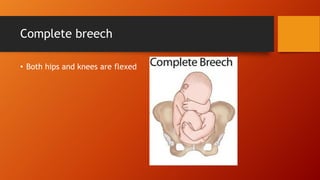
Complete breech
• Both hips and knees are flexed
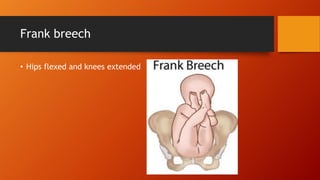
Frank breech
• Hips flexed and knees extended
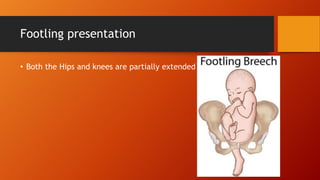
Footling presentation
• Both the Hips and knees are partially extended
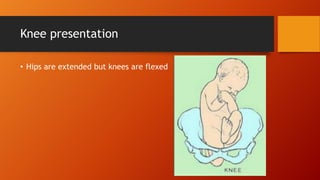
Knee presentation
• Hips are extended but knees are flexed
Factor responsible for breech presentation
(causes)
• Prematurity:-commonest cause
• Factors preventing spontaneous version:(a) Breech with extended legs, (b)
Twins,
• (c) Oligohydramnios, (d) Congenital malformation of the uterus such as septate
or bicornuate uterus, (e) Short cord, relative or absolute, (f) Intrauterine death
of the fetus.
• Favorable adaptation: (a) Hydrocephalus—big head can be well
accommodated in the wide fundus, (b) Placenta previa, (c) Contracted pelvis,
(d) Cornu-fundal attachment of the placenta—
Undue mobility of the fetus: (a) Hydramnios, (b) Multiparae with
lax abdominal wall.
Fetal abnormality: Trisomies 13, 18, 21, anencephaly and
myotonic dystrophy due to alteration of fetal muscular tone and
mobility
Diagnosis of breech presentation
• Clinical:
• A) Per abdomen
• B) Per vaginam
• Sonography:
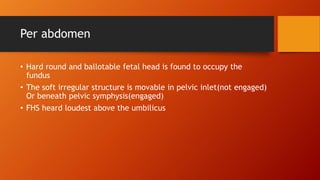
Per abdomen
• Hard round and ballotable fetal head is found to occupy the
fundus
• The soft irregular structure is movable in pelvic inlet(not engaged)
Or beneath pelvic symphysis(engaged)
• FHS heard loudest above the umbilicus
Per vaginam
• Frank breech: Both ischial tuberosities, sacrumand anus are
palpable
• Complete breech: Feet may be felt alongside the buttock
• Footling presentation: one or both feet are inferior to the buttock
• Kneel presentation: Knee is felt
Sonography
• ULTRASONOGRAPHY is most informative.
• (1) It confirms the clinical diagnosis
• (2) It can detect fetal congenital abnormality and also congenital anomalies of
the uterus.
• (3) Type of breech (complete or incomplete).
• (4) It measures biparietal diameter, gestational age and estimated weight
• of the fetus.
• (5) It also localizes the placenta.
• (6) Assessment of liquor volume (important for ECV).
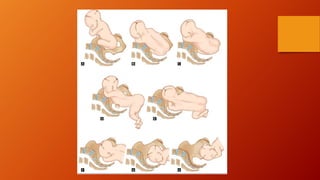
Mechanism of labor in breech presentation
• Sacro-Anterior Position: Principal movements occur at three places- Buttocks,
shoulders and head.
• Each of the three components undergo cardinal movements as those of normal
mechanism of labor
Mechanism of breech delivery video
Management
• Identification of the complicating factors related with breech
presentation
• External cephalic version
• Vaginal delivery
• Caesarean delivery
Vaginal breech deliveries
• 1.Spontaneous breech delivery:without traction or manipulation
other than infant support
• 2.Assisted breech delivery:
• delivered by the help Or extraction of the operator or various
maneuver
• 3.Breech extraction:The entire body is extracted by the operator
Thank you

Breech presentation new 1.pdf

  • 1.
  • 2.
    Definition • The presentationin which the fetus lie is longitudinal and the podalic pole presents at the pelvic brim. It is the commonest malpresentation
  • 3.
    Classification of breech •Complete breech • Incomplete breech • a) Frank breech • b) Footling presentation • c) Knee presentation
  • 4.
    Complete breech • Bothhips and knees are flexed
  • 5.
    Frank breech • Hipsflexed and knees extended
  • 6.
    Footling presentation • Boththe Hips and knees are partially extended
  • 7.
    Knee presentation • Hipsare extended but knees are flexed
  • 8.
    Factor responsible forbreech presentation (causes) • Prematurity:-commonest cause • Factors preventing spontaneous version:(a) Breech with extended legs, (b) Twins, • (c) Oligohydramnios, (d) Congenital malformation of the uterus such as septate or bicornuate uterus, (e) Short cord, relative or absolute, (f) Intrauterine death of the fetus. • Favorable adaptation: (a) Hydrocephalus—big head can be well accommodated in the wide fundus, (b) Placenta previa, (c) Contracted pelvis, (d) Cornu-fundal attachment of the placenta—
  • 9.
    Undue mobility ofthe fetus: (a) Hydramnios, (b) Multiparae with lax abdominal wall. Fetal abnormality: Trisomies 13, 18, 21, anencephaly and myotonic dystrophy due to alteration of fetal muscular tone and mobility
  • 10.
    Diagnosis of breechpresentation • Clinical: • A) Per abdomen • B) Per vaginam • Sonography:
  • 11.
    Per abdomen • Hardround and ballotable fetal head is found to occupy the fundus • The soft irregular structure is movable in pelvic inlet(not engaged) Or beneath pelvic symphysis(engaged) • FHS heard loudest above the umbilicus
  • 12.
    Per vaginam • Frankbreech: Both ischial tuberosities, sacrumand anus are palpable • Complete breech: Feet may be felt alongside the buttock • Footling presentation: one or both feet are inferior to the buttock • Kneel presentation: Knee is felt
  • 13.
    Sonography • ULTRASONOGRAPHY ismost informative. • (1) It confirms the clinical diagnosis • (2) It can detect fetal congenital abnormality and also congenital anomalies of the uterus. • (3) Type of breech (complete or incomplete). • (4) It measures biparietal diameter, gestational age and estimated weight • of the fetus. • (5) It also localizes the placenta. • (6) Assessment of liquor volume (important for ECV).
  • 14.
    Mechanism of laborin breech presentation • Sacro-Anterior Position: Principal movements occur at three places- Buttocks, shoulders and head. • Each of the three components undergo cardinal movements as those of normal mechanism of labor
  • 16.
    Mechanism of breechdelivery video
  • 17.
    Management • Identification ofthe complicating factors related with breech presentation • External cephalic version • Vaginal delivery • Caesarean delivery
  • 18.
    Vaginal breech deliveries •1.Spontaneous breech delivery:without traction or manipulation other than infant support • 2.Assisted breech delivery: • delivered by the help Or extraction of the operator or various maneuver • 3.Breech extraction:The entire body is extracted by the operator
  • 20.