
Brand
communication
Presented By
 A-13 Niral Patel
 A-14 Tejendra Gohil
 A-15 Upendra Patel
 A-16 Dushyant Vagadiya
 A-17 Sumeet Shah
 A-62 Noor Zaman Muqbel
AGENDA
Definition
Objectives
Process
Strategy
Brand Awareness
Brand Elements
Types
Digital Brand Management Model
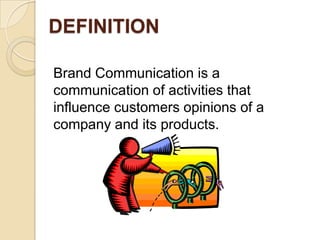
DEFINITION
Brand Communication is a
communication of activities that
influence customers opinions of a
company and its products.
 Consumers are constantly meeting the
brand
 Through advertising
 With editorial mentions
 By sponsorships
 On the point of purchase materials
 Over the supermarket shelves
 They often meet our brands, but how
often do they notice them?
Objectives
 The message clearly
 Confirms your credibility
 Connects your target prospects
emotionally
 Motivates the buyer Delivers
 Concretes User Loyalty
Process Of Brand
Communication
 Step 1: Start with understanding the
role of brand in your business.
 Step 2: Understand the factors that
contribute to brand value.
 Step 3: Understand whom you need
to reach.
 Step 4: Frame your BIG idea.
 Step 5: Understand how far you need
to shift perceptions in order to own the
big idea.
Process Cont…
 Step 6: Build the messages to shift
perceptions.
 Step 7: Understand the role of each
medium in making the shift and
sustaining momentum.
 Step 8: Determine the optimum media
allocation.
 Step 9: Measure results.
 Step 10:Revisit Step 5…and repeat
the process again…and again…
Strategy of
Brand Communication
 Purpose and Overview
 Structure and Goals
Brand Awareness
 Brand awareness refers to customers'
ability to recall and recognize the
brand under different conditions and
link to the brand name, logo, jingles
and so on to certain associations in
memory.
 It consists of brand recognition and
brand recall.
 There are various levels of brand
awareness that require different levels and
combinations of brand recognition and
recall.
 Top-of-Mind awareness occurs when
your brand is what pops into a consumers
mind when asked to name brands in a
product category.
Eg : When any person thinks about
chocolates the first brand coming in mind
is Cadbury
 Aided Awareness occurs when a
consumer is shown or reads a list of
brands, and expresses familiarity with
your brand only after they hear or see it
as a type of memory aide.
 Strategic Awareness occurs when your
brand is not only top-of-mind to
consumers, but also has distinctive
qualities that stick out to consumers as
making it better than the other brands in
your market.
Brand Elements
 Name : The word or words used to identify
a company, product, service, or concept.
 Logo : The visual trademark that identifies
the brand.
 Tagline or Catchphrase : "The Quicker
Picker Upper" is associated with Bounty
paper towels.
 Colors : Owens-Corning is the only brand
of fiberglass insulation that can be pink.
 Sounds : A unique tune or set of notes
can denote a brand. NBC's chimes are a
famous example.
 Movements : Lamborghini has
trademarked the upward motion of its car
doors.
 Graphics : The dynamic ribbon is a
trademarked part of Coca-Cola's brand.
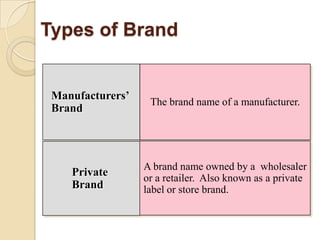
Types of Brand
Manufacturers’
Brand
Private
Brand
The brand name of a manufacturer.
A brand name owned by a wholesaler
or a retailer. Also known as a private
label or store brand.
Manufacturer brands
Manufacturer brands are created by
producers and bear their chosen brand
name.
The producer is responsible for marketing
the brand.
The brand is owned by the producer.
Advantages of Manufacturers’
Brands
 Develop customer loyalty
 Attract new customers
 Enhance prestige
 Ensure dealer loyalty
Private Label brands
Own-label brands are created and owned
by businesses that operate in the
distribution channel – often referred to as
“distributors”.
Often these distributors are retailers, but
not exclusively.
 Sometimes the retailer’s entire product
range will be own-label.
Advantages of Private Brands
 Earn higher profits
 Less pressure to mark down prices
 Ties customer to wholesaler or retailer
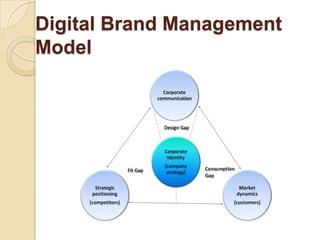
Digital Brand Management
Model
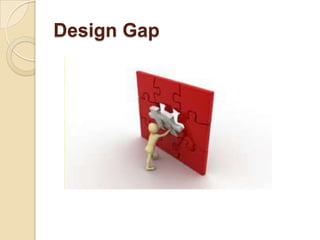
Design Gap
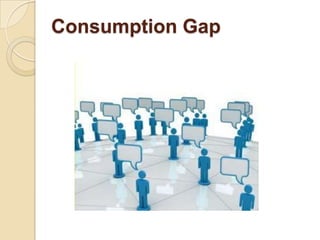
Consumption Gap
Fit Gap
Brand communication

Brand communication

  • 1.
  • 2.
    Presented By  A-13Niral Patel  A-14 Tejendra Gohil  A-15 Upendra Patel  A-16 Dushyant Vagadiya  A-17 Sumeet Shah  A-62 Noor Zaman Muqbel
  • 3.
  • 4.
    DEFINITION Brand Communication isa communication of activities that influence customers opinions of a company and its products.
  • 5.
     Consumers areconstantly meeting the brand  Through advertising  With editorial mentions  By sponsorships  On the point of purchase materials  Over the supermarket shelves  They often meet our brands, but how often do they notice them?
  • 6.
    Objectives  The messageclearly  Confirms your credibility  Connects your target prospects emotionally  Motivates the buyer Delivers  Concretes User Loyalty
  • 7.
    Process Of Brand Communication Step 1: Start with understanding the role of brand in your business.  Step 2: Understand the factors that contribute to brand value.  Step 3: Understand whom you need to reach.  Step 4: Frame your BIG idea.  Step 5: Understand how far you need to shift perceptions in order to own the big idea.
  • 8.
    Process Cont…  Step6: Build the messages to shift perceptions.  Step 7: Understand the role of each medium in making the shift and sustaining momentum.  Step 8: Determine the optimum media allocation.  Step 9: Measure results.  Step 10:Revisit Step 5…and repeat the process again…and again…
  • 9.
    Strategy of Brand Communication Purpose and Overview  Structure and Goals
  • 10.
    Brand Awareness  Brandawareness refers to customers' ability to recall and recognize the brand under different conditions and link to the brand name, logo, jingles and so on to certain associations in memory.  It consists of brand recognition and brand recall.
  • 11.
     There arevarious levels of brand awareness that require different levels and combinations of brand recognition and recall.  Top-of-Mind awareness occurs when your brand is what pops into a consumers mind when asked to name brands in a product category.
  • 12.
    Eg : Whenany person thinks about chocolates the first brand coming in mind is Cadbury
  • 13.
     Aided Awarenessoccurs when a consumer is shown or reads a list of brands, and expresses familiarity with your brand only after they hear or see it as a type of memory aide.
  • 14.
     Strategic Awarenessoccurs when your brand is not only top-of-mind to consumers, but also has distinctive qualities that stick out to consumers as making it better than the other brands in your market.
  • 15.
    Brand Elements  Name: The word or words used to identify a company, product, service, or concept.  Logo : The visual trademark that identifies the brand.  Tagline or Catchphrase : "The Quicker Picker Upper" is associated with Bounty paper towels.
  • 16.
     Colors :Owens-Corning is the only brand of fiberglass insulation that can be pink.  Sounds : A unique tune or set of notes can denote a brand. NBC's chimes are a famous example.  Movements : Lamborghini has trademarked the upward motion of its car doors.  Graphics : The dynamic ribbon is a trademarked part of Coca-Cola's brand.
  • 17.
    Types of Brand Manufacturers’ Brand Private Brand Thebrand name of a manufacturer. A brand name owned by a wholesaler or a retailer. Also known as a private label or store brand.
  • 18.
    Manufacturer brands Manufacturer brandsare created by producers and bear their chosen brand name. The producer is responsible for marketing the brand. The brand is owned by the producer.
  • 19.
    Advantages of Manufacturers’ Brands Develop customer loyalty  Attract new customers  Enhance prestige  Ensure dealer loyalty
  • 20.
    Private Label brands Own-labelbrands are created and owned by businesses that operate in the distribution channel – often referred to as “distributors”. Often these distributors are retailers, but not exclusively.  Sometimes the retailer’s entire product range will be own-label.
  • 21.
    Advantages of PrivateBrands  Earn higher profits  Less pressure to mark down prices  Ties customer to wholesaler or retailer
  • 22.
  • 23.
  • 24.
  • 25.