Manthan topic :- Healing touch
Healing Touch: Universalizing access to quality
primary healthcare
Team Name :- Brain Bugs
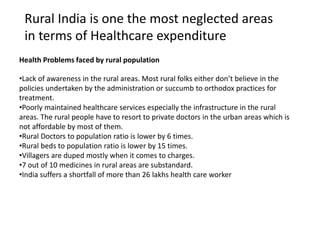
•Lack of awareness in the rural areas. Most rural folks either don’t believe in the
policies undertaken by the administration or succumb to orthodox practices for
treatment.
•Poorly maintained healthcare services especially the infrastructure in the rural
areas. The rural people have to resort to private doctors in the urban areas which is
not affordable by most of them.
•Rural Doctors to population ratio is lower by 6 times.
•Rural beds to population ratio is lower by 15 times.
•Villagers are duped mostly when it comes to charges.
•7 out of 10 medicines in rural areas are substandard.
•India suffers a shortfall of more than 26 lakhs health care worker
Health Problems faced by rural population
Rural India is one the most neglected areas
in terms of Healthcare expenditure
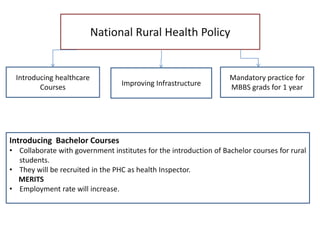
National Rural Health Policy
Introducing healthcare
Courses
Improving Infrastructure
Mandatory practice for
MBBS grads for 1 year
Introducing Bachelor Courses
• Collaborate with government institutes for the introduction of Bachelor courses for rural
students.
• They will be recruited in the PHC as health Inspector.
MERITS
• Employment rate will increase.
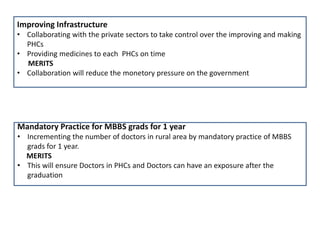
Improving Infrastructure
• Collaborating with the private sectors to take control over the improving and making
PHCs
• Providing medicines to each PHCs on time
MERITS
• Collaboration will reduce the monetory pressure on the government
Mandatory Practice for MBBS grads for 1 year
• Incrementing the number of doctors in rural area by mandatory practice of MBBS
grads for 1 year.
MERITS
• This will ensure Doctors in PHCs and Doctors can have an exposure after the
graduation
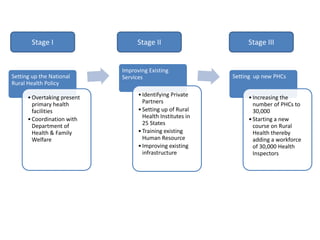
Setting up the National
Rural Health Policy
•Overtaking present
primary health
facilities
•Coordination with
Department of
Health & Family
Welfare
Improving Existing
Services
•Identifying Private
Partners
•Setting up of Rural
Health Institutes in
25 States
•Training existing
Human Resource
•Improving existing
infrastructure
Setting up new PHCs
•Increasing the
number of PHCs to
30,000
•Starting a new
course on Rural
Health thereby
adding a workforce
of 30,000 Health
Inspectors
Stage I Stage II Stage III
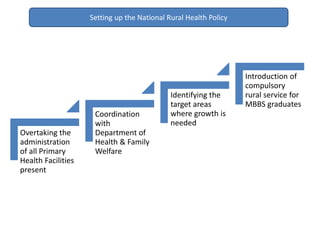
Overtaking the
administration
of all Primary
Health Facilities
present
Coordination
with
Department of
Health & Family
Welfare
Introduction of
compulsory
rural service for
MBBS graduates
Identifying the
target areas
where growth is
needed
Setting up the National Rural Health Policy
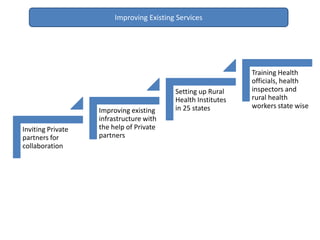
Inviting Private
partners for
collaboration
Improving existing
infrastructure with
the help of Private
partners
Setting up Rural
Health Institutes
in 25 states
Training Health
officials, health
inspectors and
rural health
workers state wise
Improving Existing Services
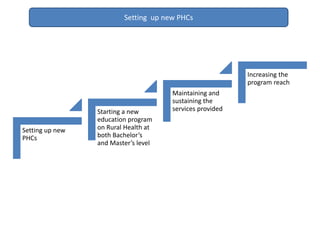
Setting up new
PHCs
Starting a new
education program
on Rural Health at
both Bachelor’s
and Master’s level
Maintaining and
sustaining the
services provided
Increasing the
program reach
Setting up new PHCs
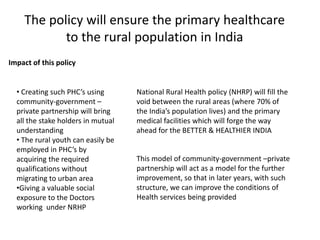
The policy will ensure the primary healthcare
to the rural population in India
Impact of this policy
• Creating such PHC’s using
community-government –
private partnership will bring
all the stake holders in mutual
understanding
• The rural youth can easily be
employed in PHC’s by
acquiring the required
qualifications without
migrating to urban area
•Giving a valuable social
exposure to the Doctors
working under NRHP
National Rural Health policy (NHRP) will fill the
void between the rural areas (where 70% of
the India’s population lives) and the primary
medical facilities which will forge the way
ahead for the BETTER & HEALTHIER INDIA
This model of community-government –private
partnership will act as a model for the further
improvement, so that in later years, with such
structure, we can improve the conditions of
Health services being provided
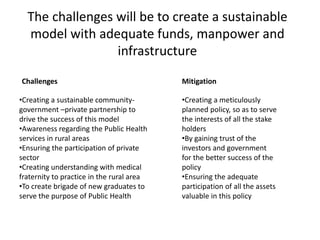
The challenges will be to create a sustainable
model with adequate funds, manpower and
infrastructure
•Creating a sustainable community-
government –private partnership to
drive the success of this model
•Awareness regarding the Public Health
services in rural areas
•Ensuring the participation of private
sector
•Creating understanding with medical
fraternity to practice in the rural area
•To create brigade of new graduates to
serve the purpose of Public Health
Challenges Mitigation
•Creating a meticulously
planned policy, so as to serve
the interests of all the stake
holders
•By gaining trust of the
investors and government
for the better success of the
policy
•Ensuring the adequate
participation of all the assets
valuable in this policy

BrainBugs

  • 1.
    Manthan topic :-Healing touch Healing Touch: Universalizing access to quality primary healthcare Team Name :- Brain Bugs
  • 2.
    •Lack of awarenessin the rural areas. Most rural folks either don’t believe in the policies undertaken by the administration or succumb to orthodox practices for treatment. •Poorly maintained healthcare services especially the infrastructure in the rural areas. The rural people have to resort to private doctors in the urban areas which is not affordable by most of them. •Rural Doctors to population ratio is lower by 6 times. •Rural beds to population ratio is lower by 15 times. •Villagers are duped mostly when it comes to charges. •7 out of 10 medicines in rural areas are substandard. •India suffers a shortfall of more than 26 lakhs health care worker Health Problems faced by rural population Rural India is one the most neglected areas in terms of Healthcare expenditure
  • 3.
    National Rural HealthPolicy Introducing healthcare Courses Improving Infrastructure Mandatory practice for MBBS grads for 1 year Introducing Bachelor Courses • Collaborate with government institutes for the introduction of Bachelor courses for rural students. • They will be recruited in the PHC as health Inspector. MERITS • Employment rate will increase.
  • 4.
    Improving Infrastructure • Collaboratingwith the private sectors to take control over the improving and making PHCs • Providing medicines to each PHCs on time MERITS • Collaboration will reduce the monetory pressure on the government Mandatory Practice for MBBS grads for 1 year • Incrementing the number of doctors in rural area by mandatory practice of MBBS grads for 1 year. MERITS • This will ensure Doctors in PHCs and Doctors can have an exposure after the graduation
  • 5.
    Setting up theNational Rural Health Policy •Overtaking present primary health facilities •Coordination with Department of Health & Family Welfare Improving Existing Services •Identifying Private Partners •Setting up of Rural Health Institutes in 25 States •Training existing Human Resource •Improving existing infrastructure Setting up new PHCs •Increasing the number of PHCs to 30,000 •Starting a new course on Rural Health thereby adding a workforce of 30,000 Health Inspectors Stage I Stage II Stage III
  • 6.
    Overtaking the administration of allPrimary Health Facilities present Coordination with Department of Health & Family Welfare Introduction of compulsory rural service for MBBS graduates Identifying the target areas where growth is needed Setting up the National Rural Health Policy
  • 7.
    Inviting Private partners for collaboration Improvingexisting infrastructure with the help of Private partners Setting up Rural Health Institutes in 25 states Training Health officials, health inspectors and rural health workers state wise Improving Existing Services
  • 8.
    Setting up new PHCs Startinga new education program on Rural Health at both Bachelor’s and Master’s level Maintaining and sustaining the services provided Increasing the program reach Setting up new PHCs
  • 9.
    The policy willensure the primary healthcare to the rural population in India Impact of this policy • Creating such PHC’s using community-government – private partnership will bring all the stake holders in mutual understanding • The rural youth can easily be employed in PHC’s by acquiring the required qualifications without migrating to urban area •Giving a valuable social exposure to the Doctors working under NRHP National Rural Health policy (NHRP) will fill the void between the rural areas (where 70% of the India’s population lives) and the primary medical facilities which will forge the way ahead for the BETTER & HEALTHIER INDIA This model of community-government –private partnership will act as a model for the further improvement, so that in later years, with such structure, we can improve the conditions of Health services being provided
  • 10.
    The challenges willbe to create a sustainable model with adequate funds, manpower and infrastructure •Creating a sustainable community- government –private partnership to drive the success of this model •Awareness regarding the Public Health services in rural areas •Ensuring the participation of private sector •Creating understanding with medical fraternity to practice in the rural area •To create brigade of new graduates to serve the purpose of Public Health Challenges Mitigation •Creating a meticulously planned policy, so as to serve the interests of all the stake holders •By gaining trust of the investors and government for the better success of the policy •Ensuring the adequate participation of all the assets valuable in this policy