Grassroots Advocacy – Who, Me?


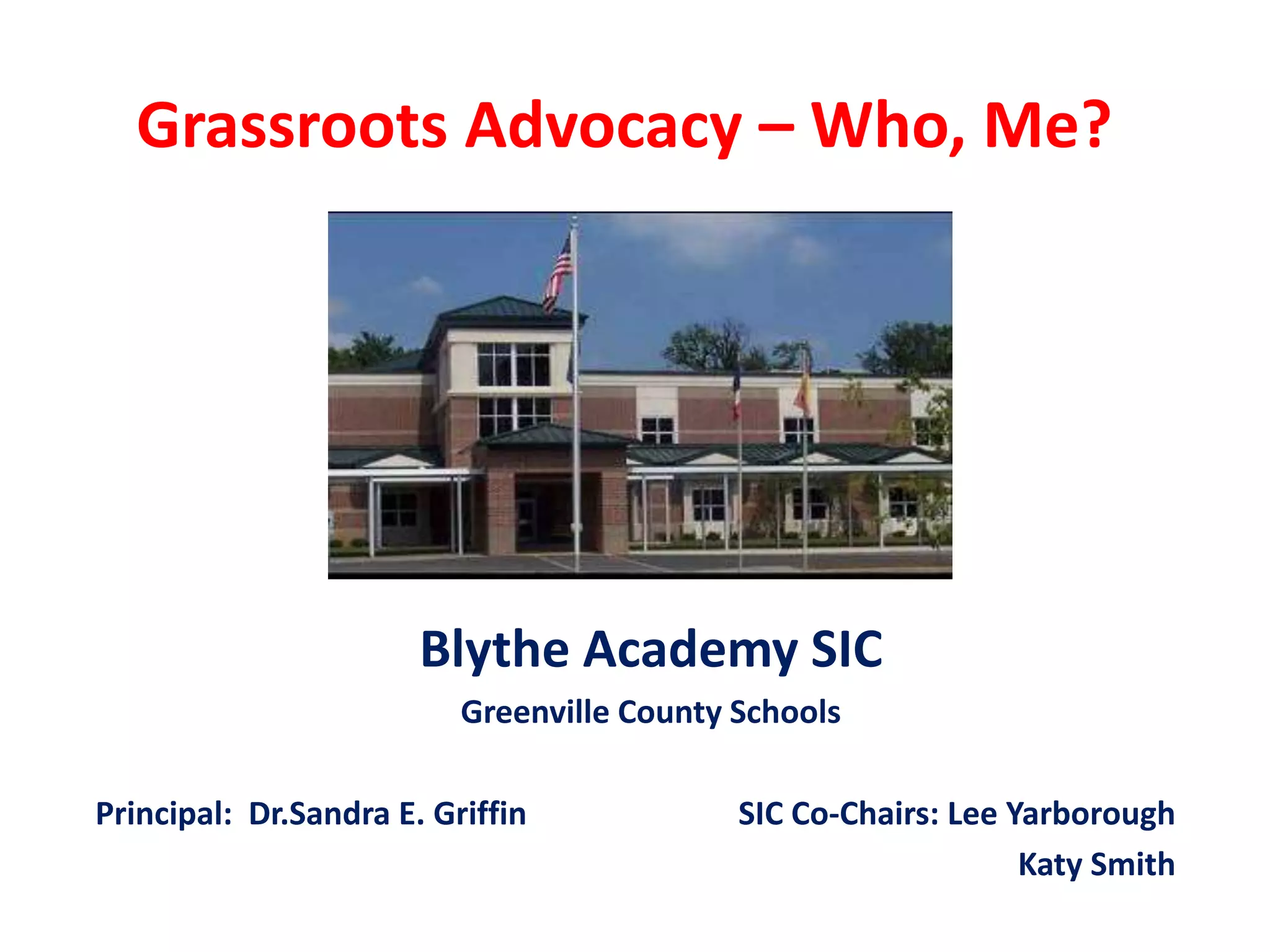
                       Blythe Academy SIC
                          Greenville County Schools

Principal: Dr.Sandra E. Griffin             SIC Co-Chairs: Lee Yarborough
                                                                Katy Smith
The Greenville News
                      Why Advocacy?                           December 18, 2010
   Ron Barnett
• Loss of fundingeducation ideas to ease pain of funding cuts
        Lawmakers offer
                             from state budget
• Lack of understanding and support among
  From a bill that would give families a $2,000 tax credit to pay for tutoring to one
  legislators
  that would require schools to teach children to swim, lawmakers will have plenty
• of education-related measures to mull over when they go into session next
  month. and discomfort among parents and potential
  Fear
  advocates
• Opportunity at Blythe Academy
    – Diversity
    – Example of public school choice
    – County-wide
Blythe Academy SIC - Advocacy
• Relationship-building
   – Special events for City Council, School Board, and
     other state officials
   – Tours for elected officials
   – Meetings with elected officials
• Education and information
   – Training by Public Education Partners
   – Training by our SIC and PTA for community
   – Regular newsletter and e-blast updates
Blythe Academy SIC - Advocacy
• Grassroots efforts
   – Phone and email tree
   – Letter-writing
• Public expressions
   – Activism in ROAR
   – Op-ed in newspaper
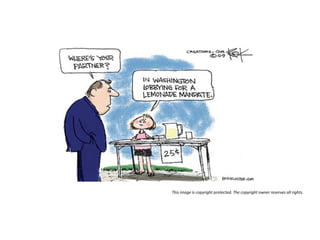
This image is copyright protected. The copyright owner reserves all rights.
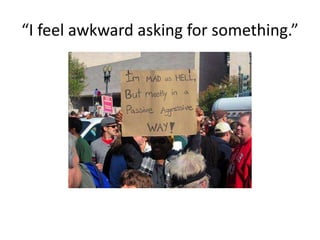
“I feel awkward asking for something.”
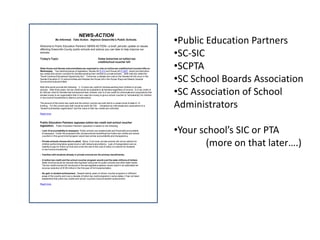
“I don’t know enough about the issues.”
NEWS-ACTION
                Be Informed. Take Action. Improve Greenville’s Public Schools.

Welcome to Public Education Partners' NEWS-ACTION—a brief, periodic update on issues
                                                                                                                          •Public Education Partners
                                                                                                                          •SC-SIC
affecting Greenville County public schools and actions you can take to help improve our
schools.

Today's Topic:                                                  Votes tomorrow on tuition tax


                                                                                                                          •SCPTA
                                                                credit/school voucher bill

State House and Senate subcommittees are expected to vote on tuition tax credit/school voucher bills on
Wednesday. Two identical pieces of legislation, Senate bill S.414 and House bill H.3407, would provide tuition


                                                                                                                          •SC School Boards Association
tax credits and school vouchers for families sending their children to private schools. Both bills are called the
"South Carolina Educational Opportunity Act." Tomorrow, a debate and vote on the Senate bill will occur in the
Senate Education K-12 subcommittee and likewise the House bill in the House Ways and Means General
Government subcommittee.


                                                                                                                          •SC Association of School
Both bills would provide the following: 1) A tuition tax credit for families sending their children to private
schools. After three years, the tax credit would be available to all families regardless of income; 2) A tax credit of
$1,000 per child for families that homeschool their children; and 3) A tax credit for individuals and corporations that
donate money to an organization that in turn uses the money to give a school voucher (a "scholarship') for children
in low-income households to attend a private school.

The amount of the tuition tax credit and the school voucher are both tied to a certain level of state K-12
funding. For the current year both would be worth $2,720. Donations by individuals and corporations to a
"student scholarship organization" and the value of their tax credits are unlimited.
                                                                                                                          Administrators
Read more.


Public Education Partners opposes tuition tax credit and school voucher


                                                                                                                          •Your school’s SIC or PTA
legislation. Public Education Partners' opposition is based on the following:
- Lack of accountability to taxpayers. Public schools are academically and financially accountable
  to taxpayers. Under the proposed bills, private schools benefiting from tuition tax credits and school
  vouchers in this government program would lack similar accountability and transparency.

- Private schools choose who to admit. Many, if not most, private schools will not be options for
  children performing below grade level or with behavioral problems. Lack of transportation and an
  inability to pay for tuition up front and cover the rest of the cost of tuition is a barrier for students
  in low-income households.
                                                                                                                                  (more on that later….)
- Families with students already in private schools are the primary beneficiaries.

- A tuition tax credit and the school voucher program would cost the state millions of dollars.
  State revenue would be reduced leaving fewer resources for public schools and other state needs.
  The tax credit/voucher bill introduced in the last legislative session would result in an estimated net
  revenue reduction of $128 million in the first year of full implementation.

- No gain in student achievement. Despite twenty years of school voucher programs in different
  areas of the country and over a decade of tuition tax credit programs in some states, it has not been
  established that tuition tax credits and school vouchers improve student achievement.

Read more.
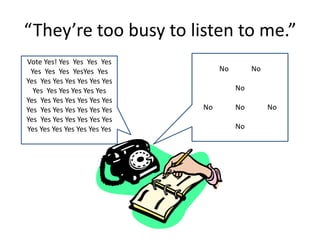
“They’re too busy to listen to me.”
Vote Yes! Yes Yes Yes Yes
 Yes Yes Yes YesYes Yes            No        No
Yes Yes Yes Yes Yes Yes Yes
  Yes Yes Yes Yes Yes Yes               No
Yes Yes Yes Yes Yes Yes Yes
Yes Yes Yes Yes Yes Yes Yes   No        No        No
Yes Yes Yes Yes Yes Yes Yes
Yes Yes Yes Yes Yes Yes Yes             No
“I don’t have enough time to do this.”
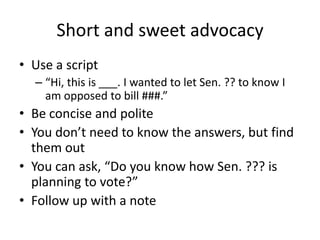
Short and sweet advocacy
• Use a script
  – “Hi, this is ___. I wanted to let Sen. ?? to know I
    am opposed to bill ###.”
• Be concise and polite
• You don’t need to know the answers, but find
  them out
• You can ask, “Do you know how Sen. ??? is
  planning to vote?”
• Follow up with a note
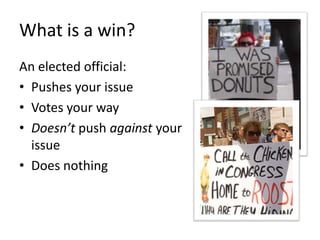
What is a win?
An elected official:
• Pushes your issue
• Votes your way
• Doesn’t push against your
  issue
• Does nothing
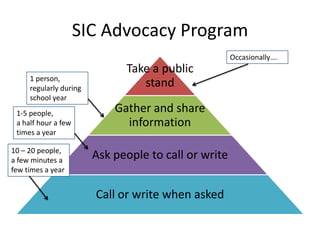
SIC Advocacy Program
                                                      Occasionally….
                              Take a public
     1 person,
     regularly during
                                 stand
     school year
 1-5 people,                Gather and share
 a half hour a few            information
 times a year

10 – 20 people,
a few minutes a
                        Ask people to call or write
few times a year


                        Call or write when asked
Starting a PTA/SIC Advocacy Program
             at your school
• Identify a point person
  – Who will follow the issues? Who will lead your
    program?
• Identify 15 or more advocates willing to make
  calls
• Conduct an advocacy training at your school
• Set up communication methods
  – News-Action, phone/email trees and follow up
Other advocacy activities…
• Letter writing campaigns
• Open house or personal
  tour of your school
• Visit with elected official
  in Columbia
• Raise parents’ awareness
   – Communicate with parents
     through
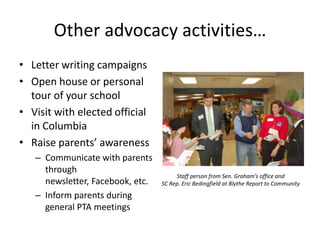
                                       Staff person from Sen. Graham’s office and
     newsletter, Facebook, etc.   SC Rep. Eric Bedingfield at Blythe Report to Community

   – Inform parents during
     general PTA meetings
Thank you!

Blythe Academy of Languages School Improvement Council 2012

  • 1.
    Grassroots Advocacy –Who, Me? Blythe Academy SIC Greenville County Schools Principal: Dr.Sandra E. Griffin SIC Co-Chairs: Lee Yarborough Katy Smith
  • 2.
    The Greenville News Why Advocacy? December 18, 2010 Ron Barnett • Loss of fundingeducation ideas to ease pain of funding cuts Lawmakers offer from state budget • Lack of understanding and support among From a bill that would give families a $2,000 tax credit to pay for tutoring to one legislators that would require schools to teach children to swim, lawmakers will have plenty • of education-related measures to mull over when they go into session next month. and discomfort among parents and potential Fear advocates • Opportunity at Blythe Academy – Diversity – Example of public school choice – County-wide
  • 3.
    Blythe Academy SIC- Advocacy • Relationship-building – Special events for City Council, School Board, and other state officials – Tours for elected officials – Meetings with elected officials • Education and information – Training by Public Education Partners – Training by our SIC and PTA for community – Regular newsletter and e-blast updates
  • 4.
    Blythe Academy SIC- Advocacy • Grassroots efforts – Phone and email tree – Letter-writing • Public expressions – Activism in ROAR – Op-ed in newspaper
  • 5.
    This image iscopyright protected. The copyright owner reserves all rights.
  • 6.
    “I feel awkwardasking for something.”
  • 7.
    “I don’t knowenough about the issues.”
  • 8.
    NEWS-ACTION Be Informed. Take Action. Improve Greenville’s Public Schools. Welcome to Public Education Partners' NEWS-ACTION—a brief, periodic update on issues •Public Education Partners •SC-SIC affecting Greenville County public schools and actions you can take to help improve our schools. Today's Topic: Votes tomorrow on tuition tax •SCPTA credit/school voucher bill State House and Senate subcommittees are expected to vote on tuition tax credit/school voucher bills on Wednesday. Two identical pieces of legislation, Senate bill S.414 and House bill H.3407, would provide tuition •SC School Boards Association tax credits and school vouchers for families sending their children to private schools. Both bills are called the "South Carolina Educational Opportunity Act." Tomorrow, a debate and vote on the Senate bill will occur in the Senate Education K-12 subcommittee and likewise the House bill in the House Ways and Means General Government subcommittee. •SC Association of School Both bills would provide the following: 1) A tuition tax credit for families sending their children to private schools. After three years, the tax credit would be available to all families regardless of income; 2) A tax credit of $1,000 per child for families that homeschool their children; and 3) A tax credit for individuals and corporations that donate money to an organization that in turn uses the money to give a school voucher (a "scholarship') for children in low-income households to attend a private school. The amount of the tuition tax credit and the school voucher are both tied to a certain level of state K-12 funding. For the current year both would be worth $2,720. Donations by individuals and corporations to a "student scholarship organization" and the value of their tax credits are unlimited. Administrators Read more. Public Education Partners opposes tuition tax credit and school voucher •Your school’s SIC or PTA legislation. Public Education Partners' opposition is based on the following: - Lack of accountability to taxpayers. Public schools are academically and financially accountable to taxpayers. Under the proposed bills, private schools benefiting from tuition tax credits and school vouchers in this government program would lack similar accountability and transparency. - Private schools choose who to admit. Many, if not most, private schools will not be options for children performing below grade level or with behavioral problems. Lack of transportation and an inability to pay for tuition up front and cover the rest of the cost of tuition is a barrier for students in low-income households. (more on that later….) - Families with students already in private schools are the primary beneficiaries. - A tuition tax credit and the school voucher program would cost the state millions of dollars. State revenue would be reduced leaving fewer resources for public schools and other state needs. The tax credit/voucher bill introduced in the last legislative session would result in an estimated net revenue reduction of $128 million in the first year of full implementation. - No gain in student achievement. Despite twenty years of school voucher programs in different areas of the country and over a decade of tuition tax credit programs in some states, it has not been established that tuition tax credits and school vouchers improve student achievement. Read more.
  • 9.
    “They’re too busyto listen to me.” Vote Yes! Yes Yes Yes Yes Yes Yes Yes YesYes Yes No No Yes Yes Yes Yes Yes Yes Yes Yes Yes Yes Yes Yes Yes No Yes Yes Yes Yes Yes Yes Yes Yes Yes Yes Yes Yes Yes Yes No No No Yes Yes Yes Yes Yes Yes Yes Yes Yes Yes Yes Yes Yes Yes No
  • 10.
    “I don’t haveenough time to do this.”
  • 11.
    Short and sweetadvocacy • Use a script – “Hi, this is ___. I wanted to let Sen. ?? to know I am opposed to bill ###.” • Be concise and polite • You don’t need to know the answers, but find them out • You can ask, “Do you know how Sen. ??? is planning to vote?” • Follow up with a note
  • 12.
    What is awin? An elected official: • Pushes your issue • Votes your way • Doesn’t push against your issue • Does nothing
  • 13.
    SIC Advocacy Program Occasionally…. Take a public 1 person, regularly during stand school year 1-5 people, Gather and share a half hour a few information times a year 10 – 20 people, a few minutes a Ask people to call or write few times a year Call or write when asked
  • 14.
    Starting a PTA/SICAdvocacy Program at your school • Identify a point person – Who will follow the issues? Who will lead your program? • Identify 15 or more advocates willing to make calls • Conduct an advocacy training at your school • Set up communication methods – News-Action, phone/email trees and follow up
  • 15.
    Other advocacy activities… •Letter writing campaigns • Open house or personal tour of your school • Visit with elected official in Columbia • Raise parents’ awareness – Communicate with parents through Staff person from Sen. Graham’s office and newsletter, Facebook, etc. SC Rep. Eric Bedingfield at Blythe Report to Community – Inform parents during general PTA meetings
  • 16.

Editor's Notes

  • #3 These headlines have become familiar to us….loss of funding for our schools and lots of ideas from elected officials about how to “fix” schoolsWe realized that bake sales and fundraisers and corporate partnerships were not enough. The biggest issue we face at Blythe, and we believe it’s true for many of you, too, is a loss of funding from the legislature and a broken tax structure.To address this, it takes our voices and activity with our elected officials.And we realized that our school is uniquely positioned to engage in advocacy. We have a diverse population, with nearly half of our students qualifying for free or reduced lunch, with another large portion coming from wealthy homes and neighborhoods. So our families could see the real need of students but have the political connections to make their voices heard.Our schools is a magnet school of choice, meaning that half of our families travel to Blythe from all over Greenville County. This means our families touch every legislative district, while a neighborhood school might be constituents of just a senator and a rep.
  • #6 Our goal today isn’t just to report to you on the activities we detailed in our Riley Award application. We want to encourage you to start an advocacy program at your school and to share with you the gospel of advocacy that we’ve been working to spread in our community.
  • #7 Many parents and volunteers are uncomfortable with advocacyBut there are many issues that are critical to our families, our childrens’ future, and to us as taxpayers and residents on which our elected officials need to hear our opinionsWe as citizens are exactly what is right about our political process!Why do we feel “funny” about advocacy?Seems rude to ask for favorsFeel impolite talking about politics with others – we don’t know where other parents stand on issues, so we don’t want to offend themWe feel we don’t fit the activist mold – want to keep our opinions to ourselvesBut…..Our elected officials WANT to hear from us. They are in office to represent us. If they don’t know what we want, they won’t know how to represent our opinions.In meetings, officials will frequently say, “The people in my district believe…..” How will they know if they don’t hear from us?
  • #8 Unfortunately, many people in our nation don’t know much about the issues.But that doesn’t stop them from getting out and advocating.So don’t worry that you don’t have a Masters in public policy from the Kennedy School of Government. Seriously – there are many people who don’t know much or who are guided by misinformation who are calling their elected officials and LOUDLY.I have been in a county council meeting before on an issue that seemed completely logical – a no-brainer to pass – but a small but vocal group of people barraged their council members with calls the day of the meeting, and it was voted down. This is heartbreaking. You can’t assume that because you don’t know enough or because the issue seems clear that your call isn’t important.
  • #9 The good news is there are ways to get informed.If you’re interested in public education, several good organizations have researched the issues for you.Hopefully, you’re signed up for Public Education Partners “News-Action” alerts, which will briefly tell you about the issue and whom to call. These are a few other good resources….And hopefully we can get our SICs and PTAs organized to let you know what you need to know and when….But additional good news is that when you get involved in advocacy, there will be no quiz on your knowledge. Which leads me to my next point…
  • #10 YOU as a constituent are the business of an elected official. He or she may disagree with you but will always listen to you.But here’s the thing – when you call, it is extremely unlikely that your senator or representative will be the person picking up the phone. Instead it will be a secretary who also serves at least one other house or senate member. And all she really wants to do is take your message about why you’re calling.You will just say, “I’m Katy Smith and I want to let Rep. So and So know that I support Bill 1234.” And she’ll say, “OK” and mark it down on a notepad.If it’s a hot issue, she’ll be recording calls just like yours all day.What you don’t want to happen, though, is to have your cause on the other side of the tally sheet. If all day, she’s recording calls from your opposition, you will make little impression on your busy Representative when the secretary says, “200 people called supporting the bill and 7 people called opposed.” He’ll know exactly what his constituents think.This is why all of our calls are so important.
  • #11 On the eve of a G8 Summit - the annual meeting of the leaders of the world’s eight most industrialized nations that is always accompanied by raucous protests – John Stewart remarked that the summit is the world’s largest gathering of sophomore political science majors. And if you haven’t been involved in advocacy before, you may feel it is something best left to former hippies, passionate grad students without real jobs and commitments, or retirees.But your role can be very small but very critical.
  • #12 To really have an impact, those of us interested in public education need key people who can be knowledgeable and commit a lot of time to these issues AS WELL AS many people who can take about 15 minutes as issues come up – which will be every few weeks during the legislative session – to make phone calls.If you haven’t done this before, here are tips to make it easier:Use a script – write on a sheet of paper what you’d like to say and who you want to call. Check them off as you go. You can print out PEP’s News-Actions to do this.Be concise and polite. Remember the secretary I mentioned earlier? She really just wants your name and whether you’re for or against. Don’t give her a bad taste in her mouth about you and your cause.You don’t need the answers – if by some surprise chance you do reach the Sen. Or Rep and he or she asks you more, tell him how you feel and what you do know. If you don’t know, say, “I’ll find out” and do some more research, then get back to him.You don’t have to do this, but it is OK to say, “Do you know how he’s planning to vote?”Once the vote has taken place, it’s nice to follow up with an email or handwritten note to thank him if he voted supporting your position.
  • #14 We have a process that has worked at Blythe that we’d like to share with you. In fact, today we’re inviting you to join us as schools that view advocacy as central to their mission. Because if an issue comes up that is important to education and there are 70,000 students in Greenville County Schools, it doesn’t say much if just a few dozen parents call. We need to let our elected officials know we care, and that means all of our county’s PTAs and SICs need to get involved.Most people are involved in this process at this bottom level. Our PTA executive board and our SIC have been trained through meetings with Craig Stine, and when issues come up we enlist their help in making calls. This has been only twice this school year and has taken up only about 10 minutes of each person’s time. But we know that when we sound the bell, we can get about 20 phone calls to an elected official.At the next level are our PTA presidents and SIC co-chairs as well as our PTA legislative affairs chair. We all subscribe to several e-alerts on advocacy issues and touch base with each other about how best to keep our parents informed and when to sound the advocacy bell. We make sure we put our advocacy resources at the school to the best use.But it helps to have one point person whose main job it is to focus on advocacy. That way you can really map out a full strategy for the school, including newsletter articles, training for parents, and tours for elected officials.Finally, every once in a while, your school might really want to take a stand. This might not even be every school year. But it could be a petition you circulate, a letter to the editor, or a carpool visit to the capitol.
  • #15 So, to restate it, we’d like to enlist your school to join us in formalizing your advocacy efforts.First, identify a point person.Second, identify 15 or more advocates who are willing to make calls. This can’t just be a statement from you that your Exec Board would probably do it. You need this to be people who are signing on to make these calls and call you back to confirm that they’ve done it (provided they are in agreement on the issue). It can be your spouse, both of your parents, and your aunt! We just needed numbers on our side.Third, conduct an advocacy training at your school. This could be your point person having a simple discussion with your recruits and other school volunteers or better yet a training by Craig Stine.Finally, set up communication methods….
  • #17 Recognize…..Some schools already have this underway – any experiences they wish to share???Some people present may not be PTA leadership…… how can we help them enlist their school?Some people may still be uncertain….that’s OK. How can we help???Distribute materials….