The Economy Today: U.S. Labor Market

                    Keith Hall
               Senior Research Fellow
      Mercatus Center, George Mason University


                 September 27, 2012
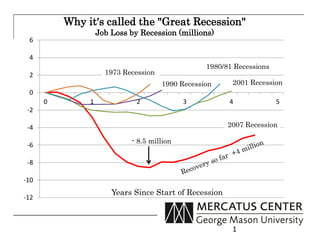
Why it's called the "Great Recession"
                   Job Loss by Recession (millions)
 6

 4
                                                  1980/81 Recessions
 2                   1973 Recession
                                      1990 Recession     2001 Recession
 0
      0        1              2             3           4              5
 -2

 -4                                                     2007 Recession

                            - 8.5 million
 -6

 -8

-10
                       Years Since Start of Recession
-12


                                                         1
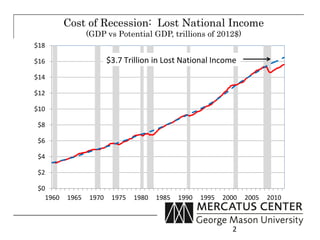
Cost of Recession: Lost National Income
                 (GDP vs Potential GDP, trillions of 2012$)
$18

$16                     $3.7 Trillion in Lost National Income
$14

$12

$10

 $8

 $6

 $4

 $2

 $0
   1960   1965   1970    1975   1980   1985   1990   1995   2000   2005   2010


                                                              2
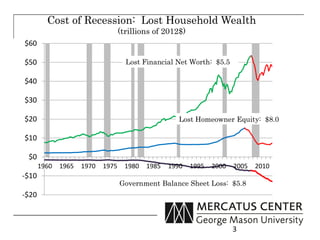
Cost of Recession: Lost Household Wealth
                                   (trillions of 2012$)
$60

$50                                  Lost Financial Net Worth: $5.5

$40

$30

$20                                                   Lost Homeowner Equity: $8.0

$10

 $0
       1960   1965   1970   1975     1980   1985   1990   1995   2000   2005   2010
-$10
                                   Government Balance Sheet Loss: $5.8
-$20


                                                                        3
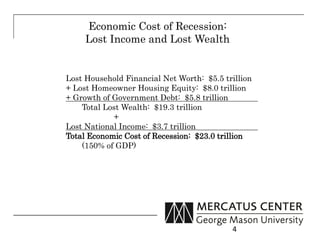
Economic Cost of Recession:
     Lost Income and Lost Wealth


Lost Household Financial Net Worth: $5.5 trillion
+ Lost Homeowner Housing Equity: $8.0 trillion
+ Growth of Government Debt: $5.8 trillion
    Total Lost Wealth: $19.3 trillion
            +
Lost National Income: $3.7 trillion
Total Economic Cost of Recession: $23.0 trillion
    (150% of GDP)


                                           4
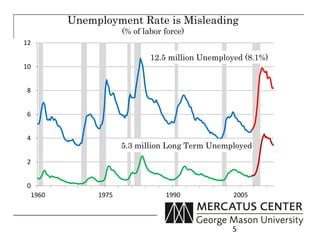
Unemployment Rate is Misleading
                    (% of labor force)
12

                            12.5 million Unemployed (8.1%)
10


8


6


4
                    5.3 million Long Term Unemployed
2


0
 1960        1975               1990             2005


                                                5
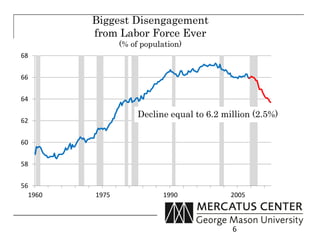
Biggest Disengagement
         from Labor Force Ever
                (% of population)
68


66


64

                     Decline equal to 6.2 million (2.5%)
62


60


58


56
  1960   1975              1990             2005


                                            6
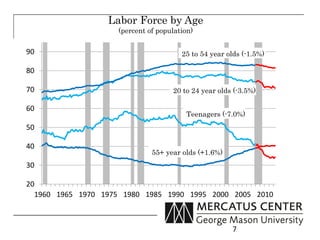
Labor Force by Age
                    (percent of population)

90                                     25 to 54 year olds (-1.5%)

80

70                                  20 to 24 year olds (-3.5%)

60
                                         Teenagers (-7.0%)
50

40
                              55+ year olds (+1.6%)
30

20
  1960 1965 1970 1975 1980 1985 1990 1995 2000 2005 2010


                                                      7
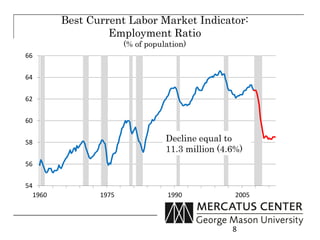
Best Current Labor Market Indicator:
                  Employment Ratio
                       (% of population)
66


64


62


60


58                                Decline equal to
                                  11.3 million (4.6%)
56


54
  1960          1975              1990             2005


                                                  8
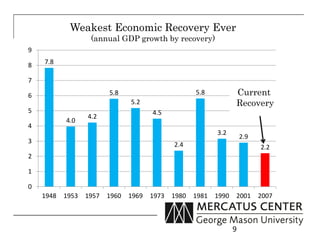
Weakest Economic Recovery Ever
                   (annual GDP growth by recovery)
9

8   7.8

7

6                        5.8                         5.8           Current
                                5.2                                Recovery
5                                      4.5
                  4.2
           4.0
4
                                                            3.2
                                                                       2.9
3
                                              2.4                            2.2
2

1

0
    1948   1953   1957   1960   1969   1973   1980   1981   1990   2001      2007


                                                                   9
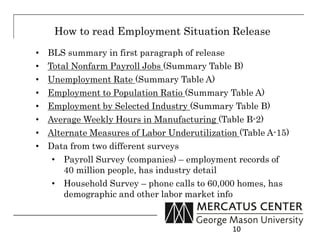
How to read Employment Situation Release
•   BLS summary in first paragraph of release
•   Total Nonfarm Payroll Jobs (Summary Table B)
•   Unemployment Rate (Summary Table A)
•   Employment to Population Ratio (Summary Table A)
•   Employment by Selected Industry (Summary Table B)
•   Average Weekly Hours in Manufacturing (Table B-2)
•   Alternate Measures of Labor Underutilization (Table A-15)
•   Data from two different surveys
     • Payroll Survey (companies) – employment records of
        40 million people, has industry detail
     • Household Survey – phone calls to 60,000 homes, has
        demographic and other labor market info


                                               10

BLS Numbers on Jobs

  • 1.
    The Economy Today:U.S. Labor Market Keith Hall Senior Research Fellow Mercatus Center, George Mason University September 27, 2012
  • 2.
    Why it's calledthe "Great Recession" Job Loss by Recession (millions) 6 4 1980/81 Recessions 2 1973 Recession 1990 Recession 2001 Recession 0 0 1 2 3 4 5 -2 -4 2007 Recession - 8.5 million -6 -8 -10 Years Since Start of Recession -12 1
  • 3.
    Cost of Recession:Lost National Income (GDP vs Potential GDP, trillions of 2012$) $18 $16 $3.7 Trillion in Lost National Income $14 $12 $10 $8 $6 $4 $2 $0 1960 1965 1970 1975 1980 1985 1990 1995 2000 2005 2010 2
  • 4.
    Cost of Recession:Lost Household Wealth (trillions of 2012$) $60 $50 Lost Financial Net Worth: $5.5 $40 $30 $20 Lost Homeowner Equity: $8.0 $10 $0 1960 1965 1970 1975 1980 1985 1990 1995 2000 2005 2010 -$10 Government Balance Sheet Loss: $5.8 -$20 3
  • 5.
    Economic Cost ofRecession: Lost Income and Lost Wealth Lost Household Financial Net Worth: $5.5 trillion + Lost Homeowner Housing Equity: $8.0 trillion + Growth of Government Debt: $5.8 trillion Total Lost Wealth: $19.3 trillion + Lost National Income: $3.7 trillion Total Economic Cost of Recession: $23.0 trillion (150% of GDP) 4
  • 6.
    Unemployment Rate isMisleading (% of labor force) 12 12.5 million Unemployed (8.1%) 10 8 6 4 5.3 million Long Term Unemployed 2 0 1960 1975 1990 2005 5
  • 7.
    Biggest Disengagement from Labor Force Ever (% of population) 68 66 64 Decline equal to 6.2 million (2.5%) 62 60 58 56 1960 1975 1990 2005 6
  • 8.
    Labor Force byAge (percent of population) 90 25 to 54 year olds (-1.5%) 80 70 20 to 24 year olds (-3.5%) 60 Teenagers (-7.0%) 50 40 55+ year olds (+1.6%) 30 20 1960 1965 1970 1975 1980 1985 1990 1995 2000 2005 2010 7
  • 9.
    Best Current LaborMarket Indicator: Employment Ratio (% of population) 66 64 62 60 58 Decline equal to 11.3 million (4.6%) 56 54 1960 1975 1990 2005 8
  • 10.
    Weakest Economic RecoveryEver (annual GDP growth by recovery) 9 8 7.8 7 6 5.8 5.8 Current 5.2 Recovery 5 4.5 4.2 4.0 4 3.2 2.9 3 2.4 2.2 2 1 0 1948 1953 1957 1960 1969 1973 1980 1981 1990 2001 2007 9
  • 11.
    How to readEmployment Situation Release • BLS summary in first paragraph of release • Total Nonfarm Payroll Jobs (Summary Table B) • Unemployment Rate (Summary Table A) • Employment to Population Ratio (Summary Table A) • Employment by Selected Industry (Summary Table B) • Average Weekly Hours in Manufacturing (Table B-2) • Alternate Measures of Labor Underutilization (Table A-15) • Data from two different surveys • Payroll Survey (companies) – employment records of 40 million people, has industry detail • Household Survey – phone calls to 60,000 homes, has demographic and other labor market info 10