Blockchain
By Shubhrajyoti Poddar
Roll: 13000219013
What is BLOCKCHAIN TECHNOLOGY?
 Blockchain is a decentralized ledger of all transactions across a peer-to-peer network.
 Using this technology , participants can perform transactions without the need for a central
certifying authority.
 Potential applications include fund transfers , settling trades , voting and many others.
 Business Networks benefit from connectivity – Connected customers, suppliers, banks, partners.
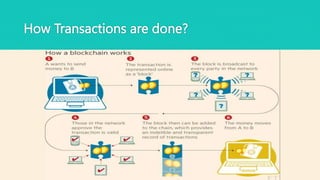
How Transactions are done?
Application: BITCOIN
 It is unregulated, censorship-resistant shadow currency.
 Blockchain ensures “cash like” coin passing
 Unique
 Immutable
 Final
 Bitcoin is the first Blockchain application.
 Digital currencies different from cryptocurrency.
Advantages:
 Transparency:
 Users or developers have the opportunity to modify it as they see fit. This makes blockchain a
particularly secure technology.
 Reduced transaction costs:
 Blockchain allows peer-to-peer and business-to- business transactions to be completed without
the need for a third party. it means they can actually reduce costs to the user or businesses over
time.
 Faster transaction settlements:
 Blockchain technology is working 24 hours a day, seven days a week, meaning blockchain-based
transactions process considerably more quickly.
 Decentralization:
 Blockchain actually allows individual transactions to have their own proof of validity and the
authorization to enforce those constraints.
Applications
 Money Transfer:By eliminating bureaucratic red tape, making ledger systems real-time and
reducing third-party fees, BLOCKCHAIN can save lots of money. These companies use blockchain
to efficiently transfer money.
 Smart Contracts: Theyare like regular contracts except the rules of the contract are enforced in real-
time on a blockchain, which eliminates the middleman and adds levels of accountability for all
parties involved in a way not possible with traditional agreements
 Electronic Voting: Delegated Proof of Stake (DPOS) is the fastest, most efficient, most
decentralized, and most flexible consensus model available.
 Paying Employees: Payments made via Bitcoin can save both money and time for
employers and employees.
THANK YOU.
References:
https://builtin.com/, https://www.weforum.org/, https://www.youtube.com/

Blockchain.pptx

  • 1.
  • 2.
    What is BLOCKCHAINTECHNOLOGY?  Blockchain is a decentralized ledger of all transactions across a peer-to-peer network.  Using this technology , participants can perform transactions without the need for a central certifying authority.  Potential applications include fund transfers , settling trades , voting and many others.  Business Networks benefit from connectivity – Connected customers, suppliers, banks, partners.
  • 3.
  • 4.
    Application: BITCOIN  Itis unregulated, censorship-resistant shadow currency.  Blockchain ensures “cash like” coin passing  Unique  Immutable  Final  Bitcoin is the first Blockchain application.  Digital currencies different from cryptocurrency.
  • 5.
    Advantages:  Transparency:  Usersor developers have the opportunity to modify it as they see fit. This makes blockchain a particularly secure technology.  Reduced transaction costs:  Blockchain allows peer-to-peer and business-to- business transactions to be completed without the need for a third party. it means they can actually reduce costs to the user or businesses over time.  Faster transaction settlements:  Blockchain technology is working 24 hours a day, seven days a week, meaning blockchain-based transactions process considerably more quickly.  Decentralization:  Blockchain actually allows individual transactions to have their own proof of validity and the authorization to enforce those constraints.
  • 6.
    Applications  Money Transfer:Byeliminating bureaucratic red tape, making ledger systems real-time and reducing third-party fees, BLOCKCHAIN can save lots of money. These companies use blockchain to efficiently transfer money.  Smart Contracts: Theyare like regular contracts except the rules of the contract are enforced in real- time on a blockchain, which eliminates the middleman and adds levels of accountability for all parties involved in a way not possible with traditional agreements  Electronic Voting: Delegated Proof of Stake (DPOS) is the fastest, most efficient, most decentralized, and most flexible consensus model available.  Paying Employees: Payments made via Bitcoin can save both money and time for employers and employees.
  • 7.