Blockchain Technology:
A Comprehensive Guide
by Webtrack
Technologies
https://webtracktechnologies.com/
What is
Blockchain
Technology?
Blockchain is an information storage
method that prevents manipulation,
hacking, and alteration. Fundamentally,
blockchain is distributed ledger
technology (DLT) that is decentralized
and records transactions across
numerous nodes.
Key
Features
Unlike conventional
databases which are
centralized, blockchain
operates on several copies
of databases spread across
multiple nodes.
Each participant on the
network can see the
transactions, prompting
loyalty and trust.
Blockchain technology
ensures data integrity
as once the transaction
is completed it cannot
be modified.
Decentralization Transparency Immutability
How Does Blockchain
Work?
Transaction Initialization: A user starts a
transaction with his/her digital signature and the
public key of the subsequent participant.
Verification: The network of computers then
approves the transaction utilizing specific
algorithms. An authorized transaction can include
cryptocurrency, records, contracts, or any other
kind of information.
Block Creation: After a transaction is finished, it is
merged with others to create a new block of data.
Adding to the Chain: This block is then
permanently merged with the existing
blockchain and cannot be altered.
Why is
Blockchain
Important for
Businesses?
Blockchain-powered smart contracts are
reducing IT costs, streamlining complex
procedures, and eliminating the need for
middlemen across various businesses.
Furthermore, blockchain’s enterprise
value is predicted to rise as business
implementations become more
sophisticated and refined.
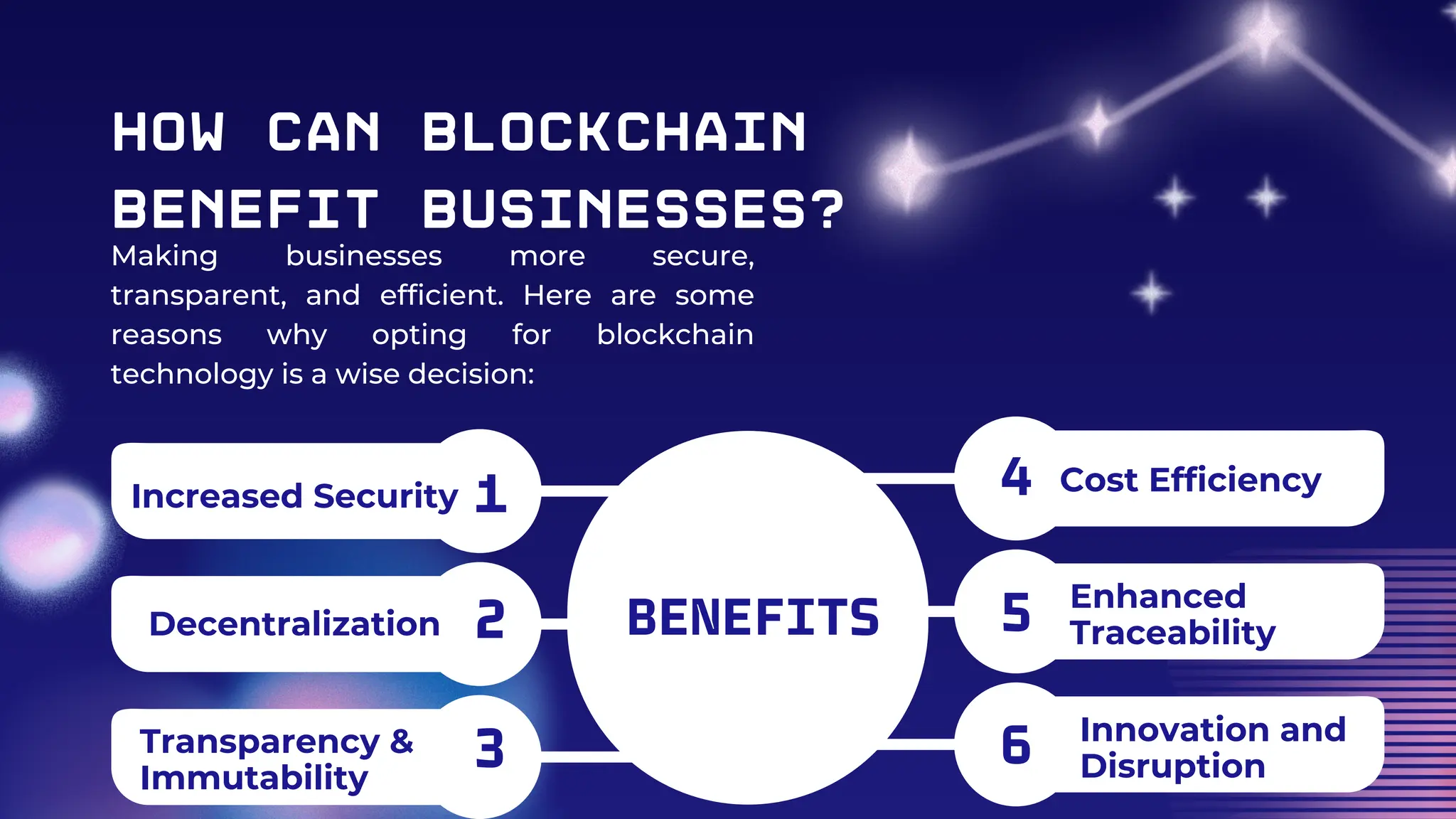
How Can Blockchain
Benefit Businesses?
Making businesses more secure,
transparent, and efficient. Here are some
reasons why opting for blockchain
technology is a wise decision:
4
5
6
Cost Efficiency
BENEFITS
1
3
2
Increased Security
Decentralization
Transparency &
Immutability
Enhanced
Traceability
Innovation and
Disruption
Here are a few more
business-oriented
blockchain development
applications:
Cybersecurity - Blockchain is a crucial weapon in the security
toolkit because of its strong encryption feature.
Cryptocurrency - Digital currencies like Bitcoin have
advanced beyond the trend stage as reputed businesses like
Tesla incorporate it into their investment portfolios. Also, take
it as payment for specific products.
Storage - Blockchain decentralized architecture makes it
possible to keep together the unutilized disk space of
blockchain participants, forming blockchain storage.
Use Cases of
Blockchain Development
Technology
Supply Chain - Blockchain helps more
individuals use the same information to
buyers and suppliers. Hence, getting closer
to the goals of supply chain transparency
Healthcare - Blockchain has the potential
to completely transform patient data
management. The technology provides
secure patient records and guarantees
that only verified individuals can make
changes.
Real Estate - Diminishing the need for
paper-based records, accelerating
transactions, and reducing fraud.
Banking and Finance - There are two
categories of uses for blockchain
technology in finance i.e. cryptocurrency,
decentralized finance, or DeFi.
Join Webtrack
Technologies
Join Webtrack
Technologies
https://webtracktechnologies.com/

Blockchain Technology | A Comprehensive Guide by Webtrack Technologies

  • 1.
    Blockchain Technology: A ComprehensiveGuide by Webtrack Technologies https://webtracktechnologies.com/
  • 2.
    What is Blockchain Technology? Blockchain isan information storage method that prevents manipulation, hacking, and alteration. Fundamentally, blockchain is distributed ledger technology (DLT) that is decentralized and records transactions across numerous nodes.
  • 3.
    Key Features Unlike conventional databases whichare centralized, blockchain operates on several copies of databases spread across multiple nodes. Each participant on the network can see the transactions, prompting loyalty and trust. Blockchain technology ensures data integrity as once the transaction is completed it cannot be modified. Decentralization Transparency Immutability
  • 4.
    How Does Blockchain Work? TransactionInitialization: A user starts a transaction with his/her digital signature and the public key of the subsequent participant. Verification: The network of computers then approves the transaction utilizing specific algorithms. An authorized transaction can include cryptocurrency, records, contracts, or any other kind of information. Block Creation: After a transaction is finished, it is merged with others to create a new block of data. Adding to the Chain: This block is then permanently merged with the existing blockchain and cannot be altered.
  • 5.
    Why is Blockchain Important for Businesses? Blockchain-poweredsmart contracts are reducing IT costs, streamlining complex procedures, and eliminating the need for middlemen across various businesses. Furthermore, blockchain’s enterprise value is predicted to rise as business implementations become more sophisticated and refined.
  • 6.
    How Can Blockchain BenefitBusinesses? Making businesses more secure, transparent, and efficient. Here are some reasons why opting for blockchain technology is a wise decision: 4 5 6 Cost Efficiency BENEFITS 1 3 2 Increased Security Decentralization Transparency & Immutability Enhanced Traceability Innovation and Disruption
  • 7.
    Here are afew more business-oriented blockchain development applications: Cybersecurity - Blockchain is a crucial weapon in the security toolkit because of its strong encryption feature. Cryptocurrency - Digital currencies like Bitcoin have advanced beyond the trend stage as reputed businesses like Tesla incorporate it into their investment portfolios. Also, take it as payment for specific products. Storage - Blockchain decentralized architecture makes it possible to keep together the unutilized disk space of blockchain participants, forming blockchain storage.
  • 8.
    Use Cases of BlockchainDevelopment Technology Supply Chain - Blockchain helps more individuals use the same information to buyers and suppliers. Hence, getting closer to the goals of supply chain transparency Healthcare - Blockchain has the potential to completely transform patient data management. The technology provides secure patient records and guarantees that only verified individuals can make changes.
  • 9.
    Real Estate -Diminishing the need for paper-based records, accelerating transactions, and reducing fraud. Banking and Finance - There are two categories of uses for blockchain technology in finance i.e. cryptocurrency, decentralized finance, or DeFi.
  • 10.