Welcom
e To
Azgari
Lipshy
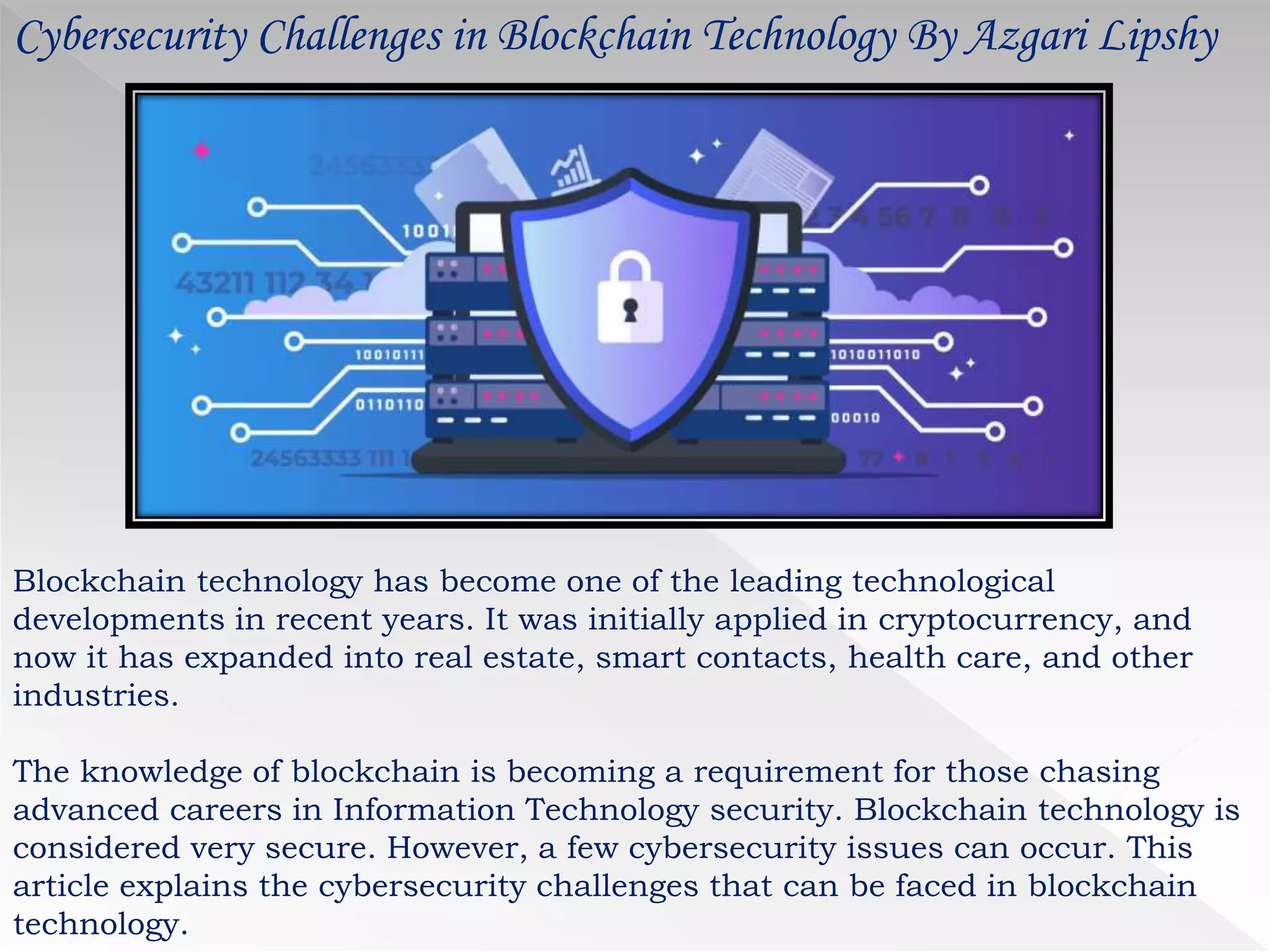
Cybersecurity Challenges in Blockchain Technology By Azgari Lipshy
Blockchain technology has become one of the leading technological
developments in recent years. It was initially applied in cryptocurrency, and
now it has expanded into real estate, smart contacts, health care, and other
industries.
The knowledge of blockchain is becoming a requirement for those chasing
advanced careers in Information Technology security. Blockchain technology is
considered very secure. However, a few cybersecurity issues can occur. This
article explains the cybersecurity challenges that can be faced in blockchain
technology.
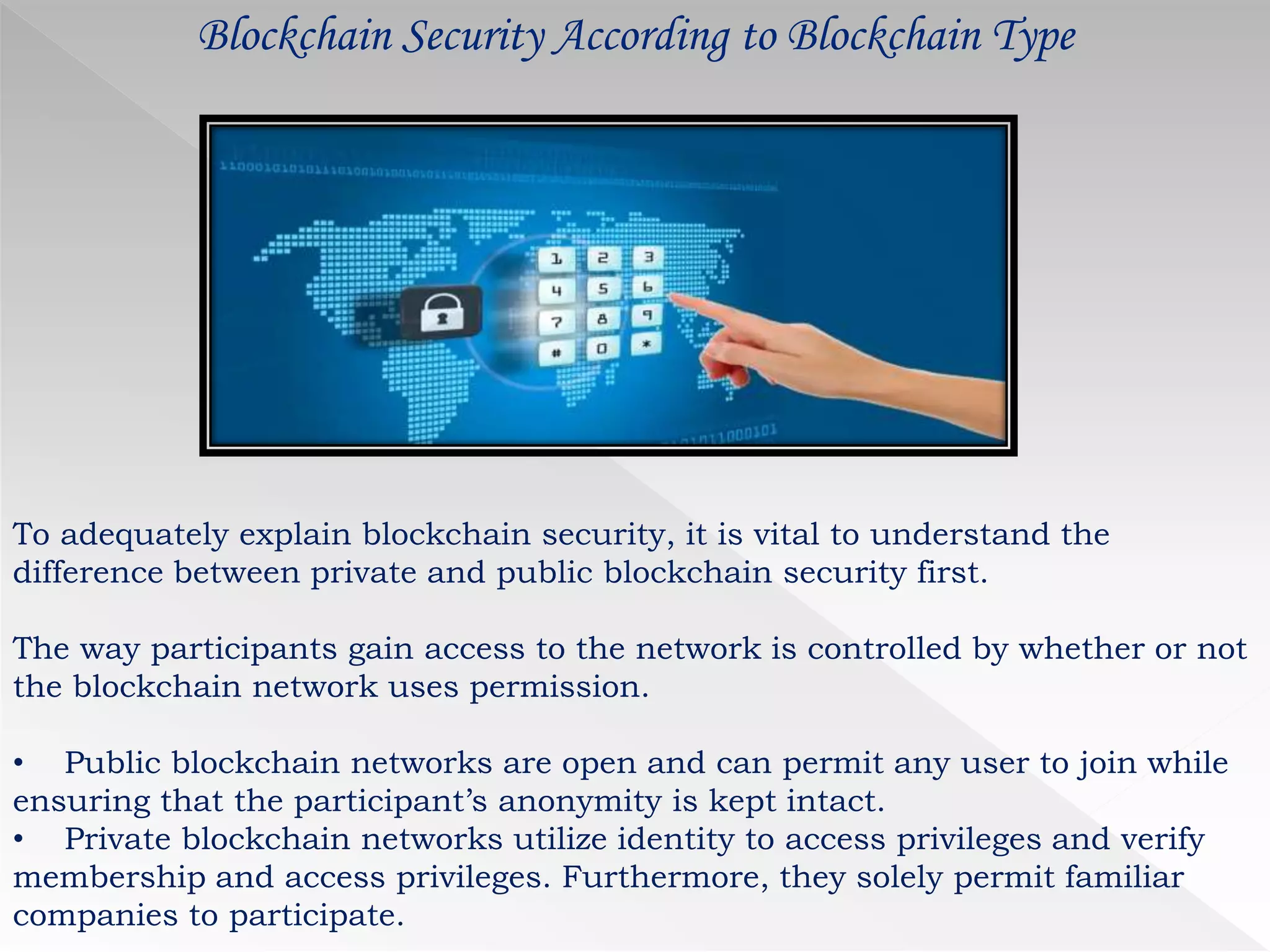
Blockchain Security According to Blockchain Type
To adequately explain blockchain security, it is vital to understand the
difference between private and public blockchain security first.
The way participants gain access to the network is controlled by whether or not
the blockchain network uses permission.
• Public blockchain networks are open and can permit any user to join while
ensuring that the participant’s anonymity is kept intact.
• Private blockchain networks utilize identity to access privileges and verify
membership and access privileges. Furthermore, they solely permit familiar
companies to participate.
Blockchain and Cyber Security
Blockchain permits transactional data to be easily and quickly processed,
which explains its increase in popularity in numerous online investing markets.
Also, it provides some essential security precautions. It is pretty challenging for
any block within a blockchain to be modified, which assists in preventing fraud.
Additionally, recognizing codes built into every block allows transactional data
to be seamlessly traced.
Still, because of blockchain’s popularity (and because it’s generally applied in
transactional settings), it has become a tempting target for cybercriminals. With
this increased popularity, numerous blockchain security challenges have
arisen.
Blockchain and Cyber Security
When people claim that blockchain is very secure, they are right! Blockchain is,
beyond doubt, beneficial to many organizations but also has its substantial
downside due to explicit security issues. Here are the top blockchain security
issues you should know about blockchain so you can guard against
1. 51% Attacks:
Miners play a crucial role in approving transactions on the blockchain,
permitting them to advance even further. A 51% attack is the most feared
threat in the whole blockchain industry. The attack is likely to happen in the
early stage of the chain, and it does not apply to private blockchains or
enterprises.
A 51% attack occurs when malicious hackers, be it an organization or
individual, gather over half of the hash rate and take control of the whole
system, which can be catastrophic. These hackers can change the transaction
order and stop them from being confirmed. They can reverse past completed
transactions, which will result in double-spending.
2. Routing Attacks:
Another primary concern is routing attacks. A blockchain network depends on
the real-time movement of enormous amounts of data. Hackers make use of the
anonymity of an account to hijack data that is being transmitted.
In routing attacks, blockchain participants are generally ignorant of the threat
because operations such as data transmission proceed as usual. These attacks
reveal confidential data frequently without the knowledge of the user.
3. Phishing Attacks:
Blockchain’s phishing attacks are skyrocketing, leading to severe issues. These
attacks are frequently targeting company employees or individuals. A hacker
aims to steal the credentials of the user.
They can send emails that look legitimate to the wallet key owner. The owner
must then input their login details through a fake hyperlink attached to the
email. When a hacker has access to sensitive information like a user’s
credentials, this will result in damages to the blockchain network and user.
This makes them also liable to follow-up attacks.
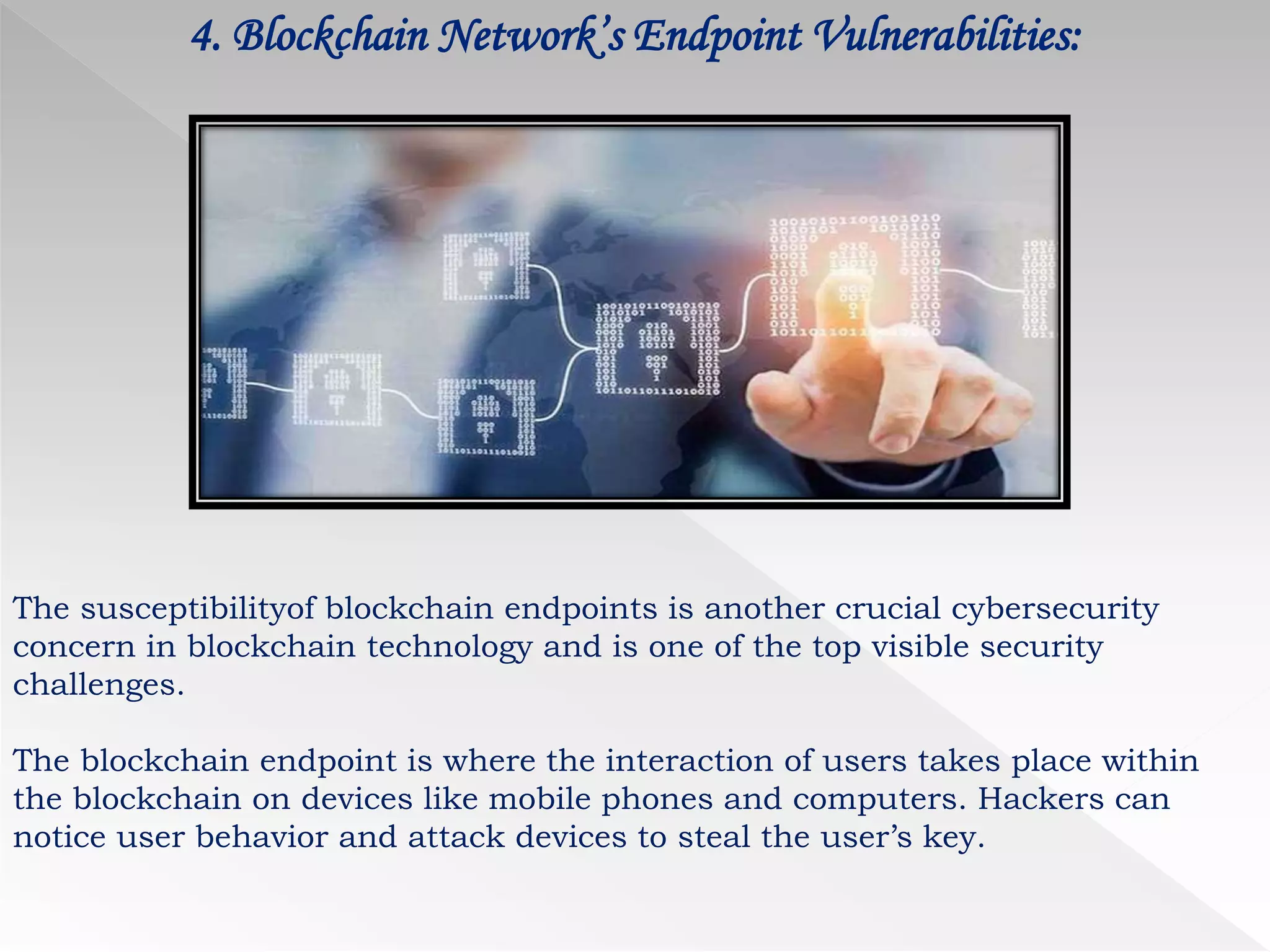
4. Blockchain Network’s Endpoint Vulnerabilities:
The susceptibilityof blockchain endpoints is another crucial cybersecurity
concern in blockchain technology and is one of the top visible security
challenges.
The blockchain endpoint is where the interaction of users takes place within
the blockchain on devices like mobile phones and computers. Hackers can
notice user behavior and attack devices to steal the user’s key.
5. Sybil Attacks:
In a Sybil attack, the hackers create different fake network nodes. With the help
of these nodes, the hacker can acquire mass consensus and interrupt the
chain’s transactions. A wide-scale Sybil assault is just another 51% attack.
For blockchain cybersecurity challenges like Sybil attacks, numerous
blockchains use proof of stake and proof of work algorithms. While these
algorithms do not stop the attacks entirely, they make it impractical for the
hacker to perform them.
6. Transaction Privacy Leakage:
Transaction privacy leakage is another dreadful issue in blockchain security.
Because user behaviors are trackable on the blockchain, blockchain systems
must protect a user’s transaction privacy. Simply put, for every transaction,
users must allocate a private key.
Hence, hackers cannot detect if a user is acquiring cryptocurrency in various
transactions. Although, the privacy protection in the blockchain is yet to be
thoroughly developed. Research shows that nearly 66% of sampled transactions
have no chaff coins(also called mixins). Chaff coins can restrict hackers from
determining the association between coins received or sent in the transaction.
7. Vulnerable Smart Contracts:
Smart contracts are code-written agreements that use blockchain networks for
record keeping. For instance, in the real world, if you borrow money from a
friend, the friend gets periodic interests until the loan has been paid, after
which you pay back the principal amount.
This can be converted into code using cryptocurrency instead of real money.
The fantastic thing is that you don’t need an intermediary like a bank. Once
you have signed the contract, it is impossible to change it.
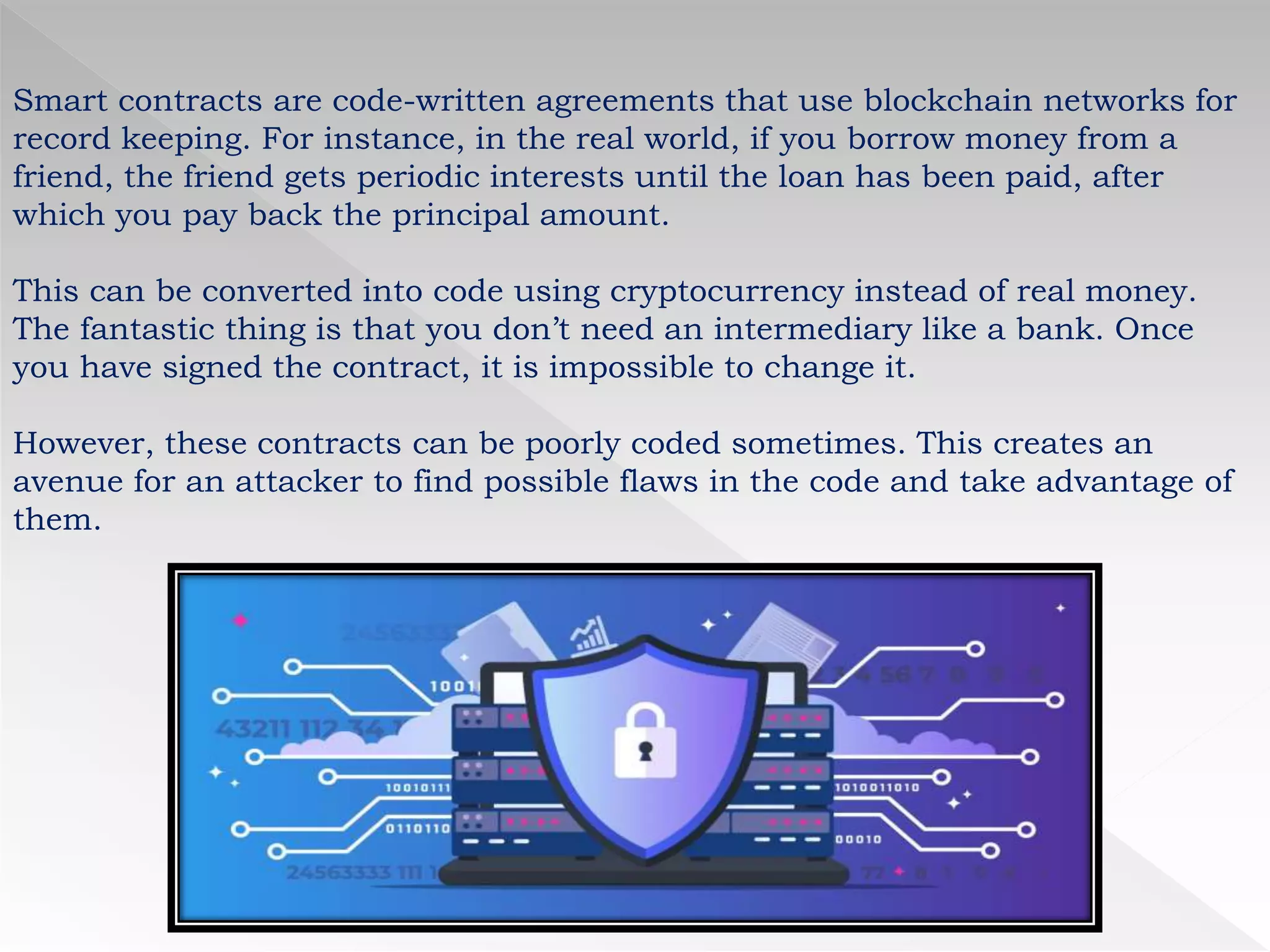
However, these contracts can be poorly coded sometimes. This creates an
avenue for an attacker to find possible flaws in the code and take advantage of
them.
Smart contracts are code-written agreements that use blockchain networks for
record keeping. For instance, in the real world, if you borrow money from a
friend, the friend gets periodic interests until the loan has been paid, after
which you pay back the principal amount.
This can be converted into code using cryptocurrency instead of real money.
The fantastic thing is that you don’t need an intermediary like a bank. Once
you have signed the contract, it is impossible to change it.
However, these contracts can be poorly coded sometimes. This creates an
avenue for an attacker to find possible flaws in the code and take advantage of
them.
For More Information:-
https://www.linkedin.com/in/Azilipshy/
https://www.youtube.com/user/azgarim/
https://www.instagram.com/azgari.lipshy/
https://www.crunchbase.com/person/azgari-lipshy
https://twitter.com/azgarilipshy
Cybersecurity Challenges in Blockchain Technology By Azgari Lipshy

Cybersecurity Challenges in Blockchain Technology By Azgari Lipshy

  • 1.
  • 2.
    Cybersecurity Challenges inBlockchain Technology By Azgari Lipshy Blockchain technology has become one of the leading technological developments in recent years. It was initially applied in cryptocurrency, and now it has expanded into real estate, smart contacts, health care, and other industries. The knowledge of blockchain is becoming a requirement for those chasing advanced careers in Information Technology security. Blockchain technology is considered very secure. However, a few cybersecurity issues can occur. This article explains the cybersecurity challenges that can be faced in blockchain technology.
  • 3.
    Blockchain Security Accordingto Blockchain Type To adequately explain blockchain security, it is vital to understand the difference between private and public blockchain security first. The way participants gain access to the network is controlled by whether or not the blockchain network uses permission. • Public blockchain networks are open and can permit any user to join while ensuring that the participant’s anonymity is kept intact. • Private blockchain networks utilize identity to access privileges and verify membership and access privileges. Furthermore, they solely permit familiar companies to participate.
  • 4.
    Blockchain and CyberSecurity Blockchain permits transactional data to be easily and quickly processed, which explains its increase in popularity in numerous online investing markets. Also, it provides some essential security precautions. It is pretty challenging for any block within a blockchain to be modified, which assists in preventing fraud. Additionally, recognizing codes built into every block allows transactional data to be seamlessly traced. Still, because of blockchain’s popularity (and because it’s generally applied in transactional settings), it has become a tempting target for cybercriminals. With this increased popularity, numerous blockchain security challenges have arisen.
  • 5.
    Blockchain and CyberSecurity When people claim that blockchain is very secure, they are right! Blockchain is, beyond doubt, beneficial to many organizations but also has its substantial downside due to explicit security issues. Here are the top blockchain security issues you should know about blockchain so you can guard against 1. 51% Attacks: Miners play a crucial role in approving transactions on the blockchain, permitting them to advance even further. A 51% attack is the most feared threat in the whole blockchain industry. The attack is likely to happen in the early stage of the chain, and it does not apply to private blockchains or enterprises. A 51% attack occurs when malicious hackers, be it an organization or individual, gather over half of the hash rate and take control of the whole system, which can be catastrophic. These hackers can change the transaction order and stop them from being confirmed. They can reverse past completed transactions, which will result in double-spending.
  • 6.
    2. Routing Attacks: Anotherprimary concern is routing attacks. A blockchain network depends on the real-time movement of enormous amounts of data. Hackers make use of the anonymity of an account to hijack data that is being transmitted. In routing attacks, blockchain participants are generally ignorant of the threat because operations such as data transmission proceed as usual. These attacks reveal confidential data frequently without the knowledge of the user. 3. Phishing Attacks: Blockchain’s phishing attacks are skyrocketing, leading to severe issues. These attacks are frequently targeting company employees or individuals. A hacker aims to steal the credentials of the user. They can send emails that look legitimate to the wallet key owner. The owner must then input their login details through a fake hyperlink attached to the email. When a hacker has access to sensitive information like a user’s credentials, this will result in damages to the blockchain network and user. This makes them also liable to follow-up attacks.
  • 7.
    4. Blockchain Network’sEndpoint Vulnerabilities: The susceptibilityof blockchain endpoints is another crucial cybersecurity concern in blockchain technology and is one of the top visible security challenges. The blockchain endpoint is where the interaction of users takes place within the blockchain on devices like mobile phones and computers. Hackers can notice user behavior and attack devices to steal the user’s key.
  • 8.
    5. Sybil Attacks: Ina Sybil attack, the hackers create different fake network nodes. With the help of these nodes, the hacker can acquire mass consensus and interrupt the chain’s transactions. A wide-scale Sybil assault is just another 51% attack. For blockchain cybersecurity challenges like Sybil attacks, numerous blockchains use proof of stake and proof of work algorithms. While these algorithms do not stop the attacks entirely, they make it impractical for the hacker to perform them. 6. Transaction Privacy Leakage: Transaction privacy leakage is another dreadful issue in blockchain security. Because user behaviors are trackable on the blockchain, blockchain systems must protect a user’s transaction privacy. Simply put, for every transaction, users must allocate a private key. Hence, hackers cannot detect if a user is acquiring cryptocurrency in various transactions. Although, the privacy protection in the blockchain is yet to be thoroughly developed. Research shows that nearly 66% of sampled transactions have no chaff coins(also called mixins). Chaff coins can restrict hackers from determining the association between coins received or sent in the transaction.
  • 9.
    7. Vulnerable SmartContracts: Smart contracts are code-written agreements that use blockchain networks for record keeping. For instance, in the real world, if you borrow money from a friend, the friend gets periodic interests until the loan has been paid, after which you pay back the principal amount. This can be converted into code using cryptocurrency instead of real money. The fantastic thing is that you don’t need an intermediary like a bank. Once you have signed the contract, it is impossible to change it. However, these contracts can be poorly coded sometimes. This creates an avenue for an attacker to find possible flaws in the code and take advantage of them.
  • 10.
    Smart contracts arecode-written agreements that use blockchain networks for record keeping. For instance, in the real world, if you borrow money from a friend, the friend gets periodic interests until the loan has been paid, after which you pay back the principal amount. This can be converted into code using cryptocurrency instead of real money. The fantastic thing is that you don’t need an intermediary like a bank. Once you have signed the contract, it is impossible to change it. However, these contracts can be poorly coded sometimes. This creates an avenue for an attacker to find possible flaws in the code and take advantage of them.
  • 11.