Blockchain Fundamentals
An overview of blockchain technology
Linh Chau
Software Engineer
April 7th
, 2018
22
Agenda
▪ Introduction to Blockchain
▪ Blockchain for Business
33
What is Blockchain?
44
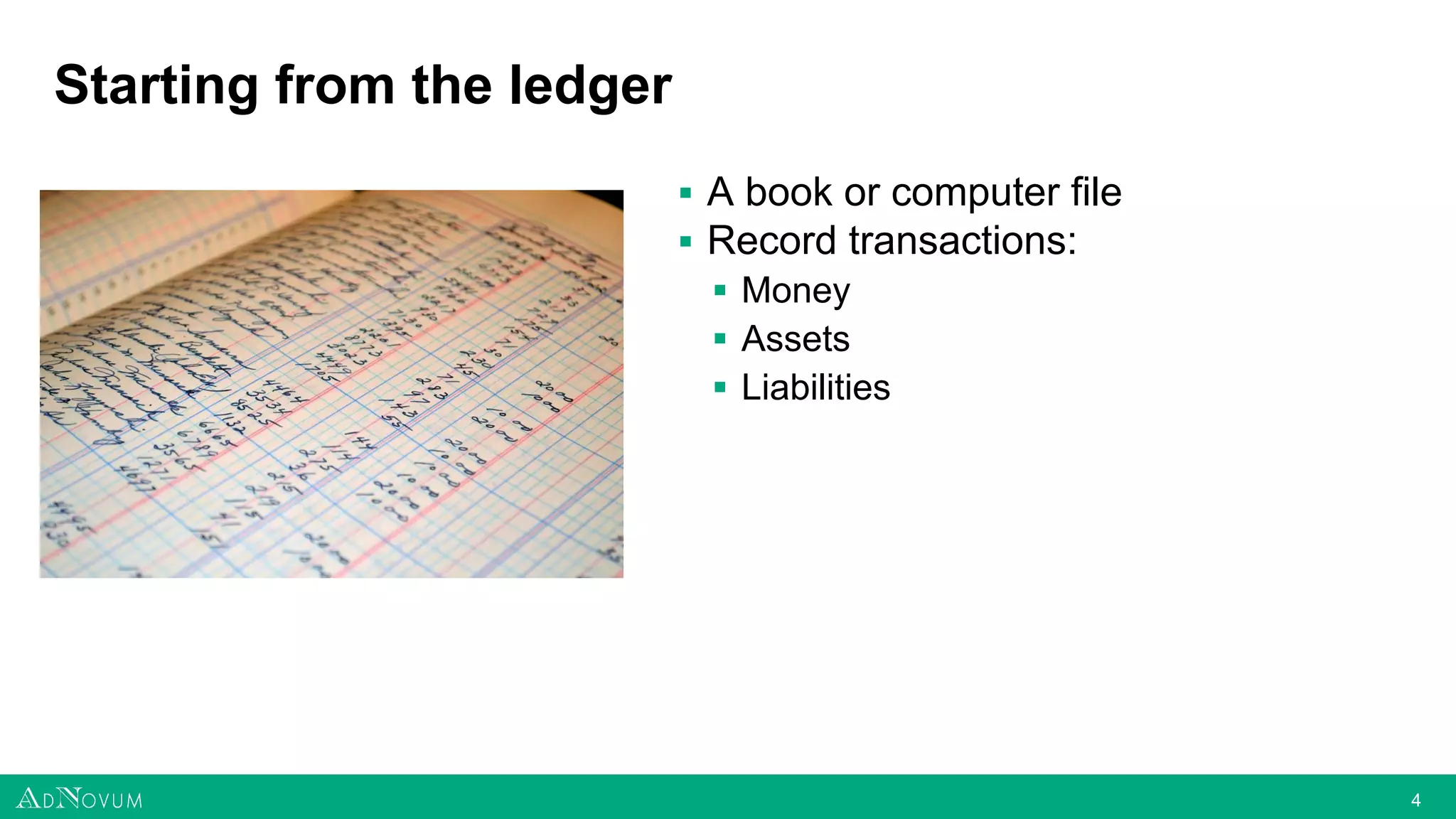
Starting from the ledger
▪ A book or computer file
▪ Record transactions:
▪ Money
▪ Assets
▪ Liabilities
55
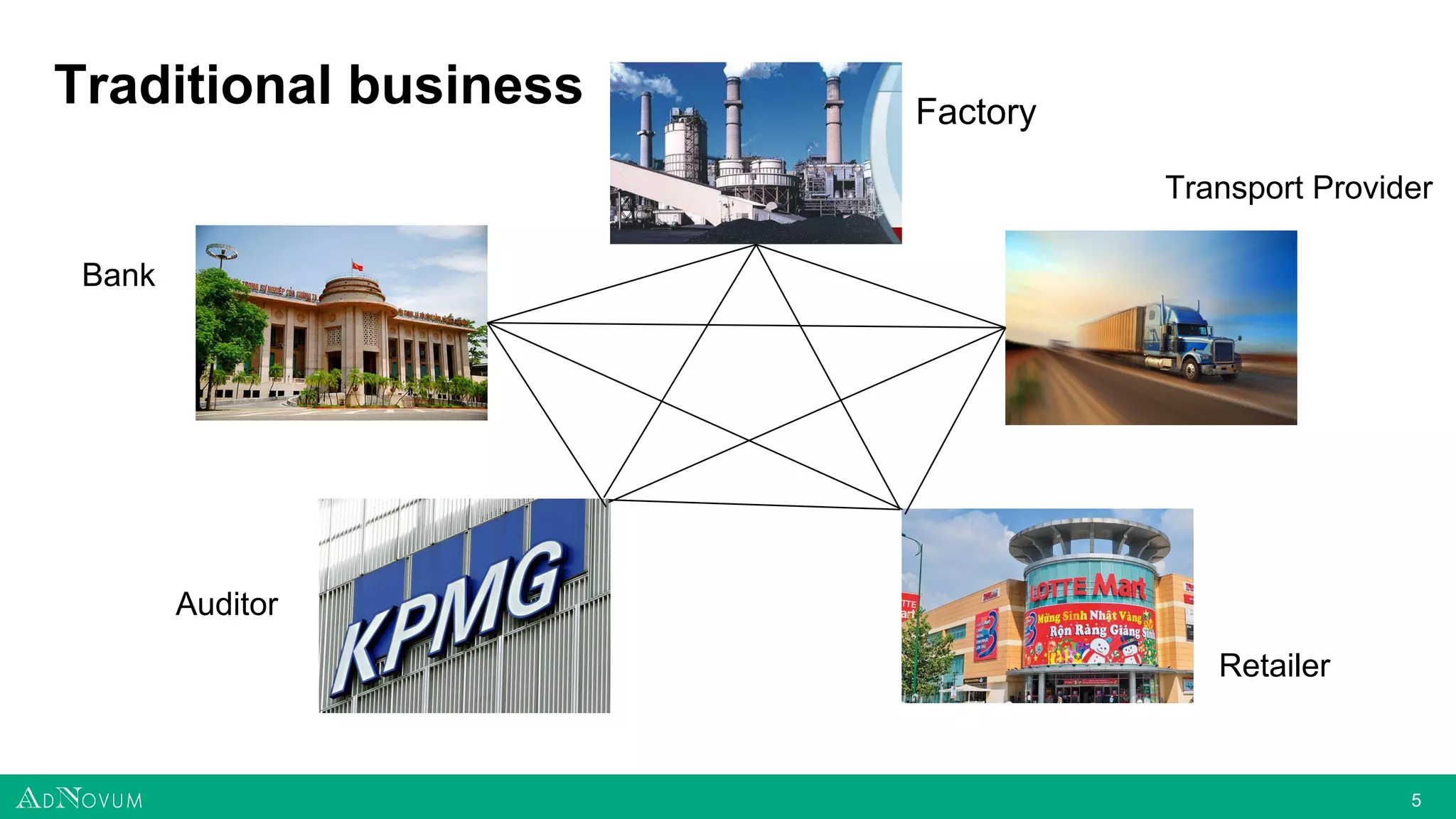
Traditional business
Bank
Factory
Transport Provider
Retailer
Auditor
66
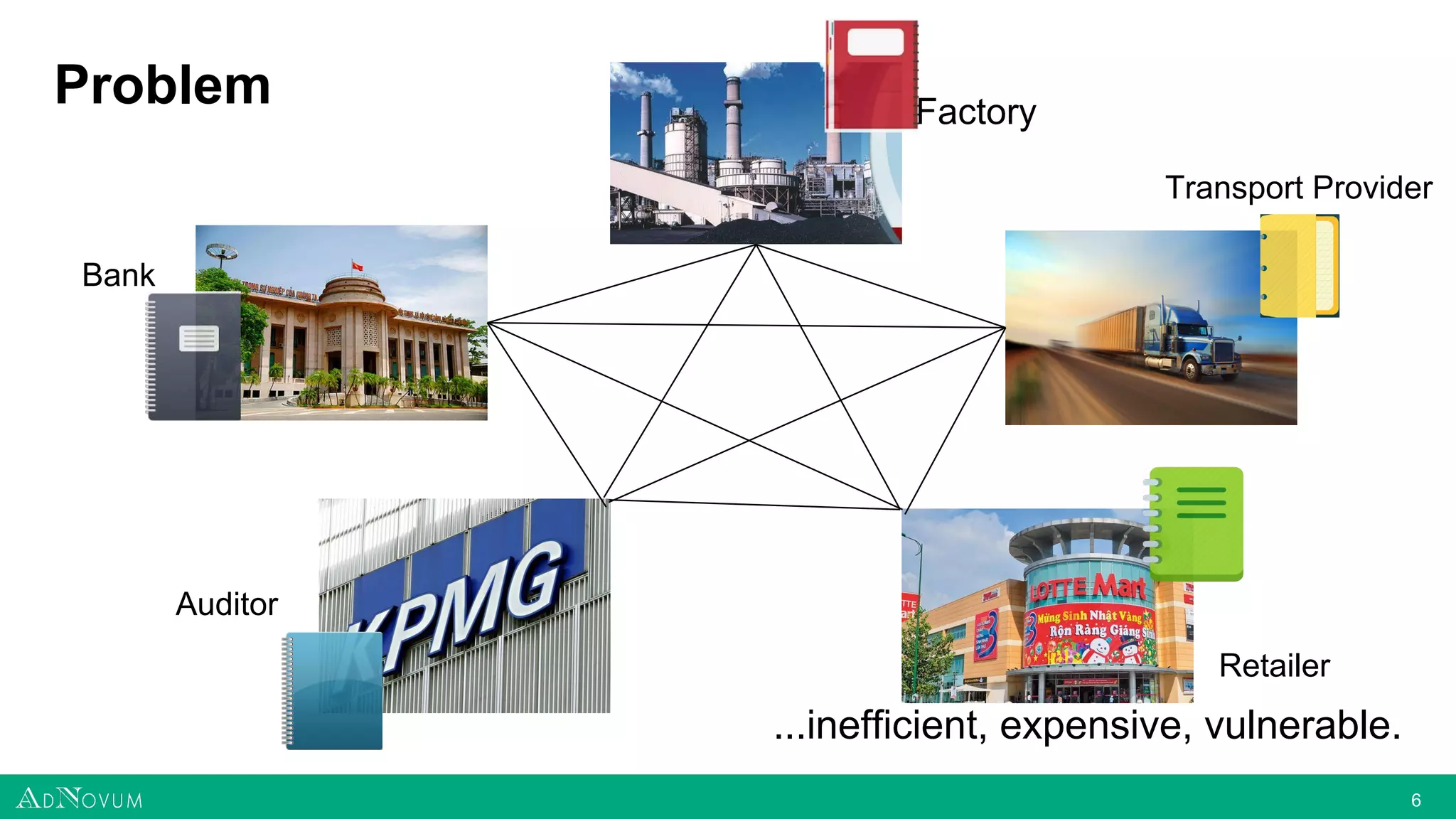
Problem
Bank
Factory
Transport Provider
Retailer
Auditor
...inefficient, expensive, vulnerable.
77
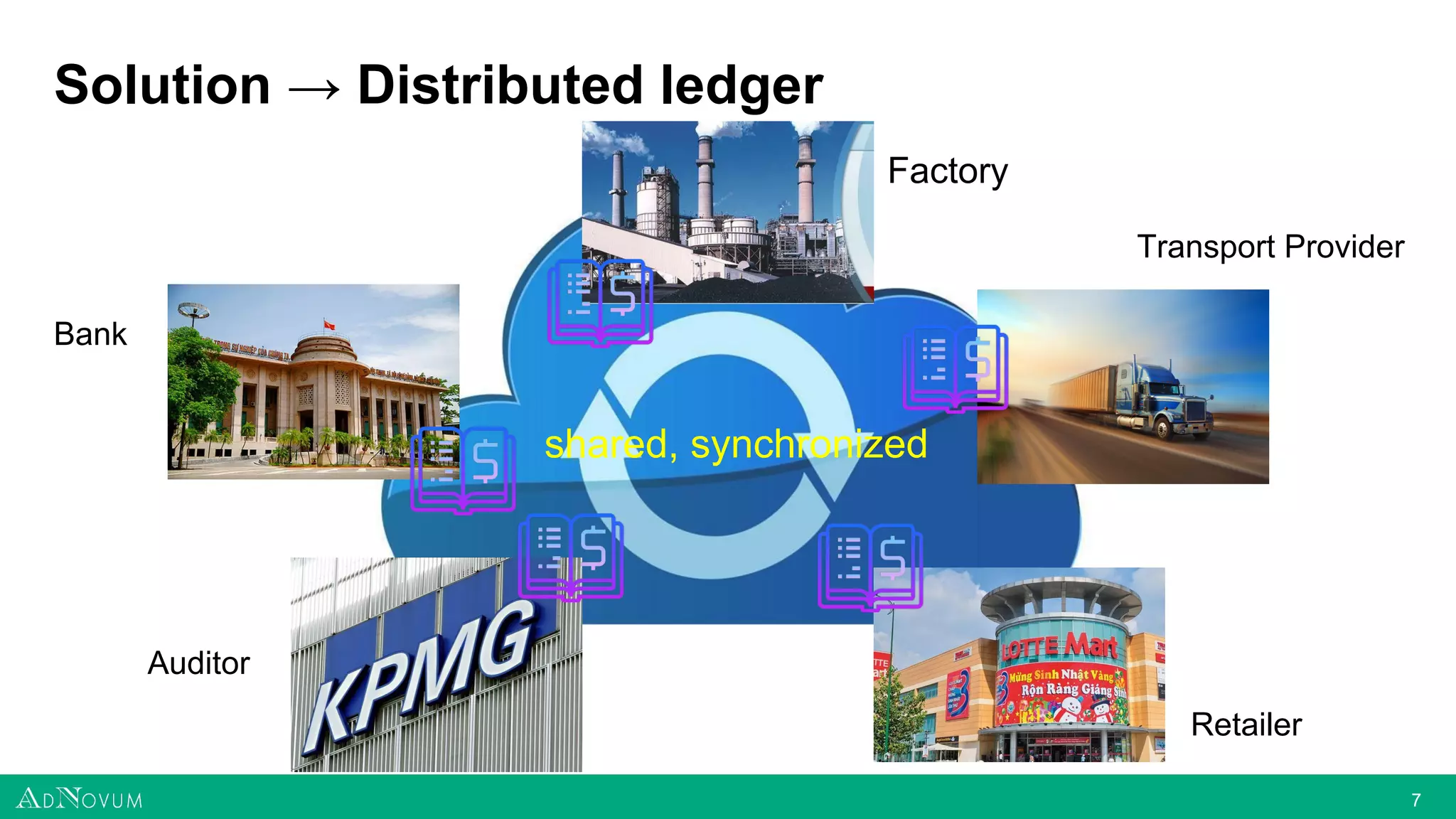
Solution → Distributed ledger
Bank
Factory
Transport Provider
Retailer
Auditor
shared, synchronized
88
Definition of blockchain
“Blockchain is a type of distributed ledger
in which value exchange transactions (in bitcoin or
other token) are sequentially grouped into blocks.
Each block is chained to the previous block and
immutably recorded across a peer-to-peer network,
using cryptographic trust and assurance mechanisms.”
Gartner IT Glossory(https://www.gartner.com/it-glossary/blockchain)
99
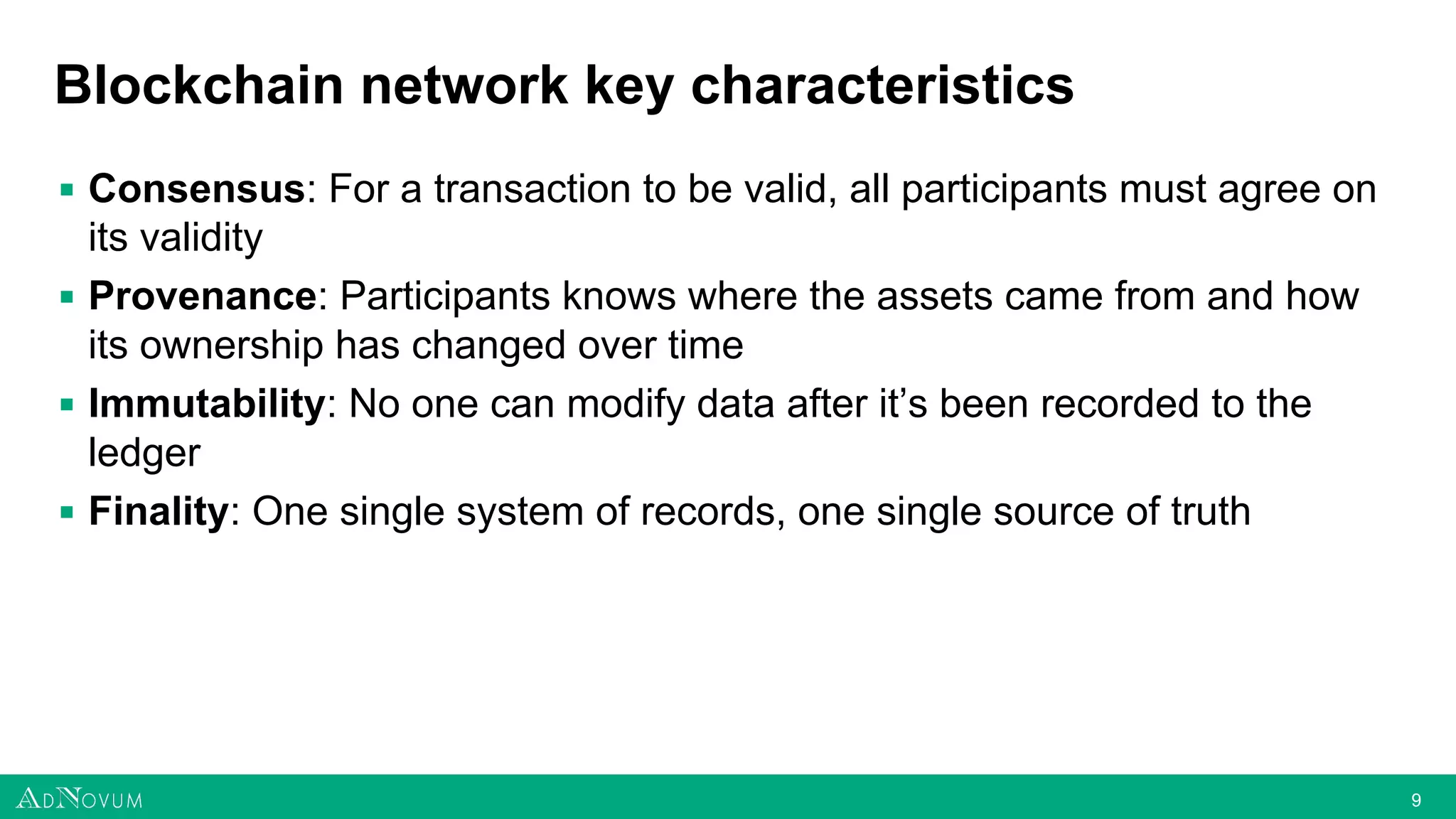
Blockchain network key characteristics
▪ Consensus: For a transaction to be valid, all participants must agree on
its validity
▪ Provenance: Participants knows where the assets came from and how
its ownership has changed over time
▪ Immutability: No one can modify data after it’s been recorded to the
ledger
▪ Finality: One single system of records, one single source of truth
1010
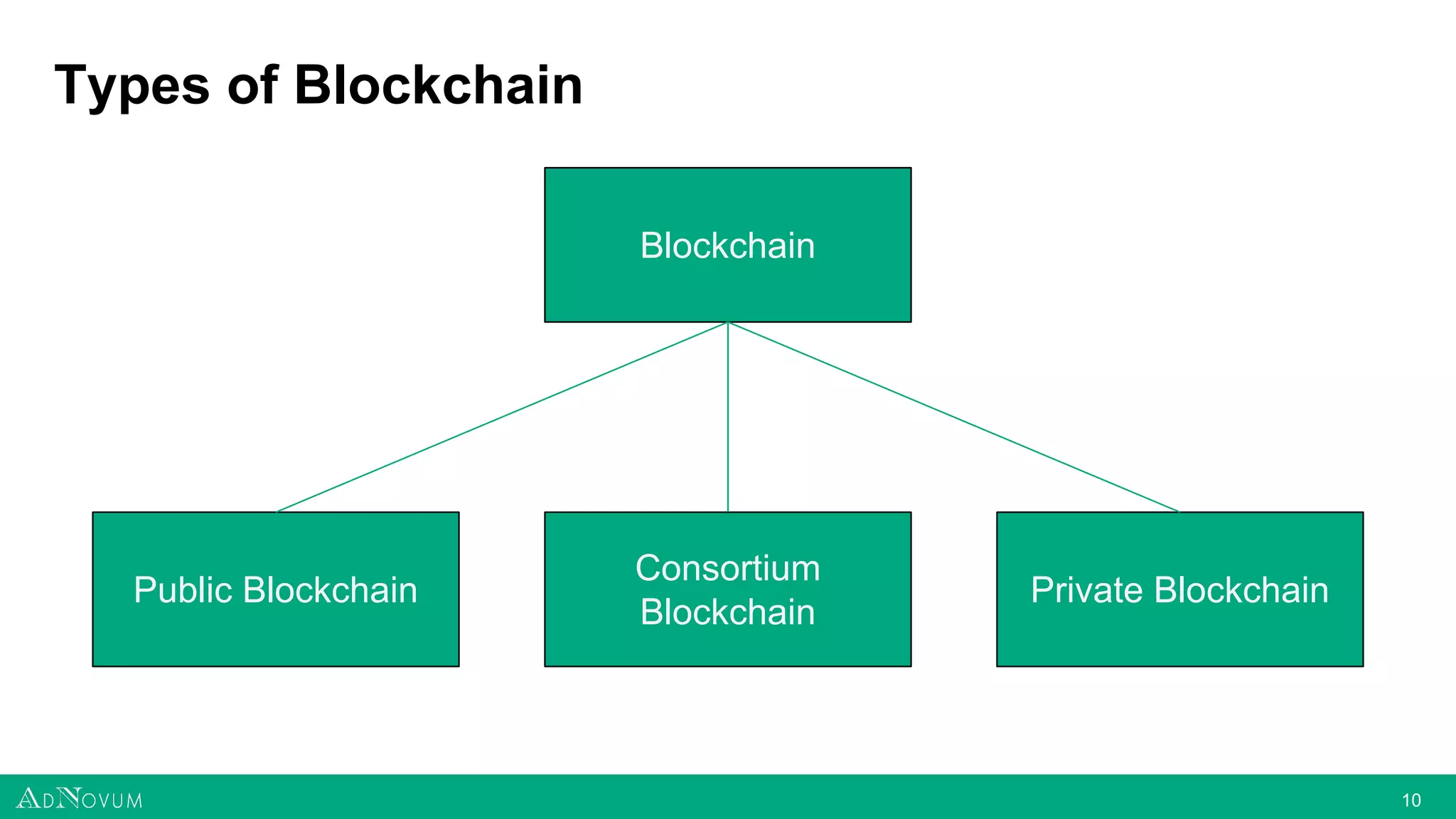
Types of Blockchain
Blockchain
Public Blockchain
Consortium
Blockchain
Private Blockchain
1111
Public Blockchain
▪ Open, allows everyone in the network to join
▪ Using cryptographic mechanisms such as proof of work for verification
▪ Each transaction is verified and synced with every node before it is
written into the system
▪ Slow and consumes a lot of computational power but secure and
transparent
1212
Private Blockchain
▪ Validator is centralized to one organization
▪ Read permissions may be public or restricted
▪ Verification process is faster and cheaper than in public blockchains
▪ This is used by our Car Dossier project
1313
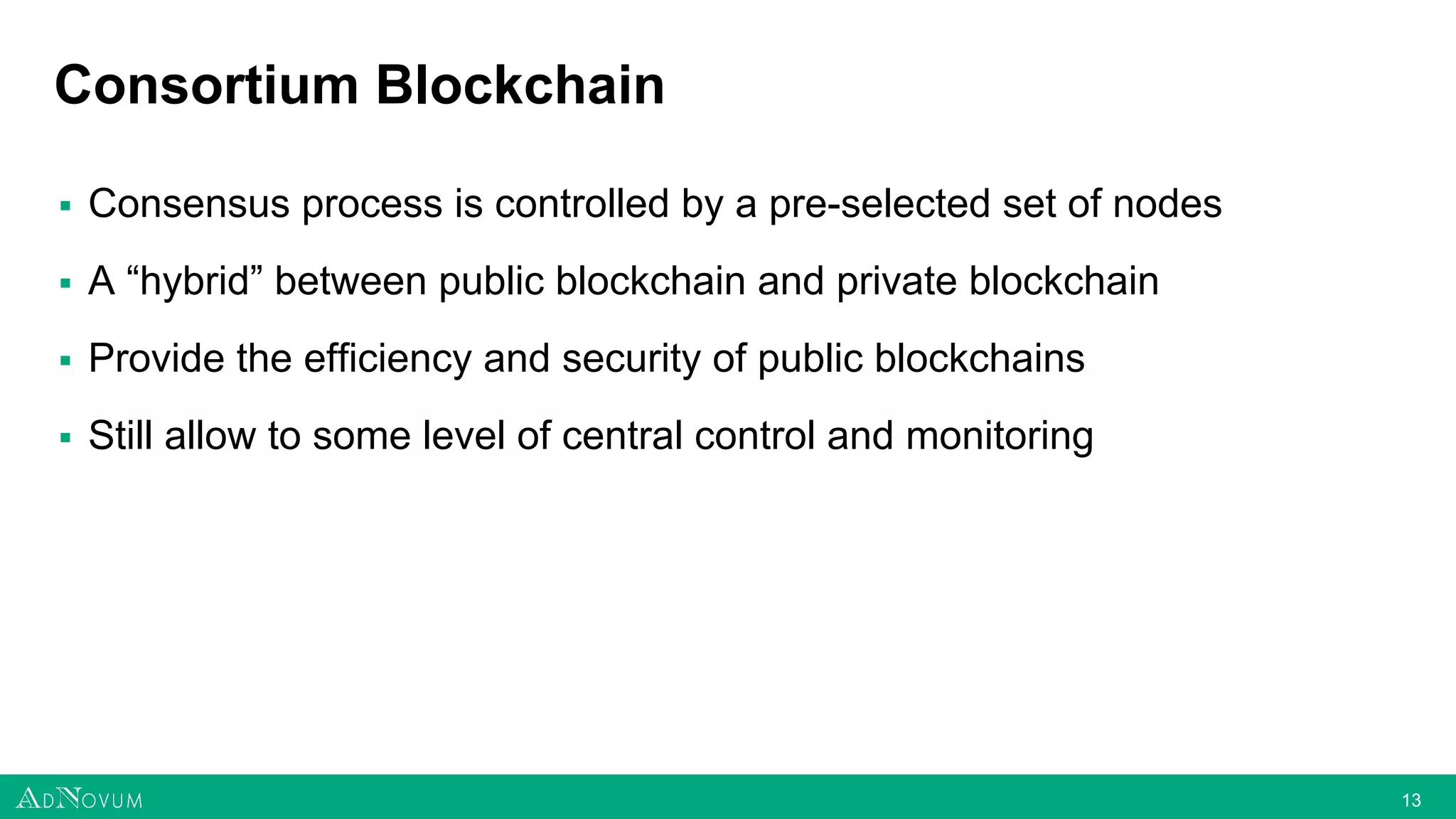
Consortium Blockchain
▪ Consensus process is controlled by a pre-selected set of nodes
▪ A “hybrid” between public blockchain and private blockchain
▪ Provide the efficiency and security of public blockchains
▪ Still allow to some level of central control and monitoring
1414
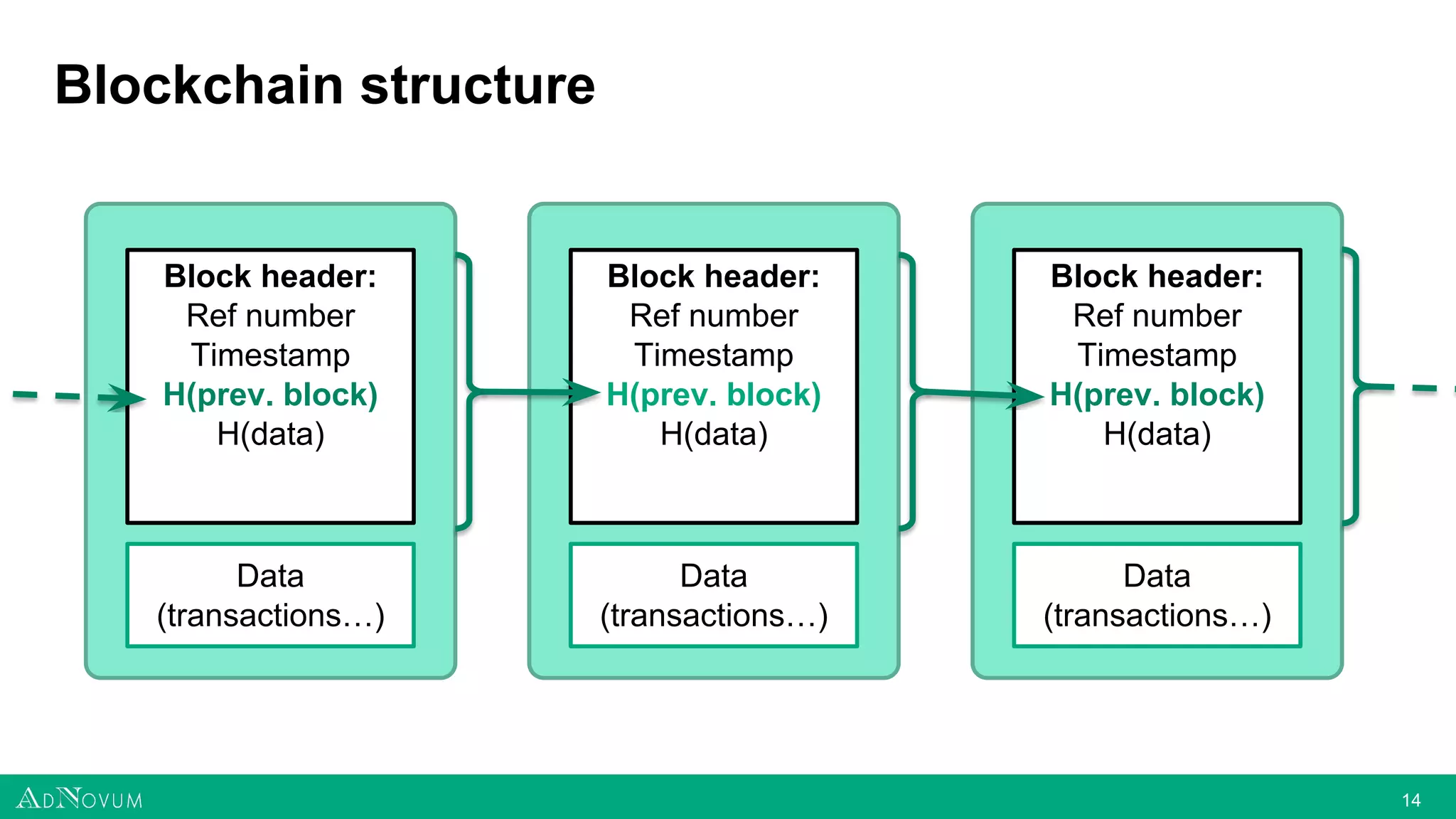
Blockchain structure
Data
(transactions…)
Block header:
Ref number
Timestamp
H(prev. block)
H(data)
Data
(transactions…)
Block header:
Ref number
Timestamp
H(prev. block)
H(data)
Data
(transactions…)
Block header:
Ref number
Timestamp
H(prev. block)
H(data)
1515
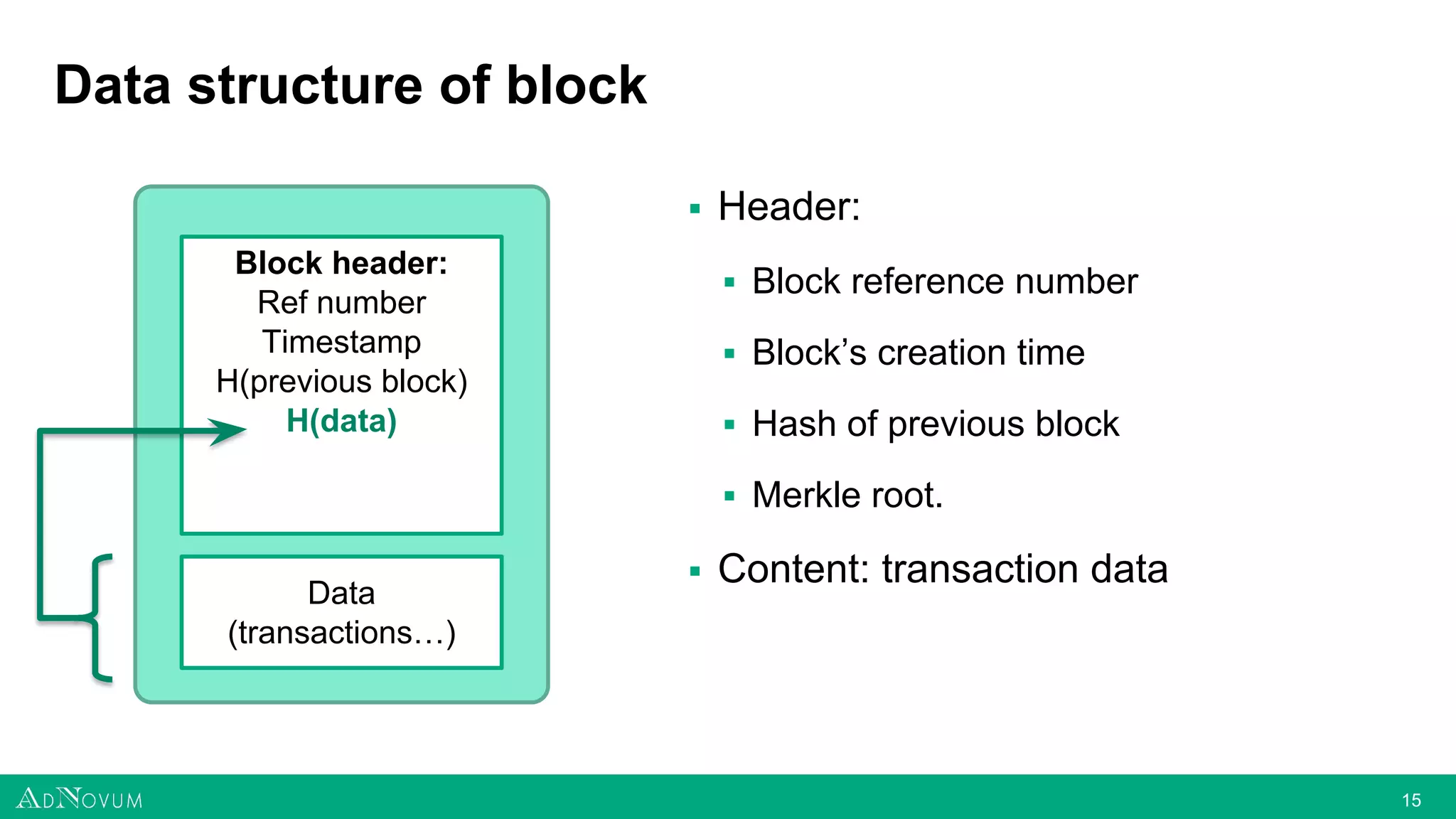
Data structure of block
▪ Header:
▪ Block reference number
▪ Block’s creation time
▪ Hash of previous block
▪ Merkle root.
▪ Content: transaction data
Data
(transactions…)
Block header:
Ref number
Timestamp
H(previous block)
H(data)
1616
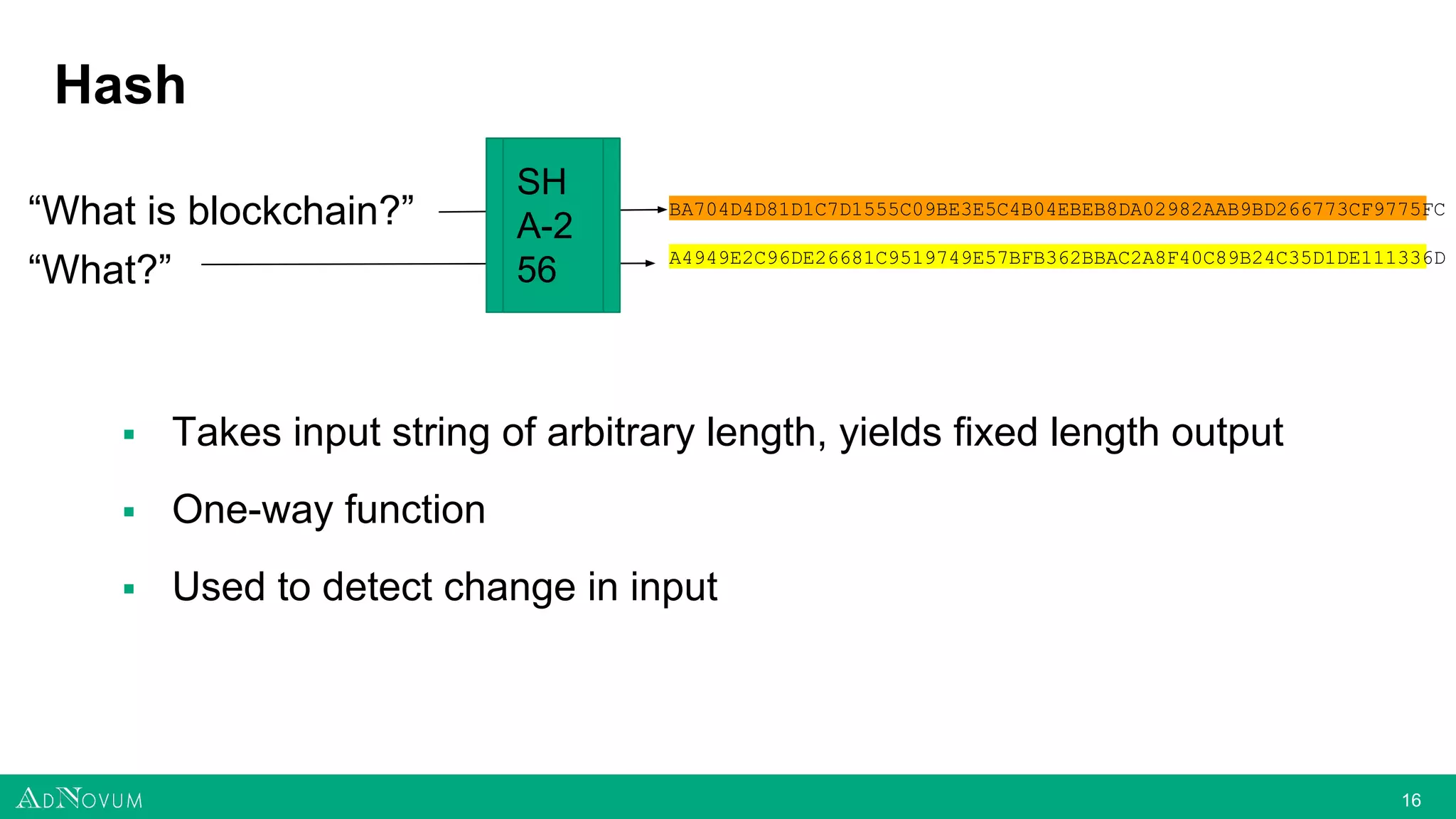
Hash
“What is blockchain?”
“What?”
BA704D4D81D1C7D1555C09BE3E5C4B04EBEB8DA02982AAB9BD266773CF9775FC
A4949E2C96DE26681C9519749E57BFB362BBAC2A8F40C89B24C35D1DE111336D
SH
A-2
56
▪ Takes input string of arbitrary length, yields fixed length output
▪ One-way function
▪ Used to detect change in input
1717
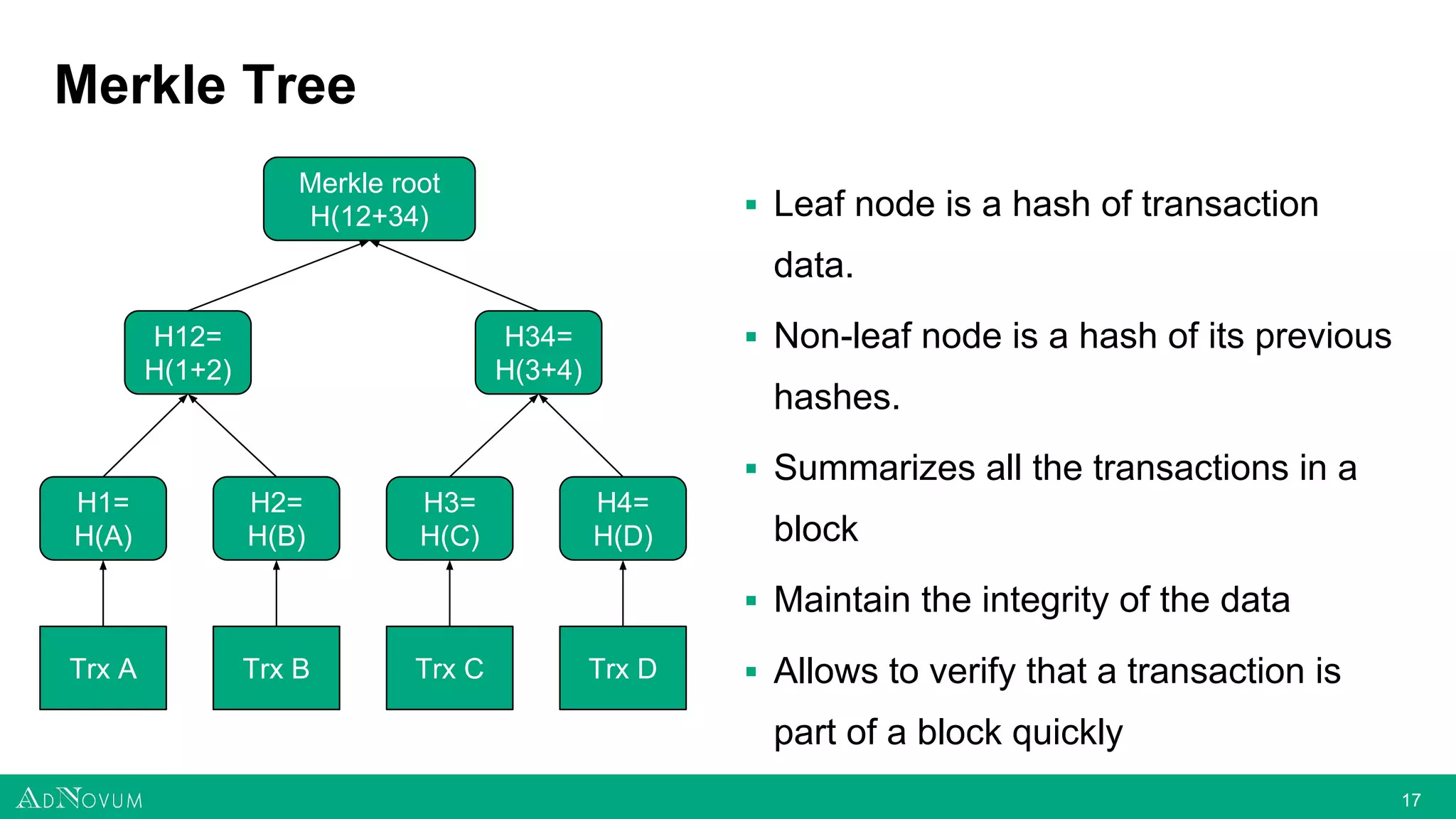
Merkle Tree
▪ Leaf node is a hash of transaction
data.
▪ Non-leaf node is a hash of its previous
hashes.
▪ Summarizes all the transactions in a
block
▪ Maintain the integrity of the data
▪ Allows to verify that a transaction is
part of a block quickly
H1=
H(A)
H2=
H(B)
H3=
H(C)
H4=
H(D)
H12=
H(1+2)
H34=
H(3+4)
Merkle root
H(12+34)
Trx A Trx B Trx C Trx D
1818
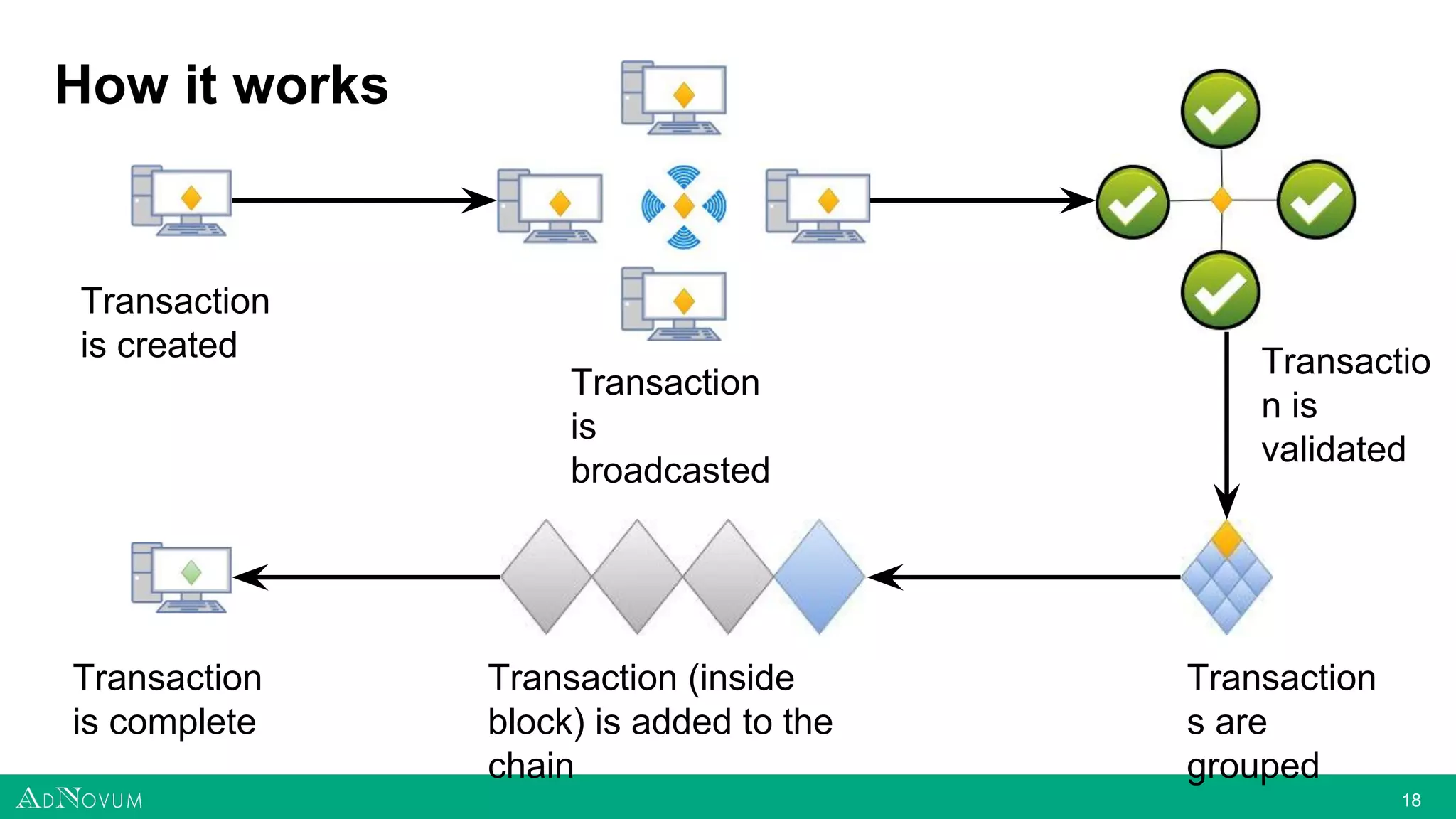
How it works
Transaction
is created
Transaction
is
broadcasted
Transactio
n is
validated
Transaction
s are
grouped
Transaction (inside
block) is added to the
chain
Transaction
is complete
1919
Blockchain For Business
2020
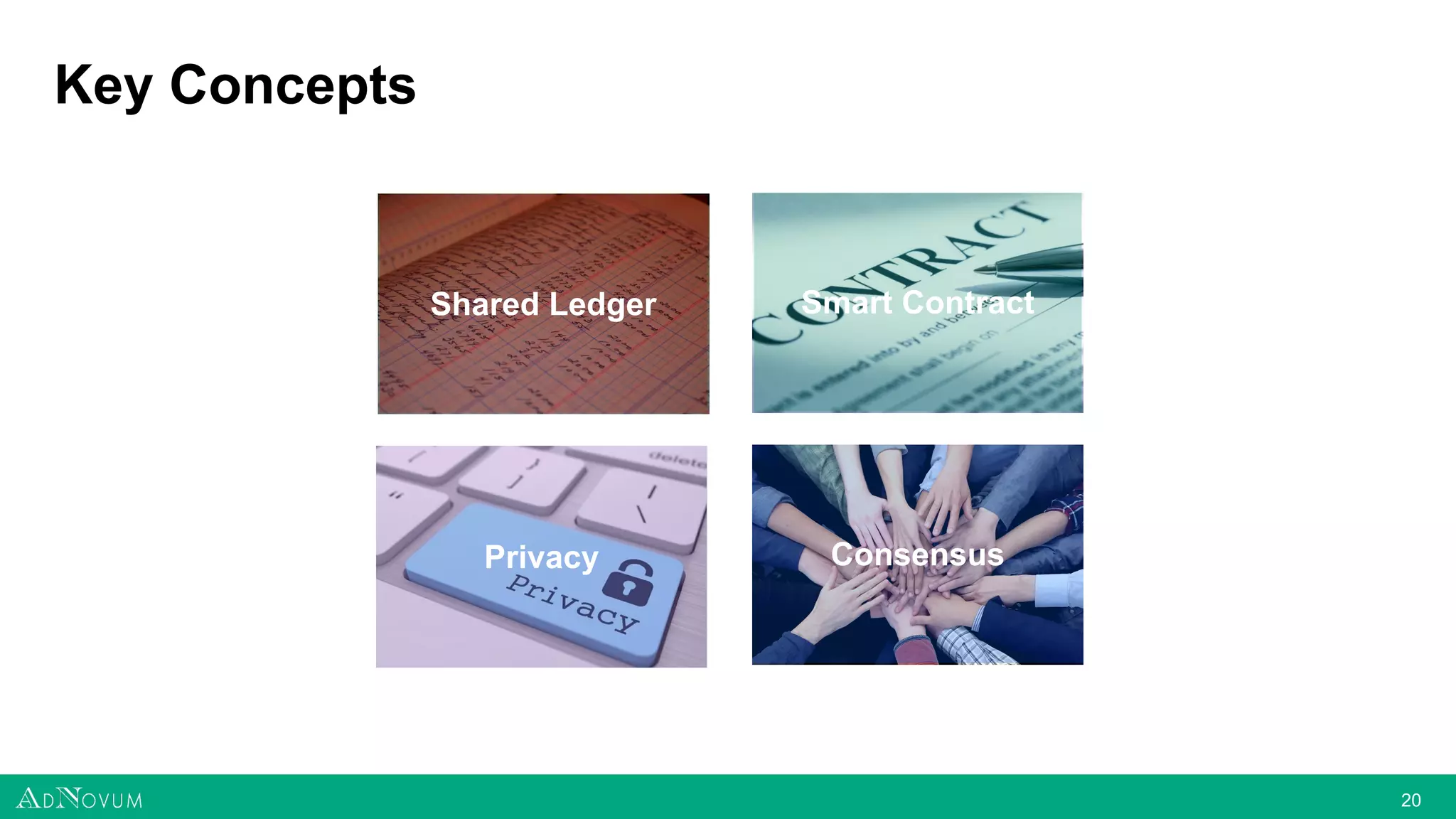
Key Concepts
Smart ContractShared Ledger
ConsensusPrivacy
2121
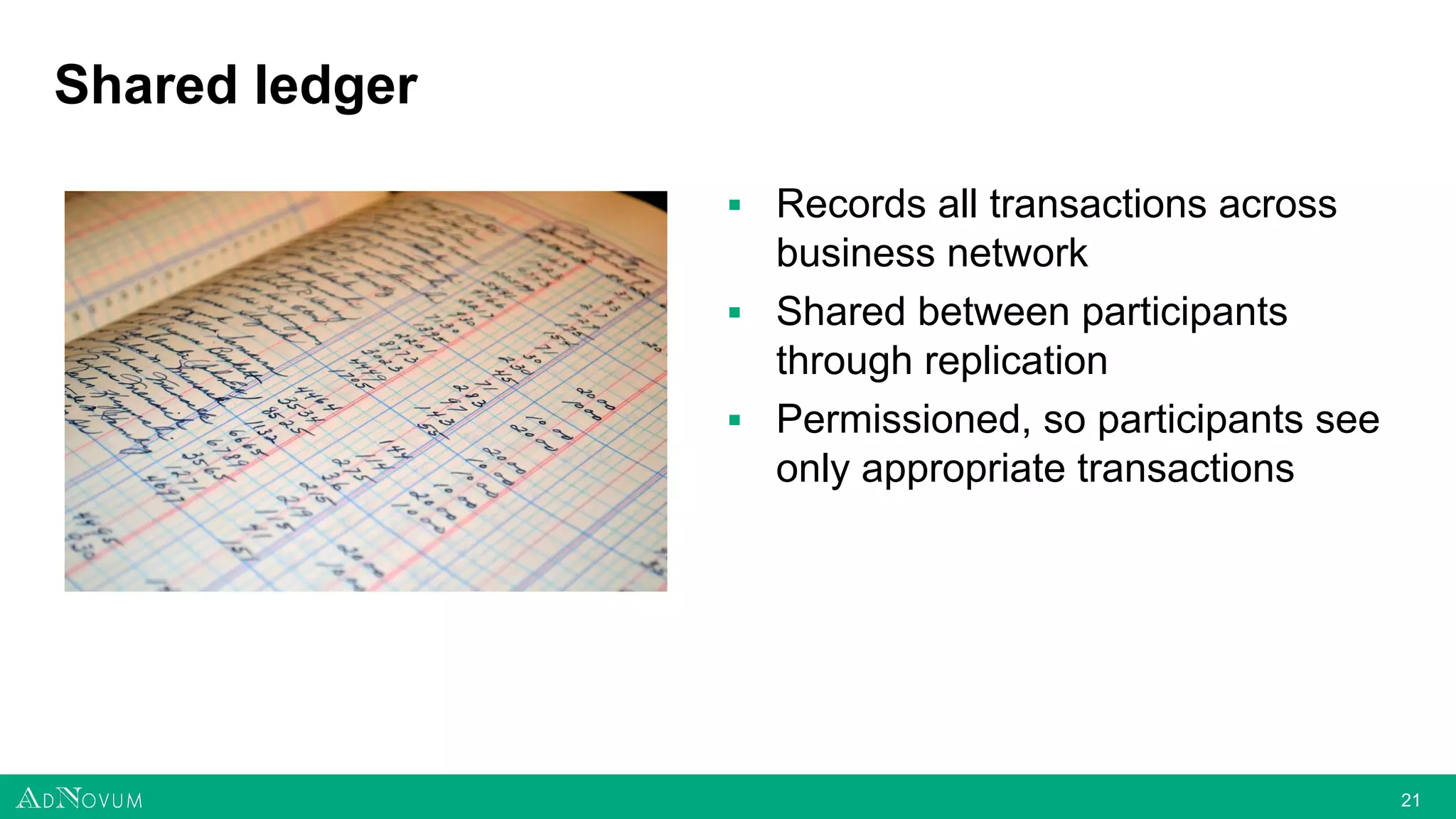
Shared ledger
▪ Records all transactions across
business network
▪ Shared between participants
through replication
▪ Permissioned, so participants see
only appropriate transactions
2222
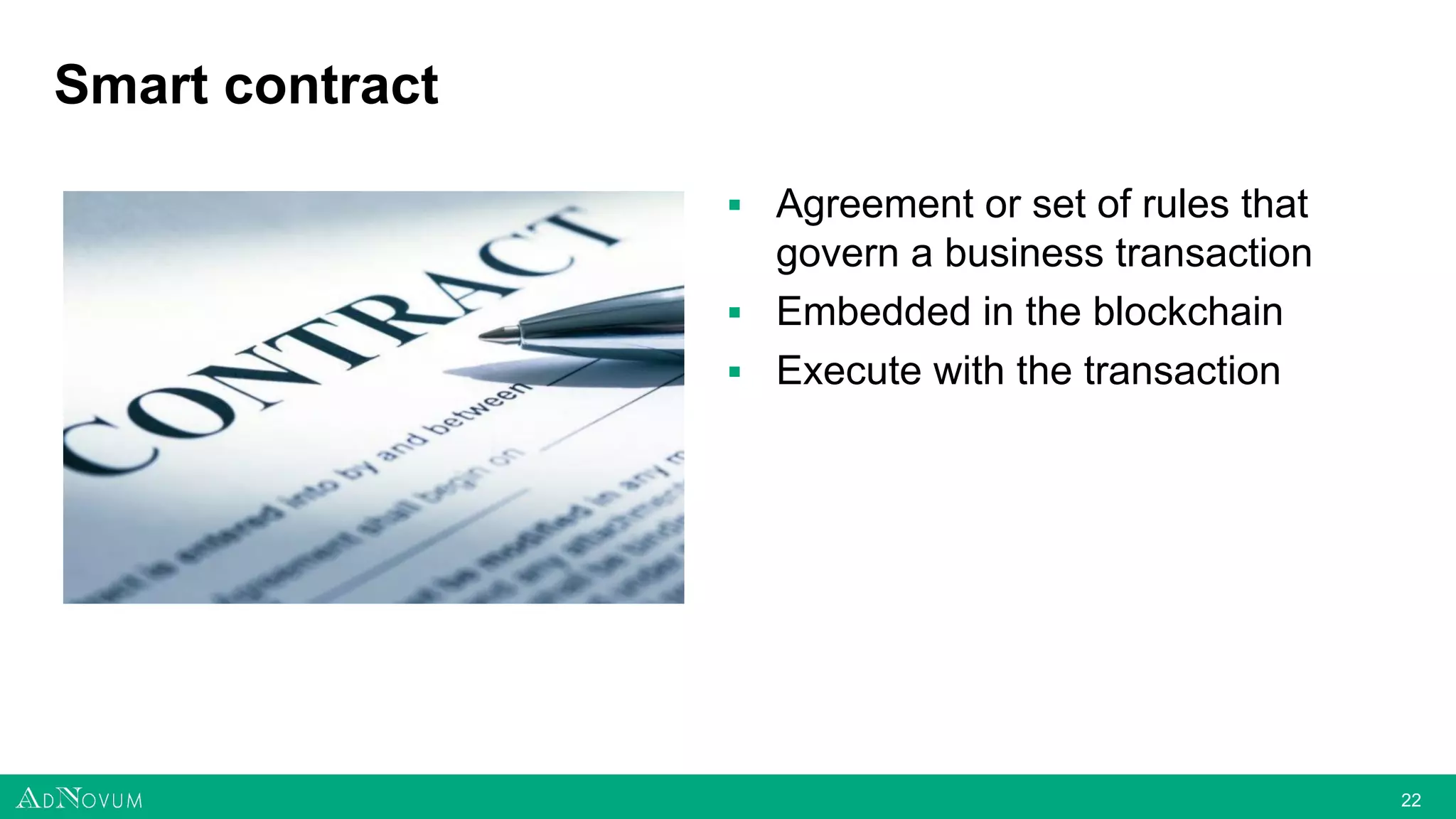
Smart contract
▪ Agreement or set of rules that
govern a business transaction
▪ Embedded in the blockchain
▪ Execute with the transaction
2323
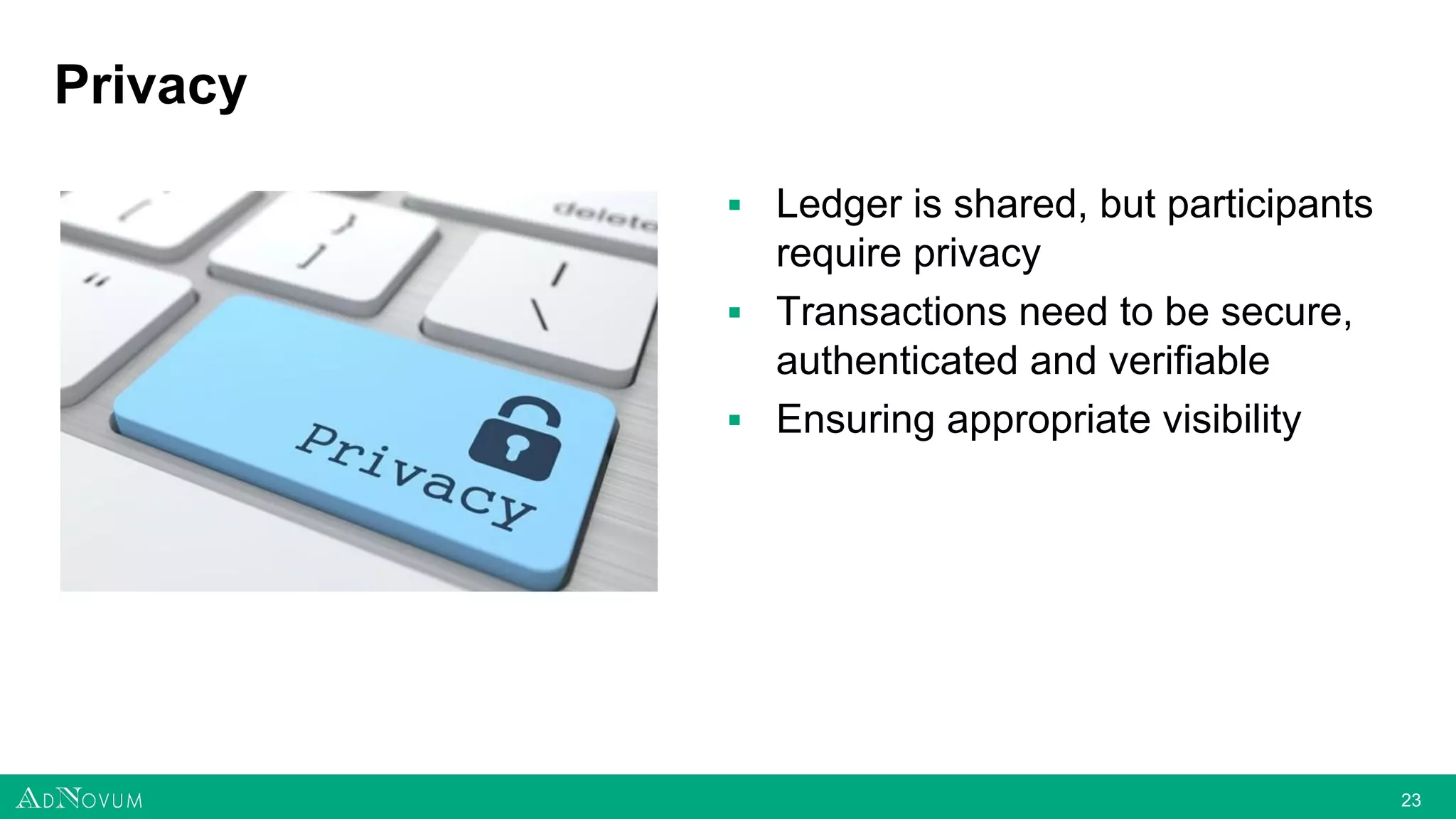
Privacy
▪ Ledger is shared, but participants
require privacy
▪ Transactions need to be secure,
authenticated and verifiable
▪ Ensuring appropriate visibility
2424
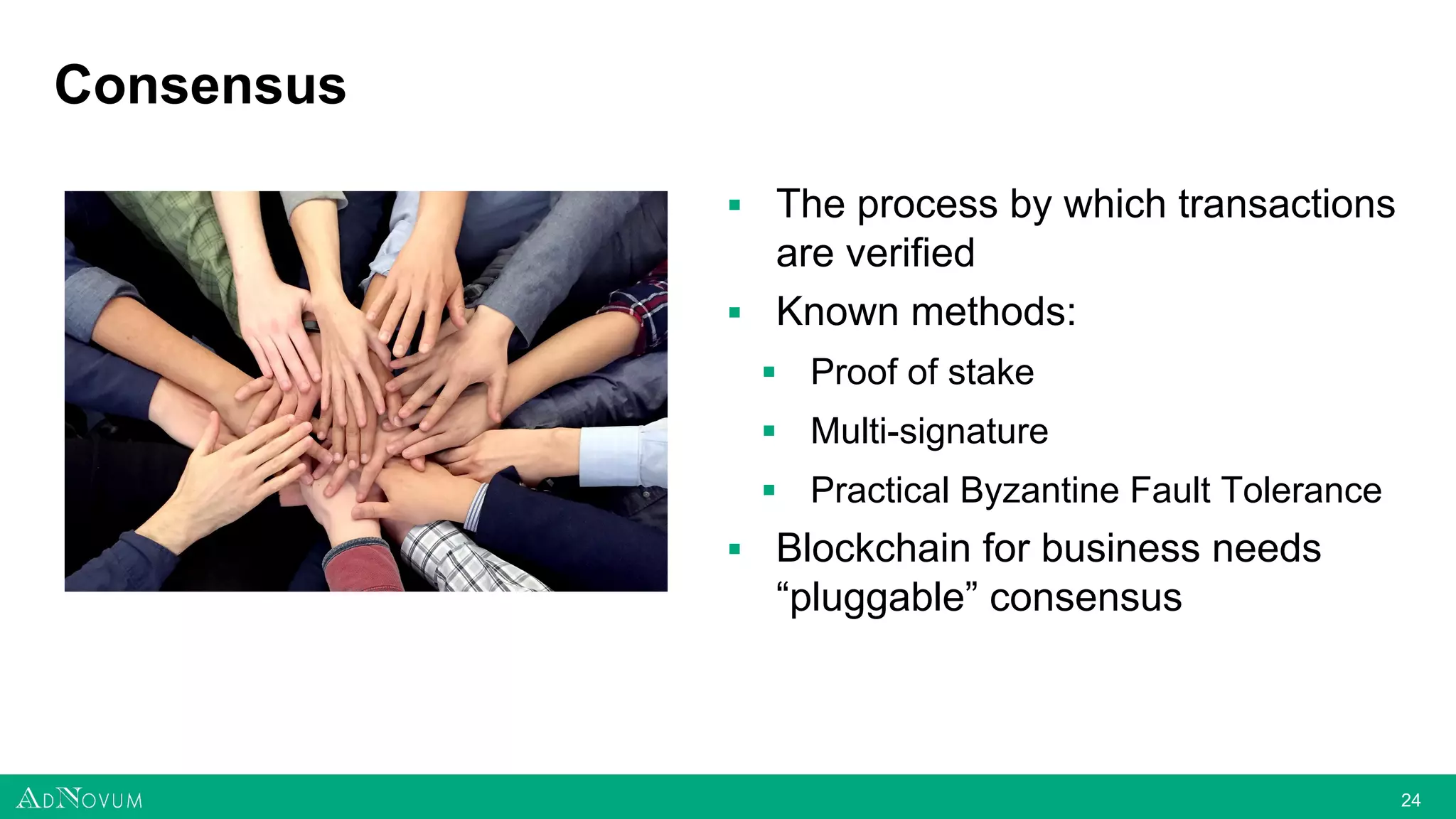
Consensus
▪ The process by which transactions
are verified
▪ Known methods:
▪ Proof of stake
▪ Multi-signature
▪ Practical Byzantine Fault Tolerance
▪ Blockchain for business needs
“pluggable” consensus
2525
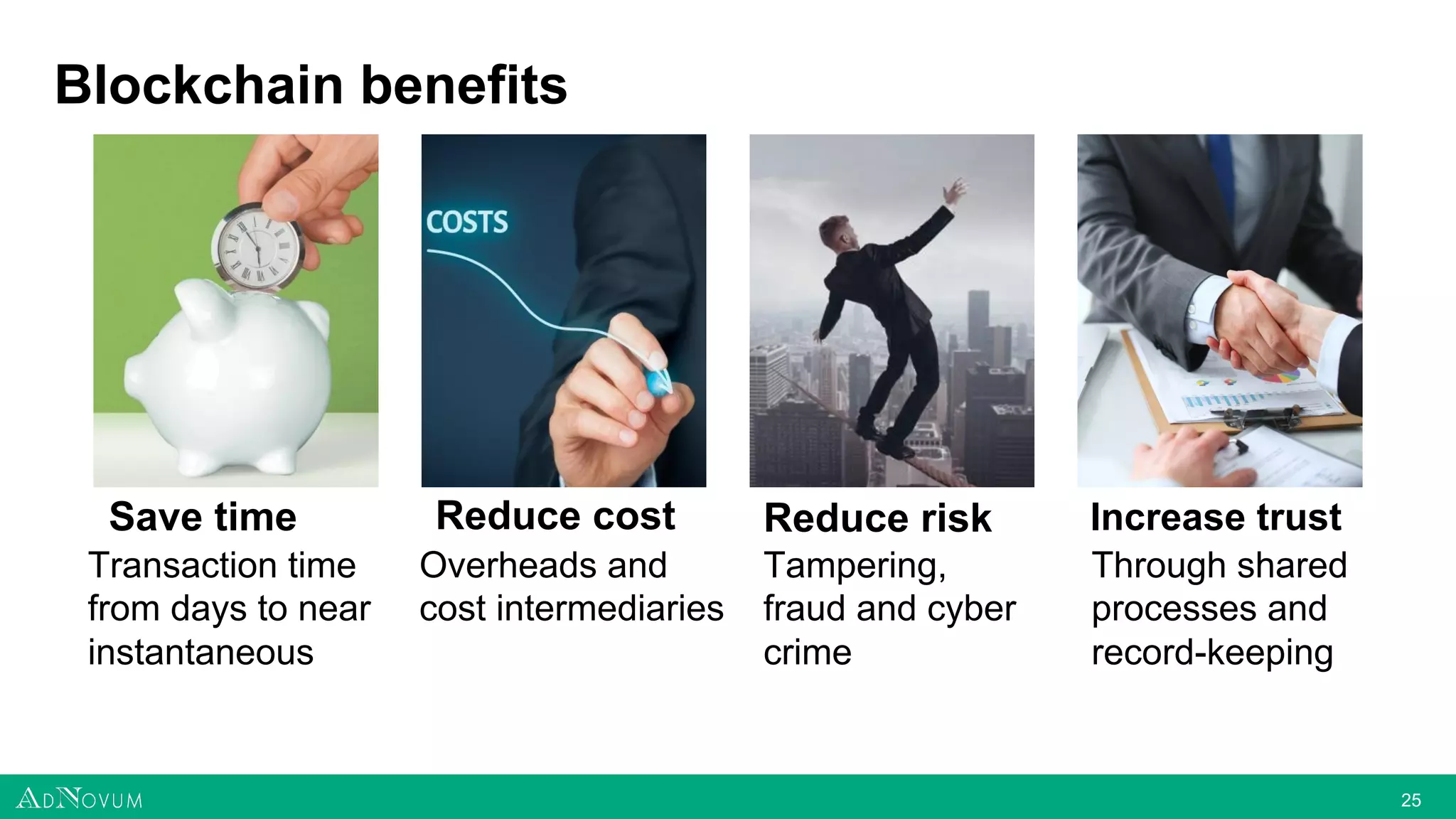
Blockchain benefits
Transaction time
from days to near
instantaneous
Overheads and
cost intermediaries
Tampering,
fraud and cyber
crime
Through shared
processes and
record-keeping
Save time Reduce cost Reduce risk Increase trust
2626
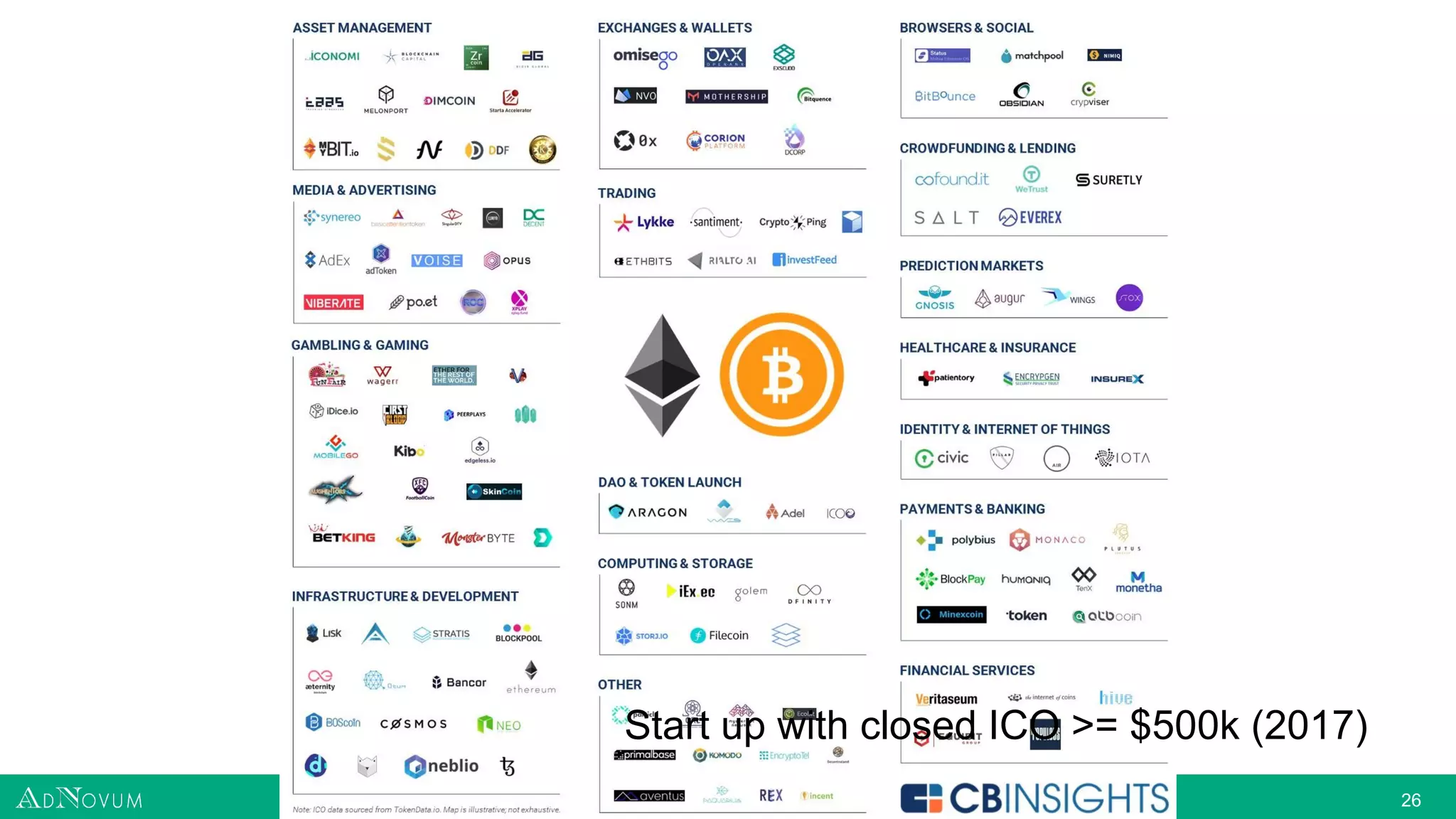
Start up with closed ICO >= $500k (2017)
2727
Q&A
2828

Blockchain fundamentals