Biomass Gasifier
 INNOVATOR 1 :Dr. SUDHIR PULORIA


PRESENTED BY: INDIRA INSTITUTE OF MANAGEMENT,PUNE
OVERVIEW
 Biomass   is basically an organic material,
  which includes wood, crop residues, solid
  waste, animal wastes, sewage, and waste
  from food processing
 Biomass gasifier benefits rural poor and
  the industrial sector on regular basis and is
  understood easily by every day users,
  whether it is a Farm or House, Hospital or a
  Clinic or a Factory
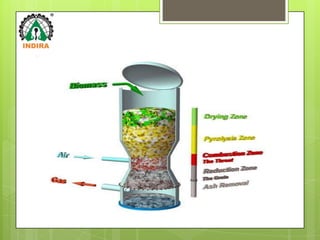
WHAT IS BIOMASS GASIFIER
 Biomass Gasifier is a thermo-chemical
 reactor where Biomass gasification takes
 place which is a conversion of solid fuels
 (Wood & Agricultural waste etc) into a
 combustible gas mixture normally called
 "Producer gas".
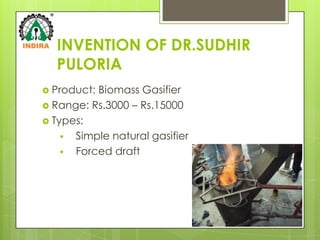
INVENTION OF DR.SUDHIR
  PULORIA
 Product:Biomass Gasifier
 Range: Rs.3000 – Rs.15000
 Types:
     Simple natural gasifier
     Forced draft
Simple Natural Gasifier
 Price:Rs 8000
 Pay Back Period: 100 days
 Wood consumption : Very high
 Smoke/Fume: Very high
 Fuel used: Agro based ( Cotton, soya
  husk)
Forced Draft
 Price:Rs 15000
 Pay back period: 60 days
 Wood consumption: Less as compared to
  simple natural gasifier
 Characteristics:
      more systematic
      ash removal system from down
      works on ac blower where primary
       and secondary combustion takes
       place
ADVANTAGES
 These  systems basically convert woody
  biomass /agricultural wastes like rice-husk,
  coconut waste etc into a combustible
  gas which can be used in a number of
  ways:
1. Burnt like a convenient gaseous fuel
   through appropriate burners in case of
   thermal applications.
2. Fed into gasoline engines (S.I. Engines) to
   replace gasoline etc.
CHALLENGES
 Availability
             of land
 Construction
 Collection    of agro waste for the
  production
 Viable only in the rural areas where ample
  raw material is available
OPPORTUNITIES IDENTIFIED
    In villages- this model can be substituted in
     the aata chakki shops
    In Naxalite area the power supply is absent.
     Hence, government can subsidize the gram
     panchayat to have this model as a substitute
     for the generators which are expensive
    It can replace fuels like:
1.     Coal
2.     Kerosene
3.     Electricity
USP
 Uses natural resource like solar energy-
  saving energy and cost
 Uses machinery parts available in the rural
  market
PROJECT FUTURE
 Future  is bright as the natural resources
  are depleting at a faster pace. Especially
  coal and hence it can be substituted
 Also, electricity demand is high and the
  supply is comparatively low. Thus, this
  model can help in fulfilling the difference
  in demand and supply
Benefits to the society
 Offersa sustainable option to all the rural
  people because they can run the gasifier
  and all the farm waste
 Nowadays all the farmers burn their farm
  grasses to clean it for the next use
 So 1 acre of farm land waste can sustain
  50 families

Biomass gasifier

  • 1.
    Biomass Gasifier INNOVATOR1 :Dr. SUDHIR PULORIA PRESENTED BY: INDIRA INSTITUTE OF MANAGEMENT,PUNE
  • 2.
    OVERVIEW  Biomass is basically an organic material, which includes wood, crop residues, solid waste, animal wastes, sewage, and waste from food processing  Biomass gasifier benefits rural poor and the industrial sector on regular basis and is understood easily by every day users, whether it is a Farm or House, Hospital or a Clinic or a Factory
  • 3.
    WHAT IS BIOMASSGASIFIER  Biomass Gasifier is a thermo-chemical reactor where Biomass gasification takes place which is a conversion of solid fuels (Wood & Agricultural waste etc) into a combustible gas mixture normally called "Producer gas".
  • 4.
    INVENTION OF DR.SUDHIR PULORIA  Product:Biomass Gasifier  Range: Rs.3000 – Rs.15000  Types:  Simple natural gasifier  Forced draft
  • 5.
    Simple Natural Gasifier Price:Rs 8000  Pay Back Period: 100 days  Wood consumption : Very high  Smoke/Fume: Very high  Fuel used: Agro based ( Cotton, soya husk)
  • 6.
    Forced Draft  Price:Rs15000  Pay back period: 60 days  Wood consumption: Less as compared to simple natural gasifier  Characteristics:  more systematic  ash removal system from down  works on ac blower where primary and secondary combustion takes place
  • 7.
    ADVANTAGES  These systems basically convert woody biomass /agricultural wastes like rice-husk, coconut waste etc into a combustible gas which can be used in a number of ways: 1. Burnt like a convenient gaseous fuel through appropriate burners in case of thermal applications. 2. Fed into gasoline engines (S.I. Engines) to replace gasoline etc.
  • 8.
    CHALLENGES  Availability of land  Construction  Collection of agro waste for the production  Viable only in the rural areas where ample raw material is available
  • 9.
    OPPORTUNITIES IDENTIFIED  In villages- this model can be substituted in the aata chakki shops  In Naxalite area the power supply is absent. Hence, government can subsidize the gram panchayat to have this model as a substitute for the generators which are expensive  It can replace fuels like: 1. Coal 2. Kerosene 3. Electricity
  • 10.
    USP  Uses naturalresource like solar energy- saving energy and cost  Uses machinery parts available in the rural market
  • 11.
    PROJECT FUTURE  Future is bright as the natural resources are depleting at a faster pace. Especially coal and hence it can be substituted  Also, electricity demand is high and the supply is comparatively low. Thus, this model can help in fulfilling the difference in demand and supply
  • 12.
    Benefits to thesociety  Offersa sustainable option to all the rural people because they can run the gasifier and all the farm waste  Nowadays all the farmers burn their farm grasses to clean it for the next use  So 1 acre of farm land waste can sustain 50 families