32.3 Primates and Human Origins
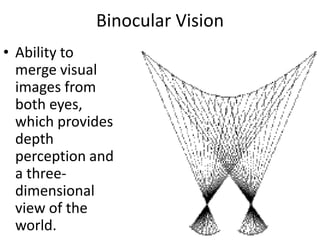
Binocular Vision Ability to merge visual images from both eyes, which provides depth perception and a three-dimensional view of the world.
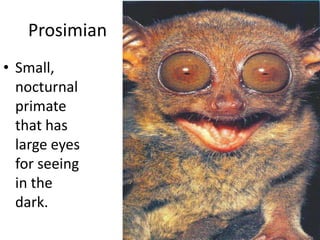
  Prosimian Small, nocturnal primate that has large eyes for seeing in the dark.
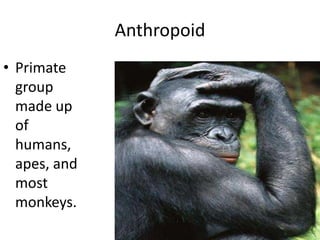
AnthropoidPrimate group made up of humans, apes, and most monkeys.
Prehensile Term used to refer to a long tail that can grasp branches.
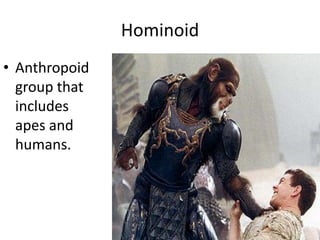
HominoidAnthropoid group that includes apes and humans.
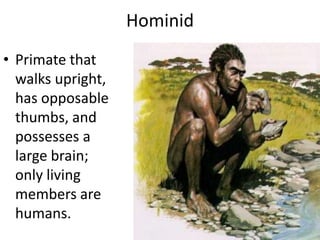
Hominid Primate that walks upright, has opposable thumbs, and possesses a large brain; only living members are humans.
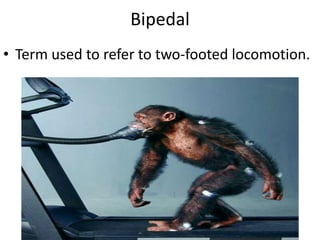
BipedalTerm used to refer to two-footed locomotion.
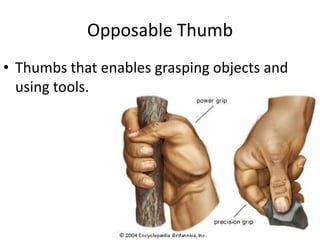
Opposable ThumbThumbs that enables grasping objects and using tools.
Key ConceptIn general, primates have binocular vision, a well-developed cerebrum, relatively long fingers and toes, and arms that can rotate around their shoulder joints.
Key ConceptPrimates that evolved from two of the earliest branches look very little like typical monkeys and are called prosimians. Members of the familiar primate group that includes monkeys, apes, and humans are called anthropoids.
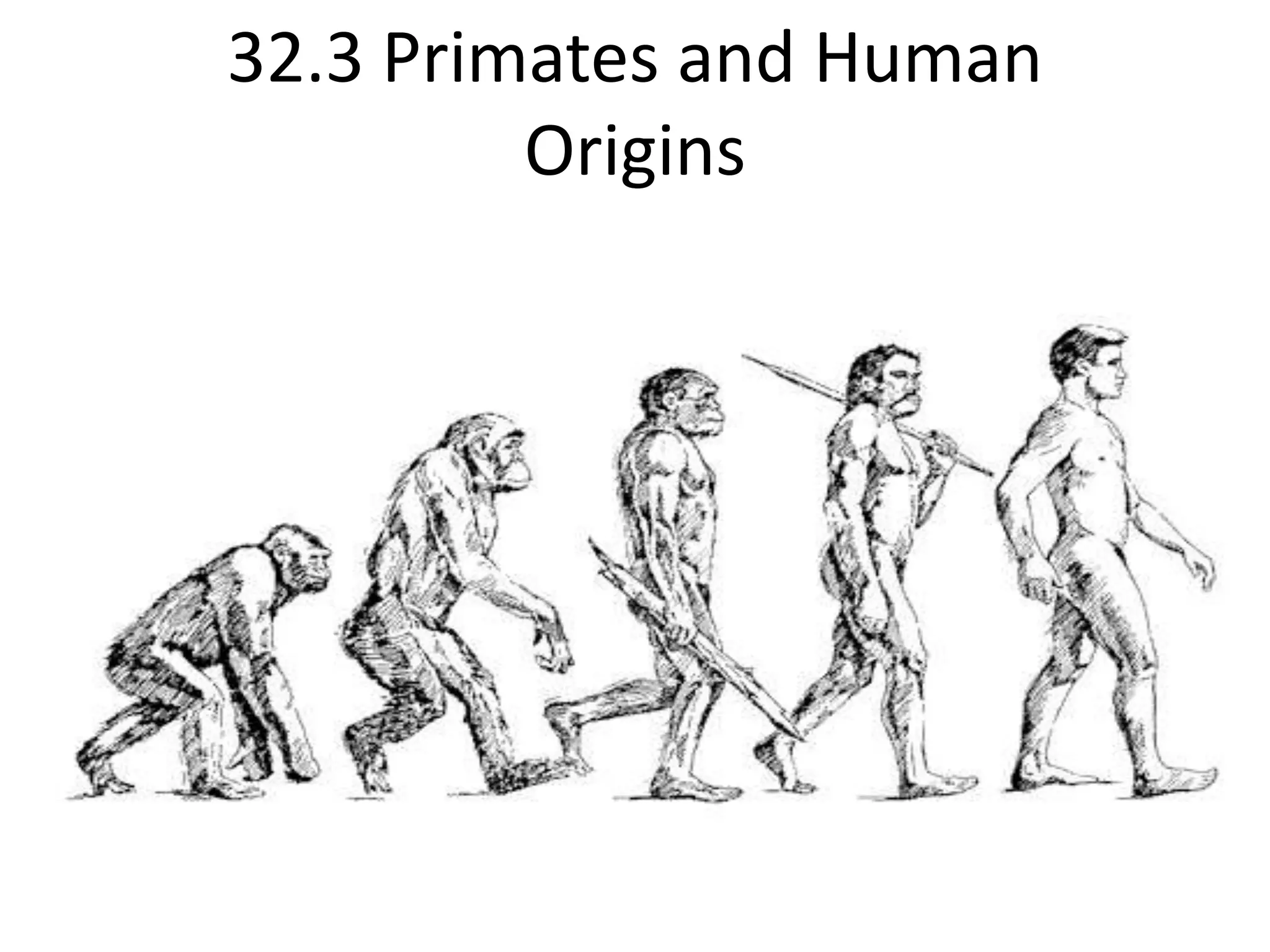
Key ConceptIt is now clear that hominid evolution did not proceed by the simple, straight-line transformation of one species into another. Rather, like the evolution of other mammalian groups, a series of complex adaptive radiations produced a large number of species whose relationships are difficult to determine.

Biology 32.3

  • 1.
    32.3 Primates andHuman Origins
  • 2.
    Binocular Vision Abilityto merge visual images from both eyes, which provides depth perception and a three-dimensional view of the world.
  • 3.
    ProsimianSmall, nocturnal primate that has large eyes for seeing in the dark.
  • 4.
    AnthropoidPrimate group madeup of humans, apes, and most monkeys.
  • 5.
    Prehensile Term usedto refer to a long tail that can grasp branches.
  • 6.
    HominoidAnthropoid group thatincludes apes and humans.
  • 7.
    Hominid Primate thatwalks upright, has opposable thumbs, and possesses a large brain; only living members are humans.
  • 8.
    BipedalTerm used torefer to two-footed locomotion.
  • 9.
    Opposable ThumbThumbs thatenables grasping objects and using tools.
  • 10.
    Key ConceptIn general,primates have binocular vision, a well-developed cerebrum, relatively long fingers and toes, and arms that can rotate around their shoulder joints.
  • 11.
    Key ConceptPrimates thatevolved from two of the earliest branches look very little like typical monkeys and are called prosimians. Members of the familiar primate group that includes monkeys, apes, and humans are called anthropoids.
  • 12.
    Key ConceptIt isnow clear that hominid evolution did not proceed by the simple, straight-line transformation of one species into another. Rather, like the evolution of other mammalian groups, a series of complex adaptive radiations produced a large number of species whose relationships are difficult to determine.