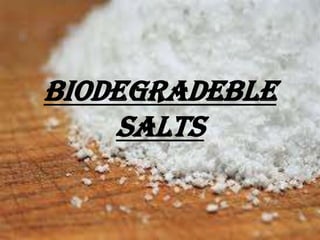
Biodegradeble
salts
What does biodegradable mean?
• Well by definition it means capable of
being decomposed by biological agents
like bacteria.
• Keep in mind that biodegradability doesn't
necessarily mean environmentally friendly.
Biodegradable soap
• A biodegradable soap is a cleaning agent that can
decompose naturally over time.
• These soaps can help reduce environmental impact
when hikers, backpackers, and campers need to
bathe or clean their belongings.
• Depending on the formulation of soap that is
purchased, it can be used on the body, face, hair,
hands and objects such as dishes and clothes.
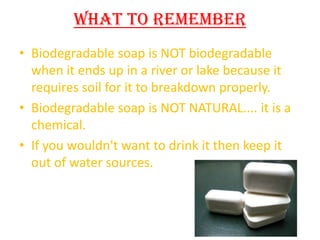
What To Remember
• Biodegradable soap is NOT biodegradable
when it ends up in a river or lake because it
requires soil for it to breakdown properly.
• Biodegradable soap is NOT NATURAL.... it is a
chemical.
• If you wouldn't want to drink it then keep it
out of water sources.
What to use instead of Biodegradable Soap
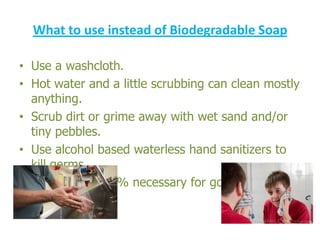
• Use a washcloth.
• Hot water and a little scrubbing can clean mostly
anything.
• Scrub dirt or grime away with wet sand and/or
tiny pebbles.
• Use alcohol based waterless hand sanitizers to
kill germs.
• Soap is not 100% necessary for good personal
hygiene
SO ARE SALTS
BIODEGRADEABLE?
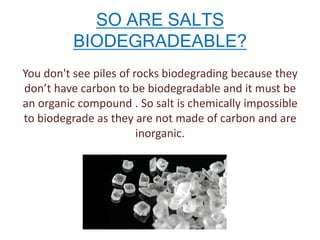
You don't see piles of rocks biodegrading because they
don’t have carbon to be biodegradable and it must be
an organic compound . So salt is chemically impossible
to biodegrade as they are not made of carbon and are
inorganic.
The fate of fatty acid salts in aqueous systems is
complicated by the fact that there are a
numbers of water soluble and water insoluble
groups and combinations of these.
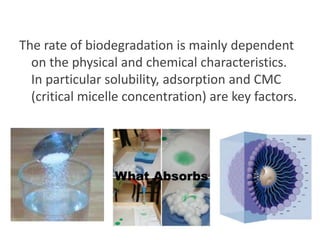
The rate of biodegradation is mainly dependent
on the physical and chemical characteristics.
In particular solubility, adsorption and CMC
(critical micelle concentration) are key factors.
• Unlike detergent, soap does not
contribute the excess phosphates
to the environment that cause
over growth of algae.
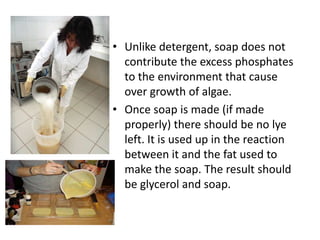
• Once soap is made (if made
properly) there should be no lye
left. It is used up in the reaction
between it and the fat used to
make the soap. The result should
be glycerol and soap.
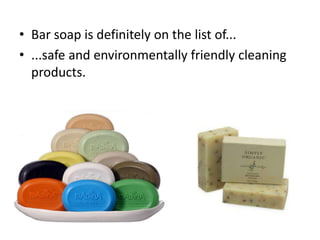
• Bar soap is definitely on the list of...
• ...safe and environmentally friendly cleaning
products.

Biodegradable Salts Chemistry Class 10

  • 1.
  • 2.
    What does biodegradablemean? • Well by definition it means capable of being decomposed by biological agents like bacteria. • Keep in mind that biodegradability doesn't necessarily mean environmentally friendly.
  • 3.
    Biodegradable soap • Abiodegradable soap is a cleaning agent that can decompose naturally over time. • These soaps can help reduce environmental impact when hikers, backpackers, and campers need to bathe or clean their belongings. • Depending on the formulation of soap that is purchased, it can be used on the body, face, hair, hands and objects such as dishes and clothes.
  • 4.
    What To Remember •Biodegradable soap is NOT biodegradable when it ends up in a river or lake because it requires soil for it to breakdown properly. • Biodegradable soap is NOT NATURAL.... it is a chemical. • If you wouldn't want to drink it then keep it out of water sources.
  • 5.
    What to useinstead of Biodegradable Soap • Use a washcloth. • Hot water and a little scrubbing can clean mostly anything. • Scrub dirt or grime away with wet sand and/or tiny pebbles. • Use alcohol based waterless hand sanitizers to kill germs. • Soap is not 100% necessary for good personal hygiene
  • 6.
    SO ARE SALTS BIODEGRADEABLE? Youdon't see piles of rocks biodegrading because they don’t have carbon to be biodegradable and it must be an organic compound . So salt is chemically impossible to biodegrade as they are not made of carbon and are inorganic.
  • 7.
    The fate offatty acid salts in aqueous systems is complicated by the fact that there are a numbers of water soluble and water insoluble groups and combinations of these.
  • 8.
    The rate ofbiodegradation is mainly dependent on the physical and chemical characteristics. In particular solubility, adsorption and CMC (critical micelle concentration) are key factors.
  • 9.
    • Unlike detergent,soap does not contribute the excess phosphates to the environment that cause over growth of algae. • Once soap is made (if made properly) there should be no lye left. It is used up in the reaction between it and the fat used to make the soap. The result should be glycerol and soap.
  • 10.
    • Bar soapis definitely on the list of... • ...safe and environmentally friendly cleaning products.