BIGFOOT
By: Rebecca Kim
Claim
Although Bigfoot’s existence is very
questionable, NorthAmerica does contain
an ecosystem, such as the Kodiak Island in
Alaska, where such a creature could exist, as
evidenced by Gigantopithecus Blacki’s
ability to survive in a similar environment.
With the correlations between Bigfoot and
Blacki, this NorthAmerican ecosystem can
hold the necessary dietary needs and
natural resources required to sustain
Bigfoot.
Similarities with
Gigantopithecus Blacki
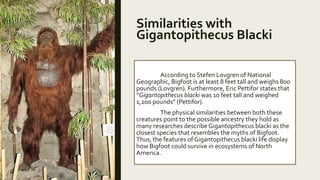
According to Stefen Lovgren of National
Geographic, Bigfoot is at least 8 feet tall and weighs 800
pounds (Lovgren). Furthermore, Eric Pettifor states that
“Gigantopithecus blacki was 10 feet tall and weighed
1,200 pounds” (Pettifor).
The physical similarities between both these
creatures point to the possible ancestry they hold as
many researches describe Gigantopithecus blacki as the
closest species that resembles the myths of Bigfoot.
Thus, the features of Gigantopithecus blacki life display
how Bigfoot could survive in ecosystems of North
America.
Diet
The Gigantopithecus Blacki and Bigfoot can be
seen in similar lights regarding food supply.The
Gigantopithecus Blacki had “a mixed diet of fruits and
seeds from the fig family Moraceae and some kind of
grasses” (Wayman).Through inspection of Blacki’s
teeth, it was found that “the canine teeth are not sharp
and pointed, but are rather broad and flat” (Pettifor),
displaying their herbivorous nature. Many ecosystems in
NorthAmerica, especially biomes resembling tropical
rain forests, could provide the mixture of fruits, and
grasses needed to suffice the possible Bigfoot diet.
Kodiak Island Rainforest in Alaska
Researcher Russell Ciochon explains that the
habitats of the Gigantopithecus Blacki “were
subtropical to tropical forested settings, since this
family does not occur in savanna or
savanna/woodland habitats” (Ciochon 8123).
Therefore, one specific ecosystem in NorthAmerica
that makes sense is the Kodiak Island Rainforest in
Alaska.As it is the largest temperate rain forest in
NorthAmerica and holds wildlife ranging from deers
and salmon to bears and fox, the Kodiak Island
provides the necessary resources and favorable
conditions for a creature like Bigfoot.
Therefore…
Bigfoot can exist in NorthAmerican ecosystems
that match largeAsian rain forests because these
ecosystems have proven to sustain a similar species,
Gigantopithecus blacki, with their abundance of
natural resources and favorable environmental
conditions.

Bigfoot

  • 1.
  • 2.
    Claim Although Bigfoot’s existenceis very questionable, NorthAmerica does contain an ecosystem, such as the Kodiak Island in Alaska, where such a creature could exist, as evidenced by Gigantopithecus Blacki’s ability to survive in a similar environment. With the correlations between Bigfoot and Blacki, this NorthAmerican ecosystem can hold the necessary dietary needs and natural resources required to sustain Bigfoot.
  • 3.
    Similarities with Gigantopithecus Blacki Accordingto Stefen Lovgren of National Geographic, Bigfoot is at least 8 feet tall and weighs 800 pounds (Lovgren). Furthermore, Eric Pettifor states that “Gigantopithecus blacki was 10 feet tall and weighed 1,200 pounds” (Pettifor). The physical similarities between both these creatures point to the possible ancestry they hold as many researches describe Gigantopithecus blacki as the closest species that resembles the myths of Bigfoot. Thus, the features of Gigantopithecus blacki life display how Bigfoot could survive in ecosystems of North America.
  • 4.
    Diet The Gigantopithecus Blackiand Bigfoot can be seen in similar lights regarding food supply.The Gigantopithecus Blacki had “a mixed diet of fruits and seeds from the fig family Moraceae and some kind of grasses” (Wayman).Through inspection of Blacki’s teeth, it was found that “the canine teeth are not sharp and pointed, but are rather broad and flat” (Pettifor), displaying their herbivorous nature. Many ecosystems in NorthAmerica, especially biomes resembling tropical rain forests, could provide the mixture of fruits, and grasses needed to suffice the possible Bigfoot diet.
  • 5.
    Kodiak Island Rainforestin Alaska Researcher Russell Ciochon explains that the habitats of the Gigantopithecus Blacki “were subtropical to tropical forested settings, since this family does not occur in savanna or savanna/woodland habitats” (Ciochon 8123). Therefore, one specific ecosystem in NorthAmerica that makes sense is the Kodiak Island Rainforest in Alaska.As it is the largest temperate rain forest in NorthAmerica and holds wildlife ranging from deers and salmon to bears and fox, the Kodiak Island provides the necessary resources and favorable conditions for a creature like Bigfoot.
  • 6.
    Therefore… Bigfoot can existin NorthAmerican ecosystems that match largeAsian rain forests because these ecosystems have proven to sustain a similar species, Gigantopithecus blacki, with their abundance of natural resources and favorable environmental conditions.