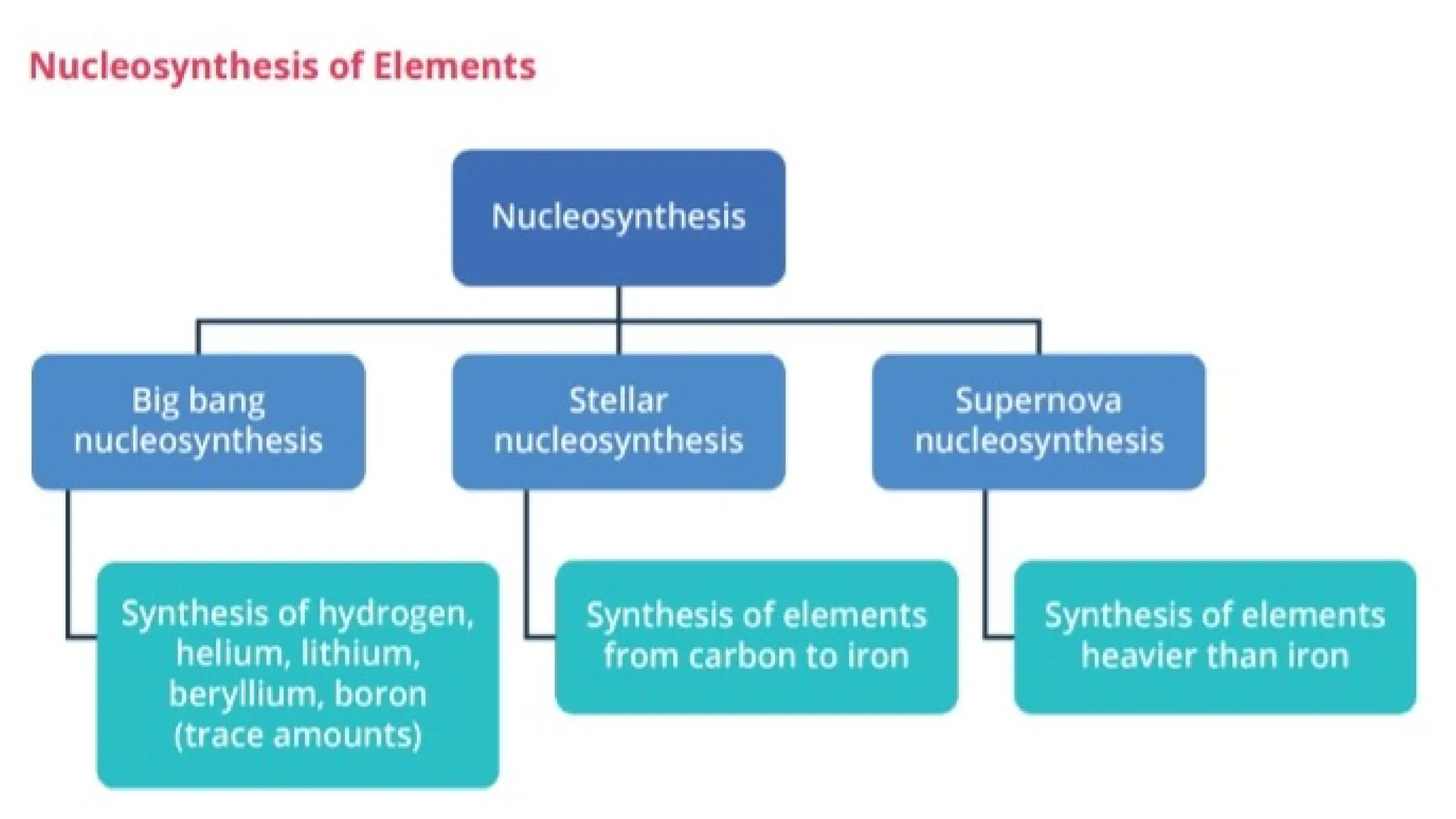
BIGBANG THEORY AND
ORIGIN OF THE LIGHT
ELEMENTS
https://en.wikipedia.org/wiki/Big_Bang
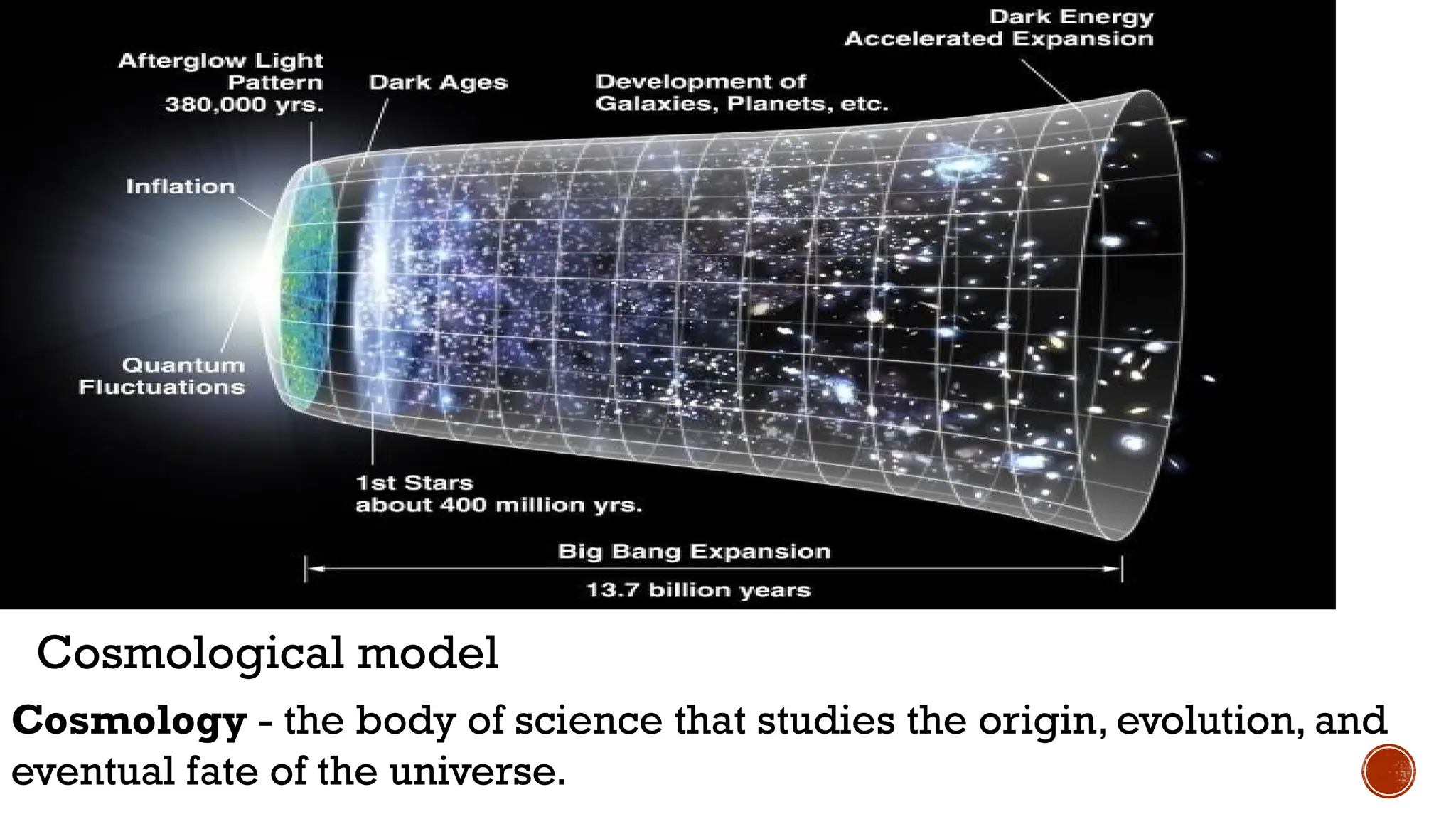
Cosmology - the body of science that studies the origin, evolution, and
eventual fate of the universe.
Cosmological model
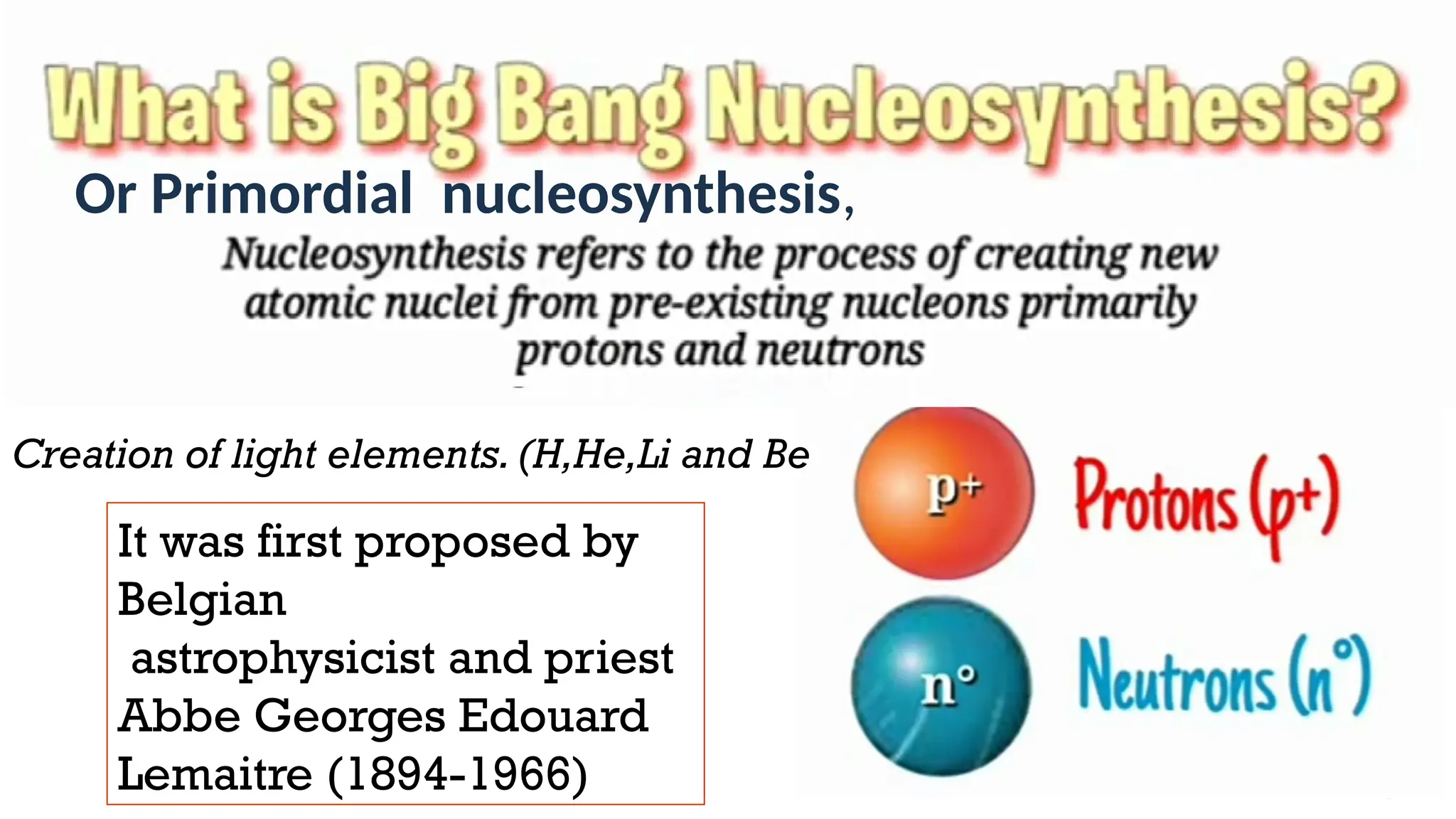
It was first proposed by
Belgian
astrophysicist and priest
Abbe Georges Edouard
Lemaitre (1894-1966)
Or Primordial nucleosynthesis,
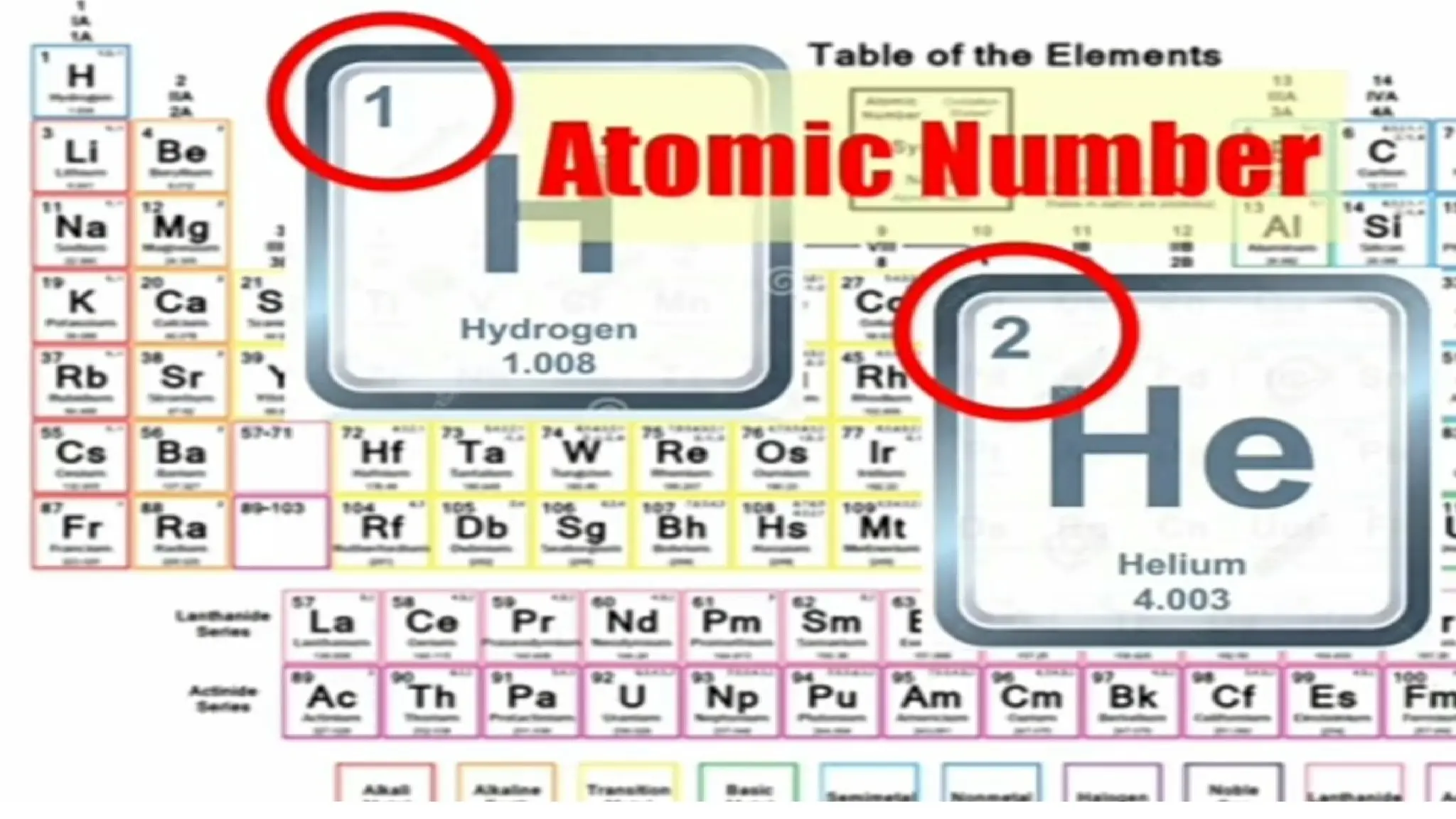
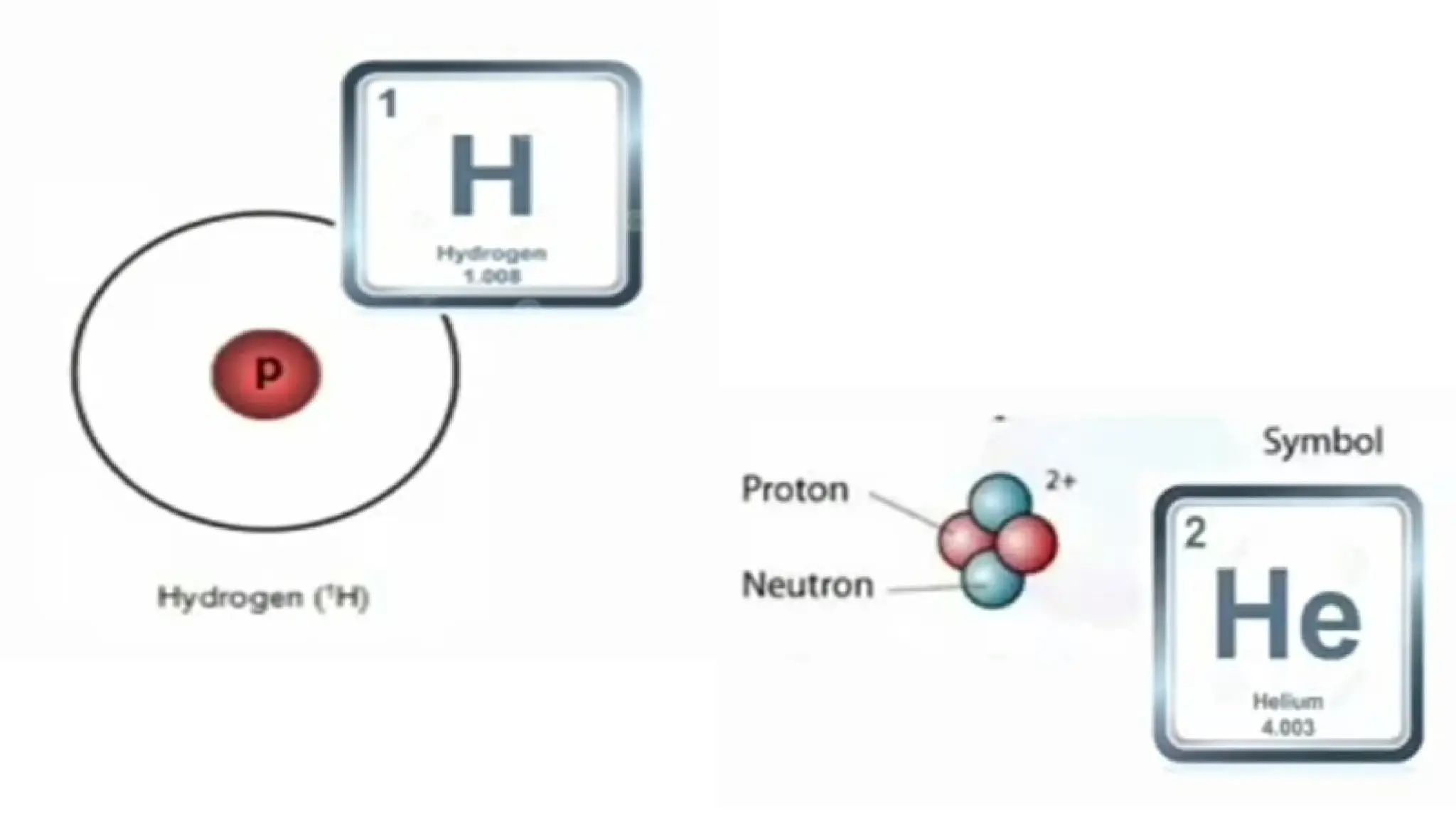
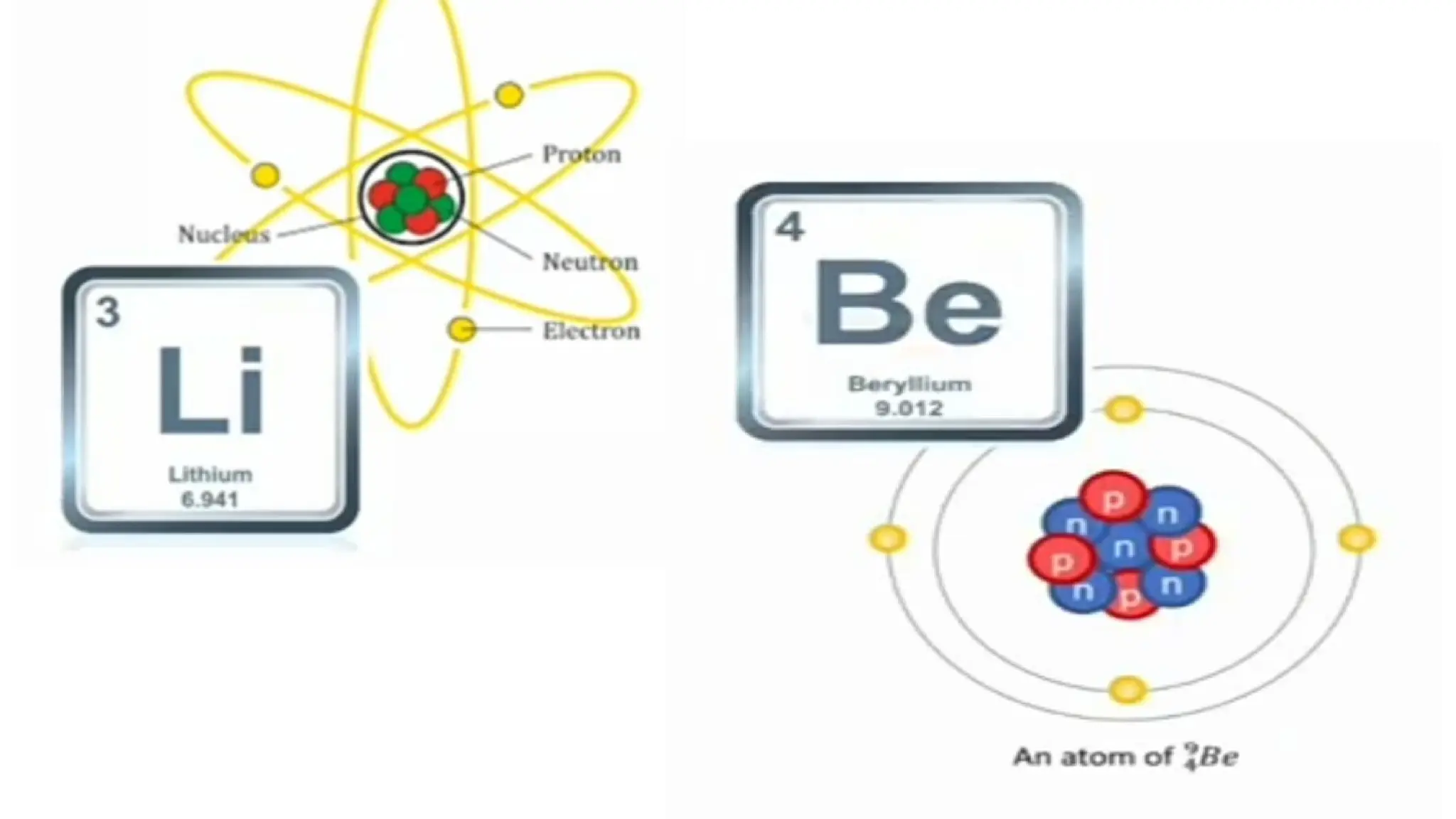
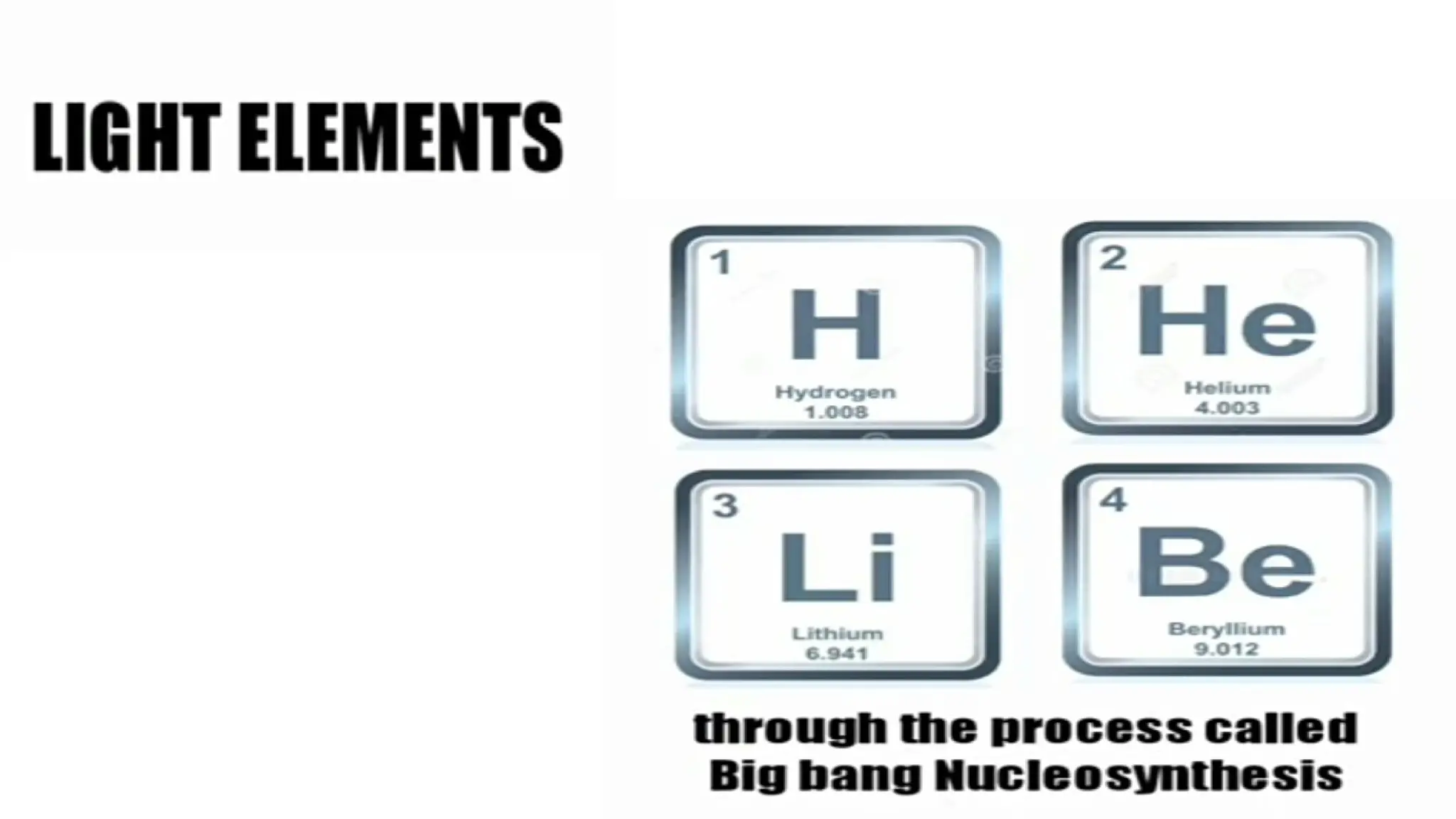
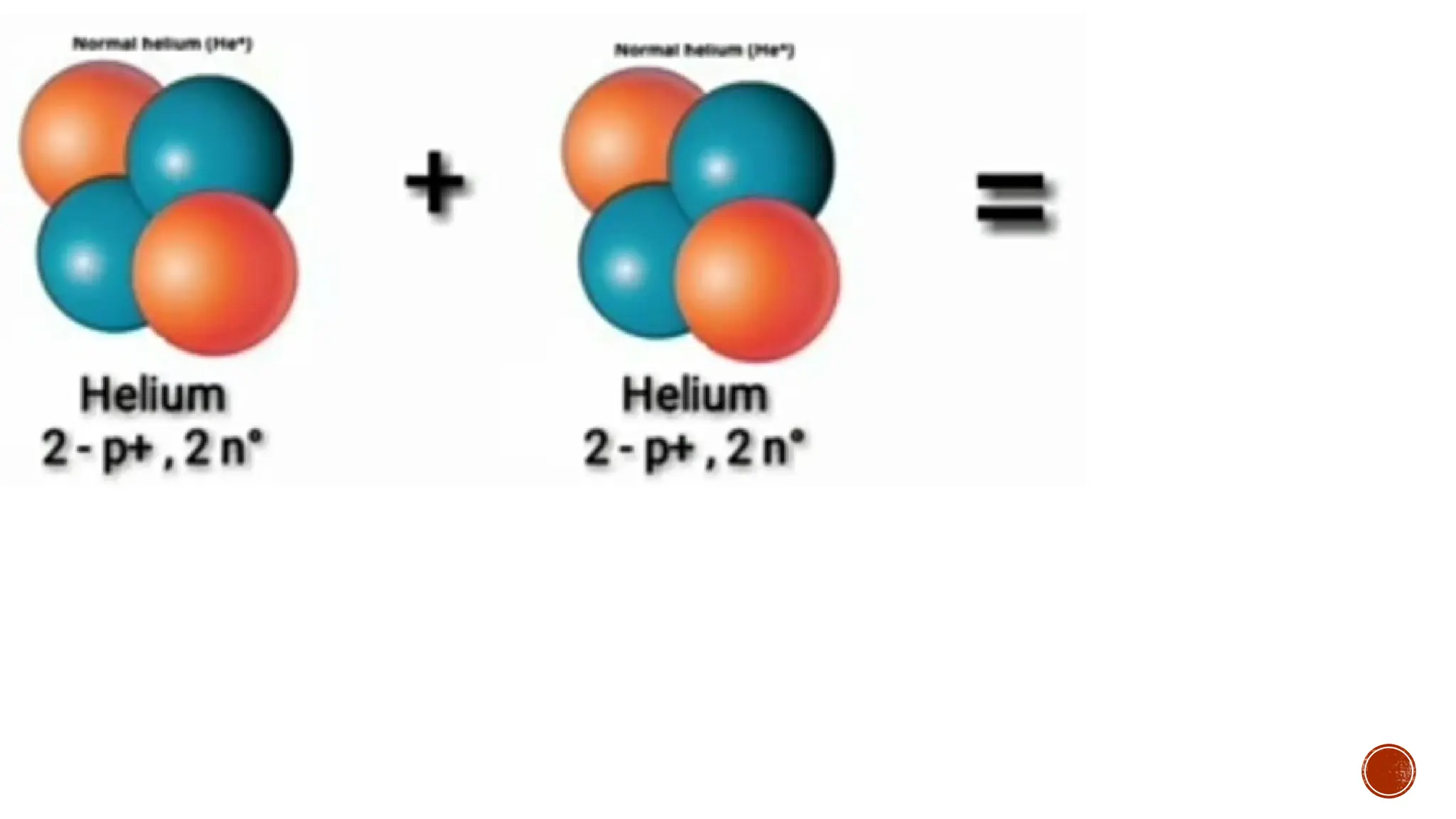
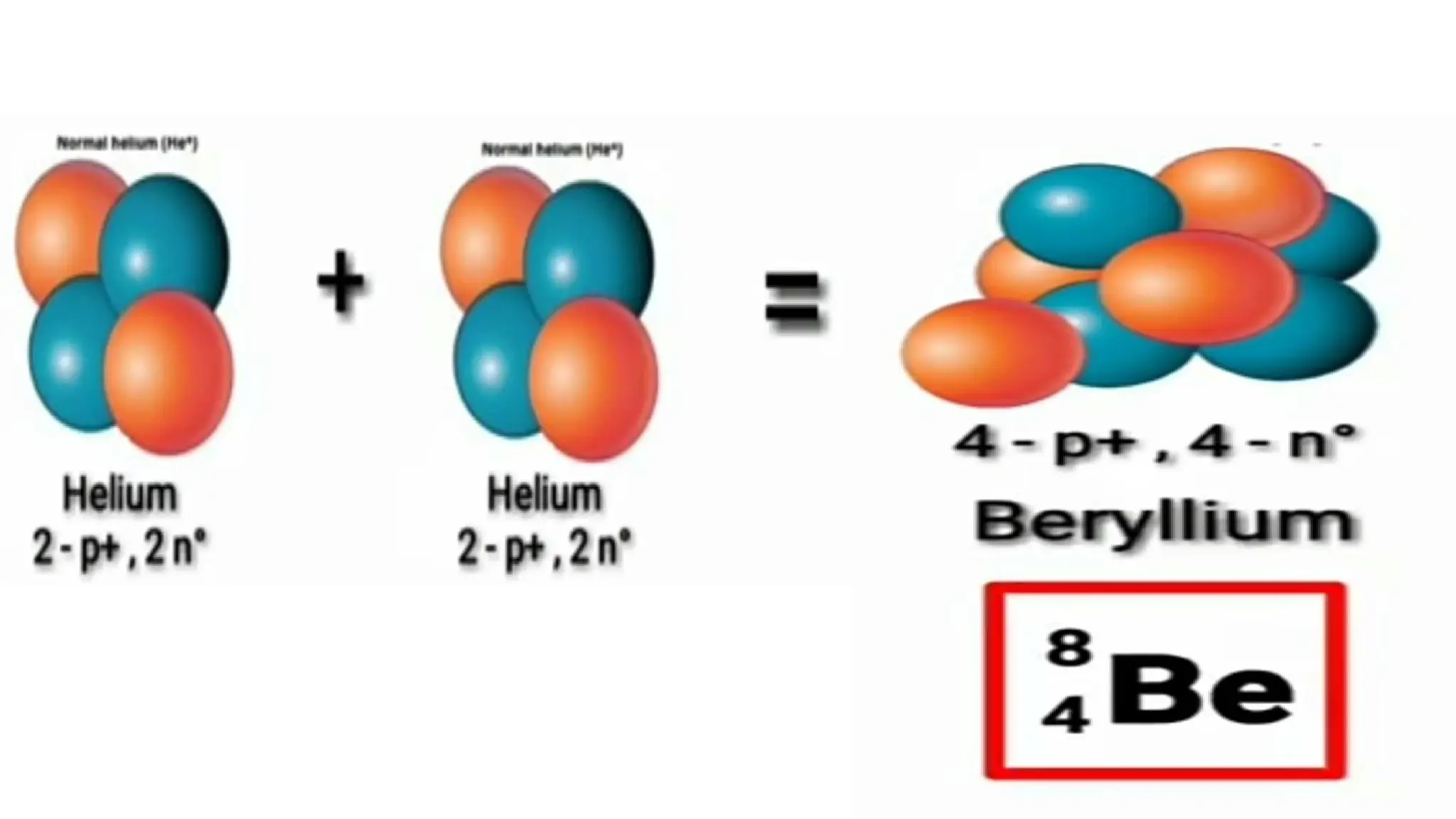
Creation of light elements. (H,He,Li and Be
THE BIG BANG THEORY
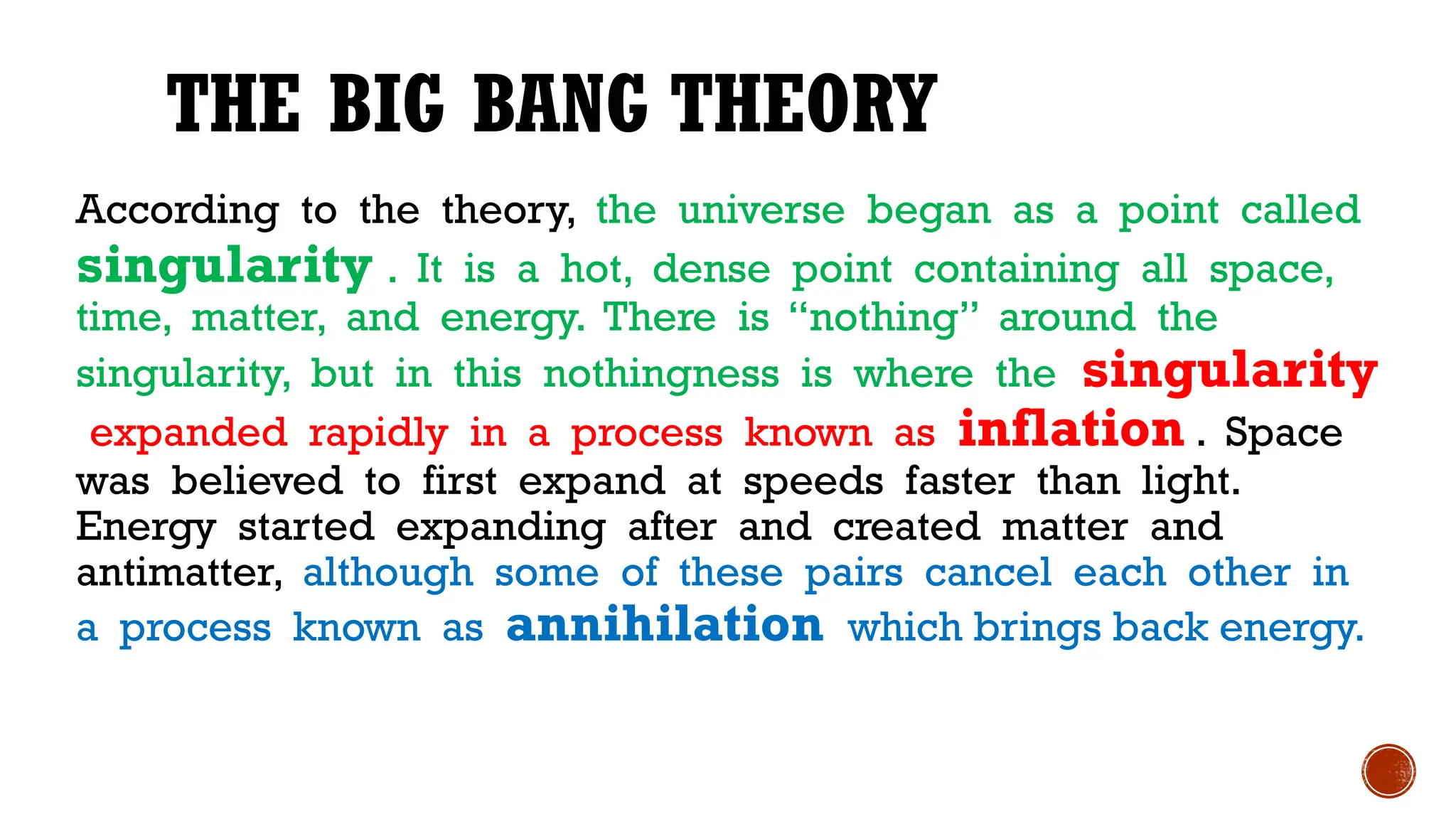
According to the theory, the universe began as a point called
singularity . It is a hot, dense point containing all space,
time, matter, and energy. There is “nothing” around the
singularity, but in this nothingness is where the singularity
expanded rapidly in a process known as inflation . Space
was believed to first expand at speeds faster than light.
Energy started expanding after and created matter and
antimatter, although some of these pairs cancel each other in
a process known as annihilation which brings back energy.
THE BIG BANG THEORY
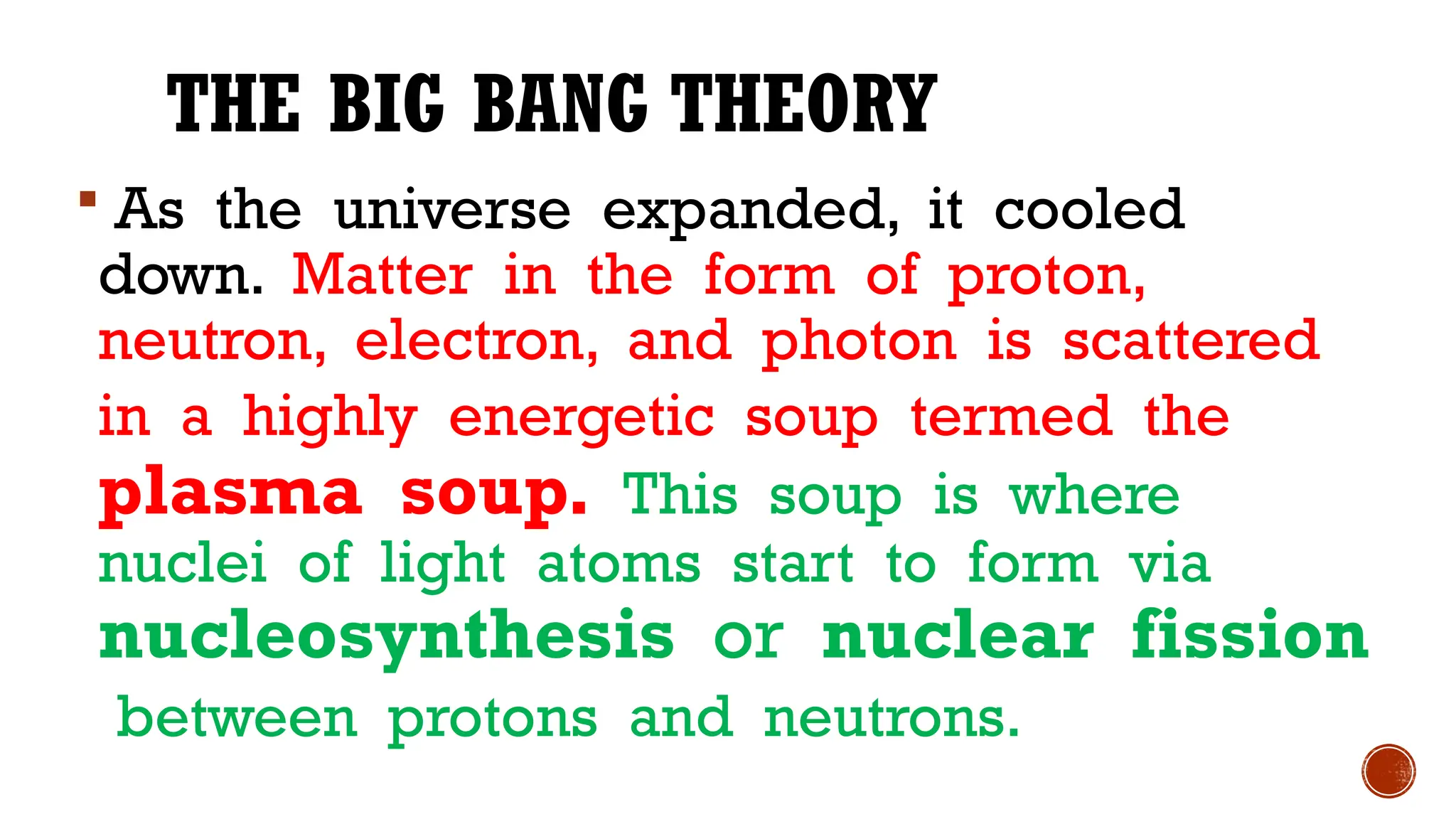
 As the universe expanded, it cooled
down. Matter in the form of proton,
neutron, electron, and photon is scattered
in a highly energetic soup termed the
plasma soup. This soup is where
nuclei of light atoms start to form via
nucleosynthesis or nuclear fission
between protons and neutrons.
THE BIG BANG THEORY

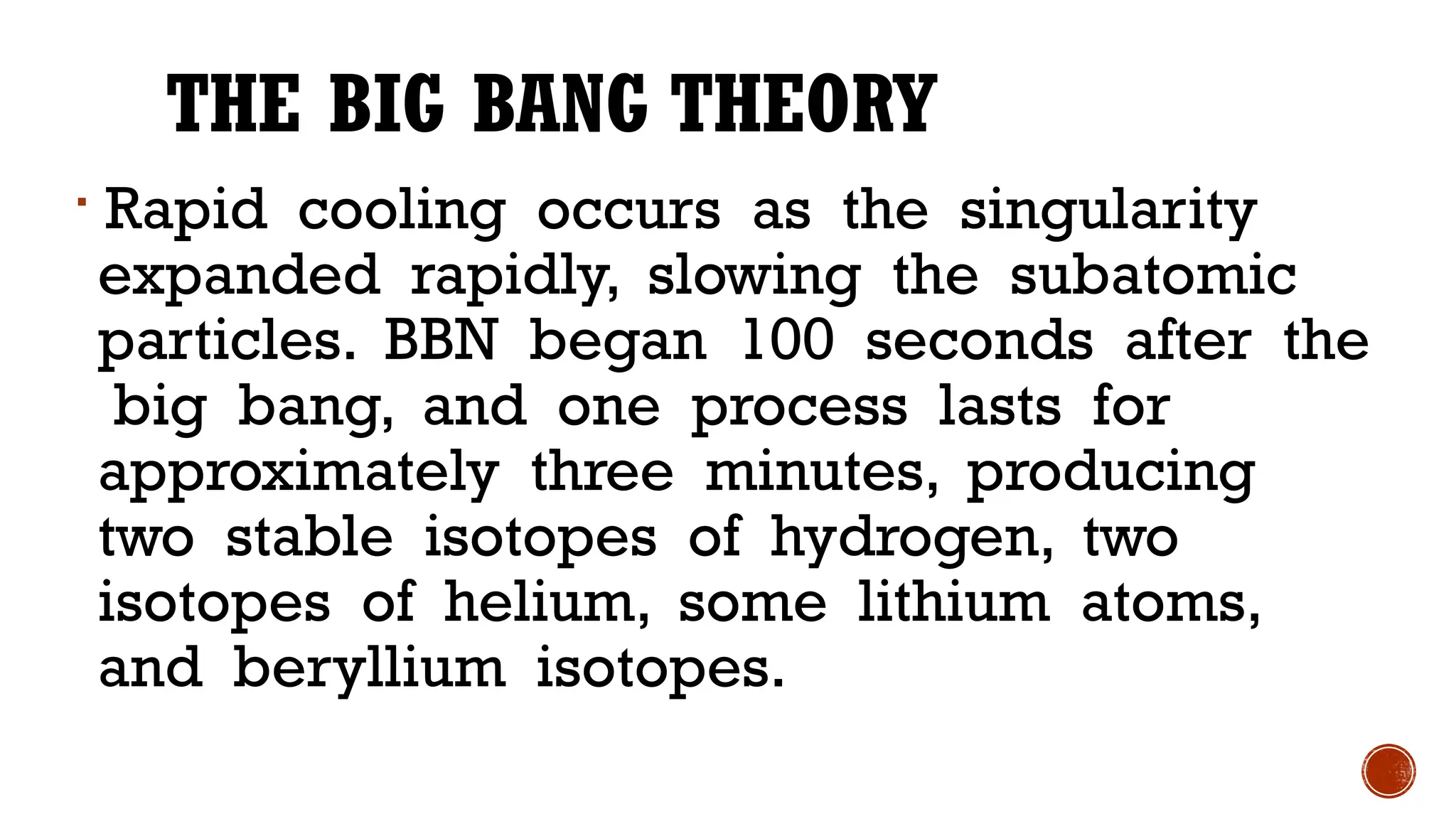
Rapid cooling occurs as the singularity
expanded rapidly, slowing the subatomic
particles. BBN began 100 seconds after the
big bang, and one process lasts for
approximately three minutes, producing
two stable isotopes of hydrogen, two
isotopes of helium, some lithium atoms,
and beryllium isotopes.
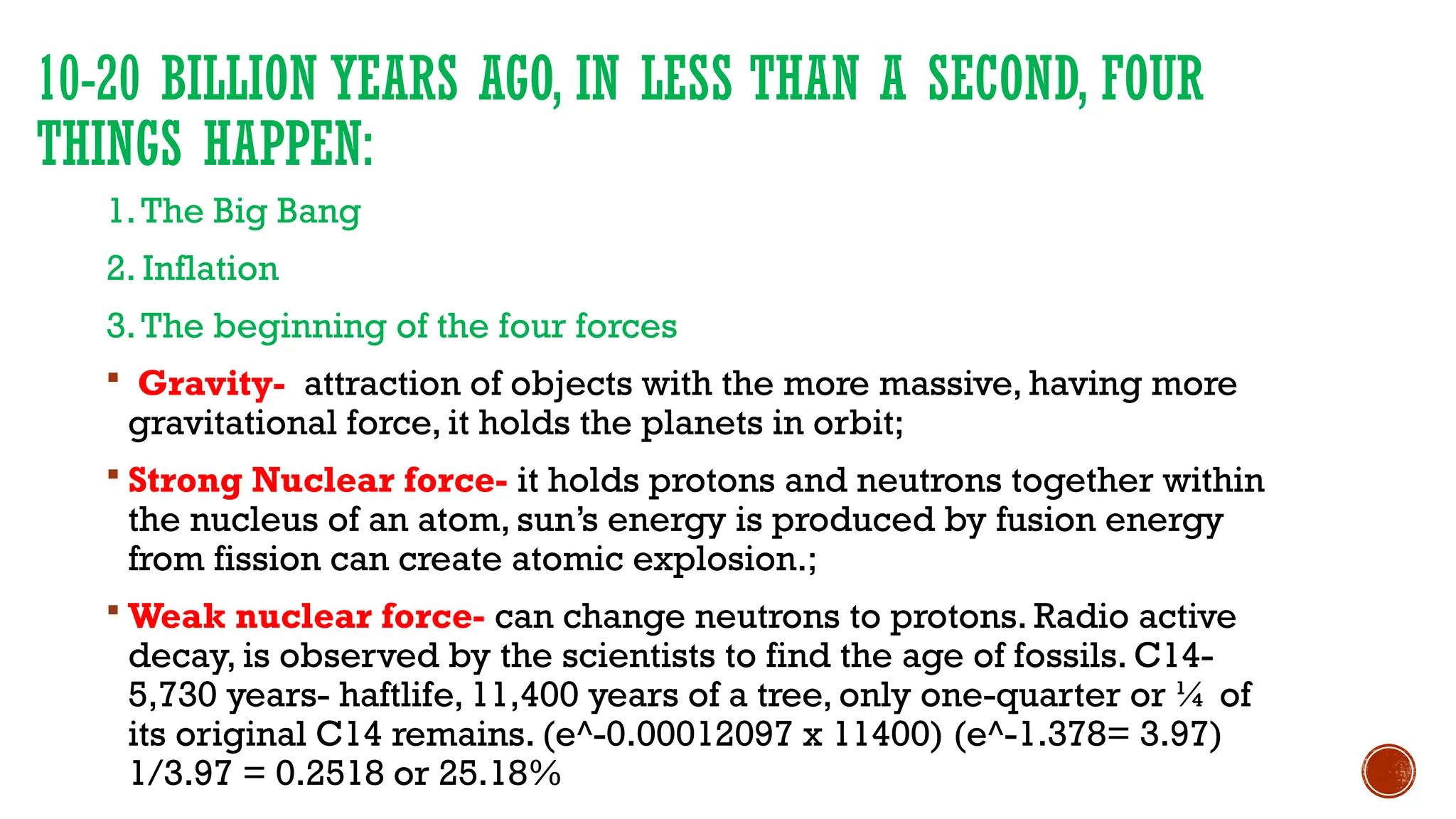
10-20 BILLION YEARS AGO, IN LESS THAN A SECOND, FOUR
THINGS HAPPEN:
1.The Big Bang
2. Inflation
3.The beginning of the four forces
 Gravity- attraction of objects with the more massive, having more
gravitational force, it holds the planets in orbit;
 Strong Nuclear force- it holds protons and neutrons together within
the nucleus of an atom, sun’s energy is produced by fusion energy
from fission can create atomic explosion.;
 Weak nuclear force- can change neutrons to protons. Radio active
decay, is observed by the scientists to find the age of fossils. C14-
5,730 years- haftlife, 11,400 years of a tree, only one-quarter or ¼ of
its original C14 remains. (e^-0.00012097 x 11400) (e^-1.378= 3.97)
1/3.97 = 0.2518 or 25.18%
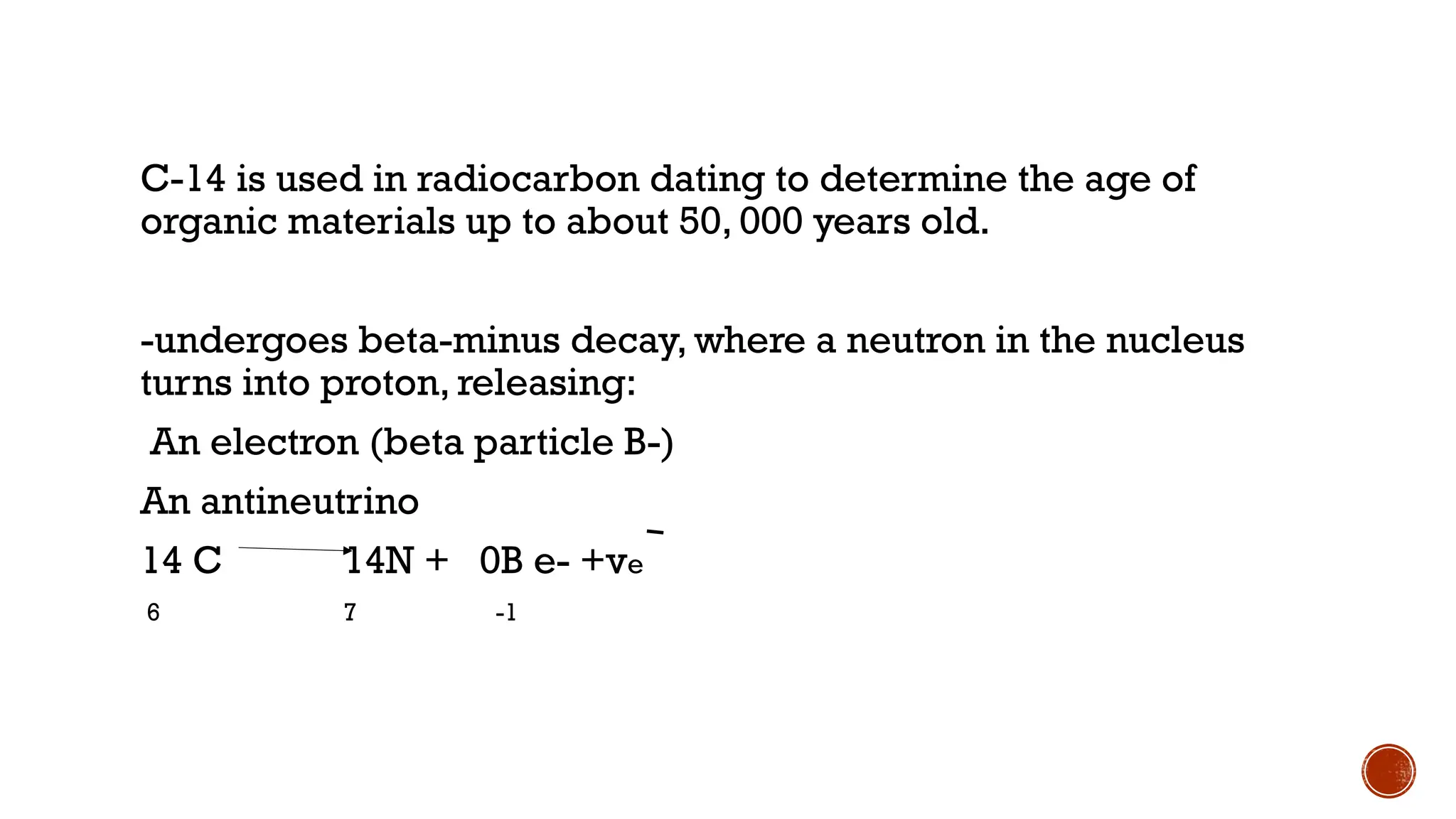
C-14 is used in radiocarbon dating to determine the age of
organic materials up to about 50, 000 years old.
-undergoes beta-minus decay, where a neutron in the nucleus
turns into proton, releasing:
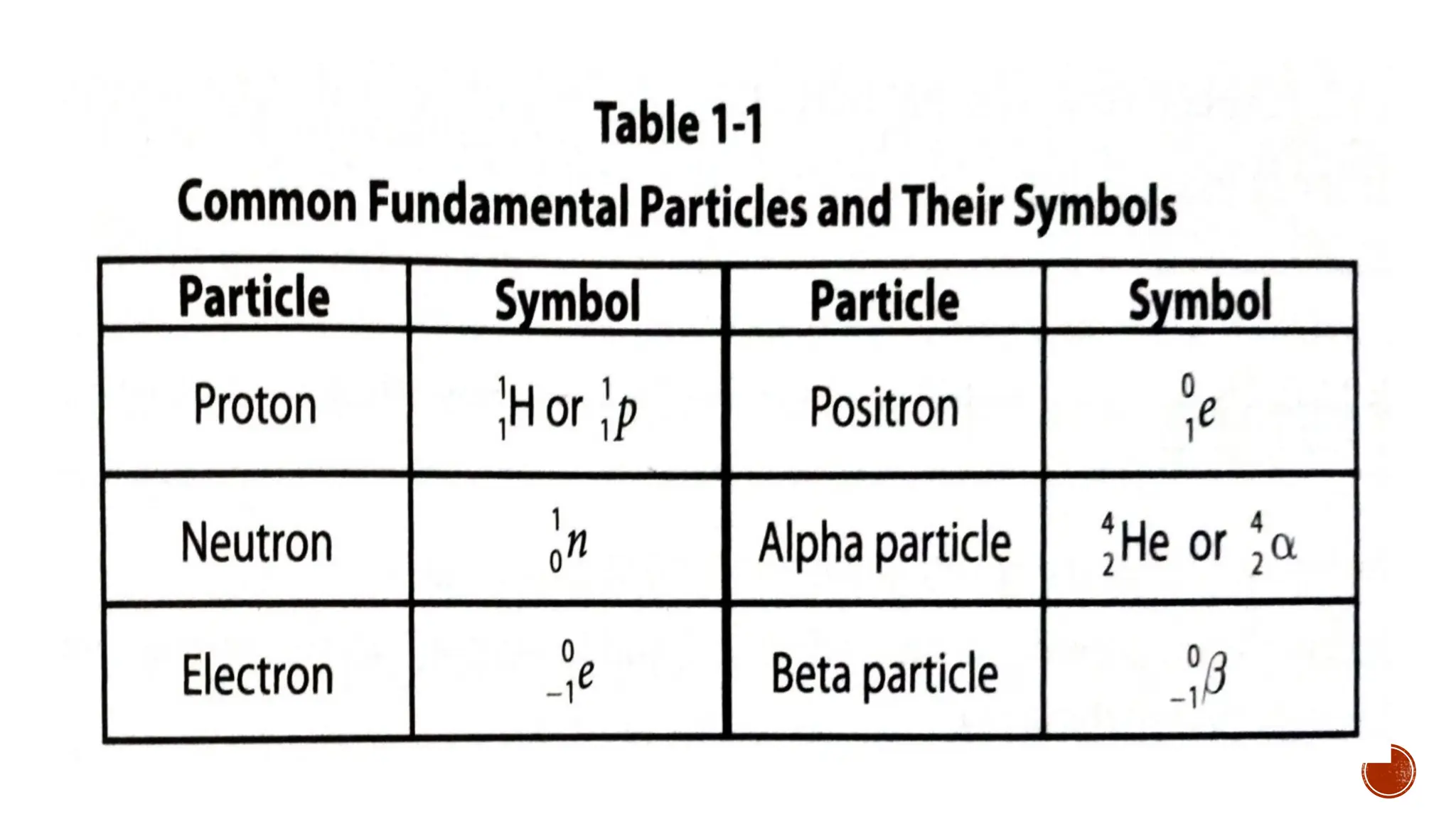
An electron (beta particle B-)
An antineutrino
14 C 14N + 0B e- +ve
6 7 -1
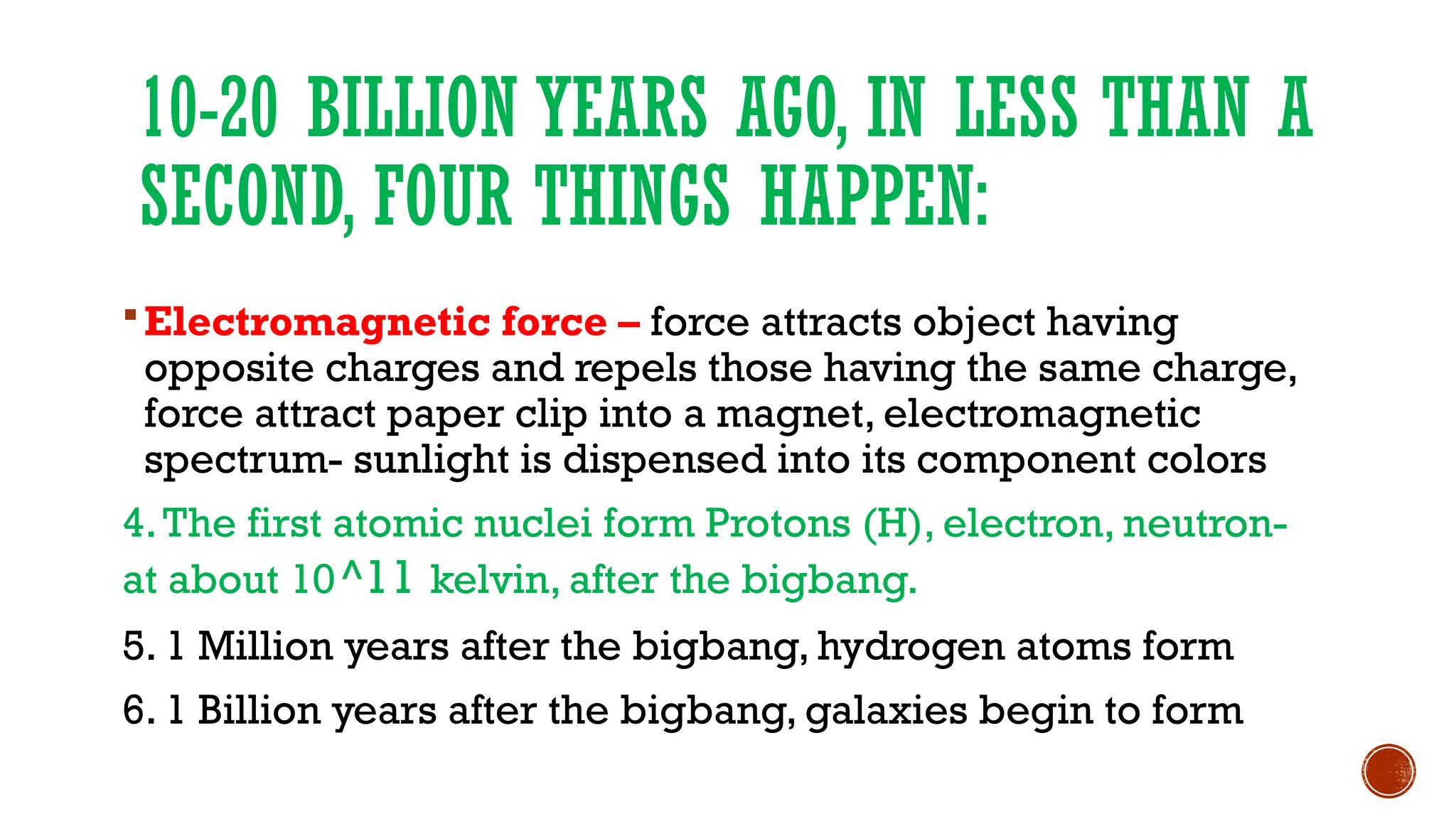
10-20 BILLION YEARS AGO, IN LESS THAN A
SECOND, FOUR THINGS HAPPEN:
Electromagnetic force – force attracts object having
opposite charges and repels those having the same charge,
force attract paper clip into a magnet, electromagnetic
spectrum- sunlight is dispensed into its component colors
4.The first atomic nuclei form Protons (H), electron, neutron-
at about 10^11 kelvin, after the bigbang.
5. 1 Million years after the bigbang, hydrogen atoms form
6. 1 Billion years after the bigbang, galaxies begin to form
7. 5 Billion years ago the planet Earth forms
8. 4.6 Billion years ago the planet Earth forms
9. 4.5 Billion years ago the oceans and first land
masses form
10. 3 Billion years ago bacteria appear--- life begins
11. 2.5 Billion years ago the atmosphere forms.
10-20 BILLION YEARS AGO, IN LESS THAN A
SECOND, FOUR THINGS HAPPEN:
The idea that the universe is
dynamic was first observed
by Vesto Slipher and Carl
Wilhelm Wirtz in 1910
where they discovered that
most spiral galaxies were
moving away from Earth.
This phenomenon is known
as redshift . Later in 1927,
Georges Lemaître, a
Belgian Catholic priest,
suggested that these galaxies
were not moving but instead
proposed that the universe is
expanding.
 The Bigbang theory is a cosmological
model stating that the universe started
its expansion about 13.8 billion years
ago. Pieces of supporting evidence
supporting this theory are:
1. Occurrence of red
shift/Hubble/cosmic expansion
2. Cosmic microwave background –
(1964) Arno Penzias and Robert
Wilson- observed the after glow of
radiation from the bigbang having a
2.7 K temperature.When the Earth is
about 380, 000 years old
3. Primordial or Bigbang Nucleosynthesis
- In 1929, Edwin Hubble used the redshift
of light from where galaxies are moving
away from the Earth and from each
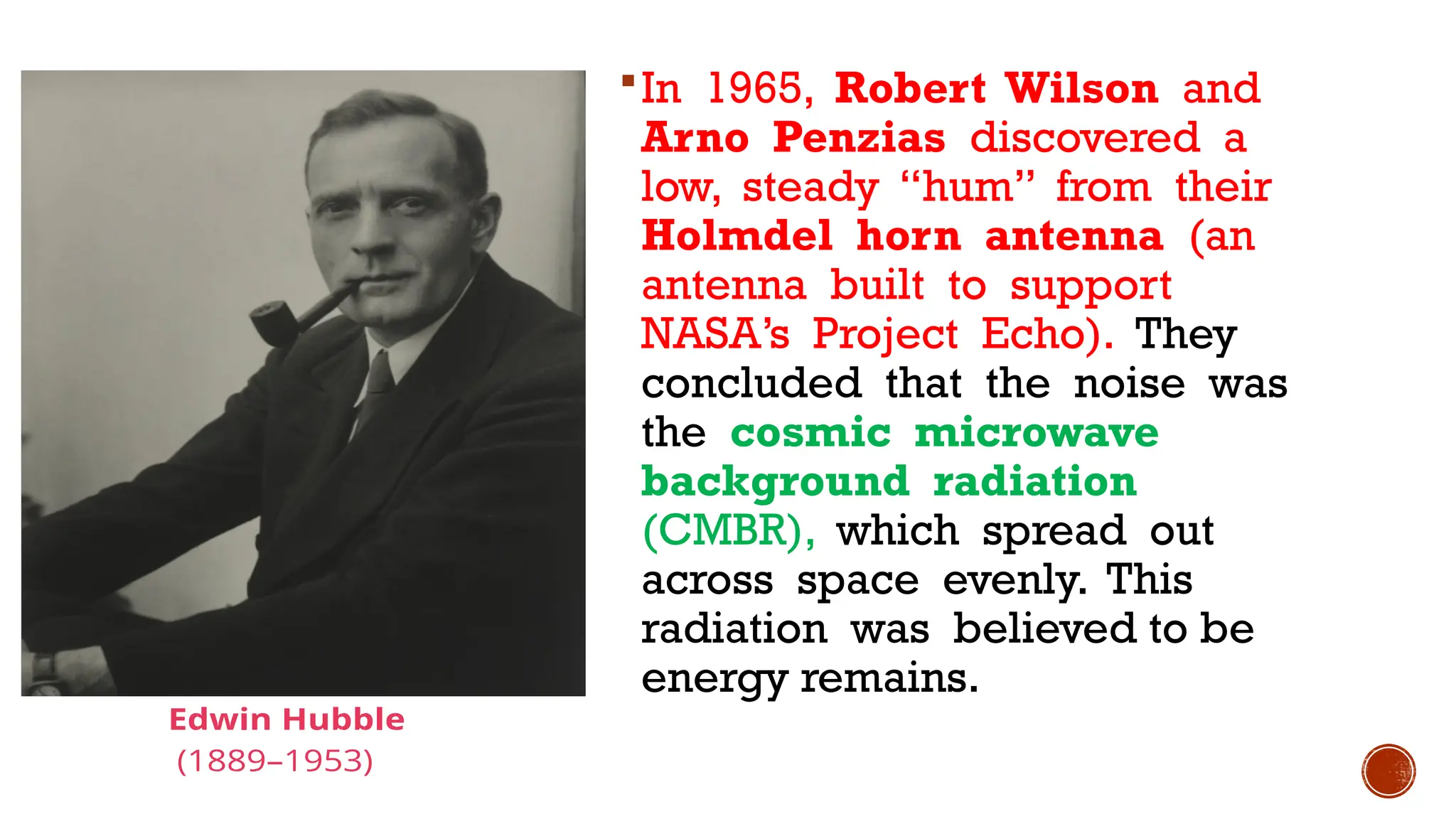
In 1965, Robert Wilson and
Arno Penzias discovered a
low, steady “hum” from their
Holmdel horn antenna (an
antenna built to support
NASA’s Project Echo). They
concluded that the noise was
the cosmic microwave
background radiation
(CMBR), which spread out
across space evenly. This
radiation was believed to be
energy remains.
=
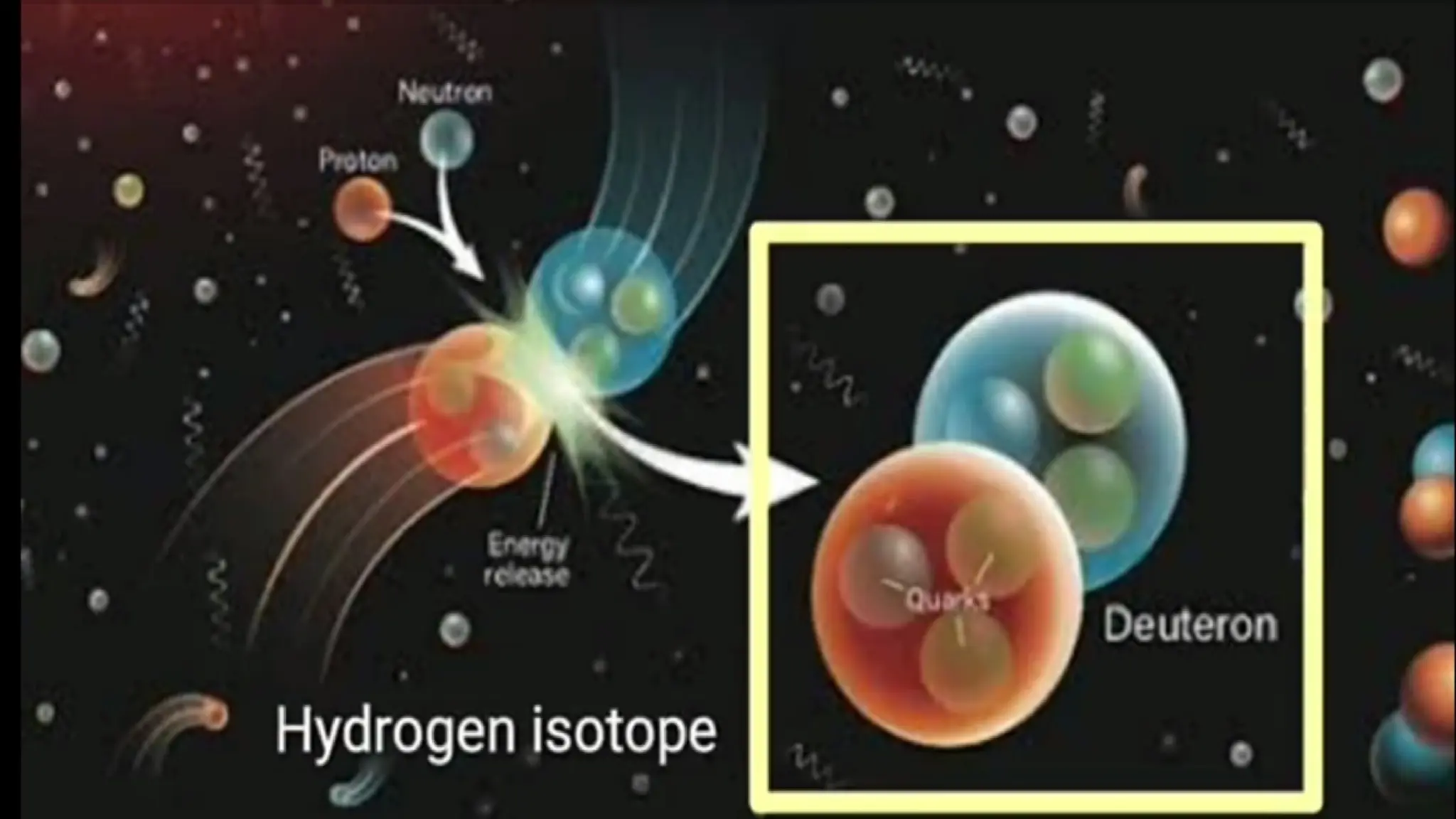
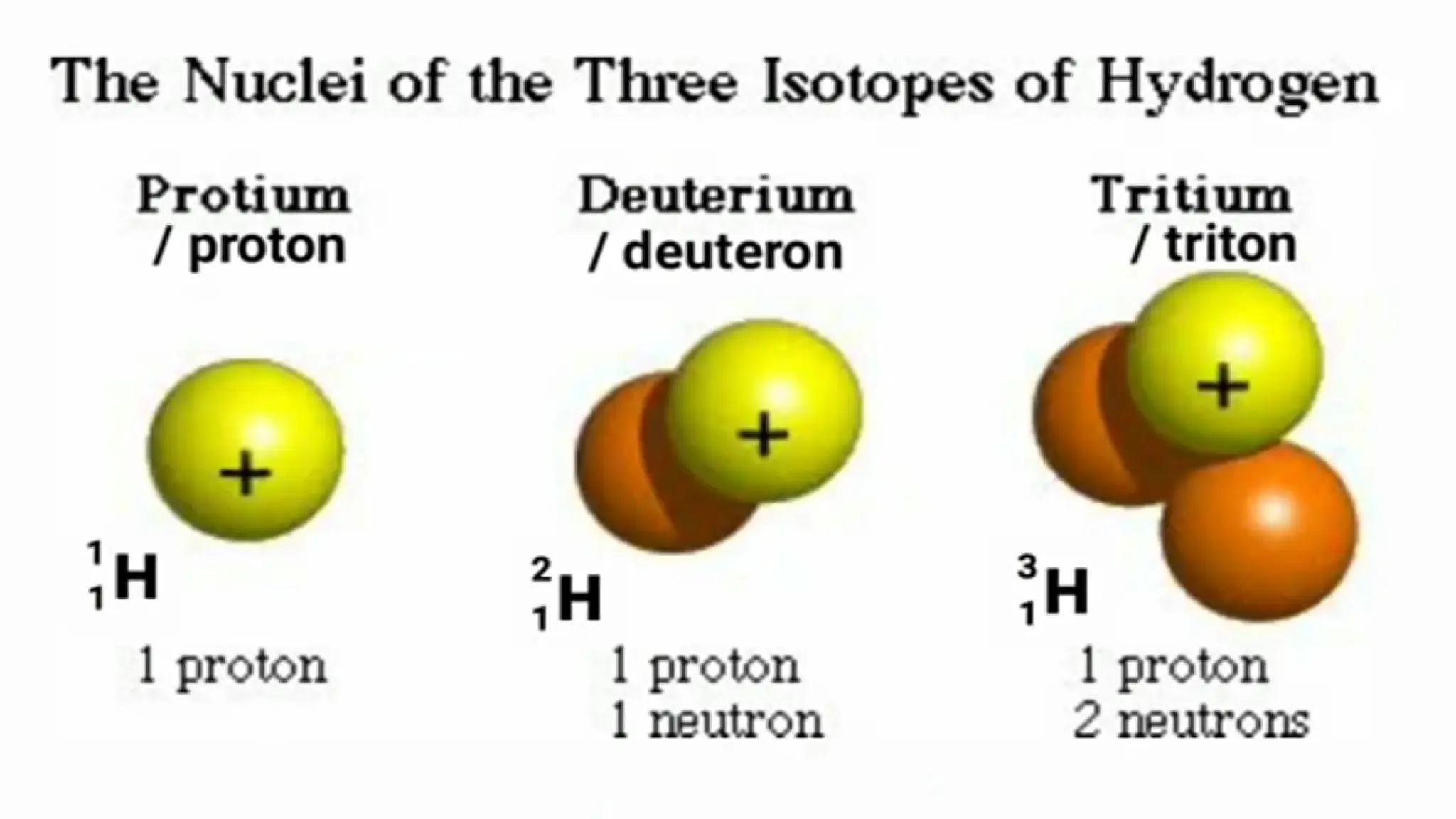
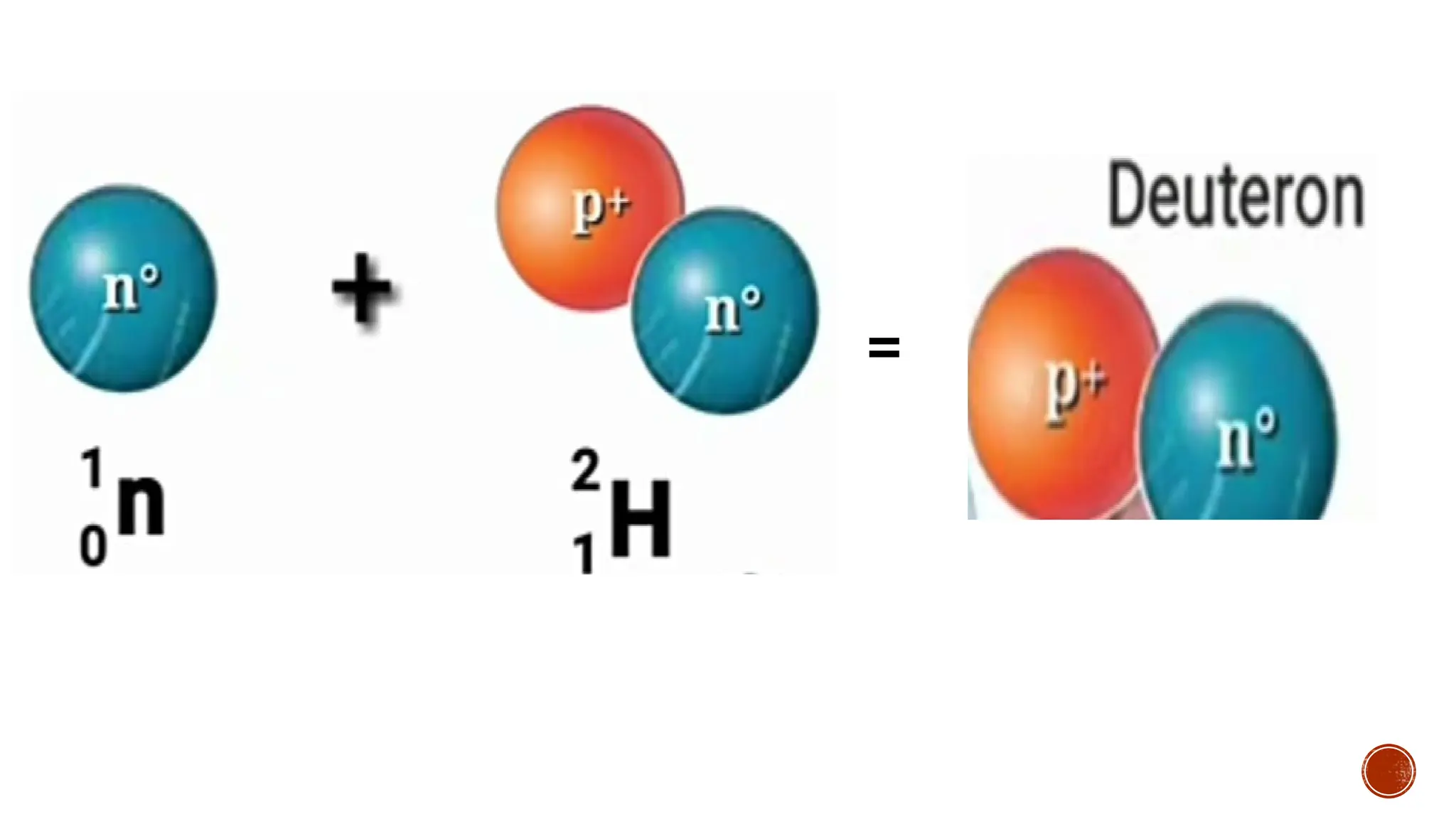
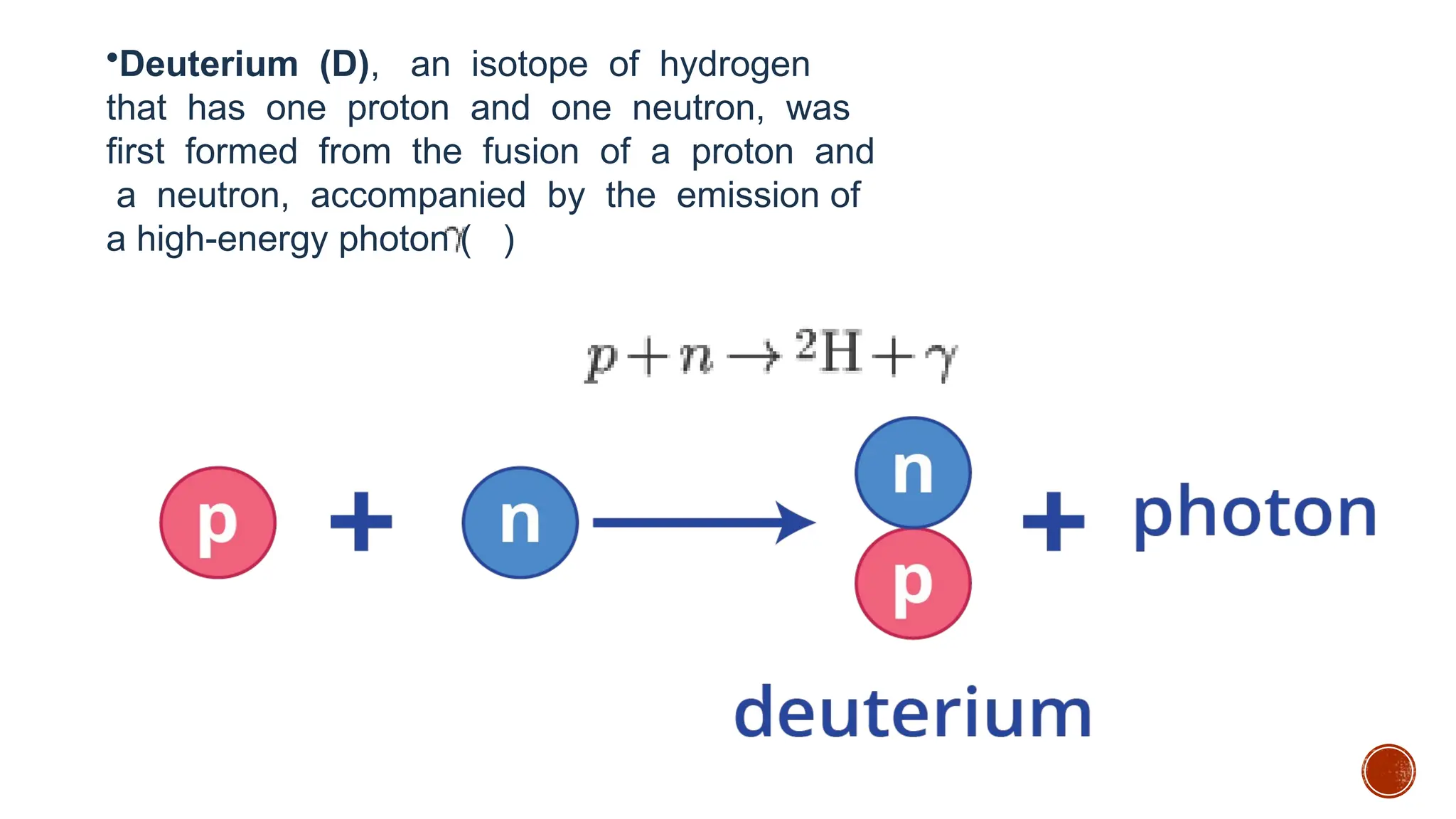
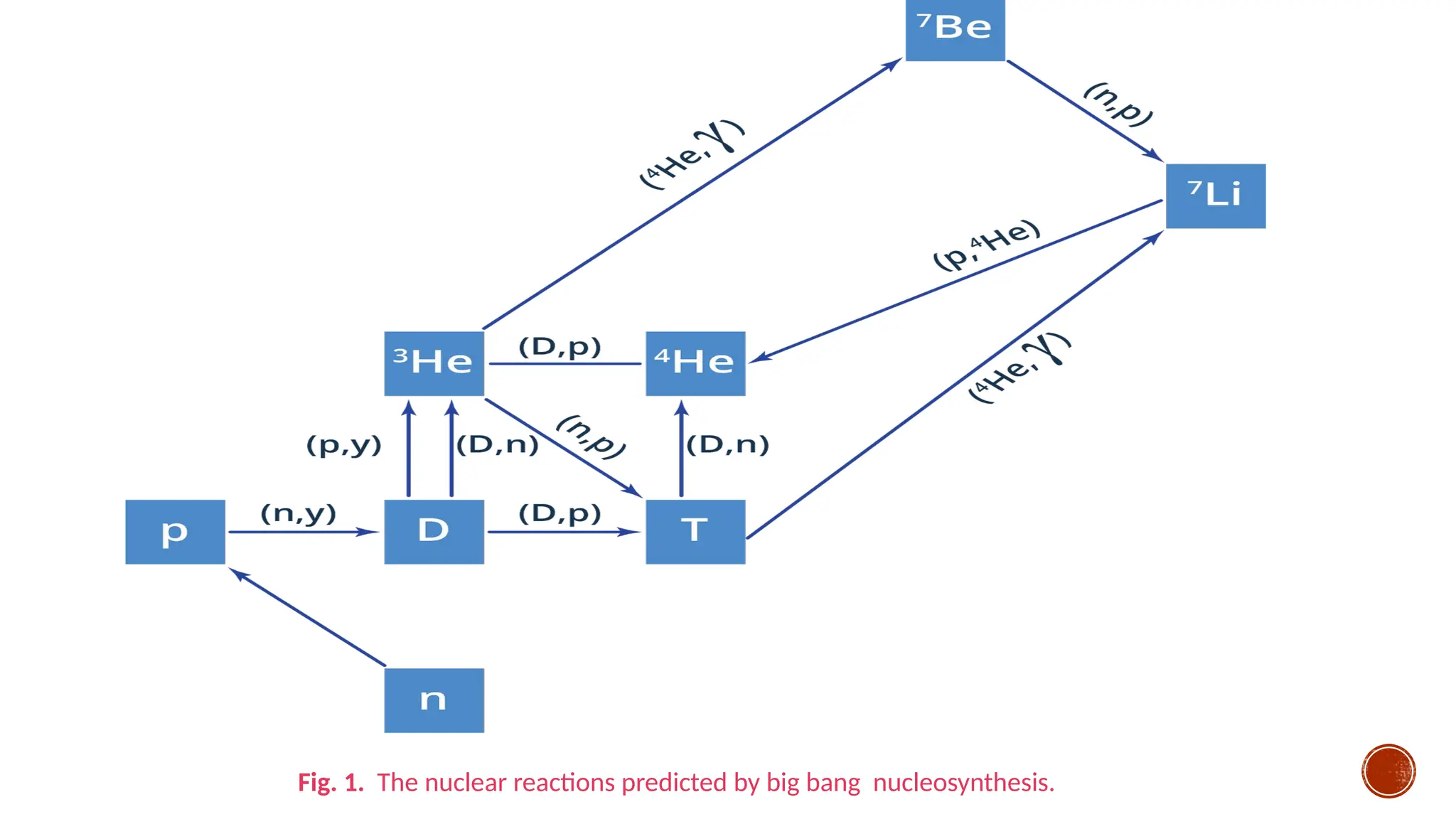
•Deuterium (D), an isotope of hydrogen
that has one proton and one neutron, was
first formed from the fusion of a proton and
a neutron, accompanied by the emission of
a high-energy photon ( )
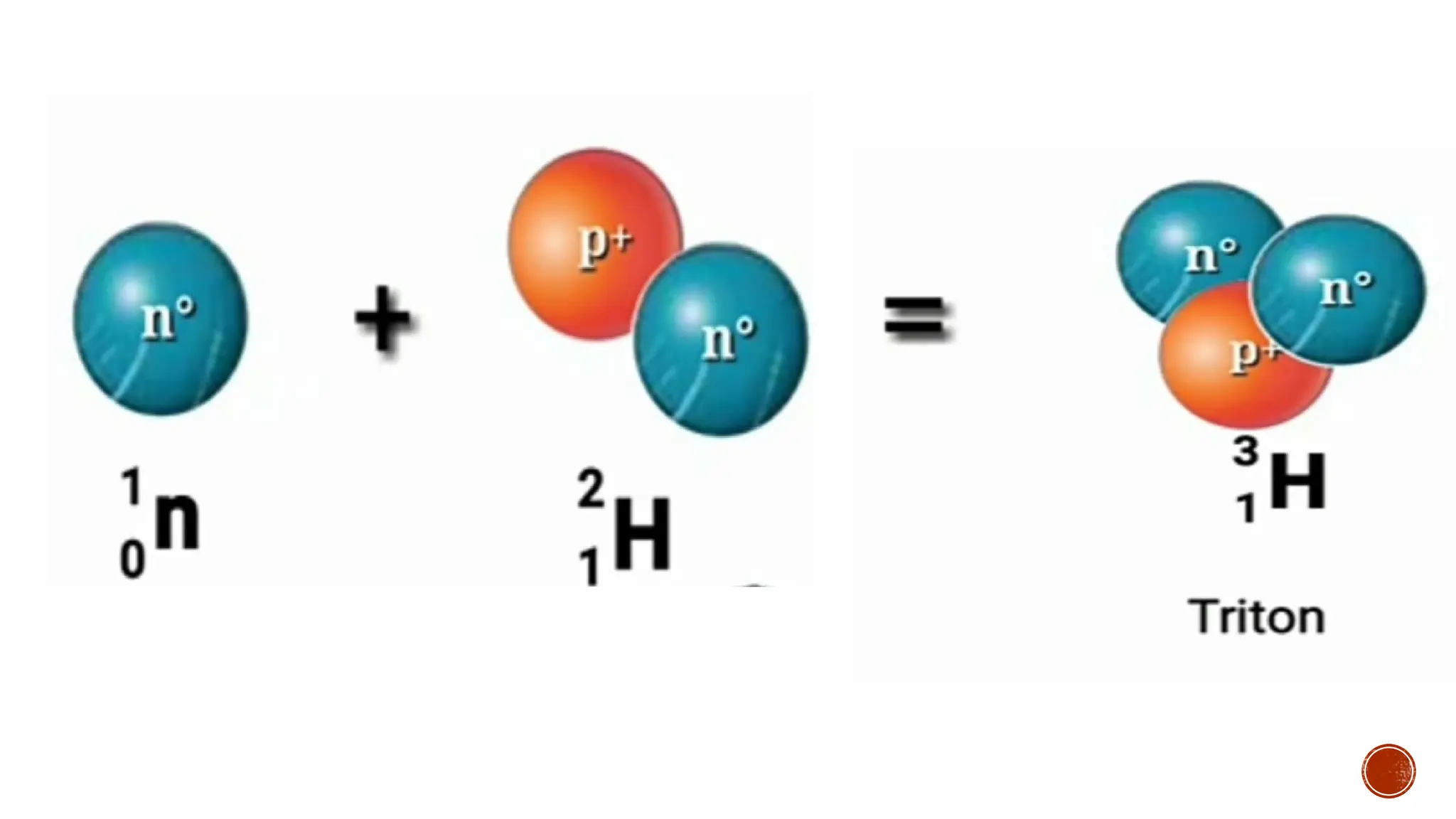
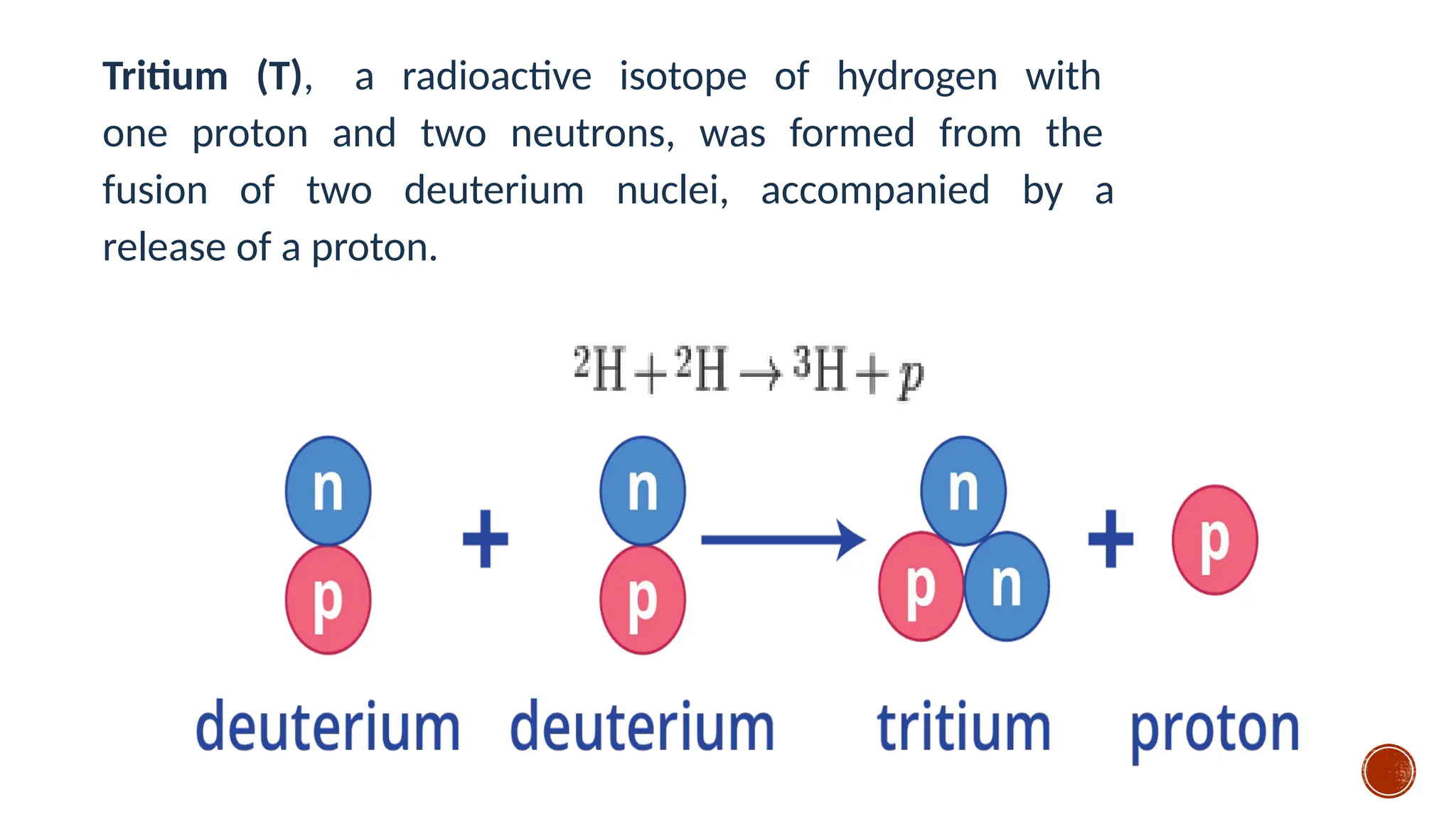
Tritium (T), a radioactive isotope of hydrogen with
one proton and two neutrons, was formed from the
fusion of two deuterium nuclei, accompanied by a
release of a proton.
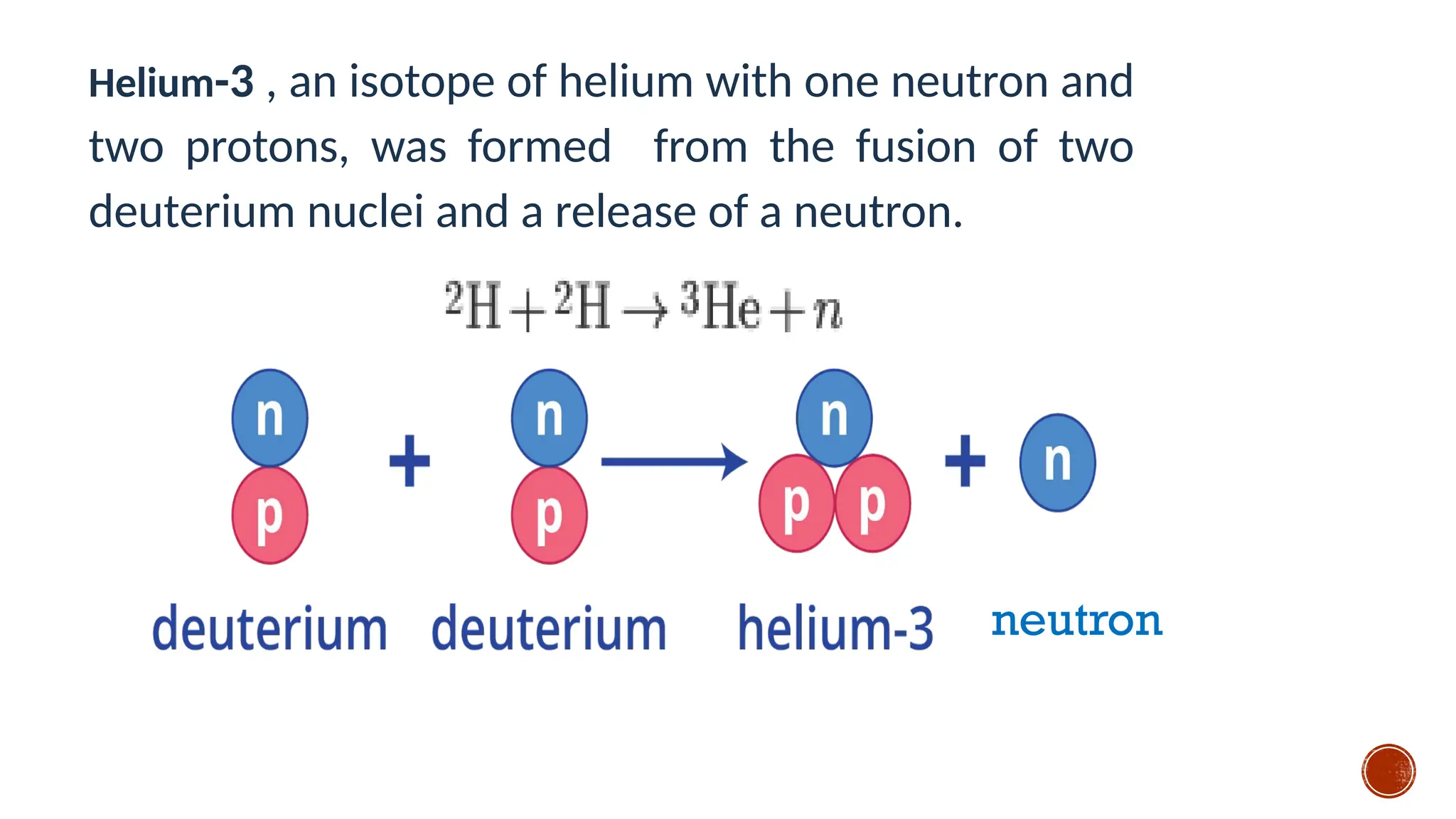
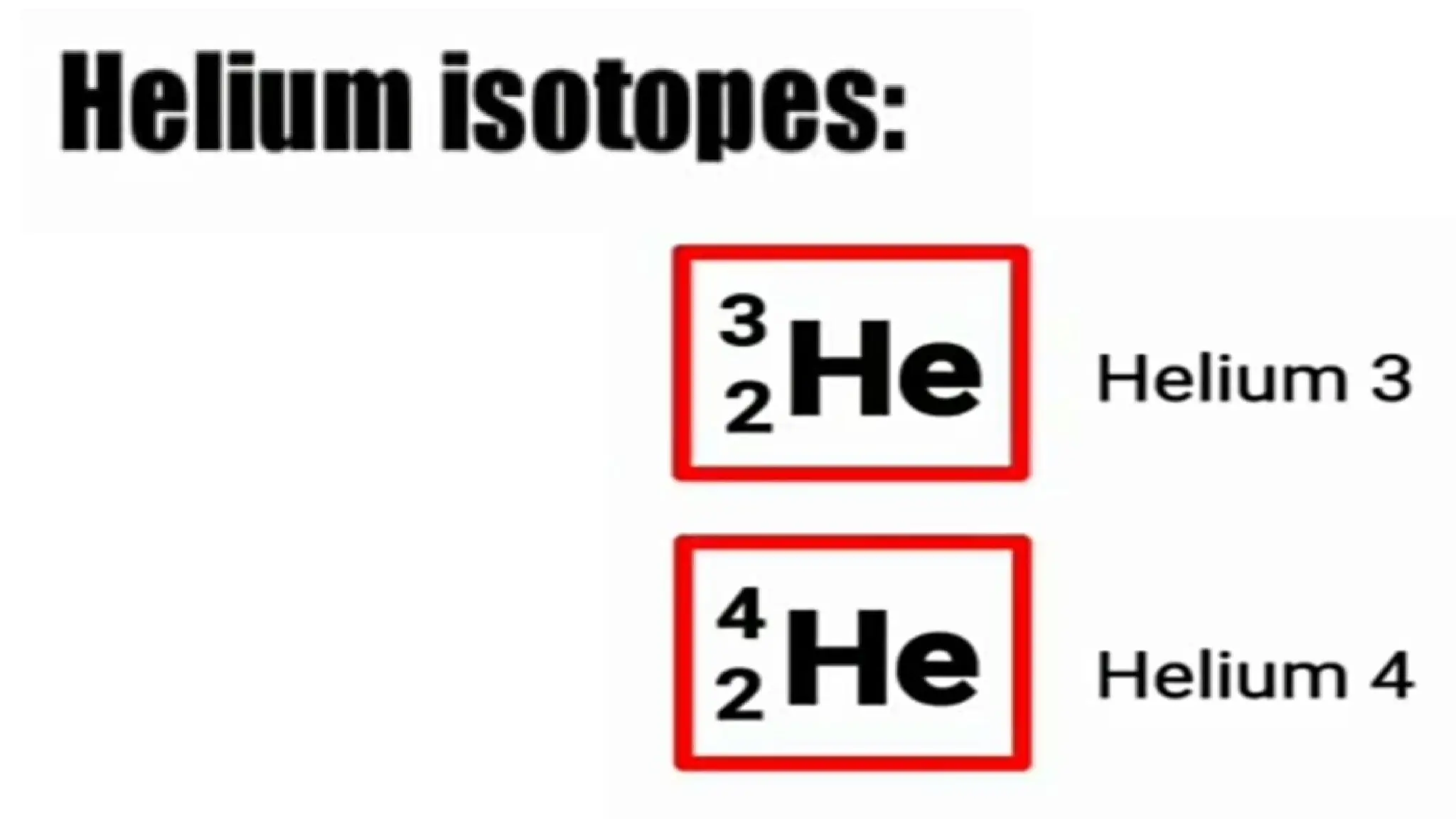
Helium-3 , an isotope of helium with one neutron and
two protons, was formed from the fusion of two
deuterium nuclei and a release of a neutron.
neutron
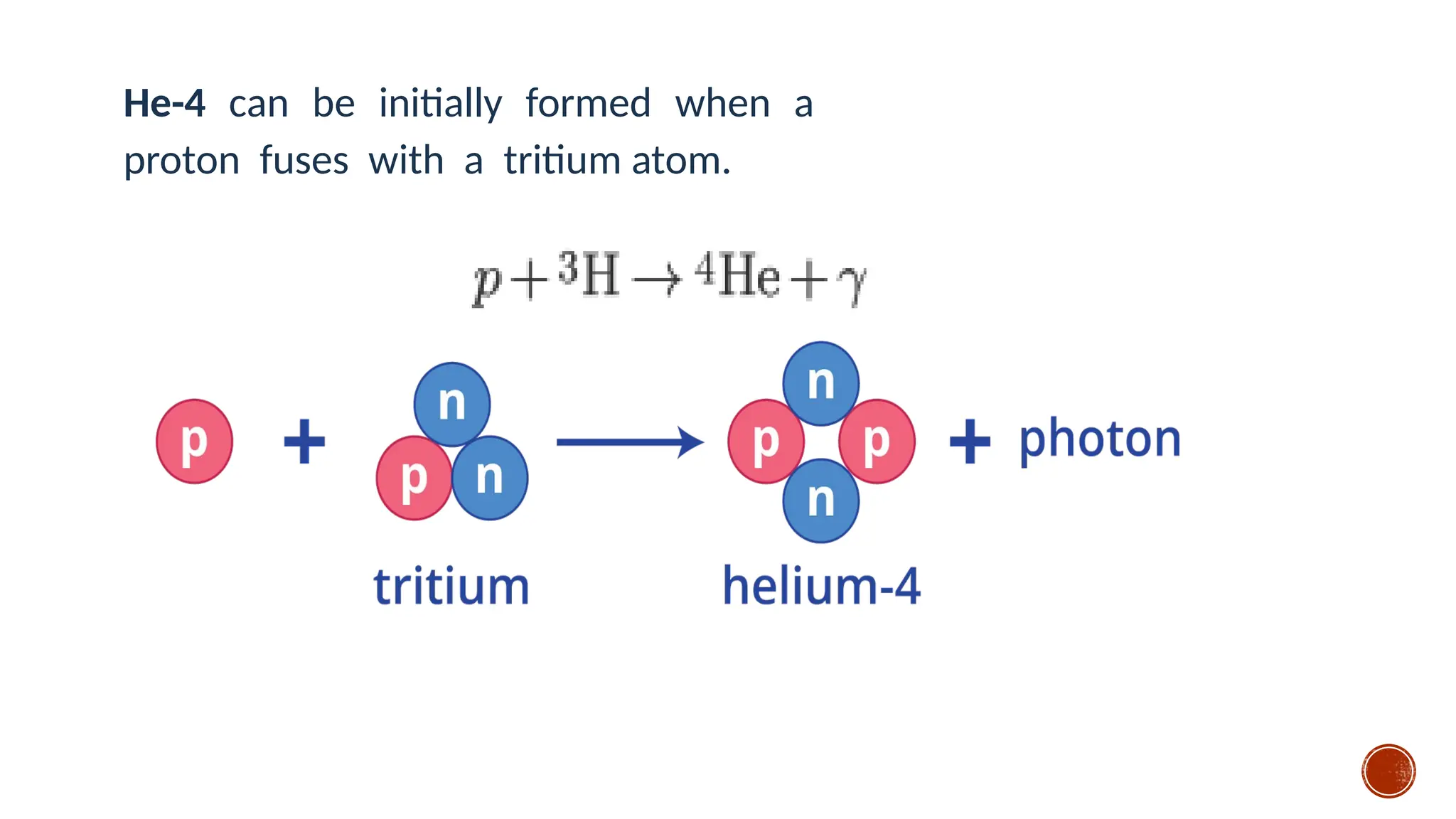
He-4 can be initially formed when a
proton fuses with a tritium atom.
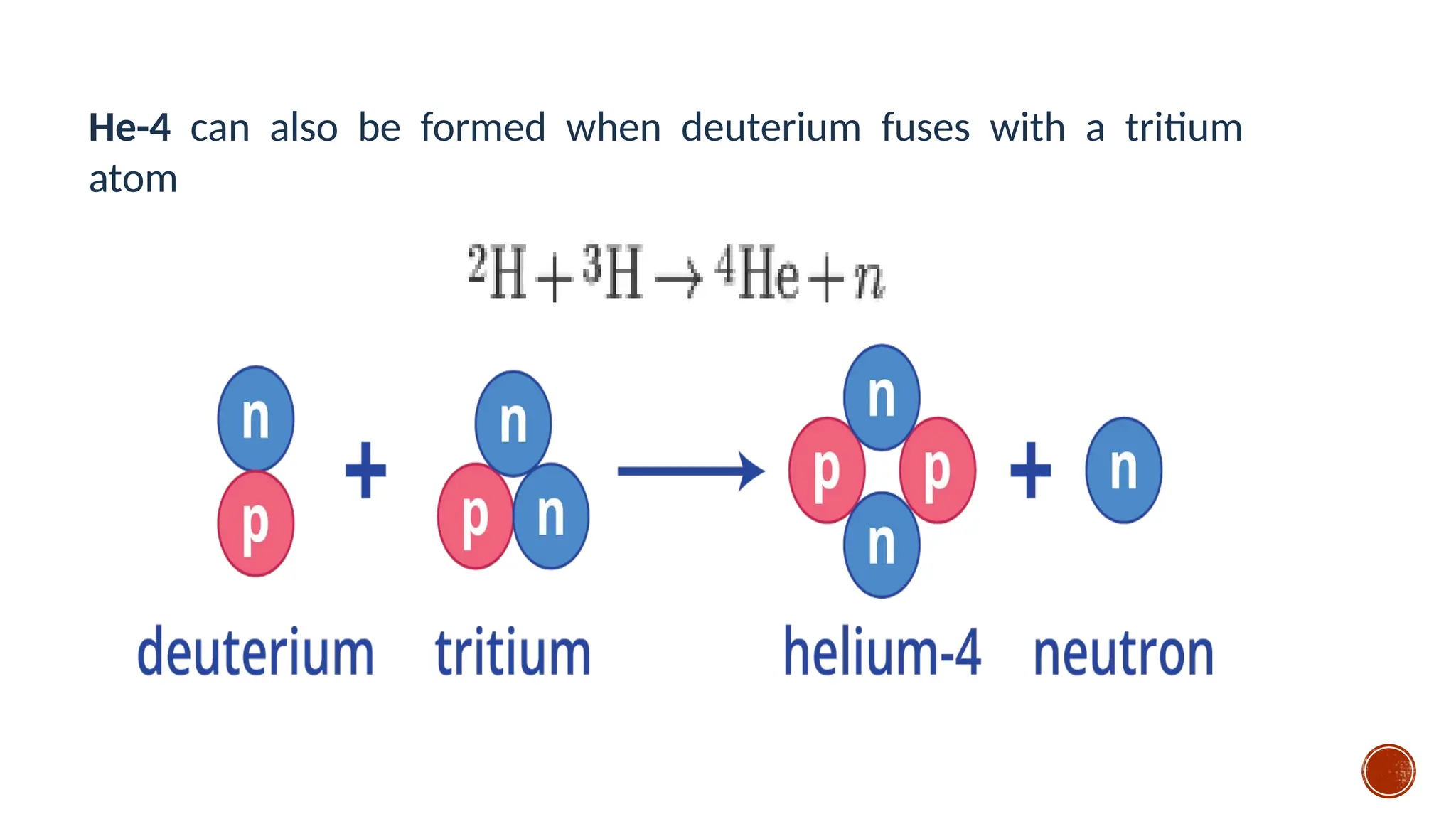
He-4 can also be formed when deuterium fuses with a tritium
atom
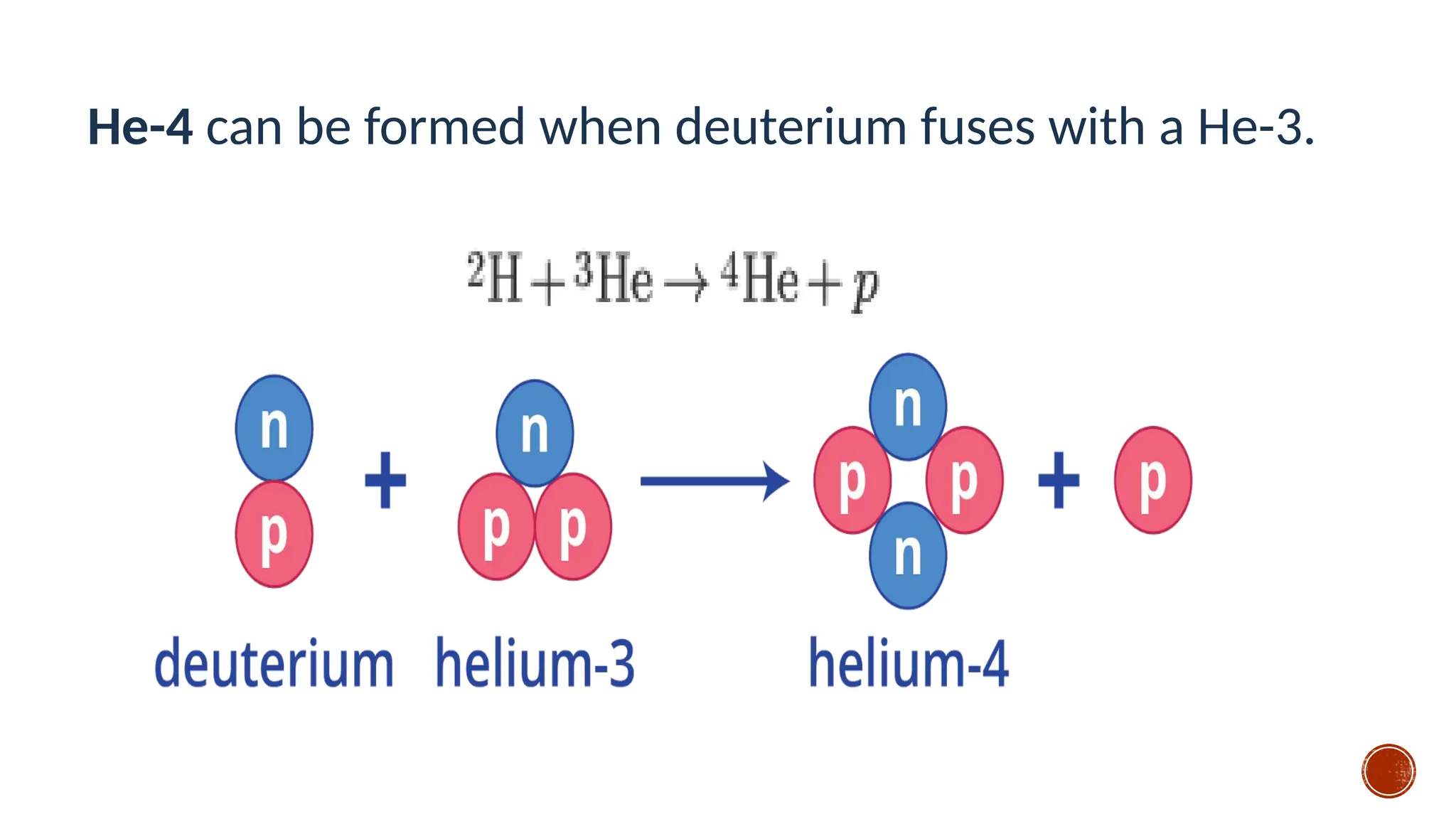
He-4 can be formed when deuterium fuses with a He-3.
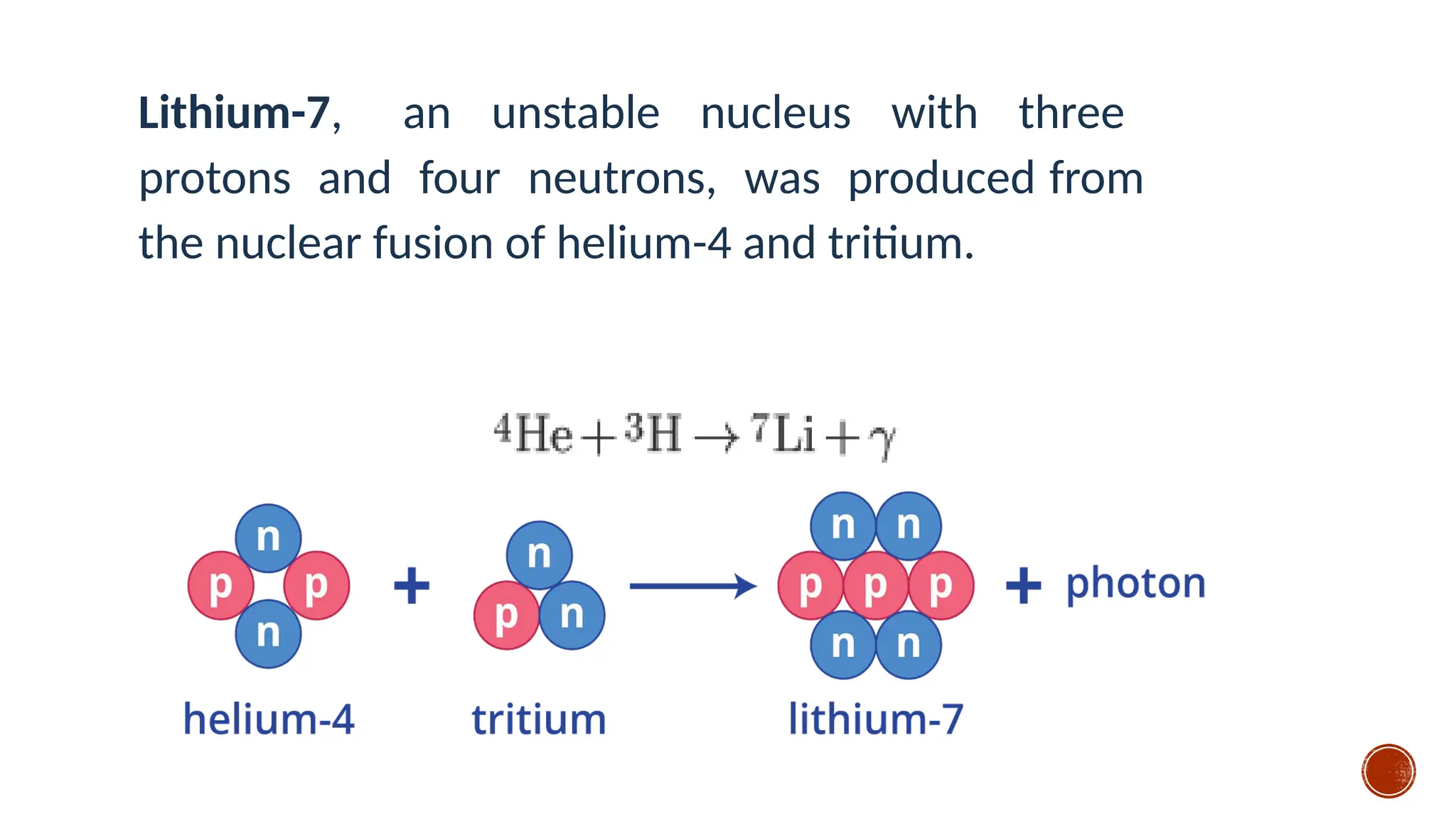
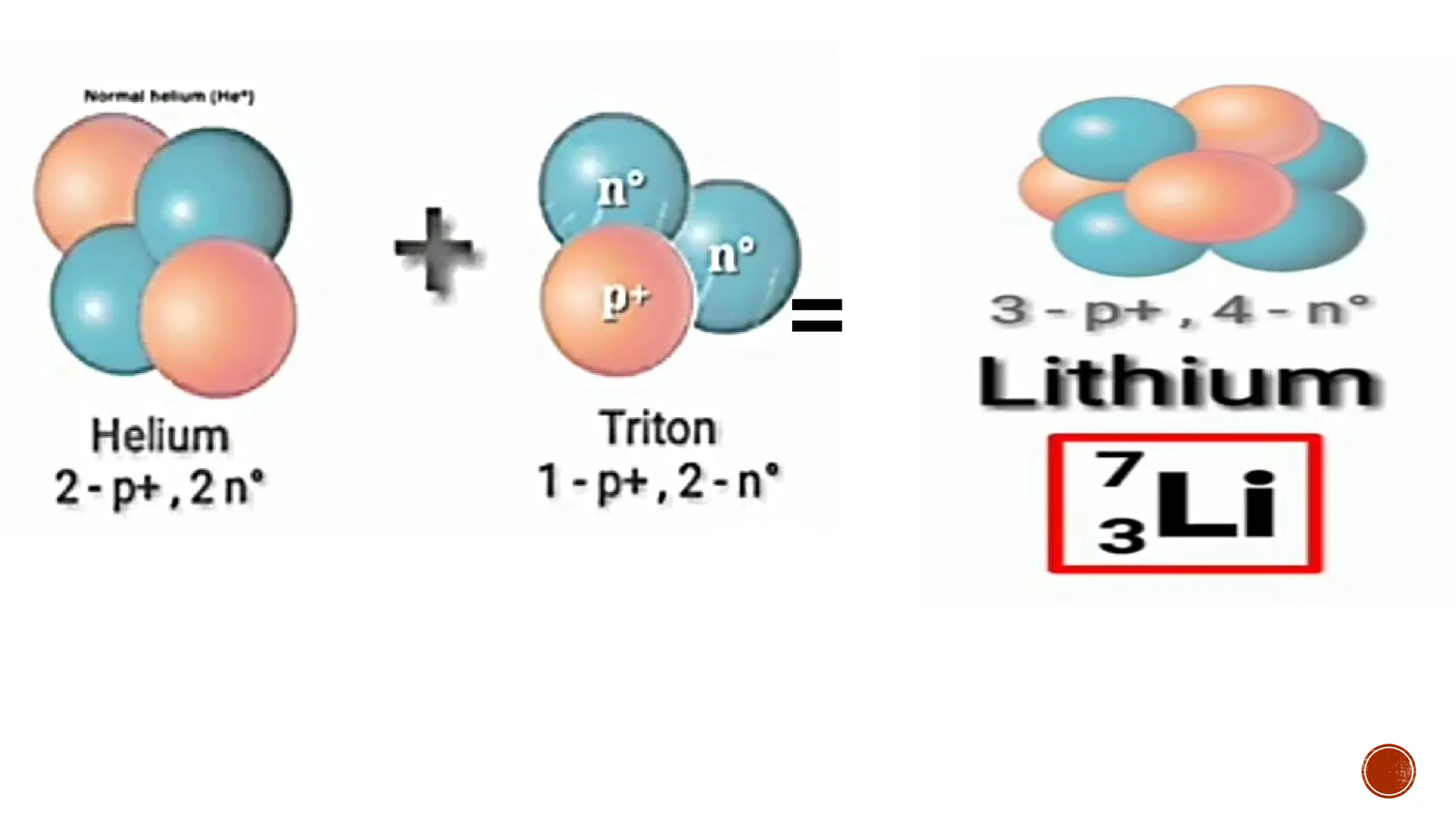
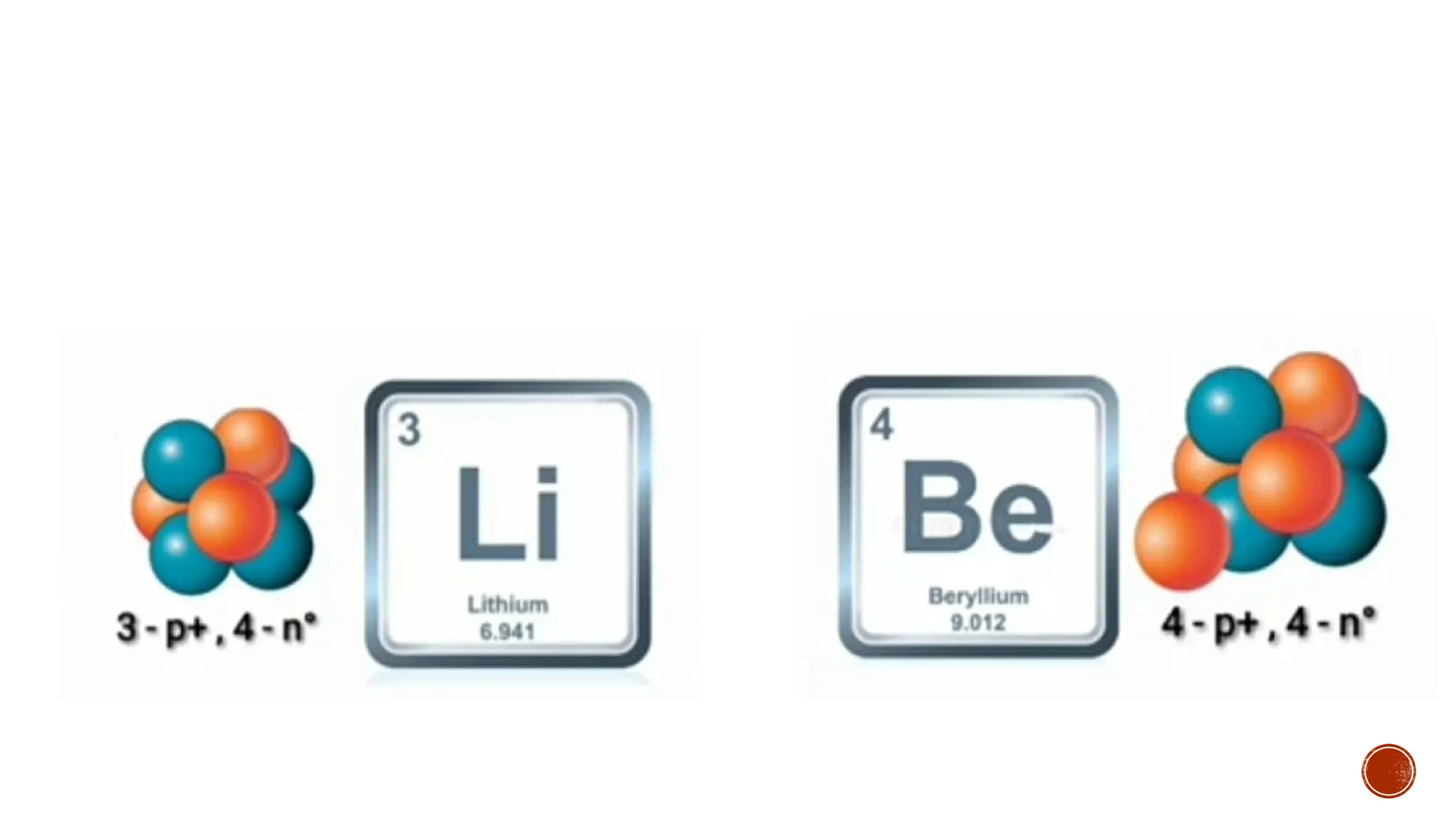
Lithium-7, an unstable nucleus with three
protons and four neutrons, was produced from
the nuclear fusion of helium-4 and tritium.
=
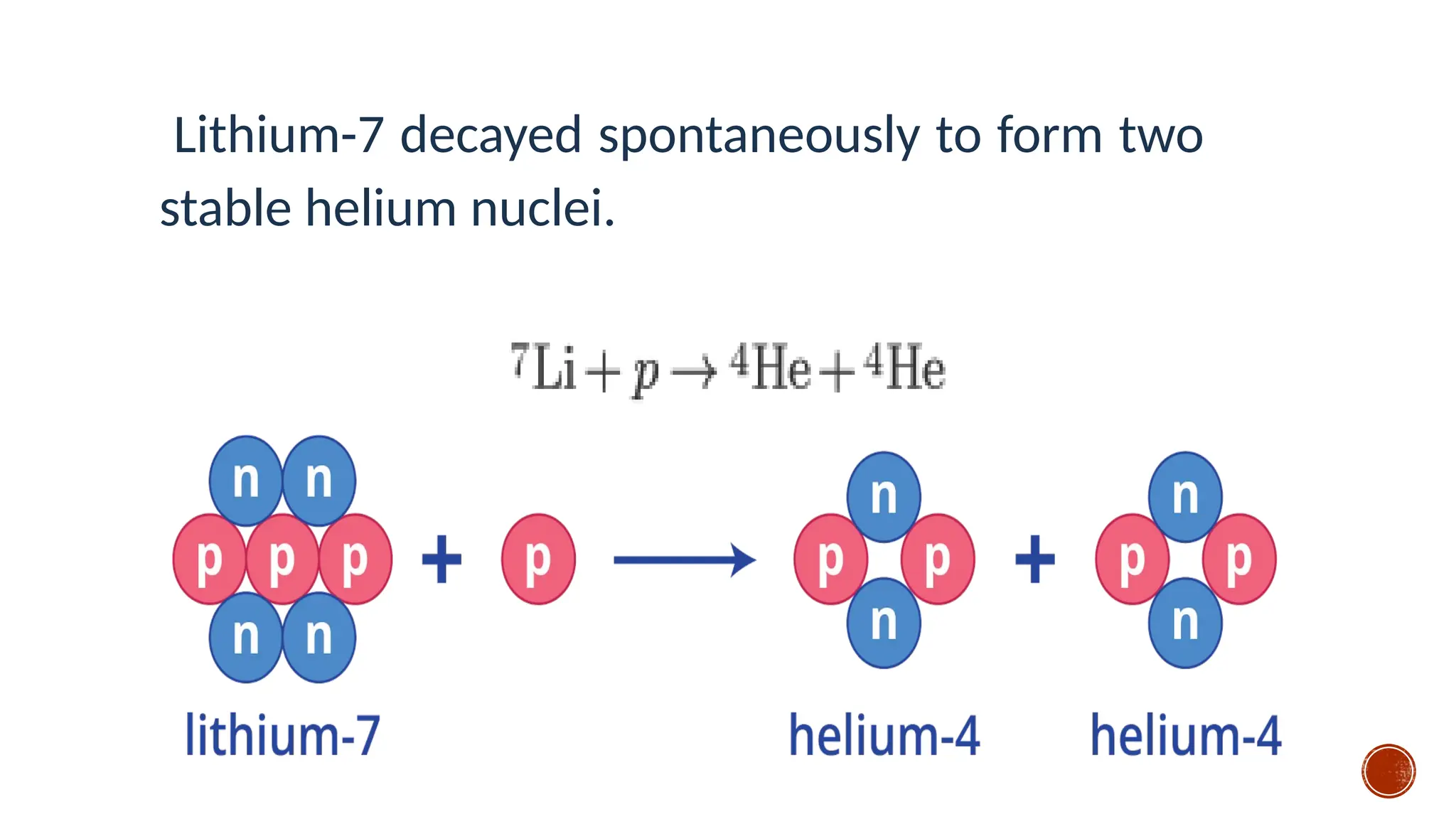
Lithium-7 decayed spontaneously to form two
stable helium nuclei.
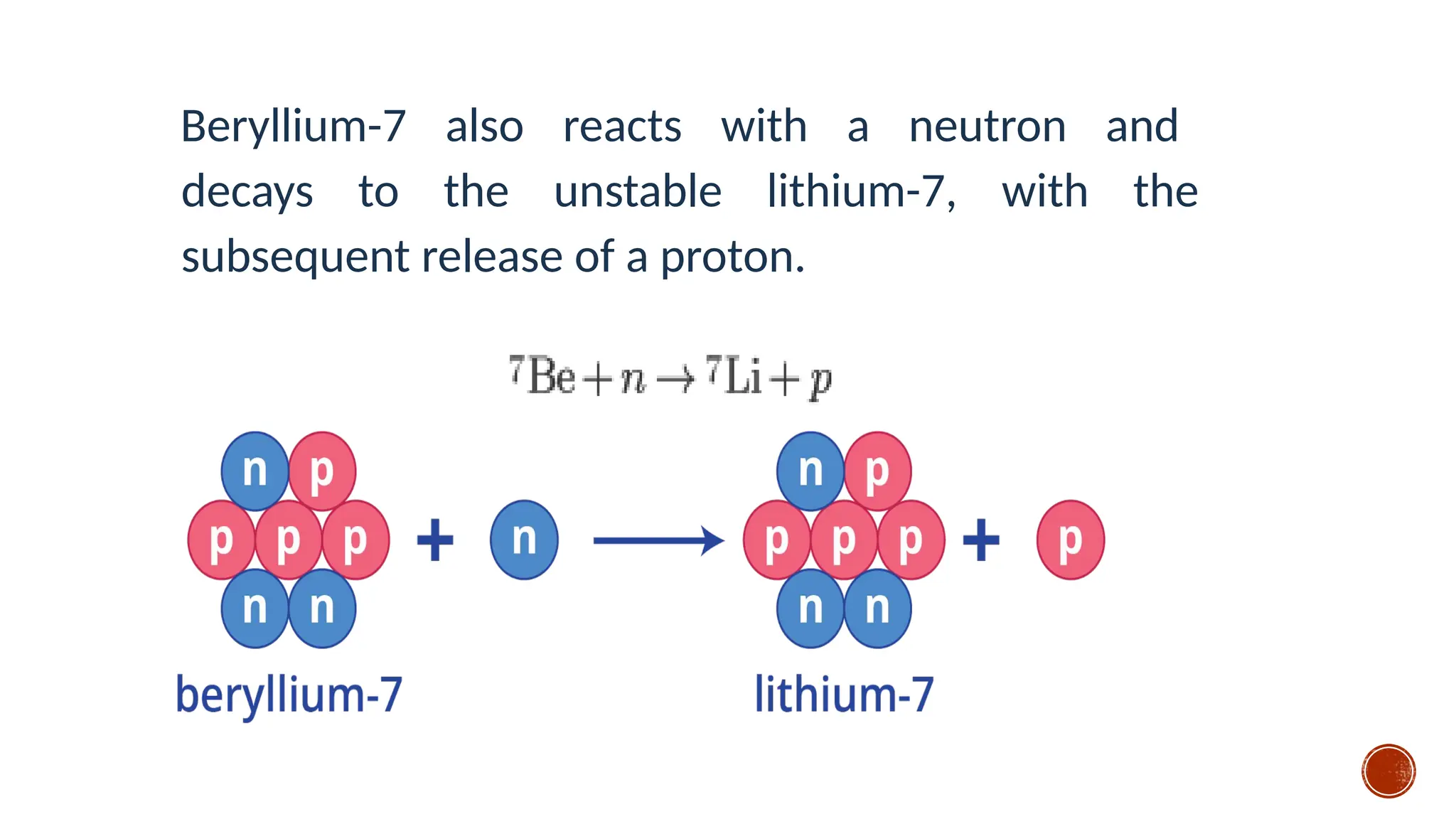
Beryllium-7 also reacts with a neutron and
decays to the unstable lithium-7, with the
subsequent release of a proton.
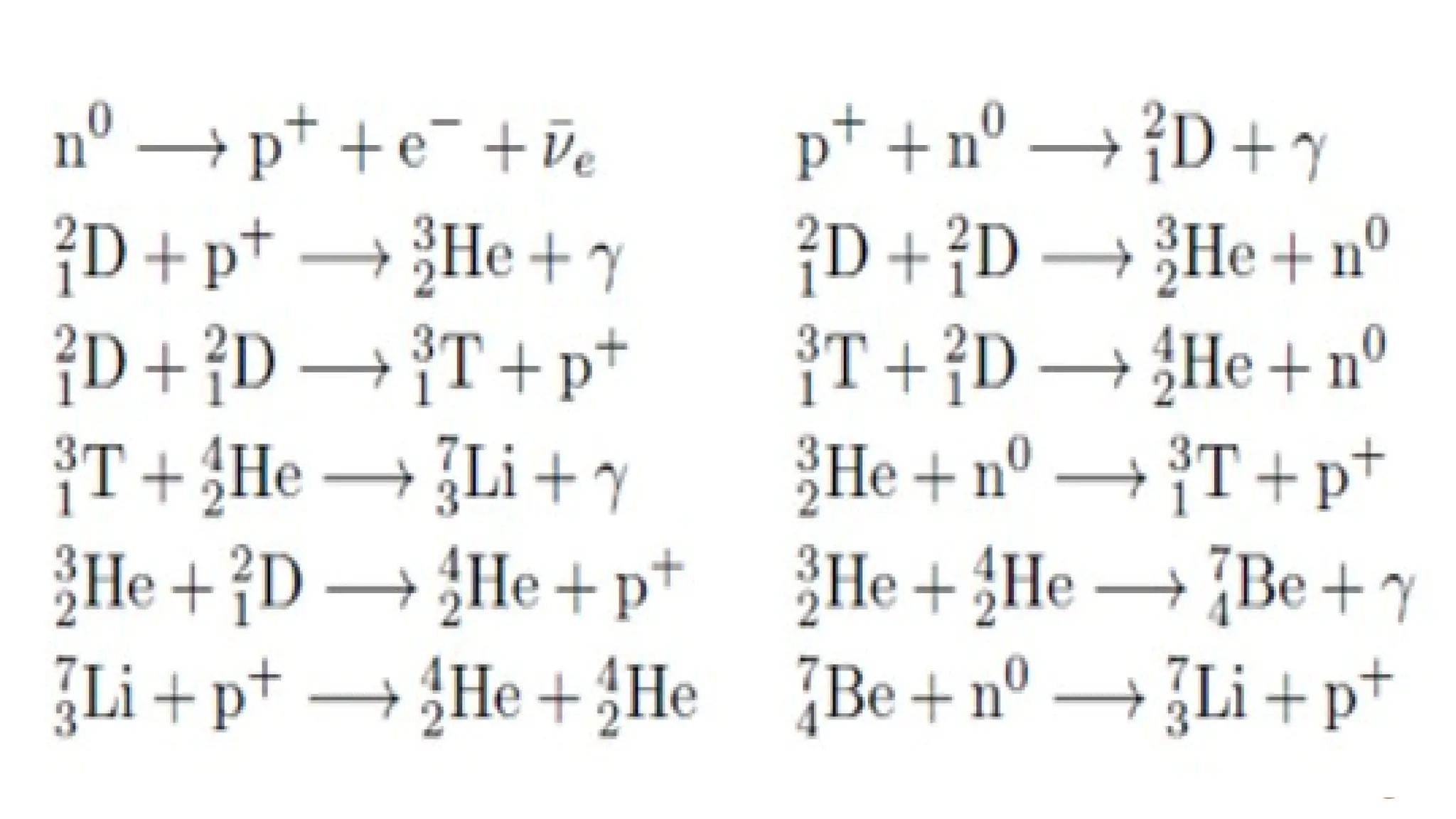
Fig. 1. The nuclear reactions predicted by big bang nucleosynthesis.
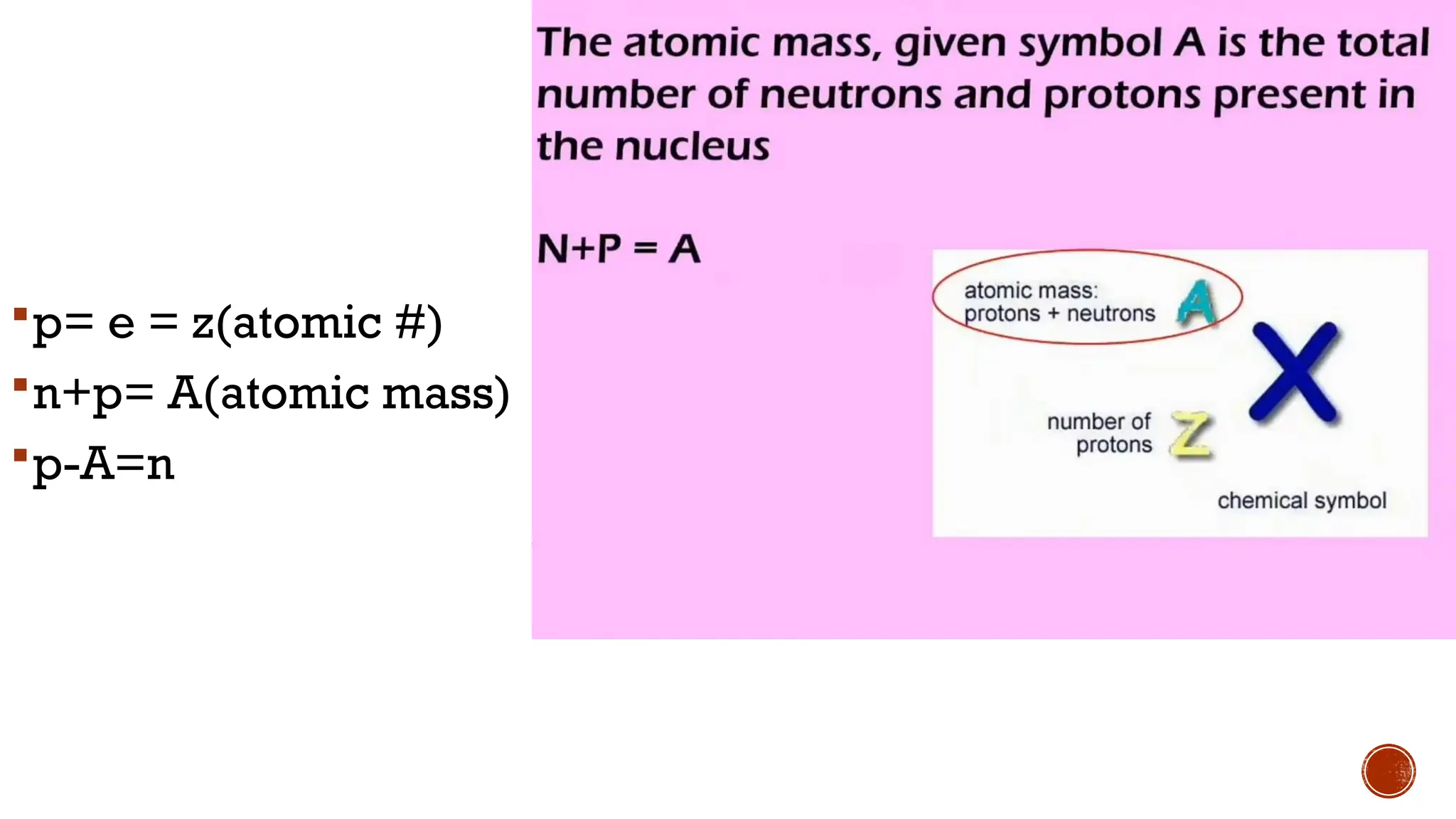
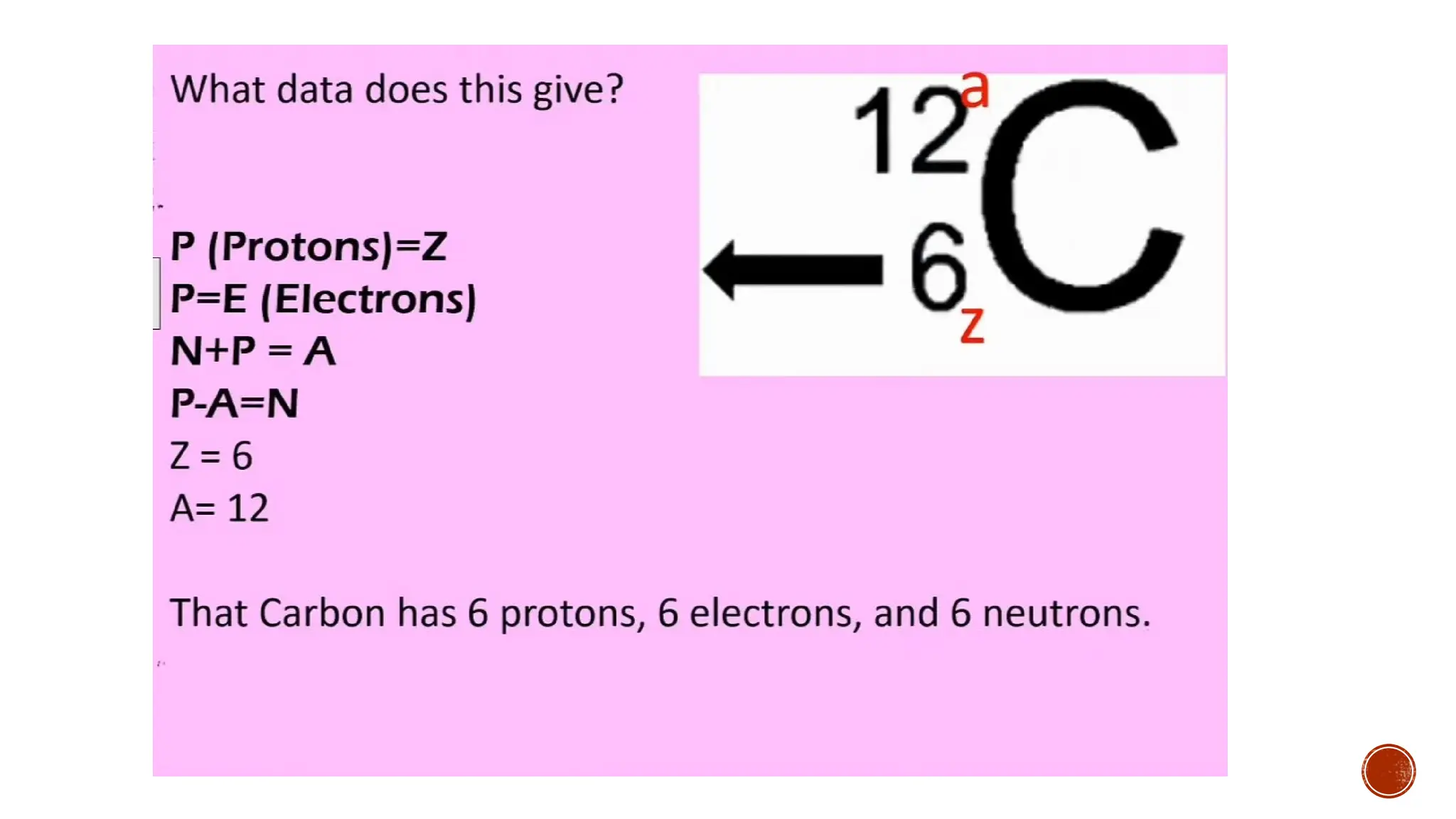
p= e = z(atomic #)
n+p= A(atomic mass)
p-A=n
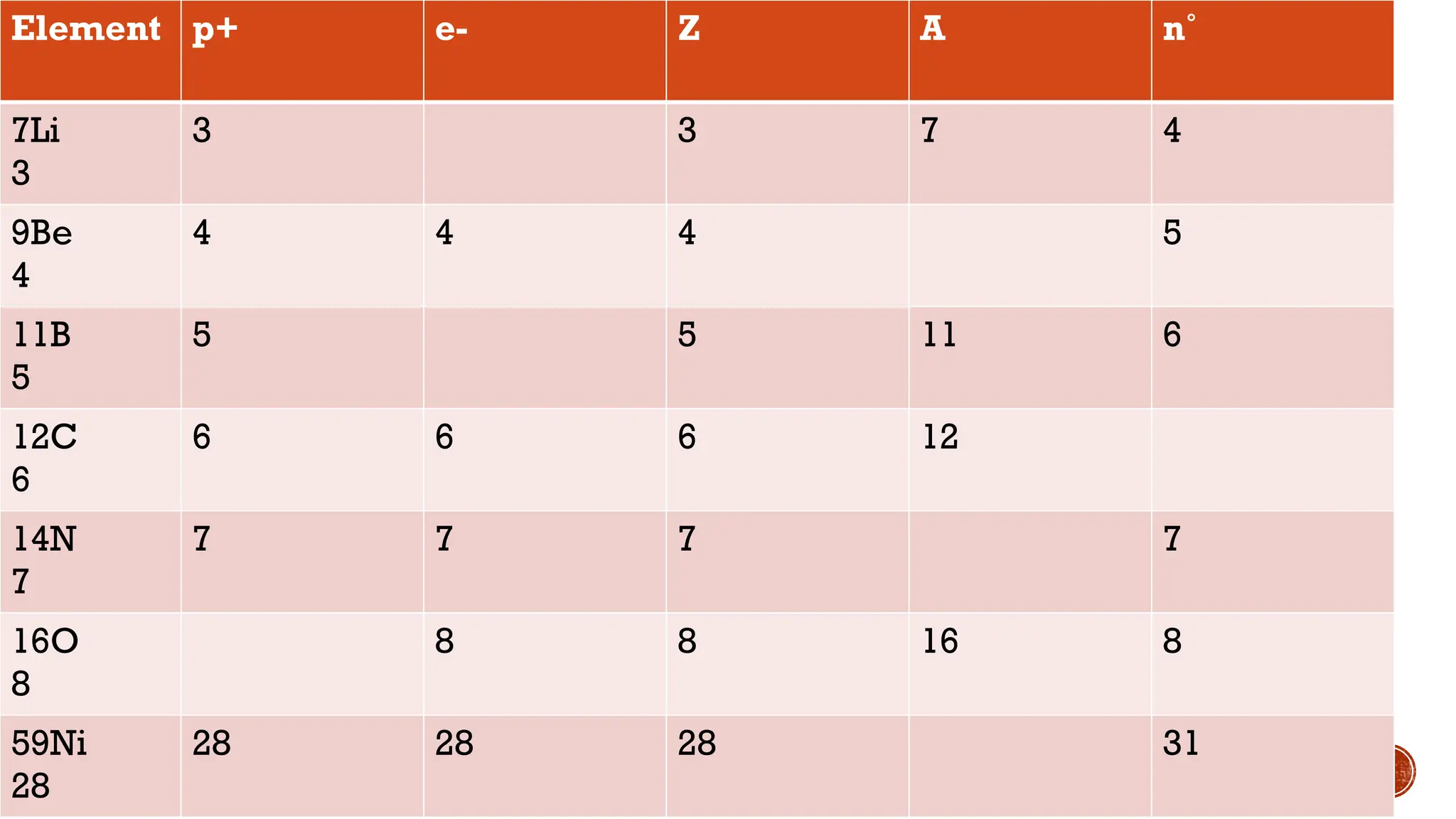
Element p+ e- Z A n˚
7Li
3
3 3 7 4
9Be
4
4 4 4 5
11B
5
5 5 11 6
12C
6
6 6 6 12
14N
7
7 7 7 7
16O
8
8 8 16 8
59Ni
28
28 28 28 31
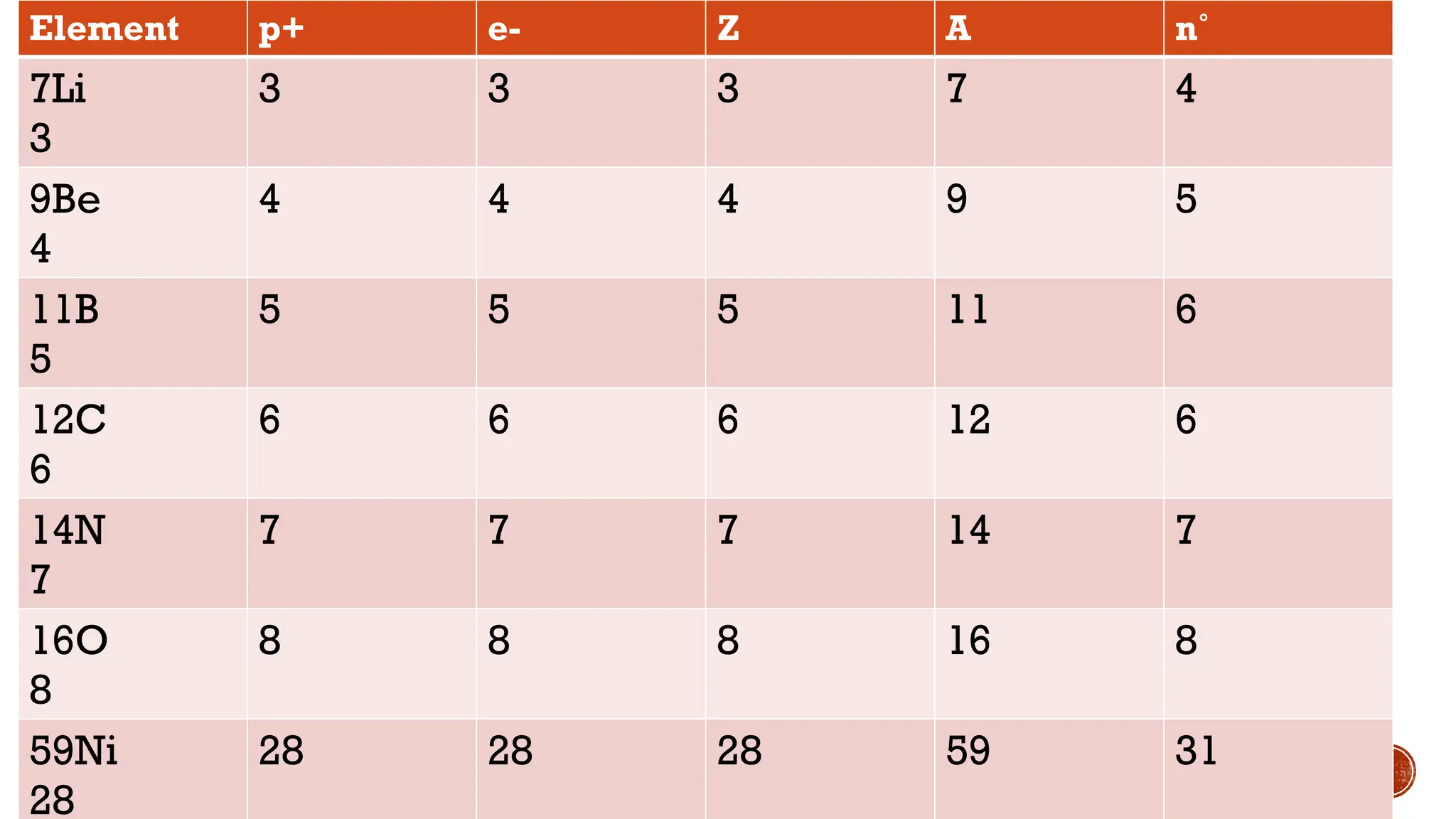
Element p+ e- Z A n˚
7Li
3
3 3 3 7 4
9Be
4
4 4 4 9 5
11B
5
5 5 5 11 6
12C
6
6 6 6 12 6
14N
7
7 7 7 14 7
16O
8
8 8 8 16 8
59Ni
28
28 28 28 59 31
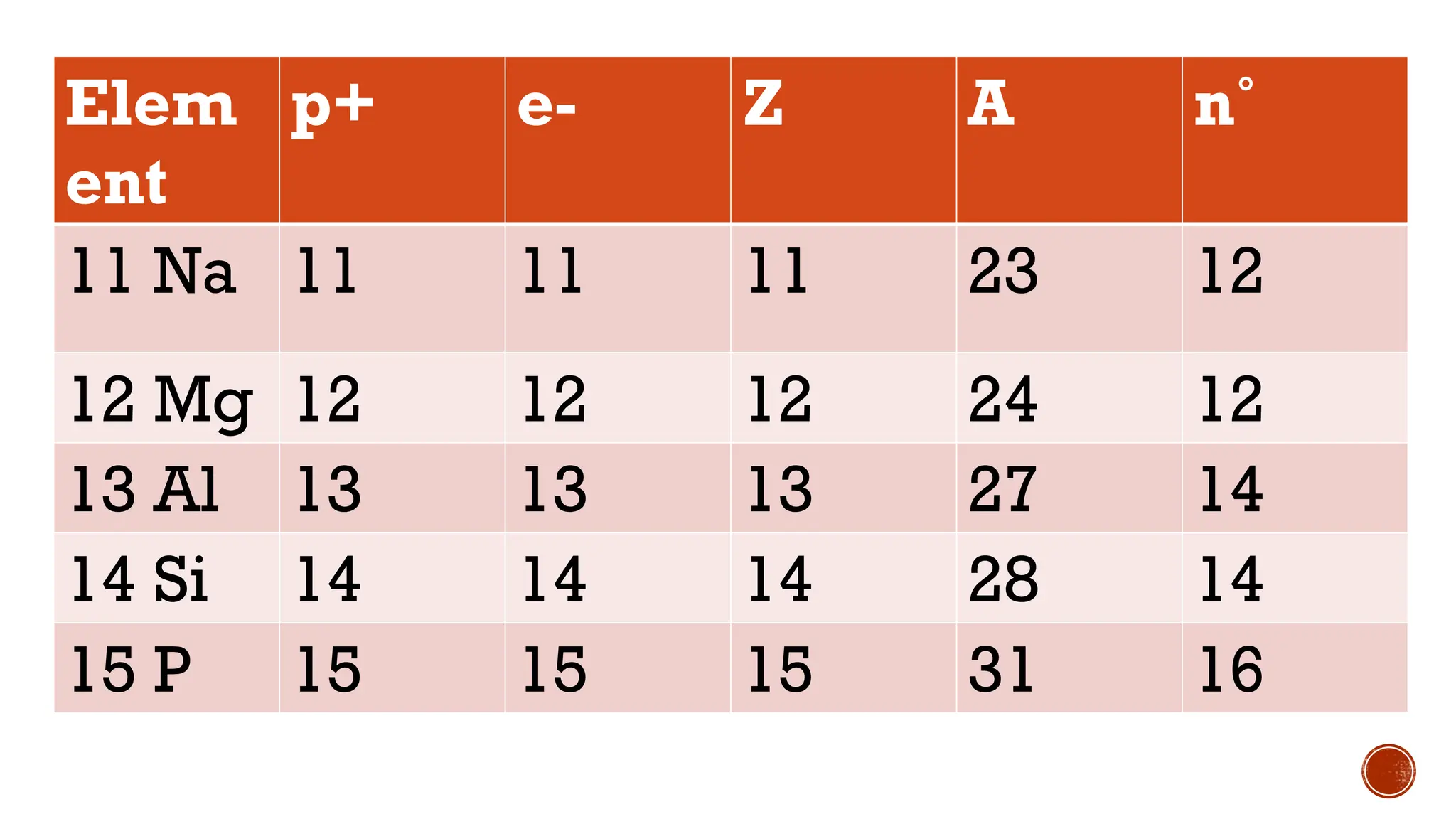
Elem
ent
p+ e- Z A n˚
11 Na 11 11 11 23 12
12 Mg 12 12 12 24 12
13 Al 13 13 13 27 14
14 Si 14 14 14 28 14
15 P 15 15 15 31 16
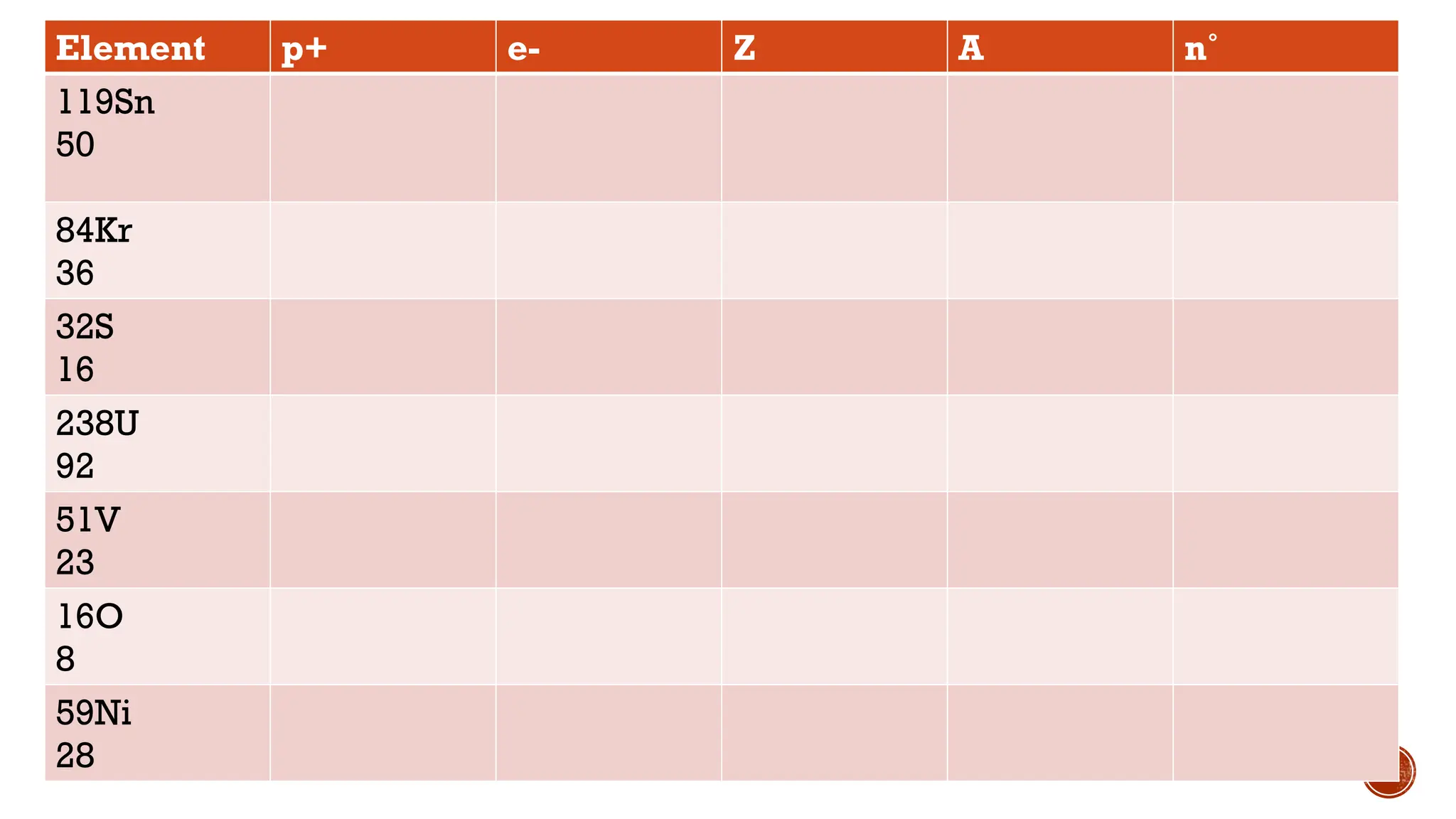
Element p+ e- Z A n˚
119Sn
50
84Kr
36
32S
16
238U
92
51V
23
16O
8
59Ni
28
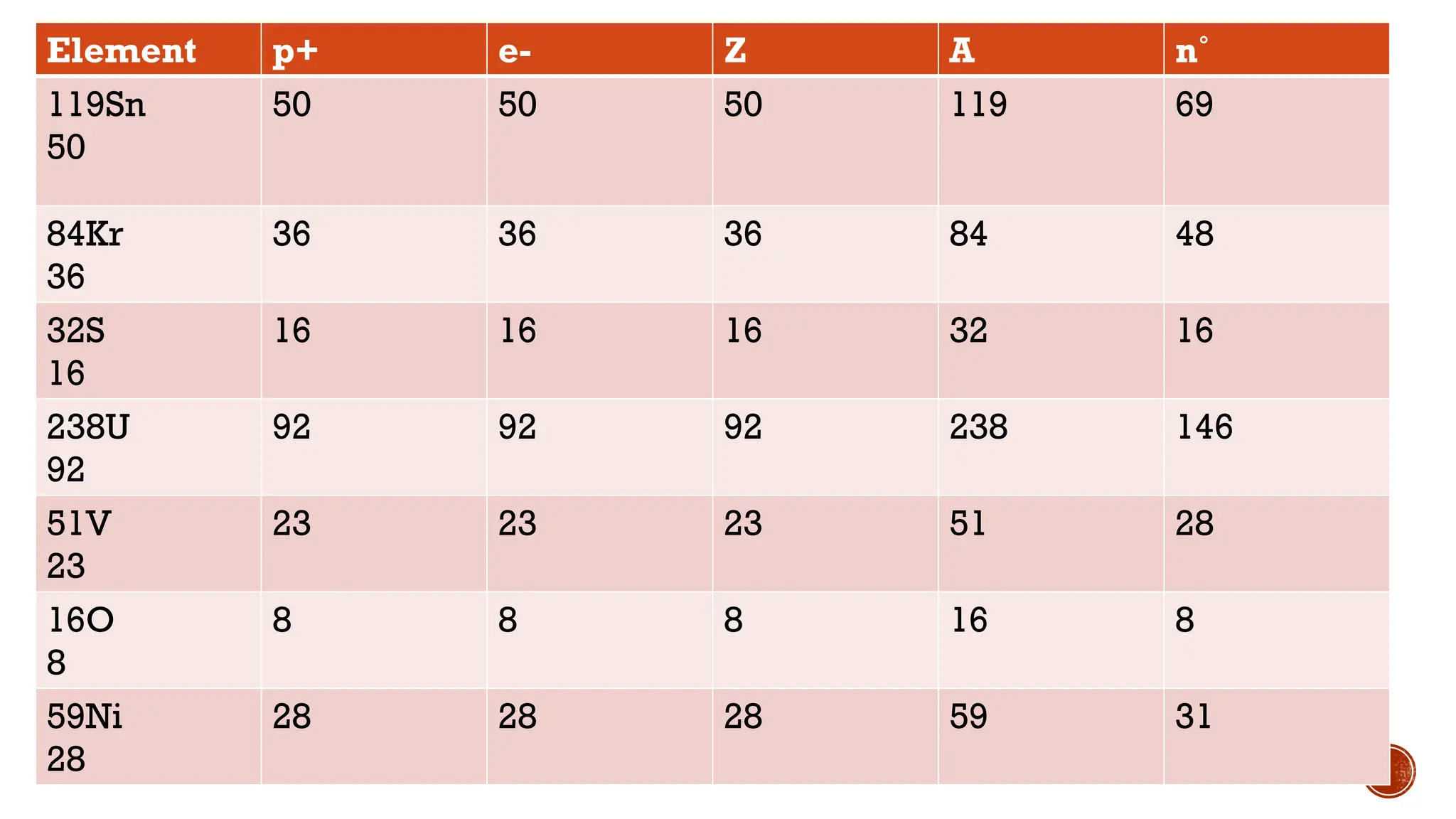
Element p+ e- Z A n˚
119Sn
50
50 50 50 119 69
84Kr
36
36 36 36 84 48
32S
16
16 16 16 32 16
238U
92
92 92 92 238 146
51V
23
23 23 23 51 28
16O
8
8 8 8 16 8
59Ni
28
28 28 28 59 31
Bigbang and Origin of the Light Elements - Copy.pptx

Bigbang and Origin of the Light Elements - Copy.pptx

  • 1.
    BIGBANG THEORY AND ORIGINOF THE LIGHT ELEMENTS
  • 4.
    https://en.wikipedia.org/wiki/Big_Bang Cosmology - thebody of science that studies the origin, evolution, and eventual fate of the universe. Cosmological model
  • 6.
    It was firstproposed by Belgian astrophysicist and priest Abbe Georges Edouard Lemaitre (1894-1966) Or Primordial nucleosynthesis, Creation of light elements. (H,He,Li and Be
  • 7.
    THE BIG BANGTHEORY According to the theory, the universe began as a point called singularity . It is a hot, dense point containing all space, time, matter, and energy. There is “nothing” around the singularity, but in this nothingness is where the singularity expanded rapidly in a process known as inflation . Space was believed to first expand at speeds faster than light. Energy started expanding after and created matter and antimatter, although some of these pairs cancel each other in a process known as annihilation which brings back energy.
  • 8.
    THE BIG BANGTHEORY  As the universe expanded, it cooled down. Matter in the form of proton, neutron, electron, and photon is scattered in a highly energetic soup termed the plasma soup. This soup is where nuclei of light atoms start to form via nucleosynthesis or nuclear fission between protons and neutrons.
  • 9.
    THE BIG BANGTHEORY  Rapid cooling occurs as the singularity expanded rapidly, slowing the subatomic particles. BBN began 100 seconds after the big bang, and one process lasts for approximately three minutes, producing two stable isotopes of hydrogen, two isotopes of helium, some lithium atoms, and beryllium isotopes.
  • 10.
    10-20 BILLION YEARSAGO, IN LESS THAN A SECOND, FOUR THINGS HAPPEN: 1.The Big Bang 2. Inflation 3.The beginning of the four forces  Gravity- attraction of objects with the more massive, having more gravitational force, it holds the planets in orbit;  Strong Nuclear force- it holds protons and neutrons together within the nucleus of an atom, sun’s energy is produced by fusion energy from fission can create atomic explosion.;  Weak nuclear force- can change neutrons to protons. Radio active decay, is observed by the scientists to find the age of fossils. C14- 5,730 years- haftlife, 11,400 years of a tree, only one-quarter or ¼ of its original C14 remains. (e^-0.00012097 x 11400) (e^-1.378= 3.97) 1/3.97 = 0.2518 or 25.18%
  • 11.
    C-14 is usedin radiocarbon dating to determine the age of organic materials up to about 50, 000 years old. -undergoes beta-minus decay, where a neutron in the nucleus turns into proton, releasing: An electron (beta particle B-) An antineutrino 14 C 14N + 0B e- +ve 6 7 -1
  • 12.
    10-20 BILLION YEARSAGO, IN LESS THAN A SECOND, FOUR THINGS HAPPEN: Electromagnetic force – force attracts object having opposite charges and repels those having the same charge, force attract paper clip into a magnet, electromagnetic spectrum- sunlight is dispensed into its component colors 4.The first atomic nuclei form Protons (H), electron, neutron- at about 10^11 kelvin, after the bigbang. 5. 1 Million years after the bigbang, hydrogen atoms form 6. 1 Billion years after the bigbang, galaxies begin to form
  • 13.
    7. 5 Billionyears ago the planet Earth forms 8. 4.6 Billion years ago the planet Earth forms 9. 4.5 Billion years ago the oceans and first land masses form 10. 3 Billion years ago bacteria appear--- life begins 11. 2.5 Billion years ago the atmosphere forms. 10-20 BILLION YEARS AGO, IN LESS THAN A SECOND, FOUR THINGS HAPPEN:
  • 14.
    The idea thatthe universe is dynamic was first observed by Vesto Slipher and Carl Wilhelm Wirtz in 1910 where they discovered that most spiral galaxies were moving away from Earth. This phenomenon is known as redshift . Later in 1927, Georges Lemaître, a Belgian Catholic priest, suggested that these galaxies were not moving but instead proposed that the universe is expanding.
  • 15.
     The Bigbangtheory is a cosmological model stating that the universe started its expansion about 13.8 billion years ago. Pieces of supporting evidence supporting this theory are: 1. Occurrence of red shift/Hubble/cosmic expansion 2. Cosmic microwave background – (1964) Arno Penzias and Robert Wilson- observed the after glow of radiation from the bigbang having a 2.7 K temperature.When the Earth is about 380, 000 years old 3. Primordial or Bigbang Nucleosynthesis - In 1929, Edwin Hubble used the redshift of light from where galaxies are moving away from the Earth and from each
  • 16.
    In 1965, RobertWilson and Arno Penzias discovered a low, steady “hum” from their Holmdel horn antenna (an antenna built to support NASA’s Project Echo). They concluded that the noise was the cosmic microwave background radiation (CMBR), which spread out across space evenly. This radiation was believed to be energy remains.
  • 25.
  • 26.
    •Deuterium (D), anisotope of hydrogen that has one proton and one neutron, was first formed from the fusion of a proton and a neutron, accompanied by the emission of a high-energy photon ( )
  • 28.
    Tritium (T), aradioactive isotope of hydrogen with one proton and two neutrons, was formed from the fusion of two deuterium nuclei, accompanied by a release of a proton.
  • 29.
    Helium-3 , anisotope of helium with one neutron and two protons, was formed from the fusion of two deuterium nuclei and a release of a neutron. neutron
  • 30.
    He-4 can beinitially formed when a proton fuses with a tritium atom.
  • 31.
    He-4 can alsobe formed when deuterium fuses with a tritium atom
  • 32.
    He-4 can beformed when deuterium fuses with a He-3.
  • 34.
    Lithium-7, an unstablenucleus with three protons and four neutrons, was produced from the nuclear fusion of helium-4 and tritium.
  • 35.
  • 36.
    Lithium-7 decayed spontaneouslyto form two stable helium nuclei.
  • 37.
    Beryllium-7 also reactswith a neutron and decays to the unstable lithium-7, with the subsequent release of a proton.
  • 40.
    Fig. 1. Thenuclear reactions predicted by big bang nucleosynthesis.
  • 47.
    p= e =z(atomic #) n+p= A(atomic mass) p-A=n
  • 49.
    Element p+ e-Z A n˚ 7Li 3 3 3 7 4 9Be 4 4 4 4 5 11B 5 5 5 11 6 12C 6 6 6 6 12 14N 7 7 7 7 7 16O 8 8 8 16 8 59Ni 28 28 28 28 31
  • 50.
    Element p+ e-Z A n˚ 7Li 3 3 3 3 7 4 9Be 4 4 4 4 9 5 11B 5 5 5 5 11 6 12C 6 6 6 6 12 6 14N 7 7 7 7 14 7 16O 8 8 8 8 16 8 59Ni 28 28 28 28 59 31
  • 51.
    Elem ent p+ e- ZA n˚ 11 Na 11 11 11 23 12 12 Mg 12 12 12 24 12 13 Al 13 13 13 27 14 14 Si 14 14 14 28 14 15 P 15 15 15 31 16
  • 52.
    Element p+ e-Z A n˚ 119Sn 50 84Kr 36 32S 16 238U 92 51V 23 16O 8 59Ni 28
  • 53.
    Element p+ e-Z A n˚ 119Sn 50 50 50 50 119 69 84Kr 36 36 36 36 84 48 32S 16 16 16 16 32 16 238U 92 92 92 92 238 146 51V 23 23 23 23 51 28 16O 8 8 8 8 16 8 59Ni 28 28 28 28 59 31