The Way We AreJourney of ManCatastropheBIG HISTORYBy, Aaron BaconHistory 140Prof. Michael ArguelloGuns, Germs, and SteelWorld Trade
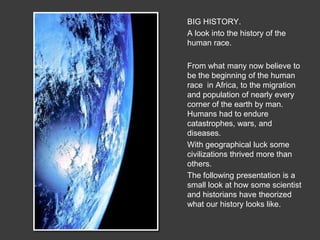
BIG HISTORY. A look into the history of the human race.From what many now believe to be the beginning of the human race  in Africa, to the migration and population of nearly every corner of the earth by man.  Humans had to endure catastrophes, wars, and diseases.  With geographical luck some civilizations thrived more than others.The following presentation is a small look at how some scientist and historians have theorized what our history looks like.
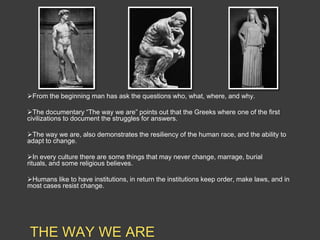
From the beginning man has ask the questions who, what, where, and why.
The documentary “The way we are” points out that the Greeks where one of the first civilizations to document the struggles for answers.
The way we are, also demonstrates the resiliency of the human race, and the ability to adapt to change.
In every culture there are some things that may never change, marrage, burial rituals, and some religious believes.
Humans like to have institutions, in return the institutions keep order, make laws, and in most cases resist change.The way we are
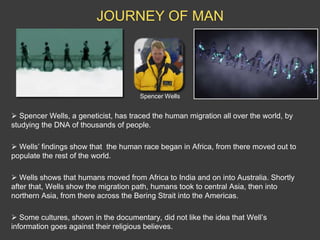
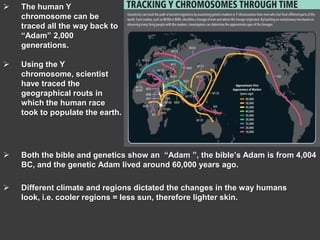
Journey of manSpencer Wells Spencer Wells, a geneticist, has traced the human migration all over the world, by studying the DNA of thousands of people.
 Wells’ findings show that  the human race began in Africa, from there moved out to populate the rest of the world.
 Wells shows that humans moved from Africa to India and on into Australia. Shortly after that, Wells show the migration path, humans took to central Asia, then into northern Asia, from there across the Bering Strait into the Americas.
 Some cultures, shown in the documentary, did not like the idea that Well’s information goes against their religious believes. The human Y chromosome can be traced all the way back to “Adam” 2,000 generations.

Big history2

  • 1.
    The Way WeAreJourney of ManCatastropheBIG HISTORYBy, Aaron BaconHistory 140Prof. Michael ArguelloGuns, Germs, and SteelWorld Trade
  • 2.
    BIG HISTORY. Alook into the history of the human race.From what many now believe to be the beginning of the human race in Africa, to the migration and population of nearly every corner of the earth by man. Humans had to endure catastrophes, wars, and diseases. With geographical luck some civilizations thrived more than others.The following presentation is a small look at how some scientist and historians have theorized what our history looks like.
  • 3.
    From the beginningman has ask the questions who, what, where, and why.
  • 4.
    The documentary “Theway we are” points out that the Greeks where one of the first civilizations to document the struggles for answers.
  • 5.
    The way weare, also demonstrates the resiliency of the human race, and the ability to adapt to change.
  • 6.
    In every culturethere are some things that may never change, marrage, burial rituals, and some religious believes.
  • 7.
    Humans like tohave institutions, in return the institutions keep order, make laws, and in most cases resist change.The way we are
  • 8.
    Journey of manSpencerWells Spencer Wells, a geneticist, has traced the human migration all over the world, by studying the DNA of thousands of people.
  • 9.
    Wells’ findingsshow that the human race began in Africa, from there moved out to populate the rest of the world.
  • 10.
    Wells showsthat humans moved from Africa to India and on into Australia. Shortly after that, Wells show the migration path, humans took to central Asia, then into northern Asia, from there across the Bering Strait into the Americas.
  • 11.
    Some cultures,shown in the documentary, did not like the idea that Well’s information goes against their religious believes. The human Y chromosome can be traced all the way back to “Adam” 2,000 generations.