Code tim20 gets you a
20% discount off the list
price.
8 November 2017
London, UK
Intercontinental at the 02
Beyond the Basics 1:
Storage Engines
Tim Biedenkapp
Solutions Architect, DACH
tim@mongodb.com
3
Beyond The Basics
• Follow on from Back to Basics : An Introduction to NoSQL and MongoDB
• Covers more advanced topics:
– Storage Engines
• What storage engines are and how to pick them
– Aggregation Framework
• How to deploy advanced analytics processing right inside the database
– The BI Connector
• How to create visualisations and dashboards from your MongoDB data
– Authentication and Authorisation
• How to secure MongoDB, both on-premise and in the cloud
4
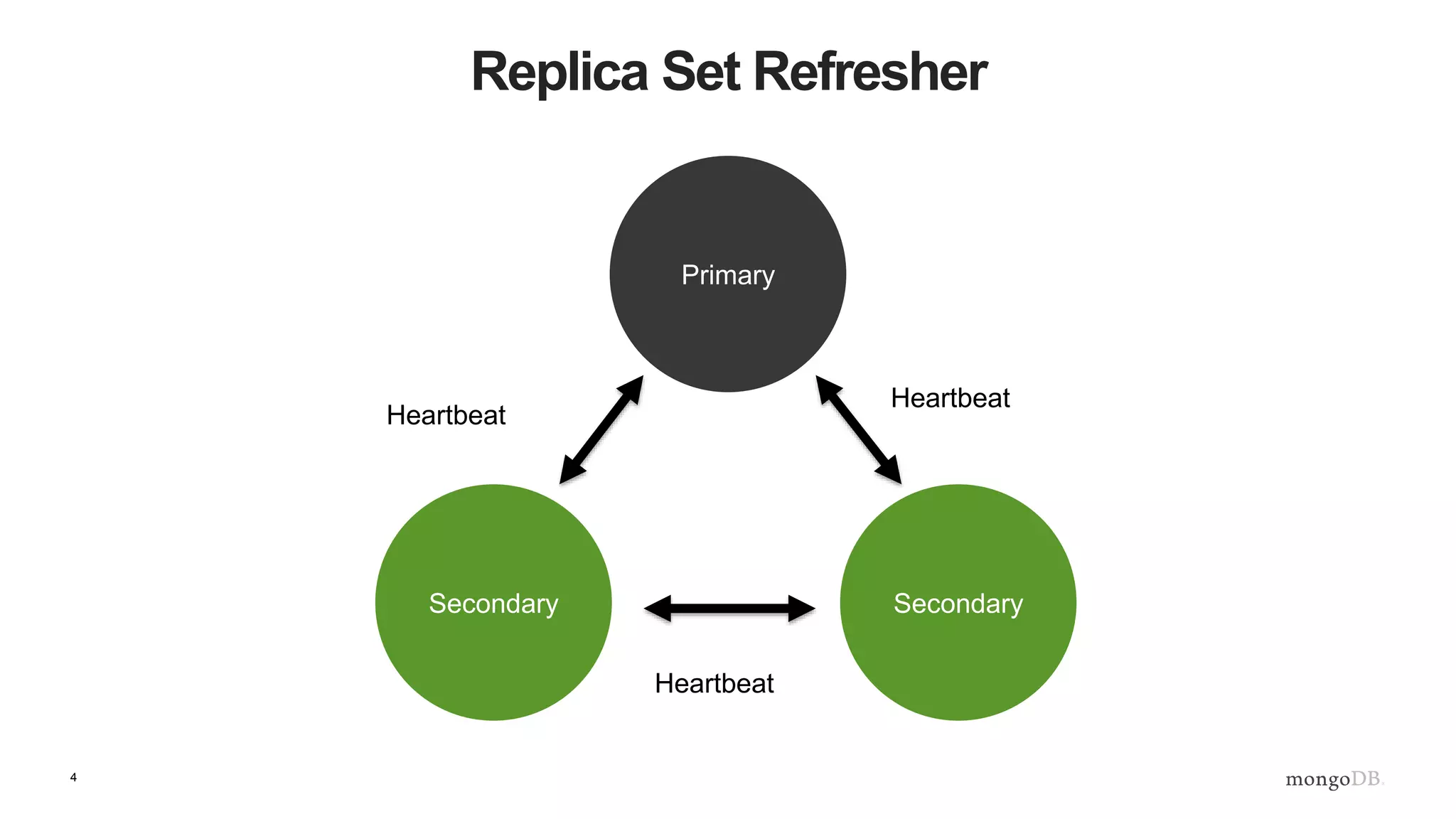
Replica Set Refresher
SecondarySecondary
Primary
Heartbeat
Heartbeat
Heartbeat
5
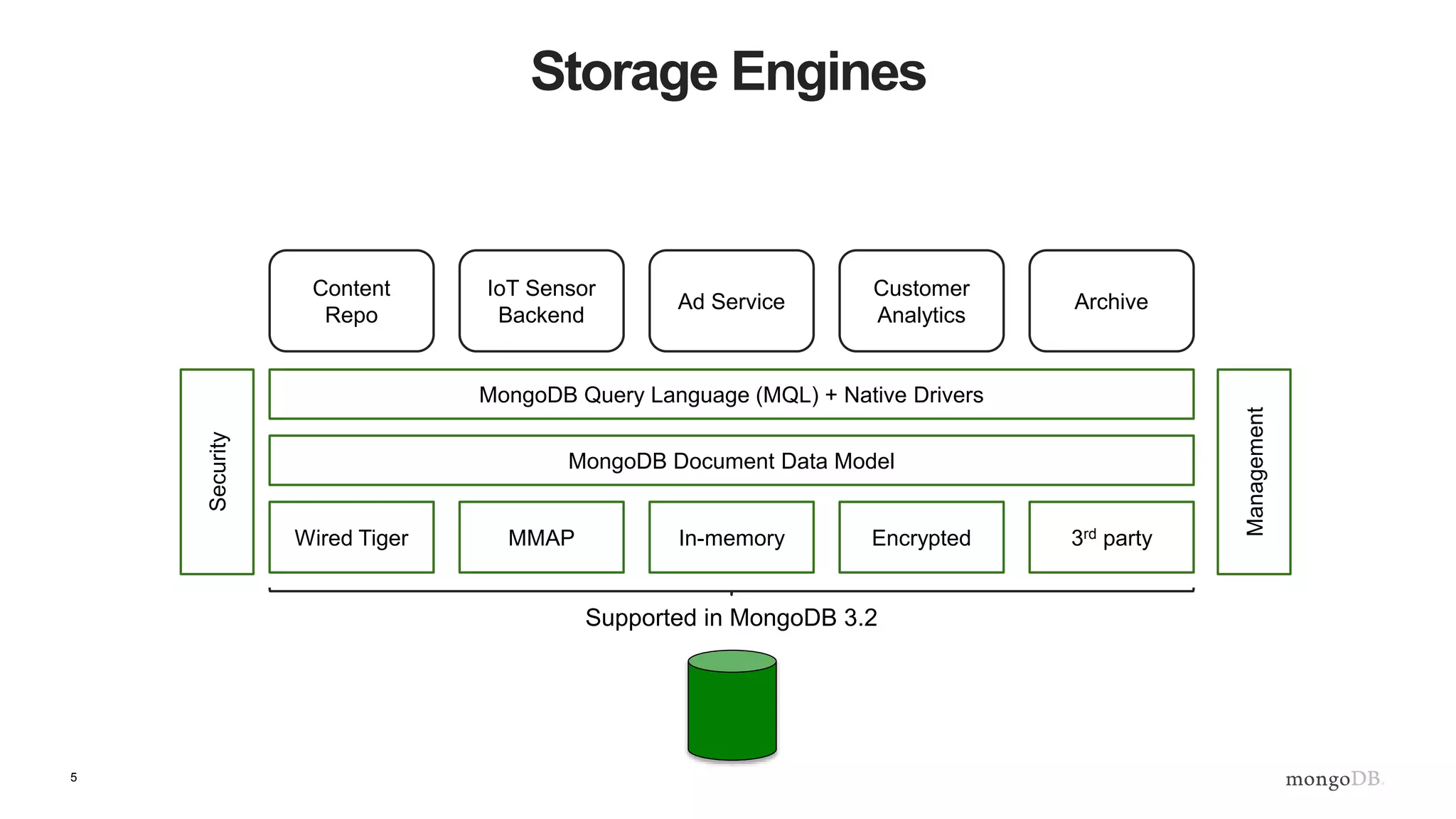
Storage Engines
Content
Repo
IoT Sensor
Backend
Ad Service
Customer
Analytics
Archive
MongoDB Query Language (MQL) + Native Drivers
MongoDB Document Data Model
Wired Tiger MMAP
Supported in MongoDB 3.2
Management
Security
In-memory Encrypted 3rd party
6
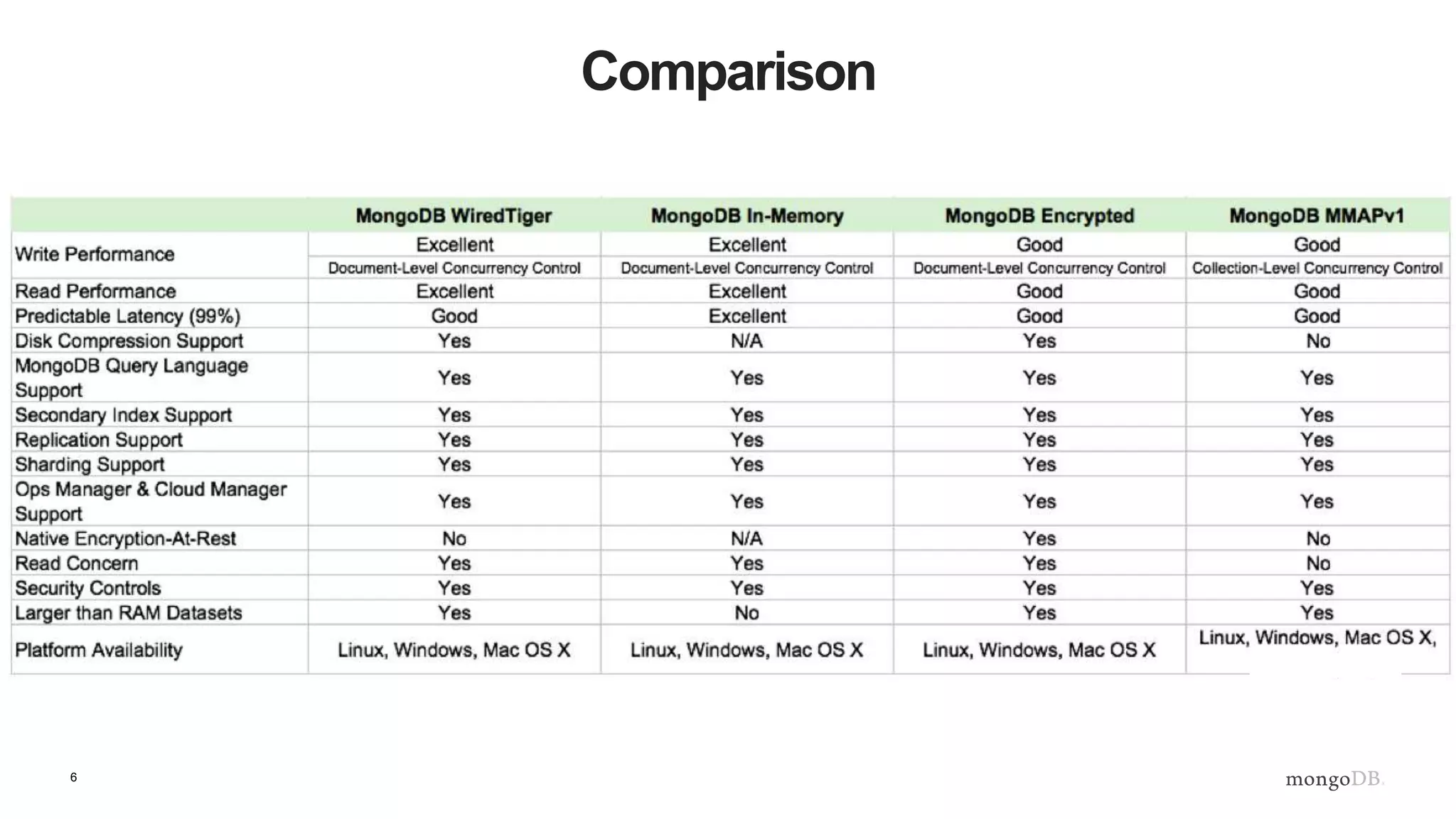
Comparison
7
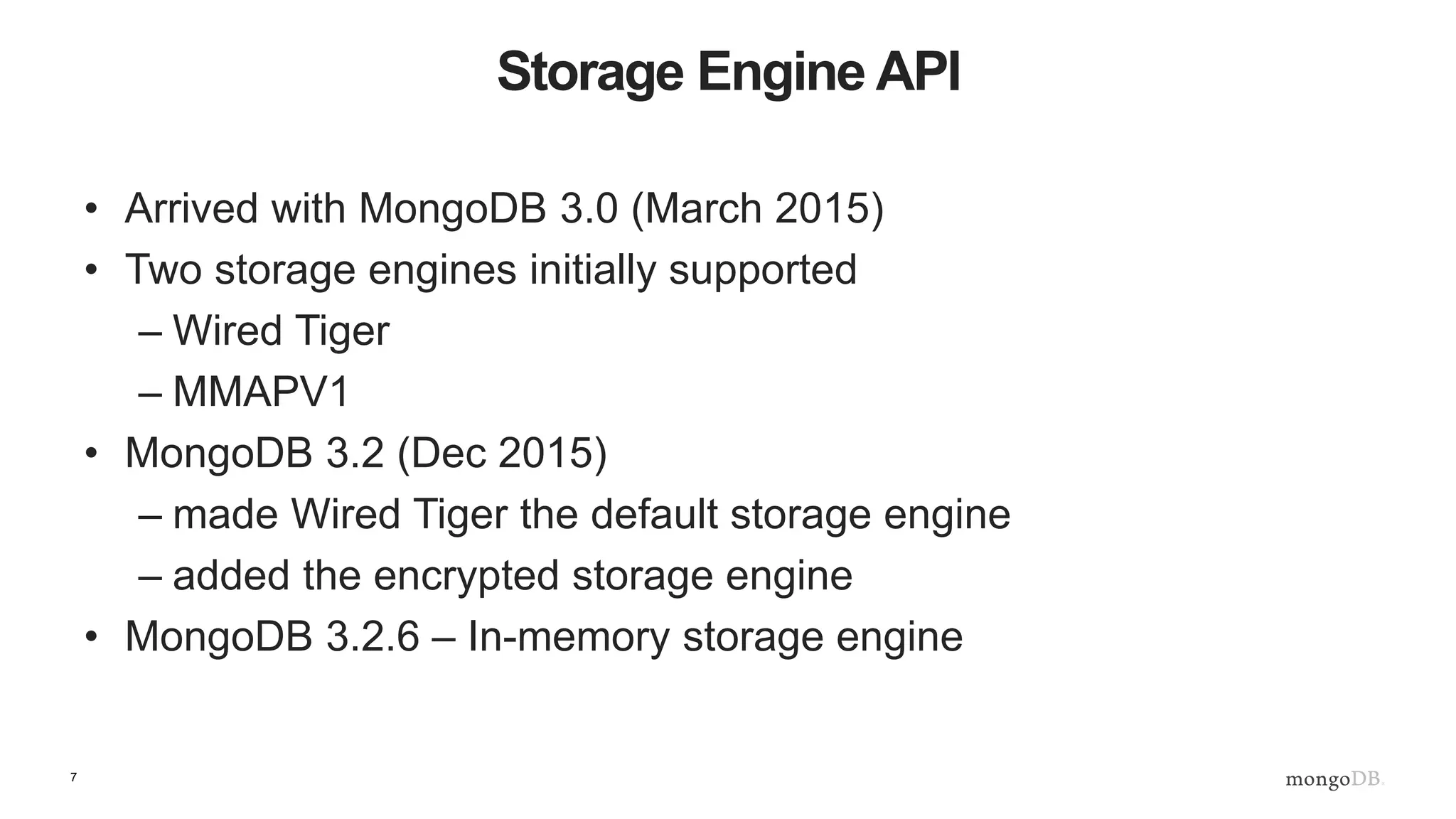
Storage Engine API
• Arrived with MongoDB 3.0 (March 2015)
• Two storage engines initially supported
– Wired Tiger
– MMAPV1
• MongoDB 3.2 (Dec 2015)
– made Wired Tiger the default storage engine
– added the encrypted storage engine
• MongoDB 3.2.6 – In-memory storage engine
8
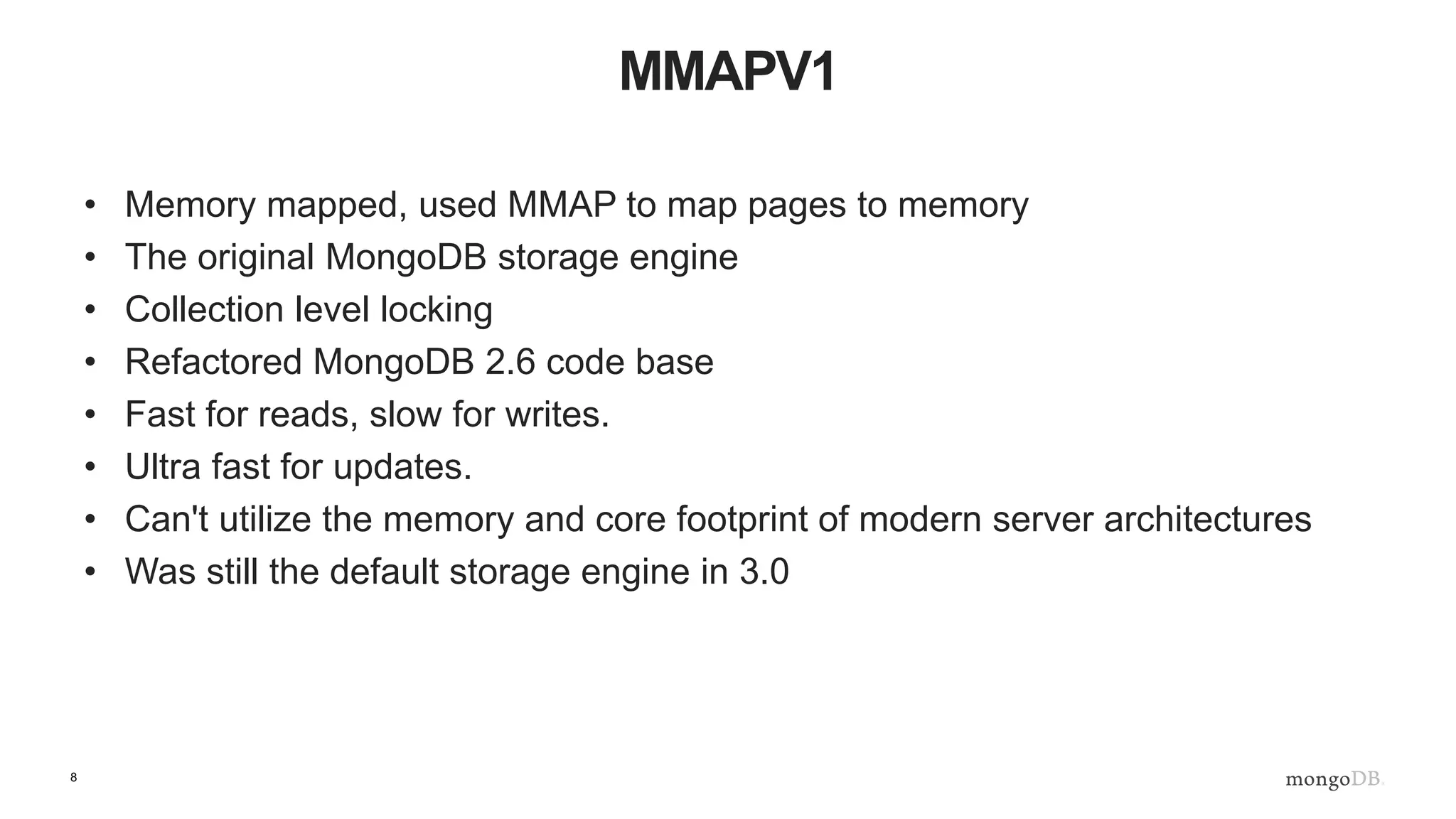
MMAPV1
• Memory mapped, used MMAP to map pages to memory
• The original MongoDB storage engine
• Collection level locking
• Refactored MongoDB 2.6 code base
• Fast for reads, slow for writes.
• Ultra fast for updates.
• Can't utilize the memory and core footprint of modern server architectures
• Was still the default storage engine in 3.0
9
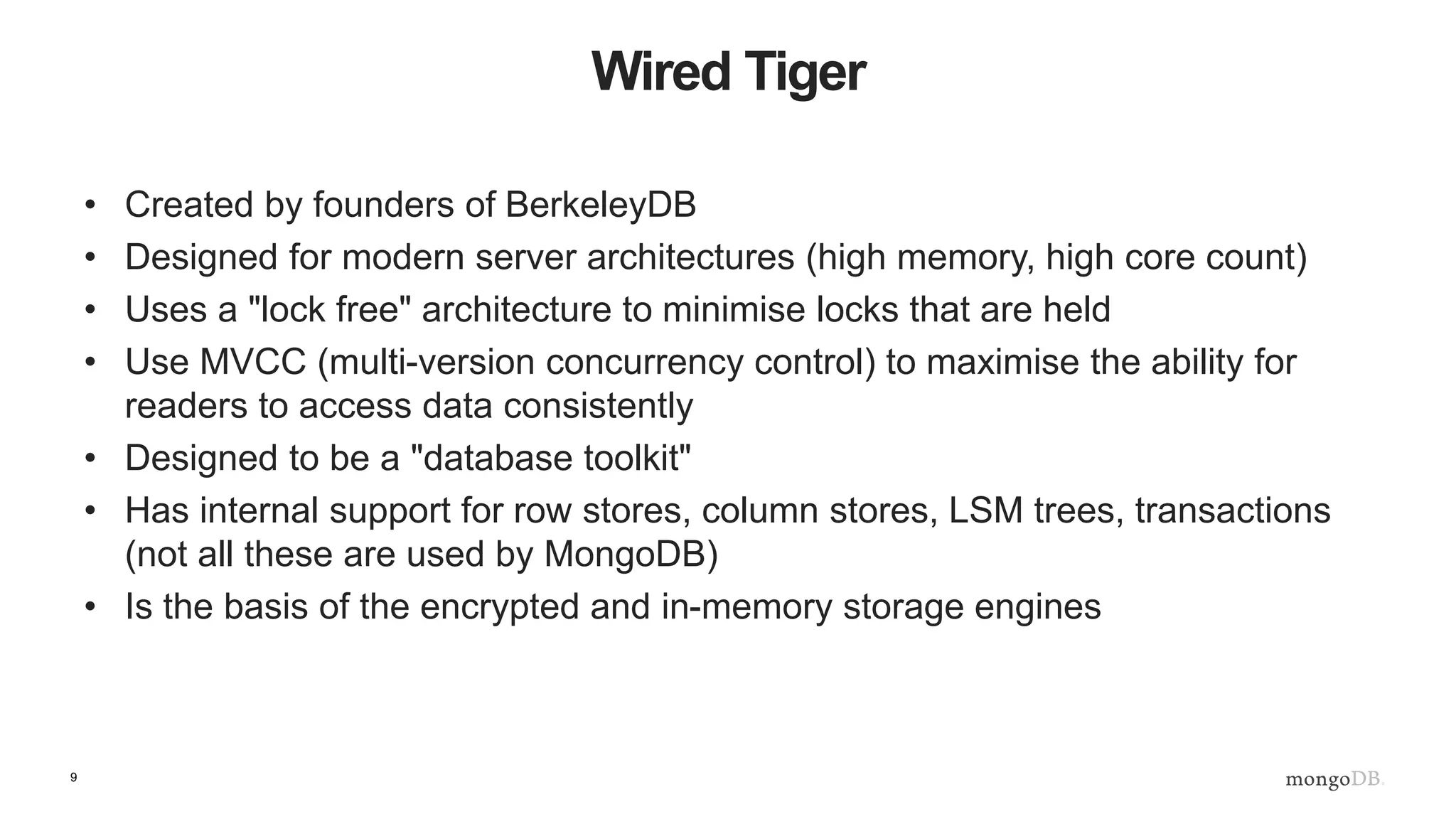
Wired Tiger
• Created by founders of BerkeleyDB
• Designed for modern server architectures (high memory, high core count)
• Uses a "lock free" architecture to minimise locks that are held
• Use MVCC (multi-version concurrency control) to maximise the ability for
readers to access data consistently
• Designed to be a "database toolkit"
• Has internal support for row stores, column stores, LSM trees, transactions
(not all these are used by MongoDB)
• Is the basis of the encrypted and in-memory storage engines
10
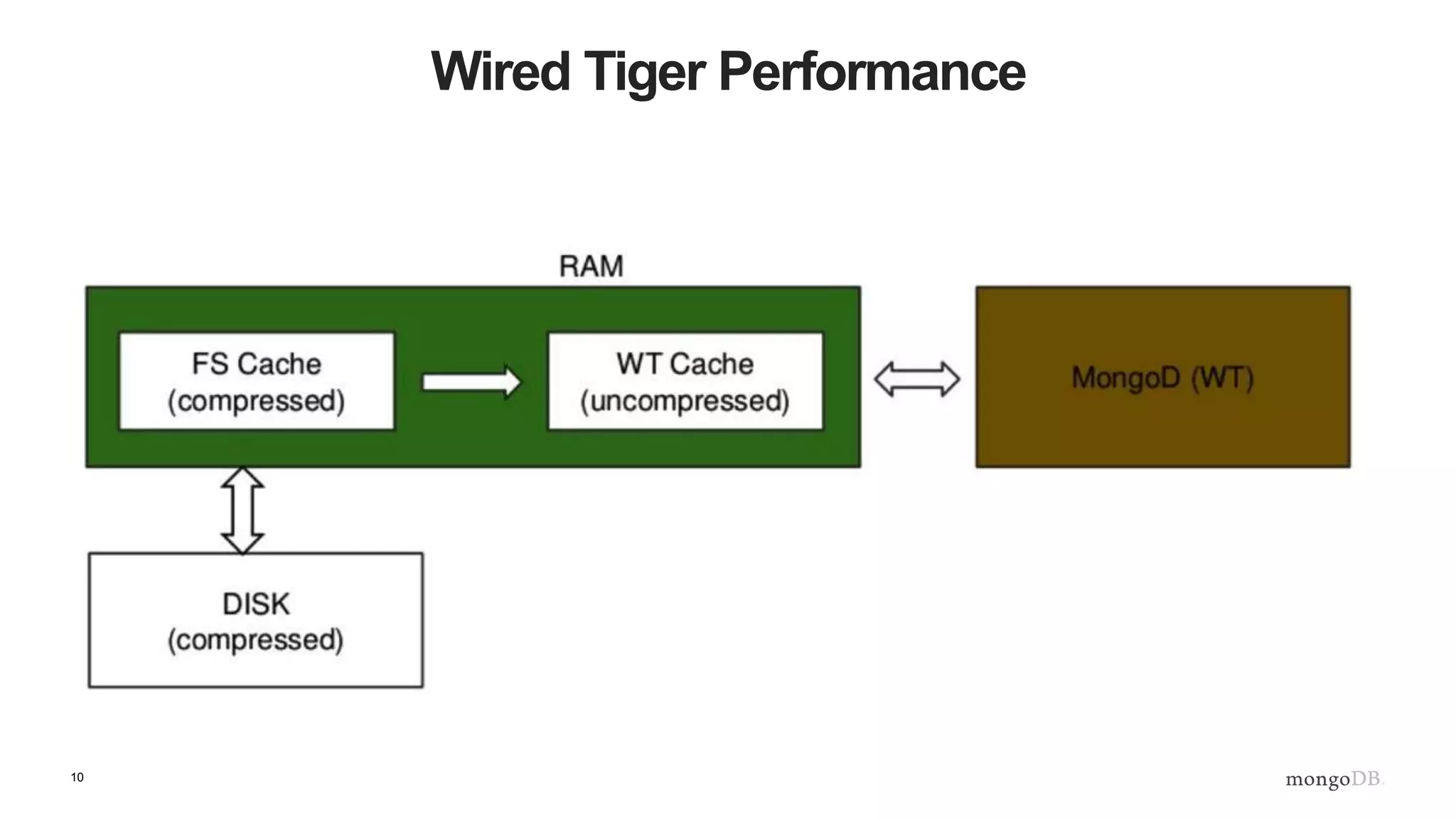
Wired Tiger Performance
11
Wired Tiger Cache
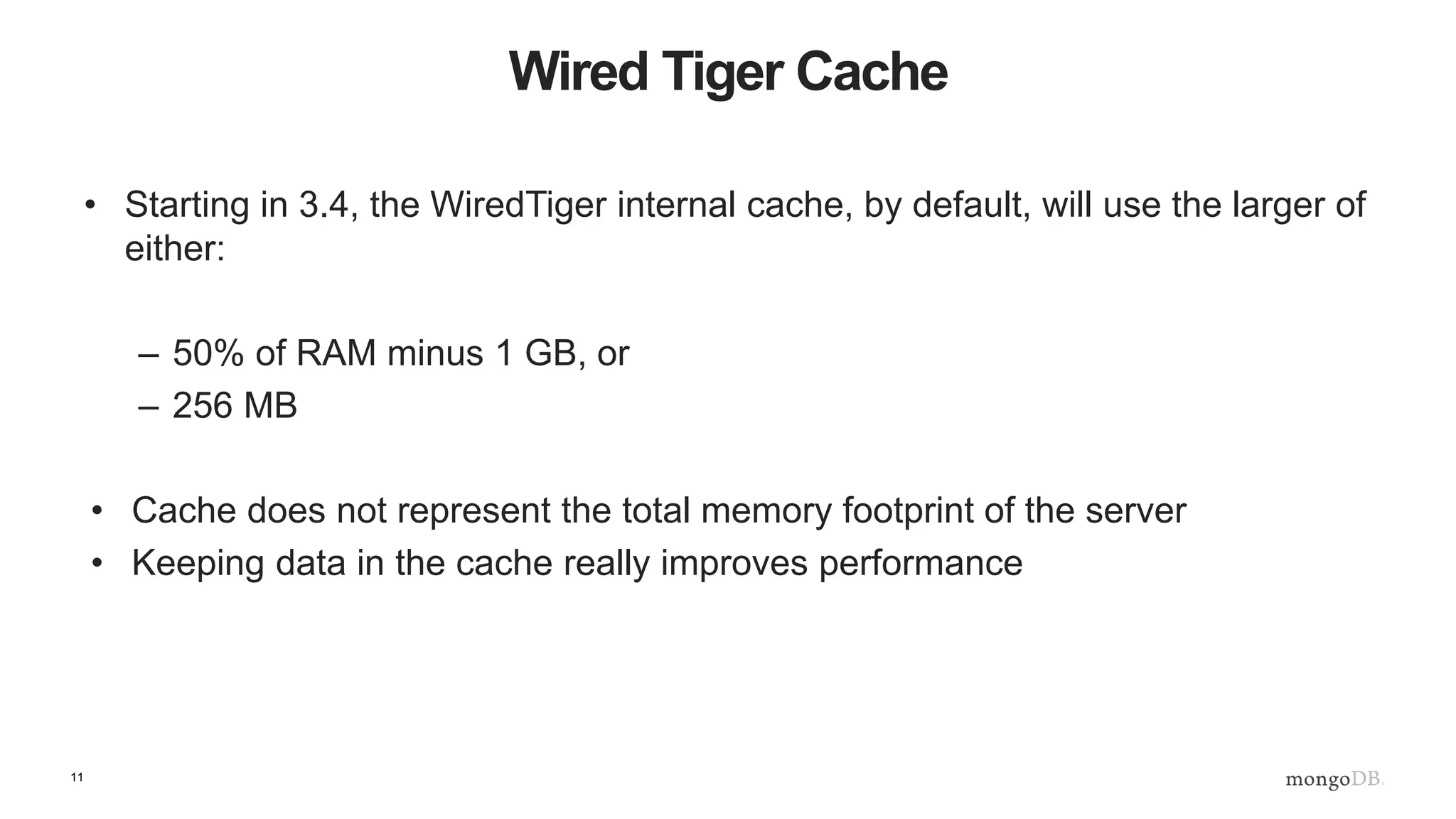
• Starting in 3.4, the WiredTiger internal cache, by default, will use the larger of
either:
– 50% of RAM minus 1 GB, or
– 256 MB
• Cache does not represent the total memory footprint of the server
• Keeping data in the cache really improves performance
12
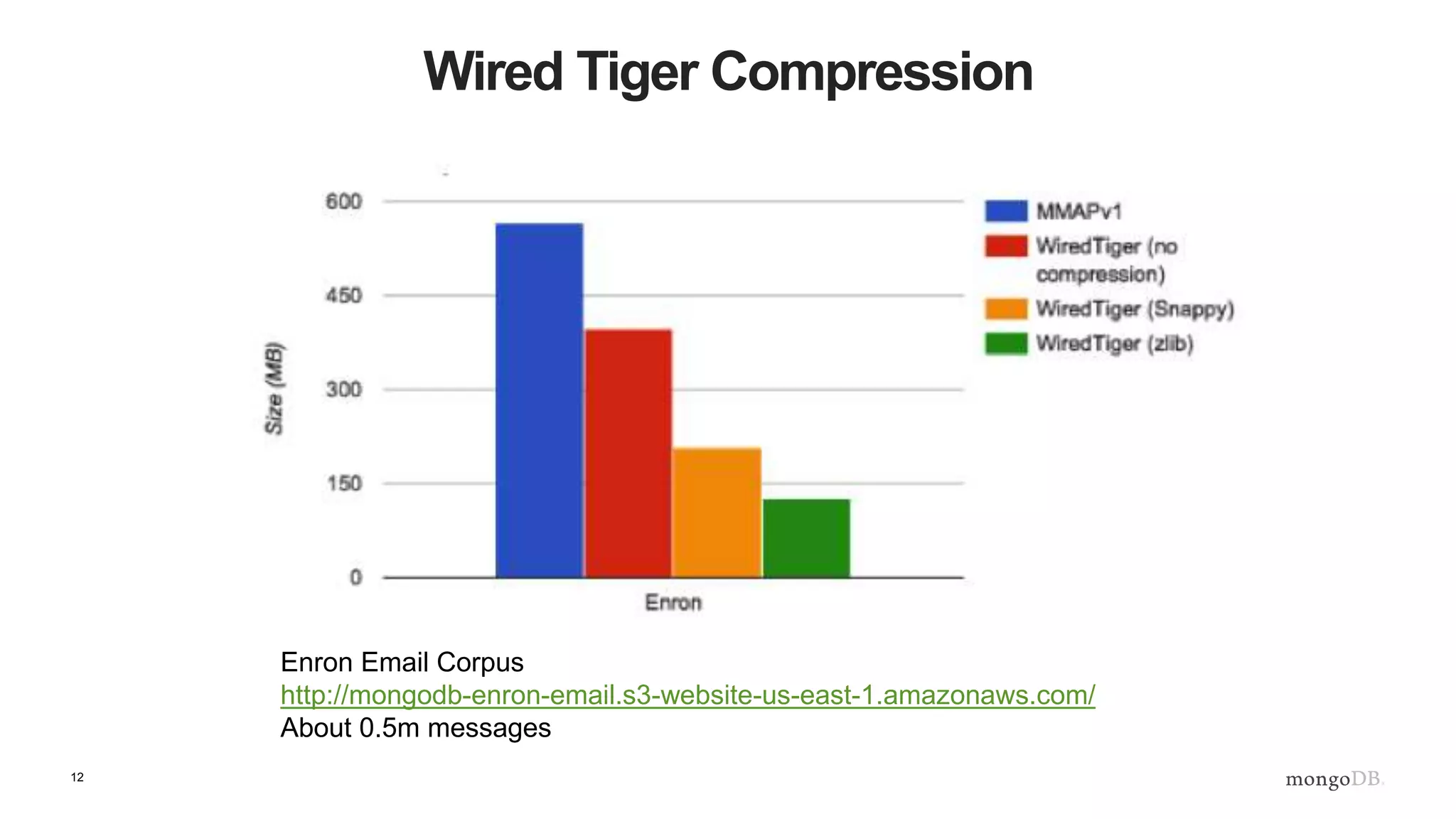
Wired Tiger Compression
Enron Email Corpus
http://mongodb-enron-email.s3-website-us-east-1.amazonaws.com/
About 0.5m messages
13
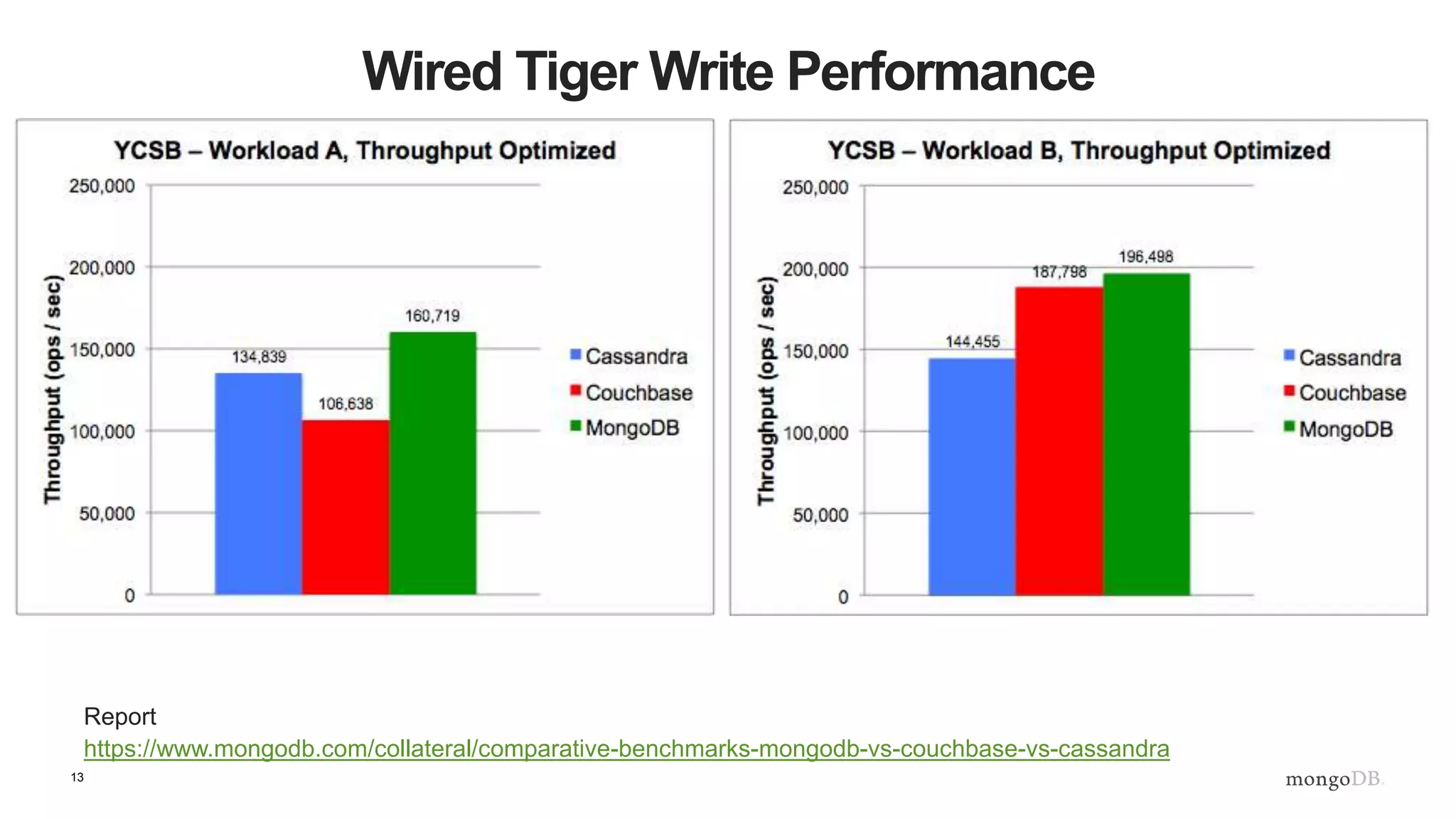
Wired Tiger Write Performance
Report
https://www.mongodb.com/collateral/comparative-benchmarks-mongodb-vs-couchbase-vs-cassandra
14
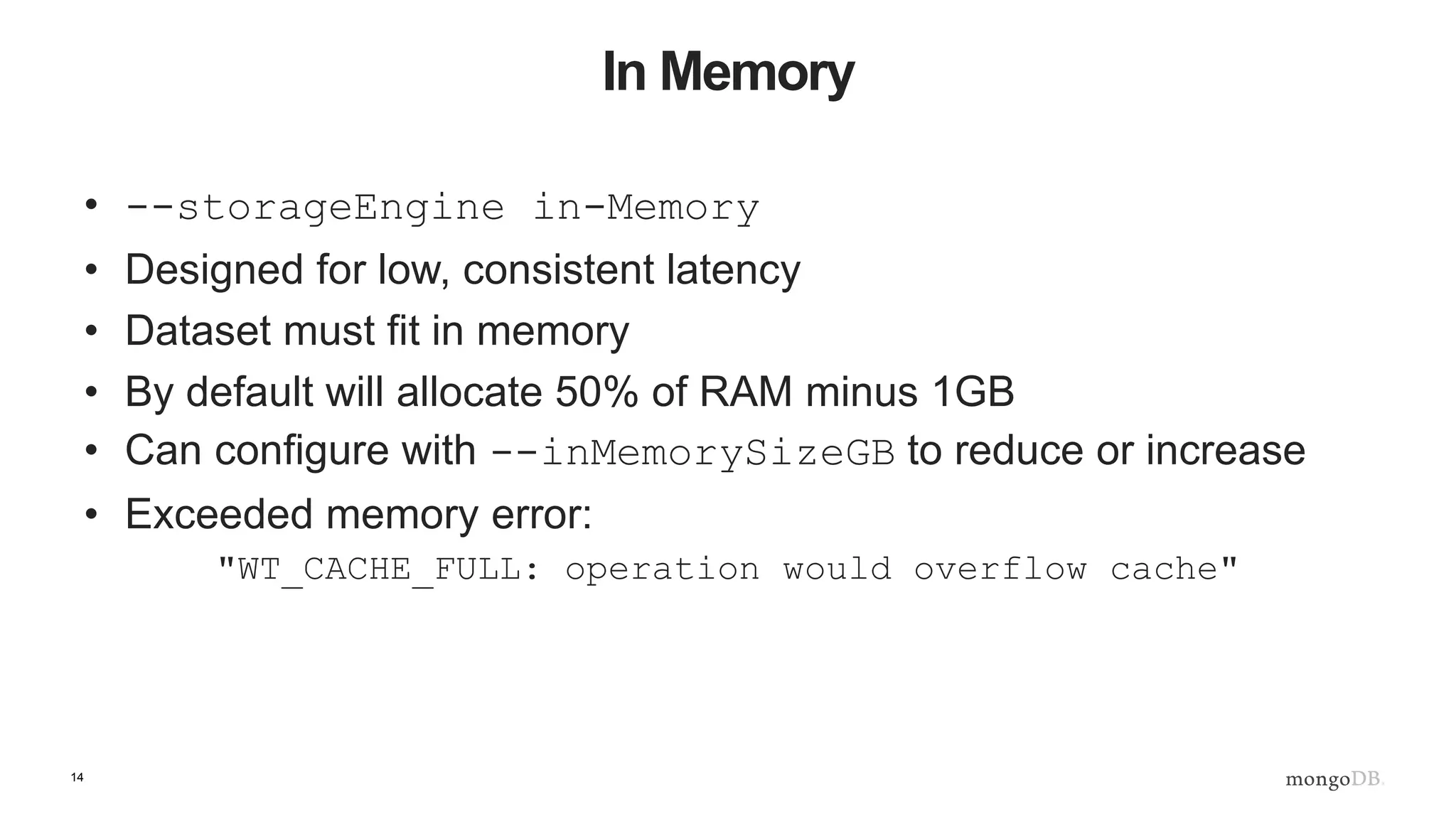
In Memory
• --storageEngine in-Memory
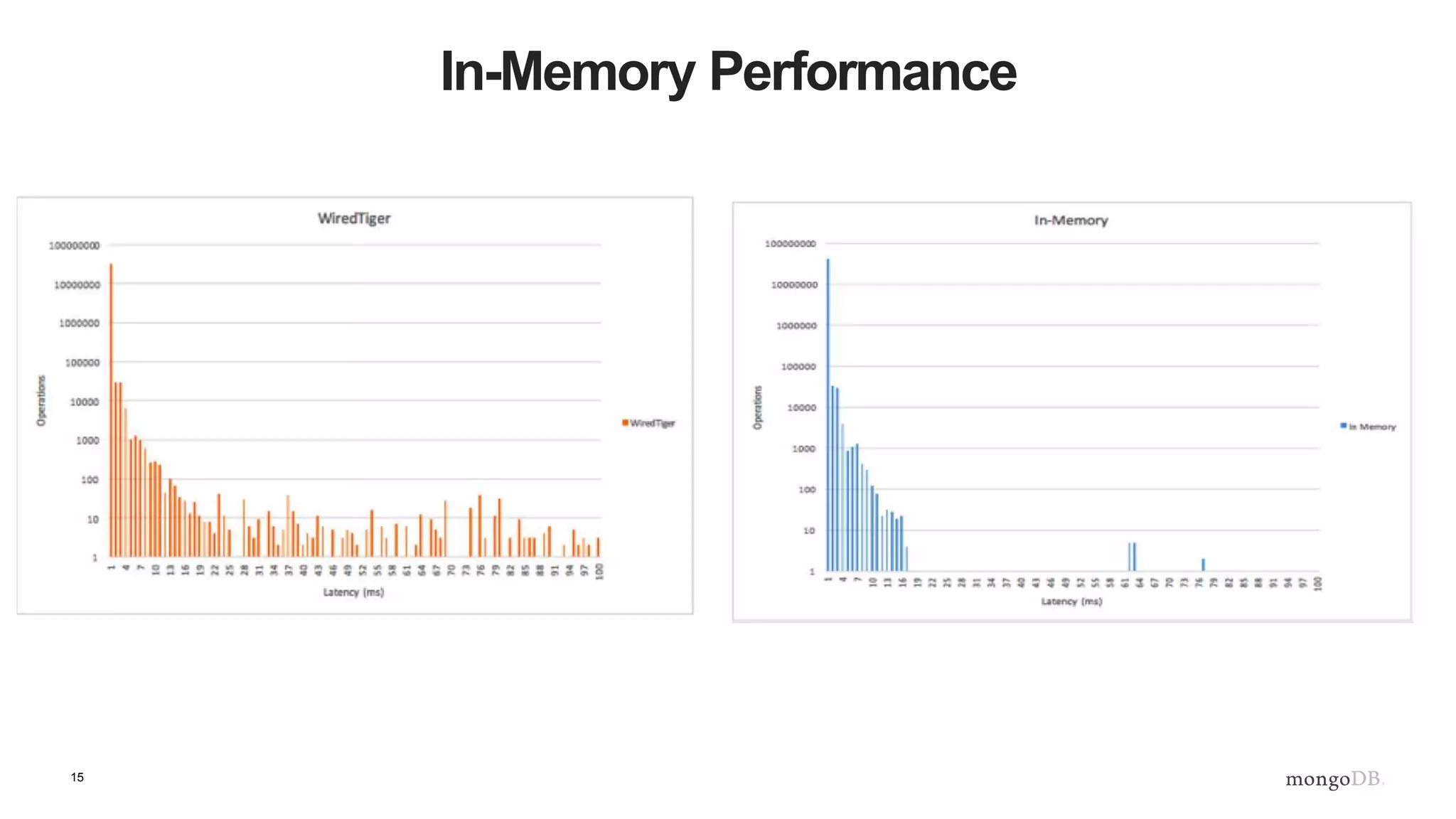
• Designed for low, consistent latency
• Dataset must fit in memory
• By default will allocate 50% of RAM minus 1GB
• Can configure with --inMemorySizeGB to reduce or increase
• Exceeded memory error:
"WT_CACHE_FULL: operation would overflow cache"
15
In-Memory Performance
16
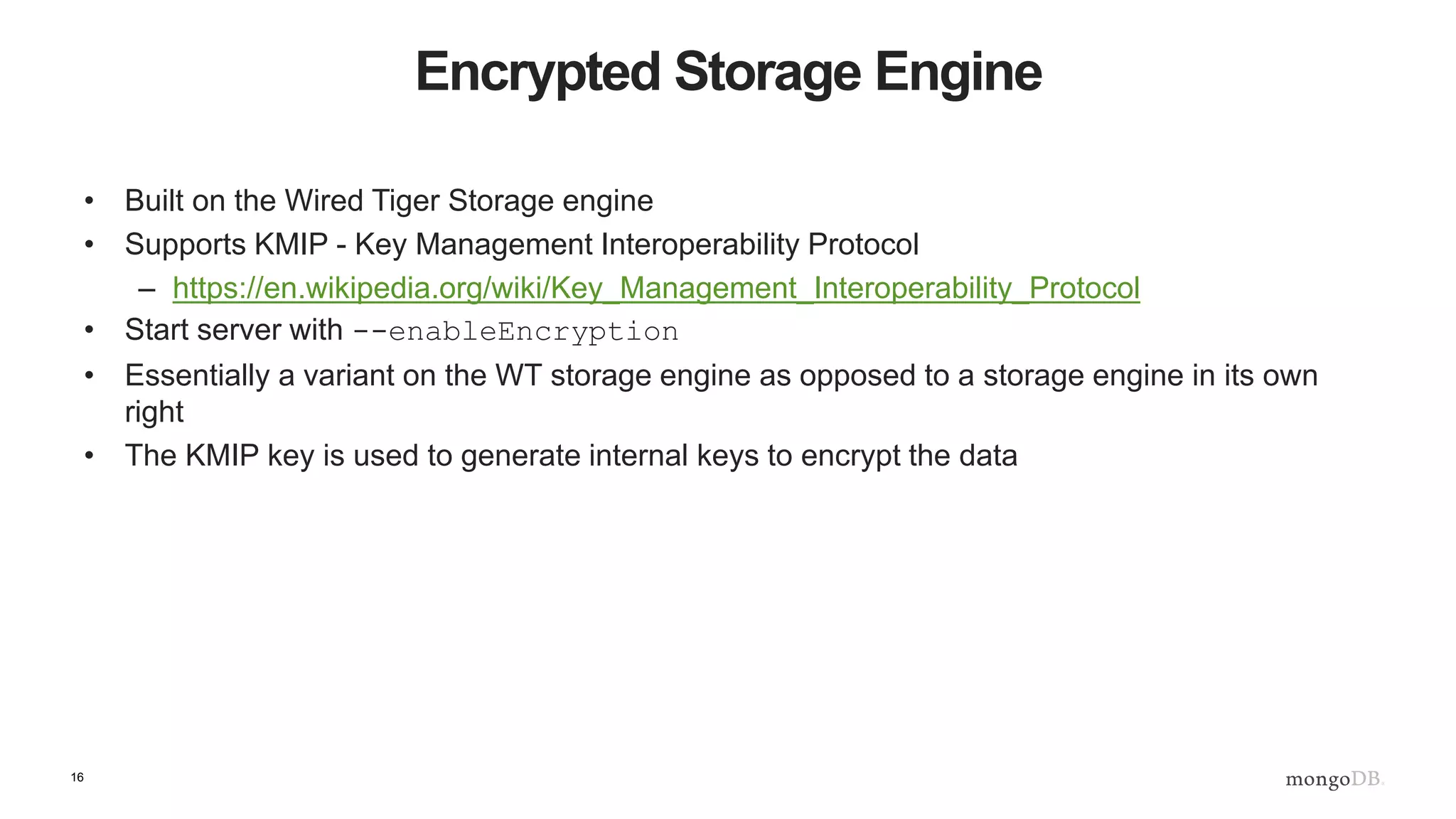
Encrypted Storage Engine
• Built on the Wired Tiger Storage engine
• Supports KMIP - Key Management Interoperability Protocol
– https://en.wikipedia.org/wiki/Key_Management_Interoperability_Protocol
• Start server with --enableEncryption
• Essentially a variant on the WT storage engine as opposed to a storage engine in its own
right
• The KMIP key is used to generate internal keys to encrypt the data
17
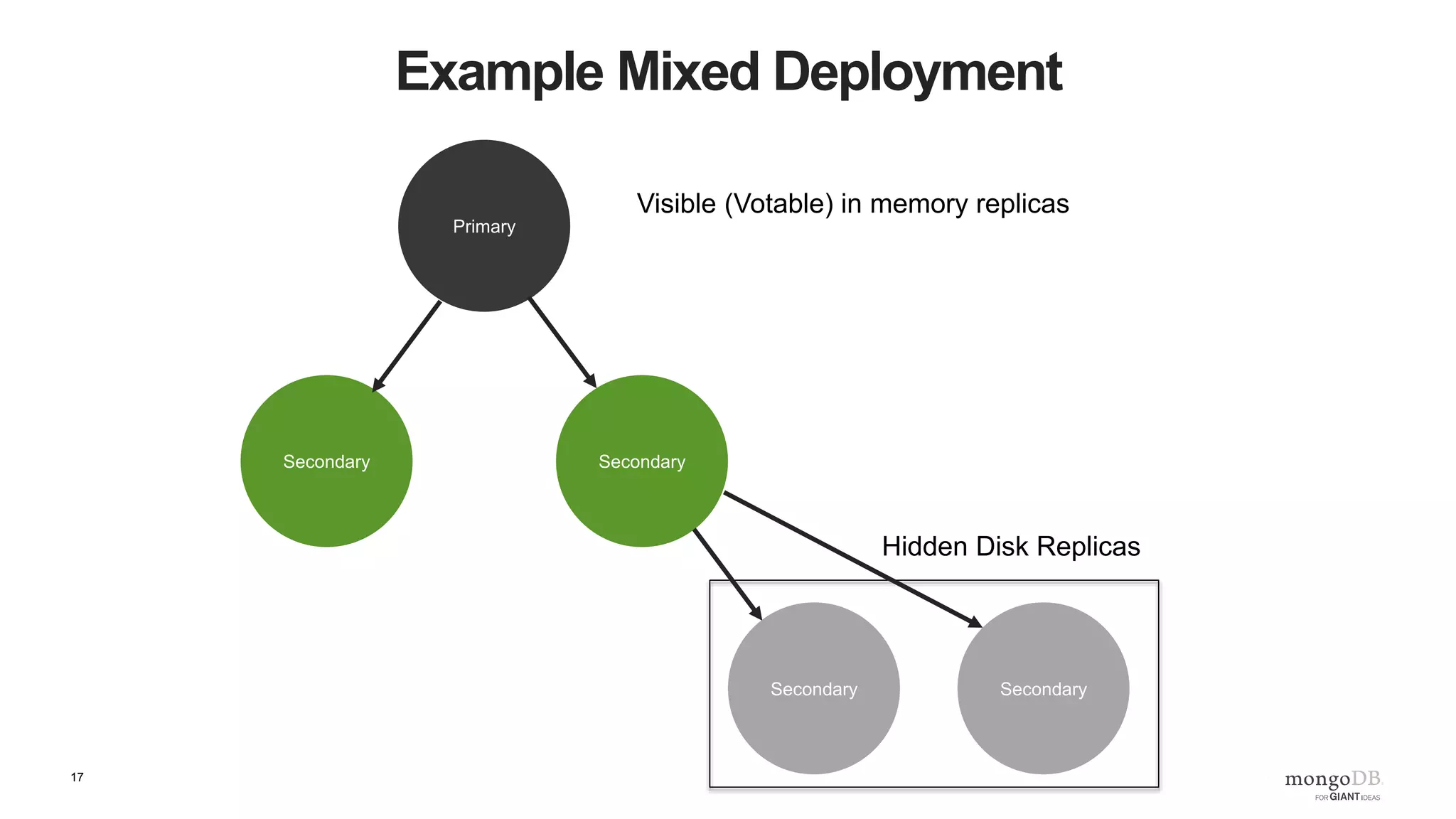
Example Mixed Deployment
SecondarySecondary
Primary
SecondarySecondary
Hidden Disk Replicas
Visible (Votable) in memory replicas
18
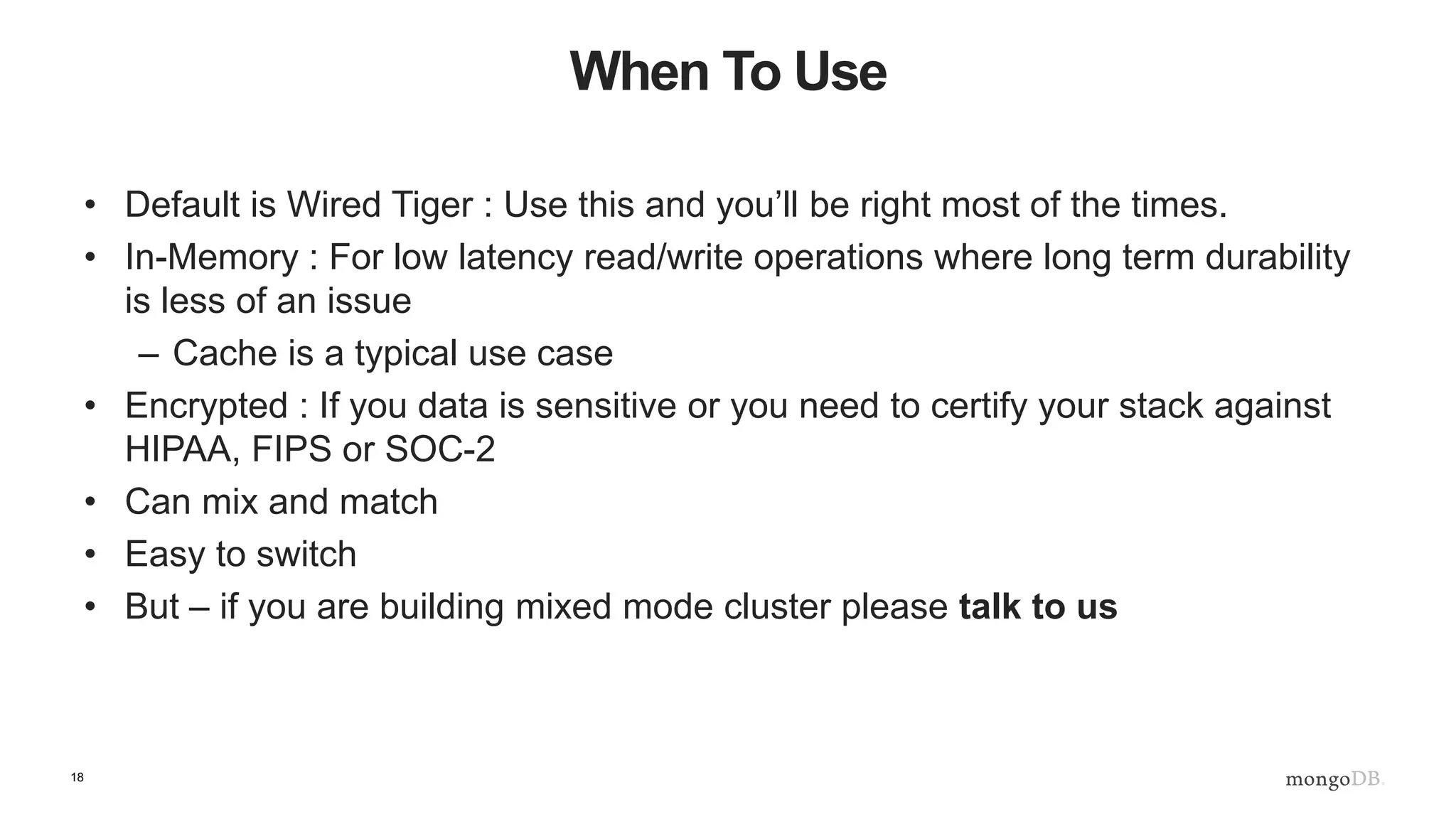
When To Use
• Default is Wired Tiger : Use this and you’ll be right most of the times.
• In-Memory : For low latency read/write operations where long term durability
is less of an issue
– Cache is a typical use case
• Encrypted : If you data is sensitive or you need to certify your stack against
HIPAA, FIPS or SOC-2
• Can mix and match
• Easy to switch
• But – if you are building mixed mode cluster please talk to us
19
Q&A
Code tim20 gets you a
20% discount off the list
price.
8 November 2017
London, UK
Intercontinental at the 02

Beyond the Basics 1: Storage Engines

  • 1.
    Code tim20 getsyou a 20% discount off the list price. 8 November 2017 London, UK Intercontinental at the 02
  • 2.
    Beyond the Basics1: Storage Engines Tim Biedenkapp Solutions Architect, DACH tim@mongodb.com
  • 3.
    3 Beyond The Basics •Follow on from Back to Basics : An Introduction to NoSQL and MongoDB • Covers more advanced topics: – Storage Engines • What storage engines are and how to pick them – Aggregation Framework • How to deploy advanced analytics processing right inside the database – The BI Connector • How to create visualisations and dashboards from your MongoDB data – Authentication and Authorisation • How to secure MongoDB, both on-premise and in the cloud
  • 4.
  • 5.
    5 Storage Engines Content Repo IoT Sensor Backend AdService Customer Analytics Archive MongoDB Query Language (MQL) + Native Drivers MongoDB Document Data Model Wired Tiger MMAP Supported in MongoDB 3.2 Management Security In-memory Encrypted 3rd party
  • 6.
  • 7.
    7 Storage Engine API •Arrived with MongoDB 3.0 (March 2015) • Two storage engines initially supported – Wired Tiger – MMAPV1 • MongoDB 3.2 (Dec 2015) – made Wired Tiger the default storage engine – added the encrypted storage engine • MongoDB 3.2.6 – In-memory storage engine
  • 8.
    8 MMAPV1 • Memory mapped,used MMAP to map pages to memory • The original MongoDB storage engine • Collection level locking • Refactored MongoDB 2.6 code base • Fast for reads, slow for writes. • Ultra fast for updates. • Can't utilize the memory and core footprint of modern server architectures • Was still the default storage engine in 3.0
  • 9.
    9 Wired Tiger • Createdby founders of BerkeleyDB • Designed for modern server architectures (high memory, high core count) • Uses a "lock free" architecture to minimise locks that are held • Use MVCC (multi-version concurrency control) to maximise the ability for readers to access data consistently • Designed to be a "database toolkit" • Has internal support for row stores, column stores, LSM trees, transactions (not all these are used by MongoDB) • Is the basis of the encrypted and in-memory storage engines
  • 10.
  • 11.
    11 Wired Tiger Cache •Starting in 3.4, the WiredTiger internal cache, by default, will use the larger of either: – 50% of RAM minus 1 GB, or – 256 MB • Cache does not represent the total memory footprint of the server • Keeping data in the cache really improves performance
  • 12.
    12 Wired Tiger Compression EnronEmail Corpus http://mongodb-enron-email.s3-website-us-east-1.amazonaws.com/ About 0.5m messages
  • 13.
    13 Wired Tiger WritePerformance Report https://www.mongodb.com/collateral/comparative-benchmarks-mongodb-vs-couchbase-vs-cassandra
  • 14.
    14 In Memory • --storageEnginein-Memory • Designed for low, consistent latency • Dataset must fit in memory • By default will allocate 50% of RAM minus 1GB • Can configure with --inMemorySizeGB to reduce or increase • Exceeded memory error: "WT_CACHE_FULL: operation would overflow cache"
  • 15.
  • 16.
    16 Encrypted Storage Engine •Built on the Wired Tiger Storage engine • Supports KMIP - Key Management Interoperability Protocol – https://en.wikipedia.org/wiki/Key_Management_Interoperability_Protocol • Start server with --enableEncryption • Essentially a variant on the WT storage engine as opposed to a storage engine in its own right • The KMIP key is used to generate internal keys to encrypt the data
  • 17.
  • 18.
    18 When To Use •Default is Wired Tiger : Use this and you’ll be right most of the times. • In-Memory : For low latency read/write operations where long term durability is less of an issue – Cache is a typical use case • Encrypted : If you data is sensitive or you need to certify your stack against HIPAA, FIPS or SOC-2 • Can mix and match • Easy to switch • But – if you are building mixed mode cluster please talk to us
  • 19.
  • 20.
    Code tim20 getsyou a 20% discount off the list price. 8 November 2017 London, UK Intercontinental at the 02