Download as PDF, PPTX










The document outlines best practices for establishing effective on-call teams including formalizing on-call schedules, ensuring team members have the proper equipment, access, and training. It emphasizes the importance of building an empathetic on-call culture through practices like shadow rotations, avoiding burnout, and establishing clear responsibilities and expectations for on-call staff.
Introduces the importance of on-call teams in handling unplanned incidents effectively.
Explains the necessity of on-call systems for reducing chaos and improving incident response, highlighting SME involvement.
Emphasizes that all businesses now operate digitally, requiring robust on-call support for various needs like payments and shopping.
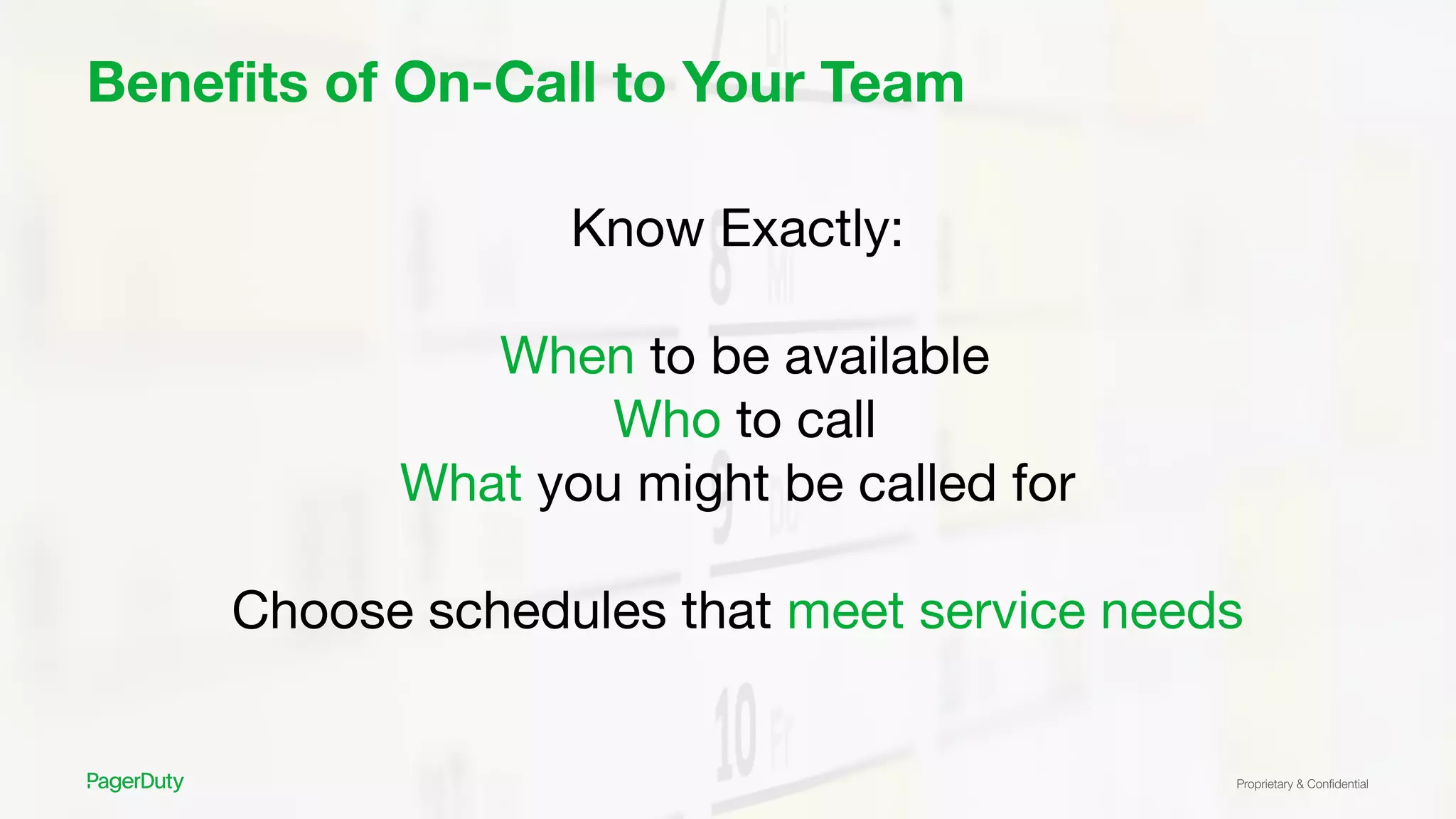
Discusses who participates in on-call and the benefits of structured schedules for respondants ensuring efficiency.
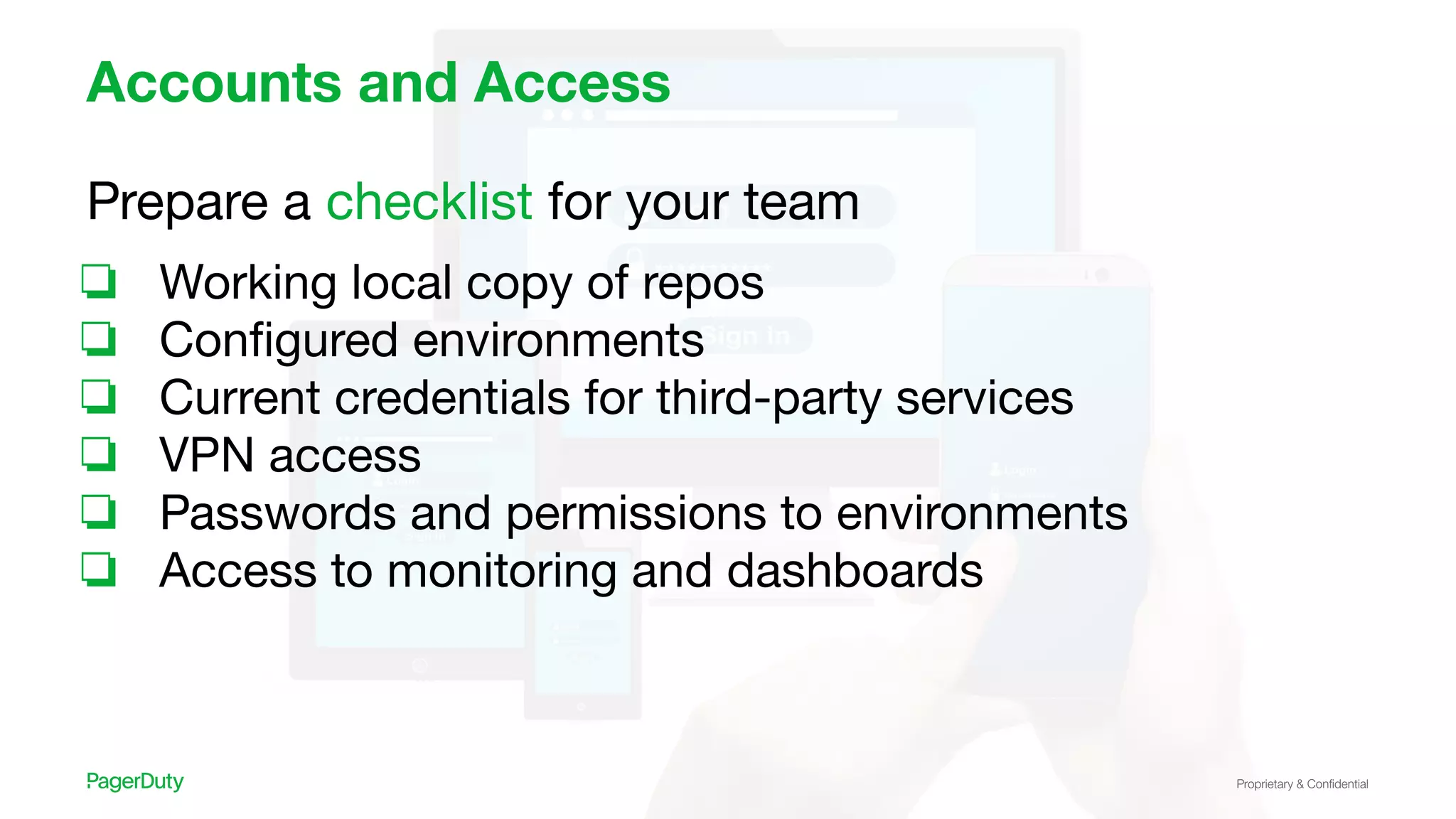
Details on conducting handoff meetings for smooth transitions and necessary equipment and access preparations for on-call.
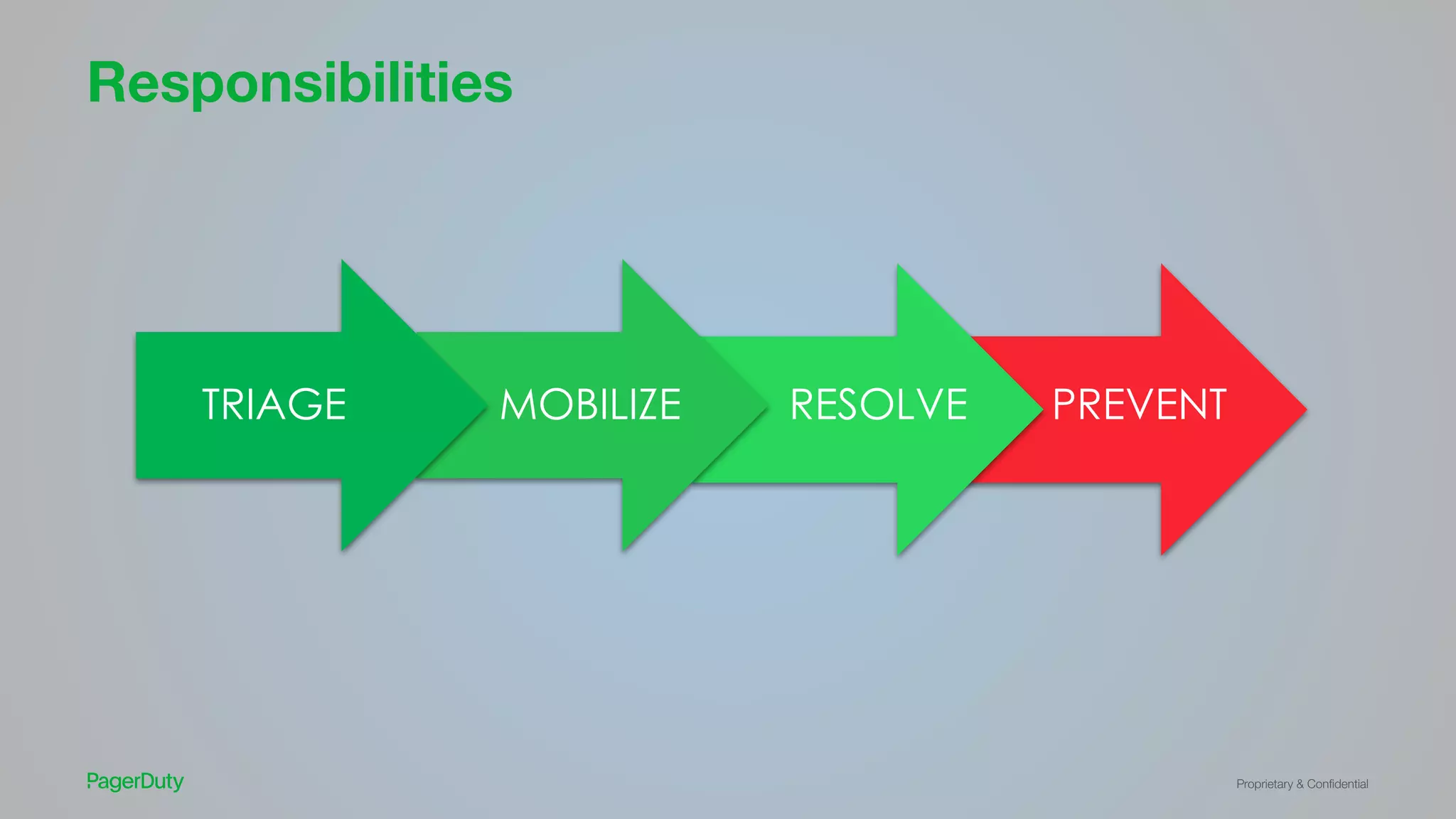
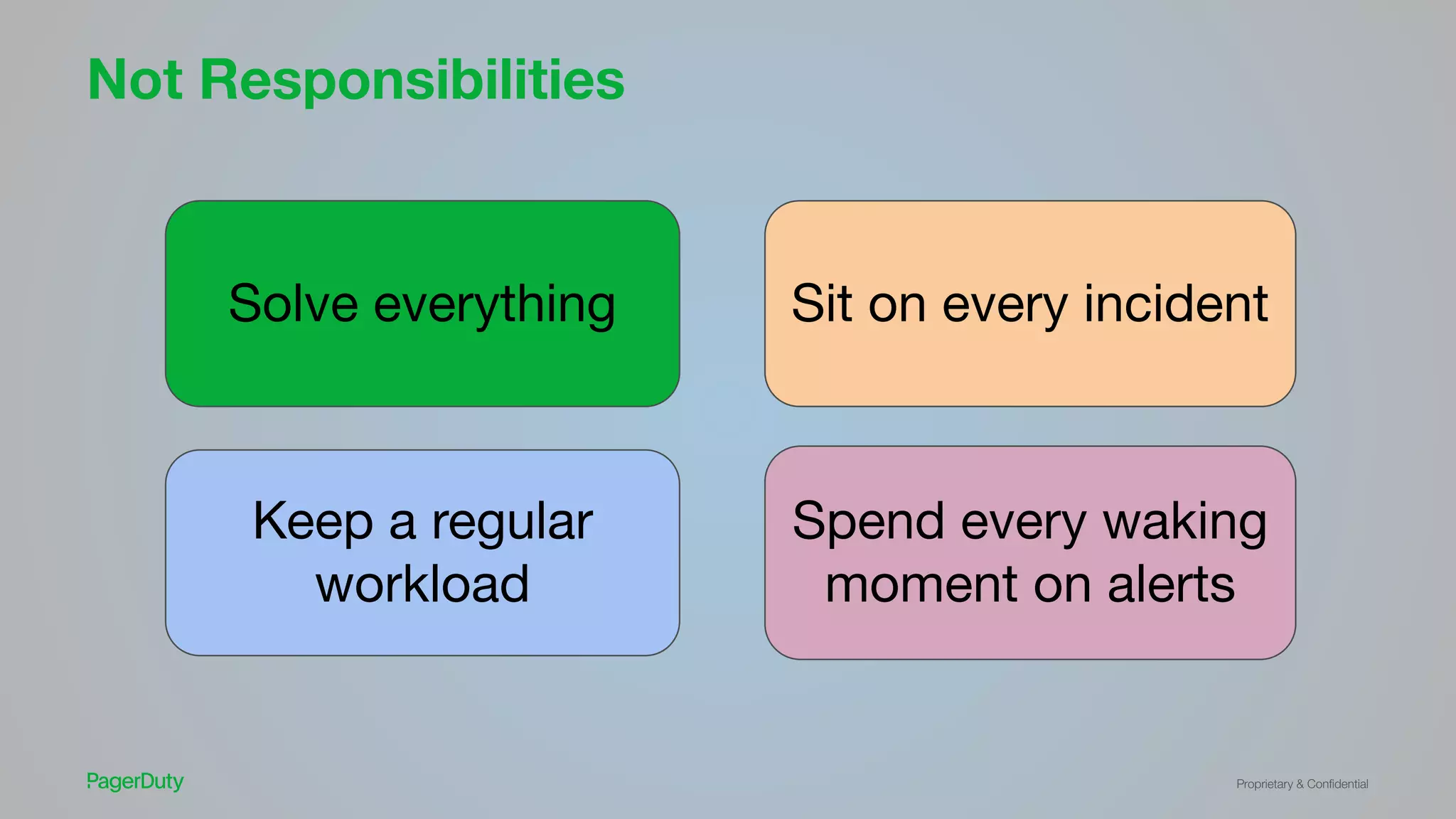
Outlines essential norms and broader responsibilities of on-call teams while clarifying that they shouldn't handle every task.
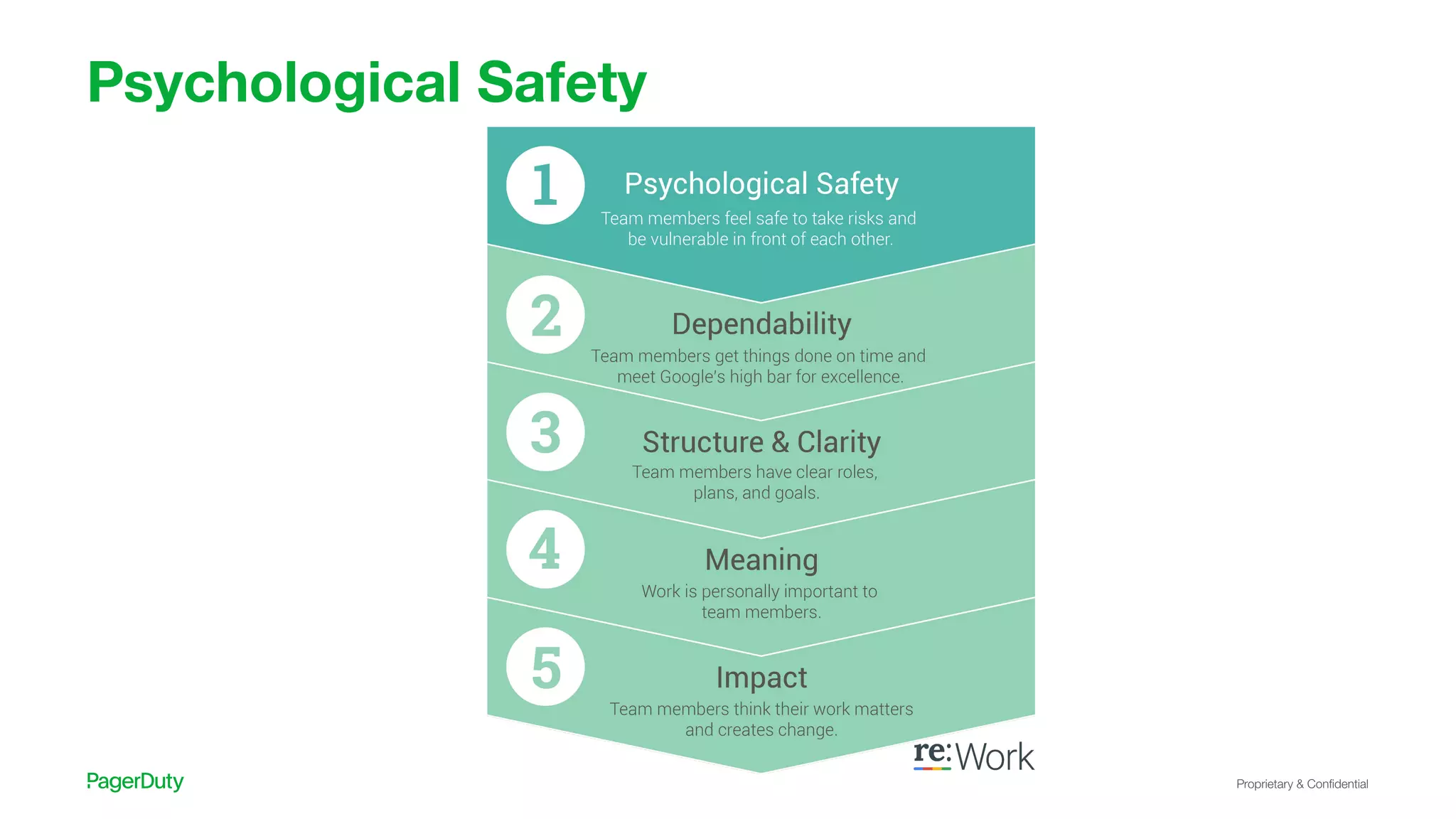
Focuses on building an on-call culture emphasizing empathy and psychological safety for team members.
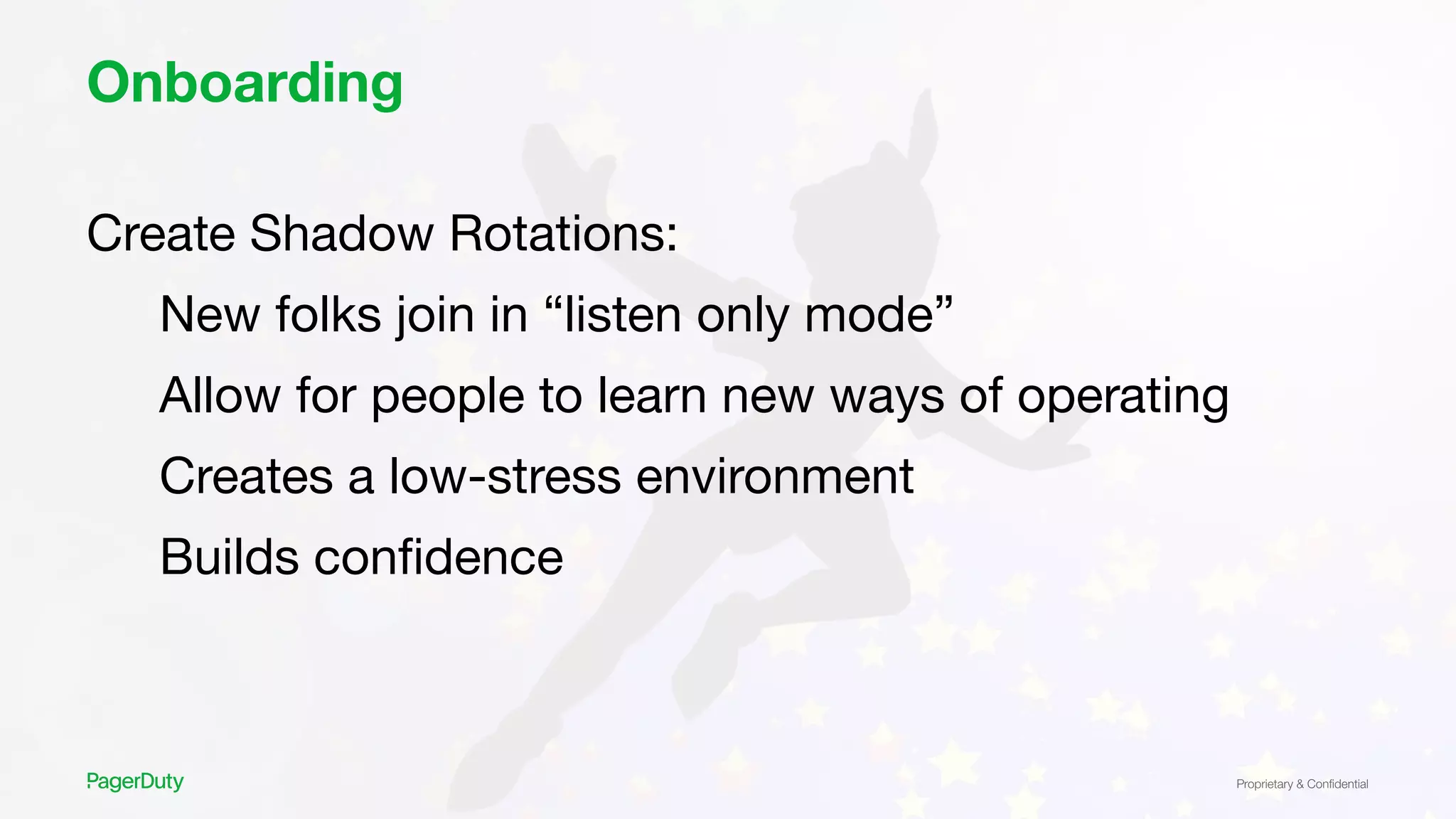
Discusses the importance of onboarding through shadowing, fostering a supportive learning environment.
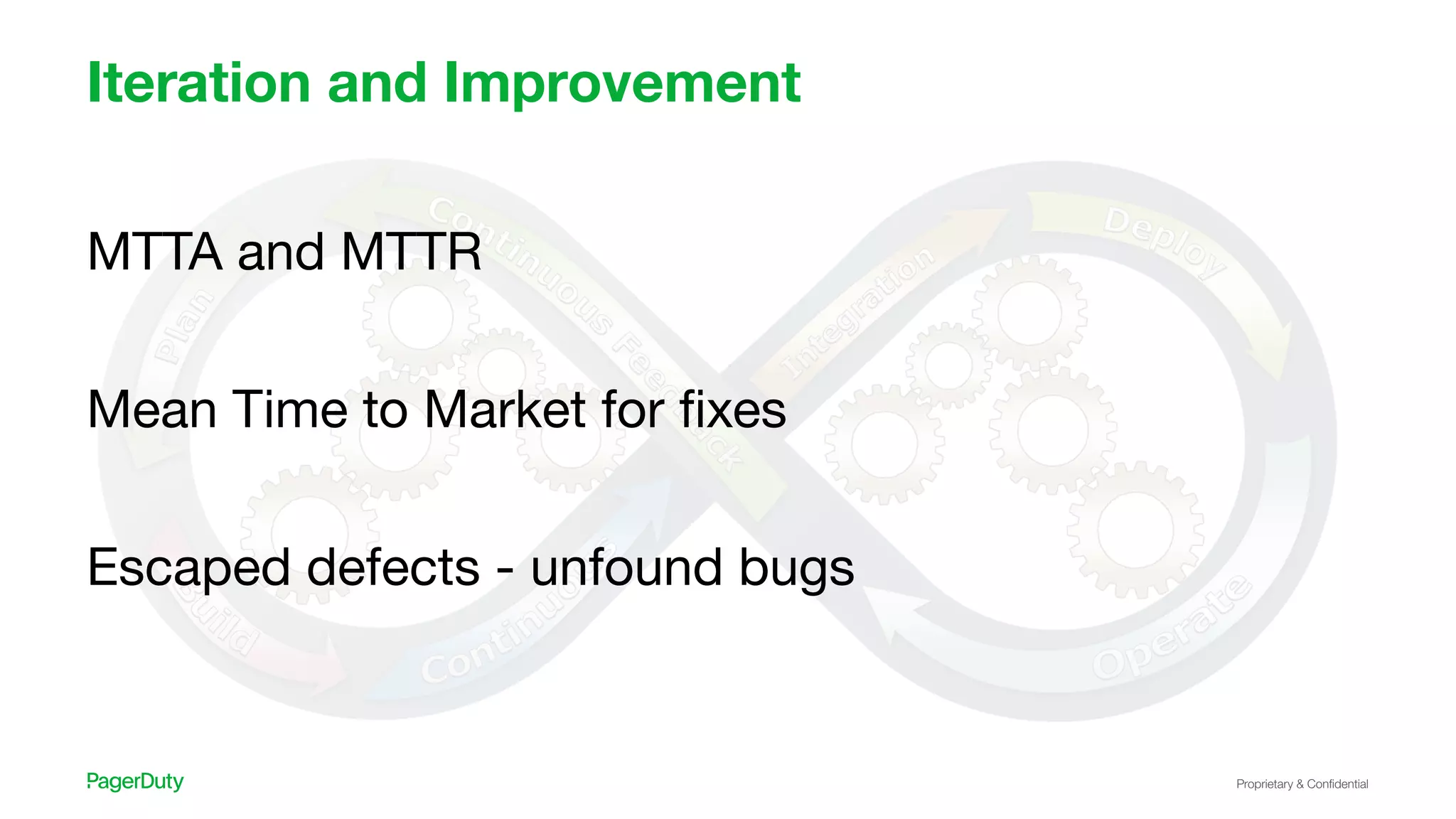
Highlights the significance of measuring MTTA and MTTR to improve incident response and identify defects.
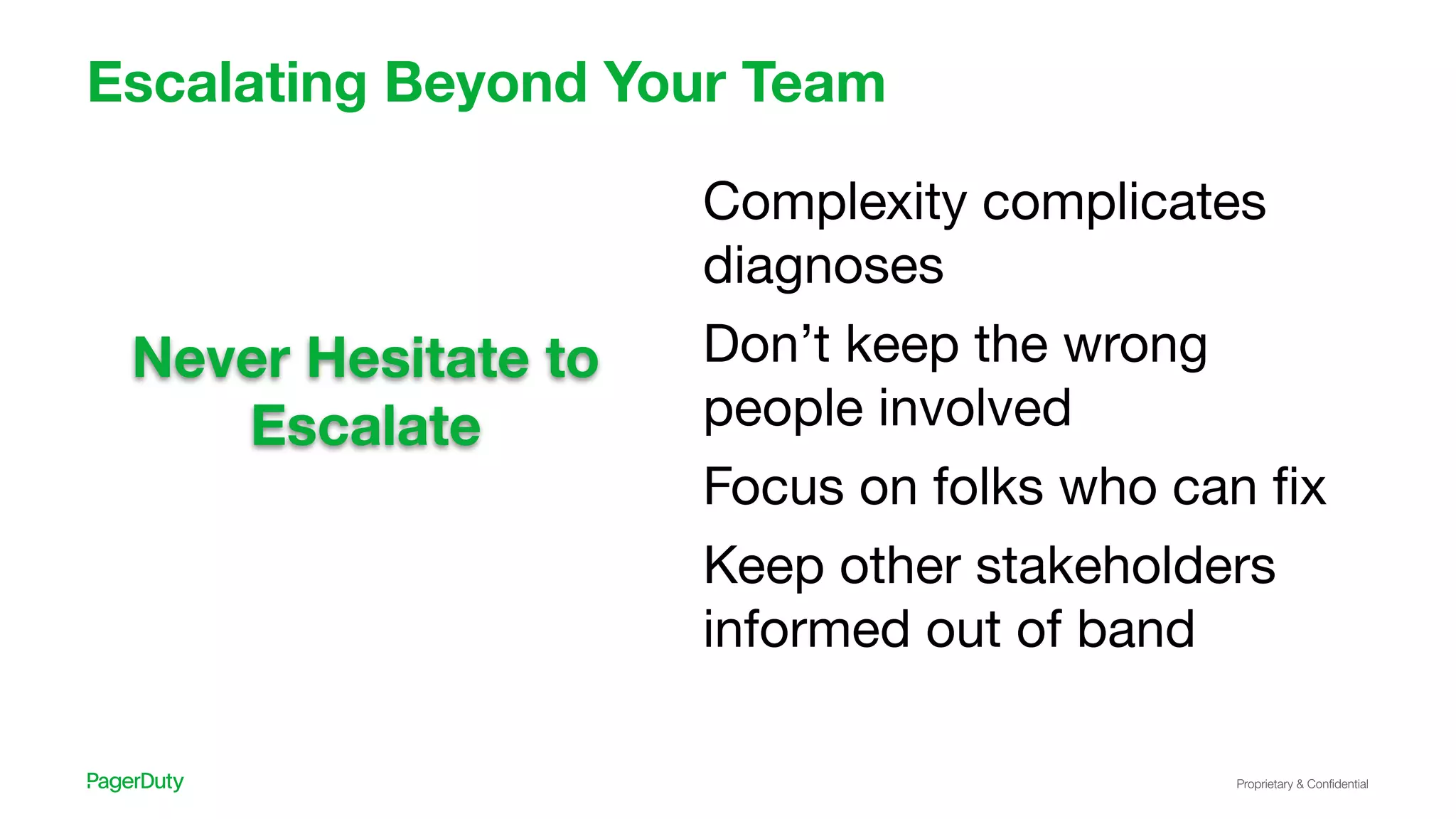
Provides insight into when and how to escalate issues beyond the immediate team for effective resolution.
Describes the methods for initiating major incident responses efficiently.
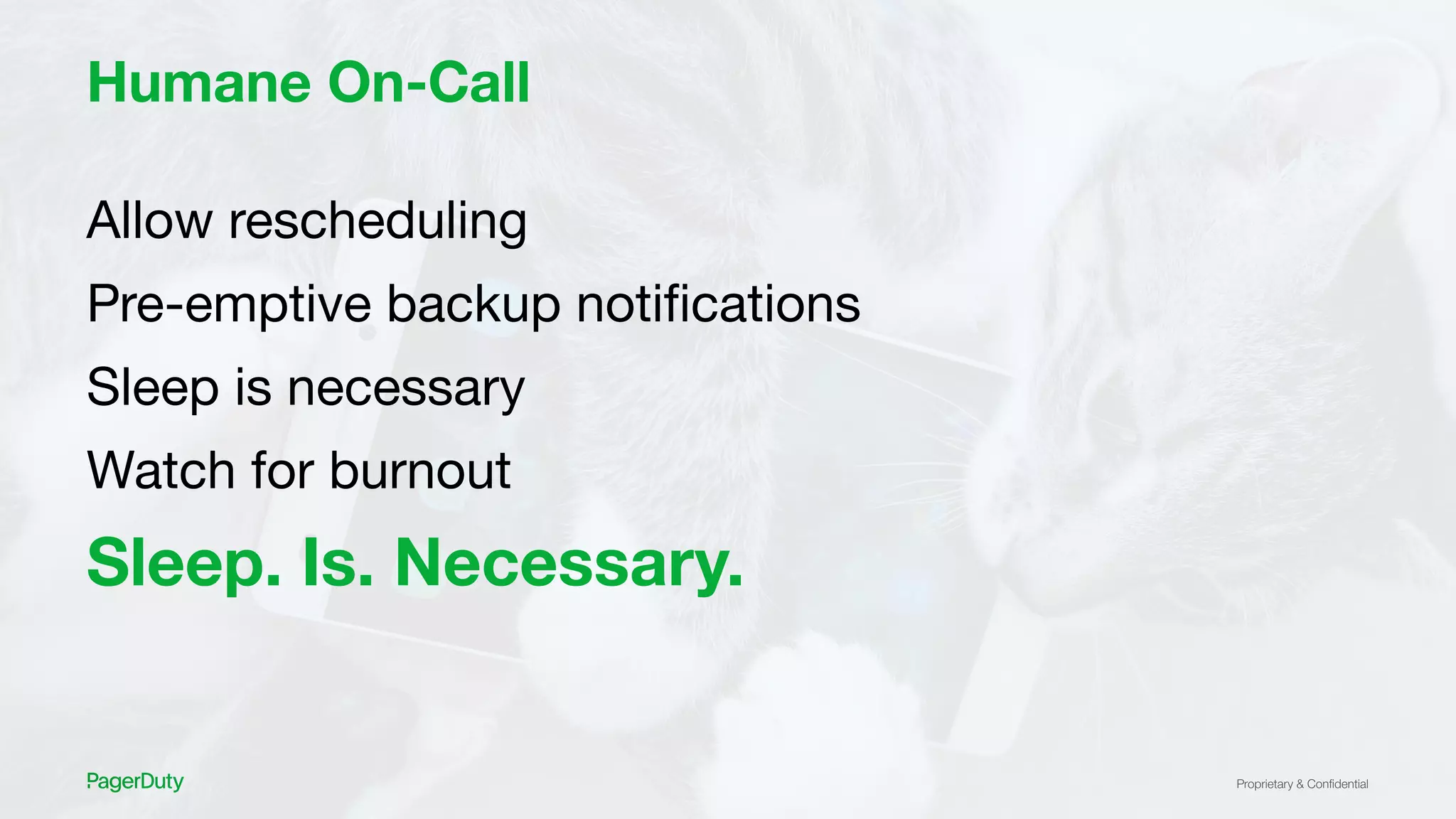
Focuses on the etiquette of on-call duties, the importance of sleep, and managing team burnout.
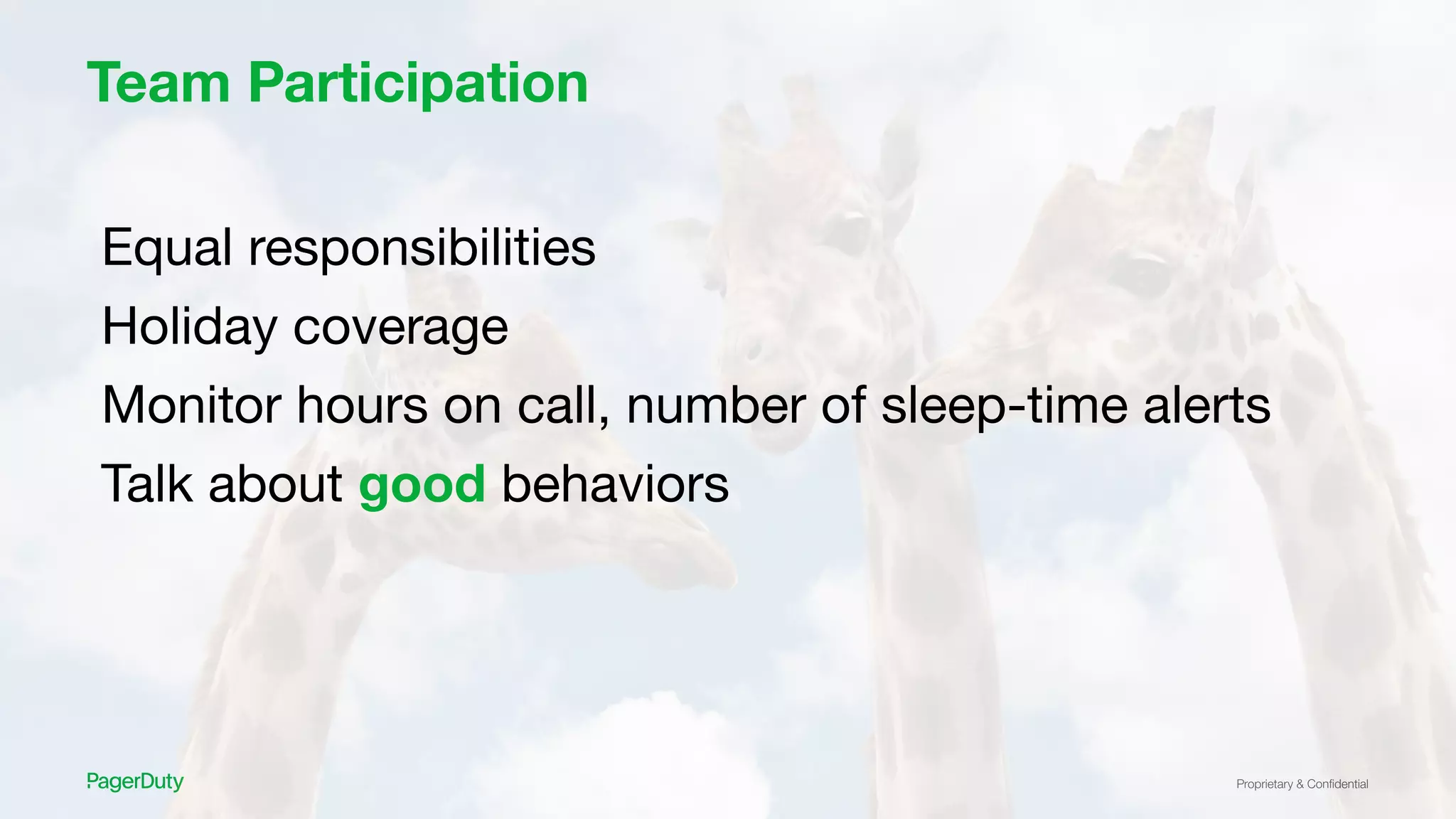
Encourages equal participation among team members in on-call responsibilities to improve fairness.
Recommends adjusting workloads to manage time better during on-call weeks.
Suggests monitoring team well-being and promoting empathetic behaviors to avoid burnout during on-call rotations.
Discusses strategies to manage alert fatigue by ensuring alerts are actionable and relevant.
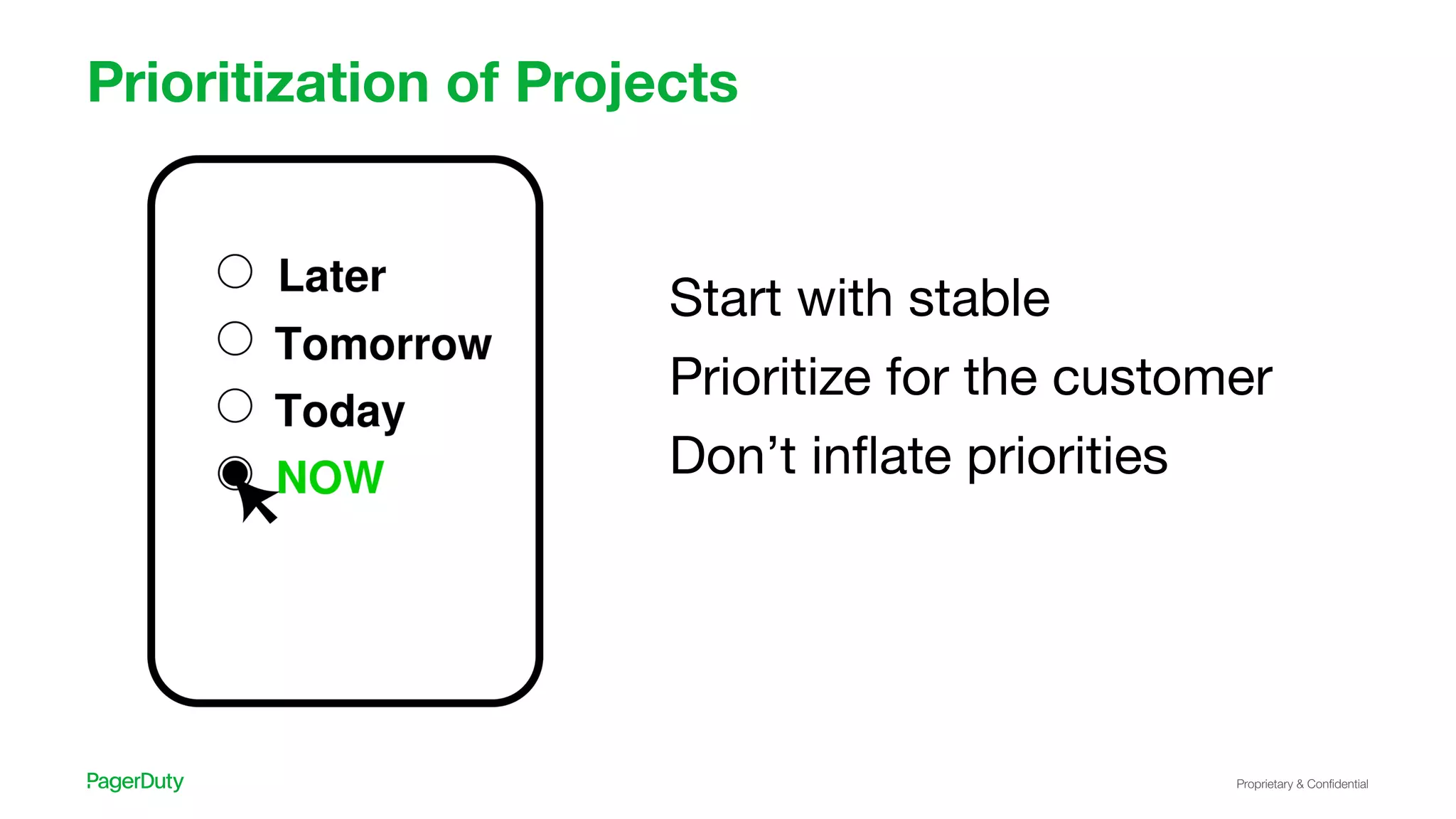
Emphasizes the importance of starting projects that ensure stability and are customer-focused.
Advises on leveraging traditional Network Operations Center functions and cross-training staff.
Suggests experimenting with different shift models for effectiveness in on-call coverage.
Underlines the necessity of establishing standards and sober practices for on-call roles.
Shares resources to enhance on-call management and team setup using PagerDuty tools.
Provides various links to industry publications and resources for improving on-call practices.


![Number_Guessing_Game_Dsbsbssbzboc[1].pptx](https://cdn.slidesharecdn.com/ss_thumbnails/numberguessinggamedoc1-251206215042-a076fc05-thumbnail.jpg?width=640&height=640&fit=bounds)


