• It is an approximate relation between pressure,
velocity and elevation
• It is valid in regions of steady, incompressible
flow
where net frictional forces are negligible
• Viscous effects are negligible compared to
inertial,
gravitational and pressure effects.
Applicable to in viscid regions of flow (flow
regions outside of boundary layers)
• Steady flow (no change with time at a specified
location)
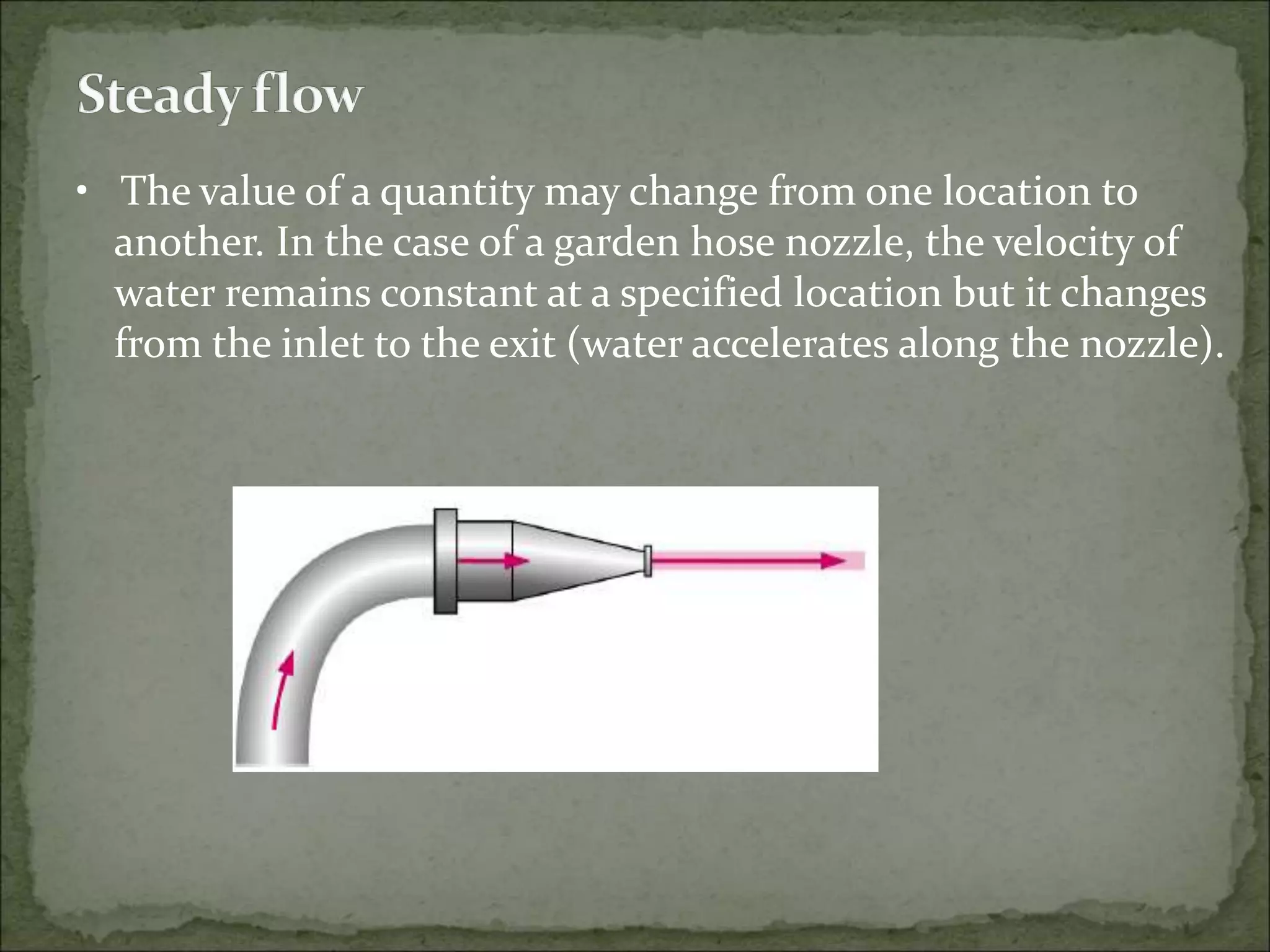
• The value of a quantity may change from one location to
another. In the case of a garden hose nozzle, the velocity of
water remains constant at a specified location but it changes
from the inlet to the exit (water accelerates along the nozzle).
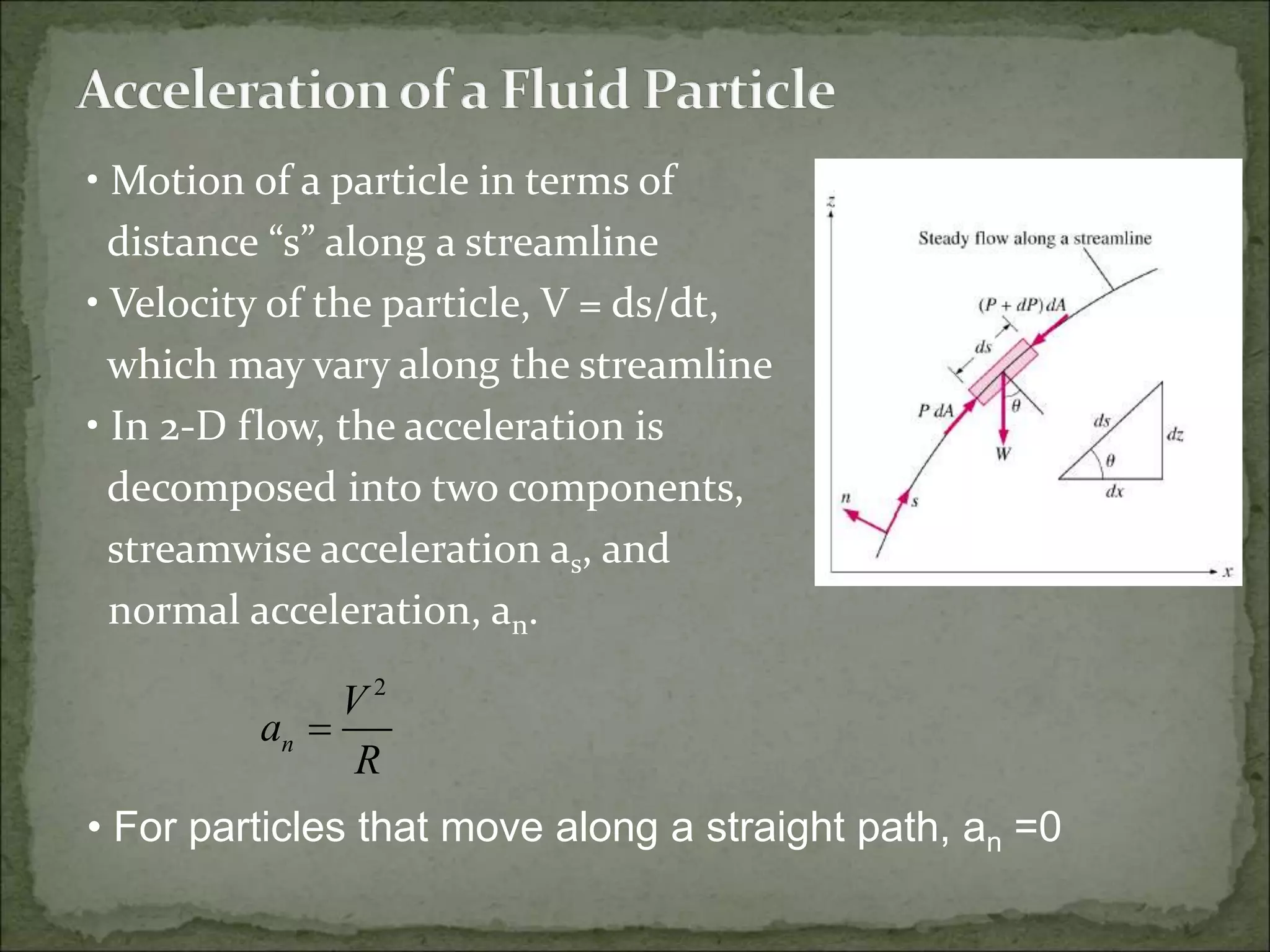
• Motion of a particle in terms of
distance “s” along a streamline
• Velocity of the particle, V = ds/dt,
which may vary along the streamline
• In 2-D flow, the acceleration is
decomposed into two components,
streamwise acceleration as, and
normal acceleration, an.
2
n
V
a
R

• For particles that move along a straight path, an =0
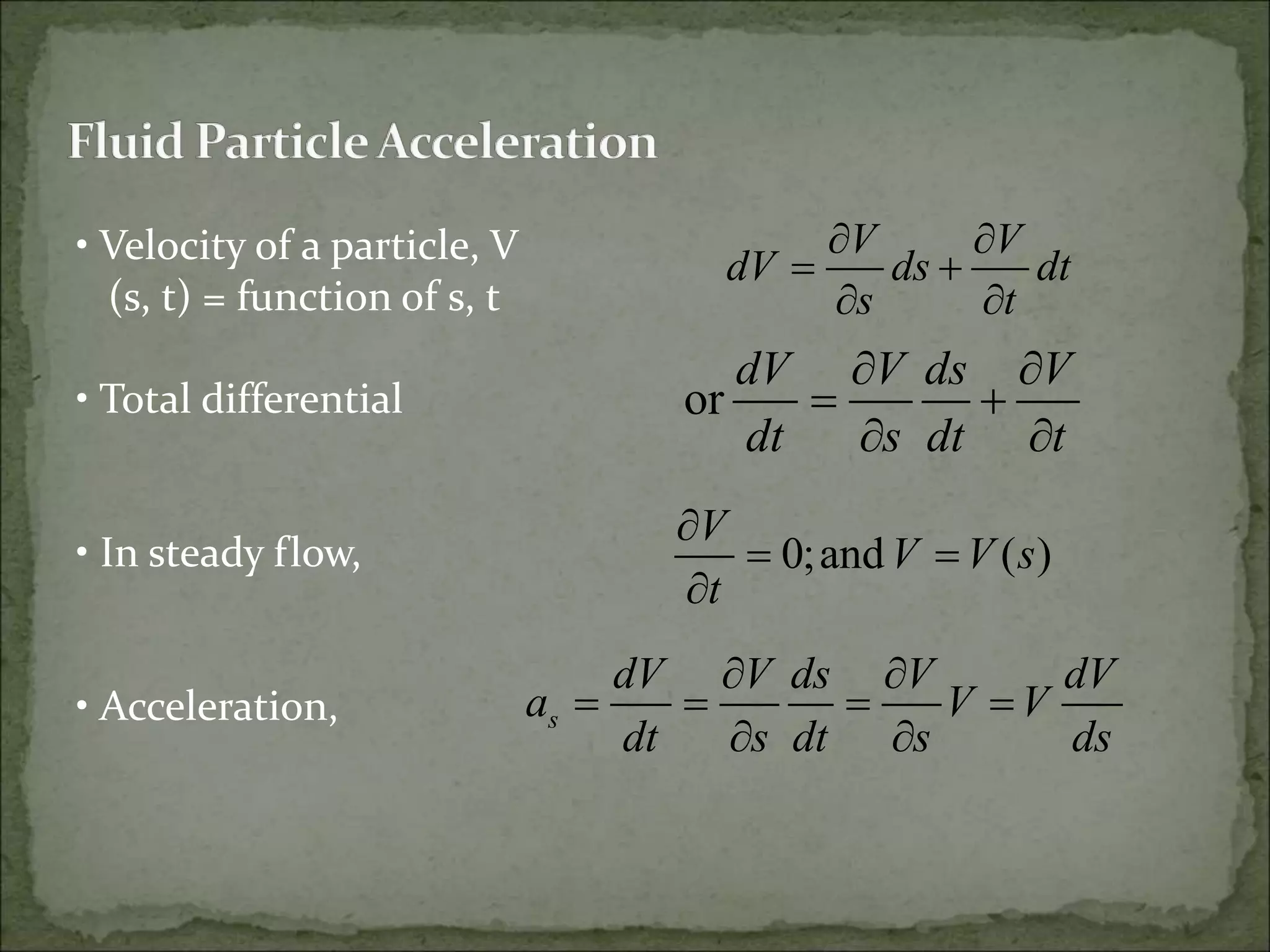
• Velocity of a particle, V
(s, t) = function of s, t
• Total differential
• In steady flow,
• Acceleration,
V V
dV ds dt
s t
 
 
 
or
dV V ds V
dt s dt t
 
 
 
0;and ( )
V
V V s
t

  

s
dV V ds V dV
a V V
dt s dt s ds
 
   
 
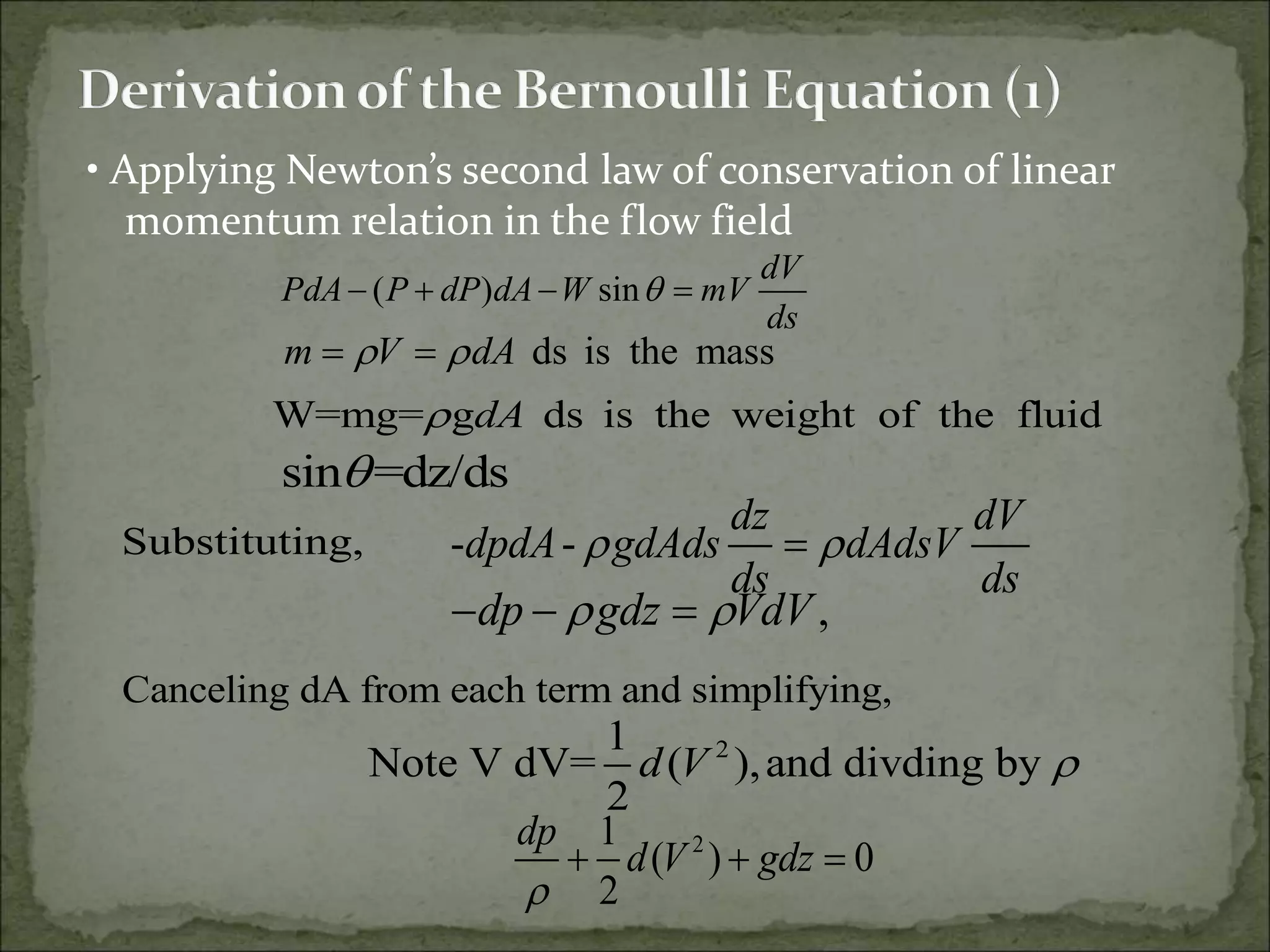
• Applying Newton’s second law of conservation of linear
momentum relation in the flow field
( ) sin
dV
PdA P dP dA W mV
ds

   
ds is the mass
m V dA
 
     
W=mg= g ds is the weight of the fluid
dA
    
sin =dz/ds

- -
dz dV
dpdA gdAds dAdsV
ds ds
 

,
dp gdz VdV
 
  
2
1
Note V dV= ( ),and divding by
2
d V 
2
1
( ) 0
2
dp
d V gdz

  
Substituting,
Canceling dA from each term and simplifying,
 Integrating
2
constant (along a streamline)
2
dp V
gz

  

2
constant (along a streamline)
2
p V
gz

  
For steady flow
For steady incompressible flow,
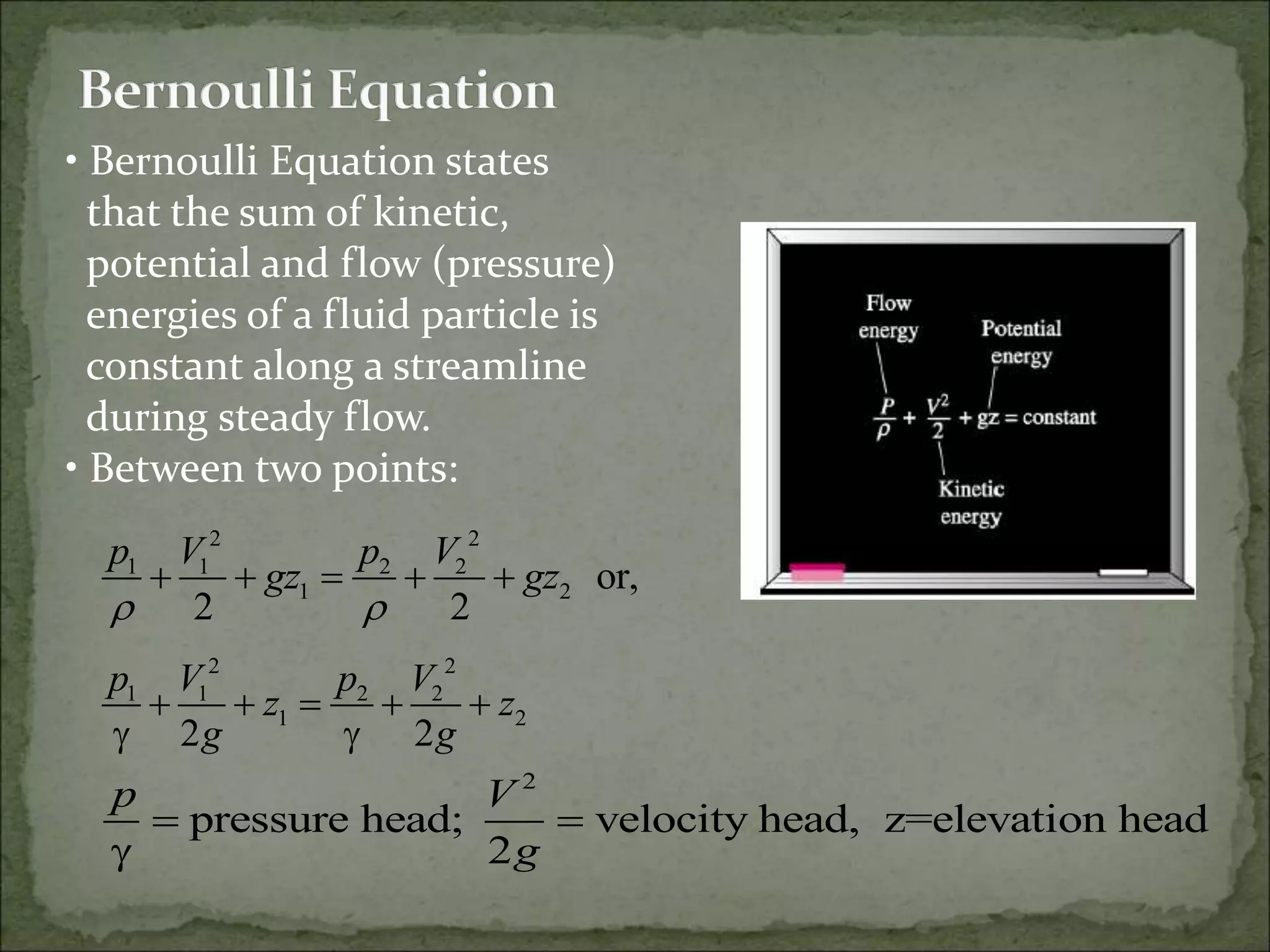
• Bernoulli Equation states
that the sum of kinetic,
potential and flow (pressure)
energies of a fluid particle is
constant along a streamline
during steady flow.
• Between two points:
2 2
1 1 2 2
1 2 or,
2 2
p V p V
gz gz
 
    
2 2
1 1 2 2
1 2
2 2
p V p V
z z
g g
    
 
2
pressure head; velocity head, z=elevation head
2
p V
g
 

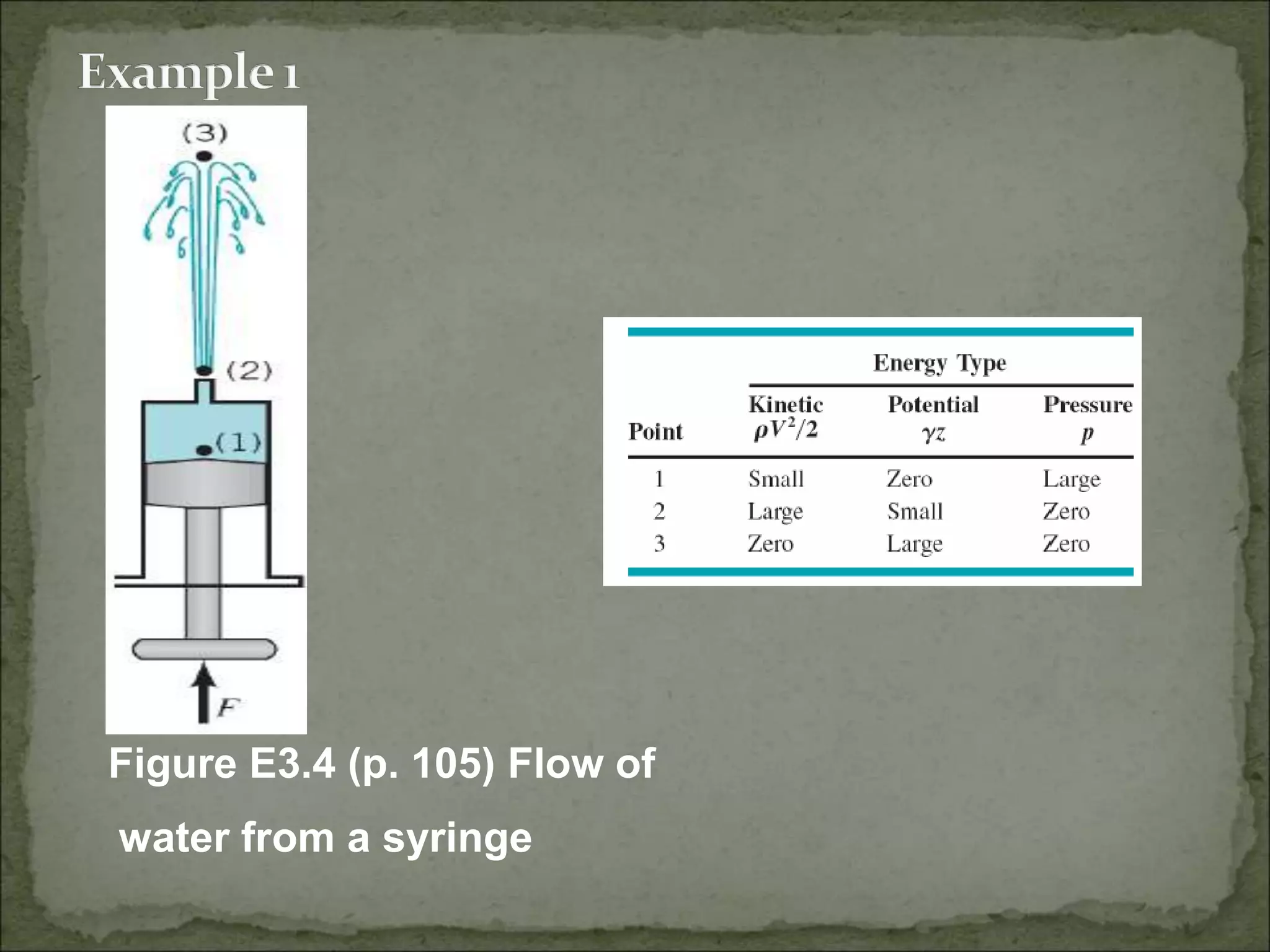
Figure E3.4 (p. 105) Flow of
water from a syringe
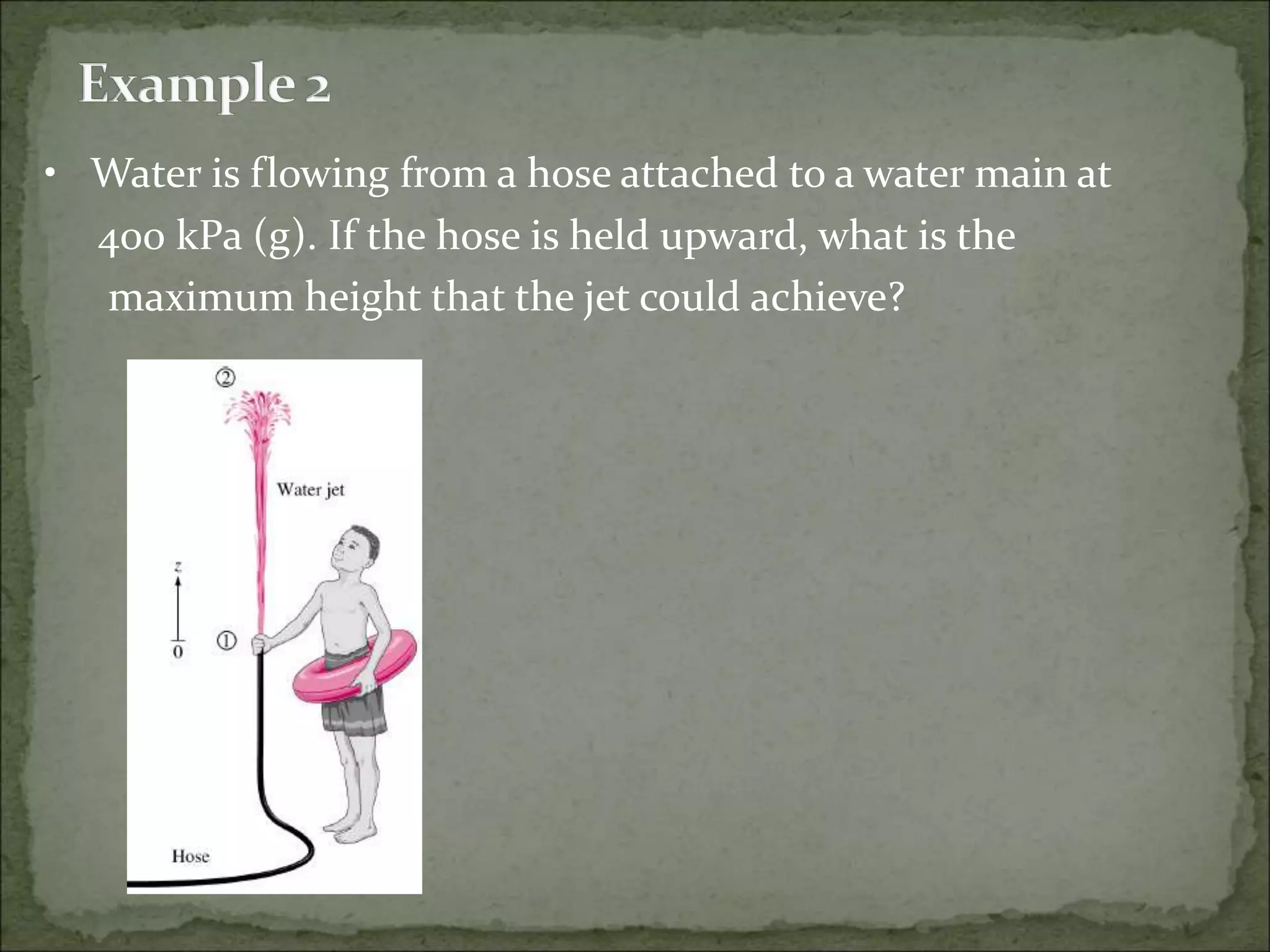
• Water is flowing from a hose attached to a water main at
400 kPa (g). If the hose is held upward, what is the
maximum height that the jet could achieve?
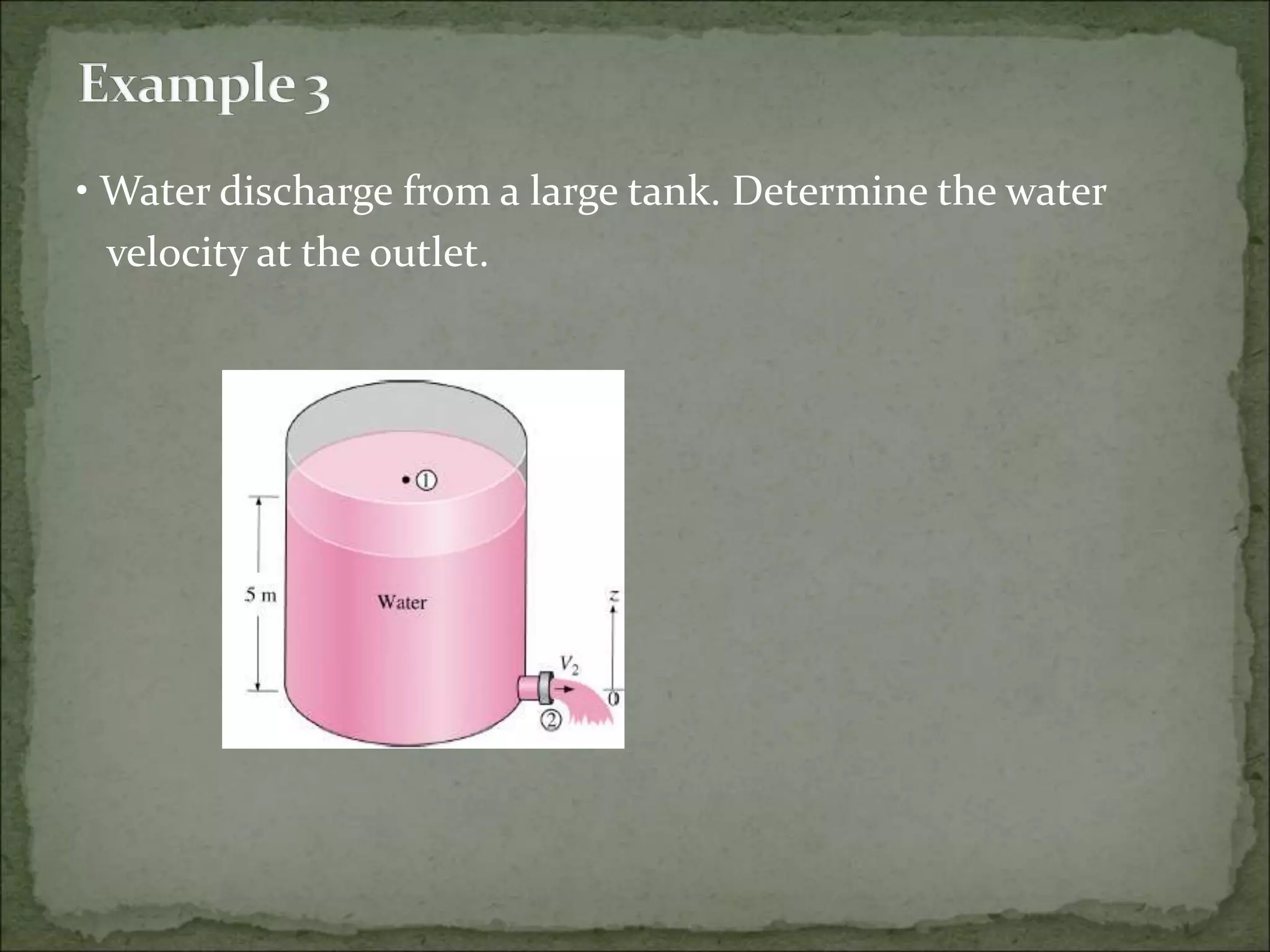
• Water discharge from a large tank. Determine the water
velocity at the outlet.
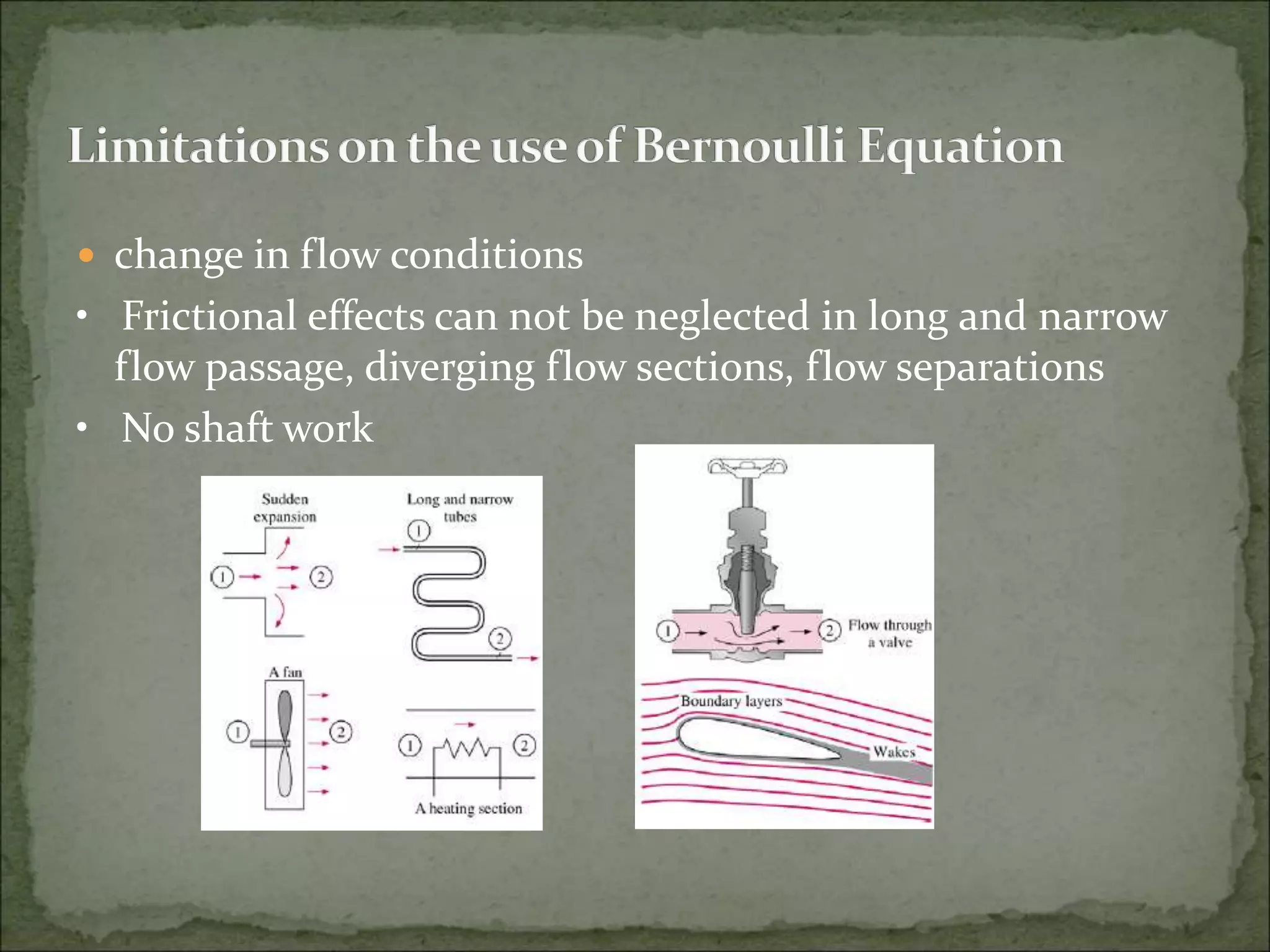
 change in flow conditions
• Frictional effects can not be neglected in long and narrow
flow passage, diverging flow sections, flow separations
• No shaft work

Bernoulli Equation, Acceleration of a Fluid Particle, Derivation of the Bernoulli Equation, Limitations.ppt

  • 1.
    • It isan approximate relation between pressure, velocity and elevation • It is valid in regions of steady, incompressible flow where net frictional forces are negligible • Viscous effects are negligible compared to inertial, gravitational and pressure effects. Applicable to in viscid regions of flow (flow regions outside of boundary layers) • Steady flow (no change with time at a specified location)
  • 2.
    • The valueof a quantity may change from one location to another. In the case of a garden hose nozzle, the velocity of water remains constant at a specified location but it changes from the inlet to the exit (water accelerates along the nozzle).
  • 3.
    • Motion ofa particle in terms of distance “s” along a streamline • Velocity of the particle, V = ds/dt, which may vary along the streamline • In 2-D flow, the acceleration is decomposed into two components, streamwise acceleration as, and normal acceleration, an. 2 n V a R  • For particles that move along a straight path, an =0
  • 4.
    • Velocity ofa particle, V (s, t) = function of s, t • Total differential • In steady flow, • Acceleration, V V dV ds dt s t       or dV V ds V dt s dt t       0;and ( ) V V V s t      s dV V ds V dV a V V dt s dt s ds        
  • 5.
    • Applying Newton’ssecond law of conservation of linear momentum relation in the flow field ( ) sin dV PdA P dP dA W mV ds      ds is the mass m V dA         W=mg= g ds is the weight of the fluid dA      sin =dz/ds  - - dz dV dpdA gdAds dAdsV ds ds    , dp gdz VdV      2 1 Note V dV= ( ),and divding by 2 d V  2 1 ( ) 0 2 dp d V gdz     Substituting, Canceling dA from each term and simplifying,
  • 6.
     Integrating 2 constant (alonga streamline) 2 dp V gz      2 constant (along a streamline) 2 p V gz     For steady flow For steady incompressible flow,
  • 7.
    • Bernoulli Equationstates that the sum of kinetic, potential and flow (pressure) energies of a fluid particle is constant along a streamline during steady flow. • Between two points: 2 2 1 1 2 2 1 2 or, 2 2 p V p V gz gz        2 2 1 1 2 2 1 2 2 2 p V p V z z g g        2 pressure head; velocity head, z=elevation head 2 p V g   
  • 8.
    Figure E3.4 (p.105) Flow of water from a syringe
  • 9.
    • Water isflowing from a hose attached to a water main at 400 kPa (g). If the hose is held upward, what is the maximum height that the jet could achieve?
  • 10.
    • Water dischargefrom a large tank. Determine the water velocity at the outlet.
  • 11.
     change inflow conditions • Frictional effects can not be neglected in long and narrow flow passage, diverging flow sections, flow separations • No shaft work