Capital
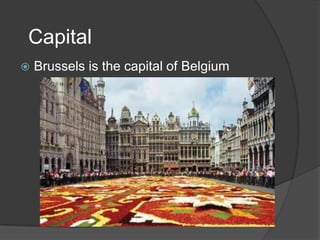
   Brussels is the capital of Belgium
Demographic Information
 Belgium has a population of 10,379,067
 Belgium covers a total of 11,780 square
  miles.
 The 2 main languages are Dutch and
  French.
 Brussels is the capital with
  approximately 1 million people.
 75% of Belgians are Roman Catholic.
Form of Government

 Belgium has a federal parliamentary
  democracy.
 This form of government is under a
  constitutional monarchy
 There and the Executive- King (head of
  state), Prime Minister (head of
  government), Council of Ministers (cabinet)
  branches. Legislative bicameral parliament
  (Senate and House of Representatives)
  branches.
Historical Events
 Belgium was created in 57 BC after
  being invaded by Romans.
 Many of Belgium's fortunes and
  misfortunes have come from Europe's
  ever-changing balance of power.
 Parties of raiding Vikings forced the
  growth of feudal domains in the 9th and
  10th centuries. This was called the rise
  of Flanders.
Historical Events
(Continued)
 At the Conference of London in January
  1831, the European powers recognized
  Belgian independence.
 After WWII the country was caught up in
  a constitutional crisis over Léopold III’s
  wartime actions.
 Many people believe that early
  surrender saved Belgium as a country.
Economic Information
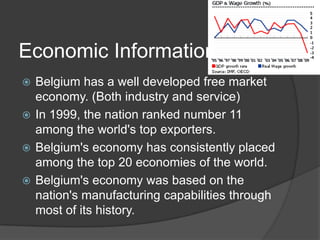
 Belgium has a well developed free market
  economy. (Both industry and service)
 In 1999, the nation ranked number 11
  among the world's top exporters.
 Belgium's economy has consistently placed
  among the top 20 economies of the world.
 Belgium's economy was based on the
  nation's manufacturing capabilities through
  most of its history.
Food
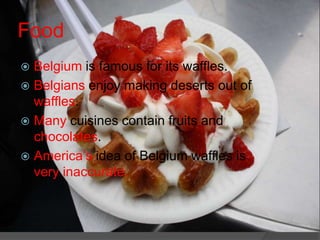
 Belgium is famous for its waffles.
 Belgians enjoy making deserts out of
  waffles.
 Many cuisines contain fruits and
  chocolates.
 America’s idea of Belgium waffles is
  very inaccurate.
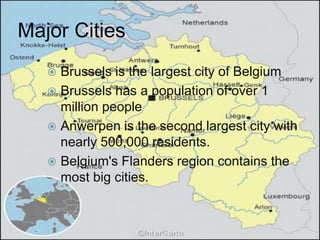
Major Cities
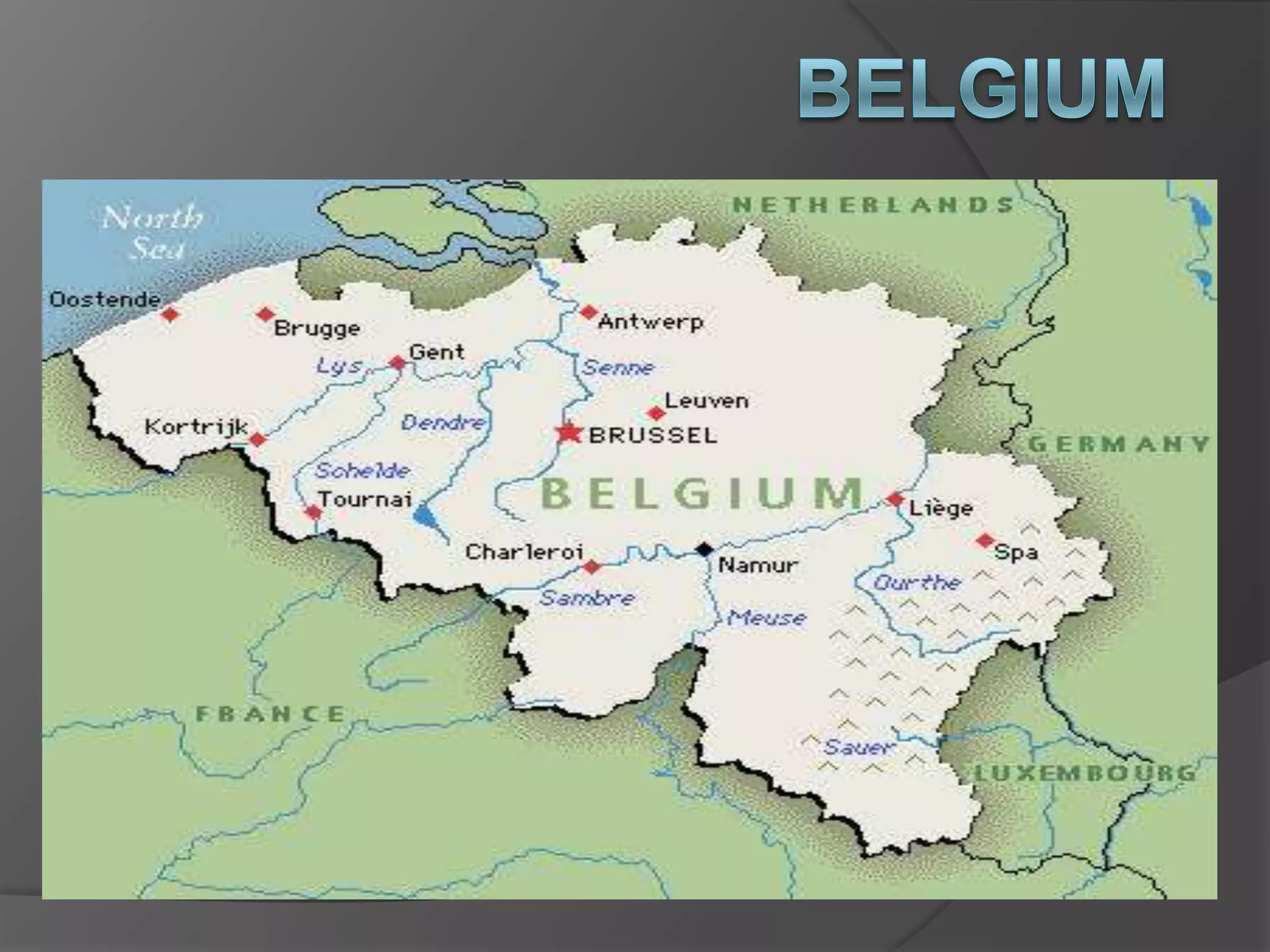
    Brussels is the largest city of Belgium
    Brussels has a population of over 1
     million people
    Anwerpen is the second largest city with
     nearly 500,000 residents.
    Belgium's Flanders region contains the
     most big cities.
Contribution to the Arts
 Belgium art expression idea from
  various disciplines portray the life and
  traditions of the people of the country.
 Belgium is essentially a heterogeneous
  country with diverse ethnic groups.
 The arts and culture of Belgium is
  diverse, rich and colorful.
 Belgium artist use realism and
  surrealism.
Works Cited
   http://wwp.greenwichmeantime.com/images/europe/belgium.jpg
   http://www.keytours.com/destinations/pictures/picture334.jpg
   http://www.123independenceday.com/belgium/demography.html
   http://www.indexmundi.com/belgium/government_type.html
   http://www.state.gov/r/pa/ei/bgn/2874.htm
   http://www.lonelyplanet.com/belgium/history
   http://dalje.com/slike/slike_3/r1/g2009/m11/y219462981877433.jpg
   http://www.nationsencyclopedia.com/economies/Europe/Belgium-
    OVERVIEW-OF-ECONOMY.html
   http://www.globalpropertyguide.com/template/assets/img/Belgium-
    gdp-and-wage-growth-graph.gif
   http://artofbackpacking.com/traditional-foods-in-belgium-liege-and-
    brussels-style-waffles/
   http://s3.static.globaltrade.net/media/images/map/map-belgium.gif
   http://www.geonames.org/BE/largest-cities-in-belgium.html

Belgium terrell mc graw(1)

  • 2.
    Capital  Brussels is the capital of Belgium
  • 3.
    Demographic Information  Belgiumhas a population of 10,379,067  Belgium covers a total of 11,780 square miles.  The 2 main languages are Dutch and French.  Brussels is the capital with approximately 1 million people.  75% of Belgians are Roman Catholic.
  • 4.
    Form of Government Belgium has a federal parliamentary democracy.  This form of government is under a constitutional monarchy  There and the Executive- King (head of state), Prime Minister (head of government), Council of Ministers (cabinet) branches. Legislative bicameral parliament (Senate and House of Representatives) branches.
  • 5.
    Historical Events  Belgiumwas created in 57 BC after being invaded by Romans.  Many of Belgium's fortunes and misfortunes have come from Europe's ever-changing balance of power.  Parties of raiding Vikings forced the growth of feudal domains in the 9th and 10th centuries. This was called the rise of Flanders.
  • 6.
    Historical Events (Continued)  Atthe Conference of London in January 1831, the European powers recognized Belgian independence.  After WWII the country was caught up in a constitutional crisis over Léopold III’s wartime actions.  Many people believe that early surrender saved Belgium as a country.
  • 7.
    Economic Information  Belgiumhas a well developed free market economy. (Both industry and service)  In 1999, the nation ranked number 11 among the world's top exporters.  Belgium's economy has consistently placed among the top 20 economies of the world.  Belgium's economy was based on the nation's manufacturing capabilities through most of its history.
  • 8.
    Food  Belgium isfamous for its waffles.  Belgians enjoy making deserts out of waffles.  Many cuisines contain fruits and chocolates.  America’s idea of Belgium waffles is very inaccurate.
  • 9.
    Major Cities  Brussels is the largest city of Belgium  Brussels has a population of over 1 million people  Anwerpen is the second largest city with nearly 500,000 residents.  Belgium's Flanders region contains the most big cities.
  • 10.
    Contribution to theArts  Belgium art expression idea from various disciplines portray the life and traditions of the people of the country.  Belgium is essentially a heterogeneous country with diverse ethnic groups.  The arts and culture of Belgium is diverse, rich and colorful.  Belgium artist use realism and surrealism.
  • 11.
    Works Cited  http://wwp.greenwichmeantime.com/images/europe/belgium.jpg  http://www.keytours.com/destinations/pictures/picture334.jpg  http://www.123independenceday.com/belgium/demography.html  http://www.indexmundi.com/belgium/government_type.html  http://www.state.gov/r/pa/ei/bgn/2874.htm  http://www.lonelyplanet.com/belgium/history  http://dalje.com/slike/slike_3/r1/g2009/m11/y219462981877433.jpg  http://www.nationsencyclopedia.com/economies/Europe/Belgium- OVERVIEW-OF-ECONOMY.html  http://www.globalpropertyguide.com/template/assets/img/Belgium- gdp-and-wage-growth-graph.gif  http://artofbackpacking.com/traditional-foods-in-belgium-liege-and- brussels-style-waffles/  http://s3.static.globaltrade.net/media/images/map/map-belgium.gif  http://www.geonames.org/BE/largest-cities-in-belgium.html