
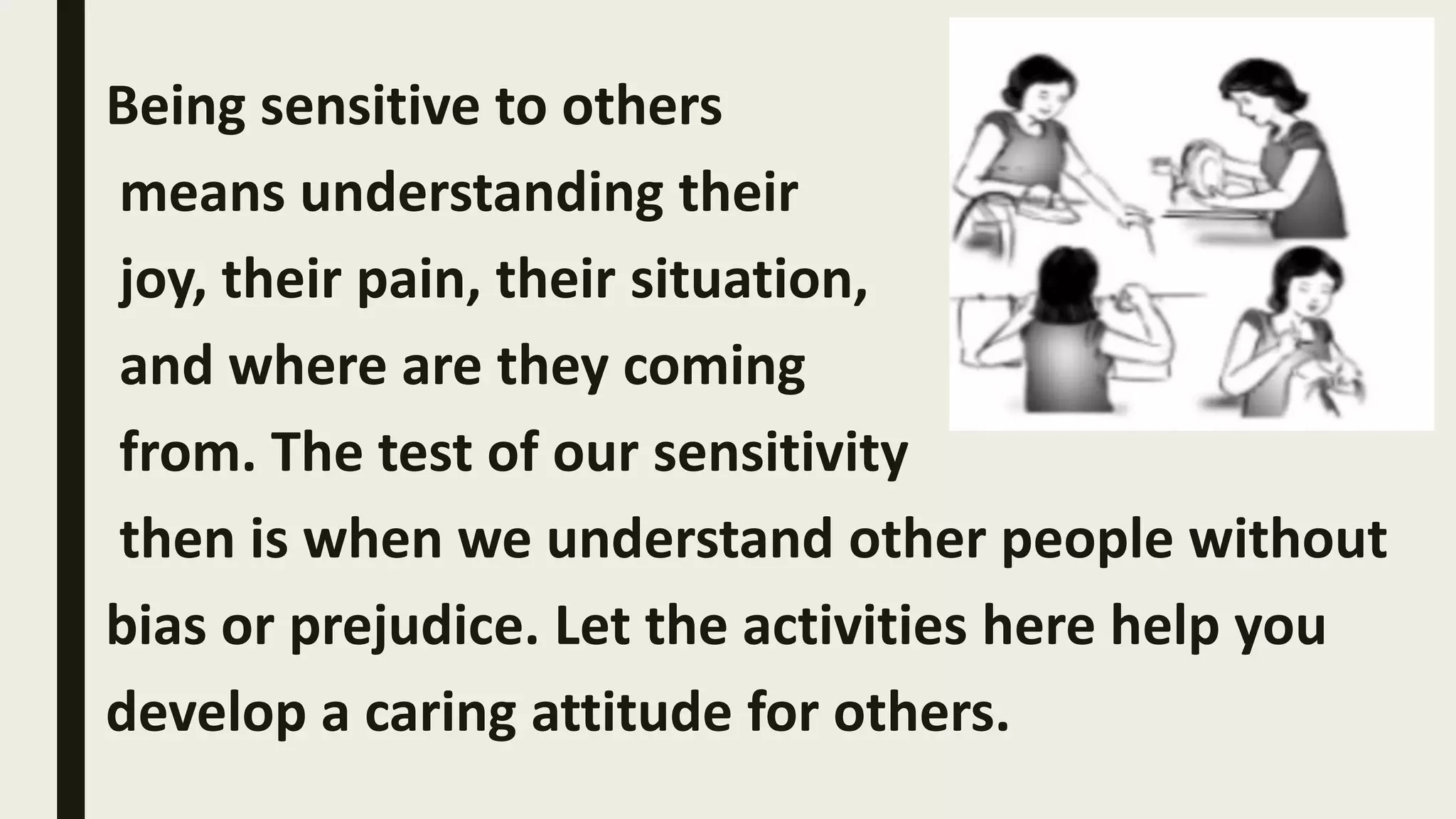


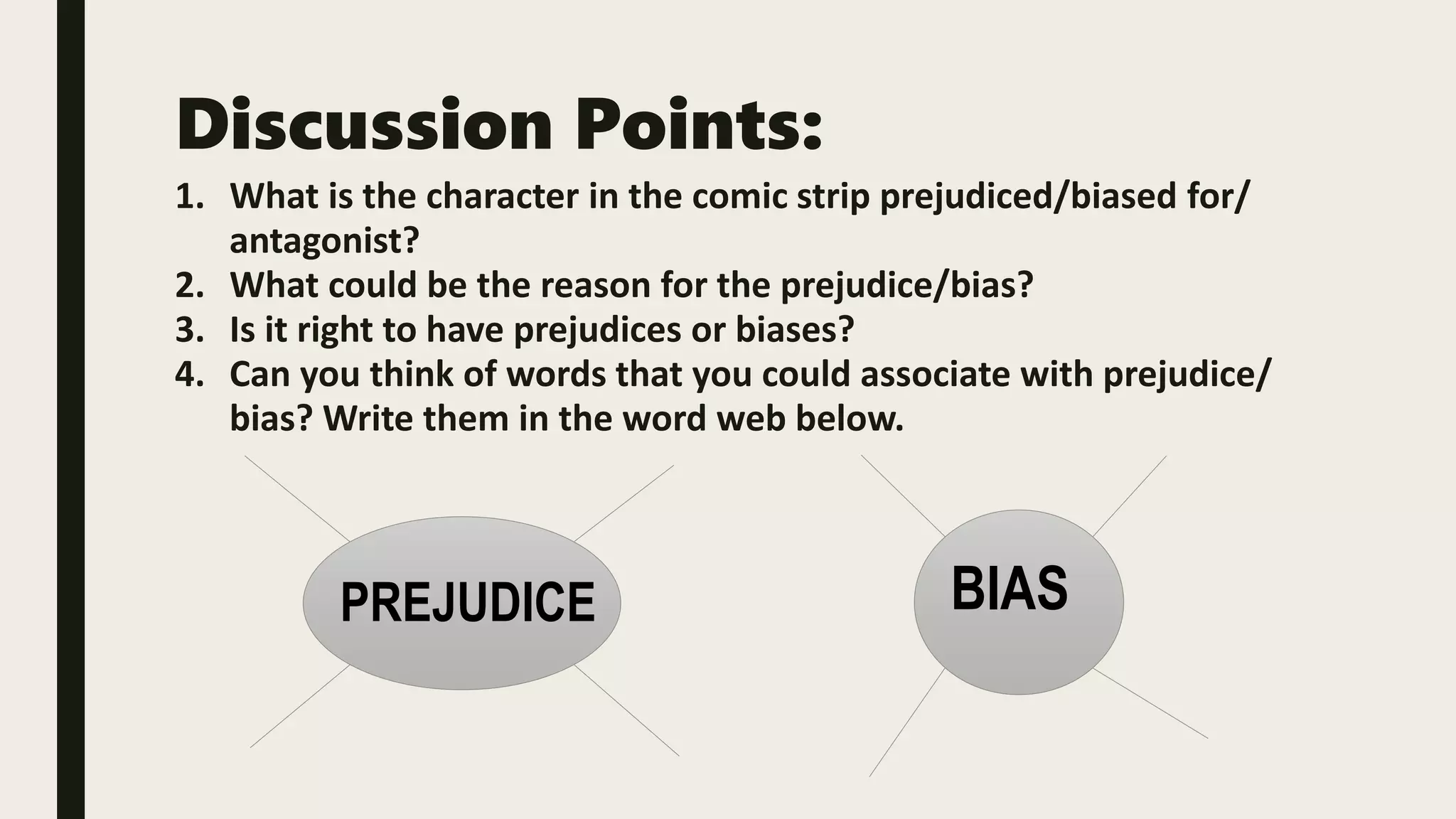




This document provides a lesson on being sensitive to others and detecting bias. It discusses developing an understanding of other people without prejudice. The lesson will help students learn about devotion during the Renaissance and analyze bias through various tasks and discussion points. It then outlines seven common forms of bias that can exist in instructional materials, such as invisibility of certain groups, stereotyping, imbalance and selectivity in perspectives presented, unreality in glossing over facts, fragmentation in isolation of groups, linguistic bias through problematic word choices, and "cosmetic bias" where issues persist beyond attractive presentations.


