Bias
(curriculum/textbooks)
How can teachers
detect such bias?
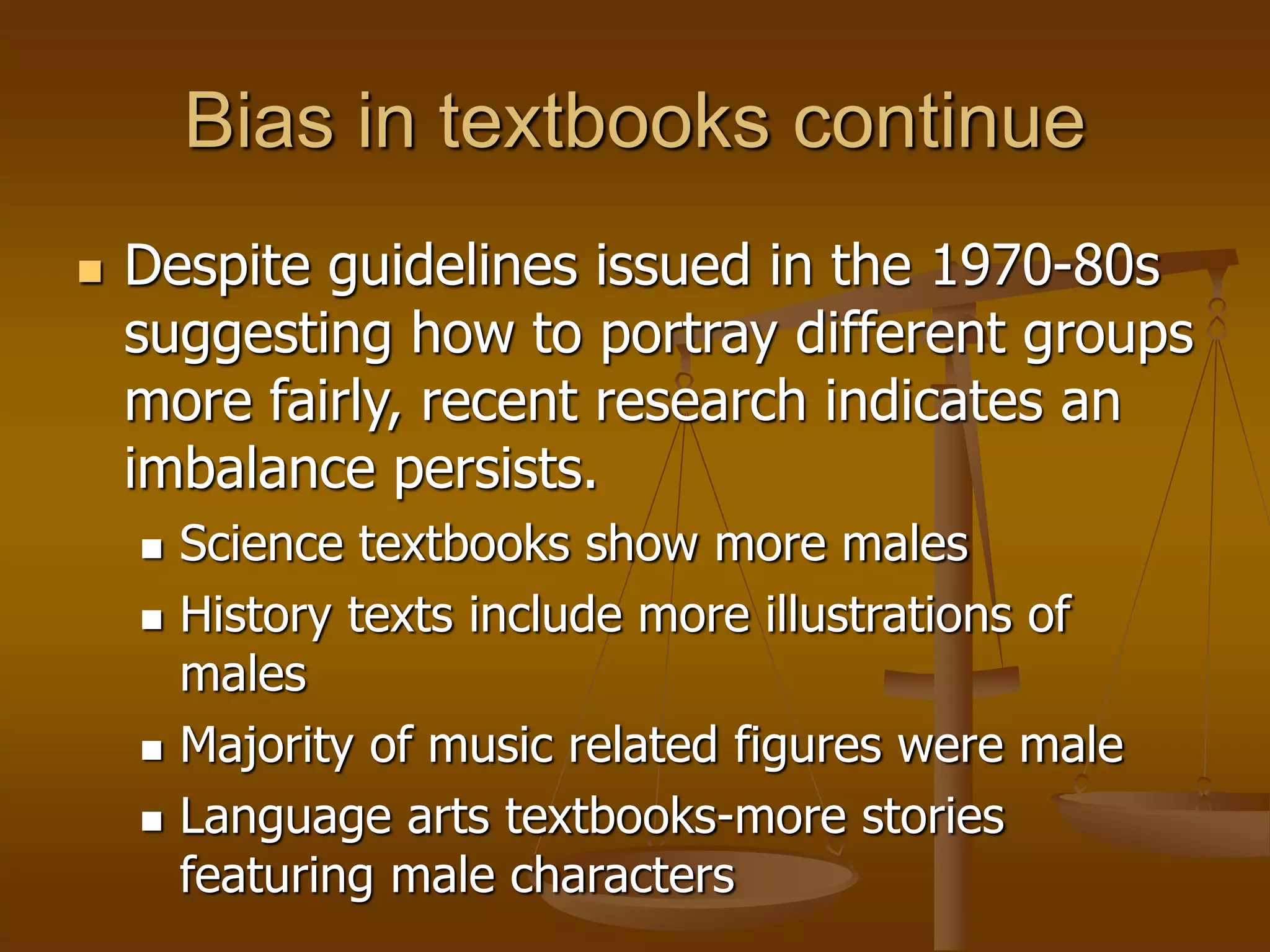
Bias in textbooks continue
 Despite guidelines issued in the 1970-80s
suggesting how to portray different groups
more fairly, recent research indicates an
imbalance persists.
 Science textbooks show more males
 History texts include more illustrations of
males
 Majority of music related figures were male
 Language arts textbooks-more stories
featuring male characters
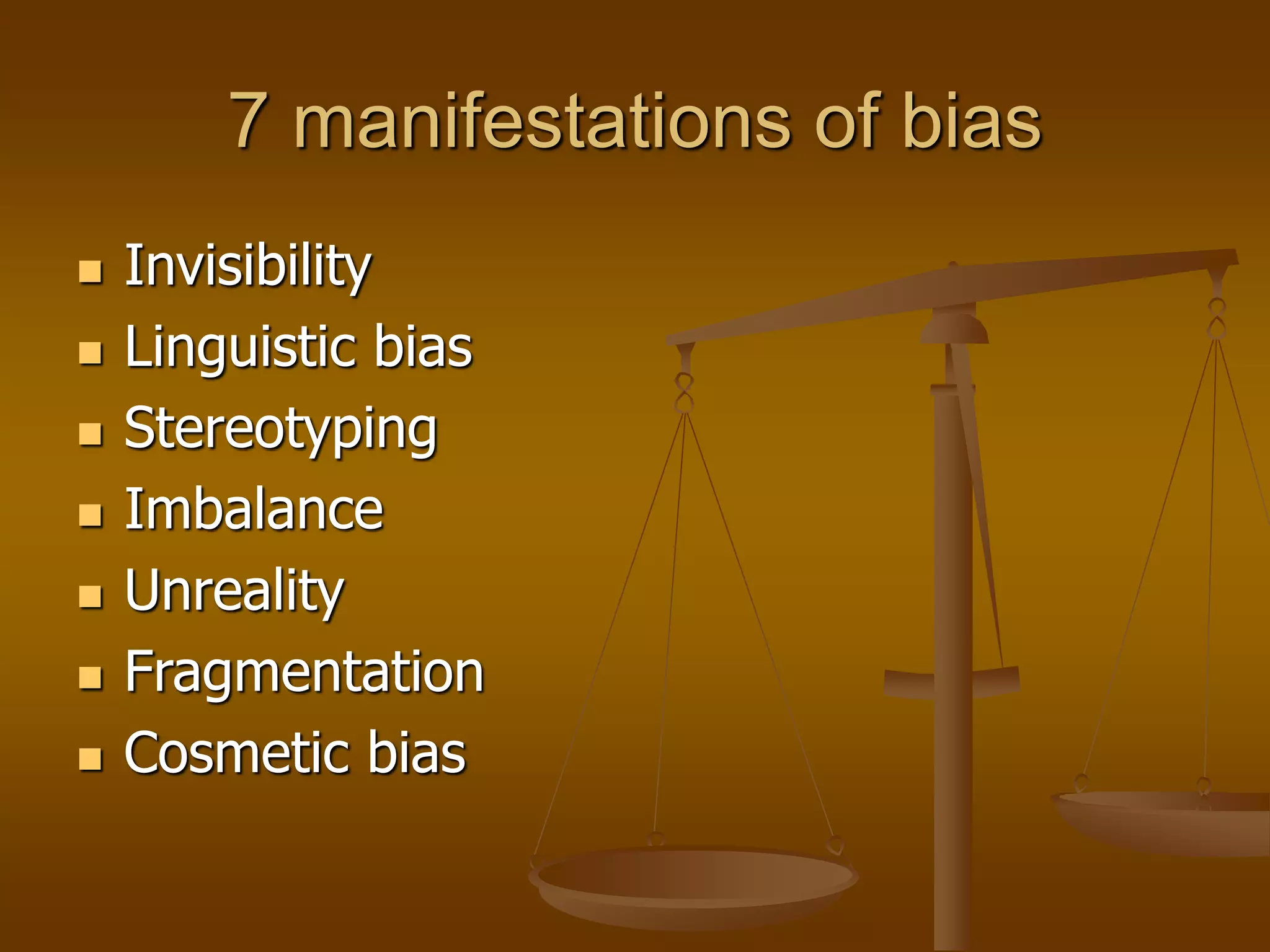
7 manifestations of bias
 Invisibility
 Linguistic bias
 Stereotyping
 Imbalance
 Unreality
 Fragmentation
 Cosmetic bias
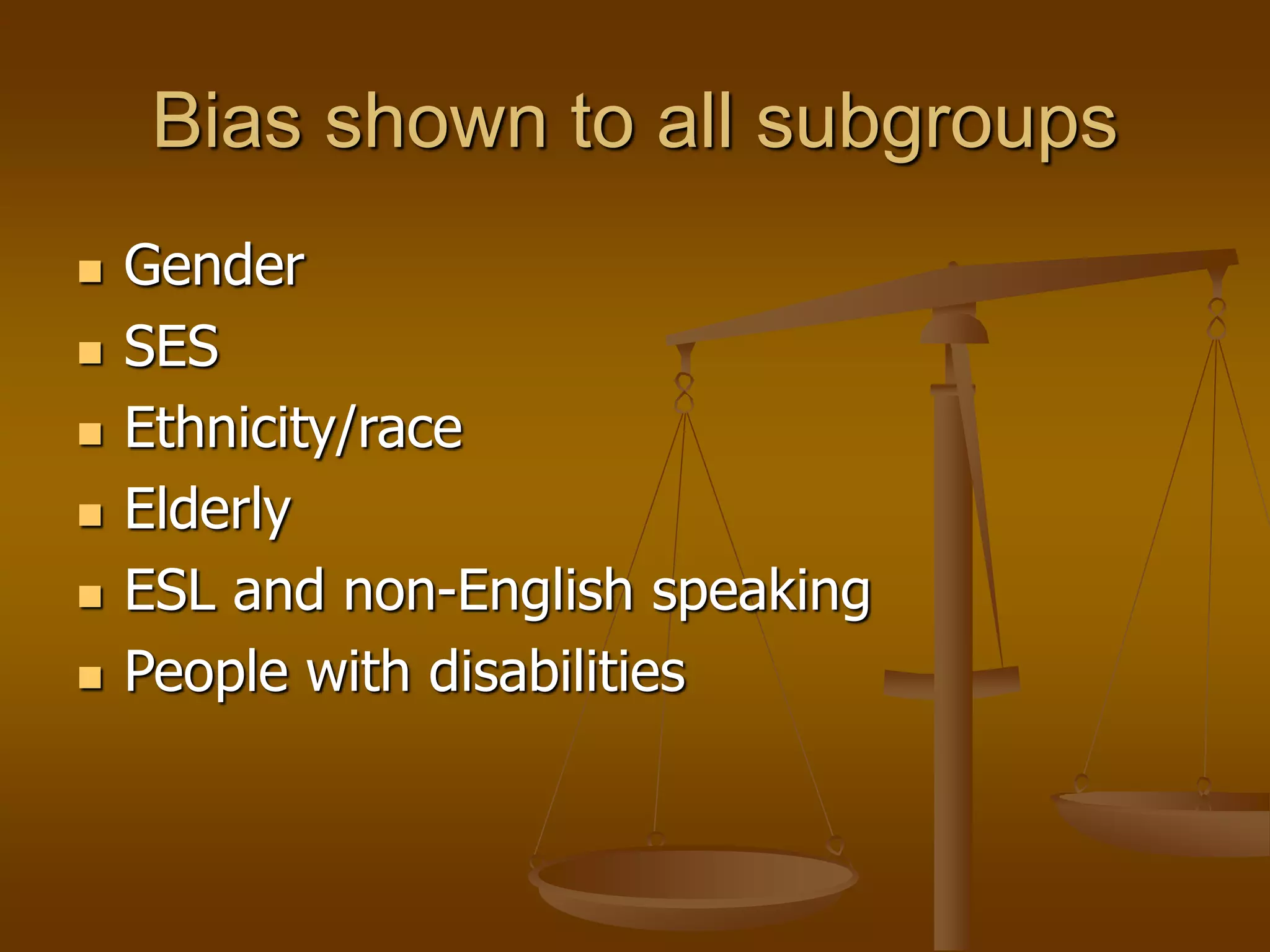
Bias shown to all subgroups
 Gender
 SES
 Ethnicity/race
 Elderly
 ESL and non-English speaking
 People with disabilities
Invisibility
 When contributions made by groups go
largely ignored in textbooks.
 When groups are systematically excluded
from curricular materials students are
deprived of information about many of the
nation’s people.
Linguistic Bias
 Terms and pronouns used that favor one
group.
 Adjectives used to portray one group as
more significant/powerful-
 For example-men whose charm, elegant
ladies
Stereotyping
 When one group is shown to exhibit one
set of values, behaviors, and roles and
another group is in possession of another
set of values, behaviors, and roles.
 Even studies of textbooks in the 1990s depict
women in more passive roles, white males
portrayed more often as physically strong
and/or in professional careers.
Imbalance
 Presenting only one view of a potentially
controversial issue.
 Simplifying a complex issue due to limited
textbook space.
Unreality
 Controversial topics are glossed over for a
more favorable or traditional view.
 This is done to avoid offending adults who
are decision makers.
 For example-with high percentage of
marriages ending in divorce and many
children living at least part of their growing up
years in single parent households, some
textbooks still report the nuclear/2 parent
family as common.
Fragmentation
 When groups are in a separate section in
a text or information on the group is
provided in an insert.
 When groups are shown to primarily only
interact with and have impact within their
own group.
Cosmetic Bias
 Illusion of equality.
 Single and perhaps elaborate portrayal of
a group with little narrative or integration
of same group throughout the materials.
References
 Multicultural Education: Issues and
Perspectives
 Edited by James Banks & Cherry Banks
 2005
 John Wiley and Sons
 Powerpoint prepared by Sheryl Erickson

Bias in textbooks-curriculum (1).ppt

  • 1.
  • 2.
    Bias in textbookscontinue  Despite guidelines issued in the 1970-80s suggesting how to portray different groups more fairly, recent research indicates an imbalance persists.  Science textbooks show more males  History texts include more illustrations of males  Majority of music related figures were male  Language arts textbooks-more stories featuring male characters
  • 3.
    7 manifestations ofbias  Invisibility  Linguistic bias  Stereotyping  Imbalance  Unreality  Fragmentation  Cosmetic bias
  • 4.
    Bias shown toall subgroups  Gender  SES  Ethnicity/race  Elderly  ESL and non-English speaking  People with disabilities
  • 5.
    Invisibility  When contributionsmade by groups go largely ignored in textbooks.  When groups are systematically excluded from curricular materials students are deprived of information about many of the nation’s people.
  • 6.
    Linguistic Bias  Termsand pronouns used that favor one group.  Adjectives used to portray one group as more significant/powerful-  For example-men whose charm, elegant ladies
  • 7.
    Stereotyping  When onegroup is shown to exhibit one set of values, behaviors, and roles and another group is in possession of another set of values, behaviors, and roles.  Even studies of textbooks in the 1990s depict women in more passive roles, white males portrayed more often as physically strong and/or in professional careers.
  • 8.
    Imbalance  Presenting onlyone view of a potentially controversial issue.  Simplifying a complex issue due to limited textbook space.
  • 9.
    Unreality  Controversial topicsare glossed over for a more favorable or traditional view.  This is done to avoid offending adults who are decision makers.  For example-with high percentage of marriages ending in divorce and many children living at least part of their growing up years in single parent households, some textbooks still report the nuclear/2 parent family as common.
  • 10.
    Fragmentation  When groupsare in a separate section in a text or information on the group is provided in an insert.  When groups are shown to primarily only interact with and have impact within their own group.
  • 11.
    Cosmetic Bias  Illusionof equality.  Single and perhaps elaborate portrayal of a group with little narrative or integration of same group throughout the materials.
  • 12.
    References  Multicultural Education:Issues and Perspectives  Edited by James Banks & Cherry Banks  2005  John Wiley and Sons  Powerpoint prepared by Sheryl Erickson