A guide to early detection and
treatment
Bed Bug Prevention Playbook
Detection: Know What to Look For
• Detection goes hand in hand
with the treatment and
ultimately the prevention of
bed bugs.
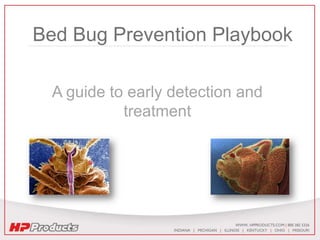
• Knowing what bed bugs look
like and the signs of their
presence is key to identifying
these pesky pests.
What Do Bed Bugs Look Like?
• Their bodies are of a
flattened oval shape and
reddish brown in color.
• These wingless insects
can grow up to ¼ of an
inch, but are usually about
the size of an apple seed.
Signs of a Bed Bug Invasion
• Direct observation of
bed bugs (dead or alive)
• Red or brown colored
stains from droppings
• Eggs attached to
surfaces in or around the
bed area
Colony of bed bugs nestle into
the side of a mattress
Dried blood and fecal matter
left by bed bugs
The Next Step: Create a
Bed Bug Protocol
• Implement a system for bed bug
detection to help prevent a building-wide
infestation.
• Incorporate weekly, monthly, and
quarterly inspections into the staff’s
cleaning routine to isolate a bed bug
presence before it spreads.
Weekly Checks
• Survey for evidence of
stains or eggs when
changing sheets.
• Inspect the edge of
the mattress and
mattress cover.
Monthly Check
• Inspect the box
springs for
discoloration or
clusters of eggs
Quarterly Checks
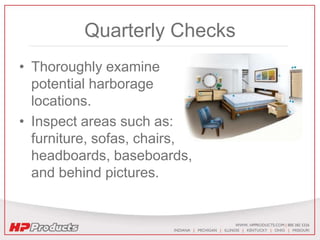
• Thoroughly examine
potential harborage
locations.
• Inspect areas such as:
furniture, sofas, chairs,
headboards, baseboards,
and behind pictures.
So You Found a Bed Bug.
What Now?
• Dispose of any items that have harbored bed
bugs by securing them in heavy duty bags
and sealing them with duct tape. Then
adhere to normal waste removal procedures.
• Any items that can be laundered should be
washed with detergent at the highest
temperature setting.
• Dry in the highest heat to kill any lingering
eggs.
Treating Bed Bugs
• In some cases, professional help may be
required.
• Pest management professionals can use
special heating and freezing equipment to
eradicate bed bugs in an infested area.
Beyond the Bugs
• Although they are not known to transmit
any diseases, their painful bites are
certainly an annoyance.
• In addition to being a nuisance to
guests, they also can have a detrimental
impact on an organization's image.
• Bed bugs are on the rise, and the only way
to beat the bug is to stay two steps ahead
of them.
Sources
• “Pulling Back the Sheets on the Bed Beg Controversy:
Research, Prevention and Management in Hospitals &
Long-Term Care Facilities” By Ron
Harrison, Ph.D., B.C.E. and Bill Lawrence, Ph.D., B.C.E.
• “Bed Bug Identification, Control and Prevention:
Recommendations for the Hospitality Industry” the
Vermont Department of Health

Bed Bug Prevention Playbook

  • 1.
    A guide toearly detection and treatment Bed Bug Prevention Playbook
  • 2.
    Detection: Know Whatto Look For • Detection goes hand in hand with the treatment and ultimately the prevention of bed bugs. • Knowing what bed bugs look like and the signs of their presence is key to identifying these pesky pests.
  • 3.
    What Do BedBugs Look Like? • Their bodies are of a flattened oval shape and reddish brown in color. • These wingless insects can grow up to ¼ of an inch, but are usually about the size of an apple seed.
  • 4.
    Signs of aBed Bug Invasion • Direct observation of bed bugs (dead or alive) • Red or brown colored stains from droppings • Eggs attached to surfaces in or around the bed area Colony of bed bugs nestle into the side of a mattress Dried blood and fecal matter left by bed bugs
  • 5.
    The Next Step:Create a Bed Bug Protocol • Implement a system for bed bug detection to help prevent a building-wide infestation. • Incorporate weekly, monthly, and quarterly inspections into the staff’s cleaning routine to isolate a bed bug presence before it spreads.
  • 6.
    Weekly Checks • Surveyfor evidence of stains or eggs when changing sheets. • Inspect the edge of the mattress and mattress cover.
  • 7.
    Monthly Check • Inspectthe box springs for discoloration or clusters of eggs
  • 8.
    Quarterly Checks • Thoroughlyexamine potential harborage locations. • Inspect areas such as: furniture, sofas, chairs, headboards, baseboards, and behind pictures.
  • 9.
    So You Founda Bed Bug. What Now? • Dispose of any items that have harbored bed bugs by securing them in heavy duty bags and sealing them with duct tape. Then adhere to normal waste removal procedures. • Any items that can be laundered should be washed with detergent at the highest temperature setting. • Dry in the highest heat to kill any lingering eggs.
  • 10.
    Treating Bed Bugs •In some cases, professional help may be required. • Pest management professionals can use special heating and freezing equipment to eradicate bed bugs in an infested area.
  • 11.
    Beyond the Bugs •Although they are not known to transmit any diseases, their painful bites are certainly an annoyance. • In addition to being a nuisance to guests, they also can have a detrimental impact on an organization's image. • Bed bugs are on the rise, and the only way to beat the bug is to stay two steps ahead of them.
  • 12.
    Sources • “Pulling Backthe Sheets on the Bed Beg Controversy: Research, Prevention and Management in Hospitals & Long-Term Care Facilities” By Ron Harrison, Ph.D., B.C.E. and Bill Lawrence, Ph.D., B.C.E. • “Bed Bug Identification, Control and Prevention: Recommendations for the Hospitality Industry” the Vermont Department of Health

Editor's Notes

  • #12 I am thinking we might just want to omit the second bullet point