1
(800) 382-5326
HPPRODUCTS.COM
Stretch Film basics
benefits of and uses for stretch films
What is stretch film?
A highly stretchable plastic that keeps
items securely bound. It’s a go-to product
for companies around the world, used for
unitizing and protecting packages in transit.
What is stretch film made of?
Low-density polyethylene (LLDPE) found in
nearly every warehouse.
Why is Stretch Film Used?
What type of stretch
film should I use?
Cast film is ideal for high speed, machine
applications due to it’s consistent machinability.
It unwinds smoothly and quietly, has excellent
clarity, and is less expensive due to reduced
manufacturing costs. It should be used when
palletizing uniform loads.
Blown film is great for palletizing and
protecting unusual shapes and loads due to its
two-way stretch property and great puncture
resistance. A cling additive protects packages
from dusty and cold environments.
Clarity Excellent Good
Cling Good Excellent
Noise
Level Quiet Loud
Puncture
Resistance Good Excellent
Load
Retention Good Excellent
CAST BLOWN
Lower Cost Flexible for All
Load Types
Reduces
Damages
Tamper Evident Keeps Product
Clean
2
Stretch Film basics
benefits of and uses for stretch films
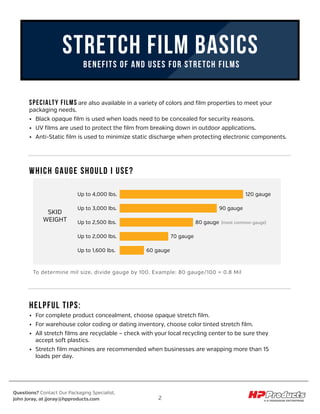
Which Gauge Should I Use?
Up to 4,000 lbs.
SKID
WEIGHT
120 gauge
90 gauge
80 gauge (most common gauge)
70 gauge
60 gauge
Up to 3,000 lbs.
Up to 2,500 lbs.
Up to 2,000 lbs.
Up to 1,600 lbs.
To determine mil size, divide gauge by 100. Example: 80 gauge/100 = 0.8 Mil
Specialty films are also available in a variety of colors and film properties to meet your
packaging needs.
•	 Black opaque film is used when loads need to be concealed for security reasons.
•	 UV films are used to protect the film from breaking down in outdoor applications.
•	 Anti-Static film is used to minimize static discharge when protecting electronic components.
Helpful tips:
•	 For complete product concealment, choose opaque stretch film.
•	 For warehouse color coding or dating inventory, choose color tinted stretch film.
•	 All stretch films are recyclable – check with your local recycling center to be sure they
accept soft plastics.
•	 Stretch film machines are recommended when businesses are wrapping more than 15
loads per day.
(800) 382-5326
HPPRODUCTS.COM

Stretch Film Basics

  • 1.
    1 (800) 382-5326 HPPRODUCTS.COM Stretch Filmbasics benefits of and uses for stretch films What is stretch film? A highly stretchable plastic that keeps items securely bound. It’s a go-to product for companies around the world, used for unitizing and protecting packages in transit. What is stretch film made of? Low-density polyethylene (LLDPE) found in nearly every warehouse. Why is Stretch Film Used? What type of stretch film should I use? Cast film is ideal for high speed, machine applications due to it’s consistent machinability. It unwinds smoothly and quietly, has excellent clarity, and is less expensive due to reduced manufacturing costs. It should be used when palletizing uniform loads. Blown film is great for palletizing and protecting unusual shapes and loads due to its two-way stretch property and great puncture resistance. A cling additive protects packages from dusty and cold environments. Clarity Excellent Good Cling Good Excellent Noise Level Quiet Loud Puncture Resistance Good Excellent Load Retention Good Excellent CAST BLOWN Lower Cost Flexible for All Load Types Reduces Damages Tamper Evident Keeps Product Clean
  • 2.
    2 Stretch Film basics benefitsof and uses for stretch films Which Gauge Should I Use? Up to 4,000 lbs. SKID WEIGHT 120 gauge 90 gauge 80 gauge (most common gauge) 70 gauge 60 gauge Up to 3,000 lbs. Up to 2,500 lbs. Up to 2,000 lbs. Up to 1,600 lbs. To determine mil size, divide gauge by 100. Example: 80 gauge/100 = 0.8 Mil Specialty films are also available in a variety of colors and film properties to meet your packaging needs. • Black opaque film is used when loads need to be concealed for security reasons. • UV films are used to protect the film from breaking down in outdoor applications. • Anti-Static film is used to minimize static discharge when protecting electronic components. Helpful tips: • For complete product concealment, choose opaque stretch film. • For warehouse color coding or dating inventory, choose color tinted stretch film. • All stretch films are recyclable – check with your local recycling center to be sure they accept soft plastics. • Stretch film machines are recommended when businesses are wrapping more than 15 loads per day. (800) 382-5326 HPPRODUCTS.COM