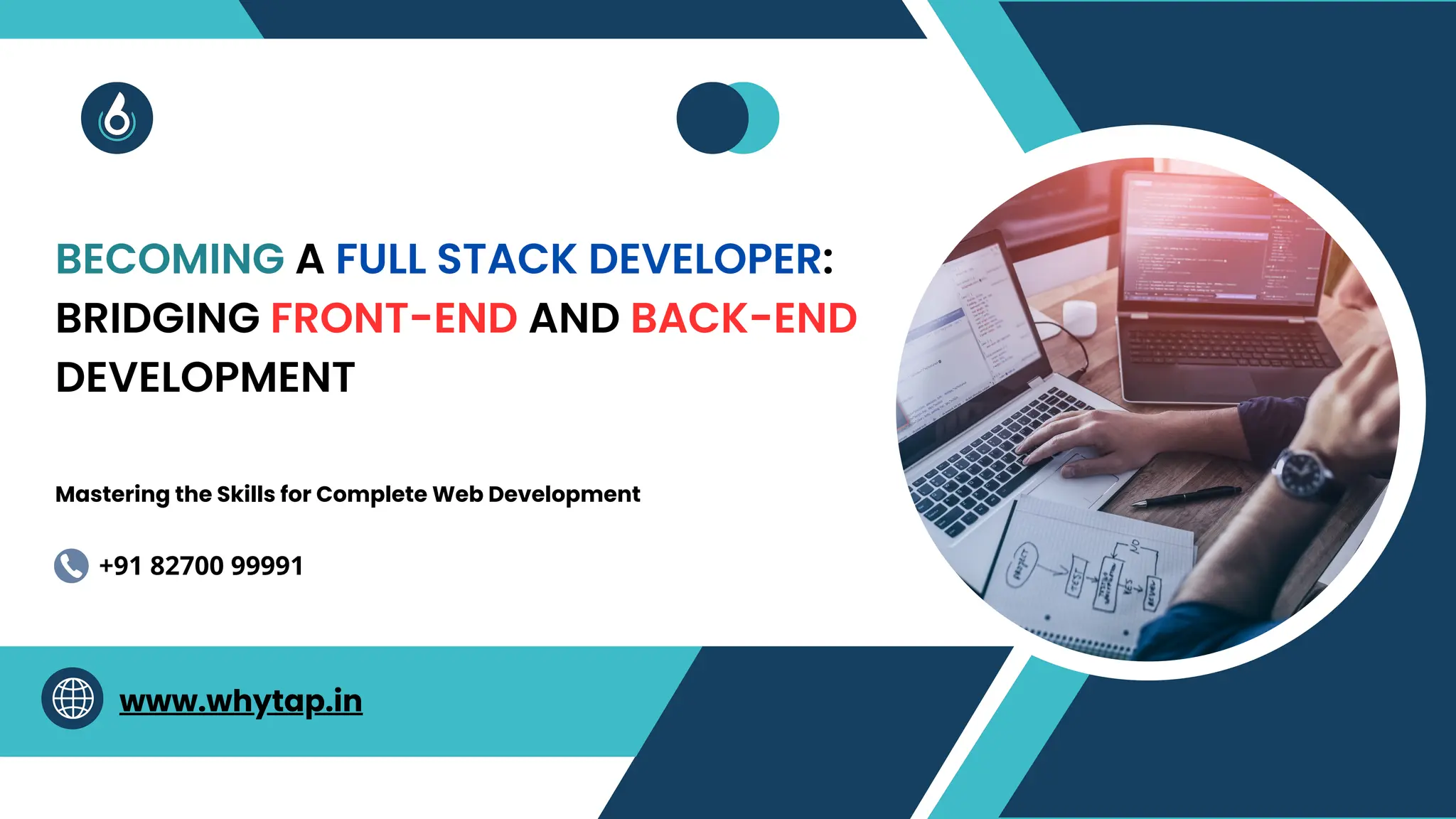
BECOMING A FULL STACK DEVELOPER:
BRIDGING FRONT-END AND BACK-END
DEVELOPMENT
Mastering the Skills for Complete Web Development
www.whytap.in
+91 82700 99991
Versatility in handling entire web applications.
Full stack development encompasses both front-end and
back-end development.
Definition:
Introduction to Full Stack Development
Importance:
Overview of Topics
Key Technologies:
HTML, CSS, JavaScript
Tools:
Popular libraries and frameworks
(React, Angular, Vue.js)
Front-End Development Overview
Role:
Creating the visual and interactive
parts of a website.
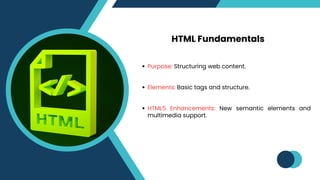
Purpose: Structuring web content.
Elements: Basic tags and structure.
HTML5 Enhancements: New semantic elements and
multimedia support.
HTML Fundamentals
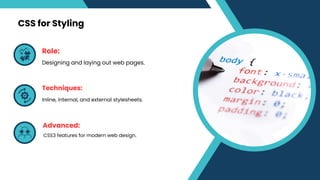
Designing and laying out web pages.
Inline, internal, and external stylesheets.
CSS3 features for modern web design.
CSS for Styling
Role:
Techniques:
Advanced:
JavaScript Essentials
Core Concepts:
Function:
Frameworks:
Variables, functions, events.
Adding interactivity to web pages.
Introduction to popular libraries
(jQuery, React)
Key Technologies: Node.js, Python, Ruby, Java
Role: Managing databases, server logic, and application security.
Tools: Popular frameworks (Express, Django, Ruby on Rails)
Back-End Development Overview
Stress management
Introduction to Node.js
What: Server-side JavaScript runtime.
Features: Non-blocking I/O, event-driven architecture.
Example: Simple HTTP server setup.
Database Management
Types: SQL (MySQL, PostgreSQL) vs. NoSQL
(MongoDB)
Role: Storing and retrieving data.
Interaction: Using ORMs (Object-Relational
Mappers)
Connecting Front-End and Back-End
API Basics: RESTful services, JSON
Communication: Fetching and sending data between
client and server.
Example: Simple Express.js API setup
Version Control with Git
Purpose:
Basics:
Platforms:
Tracking changes
and collaboration.
Repositories, commits,
branches.
GitHub,
GitLab,
Bitbucket
Recap: Importance of being well-versed in both front-end
and back-end technologies.
Next Steps: Continuous learning, building projects,
contributing to open source.
Conclusion
contact@whytap.in
3rd Floor, New No. 75 77 & 79, Lohmanradhri
Tower, Pantheon Road, Egmore, Chennai, Tamil
Nadu, 600008.
+91 82700 99991
www.whytap.in
THANK YOU
www.whytap.in

Becoming a Full Stack Developer Bridging Front-End and Back-End Development.pdf

  • 1.
    BECOMING A FULLSTACK DEVELOPER: BRIDGING FRONT-END AND BACK-END DEVELOPMENT Mastering the Skills for Complete Web Development www.whytap.in +91 82700 99991
  • 2.
    Versatility in handlingentire web applications. Full stack development encompasses both front-end and back-end development. Definition: Introduction to Full Stack Development Importance: Overview of Topics
  • 3.
    Key Technologies: HTML, CSS,JavaScript Tools: Popular libraries and frameworks (React, Angular, Vue.js) Front-End Development Overview Role: Creating the visual and interactive parts of a website.
  • 4.
    Purpose: Structuring webcontent. Elements: Basic tags and structure. HTML5 Enhancements: New semantic elements and multimedia support. HTML Fundamentals
  • 5.
    Designing and layingout web pages. Inline, internal, and external stylesheets. CSS3 features for modern web design. CSS for Styling Role: Techniques: Advanced:
  • 6.
    JavaScript Essentials Core Concepts: Function: Frameworks: Variables,functions, events. Adding interactivity to web pages. Introduction to popular libraries (jQuery, React)
  • 7.
    Key Technologies: Node.js,Python, Ruby, Java Role: Managing databases, server logic, and application security. Tools: Popular frameworks (Express, Django, Ruby on Rails) Back-End Development Overview Stress management
  • 8.
    Introduction to Node.js What:Server-side JavaScript runtime. Features: Non-blocking I/O, event-driven architecture. Example: Simple HTTP server setup.
  • 9.
    Database Management Types: SQL(MySQL, PostgreSQL) vs. NoSQL (MongoDB) Role: Storing and retrieving data. Interaction: Using ORMs (Object-Relational Mappers)
  • 10.
    Connecting Front-End andBack-End API Basics: RESTful services, JSON Communication: Fetching and sending data between client and server. Example: Simple Express.js API setup
  • 11.
    Version Control withGit Purpose: Basics: Platforms: Tracking changes and collaboration. Repositories, commits, branches. GitHub, GitLab, Bitbucket
  • 12.
    Recap: Importance ofbeing well-versed in both front-end and back-end technologies. Next Steps: Continuous learning, building projects, contributing to open source. Conclusion contact@whytap.in 3rd Floor, New No. 75 77 & 79, Lohmanradhri Tower, Pantheon Road, Egmore, Chennai, Tamil Nadu, 600008. +91 82700 99991 www.whytap.in
  • 13.