Be Digital or Die
by Alpesh Doshi, Fintricity
A look at leveraging Big Data and
Predictive Analytics for digital
transformation
Predictive Analytics & Innovation Summit
11th May 2016
London, UK
By Alpesh Doshi, Fintricity
What is Digital Transformation?
Digital Transformation is the application of
disruptive technologies and business models
to transform how the industry works.
- Alpesh Doshi
“ “
Big data is like teenage sex: everyone talks
about it, nobody really knows how to do it,
everyone thinks everyone else is doing it, so
everyone claims they are doing it.
- Dan Ariely
“ “
What is Big Data?
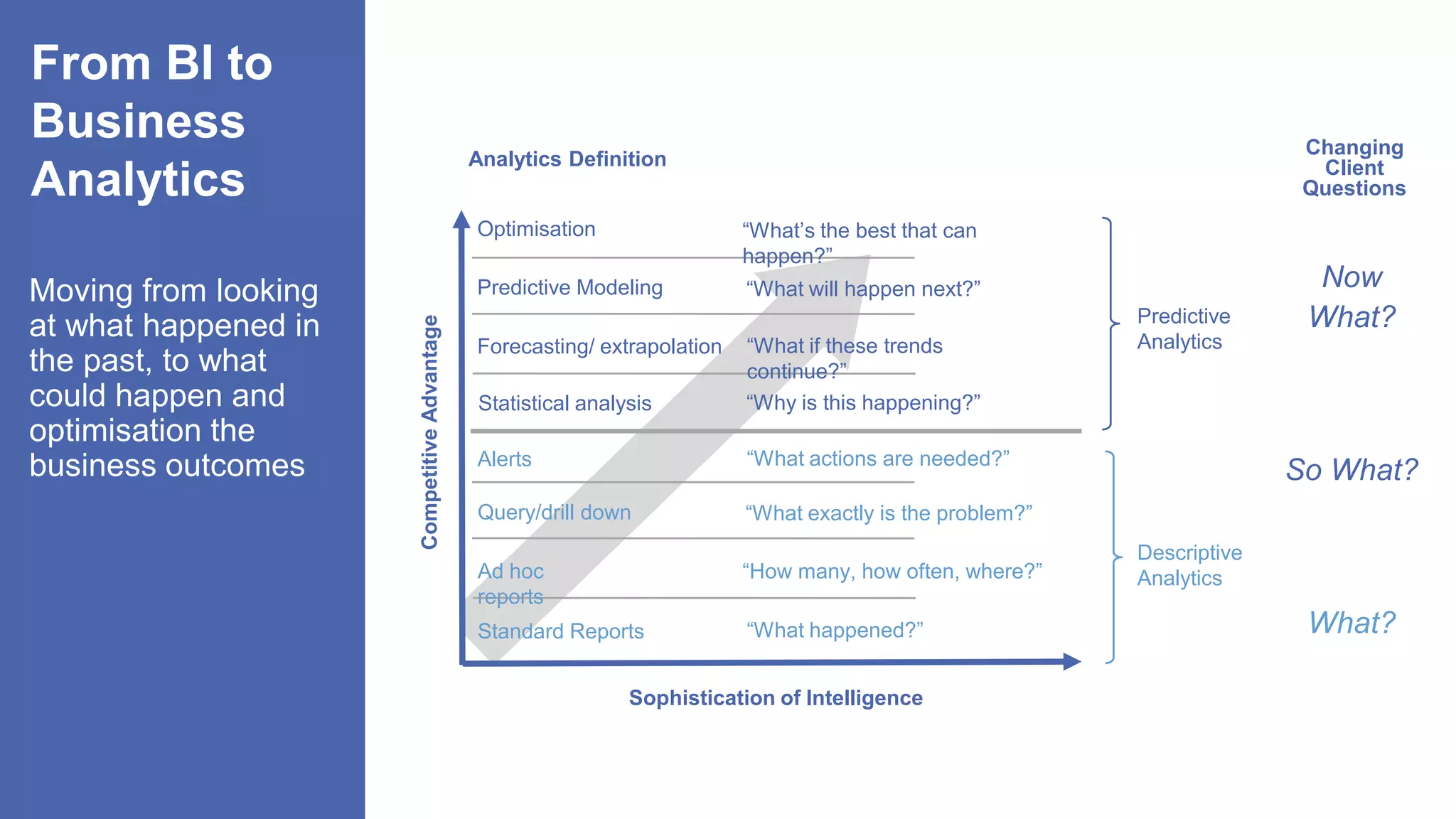
From BI to
Business
Analytics
Moving from looking
at what happened in
the past, to what
could happen and
optimisation the
business outcomes
CompetitiveAdvantage
Sophistication of Intelligence
Optimisation
Predictive Modeling
Forecasting/ extrapolation
Statistical analysis
Alerts
Query/drill down
Ad hoc
reports
Standard Reports
“What’s the best that can
happen?”
“What will happen next?”
“What if these trends
continue?”
“Why is this happening?”
“What actions are needed?”
“What exactly is the problem?”
“How many, how often, where?”
“What happened?”
Predictive
Analytics
Analytics Definition
Changing
Client
Questions
Descriptive
Analytics
Now
What?
So What?
What?
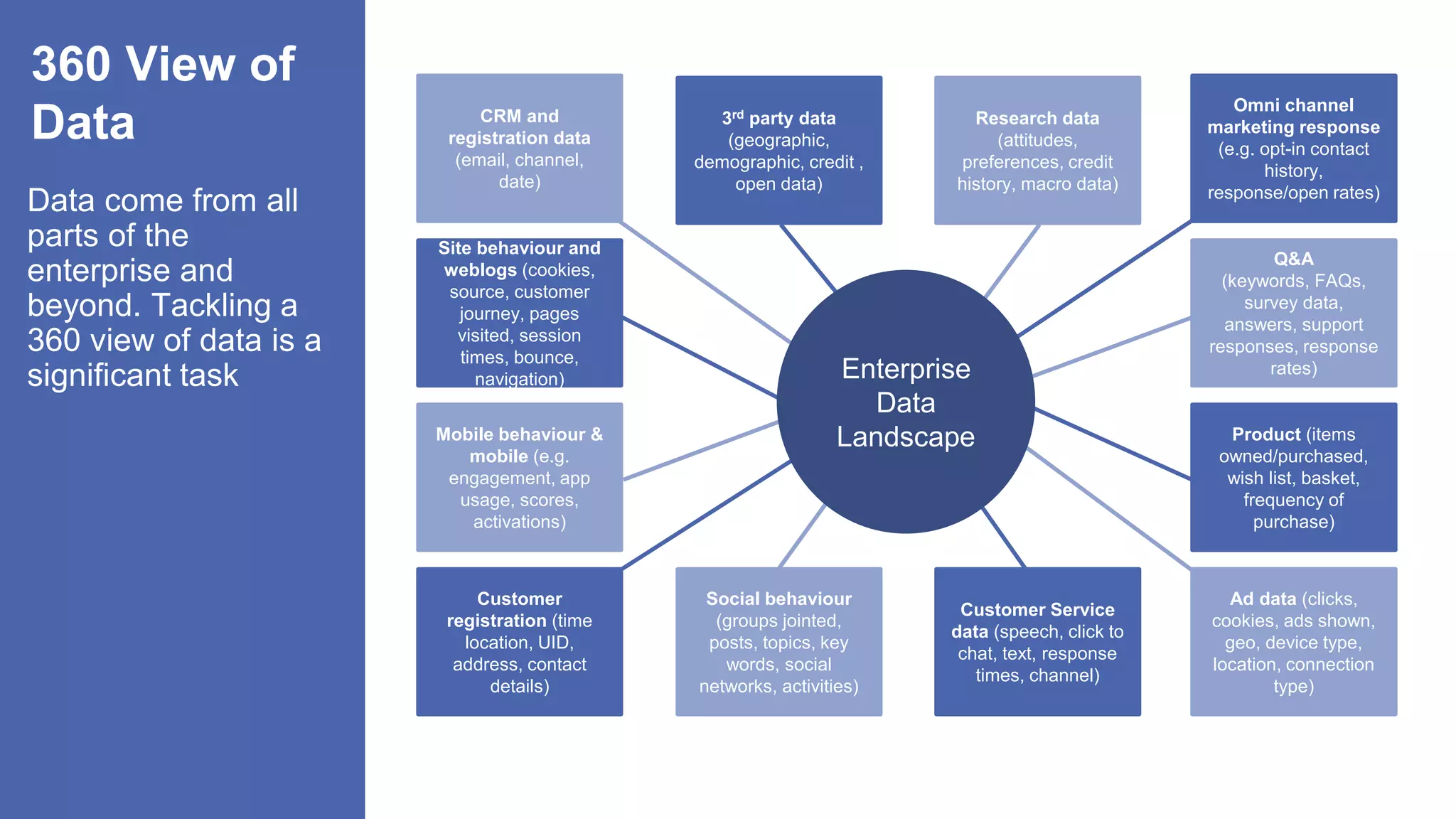
Data come from all
parts of the
enterprise and
beyond. Tackling a
360 view of data is a
significant task
360 View of
Data CRM and
registration data
(email, channel,
date)
Mobile behaviour &
mobile (e.g.
engagement, app
usage, scores,
activations)
Social behaviour
(groups jointed,
posts, topics, key
words, social
networks, activities)
Ad data (clicks,
cookies, ads shown,
geo, device type,
location, connection
type)
Q&A
(keywords, FAQs,
survey data,
answers, support
responses, response
rates)
Research data
(attitudes,
preferences, credit
history, macro data)
3rd party data
(geographic,
demographic, credit ,
open data)
Site behaviour and
weblogs (cookies,
source, customer
journey, pages
visited, session
times, bounce,
navigation)
Customer
registration (time
location, UID,
address, contact
details)
Customer Service
data (speech, click to
chat, text, response
times, channel)
Product (items
owned/purchased,
wish list, basket,
frequency of
purchase)
Omni channel
marketing response
(e.g. opt-in contact
history,
response/open rates)
Enterprise
Data
Landscape
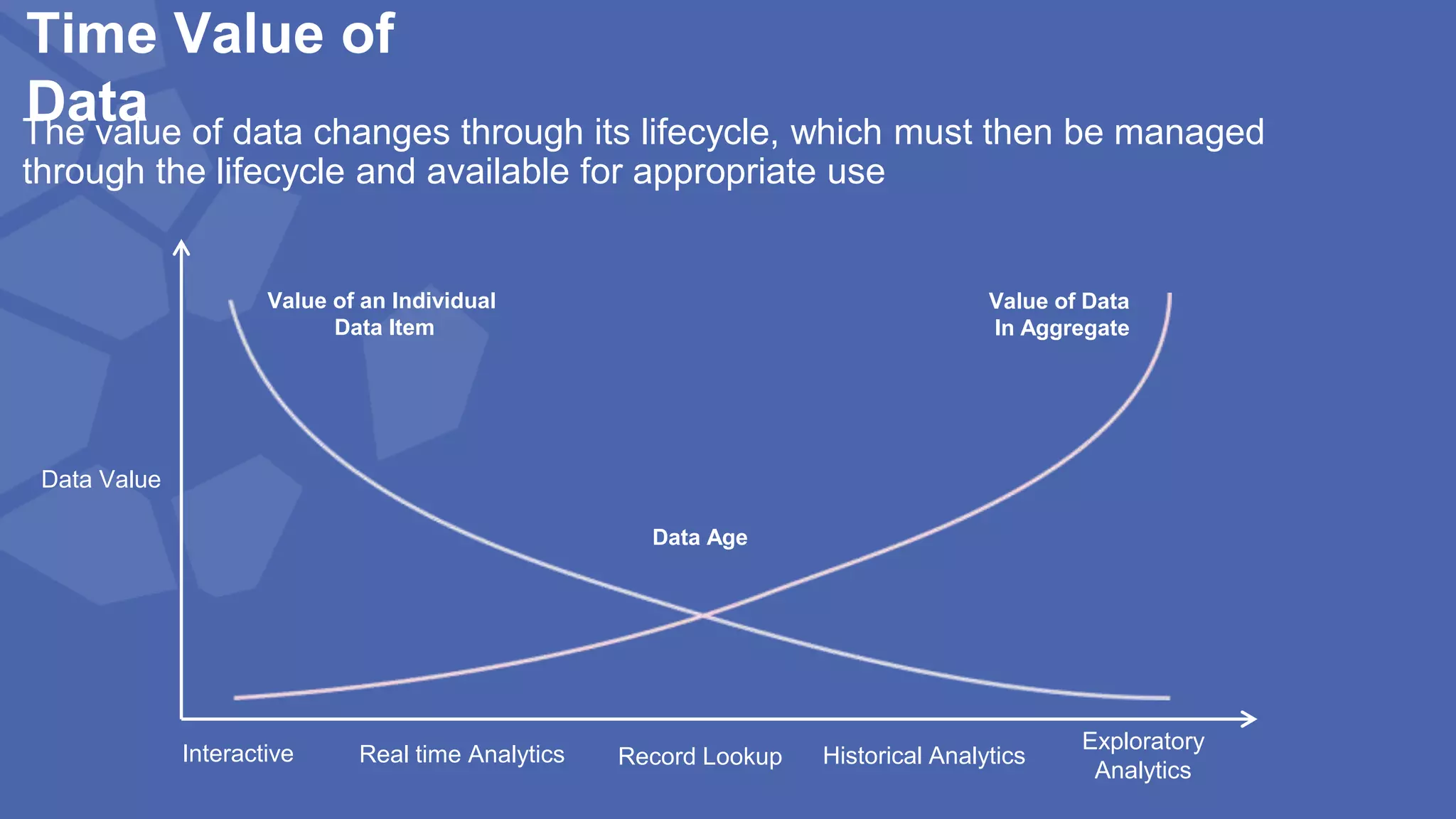
Time Value of
DataThe value of data changes through its lifecycle, which must then be managed
through the lifecycle and available for appropriate use
Data Age
Data Value
Value of an Individual
Data Item
Value of Data
In Aggregate
Interactive Real time Analytics Record Lookup Historical Analytics
Exploratory
Analytics
DATA
ANALYTICS
VISUALISATION
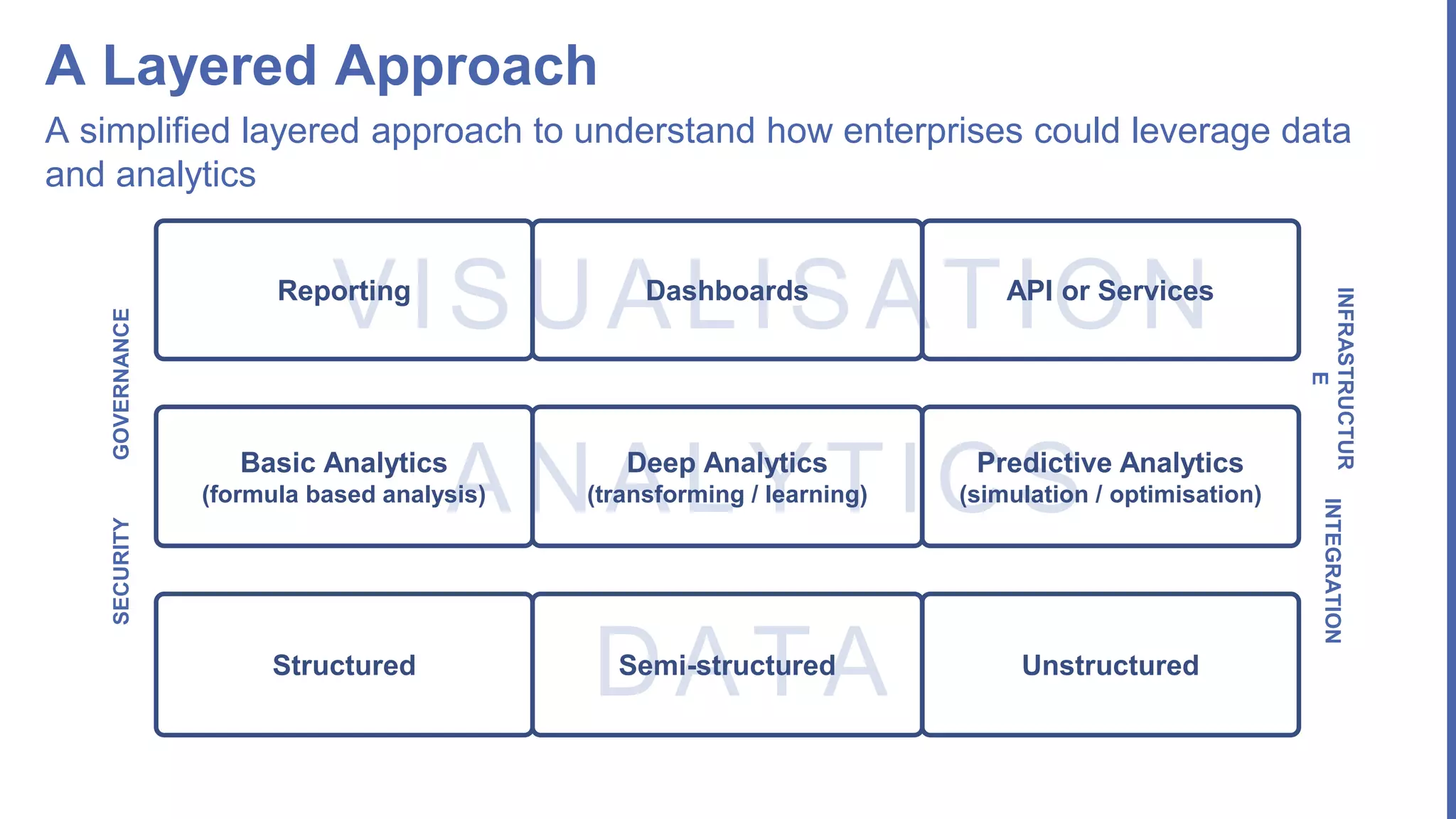
A Layered Approach
A simplified layered approach to understand how enterprises could leverage data
and analytics
Structured Semi-structured Unstructured
Basic Analytics
(formula based analysis)
Deep Analytics
(transforming / learning)
Predictive Analytics
(simulation / optimisation)
SECURITY
Reporting Dashboards API or Services
GOVERNANCE
INTEGRATION
INFRASTRUCTUR
E
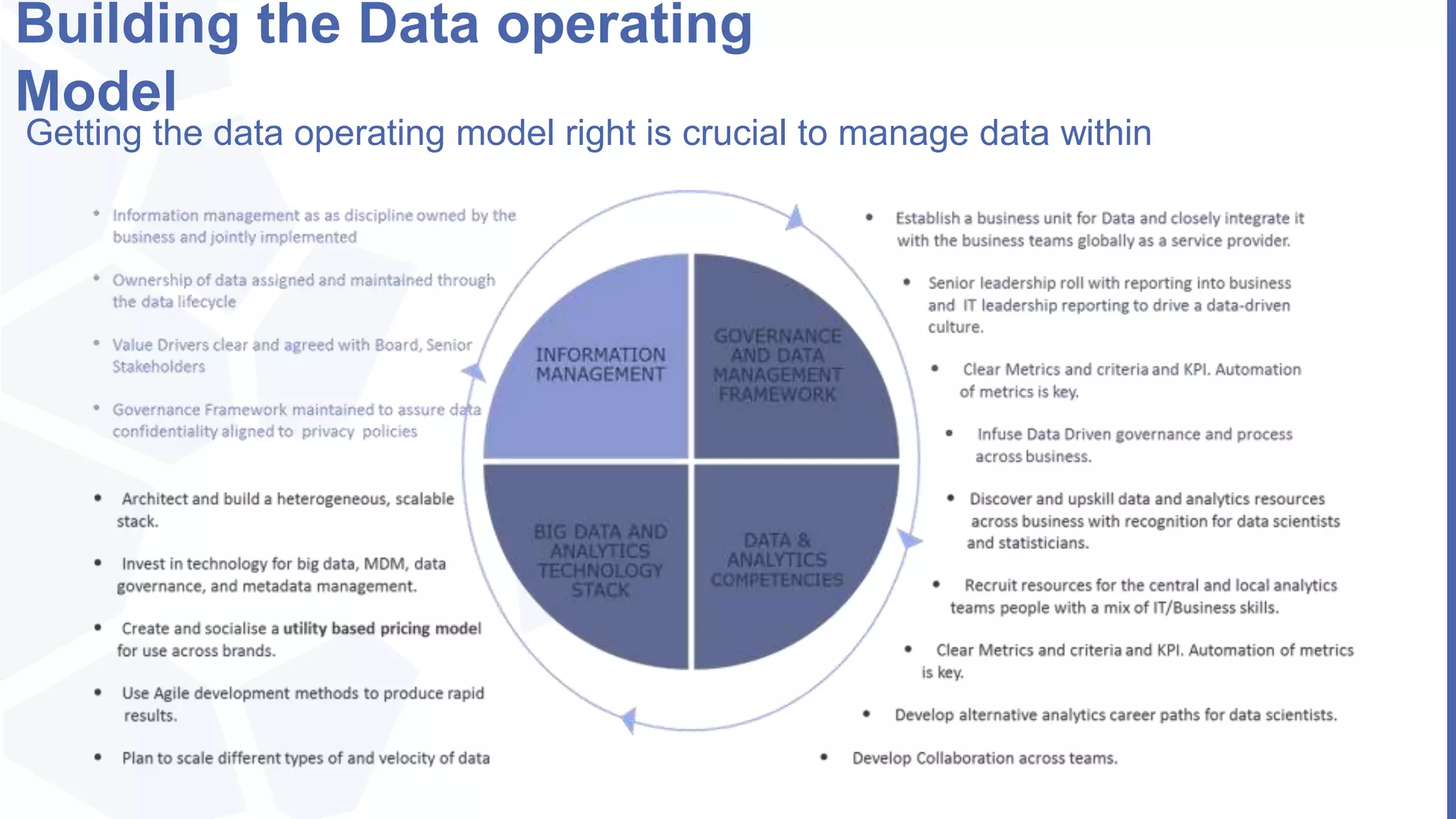
Building the Data operating
Model
Getting the data operating model right is crucial to manage data within
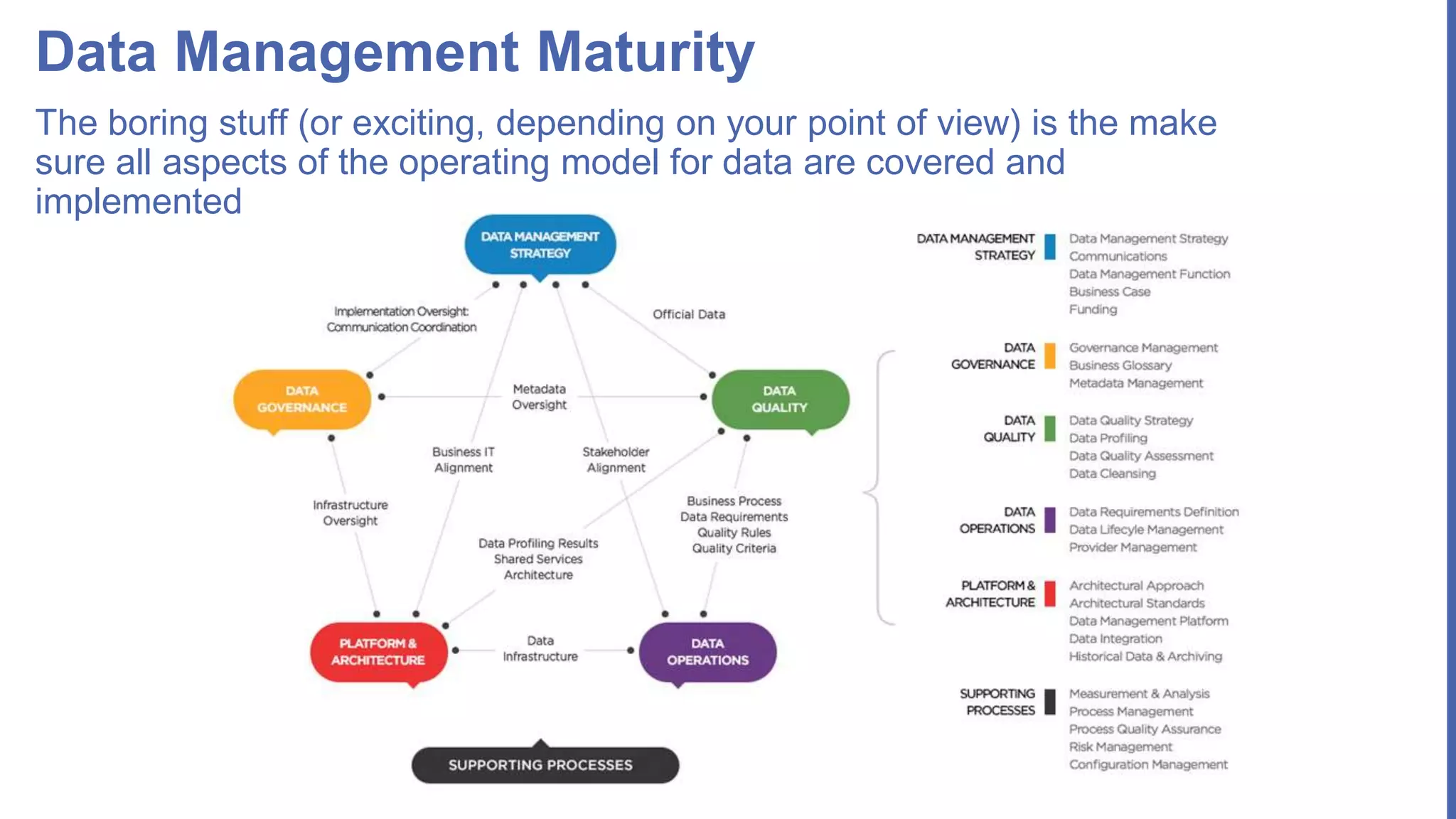
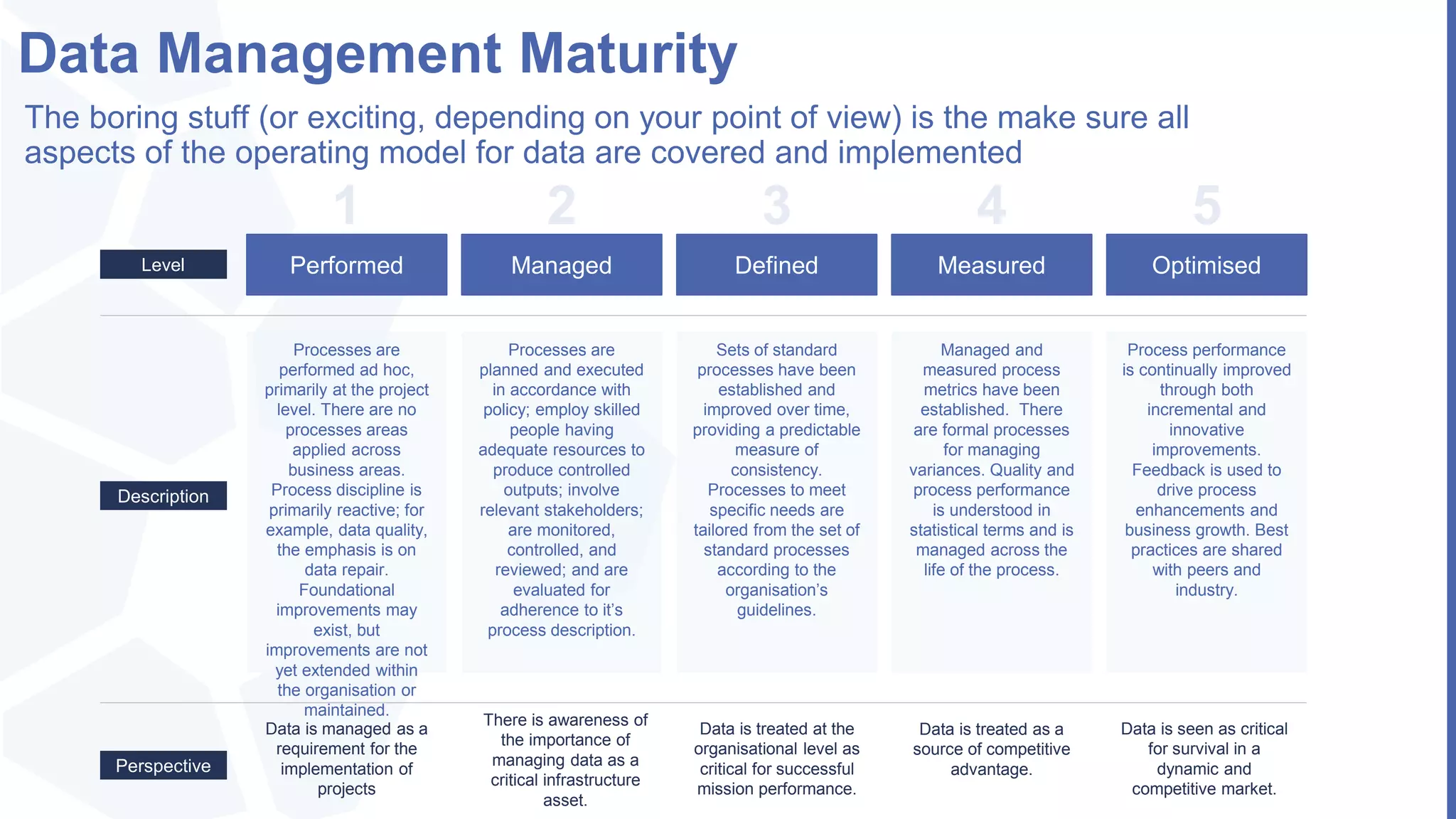
Data Management Maturity
The boring stuff (or exciting, depending on your point of view) is the make
sure all aspects of the operating model for data are covered and
implemented
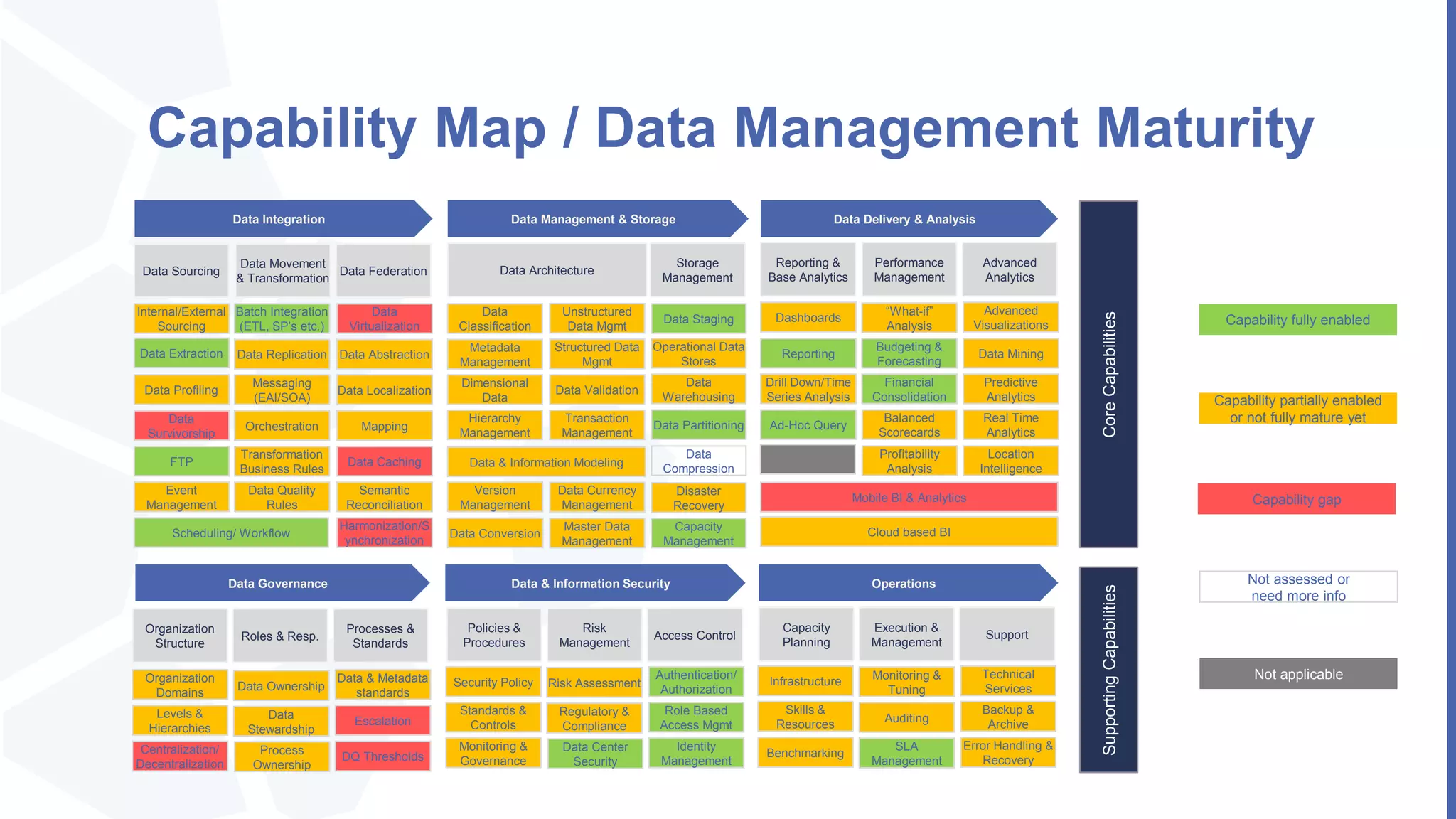
Capability Map / Data Management Maturity
Data Integration Data Management & Storage Data Delivery & Analysis
Data Sourcing Data Federation
Data Movement
& Transformation
Batch Integration
(ETL, SP’s etc.)
Data Replication
Messaging
(EAI/SOA)
Data
Survivorship
FTP
Event
Management
Scheduling/ Workflow
Data
Virtualization
Data Abstraction
Data Localization
Mapping
Data Caching
Semantic
Reconciliation
Harmonization/S
ynchronization
Orchestration
Transformation
Business Rules
Data Quality
Rules
Data Architecture
Storage
Management
Data
Classification
Metadata
Management
Dimensional
Data
Hierarchy
Management
Data & Information Modeling
Version
Management
Data Staging
Operational Data
Stores
Data
Warehousing
Data Partitioning
Transaction
Management
Unstructured
Data Mgmt
Structured Data
Mgmt
Data Validation
Reporting &
Base Analytics
Advanced
Analytics
Performance
Management
Dashboards
Reporting
Drill Down/Time
Series Analysis
Ad-Hoc Query
Mobile BI & Analytics
Advanced
Visualizations
Data Mining
Predictive
Analytics
Real Time
Analytics
Location
Intelligence
Balanced
Scorecards
Profitability
Analysis
“What-if”
Analysis
Budgeting &
Forecasting
Financial
Consolidation
CoreCapabilities
Data Governance Data & Information Security Operations
Organization
Structure
Processes &
Standards
Roles & Resp.
Policies &
Procedures
Access Control
Risk
Management
Security Policy
Standards &
Controls
Monitoring &
Governance
Authentication/
Authorization
Role Based
Access Mgmt
Identity
Management
Risk Assessment
Regulatory &
Compliance
Capacity
Planning
Support
Execution &
Management
Infrastructure
Skills &
Resources
Benchmarking
Technical
Services
Backup &
Archive
Error Handling &
Recovery
Monitoring &
Tuning
Auditing
SLA
Management
Data Center
Security
Organization
Domains
Levels &
Hierarchies
Centralization/
Decentralization
Data & Metadata
standards
Escalation
DQ Thresholds
Data Ownership
Data
Stewardship
Process
Ownership
SupportingCapabilities
Data Extraction
Internal/External
Sourcing
Data Profiling
Data Currency
Management
Data
Compression
Data Conversion
Master Data
Management
Disaster
Recovery
Cloud based BICapacity
Management
Capability fully enabled
Capability partially enabled
or not fully mature yet
Capability gap
Not assessed or
need more info
Not applicable
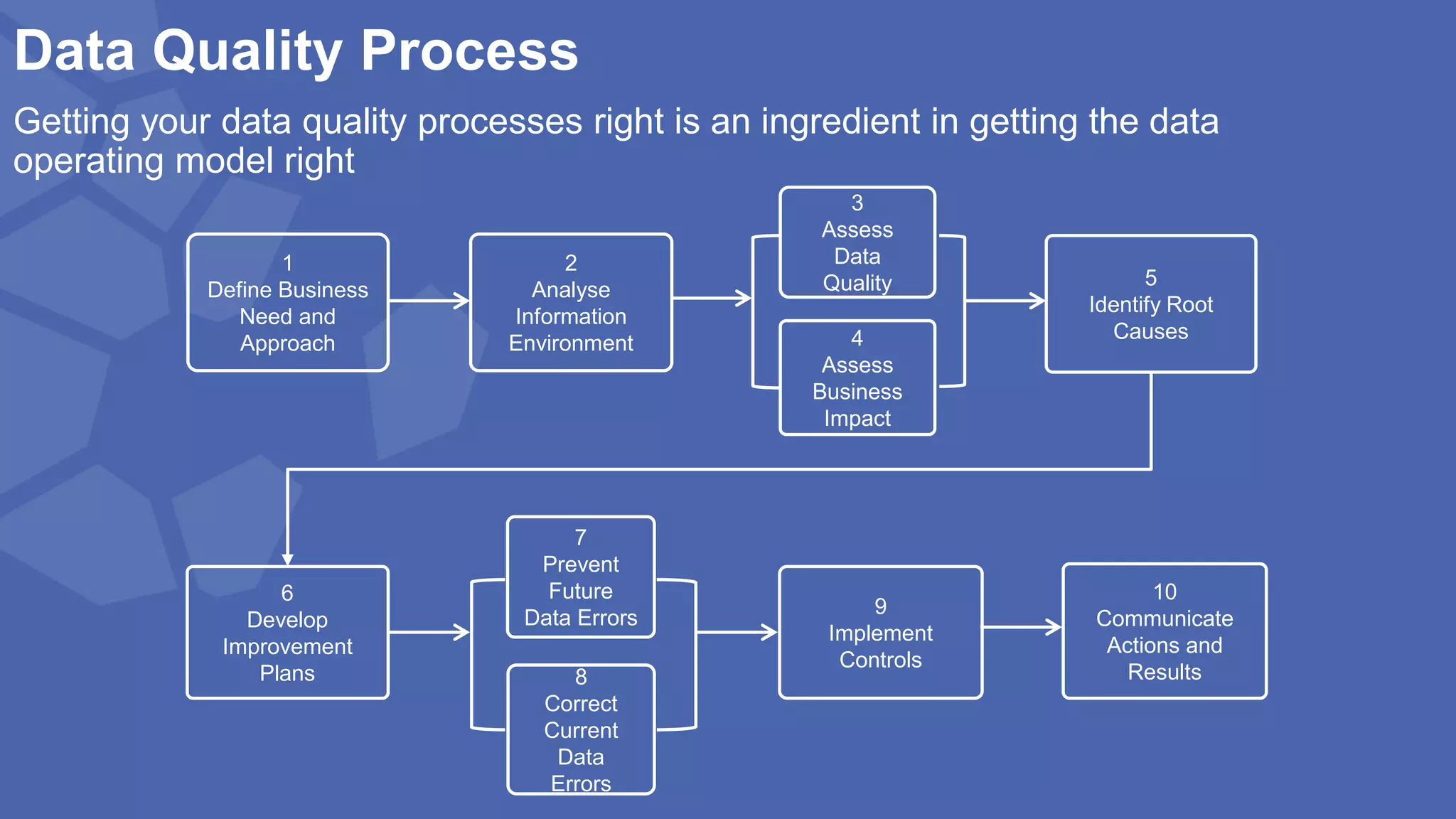
Data Quality Process
Getting your data quality processes right is an ingredient in getting the data
operating model right
1
Define Business
Need and
Approach
2
Analyse
Information
Environment
3
Assess
Data
Quality
4
Assess
Business
Impact
5
Identify Root
Causes
6
Develop
Improvement
Plans
7
Prevent
Future
Data Errors
8
Correct
Current
Data
Errors
9
Implement
Controls
10
Communicate
Actions and
Results
Data Management Maturity
The boring stuff (or exciting, depending on your point of view) is the make sure all
aspects of the operating model for data are covered and implemented
Performed Managed Defined Measured OptimisedLevel
Processes are
performed ad hoc,
primarily at the project
level. There are no
processes areas
applied across
business areas.
Process discipline is
primarily reactive; for
example, data quality,
the emphasis is on
data repair.
Foundational
improvements may
exist, but
improvements are not
yet extended within
the organisation or
maintained.
Processes are
planned and executed
in accordance with
policy; employ skilled
people having
adequate resources to
produce controlled
outputs; involve
relevant stakeholders;
are monitored,
controlled, and
reviewed; and are
evaluated for
adherence to it’s
process description.
Sets of standard
processes have been
established and
improved over time,
providing a predictable
measure of
consistency.
Processes to meet
specific needs are
tailored from the set of
standard processes
according to the
organisation’s
guidelines.
Managed and
measured process
metrics have been
established. There
are formal processes
for managing
variances. Quality and
process performance
is understood in
statistical terms and is
managed across the
life of the process.
Process performance
is continually improved
through both
incremental and
innovative
improvements.
Feedback is used to
drive process
enhancements and
business growth. Best
practices are shared
with peers and
industry.
Data is managed as a
requirement for the
implementation of
projects
Description
Perspective
There is awareness of
the importance of
managing data as a
critical infrastructure
asset.
Data is treated at the
organisational level as
critical for successful
mission performance.
Data is treated as a
source of competitive
advantage.
Data is seen as critical
for survival in a
dynamic and
competitive market.
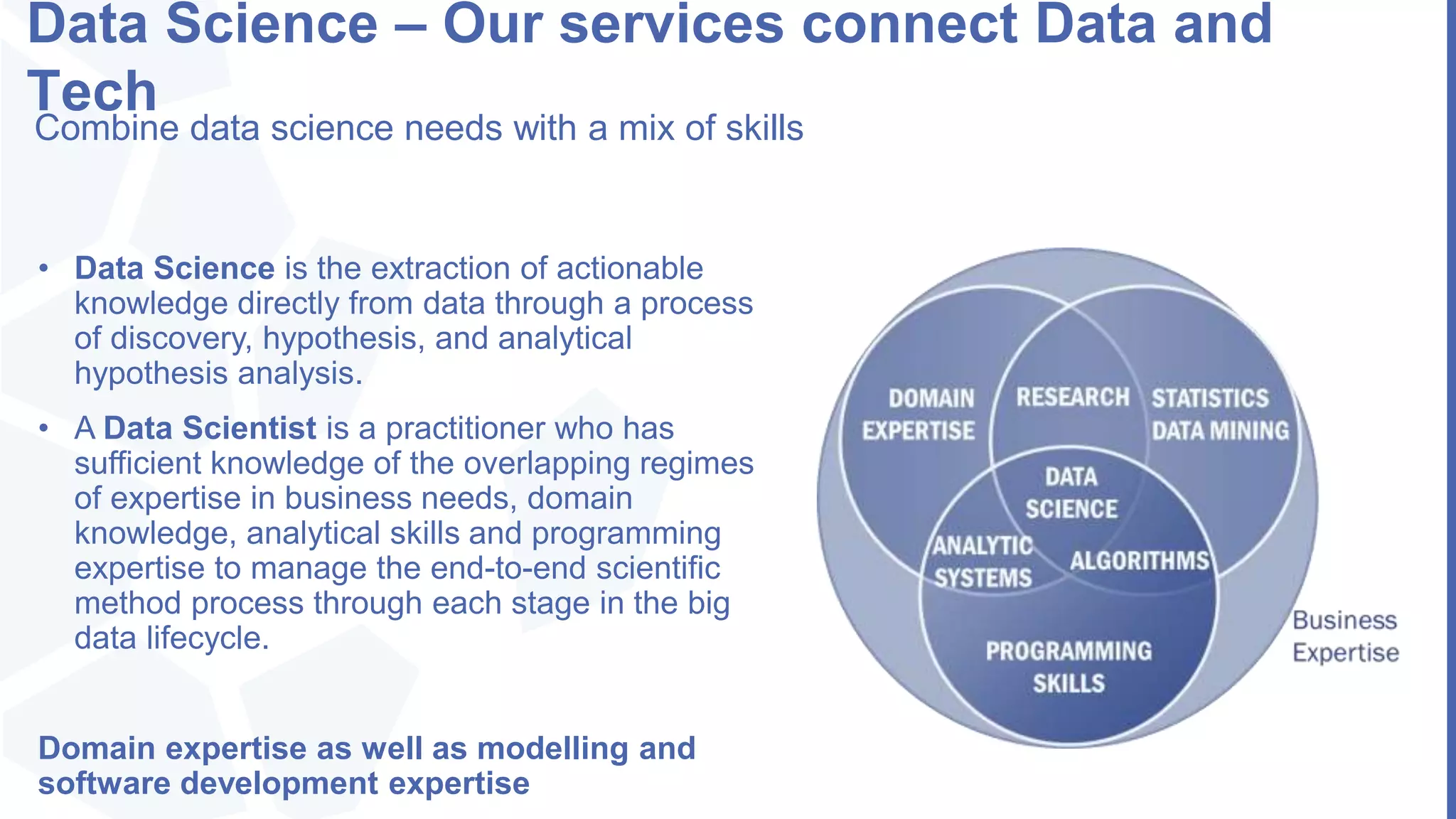
Data Science – Our services connect Data and
Tech
• Data Science is the extraction of actionable
knowledge directly from data through a process
of discovery, hypothesis, and analytical
hypothesis analysis.
• A Data Scientist is a practitioner who has
sufficient knowledge of the overlapping regimes
of expertise in business needs, domain
knowledge, analytical skills and programming
expertise to manage the end-to-end scientific
method process through each stage in the big
data lifecycle.
Domain expertise as well as modelling and
software development expertise
Combine data science needs with a mix of skills
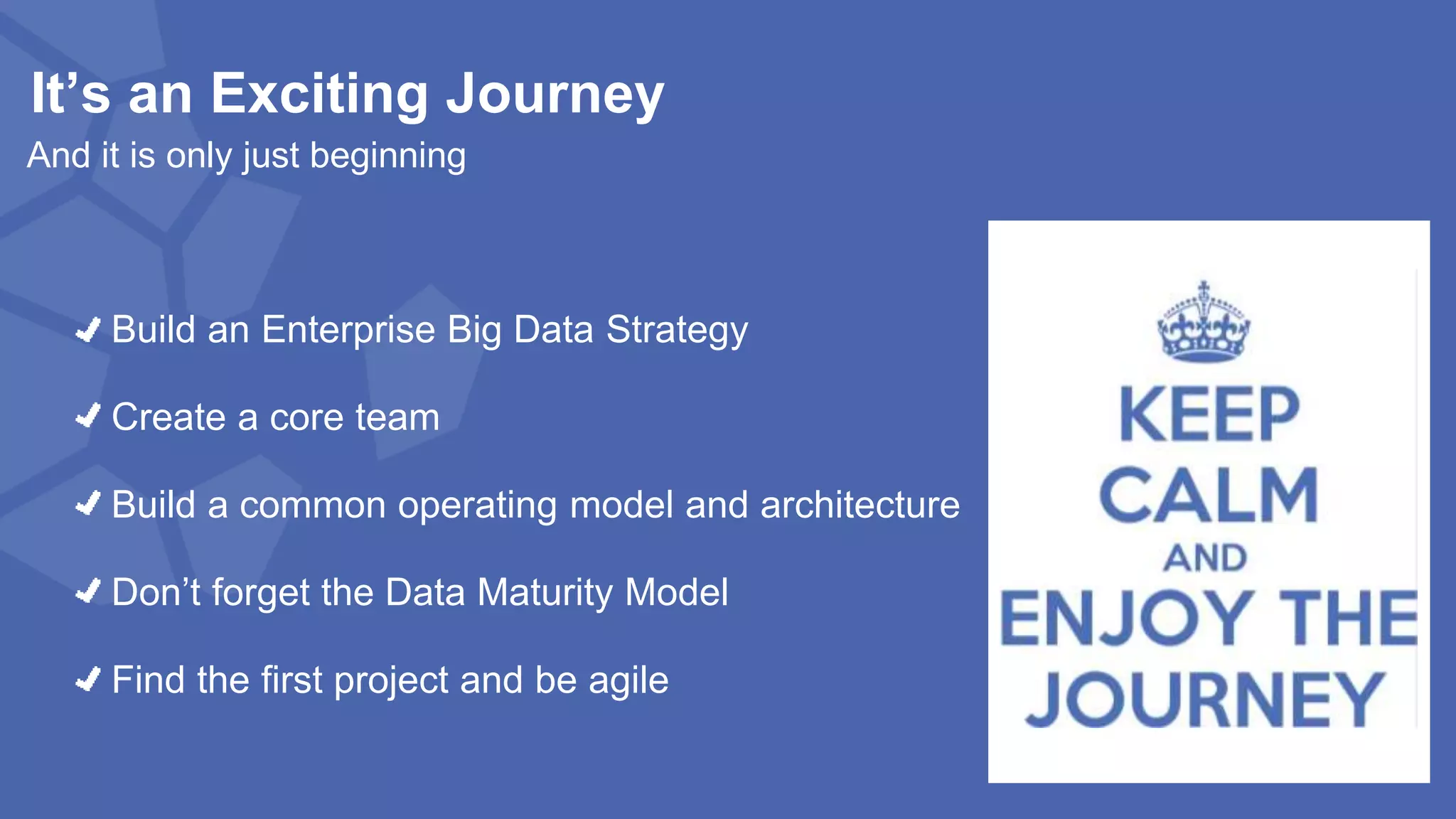
It’s an Exciting Journey
And it is only just beginning
Build an Enterprise Big Data Strategy
Create a core team
Build a common operating model and architecture
Don’t forget the Data Maturity Model
Find the first project and be agile
Thank you!Any questions?
Email the team at getintouch@fintricity.com
Fintricity. Innovative Thinking. Agile Delivery.

Be Digital or Die - Predictive Analytics for Digital Transformation

  • 1.
    Be Digital orDie by Alpesh Doshi, Fintricity
  • 2.
    A look atleveraging Big Data and Predictive Analytics for digital transformation Predictive Analytics & Innovation Summit 11th May 2016 London, UK By Alpesh Doshi, Fintricity
  • 3.
    What is DigitalTransformation? Digital Transformation is the application of disruptive technologies and business models to transform how the industry works. - Alpesh Doshi “ “
  • 4.
    Big data islike teenage sex: everyone talks about it, nobody really knows how to do it, everyone thinks everyone else is doing it, so everyone claims they are doing it. - Dan Ariely “ “ What is Big Data?
  • 5.
    From BI to Business Analytics Movingfrom looking at what happened in the past, to what could happen and optimisation the business outcomes CompetitiveAdvantage Sophistication of Intelligence Optimisation Predictive Modeling Forecasting/ extrapolation Statistical analysis Alerts Query/drill down Ad hoc reports Standard Reports “What’s the best that can happen?” “What will happen next?” “What if these trends continue?” “Why is this happening?” “What actions are needed?” “What exactly is the problem?” “How many, how often, where?” “What happened?” Predictive Analytics Analytics Definition Changing Client Questions Descriptive Analytics Now What? So What? What?
  • 6.
    Data come fromall parts of the enterprise and beyond. Tackling a 360 view of data is a significant task 360 View of Data CRM and registration data (email, channel, date) Mobile behaviour & mobile (e.g. engagement, app usage, scores, activations) Social behaviour (groups jointed, posts, topics, key words, social networks, activities) Ad data (clicks, cookies, ads shown, geo, device type, location, connection type) Q&A (keywords, FAQs, survey data, answers, support responses, response rates) Research data (attitudes, preferences, credit history, macro data) 3rd party data (geographic, demographic, credit , open data) Site behaviour and weblogs (cookies, source, customer journey, pages visited, session times, bounce, navigation) Customer registration (time location, UID, address, contact details) Customer Service data (speech, click to chat, text, response times, channel) Product (items owned/purchased, wish list, basket, frequency of purchase) Omni channel marketing response (e.g. opt-in contact history, response/open rates) Enterprise Data Landscape
  • 7.
    Time Value of DataThevalue of data changes through its lifecycle, which must then be managed through the lifecycle and available for appropriate use Data Age Data Value Value of an Individual Data Item Value of Data In Aggregate Interactive Real time Analytics Record Lookup Historical Analytics Exploratory Analytics
  • 8.
    DATA ANALYTICS VISUALISATION A Layered Approach Asimplified layered approach to understand how enterprises could leverage data and analytics Structured Semi-structured Unstructured Basic Analytics (formula based analysis) Deep Analytics (transforming / learning) Predictive Analytics (simulation / optimisation) SECURITY Reporting Dashboards API or Services GOVERNANCE INTEGRATION INFRASTRUCTUR E
  • 9.
    Building the Dataoperating Model Getting the data operating model right is crucial to manage data within
  • 10.
    Data Management Maturity Theboring stuff (or exciting, depending on your point of view) is the make sure all aspects of the operating model for data are covered and implemented
  • 11.
    Capability Map /Data Management Maturity Data Integration Data Management & Storage Data Delivery & Analysis Data Sourcing Data Federation Data Movement & Transformation Batch Integration (ETL, SP’s etc.) Data Replication Messaging (EAI/SOA) Data Survivorship FTP Event Management Scheduling/ Workflow Data Virtualization Data Abstraction Data Localization Mapping Data Caching Semantic Reconciliation Harmonization/S ynchronization Orchestration Transformation Business Rules Data Quality Rules Data Architecture Storage Management Data Classification Metadata Management Dimensional Data Hierarchy Management Data & Information Modeling Version Management Data Staging Operational Data Stores Data Warehousing Data Partitioning Transaction Management Unstructured Data Mgmt Structured Data Mgmt Data Validation Reporting & Base Analytics Advanced Analytics Performance Management Dashboards Reporting Drill Down/Time Series Analysis Ad-Hoc Query Mobile BI & Analytics Advanced Visualizations Data Mining Predictive Analytics Real Time Analytics Location Intelligence Balanced Scorecards Profitability Analysis “What-if” Analysis Budgeting & Forecasting Financial Consolidation CoreCapabilities Data Governance Data & Information Security Operations Organization Structure Processes & Standards Roles & Resp. Policies & Procedures Access Control Risk Management Security Policy Standards & Controls Monitoring & Governance Authentication/ Authorization Role Based Access Mgmt Identity Management Risk Assessment Regulatory & Compliance Capacity Planning Support Execution & Management Infrastructure Skills & Resources Benchmarking Technical Services Backup & Archive Error Handling & Recovery Monitoring & Tuning Auditing SLA Management Data Center Security Organization Domains Levels & Hierarchies Centralization/ Decentralization Data & Metadata standards Escalation DQ Thresholds Data Ownership Data Stewardship Process Ownership SupportingCapabilities Data Extraction Internal/External Sourcing Data Profiling Data Currency Management Data Compression Data Conversion Master Data Management Disaster Recovery Cloud based BICapacity Management Capability fully enabled Capability partially enabled or not fully mature yet Capability gap Not assessed or need more info Not applicable
  • 12.
    Data Quality Process Gettingyour data quality processes right is an ingredient in getting the data operating model right 1 Define Business Need and Approach 2 Analyse Information Environment 3 Assess Data Quality 4 Assess Business Impact 5 Identify Root Causes 6 Develop Improvement Plans 7 Prevent Future Data Errors 8 Correct Current Data Errors 9 Implement Controls 10 Communicate Actions and Results
  • 13.
    Data Management Maturity Theboring stuff (or exciting, depending on your point of view) is the make sure all aspects of the operating model for data are covered and implemented Performed Managed Defined Measured OptimisedLevel Processes are performed ad hoc, primarily at the project level. There are no processes areas applied across business areas. Process discipline is primarily reactive; for example, data quality, the emphasis is on data repair. Foundational improvements may exist, but improvements are not yet extended within the organisation or maintained. Processes are planned and executed in accordance with policy; employ skilled people having adequate resources to produce controlled outputs; involve relevant stakeholders; are monitored, controlled, and reviewed; and are evaluated for adherence to it’s process description. Sets of standard processes have been established and improved over time, providing a predictable measure of consistency. Processes to meet specific needs are tailored from the set of standard processes according to the organisation’s guidelines. Managed and measured process metrics have been established. There are formal processes for managing variances. Quality and process performance is understood in statistical terms and is managed across the life of the process. Process performance is continually improved through both incremental and innovative improvements. Feedback is used to drive process enhancements and business growth. Best practices are shared with peers and industry. Data is managed as a requirement for the implementation of projects Description Perspective There is awareness of the importance of managing data as a critical infrastructure asset. Data is treated at the organisational level as critical for successful mission performance. Data is treated as a source of competitive advantage. Data is seen as critical for survival in a dynamic and competitive market.
  • 14.
    Data Science –Our services connect Data and Tech • Data Science is the extraction of actionable knowledge directly from data through a process of discovery, hypothesis, and analytical hypothesis analysis. • A Data Scientist is a practitioner who has sufficient knowledge of the overlapping regimes of expertise in business needs, domain knowledge, analytical skills and programming expertise to manage the end-to-end scientific method process through each stage in the big data lifecycle. Domain expertise as well as modelling and software development expertise Combine data science needs with a mix of skills
  • 15.
    It’s an ExcitingJourney And it is only just beginning Build an Enterprise Big Data Strategy Create a core team Build a common operating model and architecture Don’t forget the Data Maturity Model Find the first project and be agile
  • 16.
    Thank you!Any questions? Emailthe team at getintouch@fintricity.com Fintricity. Innovative Thinking. Agile Delivery.