Bayesian Methods in Adaptive Clinical Trial Designs
Scientific Basis, Real-Time Data Use, and Applications in Oncology & Rare Diseases
• Presenter: Sumanthmayur M R
• Affiliation: Lovely Professional University
• Key Themes: Bayesian statistics, adaptive trials,
oncology, rare diseases
Introduction to Adaptive Clinical Trials
• Dynamic Trial Design: Allows pre-planned
modifications during trial execution based on
accumulating data
• Enhanced Efficiency: Improves resource use,
shortens timelines, and maintains ethical
standards
• Bayesian Role: Enables real-time updates and
informed decisions through probabilistic
modeling
• Special Use Cases: Highly suitable for oncology
and rare diseases with limited patient
populations
Core Concepts of Bayesian Statistics
• Bayesian Philosophy: Merges prior knowledge
with new evidence to form updated beliefs
• Probabilistic Modeling: Represents uncertainty
through probability distributions
• Posterior Calculation: Posterior = Prior ×
Likelihood from data
• Real-Time Adaptation: Dynamically updates
trial variables like treatment allocation and
sample size
Scientific Basis for Adaptive Randomization
• Responsive Allocation: Adjusts patient
assignment ratios using interim analysis results
• Bayesian Framework: Leverages posterior
probabilities to favor superior treatments
• Statistical Efficiency: Boosts power while
reducing required sample sizes
• Model Examples: Employs Bayesian hierarchical
models and Thompson sampling
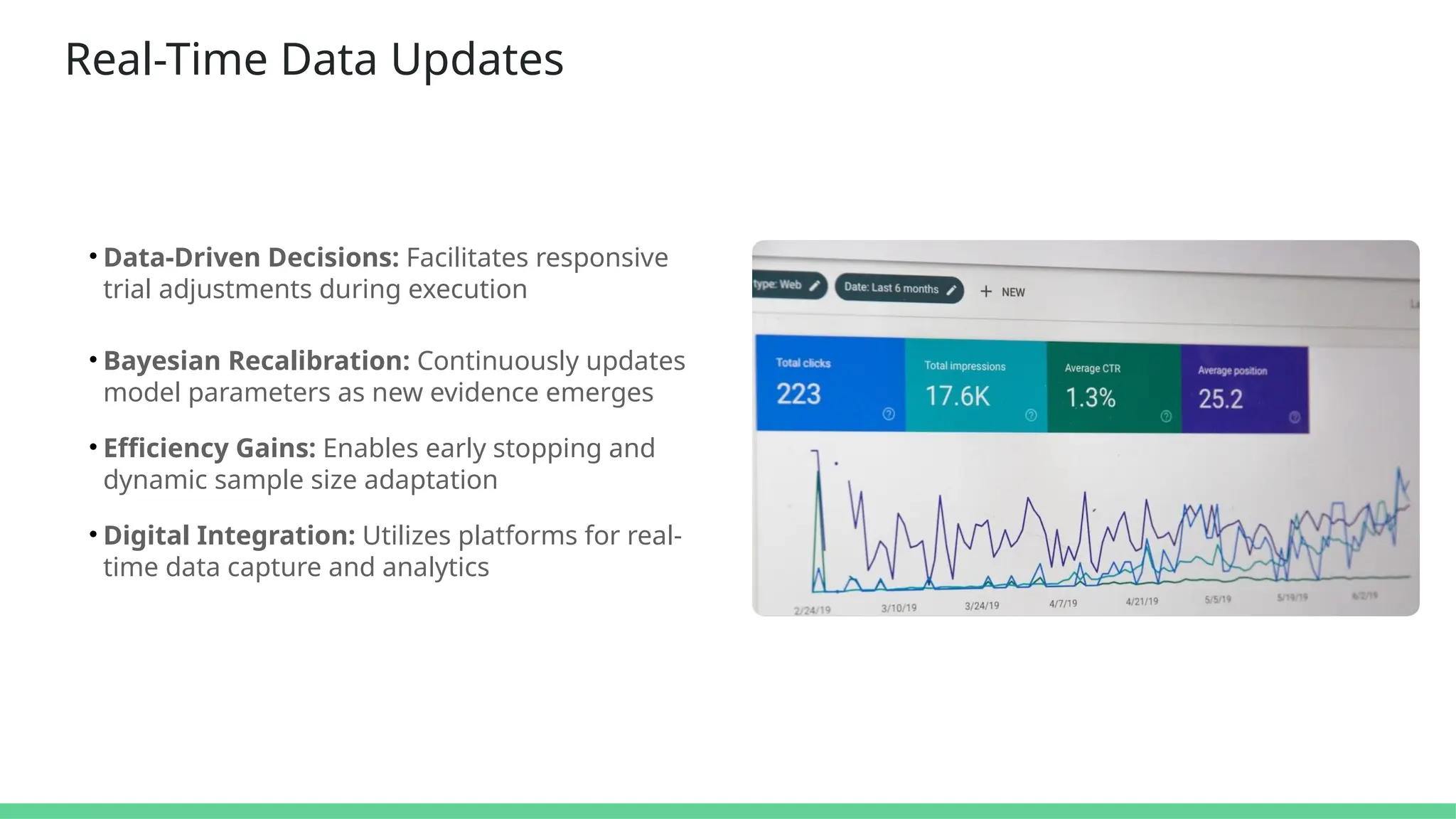
Real-Time Data Updates
• Data-Driven Decisions: Facilitates responsive
trial adjustments during execution
• Bayesian Recalibration: Continuously updates
model parameters as new evidence emerges
• Efficiency Gains: Enables early stopping and
dynamic sample size adaptation
• Digital Integration: Utilizes platforms for real-
time data capture and analytics
Bayesian Dose-Finding Designs
Early-Phase Focus
Primarily used in Phase I/II oncology trials to assess
dosing safety and efficacy
Model-Based Methods
CRM and BOIN models guide dose escalation or de-
escalation
Bayesian Logic
Posterior probabilities inform decisions on dose
tolerability
Patient Safety
Minimizes exposure to toxic or ineffective doses
Case Study – Oncology: I-SPY 2 Trial
Platform Trial Design
Utilizes a Bayesian adaptive model for breast cancer
therapies
Biomarker Integration
Assigns treatments based on molecular profiles and
interim outcomes
Learning System
Continuously updates regimen efficacy using real-
time data
Accelerated Development
Speeds up discovery and approval by prioritizing
promising candidates
Case Study – Rare Diseases: MLD Trial
• Low Patient Numbers: Adaptive design
addresses scarcity of subjects in rare disease
trials
• External Data Use: Bayesian models integrate
historical and real-world evidence
• Flexible Endpoints: Trial adjusted recruitment
and outcomes in real-time
• Regulatory Success: Enabled early approval
and improved patient access
Challenges and Considerations
Model Complexity
Requires expert statistical knowledge for accurate
implementation
Regulatory Barriers
Demand for transparency and pre-specified protocols
Computational Load
Real-time analysis imposes high software and
hardware demands
Ethical Sensitivity
Dynamic allocation raises concerns around patient
fairness
Conclusion and Future Outlook
• Methodological Shift: Bayesian designs are
reshaping clinical trial standards
• Enhanced Capabilities: Greater flexibility,
ethics, and statistical power
• Regulatory Embrace: Gaining acceptance from
global agencies like FDA and EMA
• Emerging Directions: Integration with AI, real-
world data, and decentralized frameworks

Bayesian Methods in Adaptive Clinical Trial Designs

  • 1.
    Bayesian Methods inAdaptive Clinical Trial Designs Scientific Basis, Real-Time Data Use, and Applications in Oncology & Rare Diseases • Presenter: Sumanthmayur M R • Affiliation: Lovely Professional University • Key Themes: Bayesian statistics, adaptive trials, oncology, rare diseases
  • 2.
    Introduction to AdaptiveClinical Trials • Dynamic Trial Design: Allows pre-planned modifications during trial execution based on accumulating data • Enhanced Efficiency: Improves resource use, shortens timelines, and maintains ethical standards • Bayesian Role: Enables real-time updates and informed decisions through probabilistic modeling • Special Use Cases: Highly suitable for oncology and rare diseases with limited patient populations
  • 3.
    Core Concepts ofBayesian Statistics • Bayesian Philosophy: Merges prior knowledge with new evidence to form updated beliefs • Probabilistic Modeling: Represents uncertainty through probability distributions • Posterior Calculation: Posterior = Prior × Likelihood from data • Real-Time Adaptation: Dynamically updates trial variables like treatment allocation and sample size
  • 4.
    Scientific Basis forAdaptive Randomization • Responsive Allocation: Adjusts patient assignment ratios using interim analysis results • Bayesian Framework: Leverages posterior probabilities to favor superior treatments • Statistical Efficiency: Boosts power while reducing required sample sizes • Model Examples: Employs Bayesian hierarchical models and Thompson sampling
  • 5.
    Real-Time Data Updates •Data-Driven Decisions: Facilitates responsive trial adjustments during execution • Bayesian Recalibration: Continuously updates model parameters as new evidence emerges • Efficiency Gains: Enables early stopping and dynamic sample size adaptation • Digital Integration: Utilizes platforms for real- time data capture and analytics
  • 6.
    Bayesian Dose-Finding Designs Early-PhaseFocus Primarily used in Phase I/II oncology trials to assess dosing safety and efficacy Model-Based Methods CRM and BOIN models guide dose escalation or de- escalation Bayesian Logic Posterior probabilities inform decisions on dose tolerability Patient Safety Minimizes exposure to toxic or ineffective doses
  • 7.
    Case Study –Oncology: I-SPY 2 Trial Platform Trial Design Utilizes a Bayesian adaptive model for breast cancer therapies Biomarker Integration Assigns treatments based on molecular profiles and interim outcomes Learning System Continuously updates regimen efficacy using real- time data Accelerated Development Speeds up discovery and approval by prioritizing promising candidates
  • 8.
    Case Study –Rare Diseases: MLD Trial • Low Patient Numbers: Adaptive design addresses scarcity of subjects in rare disease trials • External Data Use: Bayesian models integrate historical and real-world evidence • Flexible Endpoints: Trial adjusted recruitment and outcomes in real-time • Regulatory Success: Enabled early approval and improved patient access
  • 9.
    Challenges and Considerations ModelComplexity Requires expert statistical knowledge for accurate implementation Regulatory Barriers Demand for transparency and pre-specified protocols Computational Load Real-time analysis imposes high software and hardware demands Ethical Sensitivity Dynamic allocation raises concerns around patient fairness
  • 10.
    Conclusion and FutureOutlook • Methodological Shift: Bayesian designs are reshaping clinical trial standards • Enhanced Capabilities: Greater flexibility, ethics, and statistical power • Regulatory Embrace: Gaining acceptance from global agencies like FDA and EMA • Emerging Directions: Integration with AI, real- world data, and decentralized frameworks