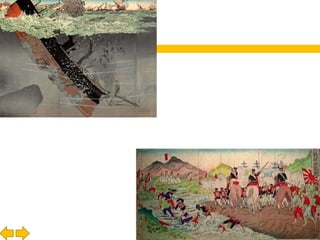
Early ConflictsThe sinking of the KowshingThe British-owned ship the Kowshing, transporting Chinese troops to Korea, was stopped on July 25th, 1894 by the Japanese ship Naniwa.The captain of the Kowshing agreed to the capture, but the Chinese on board eventually mutinied rather than be captured.The Naniwa opened fire and sunk the Kowshing.The battle of SeonghwanChinese took most of their forces to a location near Seonghwan, and fortified it heavilyJuly 29, the Japanese forces attack shortly after midnight to avoid being seenThe Chinese retreated at 5:30 AMCasualties (according to the Japanese): Chinese had 500 killed or wounded, Japanese had 82 killed or wounded.
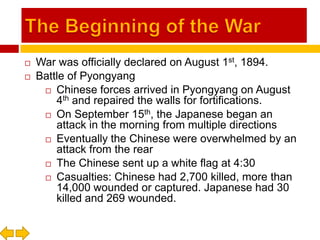
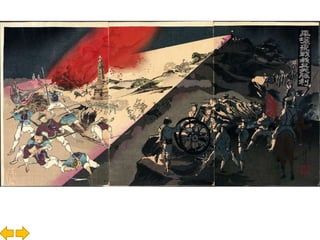
The Beginning of the WarWar was officially declared on August 1st, 1894.Battle of PyongyangChinese forces arrived in Pyongyang on August 4th and repaired the walls for fortifications.On September 15th, the Japanese began an attack in the morning from multiple directionsEventually the Chinese were overwhelmed by an attack from the rearThe Chinese sent up a white flag at 4:30Casualties: Chinese had 2,700 killed, more than 14,000 wounded or captured. Japanese had 30 killed and 269 wounded.
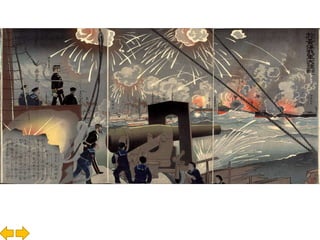
The Battle of the Yalu RiverThe Japanese fleet, which was trying to prevent Chinese troops from landing, had twelve ships, and the Chinese fleet had fourteen.The Japanese had the advantage because of experience, technology, and Chinese corruption.Chinese shells were discovered to be duds because the charge had been sold on the black market and replaced with sand or water.The Japanese sank five of the Chinese ships and severely damaged three more. The Chinese sank no Japanese ships and severely damaged four.The Chinese landing was successfully covered despite the heavy losses.Chinese forces retreated to their side of the Yalu river, and Japanese forces soon followed, moving the conflict into Manchuria
Port ArthurBattle of Lushunkou (Port Arthur)Chinese had retreated there after a series of minor battles in the Liaodong Peninsula.On November 21st, in the early morning.By the night of November 22nd, Chinese forces had abandoned their positions.Port Arthur MassacreAfter Lushunkou was captured, the Japanese reportedly stormed the city and massacred thousands of Chinese military men and civilians alike.Reports vary widelySome sources say it was prompted by the sight of the mutilated bodies of captured Japanese soldiers, while others say it had no prompting. Others even insist that it did not happen at all
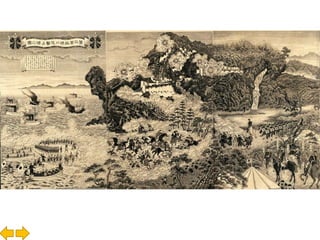
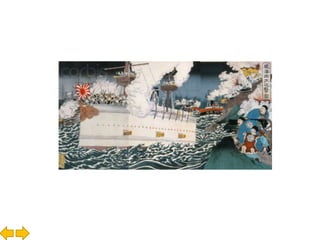
Battle of WeihaiweiLand battleThe Japanese army split in two and approached Weihai under fire.A nine-hour battle on February 1st, 1895 resulted in the Japanese capture of the town and its forts.Naval battleThe Chinese forces had 15 warships as the Weihaiwei naval base, and the Japanese had 25 warships and 16 torpedo boats.The Japanese fleet began to attack on February 7th, which ultimately resulted in the sinking of eleven Chinese vessels and the capture of seven more.On February 12th, the fleet was surrendered.Final large battle of the war
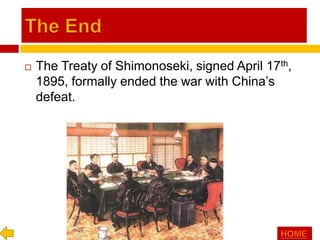
The EndThe Treaty of Shimonoseki, signed April 17th, 1895, formally ended the war with China’s defeat.HOME

Battles

  • 1.
    Early ConflictsThe sinkingof the KowshingThe British-owned ship the Kowshing, transporting Chinese troops to Korea, was stopped on July 25th, 1894 by the Japanese ship Naniwa.The captain of the Kowshing agreed to the capture, but the Chinese on board eventually mutinied rather than be captured.The Naniwa opened fire and sunk the Kowshing.The battle of SeonghwanChinese took most of their forces to a location near Seonghwan, and fortified it heavilyJuly 29, the Japanese forces attack shortly after midnight to avoid being seenThe Chinese retreated at 5:30 AMCasualties (according to the Japanese): Chinese had 500 killed or wounded, Japanese had 82 killed or wounded.
  • 3.
    The Beginning ofthe WarWar was officially declared on August 1st, 1894.Battle of PyongyangChinese forces arrived in Pyongyang on August 4th and repaired the walls for fortifications.On September 15th, the Japanese began an attack in the morning from multiple directionsEventually the Chinese were overwhelmed by an attack from the rearThe Chinese sent up a white flag at 4:30Casualties: Chinese had 2,700 killed, more than 14,000 wounded or captured. Japanese had 30 killed and 269 wounded.
  • 5.
    The Battle ofthe Yalu RiverThe Japanese fleet, which was trying to prevent Chinese troops from landing, had twelve ships, and the Chinese fleet had fourteen.The Japanese had the advantage because of experience, technology, and Chinese corruption.Chinese shells were discovered to be duds because the charge had been sold on the black market and replaced with sand or water.The Japanese sank five of the Chinese ships and severely damaged three more. The Chinese sank no Japanese ships and severely damaged four.The Chinese landing was successfully covered despite the heavy losses.Chinese forces retreated to their side of the Yalu river, and Japanese forces soon followed, moving the conflict into Manchuria
  • 7.
    Port ArthurBattle ofLushunkou (Port Arthur)Chinese had retreated there after a series of minor battles in the Liaodong Peninsula.On November 21st, in the early morning.By the night of November 22nd, Chinese forces had abandoned their positions.Port Arthur MassacreAfter Lushunkou was captured, the Japanese reportedly stormed the city and massacred thousands of Chinese military men and civilians alike.Reports vary widelySome sources say it was prompted by the sight of the mutilated bodies of captured Japanese soldiers, while others say it had no prompting. Others even insist that it did not happen at all
  • 9.
    Battle of WeihaiweiLandbattleThe Japanese army split in two and approached Weihai under fire.A nine-hour battle on February 1st, 1895 resulted in the Japanese capture of the town and its forts.Naval battleThe Chinese forces had 15 warships as the Weihaiwei naval base, and the Japanese had 25 warships and 16 torpedo boats.The Japanese fleet began to attack on February 7th, which ultimately resulted in the sinking of eleven Chinese vessels and the capture of seven more.On February 12th, the fleet was surrendered.Final large battle of the war
  • 11.
    The EndThe Treatyof Shimonoseki, signed April 17th, 1895, formally ended the war with China’s defeat.HOME