Mechanical Engineering
by
Dr Rajesh Kumar
Contents:
 What is Engineering
 Introduction of Mechanical Engineering
 Structure of Mechanical Engineering
 Basic Mechanical Engineering
 Thermodynamics
 Steam engine
“What is Engineering”
• An engineer is a person who uses scientific
knowledge to solve practical problem.
• Engineers create new things and make old
things better.
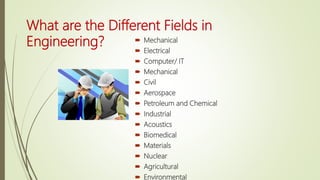
What are the Different Fields in
Engineering?  Mechanical
 Electrical
 Computer/ IT
 Mechanical
 Civil
 Aerospace
 Petroleum and Chemical
 Industrial
 Acoustics
 Biomedical
 Materials
 Nuclear
 Agricultural
 Environmental
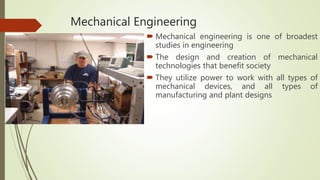
Mechanical Engineering
 Mechanical engineering is one of broadest
studies in engineering
 The design and creation of mechanical
technologies that benefit society
 They utilize power to work with all types of
mechanical devices, and all types of
manufacturing and plant designs
Foundations in Mechanical
Mathematics
Physics
Thermodynamics
and heat transfer
Materials science
Gears and systems
Fluid mechanics
Structural Analysis
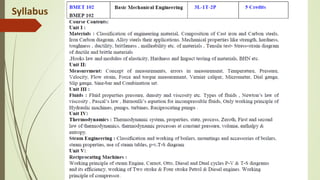
Basic Mechanical Engineering
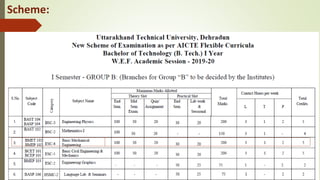
Scheme:
Syllabus
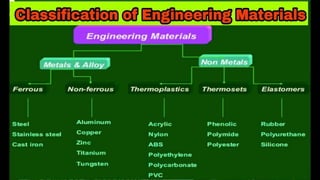
Classifications of materials:
1. Ferrous
2. Non Ferrous
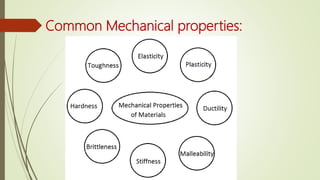
Common Mechanical properties:
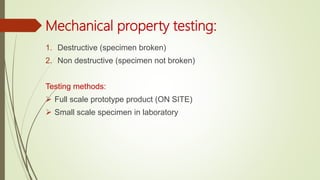
Mechanical property testing:
1. Destructive (specimen broken)
2. Non destructive (specimen not broken)
Testing methods:
 Full scale prototype product (ON SITE)
 Small scale specimen in laboratory
Most common tests:
 Tensile test
 Compression test
 Shear and bending test
 Torsion test
 Hardness test
 Impact test
 Fatigue test
 Creep test
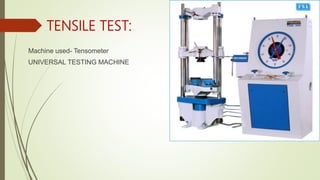
TENSILE TEST:
Machine used- Tensometer
UNIVERSAL TESTING MACHINE
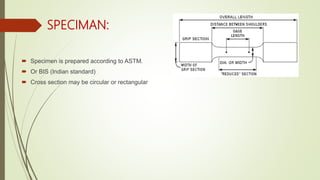
SPECIMAN:
 Specimen is prepared according to ASTM.
 Or BIS (Indian standard)
 Cross section may be circular or rectangular
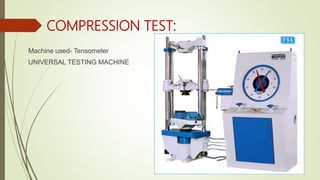
COMPRESSION TEST:
Machine used- Tensometer
UNIVERSAL TESTING MACHINE
SHEAT AND BENDING TEST (FLEXURE):
Machine used- Tensometer
UNIVERSAL TESTING MACHINE
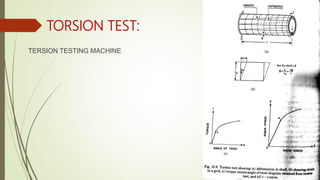
TORSION TEST:
TERSION TESTING MACHINE
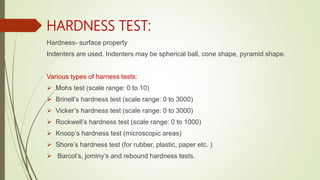
HARDNESS TEST:
Hardness- surface property
Indenters are used. Indenters may be spherical ball, cone shape, pyramid shape.
Various types of harness tests:
 Mohs test (scale range: 0 to 10)
 Brinell’s hardness test (scale range: 0 to 3000)
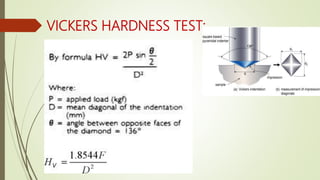
 Vicker’s hardness test (scale range: 0 to 3000)
 Rockwell’s hardness test (scale range: 0 to 1000)
 Knoop’s hardness test (microscopic areas)
 Shore’s hardness test (for rubber, plastic, paper etc. )
 Barcol’s, jominy’s and rebound hardness tests.
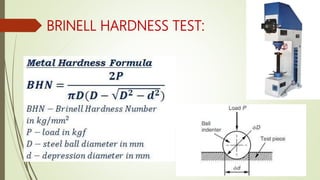
BRINELL HARDNESS TEST:
VICKERS HARDNESS TEST:
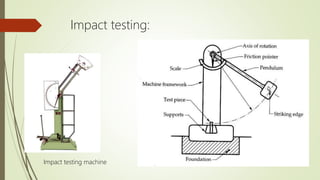
Impact testing:
Impact testing machine
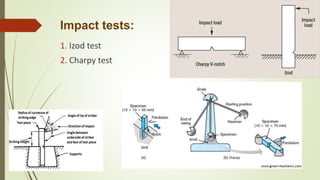
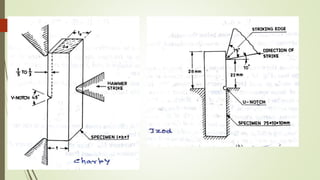
Impact tests:
1. Izod test
2. Charpy test
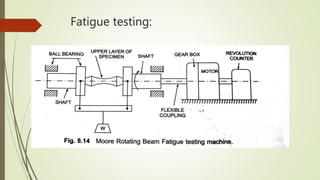
Fatigue testing:
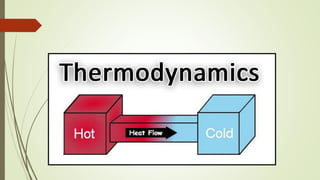
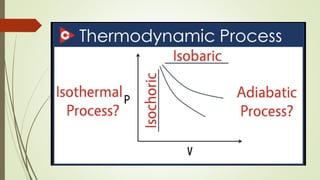
Thermodynamics:
Branch of science in which we study of conversion of heat in to work.
 Heat is low grade energy .
 Work is high grade energy.
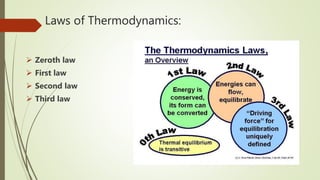
Laws of Thermodynamics:
 Zeroth law
 First law
 Second law
 Third law
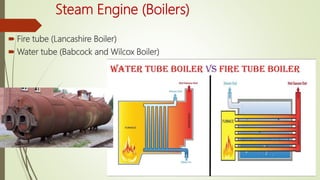
Steam Engine (Boilers)
 Fire tube (Lancashire Boiler)
 Water tube (Babcock and Wilcox Boiler)
Basics of Mechanical Engineering.pptx

Basics of Mechanical Engineering.pptx