Basics of Electricity
BY KRISHNENDU GHOSH
CURRENT ELECTRICITY
ELECTRIC CHARGE:
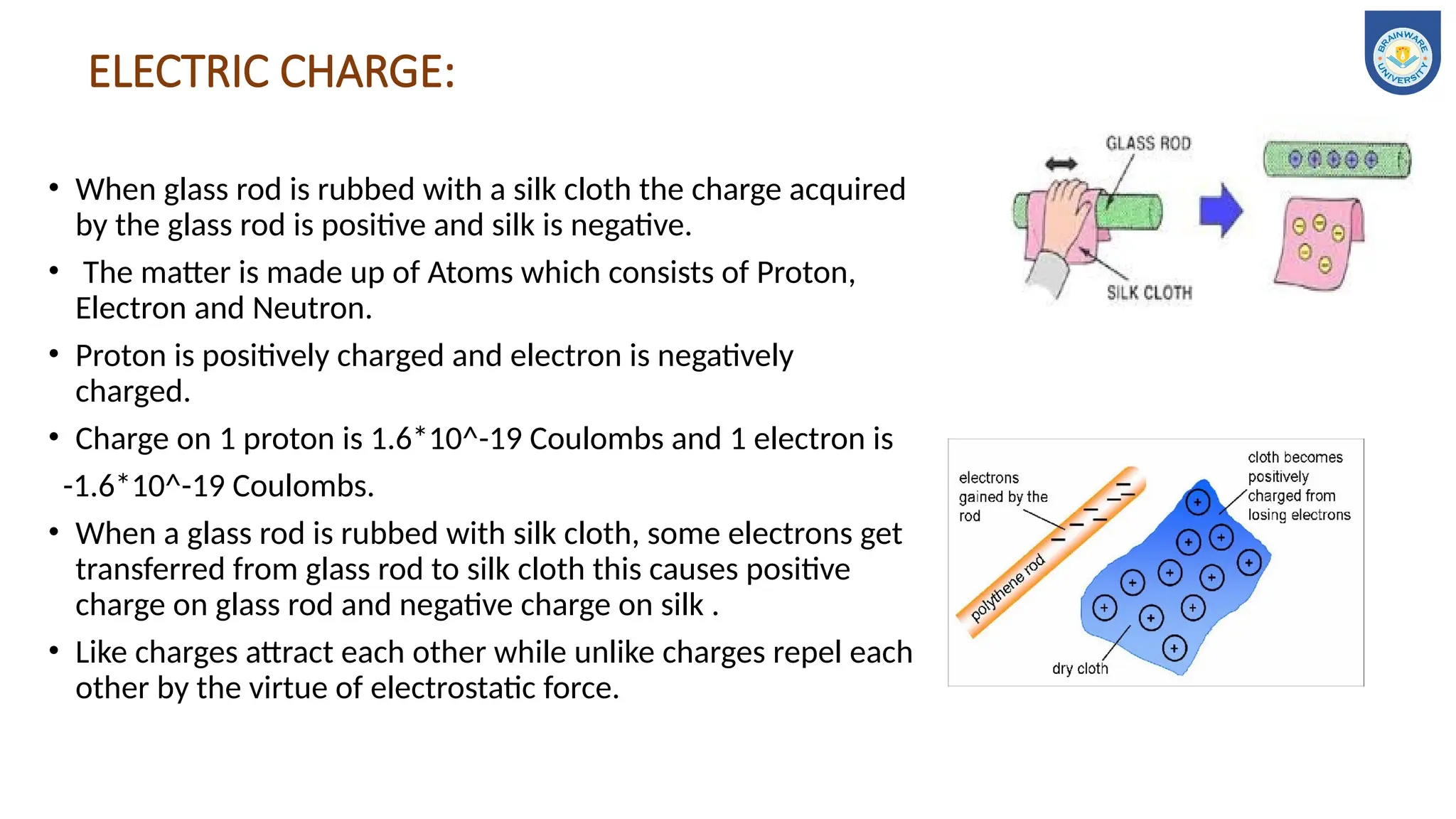
• When glass rod is rubbed with a silk cloth the charge acquired
by the glass rod is positive and silk is negative.
• The matter is made up of Atoms which consists of Proton,
Electron and Neutron.
• Proton is positively charged and electron is negatively
charged.
• Charge on 1 proton is 1.6*10^-19 Coulombs and 1 electron is
-1.6*10^-19 Coulombs.
• When a glass rod is rubbed with silk cloth, some electrons get
transferred from glass rod to silk cloth this causes positive
charge on glass rod and negative charge on silk .
• Like charges attract each other while unlike charges repel each
other by the virtue of electrostatic force.
POTENTIAL DIFFERENCE:
A B
q1
q2
q3
q4 q5
q6
q
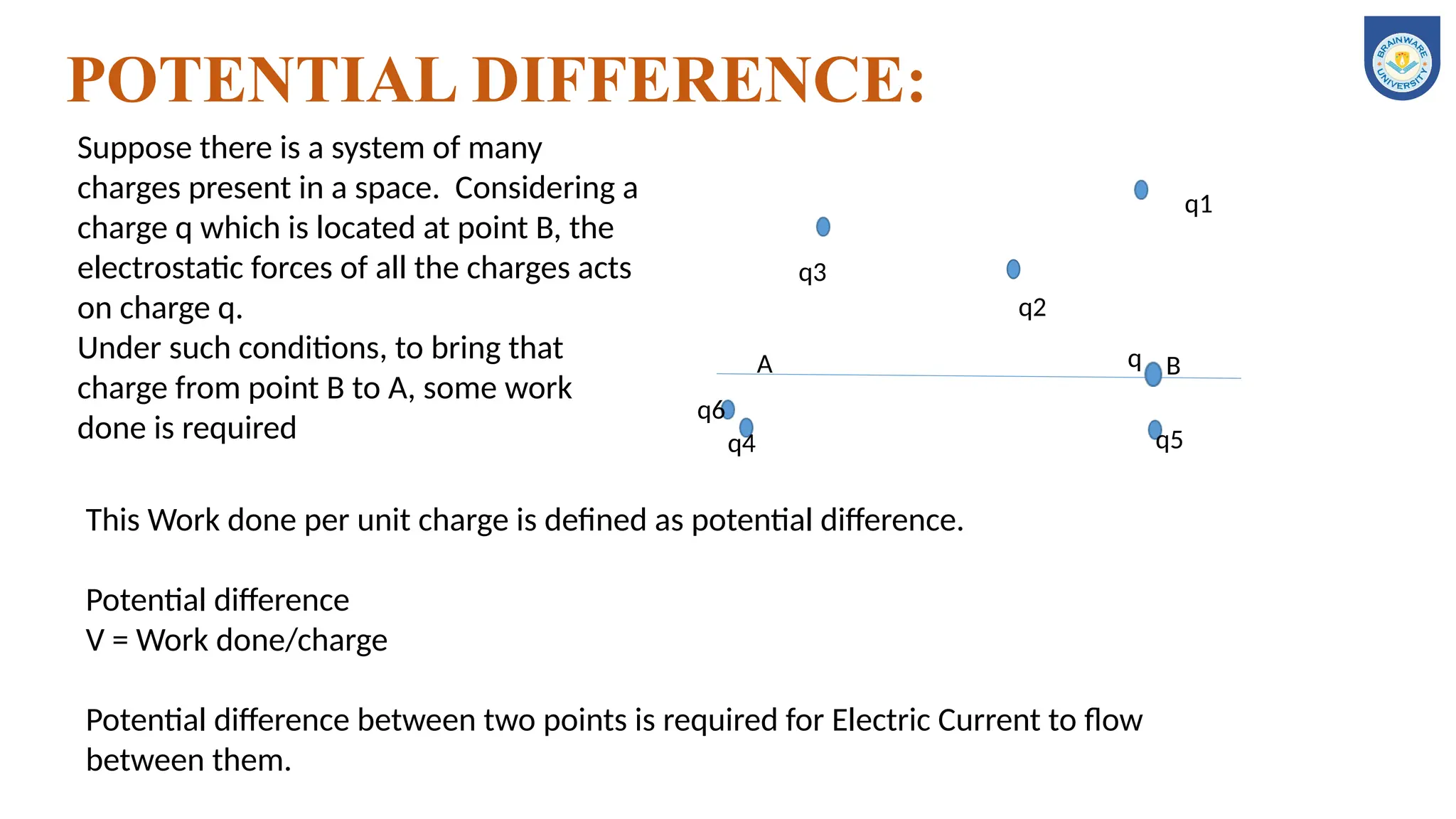
Suppose there is a system of many
charges present in a space. Considering a
charge q which is located at point B, the
electrostatic forces of all the charges acts
on charge q.
Under such conditions, to bring that
charge from point B to A, some work
done is required
This Work done per unit charge is defined as potential difference.
Potential difference
V = Work done/charge
Potential difference between two points is required for Electric Current to flow
between them.
FLOW OF CURRENT :
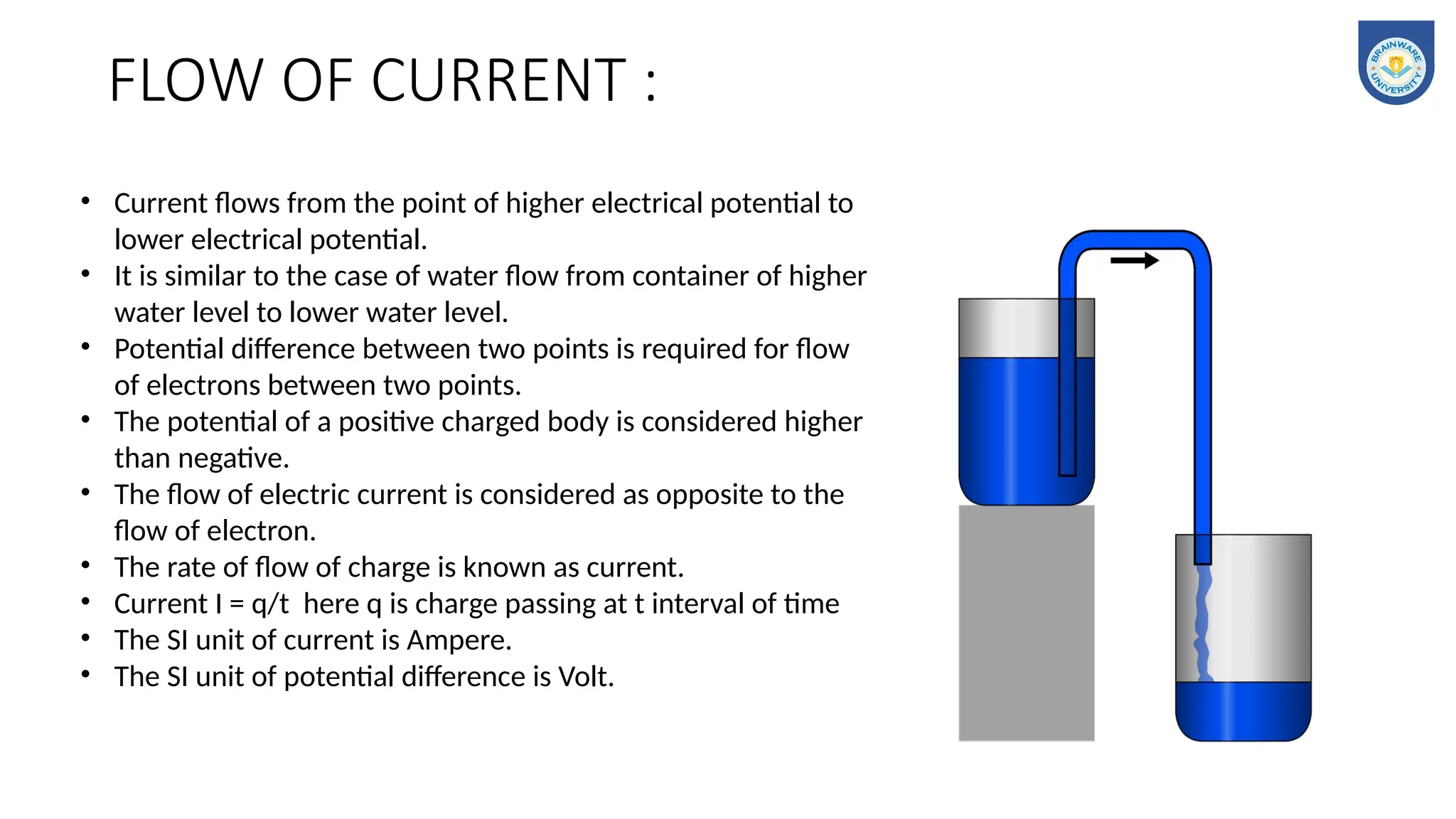
• Current flows from the point of higher electrical potential to
lower electrical potential.
• It is similar to the case of water flow from container of higher
water level to lower water level.
• Potential difference between two points is required for flow
of electrons between two points.
• The potential of a positive charged body is considered higher
than negative.
• The flow of electric current is considered as opposite to the
flow of electron.
• The rate of flow of charge is known as current.
• Current I = q/t here q is charge passing at t interval of time
• The SI unit of current is Ampere.
• The SI unit of potential difference is Volt.
Constant Potential Difference:
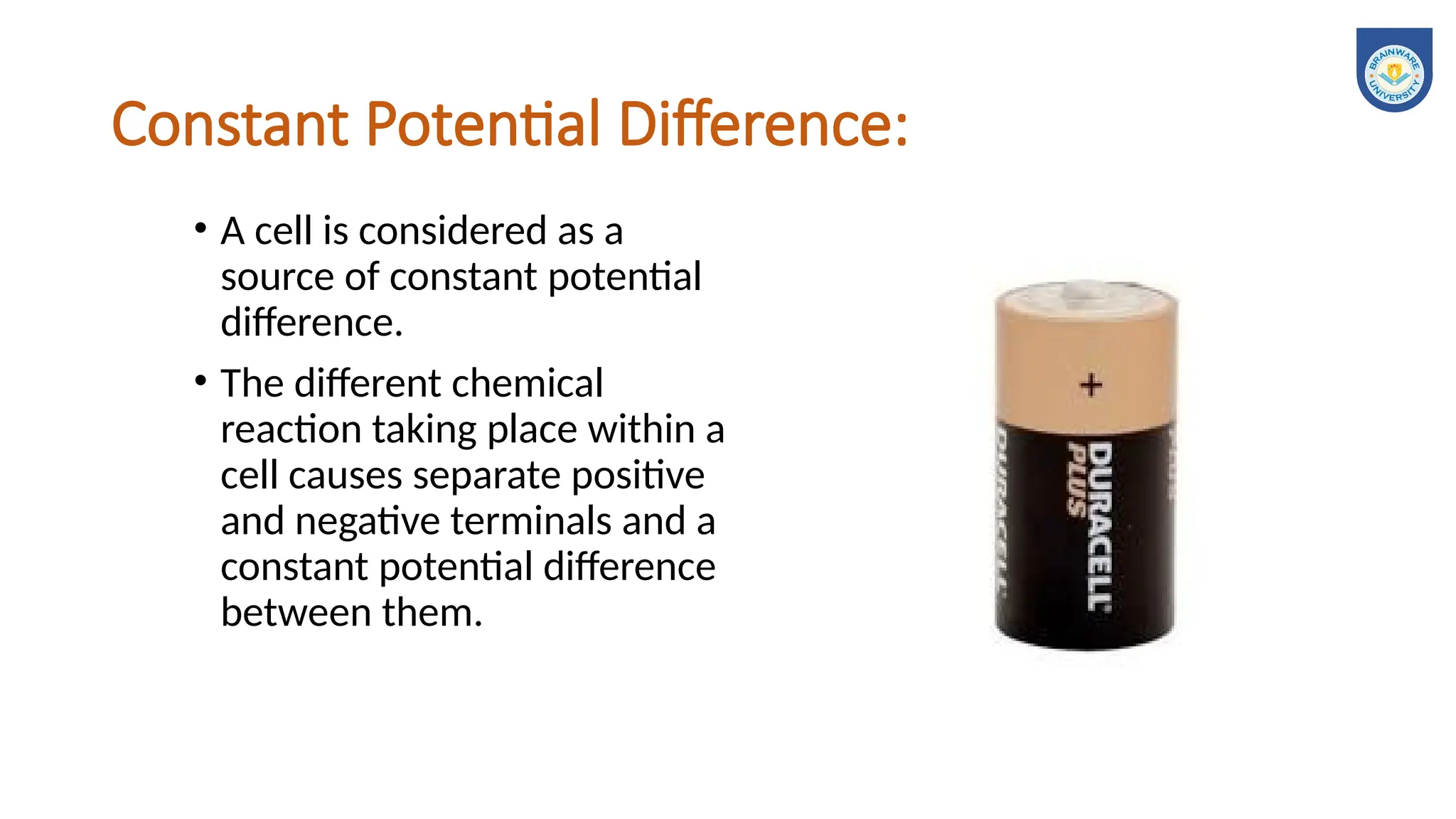
• A cell is considered as a
source of constant potential
difference.
• The different chemical
reaction taking place within a
cell causes separate positive
and negative terminals and a
constant potential difference
between them.
ELECTRICAL CIRCUIT :
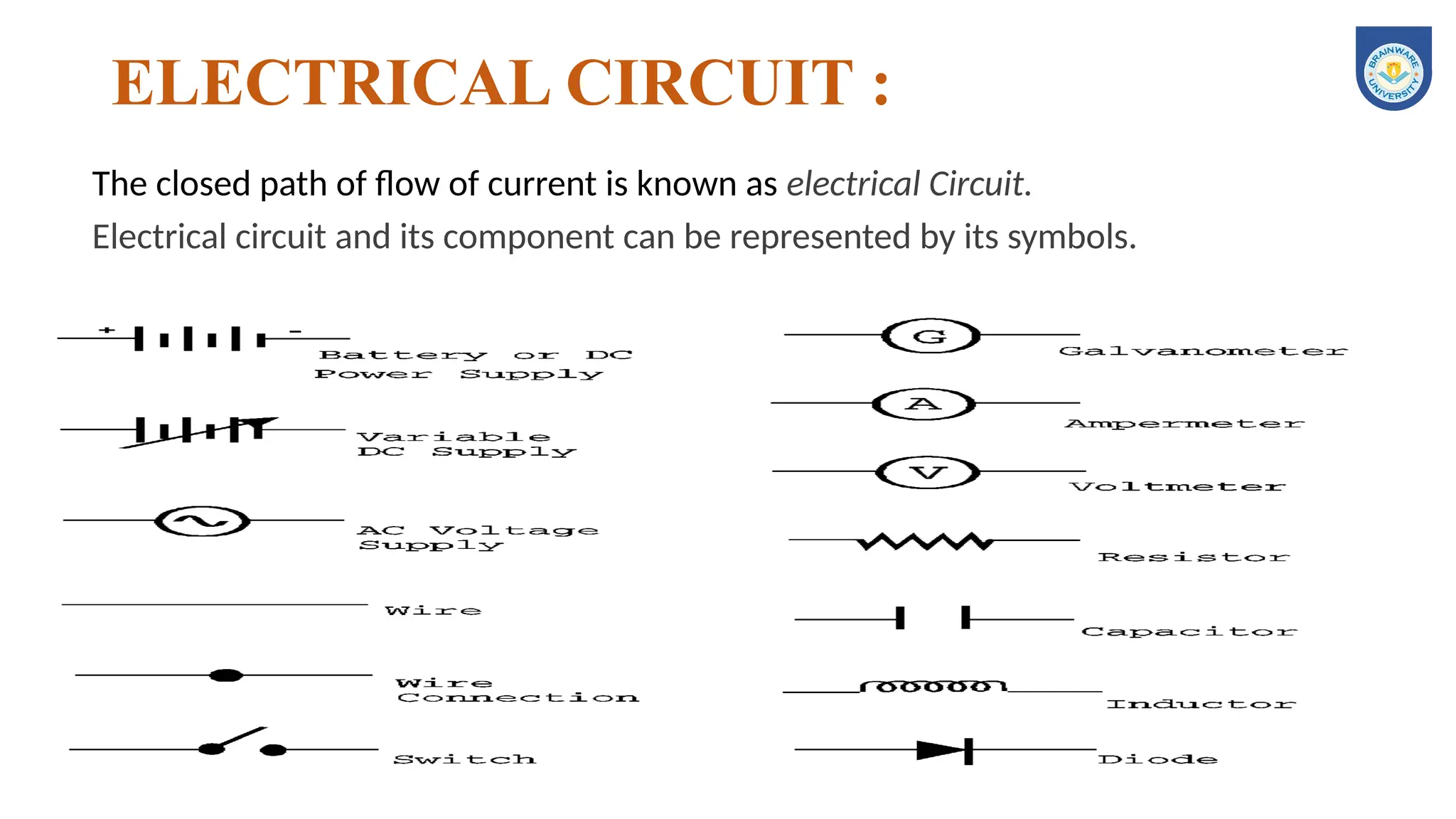
The closed path of flow of current is known as electrical Circuit.
Electrical circuit and its component can be represented by its symbols.
OHMS LAW:
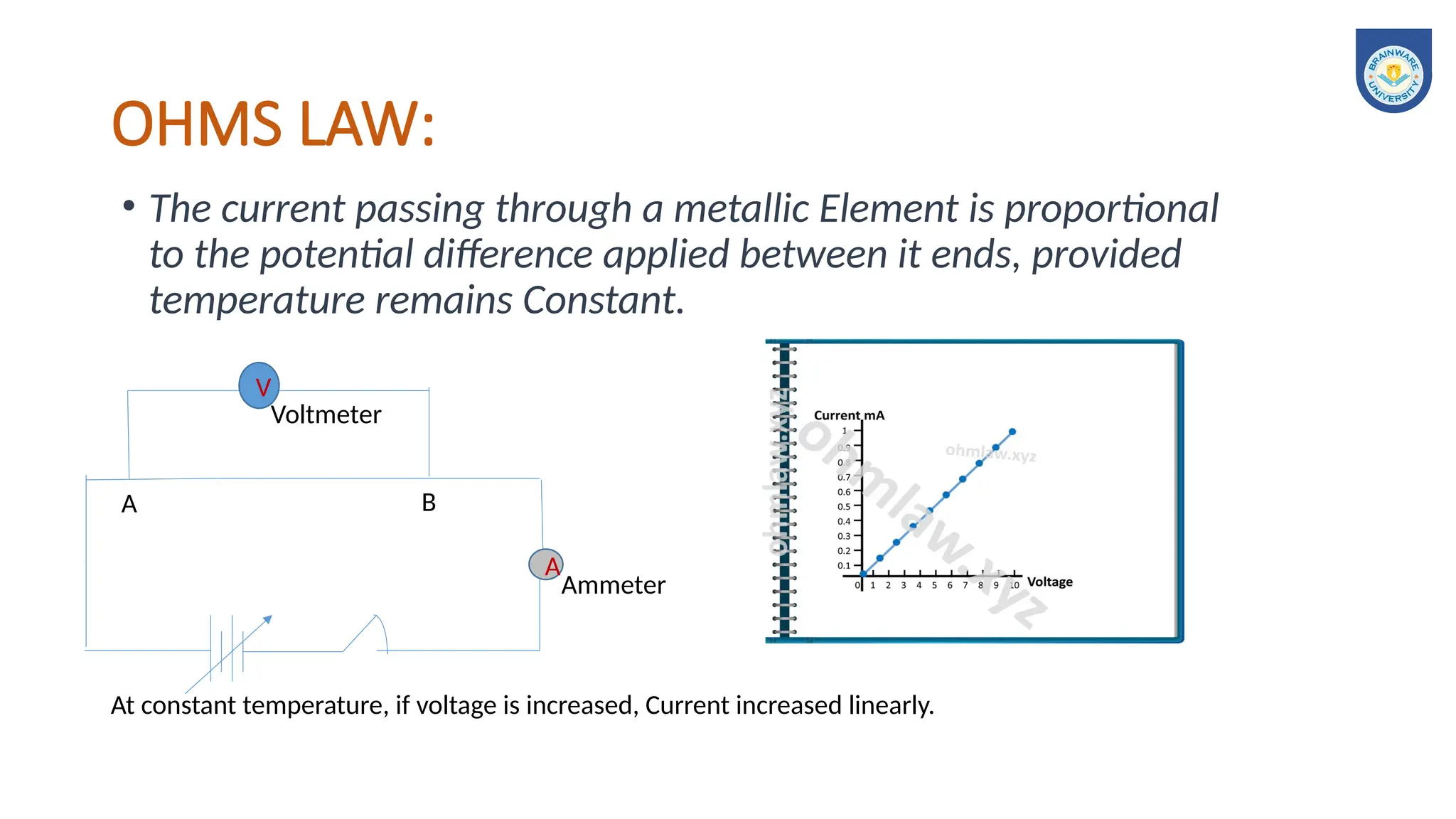
• The current passing through a metallic Element is proportional
to the potential difference applied between it ends, provided
temperature remains Constant.
A
V
Voltmeter
Ammeter
A B
At constant temperature, if voltage is increased, Current increased linearly.
RESISTANCE:
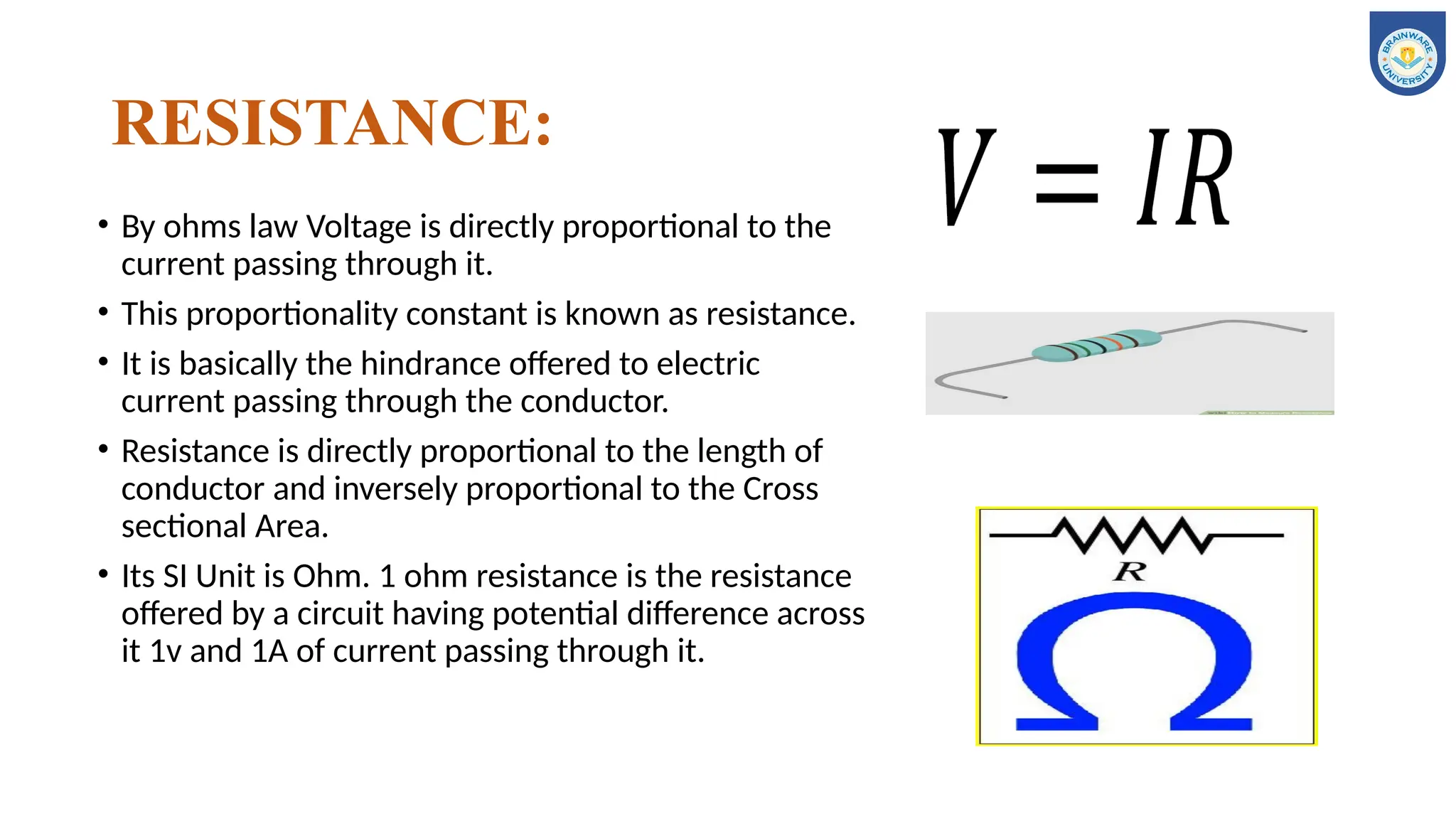
• By ohms law Voltage is directly proportional to the
current passing through it.
• This proportionality constant is known as resistance.
• It is basically the hindrance offered to electric
current passing through the conductor.
• Resistance is directly proportional to the length of
conductor and inversely proportional to the Cross
sectional Area.
• Its SI Unit is Ohm. 1 ohm resistance is the resistance
offered by a circuit having potential difference across
it 1v and 1A of current passing through it.
RESISTIVITY:
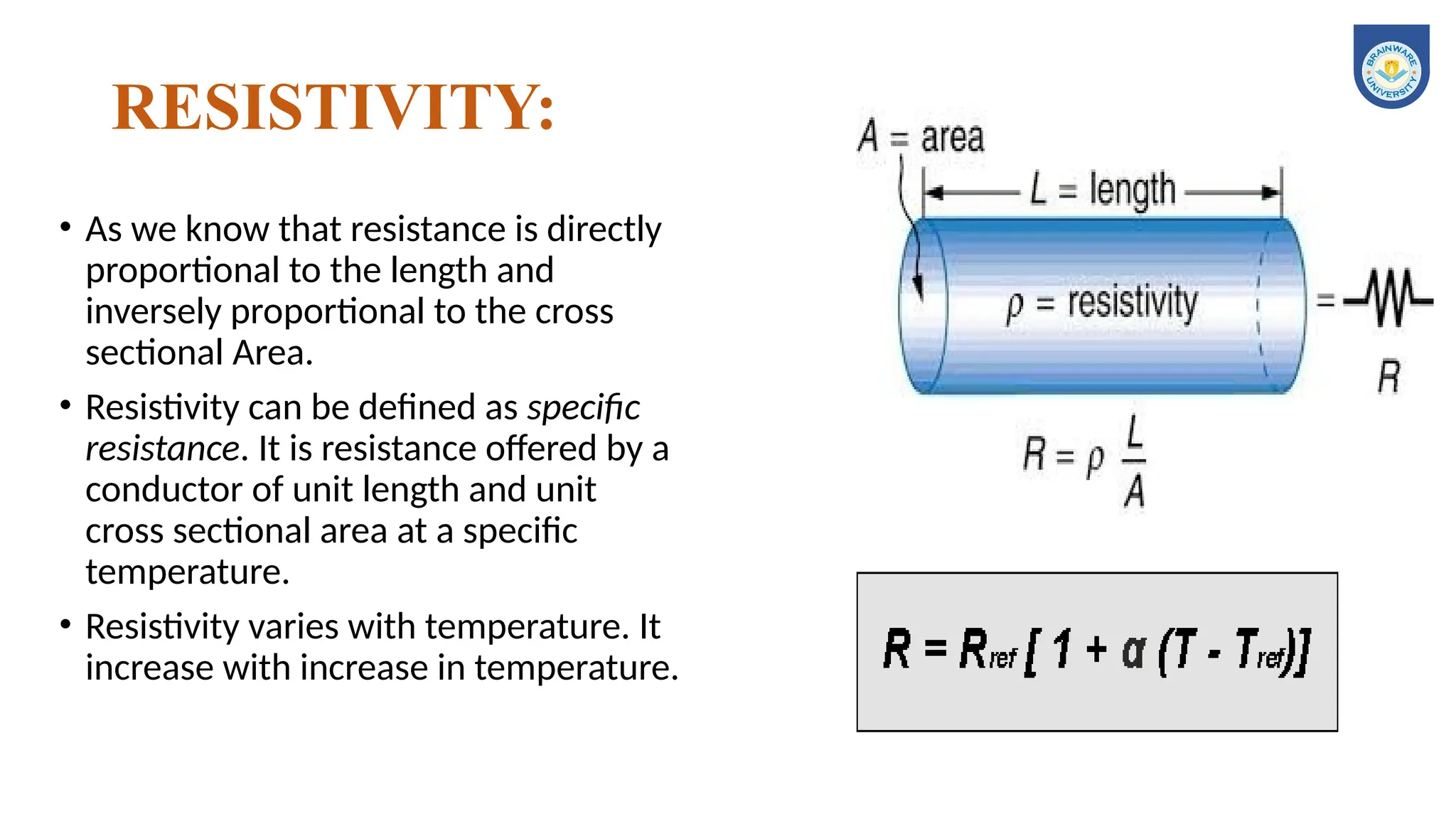
• As we know that resistance is directly
proportional to the length and
inversely proportional to the cross
sectional Area.
• Resistivity can be defined as specific
resistance. It is resistance offered by a
conductor of unit length and unit
cross sectional area at a specific
temperature.
• Resistivity varies with temperature. It
increase with increase in temperature.
Resistance in Series:
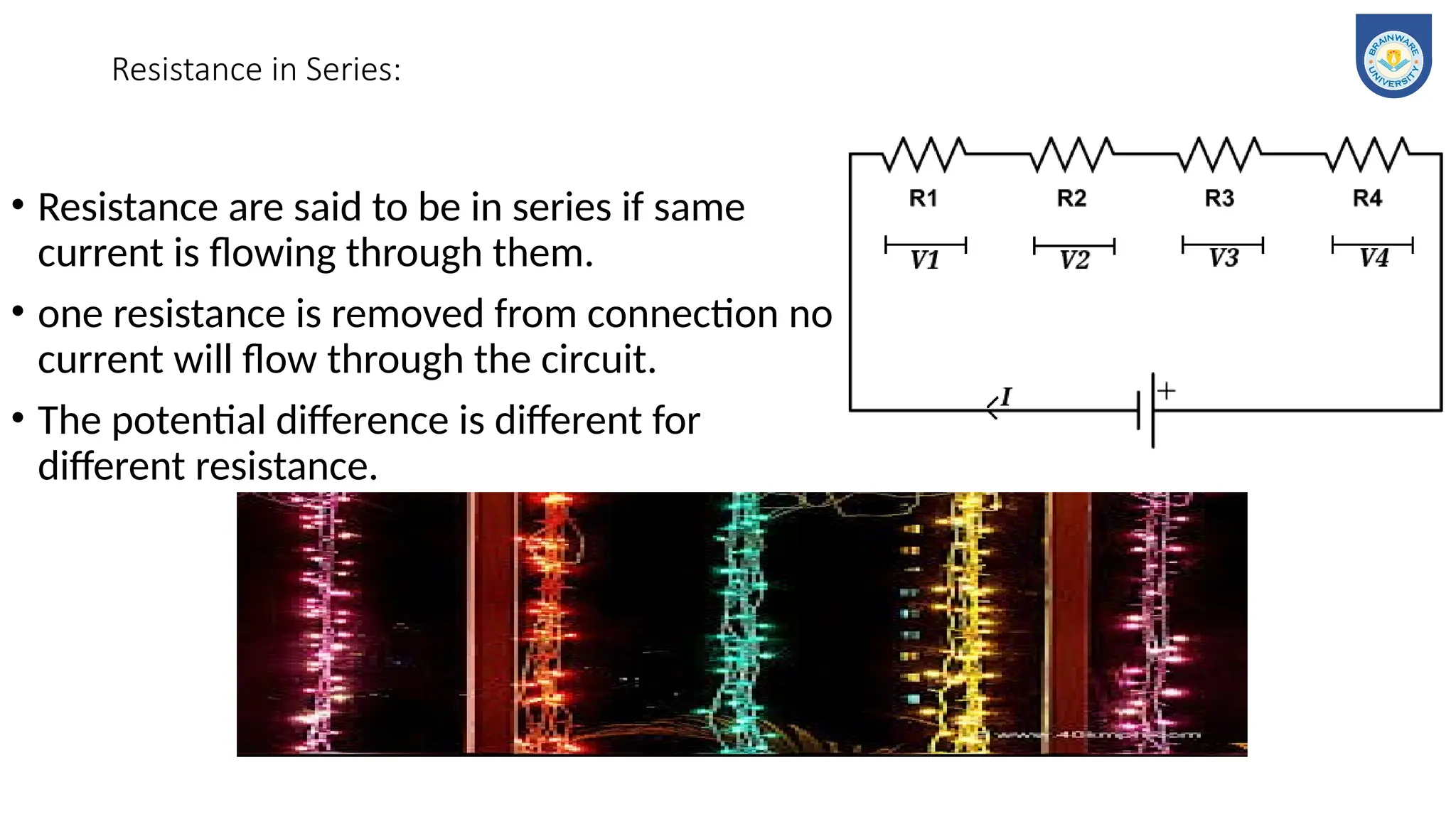
• Resistance are said to be in series if same
current is flowing through them.
• one resistance is removed from connection no
current will flow through the circuit.
• The potential difference is different for
different resistance.
Resistance in Parallel:
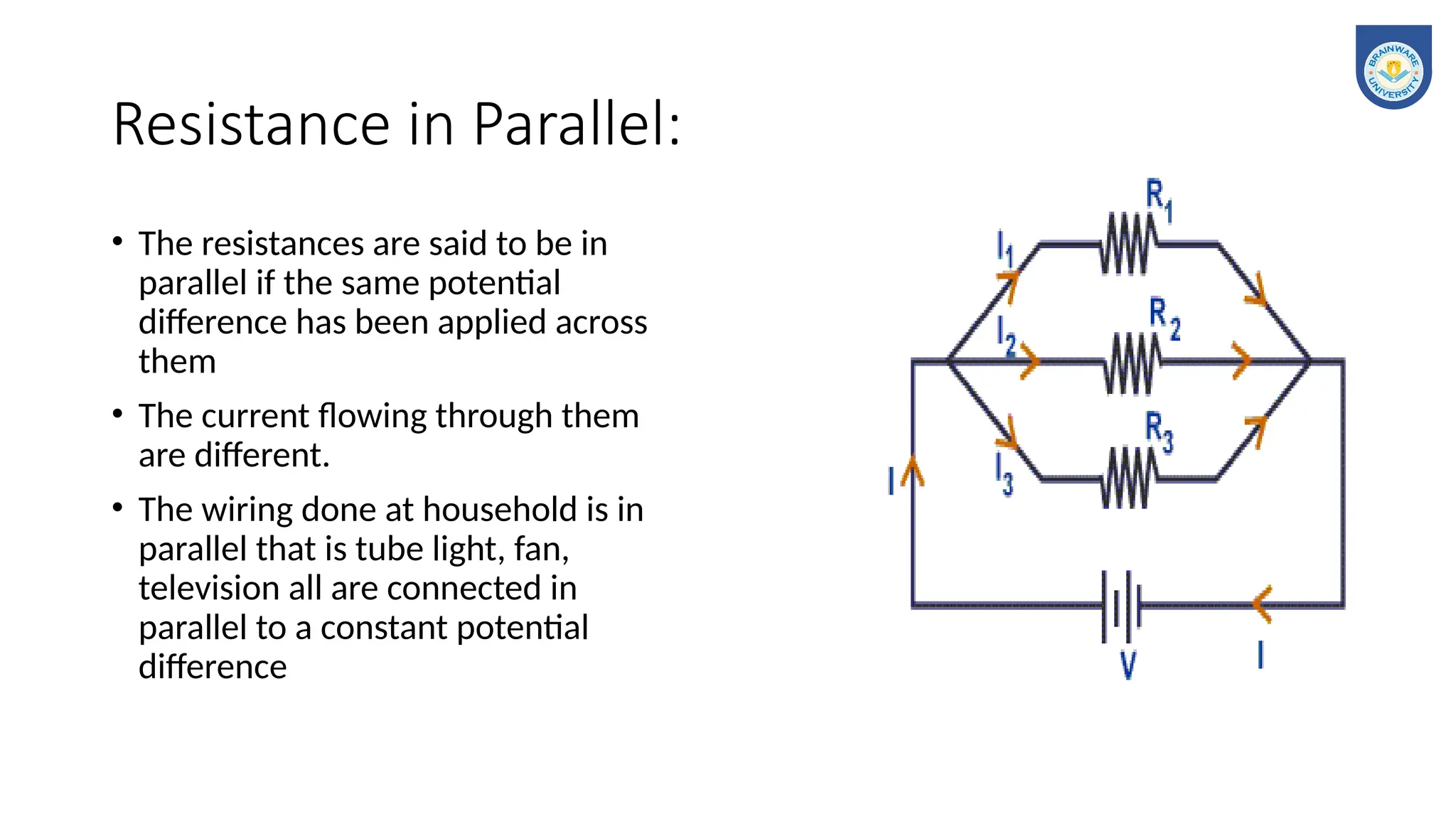
• The resistances are said to be in
parallel if the same potential
difference has been applied across
them
• The current flowing through them
are different.
• The wiring done at household is in
parallel that is tube light, fan,
television all are connected in
parallel to a constant potential
difference
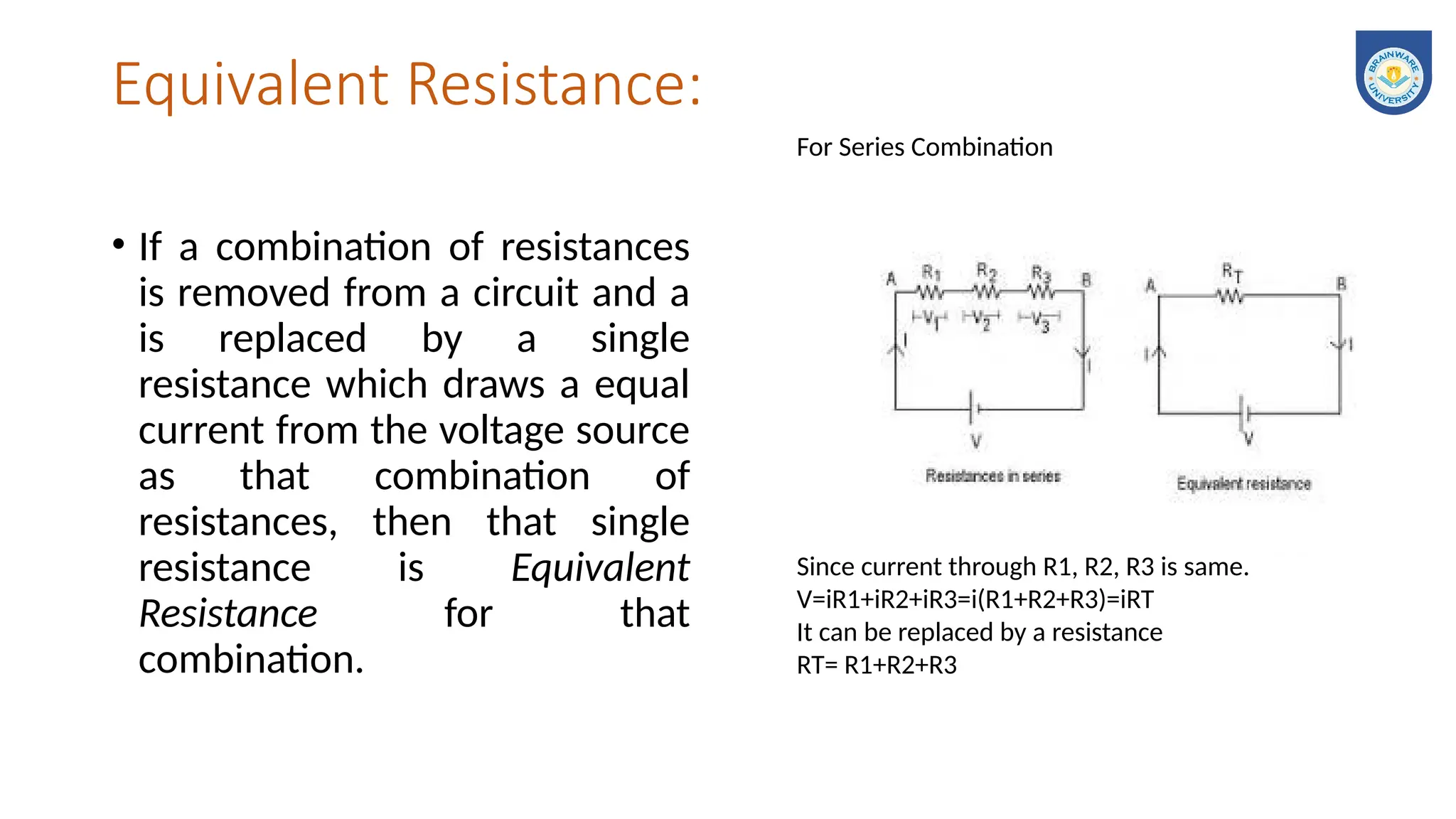
Equivalent Resistance:
• If a combination of resistances
is removed from a circuit and a
is replaced by a single
resistance which draws a equal
current from the voltage source
as that combination of
resistances, then that single
resistance is Equivalent
Resistance for that
combination.
For Series Combination
Since current through R1, R2, R3 is same.
V=iR1+iR2+iR3=i(R1+R2+R3)=iRT
It can be replaced by a resistance
RT= R1+R2+R3
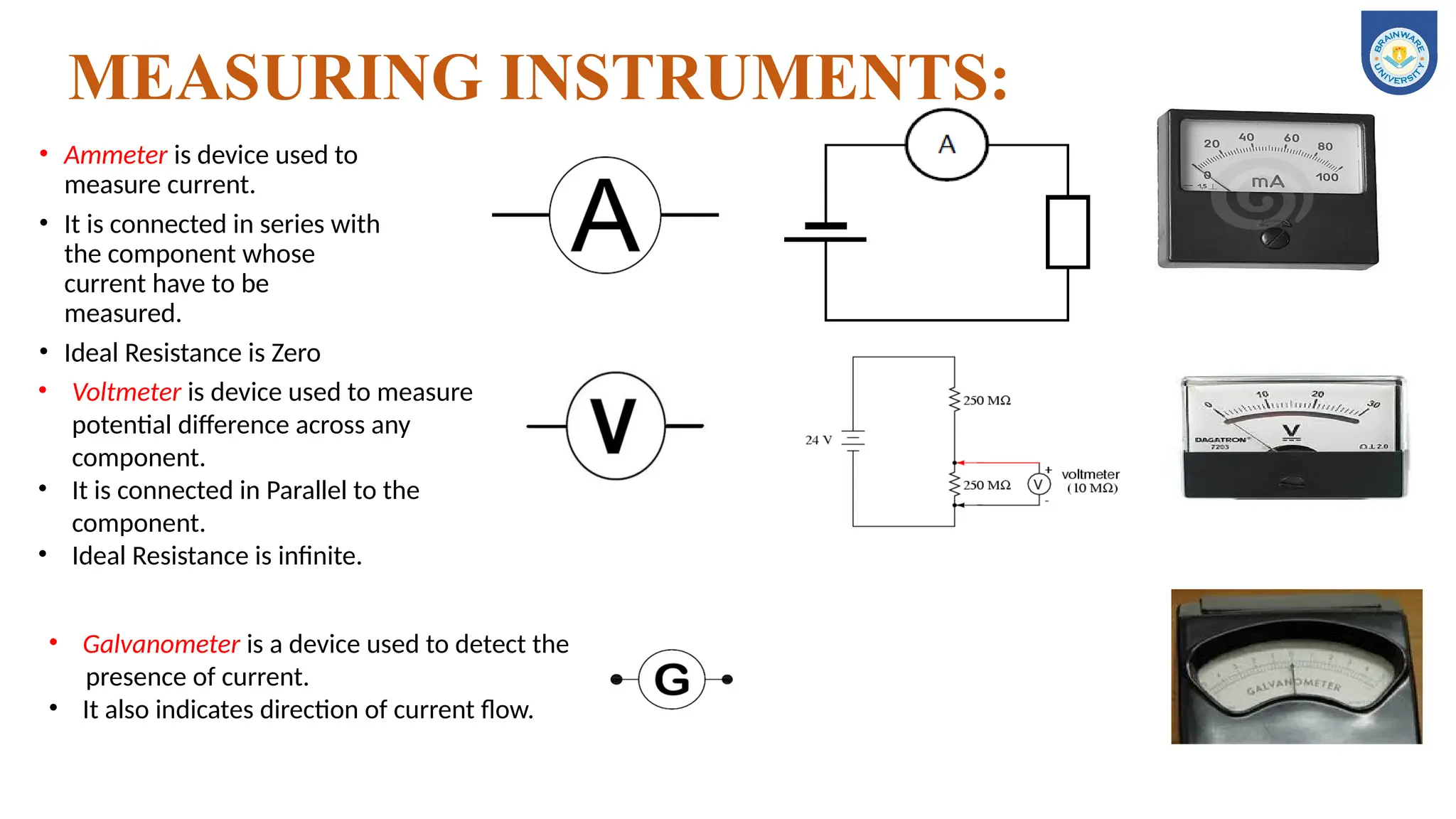
MEASURING INSTRUMENTS:
• Ammeter is device used to
measure current.
• It is connected in series with
the component whose
current have to be
measured.
• Ideal Resistance is Zero
• Voltmeter is device used to measure
potential difference across any
component.
• It is connected in Parallel to the
component.
• Ideal Resistance is infinite.
• Galvanometer is a device used to detect the
presence of current.
• It also indicates direction of current flow.
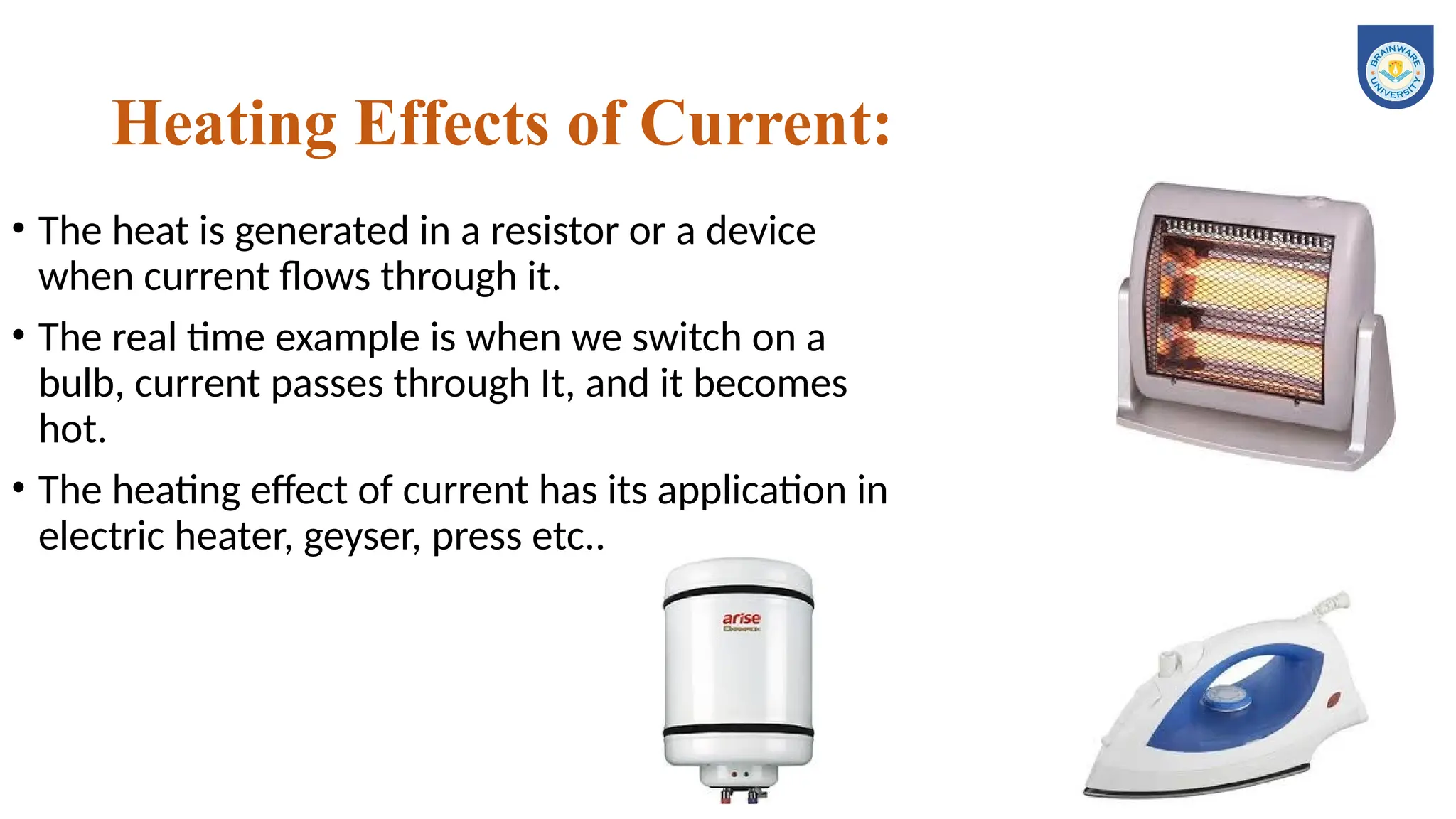
Heating Effects of Current:
• The heat is generated in a resistor or a device
when current flows through it.
• The real time example is when we switch on a
bulb, current passes through It, and it becomes
hot.
• The heating effect of current has its application in
electric heater, geyser, press etc..
ELECTRIC POWER:
• Power is defined as rate of doing Work.
• Electric Power of a device is defined as rate by which electric power is
consumed by it.
• Power=work done/time=( i^2)rt/t= (i^2)R= V^2/R=Vi.
• It’s SI unit is Watt.
• Generally the electrical energy is measured in terms of Kilowatt Hour (Kwh)
• Most of the electrical devices are ratted as Kwh. That is how many kw
power it will posses during 1 hour of use.

Basics of Electricity - Voltage, Current

  • 1.
    Basics of Electricity BYKRISHNENDU GHOSH
  • 2.
  • 3.
    ELECTRIC CHARGE: • Whenglass rod is rubbed with a silk cloth the charge acquired by the glass rod is positive and silk is negative. • The matter is made up of Atoms which consists of Proton, Electron and Neutron. • Proton is positively charged and electron is negatively charged. • Charge on 1 proton is 1.6*10^-19 Coulombs and 1 electron is -1.6*10^-19 Coulombs. • When a glass rod is rubbed with silk cloth, some electrons get transferred from glass rod to silk cloth this causes positive charge on glass rod and negative charge on silk . • Like charges attract each other while unlike charges repel each other by the virtue of electrostatic force.
  • 4.
    POTENTIAL DIFFERENCE: A B q1 q2 q3 q4q5 q6 q Suppose there is a system of many charges present in a space. Considering a charge q which is located at point B, the electrostatic forces of all the charges acts on charge q. Under such conditions, to bring that charge from point B to A, some work done is required This Work done per unit charge is defined as potential difference. Potential difference V = Work done/charge Potential difference between two points is required for Electric Current to flow between them.
  • 5.
    FLOW OF CURRENT: • Current flows from the point of higher electrical potential to lower electrical potential. • It is similar to the case of water flow from container of higher water level to lower water level. • Potential difference between two points is required for flow of electrons between two points. • The potential of a positive charged body is considered higher than negative. • The flow of electric current is considered as opposite to the flow of electron. • The rate of flow of charge is known as current. • Current I = q/t here q is charge passing at t interval of time • The SI unit of current is Ampere. • The SI unit of potential difference is Volt.
  • 6.
    Constant Potential Difference: •A cell is considered as a source of constant potential difference. • The different chemical reaction taking place within a cell causes separate positive and negative terminals and a constant potential difference between them.
  • 7.
    ELECTRICAL CIRCUIT : Theclosed path of flow of current is known as electrical Circuit. Electrical circuit and its component can be represented by its symbols.
  • 8.
    OHMS LAW: • Thecurrent passing through a metallic Element is proportional to the potential difference applied between it ends, provided temperature remains Constant. A V Voltmeter Ammeter A B At constant temperature, if voltage is increased, Current increased linearly.
  • 9.
    RESISTANCE: • By ohmslaw Voltage is directly proportional to the current passing through it. • This proportionality constant is known as resistance. • It is basically the hindrance offered to electric current passing through the conductor. • Resistance is directly proportional to the length of conductor and inversely proportional to the Cross sectional Area. • Its SI Unit is Ohm. 1 ohm resistance is the resistance offered by a circuit having potential difference across it 1v and 1A of current passing through it.
  • 10.
    RESISTIVITY: • As weknow that resistance is directly proportional to the length and inversely proportional to the cross sectional Area. • Resistivity can be defined as specific resistance. It is resistance offered by a conductor of unit length and unit cross sectional area at a specific temperature. • Resistivity varies with temperature. It increase with increase in temperature.
  • 11.
    Resistance in Series: •Resistance are said to be in series if same current is flowing through them. • one resistance is removed from connection no current will flow through the circuit. • The potential difference is different for different resistance.
  • 12.
    Resistance in Parallel: •The resistances are said to be in parallel if the same potential difference has been applied across them • The current flowing through them are different. • The wiring done at household is in parallel that is tube light, fan, television all are connected in parallel to a constant potential difference
  • 13.
    Equivalent Resistance: • Ifa combination of resistances is removed from a circuit and a is replaced by a single resistance which draws a equal current from the voltage source as that combination of resistances, then that single resistance is Equivalent Resistance for that combination. For Series Combination Since current through R1, R2, R3 is same. V=iR1+iR2+iR3=i(R1+R2+R3)=iRT It can be replaced by a resistance RT= R1+R2+R3
  • 14.
    MEASURING INSTRUMENTS: • Ammeteris device used to measure current. • It is connected in series with the component whose current have to be measured. • Ideal Resistance is Zero • Voltmeter is device used to measure potential difference across any component. • It is connected in Parallel to the component. • Ideal Resistance is infinite. • Galvanometer is a device used to detect the presence of current. • It also indicates direction of current flow.
  • 15.
    Heating Effects ofCurrent: • The heat is generated in a resistor or a device when current flows through it. • The real time example is when we switch on a bulb, current passes through It, and it becomes hot. • The heating effect of current has its application in electric heater, geyser, press etc..
  • 16.
    ELECTRIC POWER: • Poweris defined as rate of doing Work. • Electric Power of a device is defined as rate by which electric power is consumed by it. • Power=work done/time=( i^2)rt/t= (i^2)R= V^2/R=Vi. • It’s SI unit is Watt. • Generally the electrical energy is measured in terms of Kilowatt Hour (Kwh) • Most of the electrical devices are ratted as Kwh. That is how many kw power it will posses during 1 hour of use.