Solvents
Some common solvents
 Charcoal based lighter fluid,
 Windscreen washer fluid,
 Paints,
 Household cleaners,
and even
 Water!
1a
Use of solvents
 Cleaning
 Degreasing
 Removing paint, ink,
or other coatings
1b
Use of solvents
 Producing adhesives, paints,
inks, coatings, varnishes,
and other sealers
 Solvents we work
with
1c
How to recognize
solvents
 Usually liquid
 Many are colorless
 Most have a strong odor
 Some evaporate quickly
2a
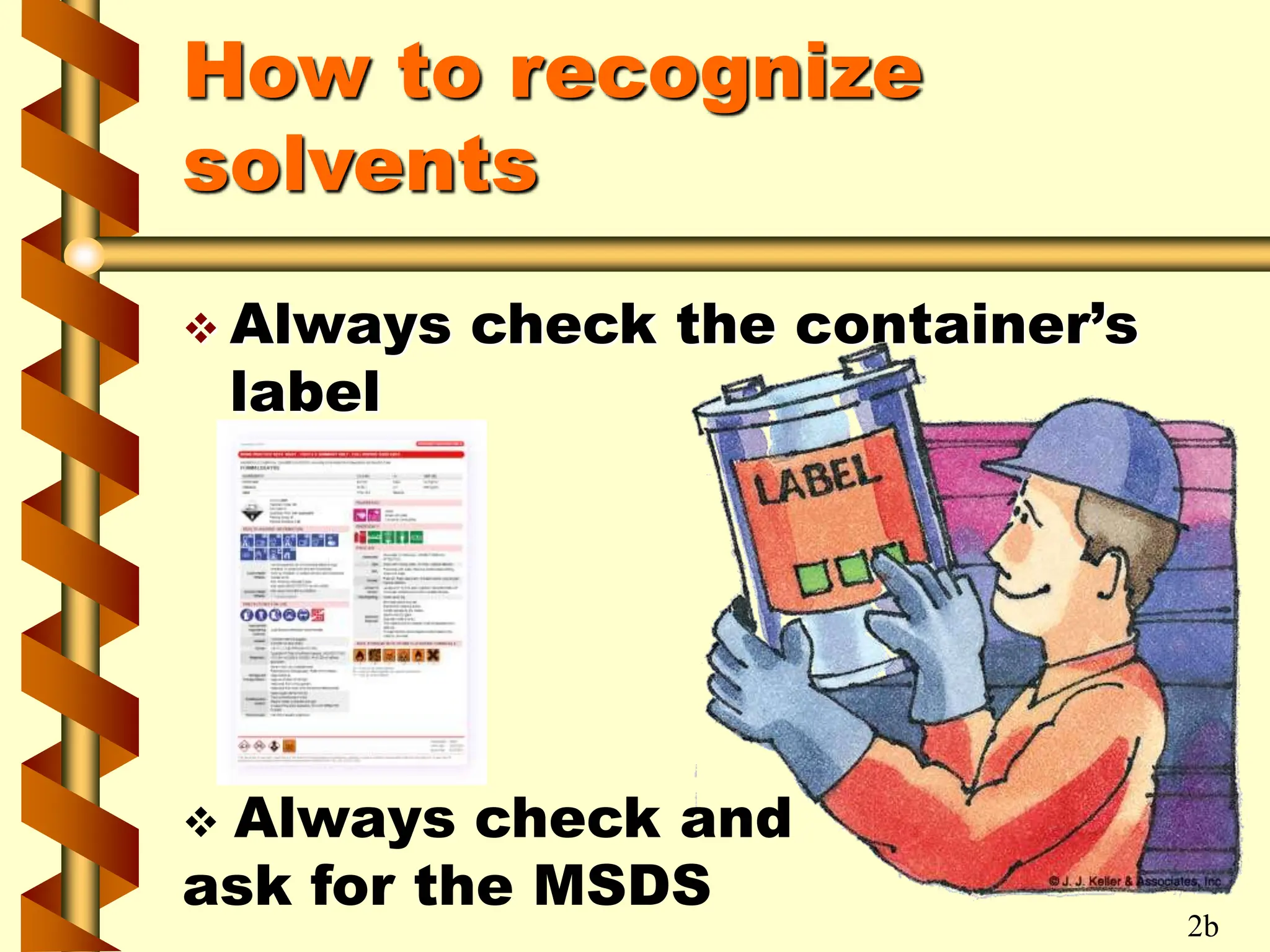
 Always check the container’s
label
How to recognize
solvents
2b
 Always check and
ask for the MSDS
Chemistry of solvents
 Solvents are used to dissolve
something else
 Like dissolves like
 How electron are distributed is
called polarity
3a
Chemistry of solvents
 Polar solvents:
• Water
• Ketones
• Alcohols
 Non-polar solvents:
• Oils
• Petroleum distillates
• Many chlorinated solvents
3b
Chemistry of solvents
 Always use the solvent
specified for the job
 Why we use certain solvents
3c
Health hazards
 Routes of entry include:
• Breathing the vapors,
• Direct contact, and
• Ingestion if you are eating or
drinking while using the solvents.
4a
Health hazards: Acute
effects
 Dizziness
 Nausea
 Irritation
 Dryness
 Itching
 Dermatitis
4b
Health hazards: Chronic
effects
 Chronic diseases typically
target:
• Skin,
• Liver,
• Kidneys,
• Circulatory system,
• Reproductive system, and
• Nervous system.
4c
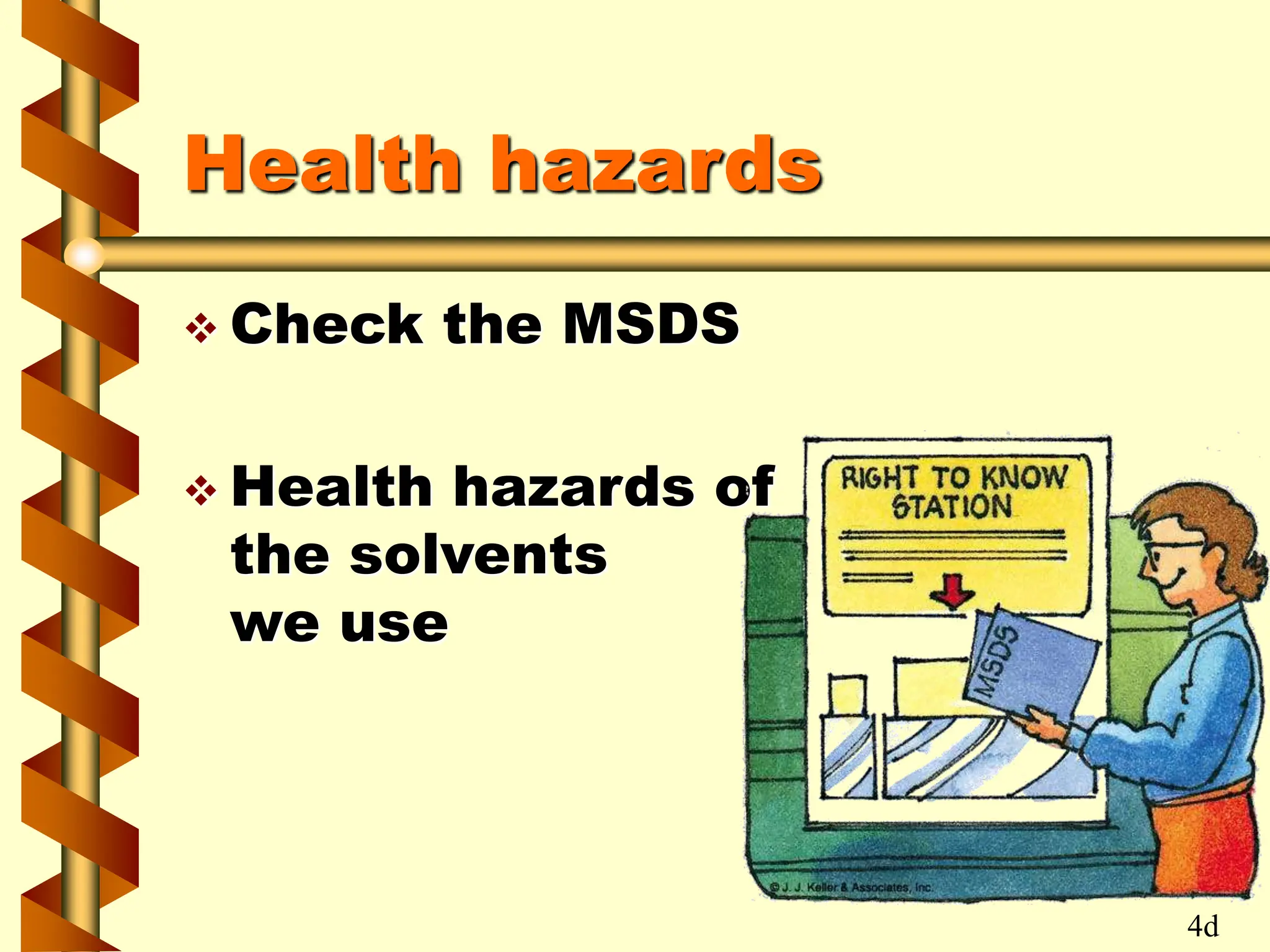
Health hazards
 Check the MSDS
 Health hazards of
the solvents
we use
4d
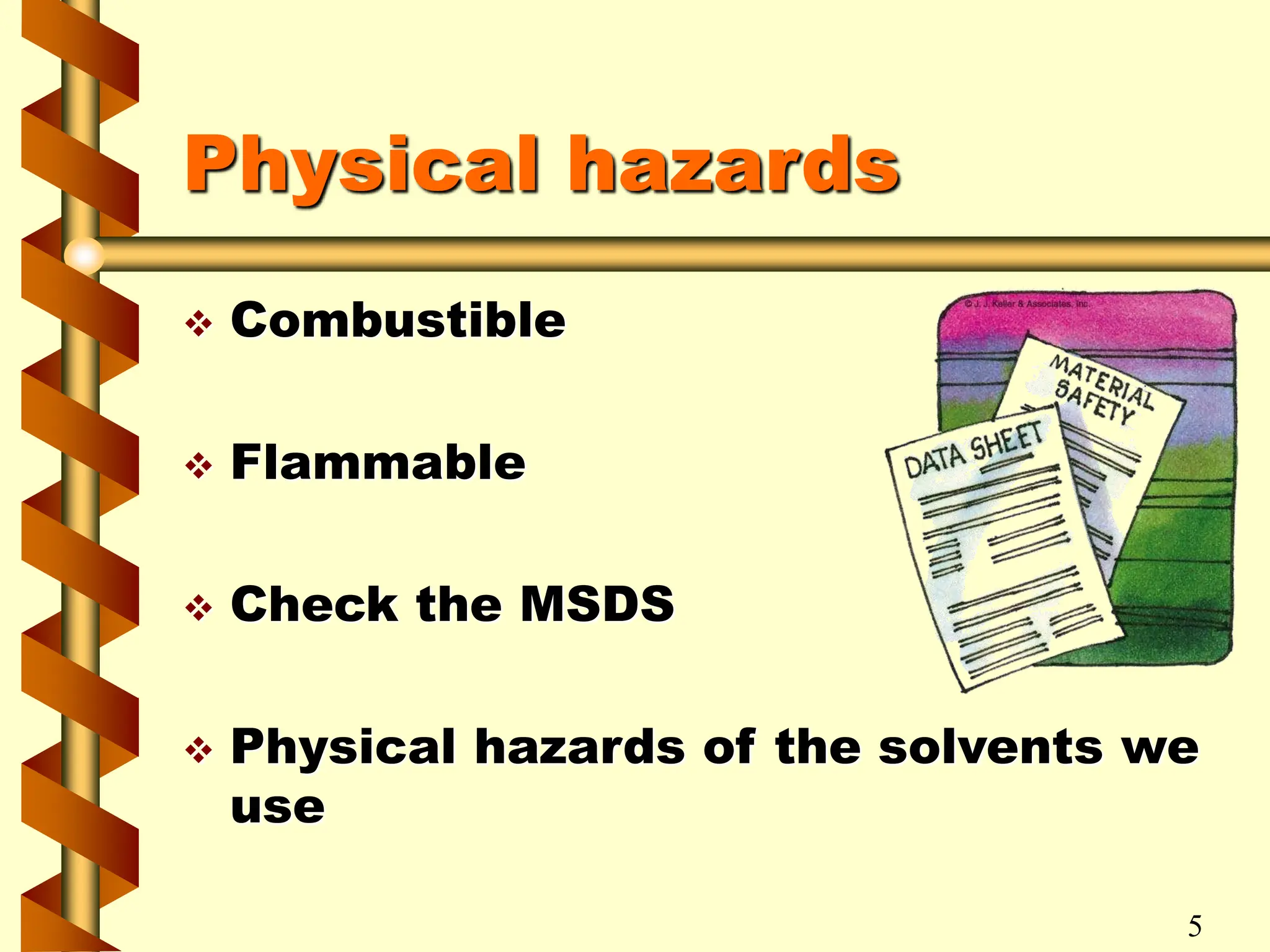
Physical hazards
 Combustible
 Flammable
 Check the MSDS
 Physical hazards of the solvents we
use
5
Engineering controls
that reduce exposures
 Ventilation
 Automated chemical transfer
equipment
 Engineering controls we use
6
Personal protective
equipment (PPE)
 See solvent’s MSDS for PPE
recommendations
 Employer selects appropriate
PPE
 Types of PPE we use
7
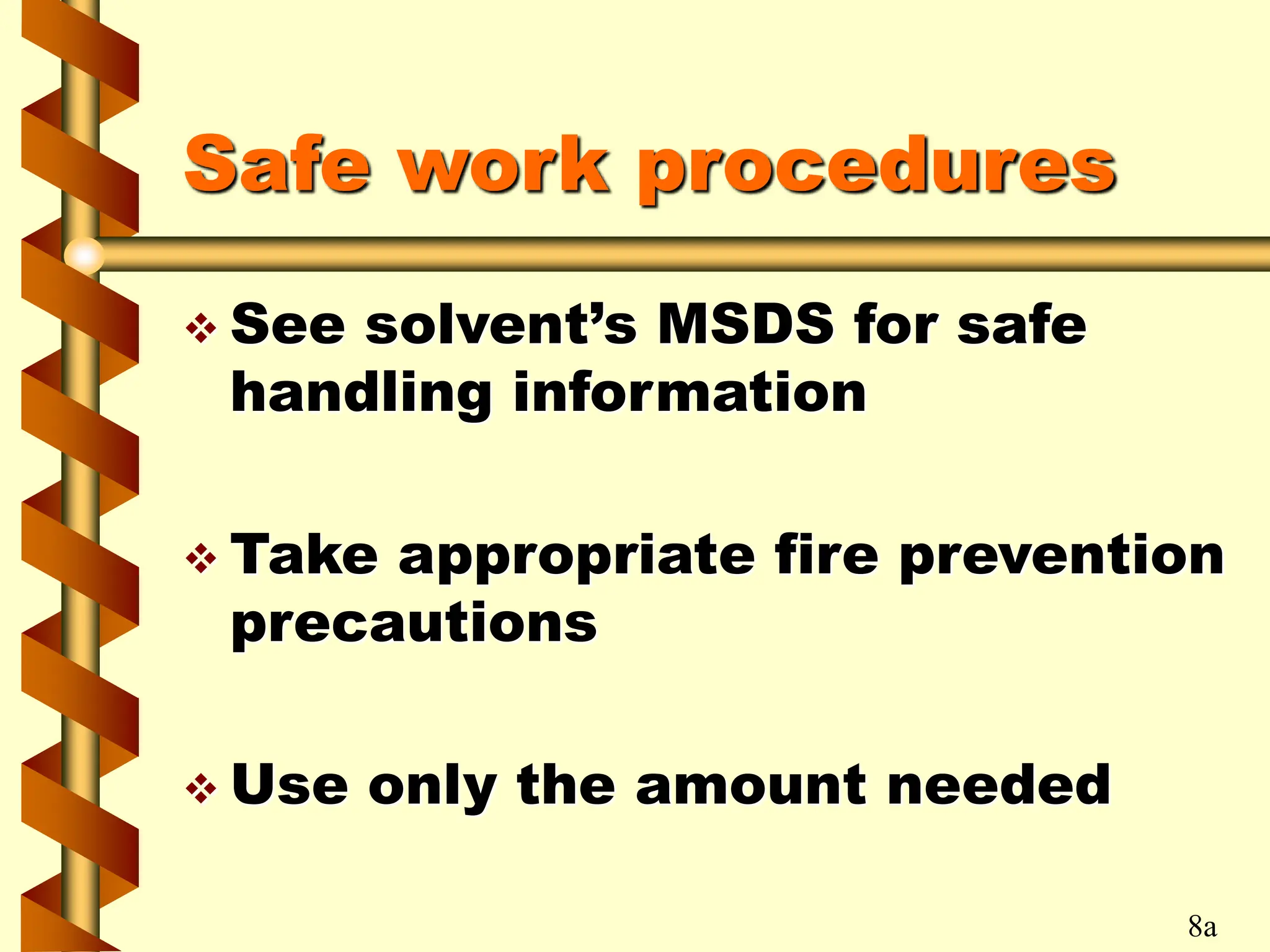
Safe work procedures
 See solvent’s MSDS for safe
handling information
 Take appropriate fire prevention
precautions
 Use only the amount needed
8a
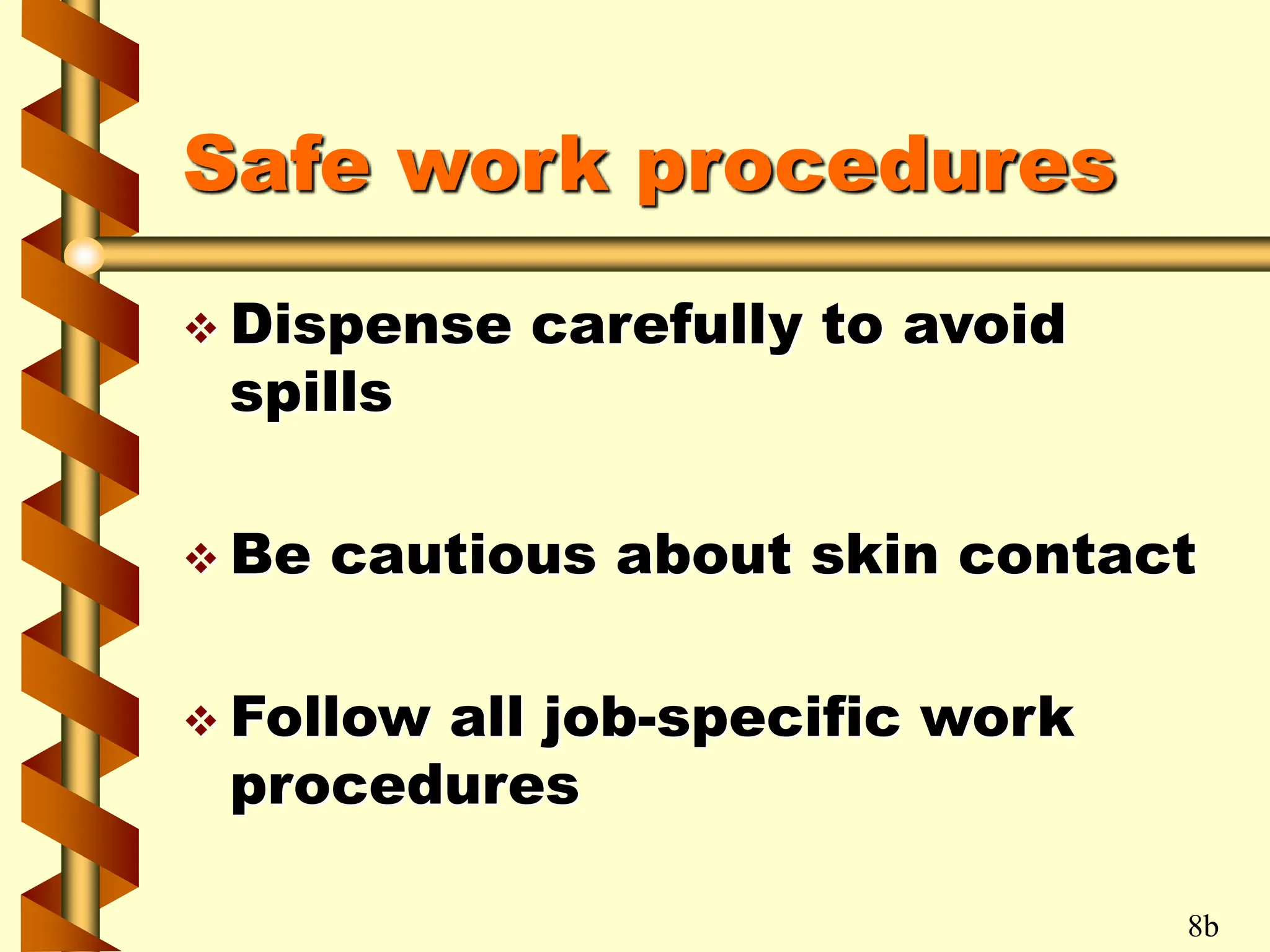
Safe work procedures
 Dispense carefully to avoid
spills
 Be cautious about skin contact
 Follow all job-specific work
procedures
8b
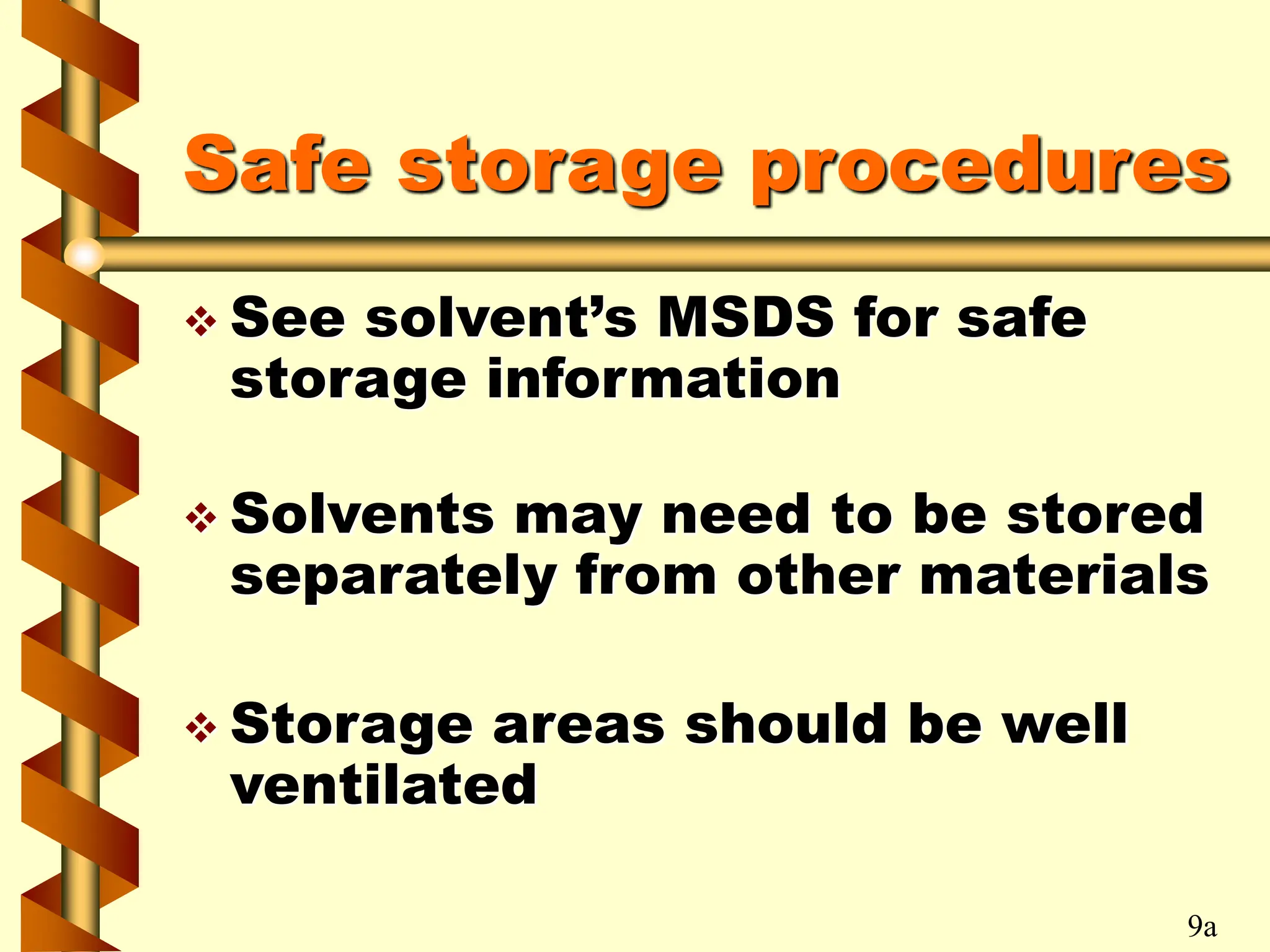
Safe storage procedures
 See solvent’s MSDS for safe
storage information
 Solvents may need to be stored
separately from other materials
 Storage areas should be well
ventilated
9a
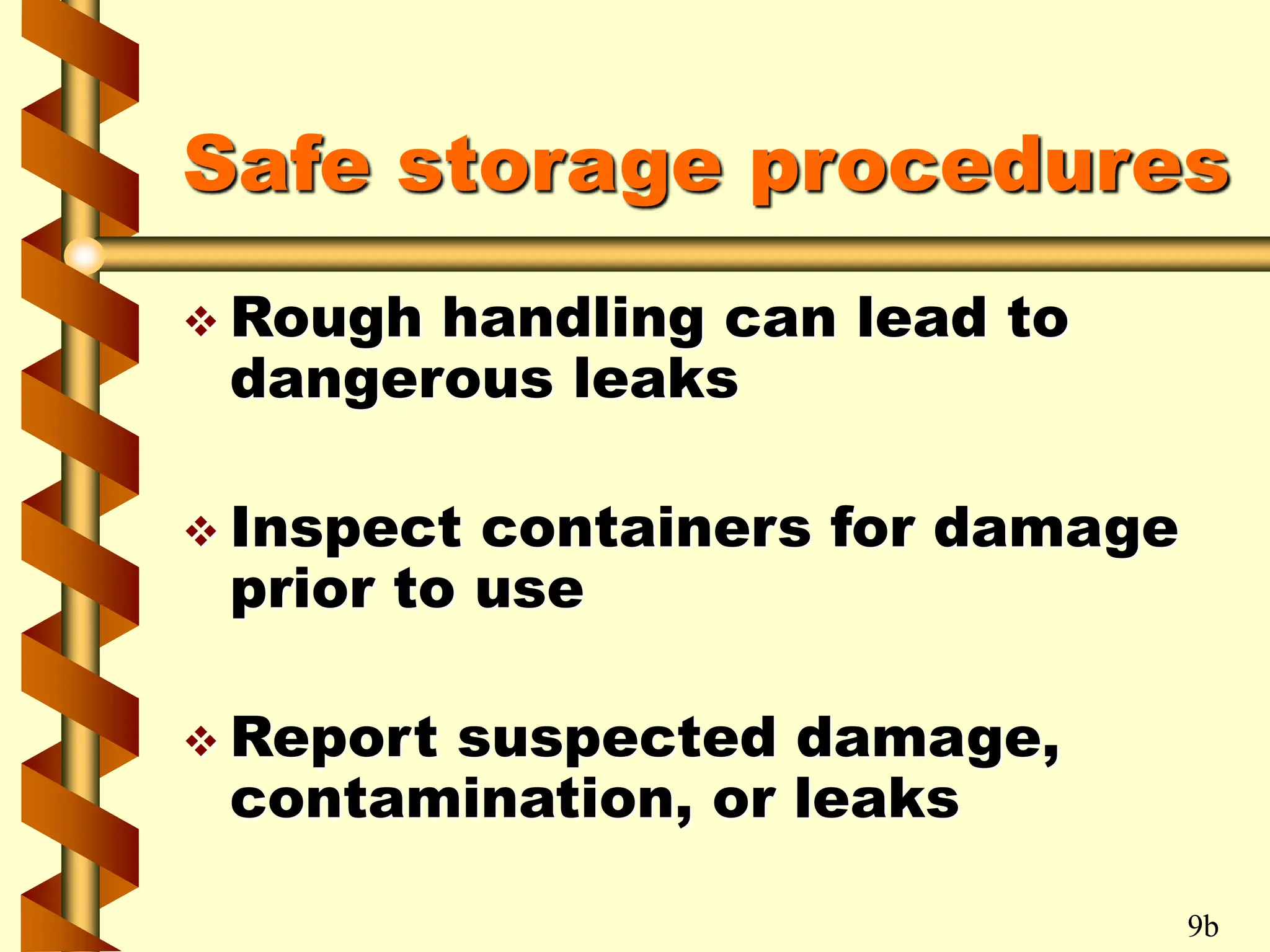
Safe storage procedures
 Rough handling can lead to
dangerous leaks
 Inspect containers for damage
prior to use
 Report suspected damage,
contamination, or leaks
9b
Proper clean-up and
disposal
 Emergency releases should be
handled by a specially trained
Hazmat team
 Waste solvents need to be
collected in proper containers
10
First aid and emergency
procedures
 Refer to the MSDS for first aid
and emergency information
 Always follow our company’s
specific procedures
for emergency
response and first aid
11

Basic solvent presentation for awareness.ppt

  • 1.
  • 2.
    Some common solvents Charcoal based lighter fluid,  Windscreen washer fluid,  Paints,  Household cleaners, and even  Water! 1a
  • 3.
    Use of solvents Cleaning  Degreasing  Removing paint, ink, or other coatings 1b
  • 4.
    Use of solvents Producing adhesives, paints, inks, coatings, varnishes, and other sealers  Solvents we work with 1c
  • 5.
    How to recognize solvents Usually liquid  Many are colorless  Most have a strong odor  Some evaporate quickly 2a
  • 6.
     Always checkthe container’s label How to recognize solvents 2b  Always check and ask for the MSDS
  • 7.
    Chemistry of solvents Solvents are used to dissolve something else  Like dissolves like  How electron are distributed is called polarity 3a
  • 8.
    Chemistry of solvents Polar solvents: • Water • Ketones • Alcohols  Non-polar solvents: • Oils • Petroleum distillates • Many chlorinated solvents 3b
  • 9.
    Chemistry of solvents Always use the solvent specified for the job  Why we use certain solvents 3c
  • 10.
    Health hazards  Routesof entry include: • Breathing the vapors, • Direct contact, and • Ingestion if you are eating or drinking while using the solvents. 4a
  • 11.
    Health hazards: Acute effects Dizziness  Nausea  Irritation  Dryness  Itching  Dermatitis 4b
  • 12.
    Health hazards: Chronic effects Chronic diseases typically target: • Skin, • Liver, • Kidneys, • Circulatory system, • Reproductive system, and • Nervous system. 4c
  • 13.
    Health hazards  Checkthe MSDS  Health hazards of the solvents we use 4d
  • 14.
    Physical hazards  Combustible Flammable  Check the MSDS  Physical hazards of the solvents we use 5
  • 15.
    Engineering controls that reduceexposures  Ventilation  Automated chemical transfer equipment  Engineering controls we use 6
  • 16.
    Personal protective equipment (PPE) See solvent’s MSDS for PPE recommendations  Employer selects appropriate PPE  Types of PPE we use 7
  • 17.
    Safe work procedures See solvent’s MSDS for safe handling information  Take appropriate fire prevention precautions  Use only the amount needed 8a
  • 18.
    Safe work procedures Dispense carefully to avoid spills  Be cautious about skin contact  Follow all job-specific work procedures 8b
  • 19.
    Safe storage procedures See solvent’s MSDS for safe storage information  Solvents may need to be stored separately from other materials  Storage areas should be well ventilated 9a
  • 20.
    Safe storage procedures Rough handling can lead to dangerous leaks  Inspect containers for damage prior to use  Report suspected damage, contamination, or leaks 9b
  • 21.
    Proper clean-up and disposal Emergency releases should be handled by a specially trained Hazmat team  Waste solvents need to be collected in proper containers 10
  • 22.
    First aid andemergency procedures  Refer to the MSDS for first aid and emergency information  Always follow our company’s specific procedures for emergency response and first aid 11