BASIC POSTURE IN
PUBLIC SPEAKING
BASIC POSTURE IN
PUBLIC SPEAKING
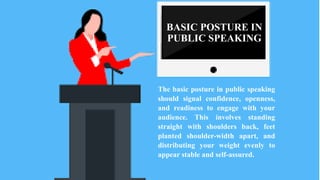
The basic posture in public speaking
should signal confidence, openness,
and readiness to engage with your
audience. This involves standing
straight with shoulders back, feet
planted shoulder-width apart, and
distributing your weight evenly to
appear stable and self-assured.
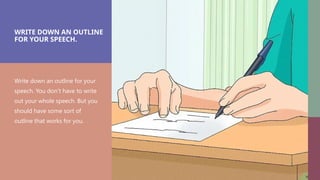
WRITE DOWN AN OUTLINE
FOR YOUR SPEECH.
Write down an outline for your
speech. You don’t have to write
out your whole speech. But you
should have some sort of
outline that works for you.
PLAN
APPROPRIATELY.
Spend time putting your speech
together so that when you give
it, it flows naturally and feels
normal to you. Being familiar
with the content will greatly
reduce stress.
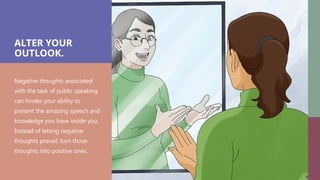
ALTER YOUR
OUTLOOK.
Negative thoughts associated
with the task of public speaking
can hinder your ability to
present the amazing speech and
knowledge you have inside you.
Instead of letting negative
thoughts prevail, turn those
thoughts into positive ones.
LEARN WHO YOUR
AUDIENCE IS
A lot of stress caused by the fear
of speaking in public, whether
for a presentation or at a social
gathering can be derived from
not knowing who you’re
speaking to. You wonder if
you’re saying the right thing. If
your point is getting across. If
you sound intelligent enough.
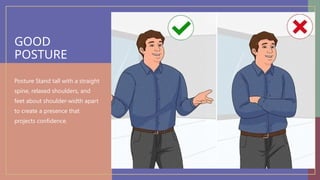
GOOD
POSTURE
Posture Stand tall with a straight
spine, relaxed shoulders, and
feet about shoulder-width apart
to create a presence that
projects confidence.
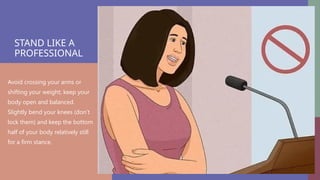
STAND LIKE A
PROFESSIONAL
Avoid crossing your arms or
shifting your weight; keep your
body open and balanced.
Slightly bend your knees (don’t
lock them) and keep the bottom
half of your body relatively still
for a firm stance.
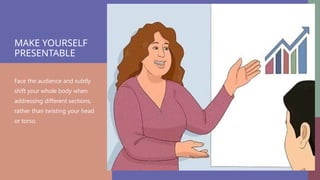
MAKE YOURSELF
PRESENTABLE
Face the audience and subtly
shift your whole body when
addressing different sections,
rather than twisting your head
or torso.
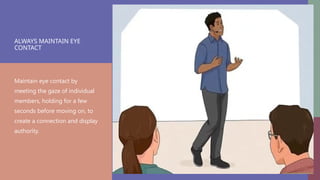
ALWAYS MAINTAIN EYE
CONTACT
Maintain eye contact by
meeting the gaze of individual
members, holding for a few
seconds before moving on, to
create a connection and display
authority.
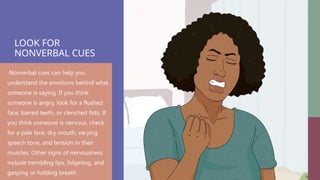
LOOK FOR
NONVERBAL CUES
Nonverbal cues can help you
understand the emotions behind what
someone is saying. If you think
someone is angry, look for a flushed
face, barred teeth, or clenched fists. If
you think someone is nervous, check
for a pale face, dry mouth, varying
speech tone, and tension in their
muscles. Other signs of nervousness
include trembling lips, fidgeting, and
gasping or holding breath.
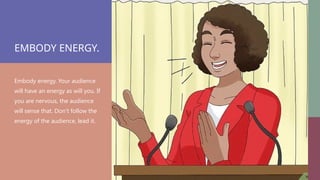
EMBODY ENERGY.
Embody energy. Your audience
will have an energy as will you. If
you are nervous, the audience
will sense that. Don’t follow the
energy of the audience, lead it.
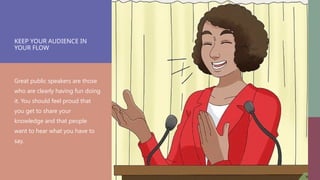
KEEP YOUR AUDIENCE IN
YOUR FLOW
Great public speakers are those
who are clearly having fun doing
it. You should feel proud that
you get to share your
knowledge and that people
want to hear what you have to
say.
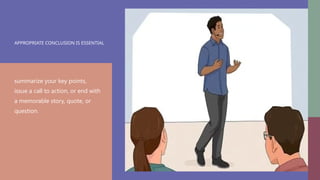
APPROPRIATE CONCLUSION IS ESSENTIAL
summarize your key points,
issue a call to action, or end with
a memorable story, quote, or
question.
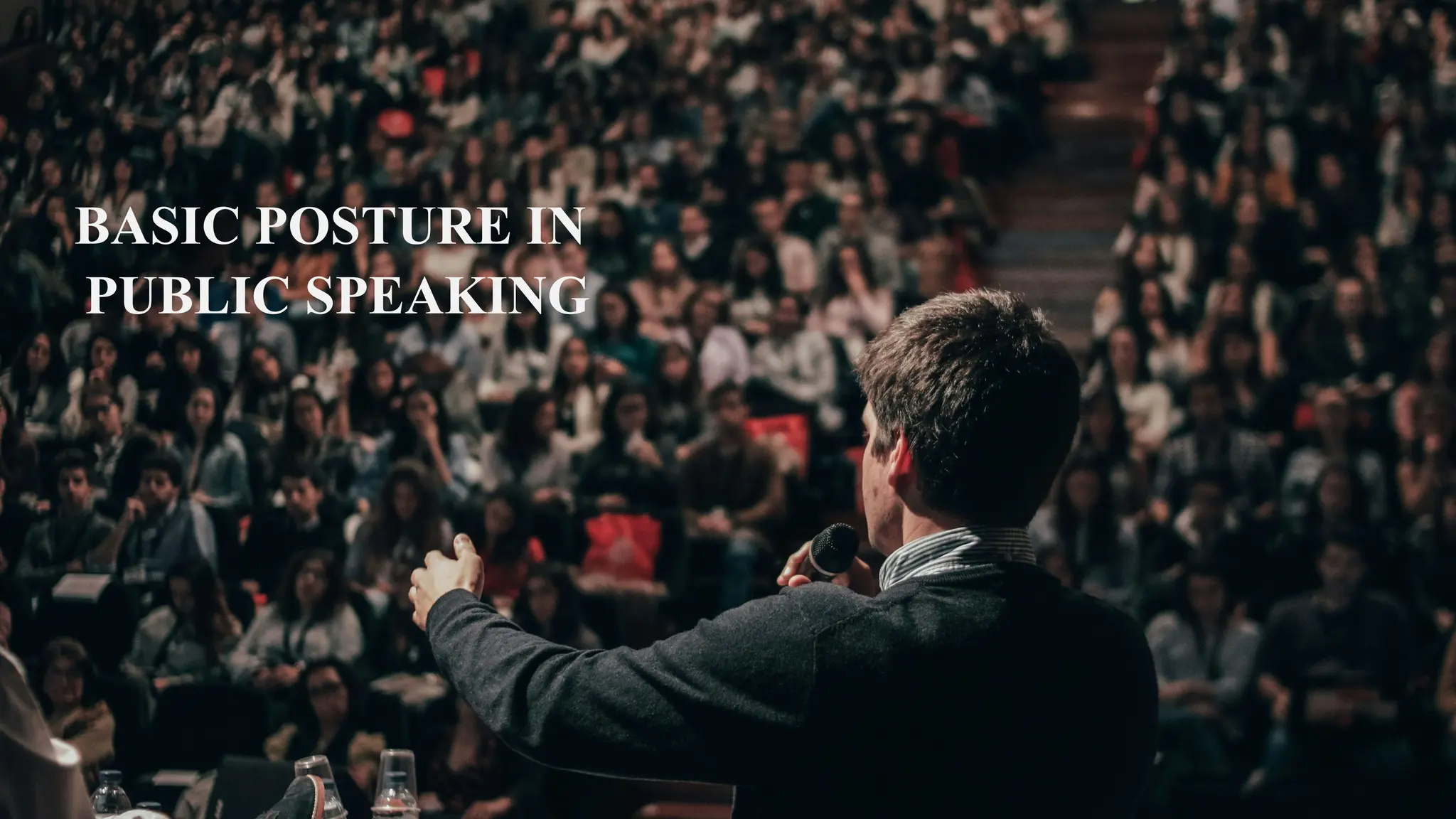
Basic Posture in public speaking skills in crowd

Basic Posture in public speaking skills in crowd

  • 1.
  • 2.
    BASIC POSTURE IN PUBLICSPEAKING The basic posture in public speaking should signal confidence, openness, and readiness to engage with your audience. This involves standing straight with shoulders back, feet planted shoulder-width apart, and distributing your weight evenly to appear stable and self-assured.
  • 3.
    WRITE DOWN ANOUTLINE FOR YOUR SPEECH. Write down an outline for your speech. You don’t have to write out your whole speech. But you should have some sort of outline that works for you.
  • 4.
    PLAN APPROPRIATELY. Spend time puttingyour speech together so that when you give it, it flows naturally and feels normal to you. Being familiar with the content will greatly reduce stress.
  • 5.
    ALTER YOUR OUTLOOK. Negative thoughtsassociated with the task of public speaking can hinder your ability to present the amazing speech and knowledge you have inside you. Instead of letting negative thoughts prevail, turn those thoughts into positive ones.
  • 6.
    LEARN WHO YOUR AUDIENCEIS A lot of stress caused by the fear of speaking in public, whether for a presentation or at a social gathering can be derived from not knowing who you’re speaking to. You wonder if you’re saying the right thing. If your point is getting across. If you sound intelligent enough.
  • 7.
    GOOD POSTURE Posture Stand tallwith a straight spine, relaxed shoulders, and feet about shoulder-width apart to create a presence that projects confidence.
  • 8.
    STAND LIKE A PROFESSIONAL Avoidcrossing your arms or shifting your weight; keep your body open and balanced. Slightly bend your knees (don’t lock them) and keep the bottom half of your body relatively still for a firm stance.
  • 9.
    MAKE YOURSELF PRESENTABLE Face theaudience and subtly shift your whole body when addressing different sections, rather than twisting your head or torso.
  • 10.
    ALWAYS MAINTAIN EYE CONTACT Maintaineye contact by meeting the gaze of individual members, holding for a few seconds before moving on, to create a connection and display authority.
  • 11.
    LOOK FOR NONVERBAL CUES Nonverbalcues can help you understand the emotions behind what someone is saying. If you think someone is angry, look for a flushed face, barred teeth, or clenched fists. If you think someone is nervous, check for a pale face, dry mouth, varying speech tone, and tension in their muscles. Other signs of nervousness include trembling lips, fidgeting, and gasping or holding breath.
  • 12.
    EMBODY ENERGY. Embody energy.Your audience will have an energy as will you. If you are nervous, the audience will sense that. Don’t follow the energy of the audience, lead it.
  • 13.
    KEEP YOUR AUDIENCEIN YOUR FLOW Great public speakers are those who are clearly having fun doing it. You should feel proud that you get to share your knowledge and that people want to hear what you have to say.
  • 14.
    APPROPRIATE CONCLUSION ISESSENTIAL summarize your key points, issue a call to action, or end with a memorable story, quote, or question.