Basic Poker Strategy
 
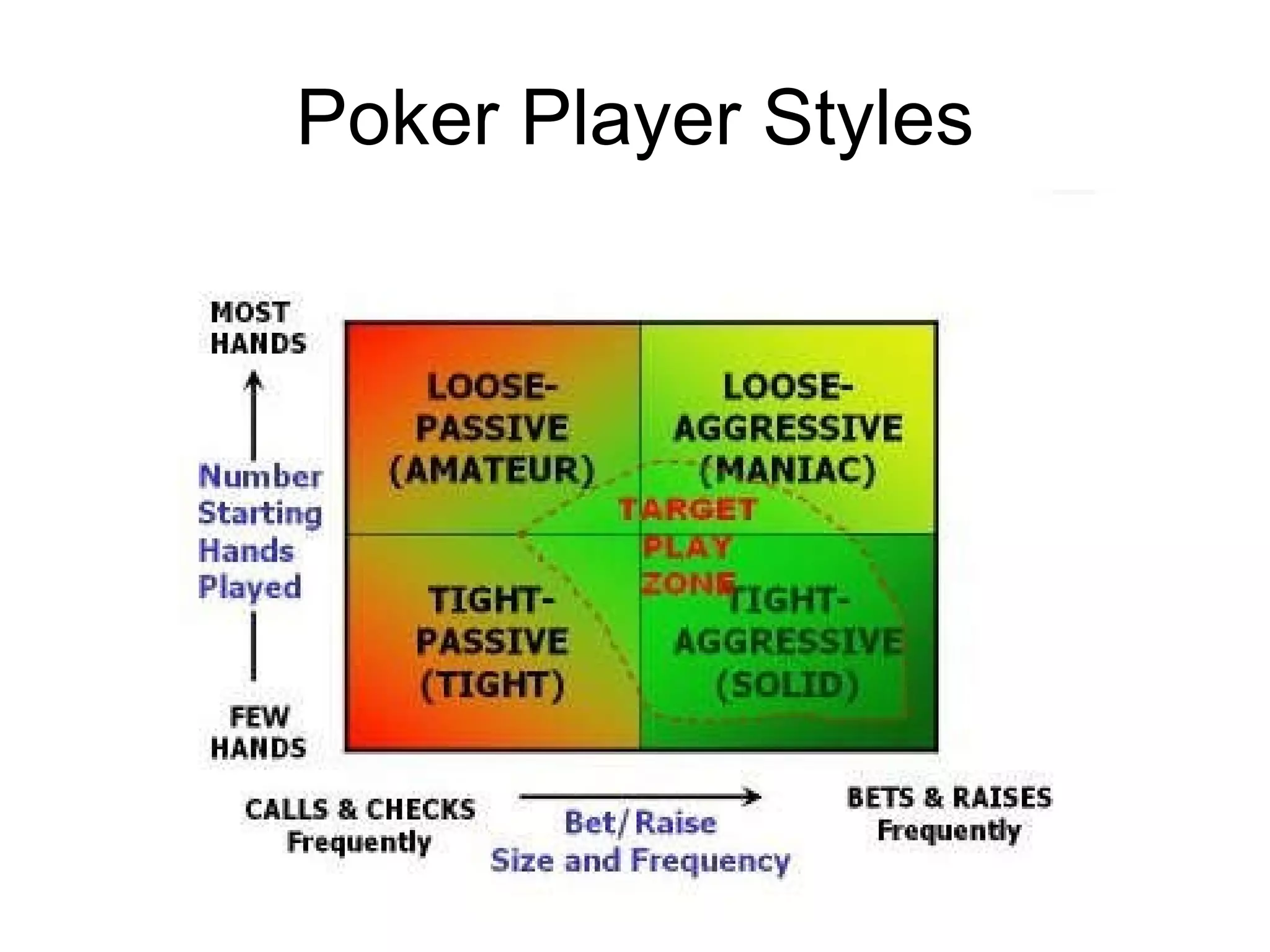
Player’s Poker Style Tight aggressive is the most desirable style. However a player should be able to adjust his style to the demands of the table.
Poker Player Styles
Player Style Needs Flexibility When becoming short stacked a player will need to loosen up Playing against very aggressive players, tighten up When playing very tight players, loosen up On the money bubble, providing chips allow, loosen up
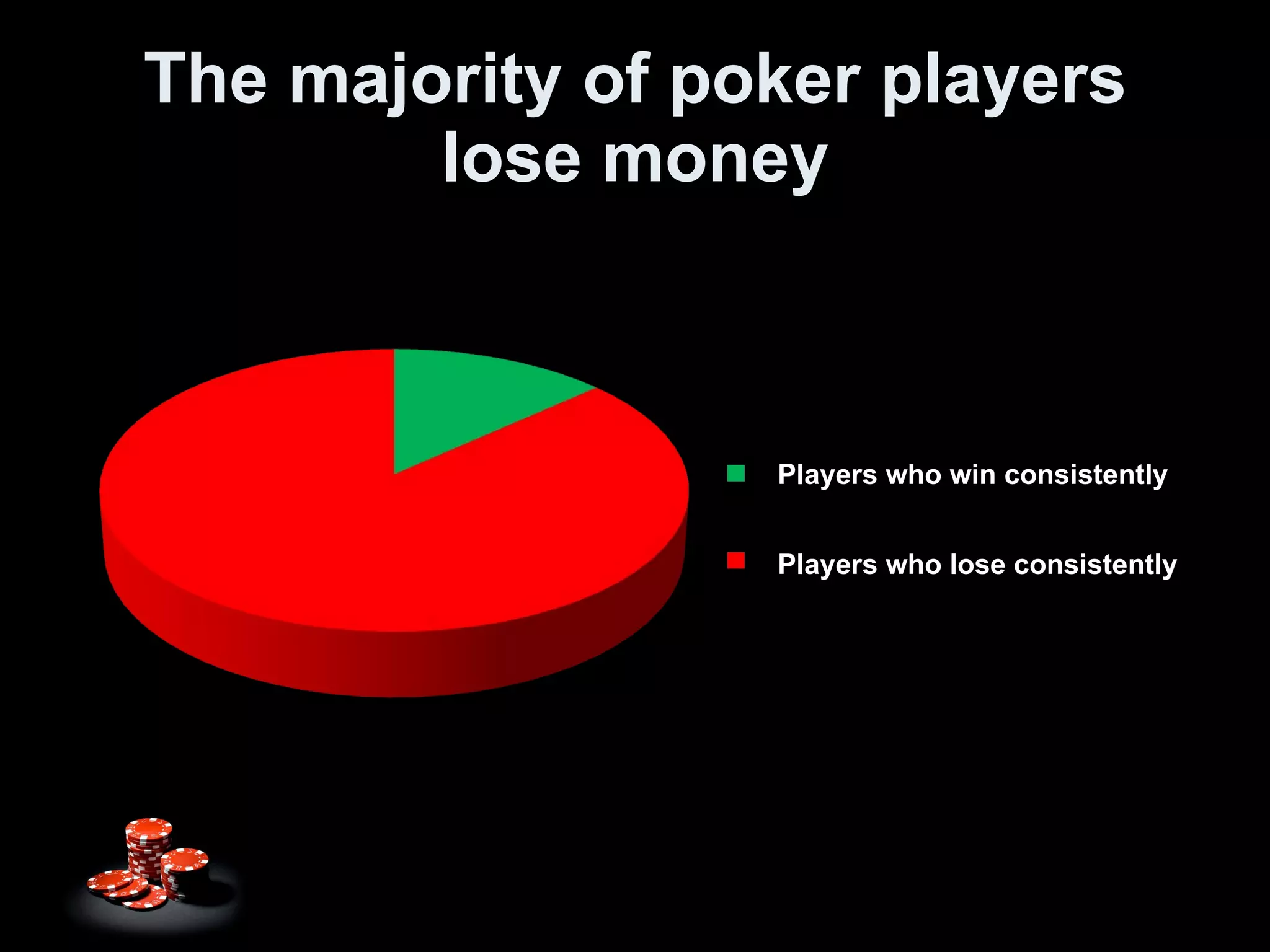
The majority of poker players lose money Players who win consistently Players who lose consistently
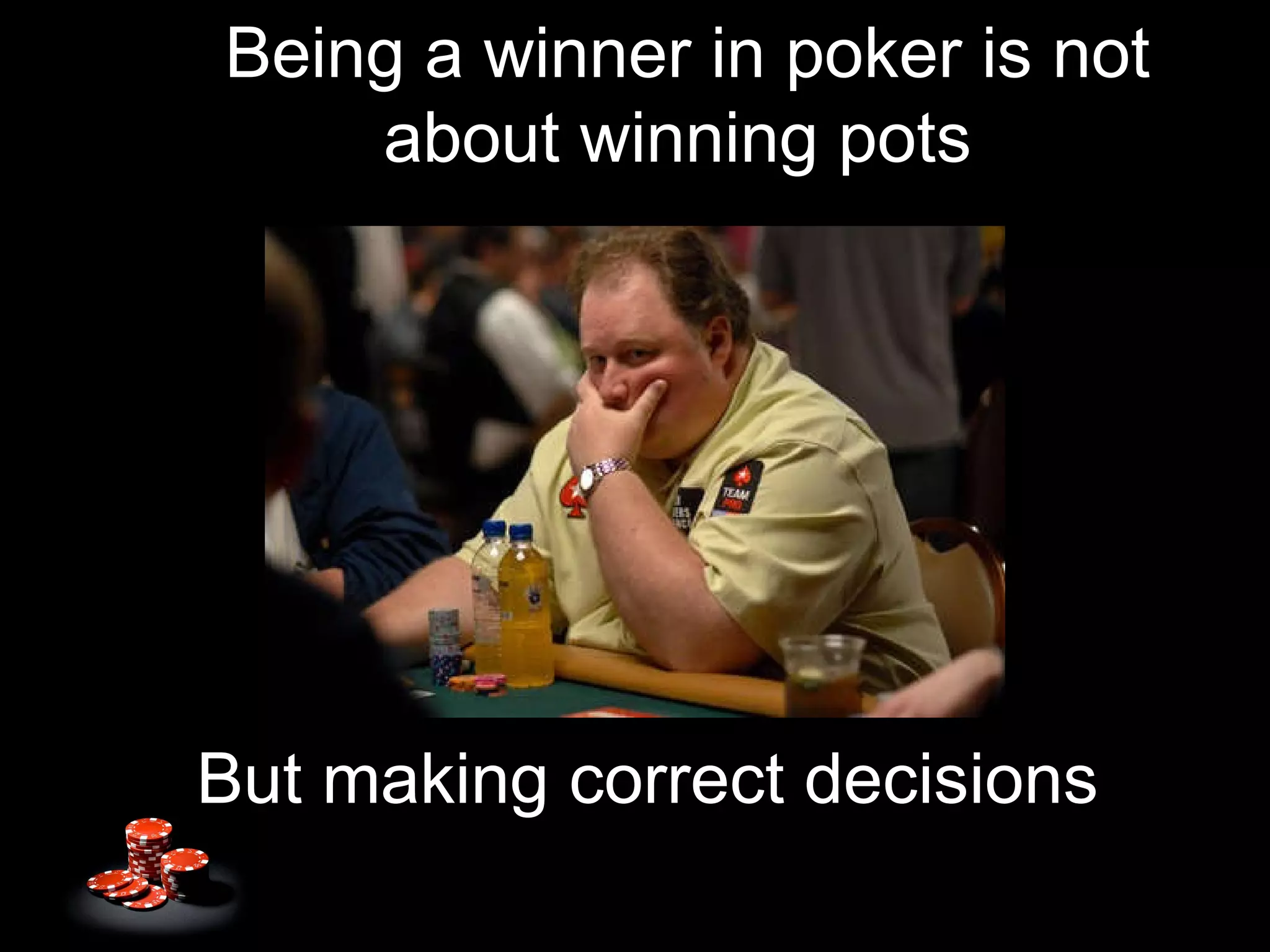
Being a winner in poker is not about winning pots  But making correct decisions
You don’t go broke folding a hand
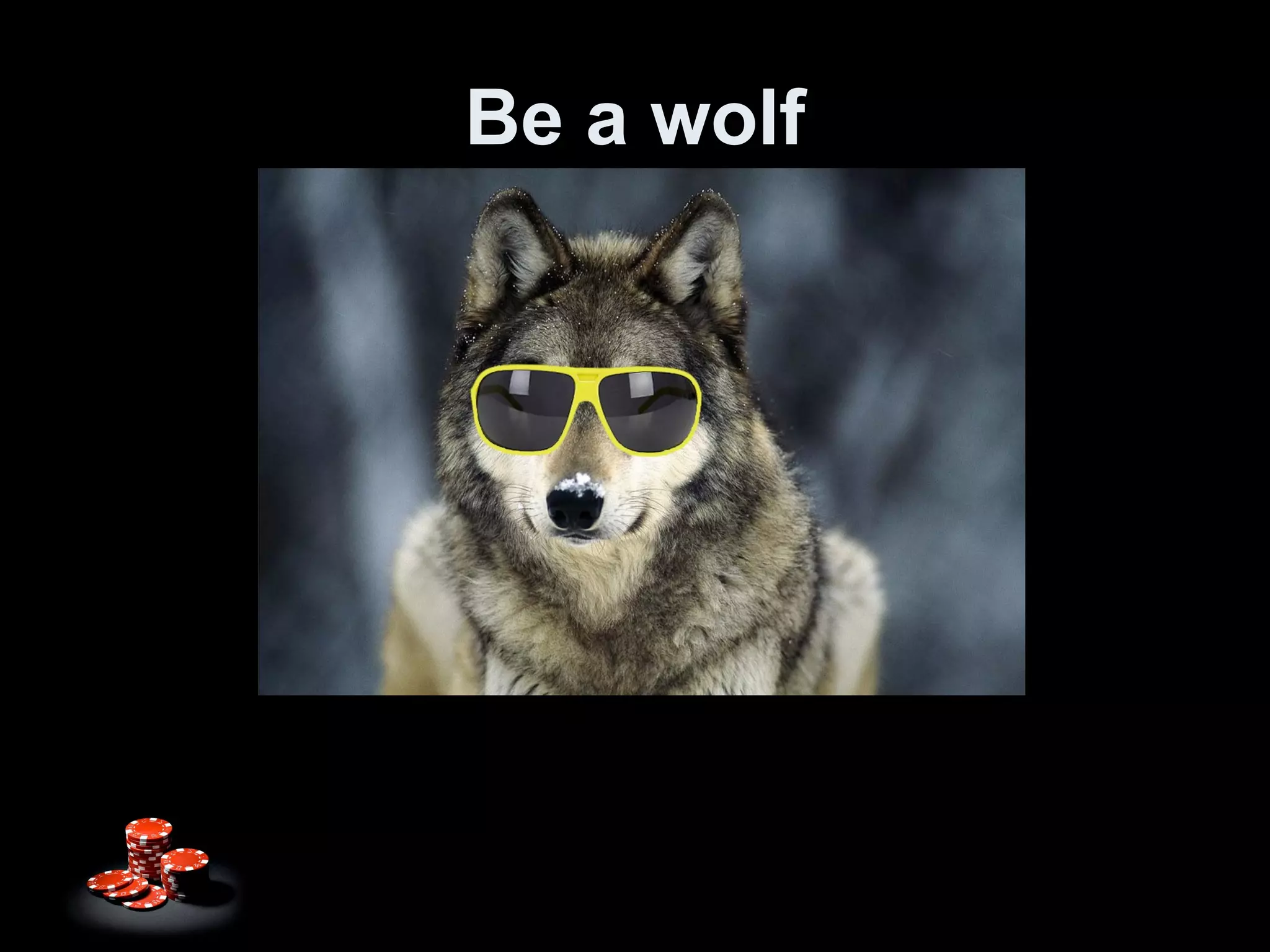
Be a wolf
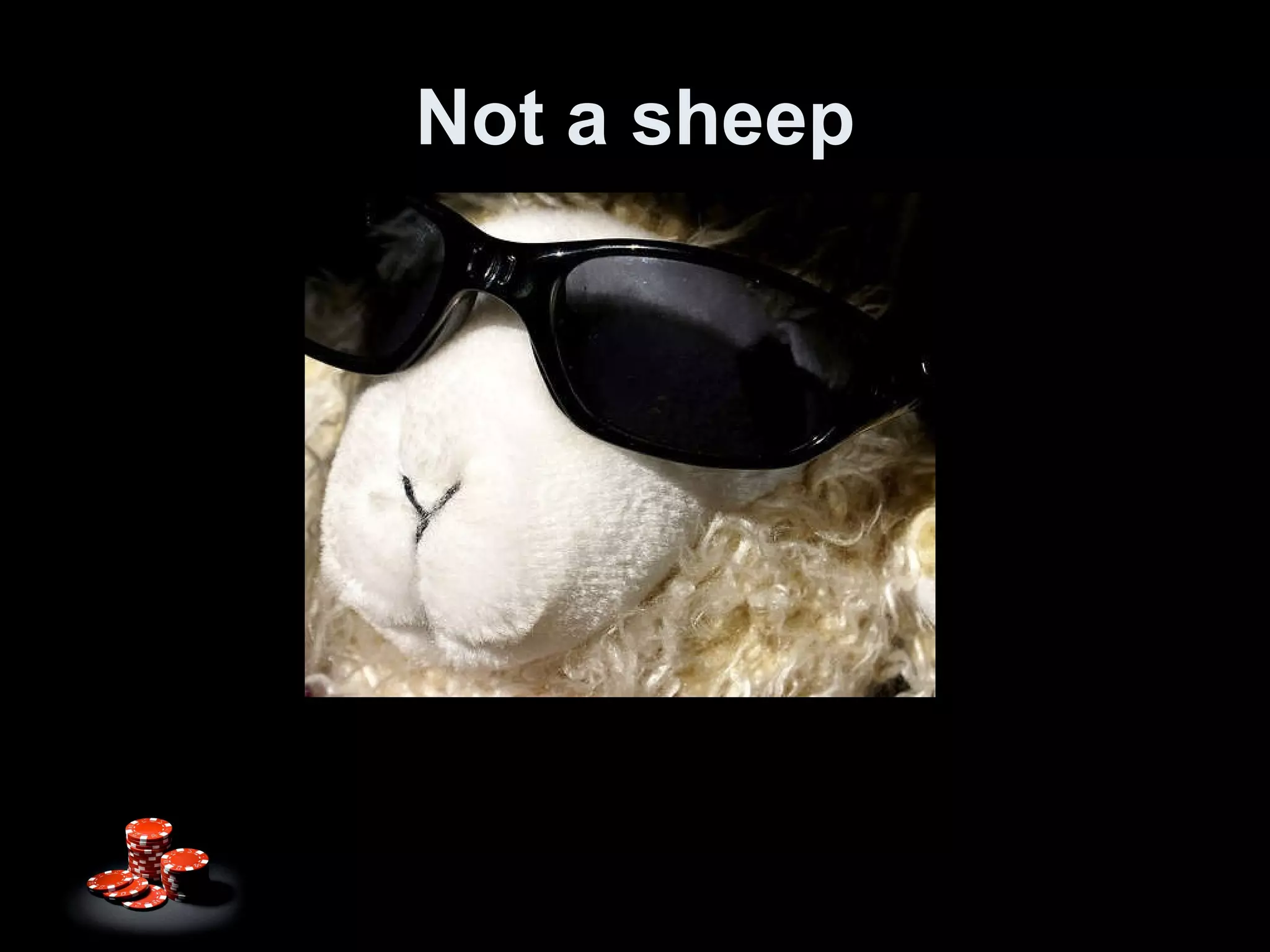
Not a sheep
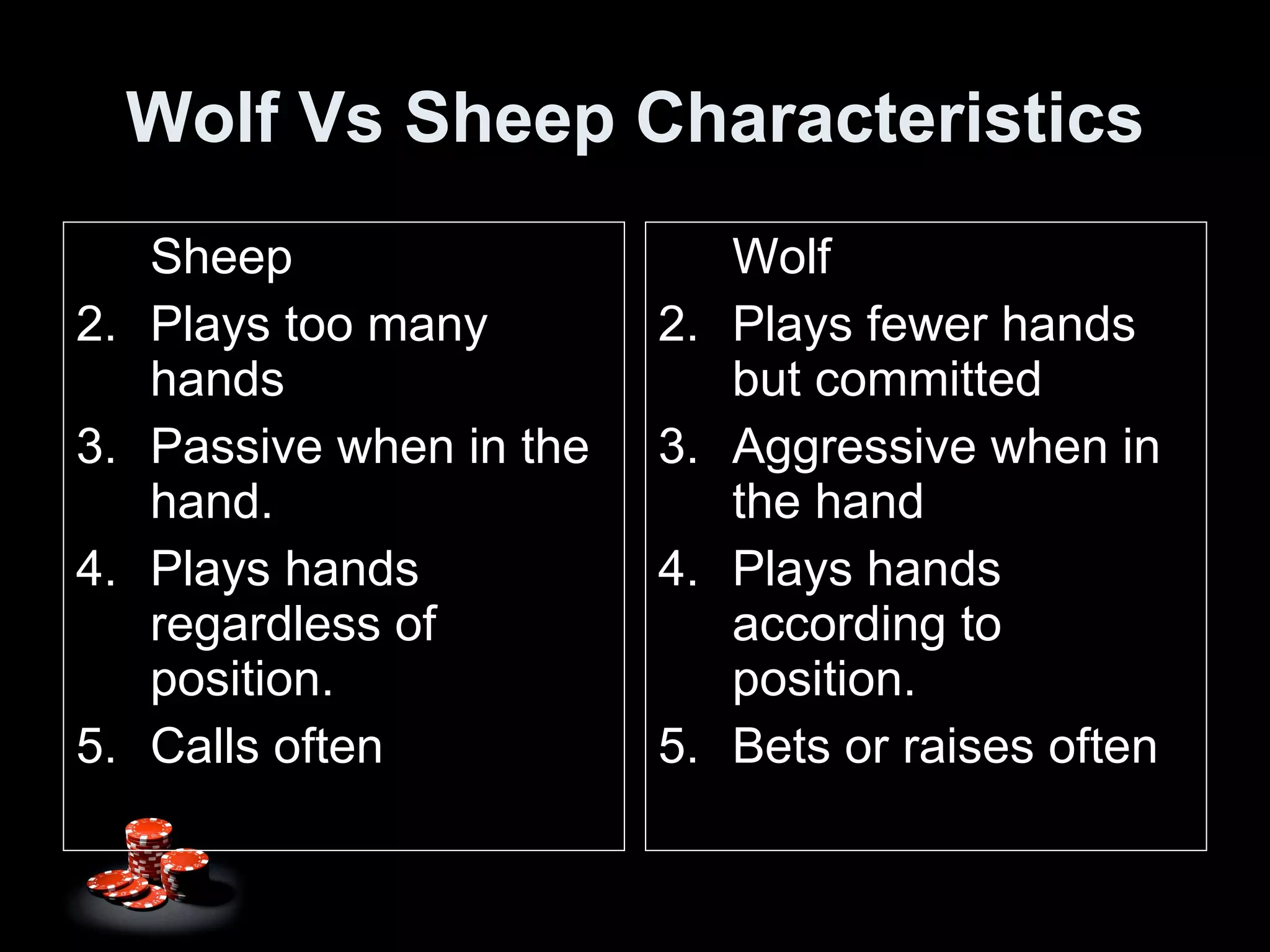
Wolf Vs Sheep Characteristics Sheep Plays too many hands Passive when in the hand. Plays hands regardless of position. Calls often  Wolf Plays fewer hands but committed Aggressive when in the hand Plays hands according to position. Bets or raises often
Calling is passive not  aggressive poker If you are making money just calling ..then you are not calling enough
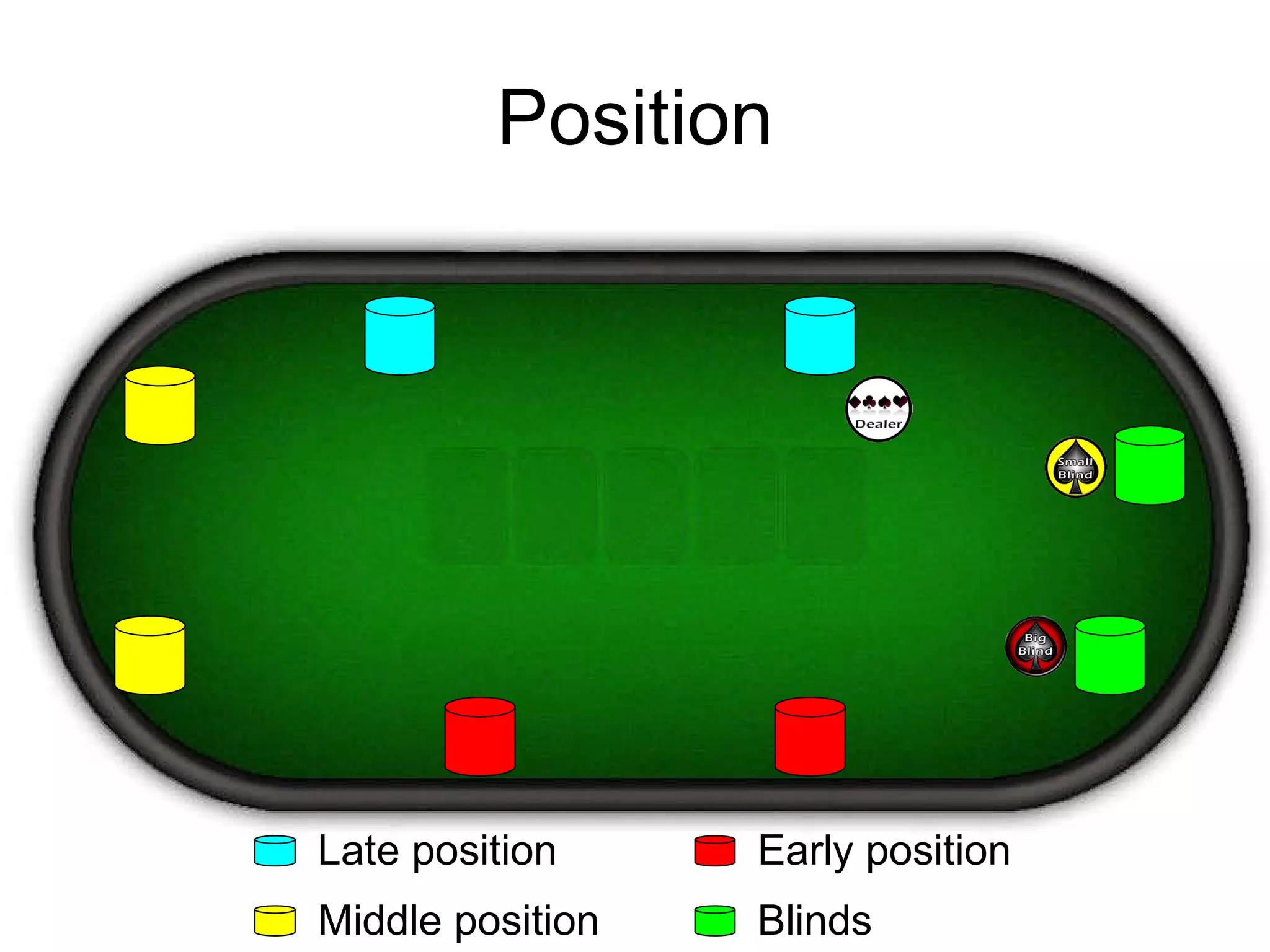
Position 4 Types Late position (best position) Blinds ( good position pre flop but terrible position after the flop) Middle position (Exercise caution) Early Position ( Worst position)
Position Late position Middle position Early position Blinds
Position Matters The later the position, the more information you have on which to base your decisions
In Poker as in any form of investment, the better informed you are, the better your decision making
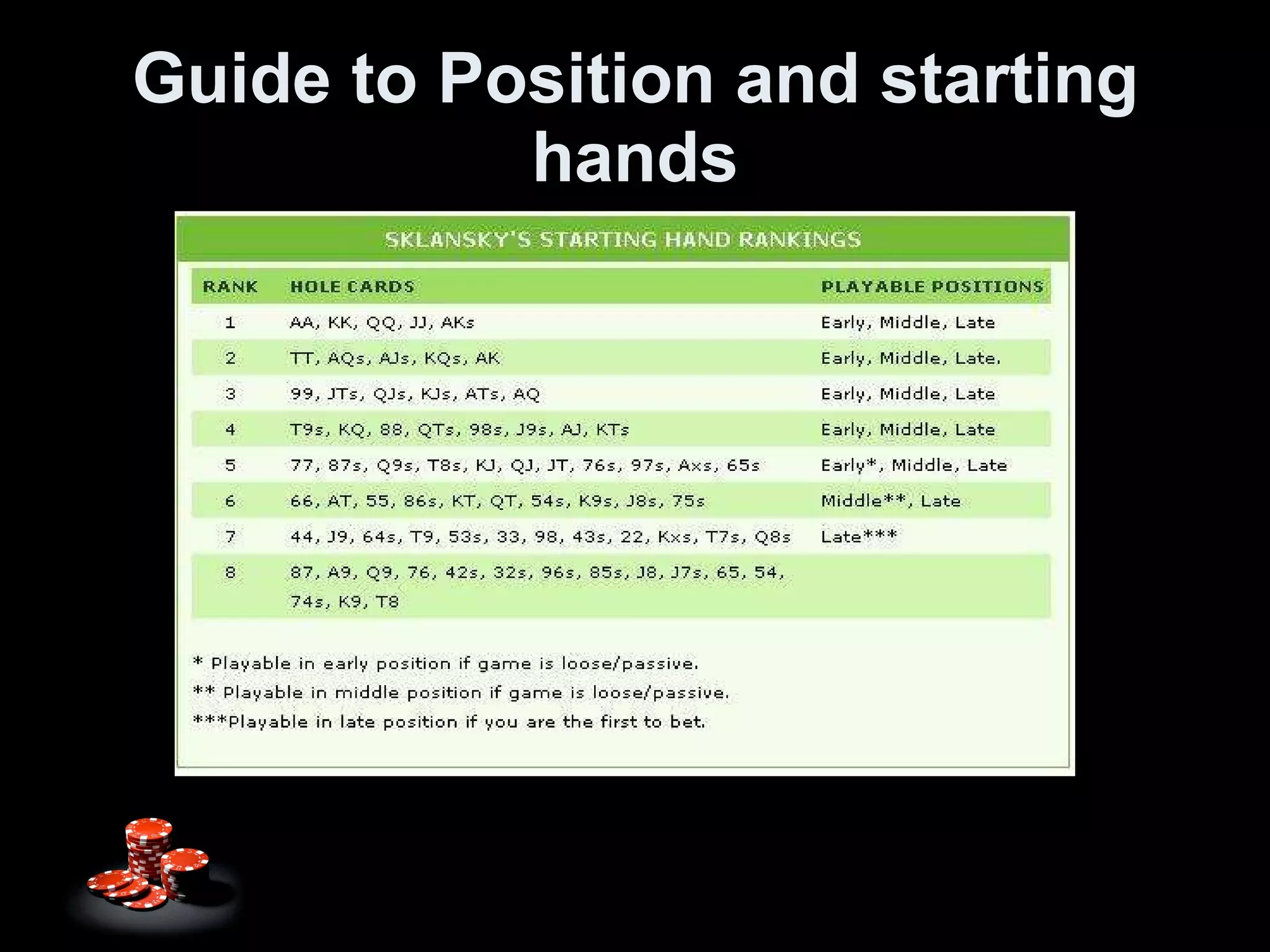
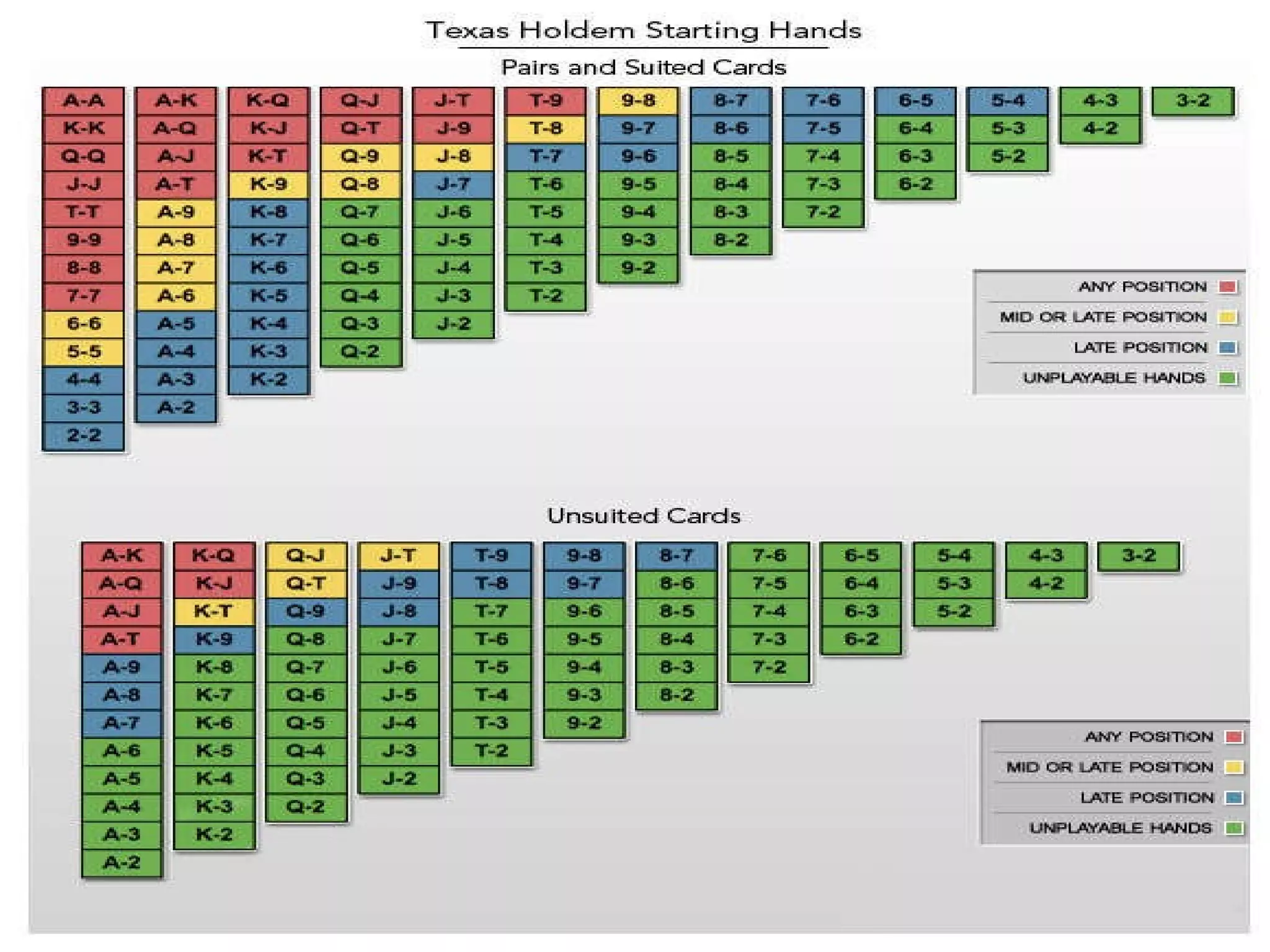
Guide to Position and starting hands
 
Pot odds and outs How to calculate outs and the pot odds required
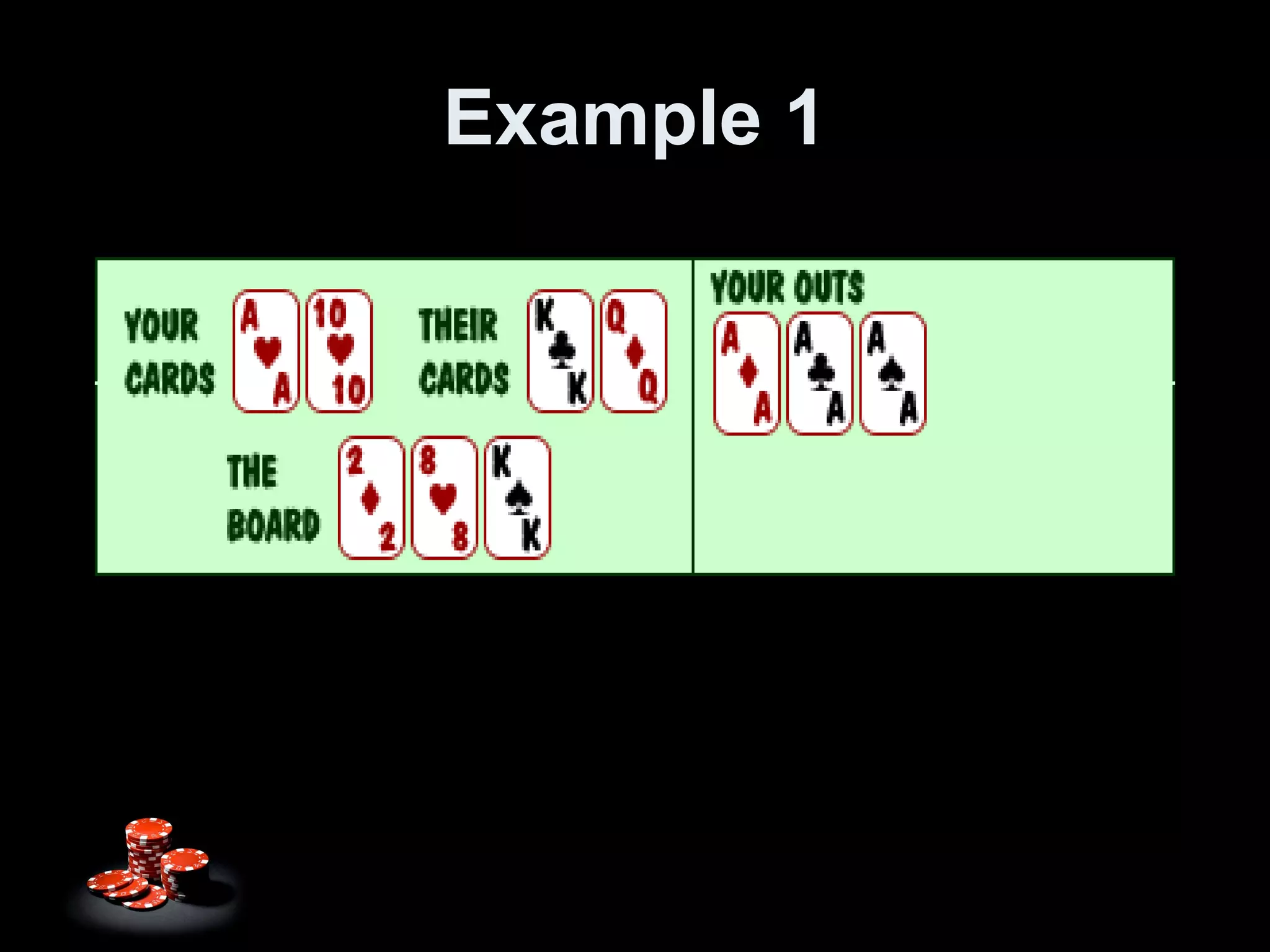
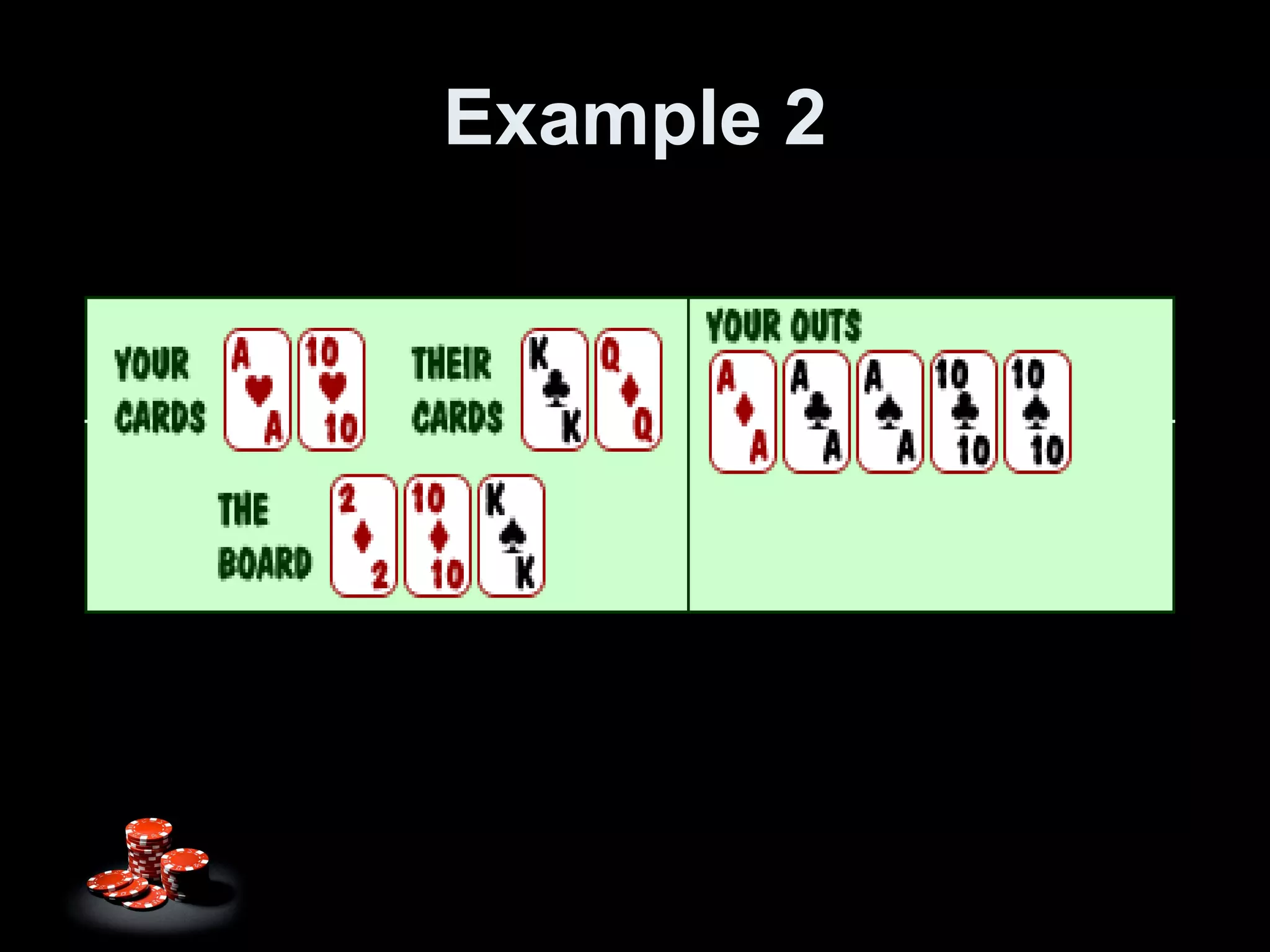
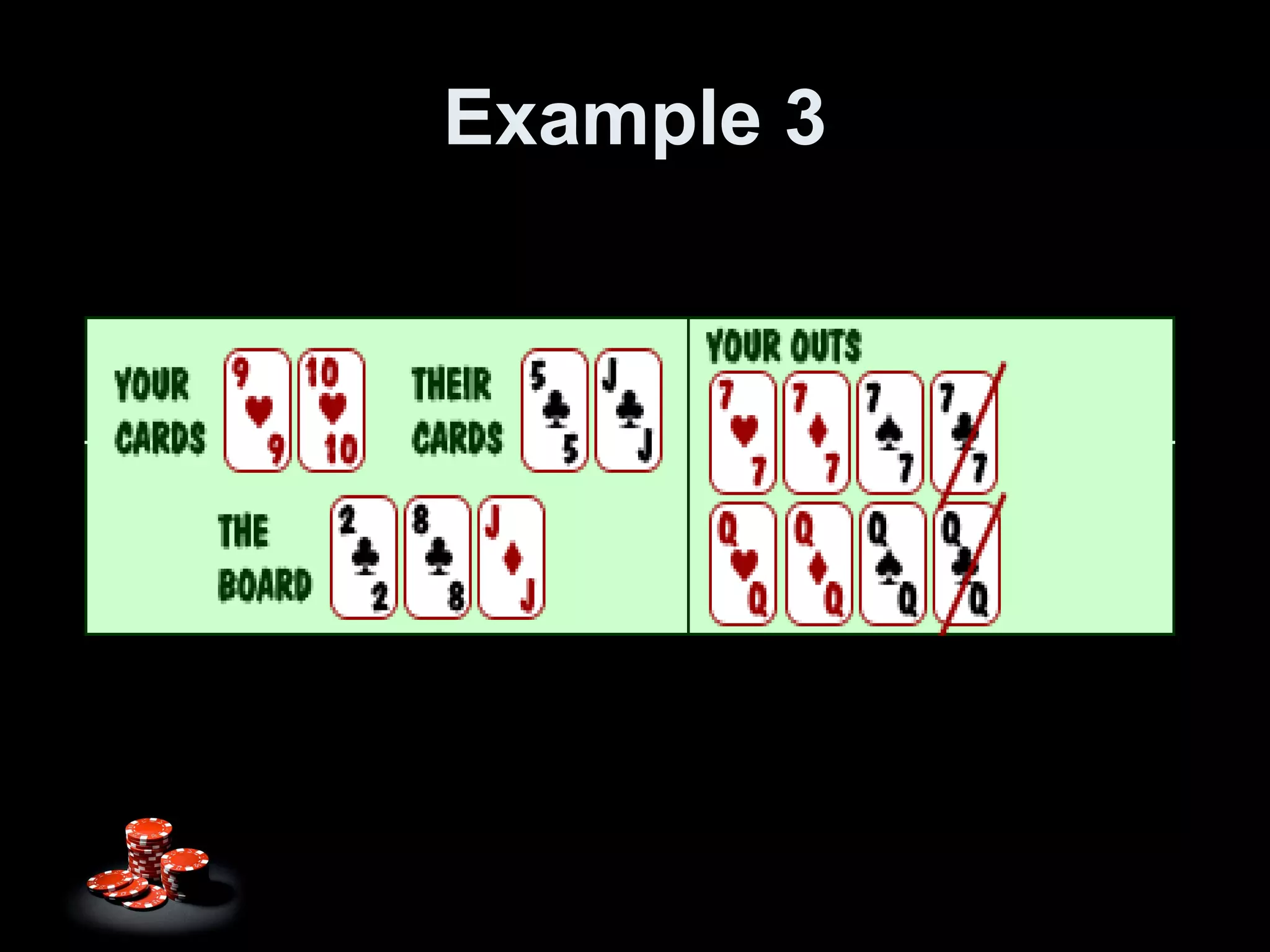
Outs Outs are, the number of cards left in the deck, that could improve you hand to the winning hand
Example 1
Example 2
Example 3
Pot Odds Once you have calculated your outs, you now have to determine whether you are getting the correct financial return for the risk
Calculating your odds The rule of Two and Four (an easy cheat that skips the complicated math)
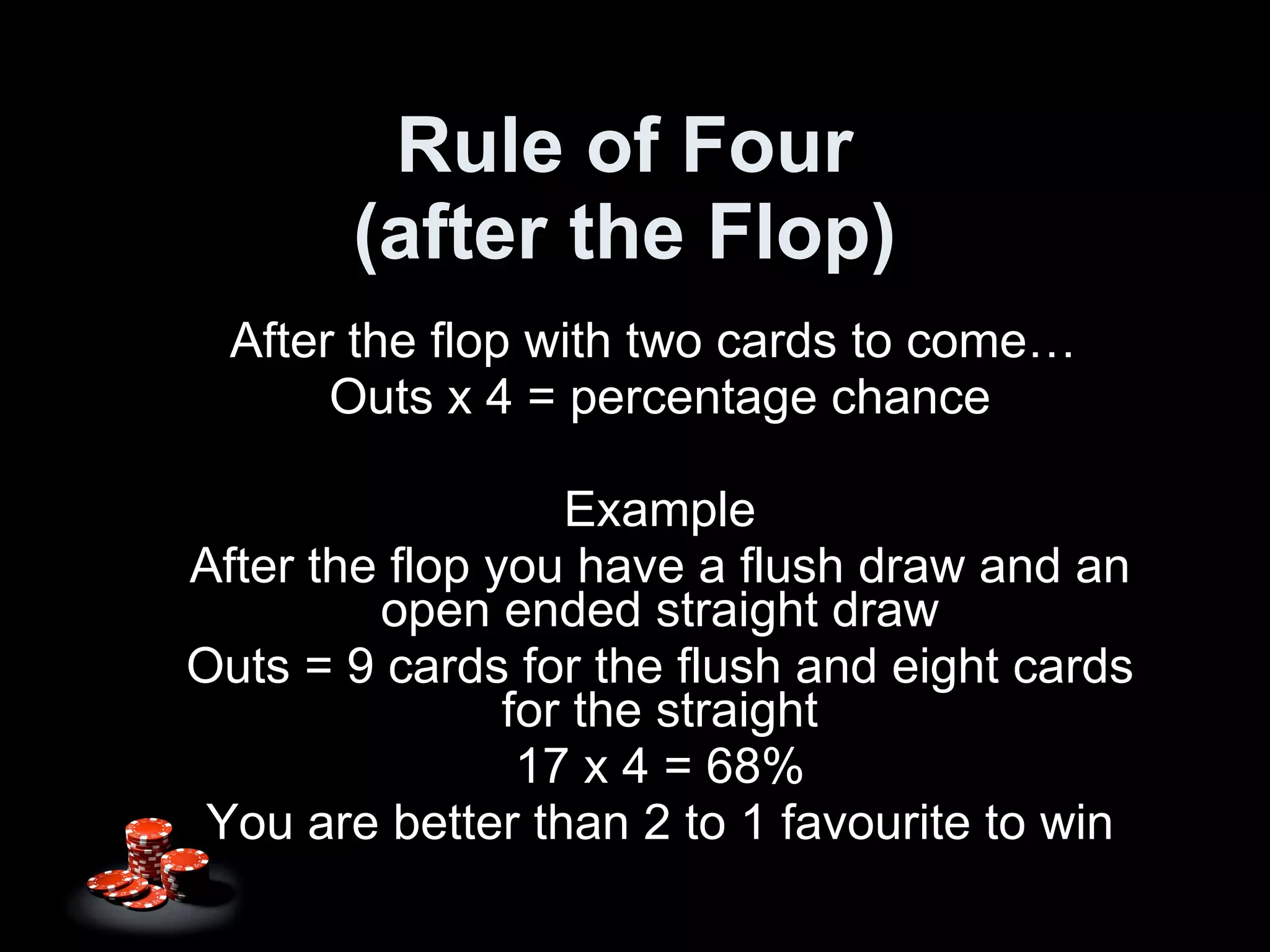
Rule of Four (after the Flop) After the flop with two cards to come…  Outs x 4 = percentage chance Example After the flop you have a flush draw and an open ended straight draw Outs = 9 cards for the flush and eight cards for the straight 17 x 4 = 68% You are better than 2 to 1 favourite to win
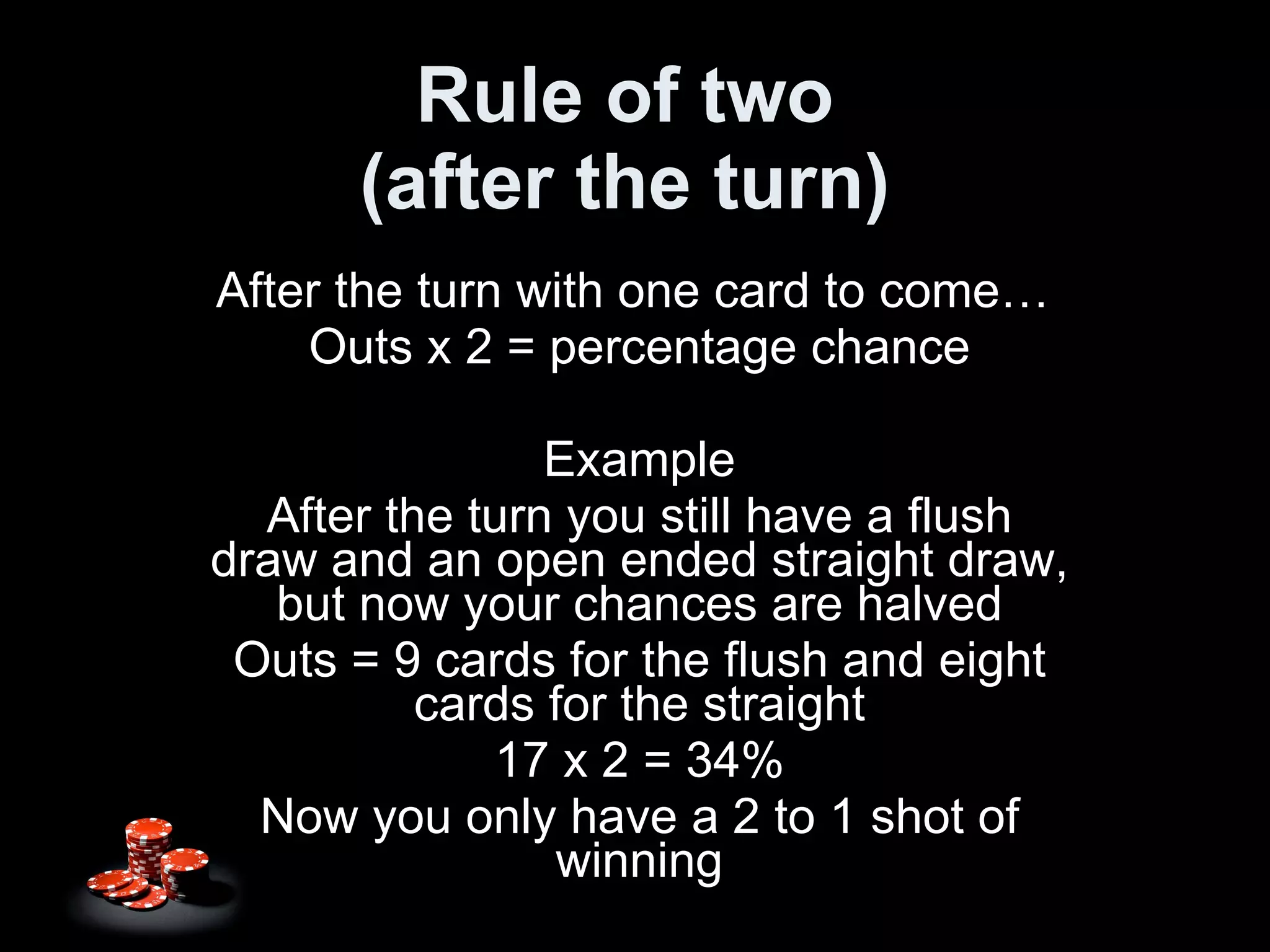
Rule of two (after the turn) After the turn with one card to come…  Outs x 2 = percentage chance Example After the turn you still have a flush draw and an open ended straight draw, but now your chances are halved Outs = 9 cards for the flush and eight cards for the straight 17 x 2 = 34% Now you only have a 2 to 1 shot of winning
Calculating pot odds The higher the risk, the better the return should be for the increased exposure to risk
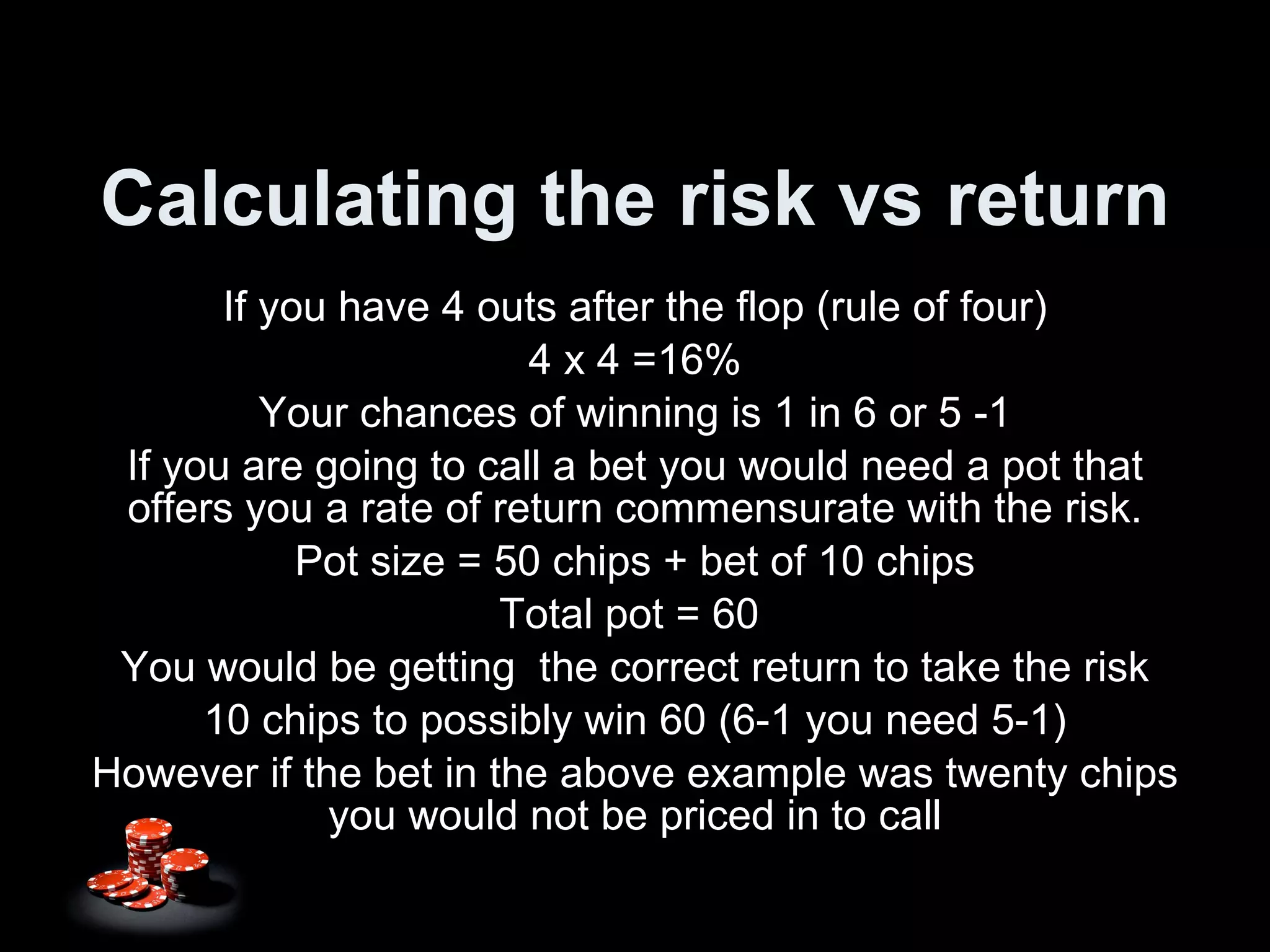
Calculating the risk vs return If you have 4 outs after the flop (rule of four) 4 x 4 =16% Your chances of winning is 1 in 6 or 5 -1 If you are going to call a bet you would need a pot that offers you a rate of return commensurate with the risk. Pot size = 50 chips + bet of 10 chips Total pot = 60  You would be getting  the correct return to take the risk 10 chips to possibly win 60 (6-1 you need 5-1) However if the bet in the above example was twenty chips you would not be priced in to call
Money not lost buys as much… as money won Do not chase straights and draws unless you are getting the correct pot odds. Or put another way. Chasing is risky so always ensure the reward is equal or better than the risk
To Bluff or not to Bluff Good players  do not  bluff as often as you think Bluff only if the pot is worth it Bluff only when you are in position Mostly bluff only if you have outs (semi Bluff) Do not bluff into a multi player pot Limit your bluffs to one or two a session
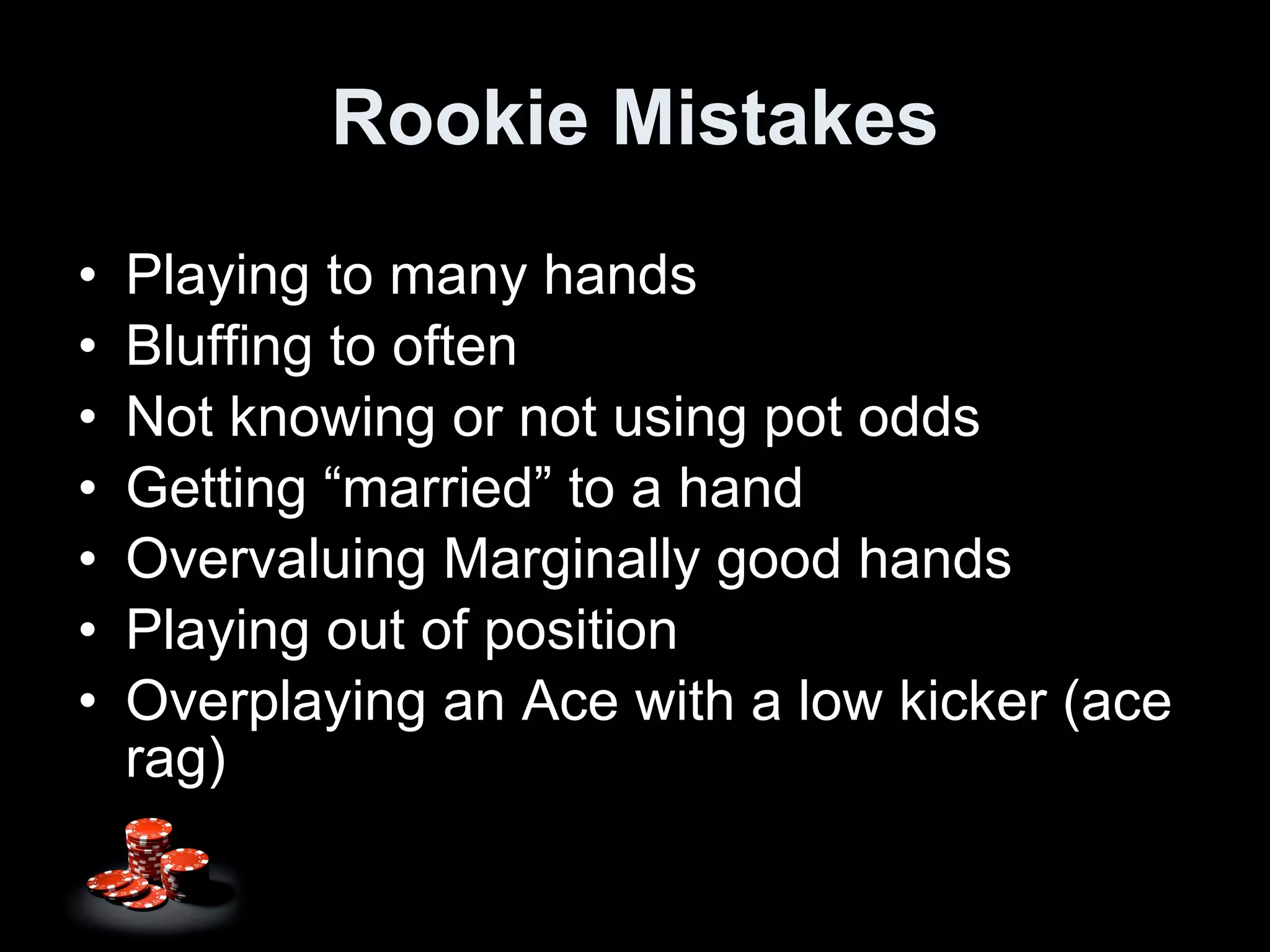
Rookie Mistakes Playing to many hands Bluffing to often Not knowing or not using pot odds Getting “married” to a hand Overvaluing Marginally good hands Playing out of position Overplaying an Ace with a low kicker (ace rag)
Expect to play many, many hands before you become a great player "How long does it take to learn poker, Dad?" "All your life, son." ~Michael Pertwee
Presentation by Gerry Roozendaal Email : tresblue1@gmail.com

Basic Poker Strategy

  • 1.
  • 2.
  • 3.
    Player’s Poker StyleTight aggressive is the most desirable style. However a player should be able to adjust his style to the demands of the table.
  • 4.
  • 5.
    Player Style NeedsFlexibility When becoming short stacked a player will need to loosen up Playing against very aggressive players, tighten up When playing very tight players, loosen up On the money bubble, providing chips allow, loosen up
  • 6.
    The majority ofpoker players lose money Players who win consistently Players who lose consistently
  • 7.
    Being a winnerin poker is not about winning pots But making correct decisions
  • 8.
    You don’t gobroke folding a hand
  • 9.
  • 10.
  • 11.
    Wolf Vs SheepCharacteristics Sheep Plays too many hands Passive when in the hand. Plays hands regardless of position. Calls often Wolf Plays fewer hands but committed Aggressive when in the hand Plays hands according to position. Bets or raises often
  • 12.
    Calling is passivenot aggressive poker If you are making money just calling ..then you are not calling enough
  • 13.
    Position 4 TypesLate position (best position) Blinds ( good position pre flop but terrible position after the flop) Middle position (Exercise caution) Early Position ( Worst position)
  • 14.
    Position Late positionMiddle position Early position Blinds
  • 15.
    Position Matters Thelater the position, the more information you have on which to base your decisions
  • 16.
    In Poker asin any form of investment, the better informed you are, the better your decision making
  • 17.
    Guide to Positionand starting hands
  • 18.
  • 19.
    Pot odds andouts How to calculate outs and the pot odds required
  • 20.
    Outs Outs are,the number of cards left in the deck, that could improve you hand to the winning hand
  • 21.
  • 22.
  • 23.
  • 24.
    Pot Odds Onceyou have calculated your outs, you now have to determine whether you are getting the correct financial return for the risk
  • 25.
    Calculating your oddsThe rule of Two and Four (an easy cheat that skips the complicated math)
  • 26.
    Rule of Four(after the Flop) After the flop with two cards to come… Outs x 4 = percentage chance Example After the flop you have a flush draw and an open ended straight draw Outs = 9 cards for the flush and eight cards for the straight 17 x 4 = 68% You are better than 2 to 1 favourite to win
  • 27.
    Rule of two(after the turn) After the turn with one card to come… Outs x 2 = percentage chance Example After the turn you still have a flush draw and an open ended straight draw, but now your chances are halved Outs = 9 cards for the flush and eight cards for the straight 17 x 2 = 34% Now you only have a 2 to 1 shot of winning
  • 28.
    Calculating pot oddsThe higher the risk, the better the return should be for the increased exposure to risk
  • 29.
    Calculating the riskvs return If you have 4 outs after the flop (rule of four) 4 x 4 =16% Your chances of winning is 1 in 6 or 5 -1 If you are going to call a bet you would need a pot that offers you a rate of return commensurate with the risk. Pot size = 50 chips + bet of 10 chips Total pot = 60 You would be getting the correct return to take the risk 10 chips to possibly win 60 (6-1 you need 5-1) However if the bet in the above example was twenty chips you would not be priced in to call
  • 30.
    Money not lostbuys as much… as money won Do not chase straights and draws unless you are getting the correct pot odds. Or put another way. Chasing is risky so always ensure the reward is equal or better than the risk
  • 31.
    To Bluff ornot to Bluff Good players do not bluff as often as you think Bluff only if the pot is worth it Bluff only when you are in position Mostly bluff only if you have outs (semi Bluff) Do not bluff into a multi player pot Limit your bluffs to one or two a session
  • 32.
    Rookie Mistakes Playingto many hands Bluffing to often Not knowing or not using pot odds Getting “married” to a hand Overvaluing Marginally good hands Playing out of position Overplaying an Ace with a low kicker (ace rag)
  • 33.
    Expect to playmany, many hands before you become a great player "How long does it take to learn poker, Dad?" "All your life, son." ~Michael Pertwee
  • 34.
    Presentation by GerryRoozendaal Email : tresblue1@gmail.com