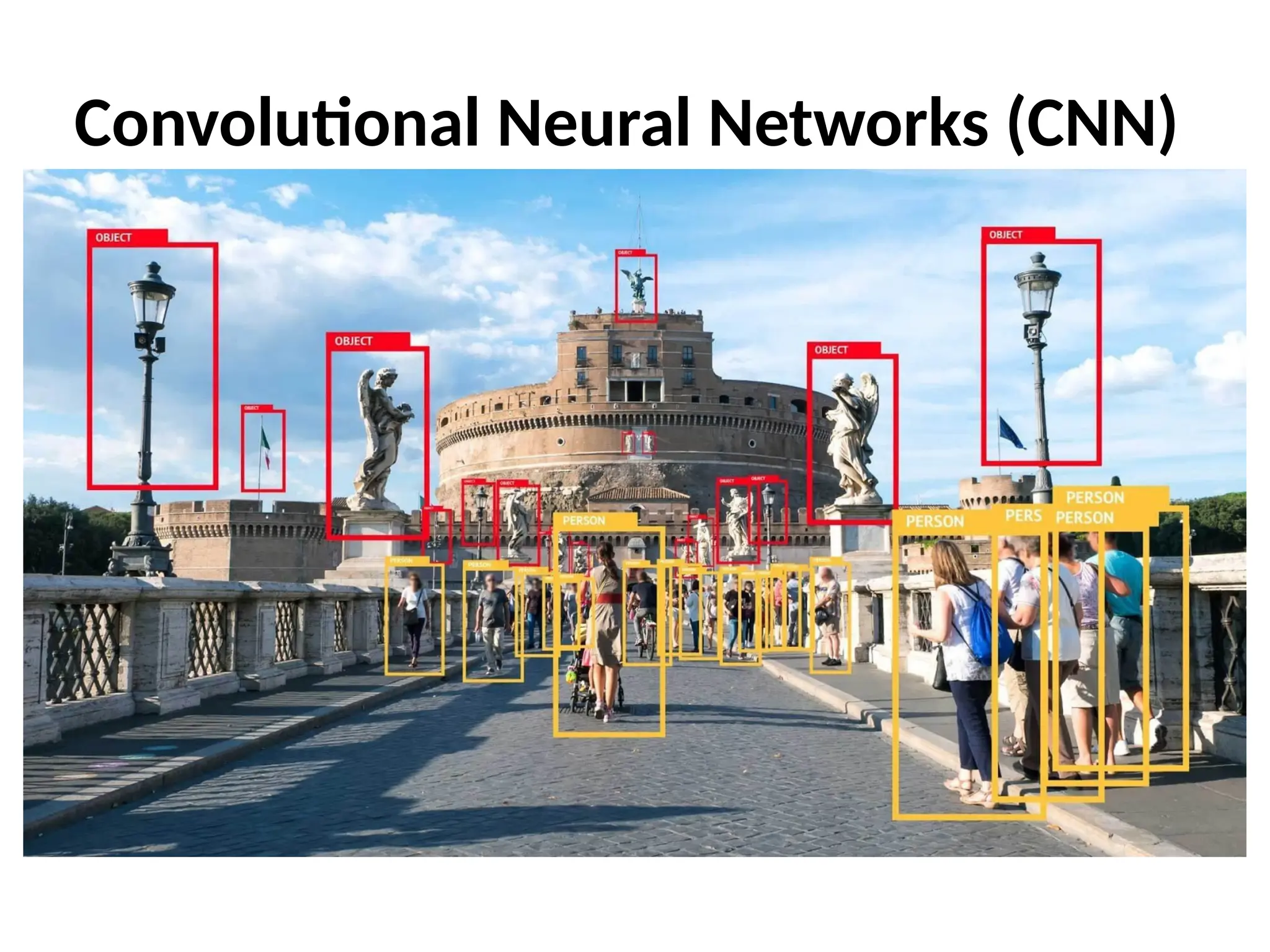
Convolutional Neural Networks (CNN)
Motivation
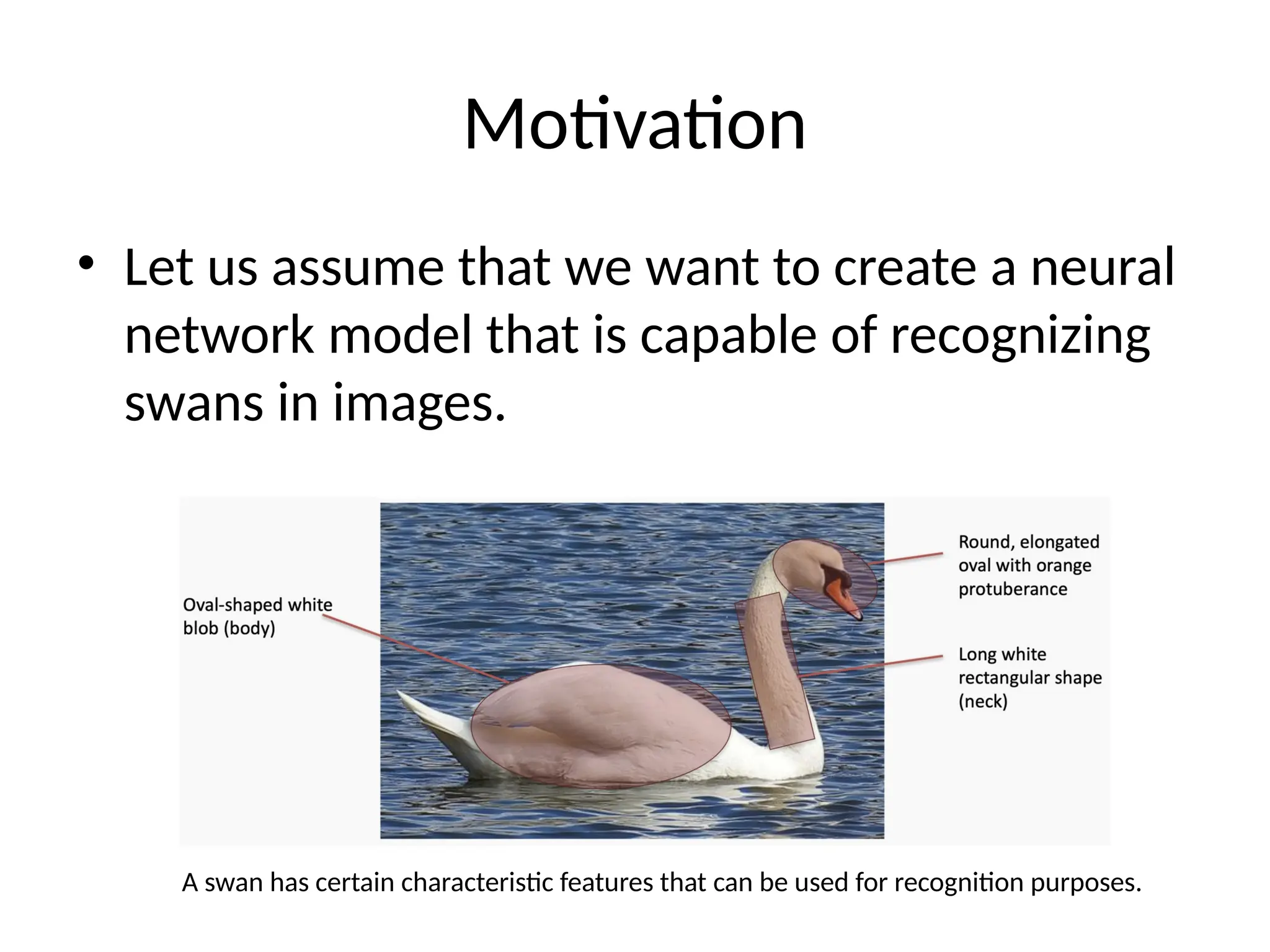
• Let us assume that we want to create a neural
network model that is capable of recognizing
swans in images.
A swan has certain characteristic features that can be used for recognition purposes.
Motivation
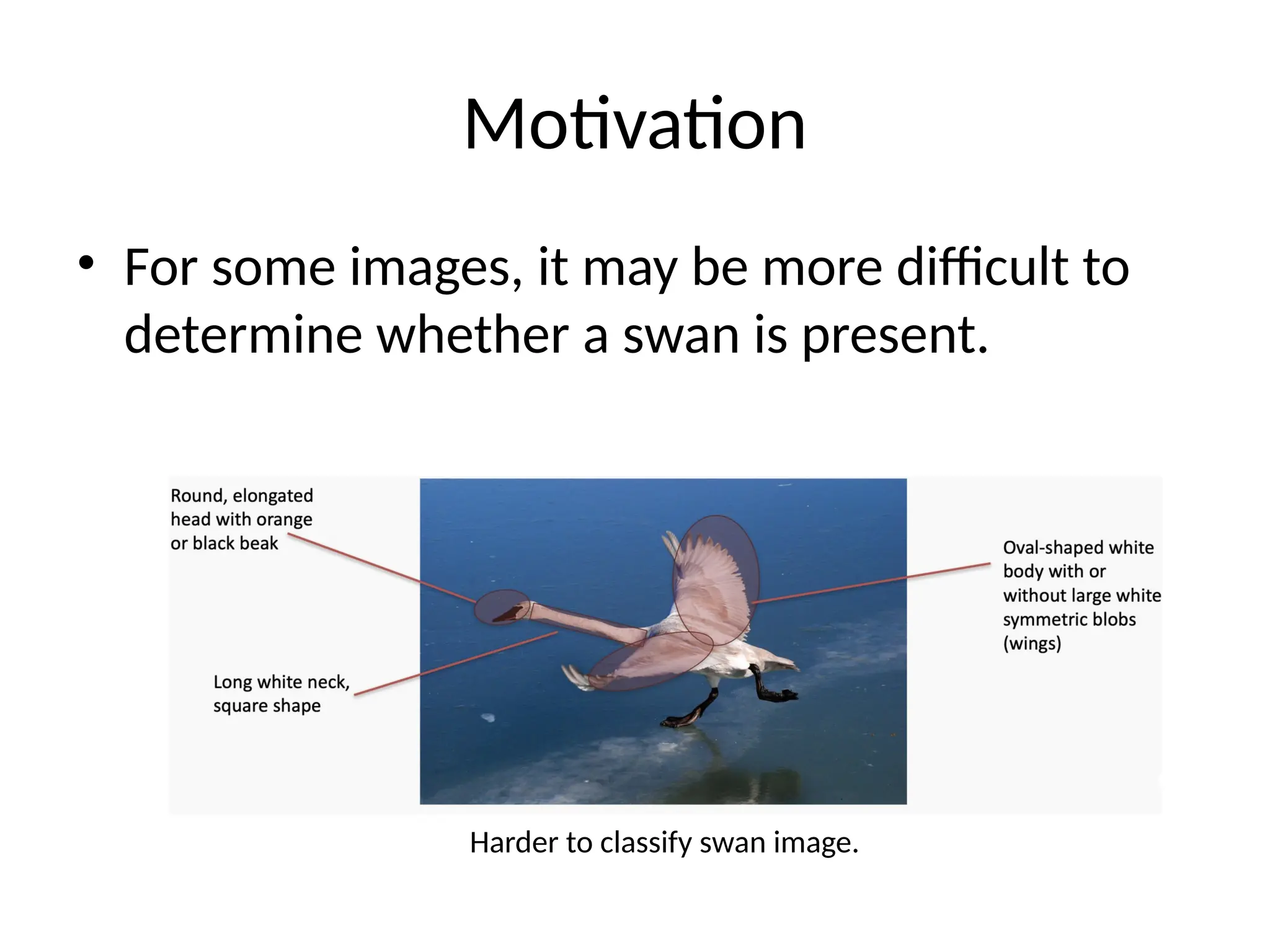
• For some images, it may be more difficult to
determine whether a swan is present.
Harder to classify swan image.
Drawback of MLPs
• Do not scale well for images
• Ignore the information brought by pixel
position and correlation with neighbors
• Cannot handle translations
Solution: CNN
Convolutional Neural Networks
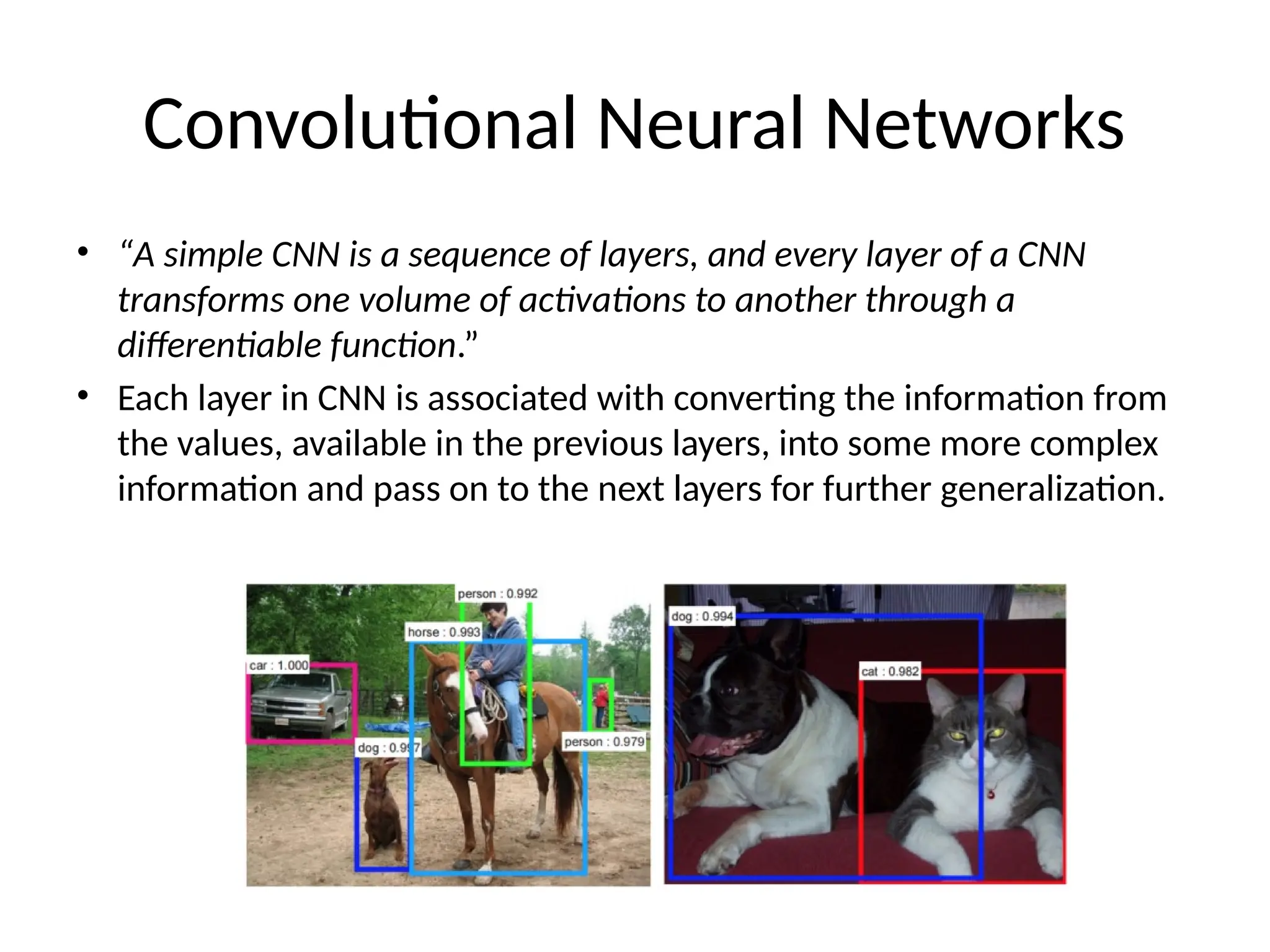
• “A simple CNN is a sequence of layers, and every layer of a CNN
transforms one volume of activations to another through a
differentiable function.”
• Each layer in CNN is associated with converting the information from
the values, available in the previous layers, into some more complex
information and pass on to the next layers for further generalization.
Convolutional Neural Network Architecture
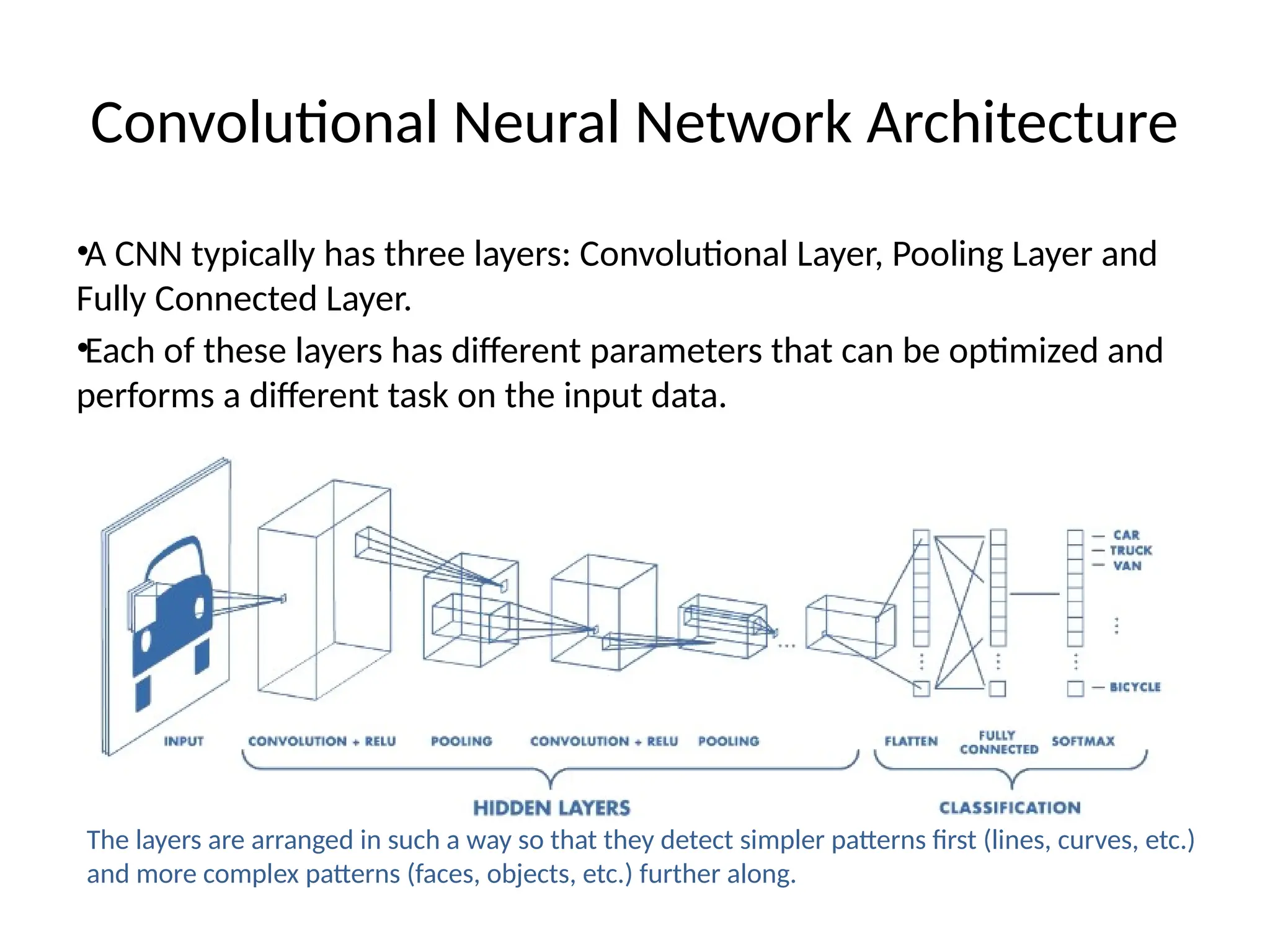
•A CNN typically has three layers: Convolutional Layer, Pooling Layer and
Fully Connected Layer.
•Each of these layers has different parameters that can be optimized and
performs a different task on the input data.
The layers are arranged in such a way so that they detect simpler patterns first (lines, curves, etc.)
and more complex patterns (faces, objects, etc.) further along.
Convolution
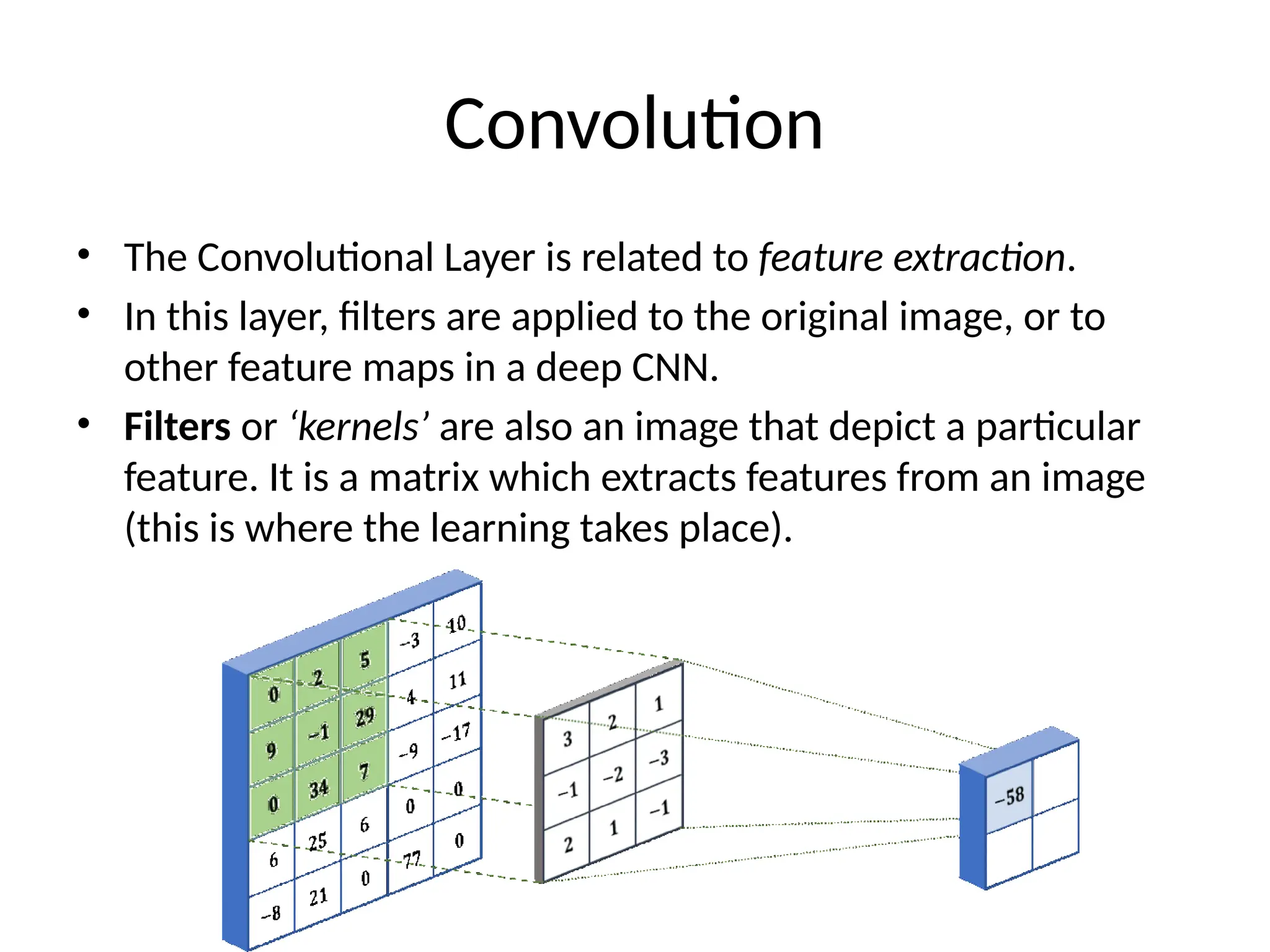
• The Convolutional Layer is related to feature extraction.
• In this layer, filters are applied to the original image, or to
other feature maps in a deep CNN.
• Filters or ‘kernels’ are also an image that depict a particular
feature. It is a matrix which extracts features from an image
(this is where the learning takes place).
Padding
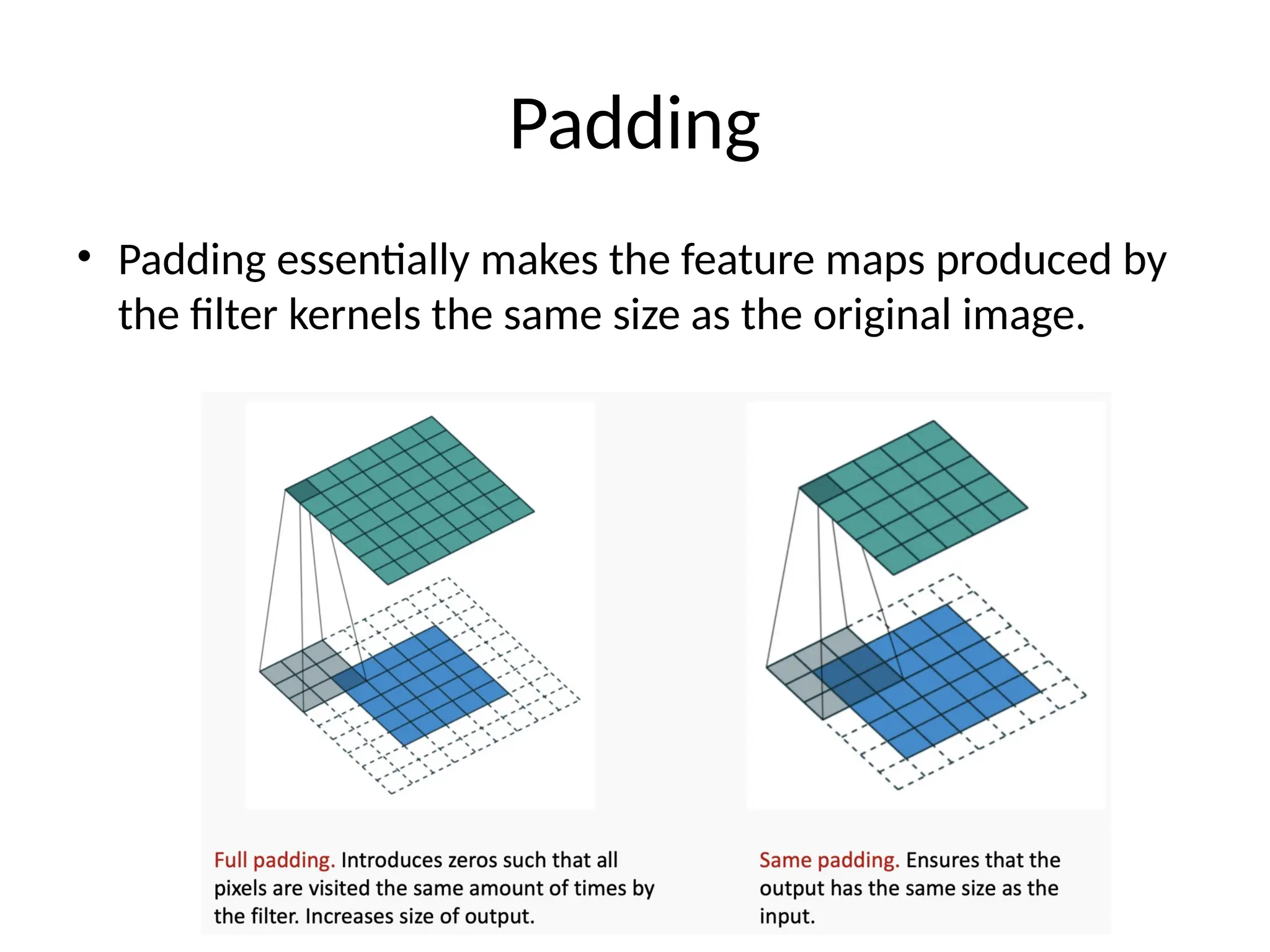
• Padding essentially makes the feature maps produced by
the filter kernels the same size as the original image.
Pooling
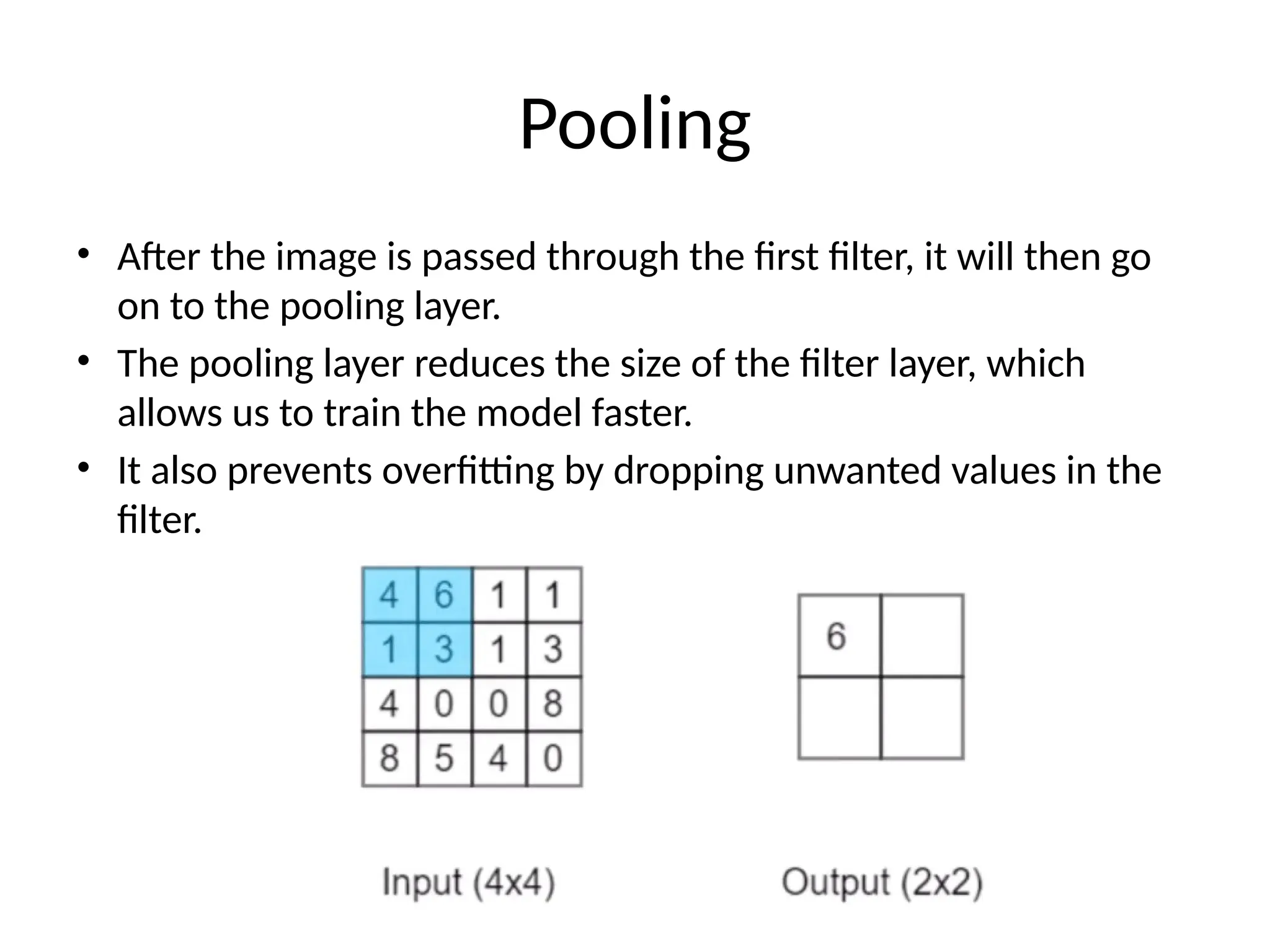
• After the image is passed through the first filter, it will then go
on to the pooling layer.
• The pooling layer reduces the size of the filter layer, which
allows us to train the model faster.
• It also prevents overfitting by dropping unwanted values in the
filter.
Re-Lu
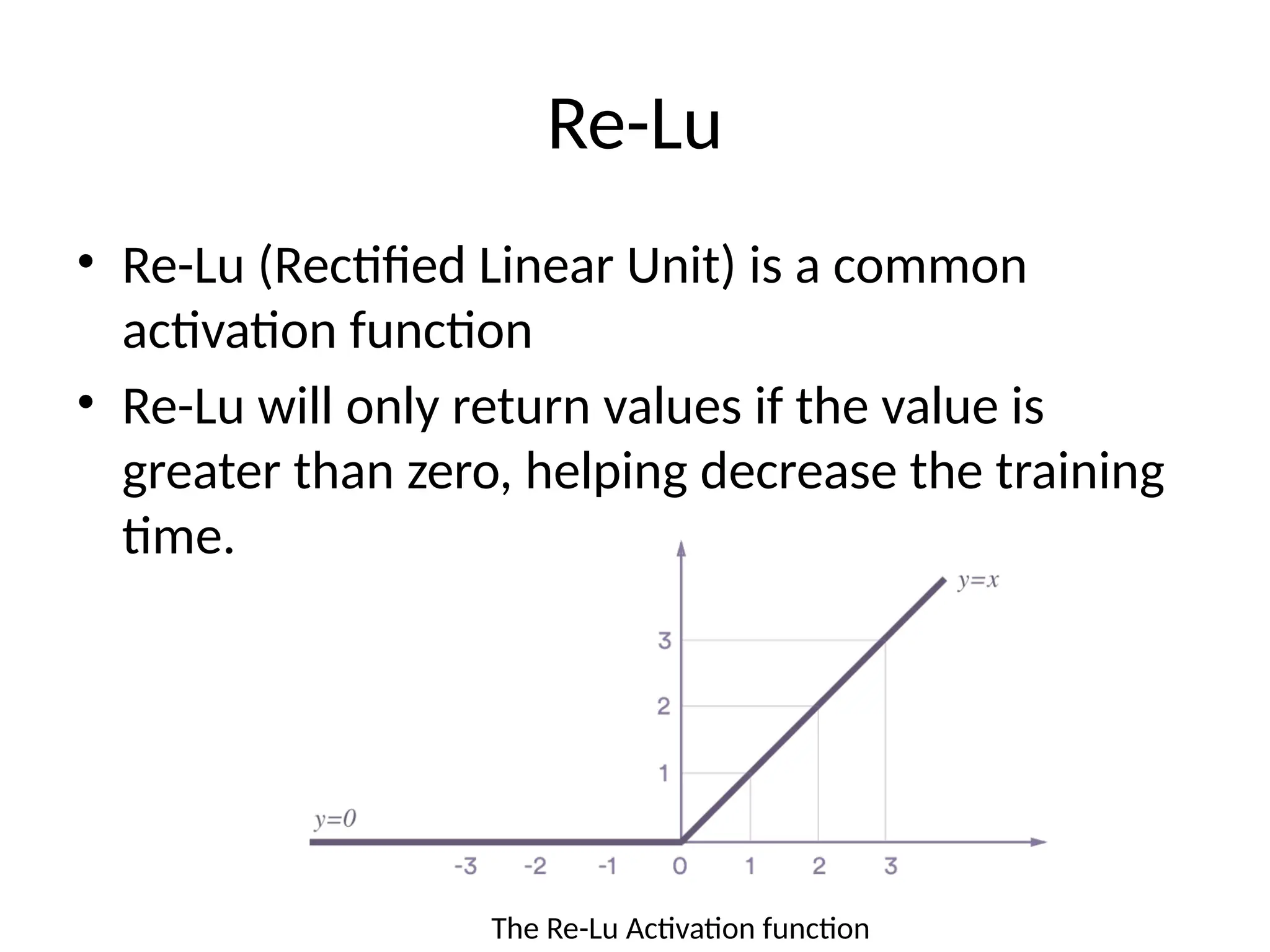
• Re-Lu (Rectified Linear Unit) is a common
activation function
• Re-Lu will only return values if the value is
greater than zero, helping decrease the training
time.
The Re-Lu Activation function
Fully Connected Layers
• Now that all the features of the image have been extracted
by the Convolutional layers, next step is to classify the
images.
• In a fully connected layer, every neuron shares a connection
with all the other neurons in the layer before and after it.
Applications

Basic Introduction to Convolutional Neural Network.pptx

  • 1.
  • 2.
    Motivation • Let usassume that we want to create a neural network model that is capable of recognizing swans in images. A swan has certain characteristic features that can be used for recognition purposes.
  • 3.
    Motivation • For someimages, it may be more difficult to determine whether a swan is present. Harder to classify swan image.
  • 4.
    Drawback of MLPs •Do not scale well for images • Ignore the information brought by pixel position and correlation with neighbors • Cannot handle translations Solution: CNN
  • 5.
    Convolutional Neural Networks •“A simple CNN is a sequence of layers, and every layer of a CNN transforms one volume of activations to another through a differentiable function.” • Each layer in CNN is associated with converting the information from the values, available in the previous layers, into some more complex information and pass on to the next layers for further generalization.
  • 6.
    Convolutional Neural NetworkArchitecture •A CNN typically has three layers: Convolutional Layer, Pooling Layer and Fully Connected Layer. •Each of these layers has different parameters that can be optimized and performs a different task on the input data. The layers are arranged in such a way so that they detect simpler patterns first (lines, curves, etc.) and more complex patterns (faces, objects, etc.) further along.
  • 7.
    Convolution • The ConvolutionalLayer is related to feature extraction. • In this layer, filters are applied to the original image, or to other feature maps in a deep CNN. • Filters or ‘kernels’ are also an image that depict a particular feature. It is a matrix which extracts features from an image (this is where the learning takes place).
  • 8.
    Padding • Padding essentiallymakes the feature maps produced by the filter kernels the same size as the original image.
  • 9.
    Pooling • After theimage is passed through the first filter, it will then go on to the pooling layer. • The pooling layer reduces the size of the filter layer, which allows us to train the model faster. • It also prevents overfitting by dropping unwanted values in the filter.
  • 10.
    Re-Lu • Re-Lu (RectifiedLinear Unit) is a common activation function • Re-Lu will only return values if the value is greater than zero, helping decrease the training time. The Re-Lu Activation function
  • 11.
    Fully Connected Layers •Now that all the features of the image have been extracted by the Convolutional layers, next step is to classify the images. • In a fully connected layer, every neuron shares a connection with all the other neurons in the layer before and after it.
  • 13.