Download as PDF, PPTX






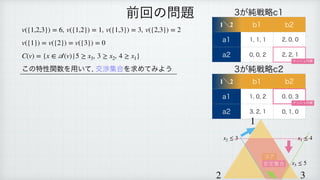
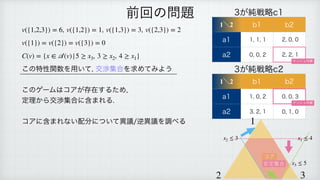
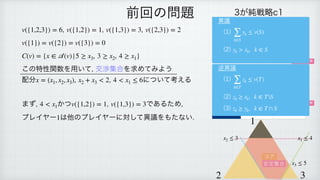
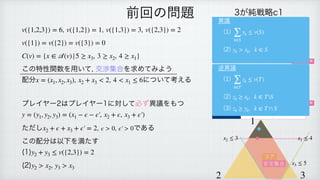
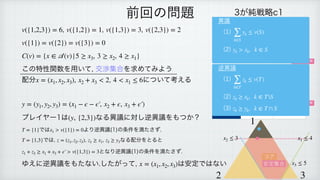
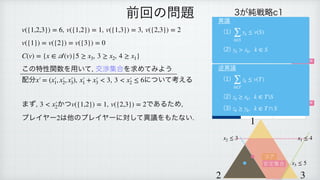
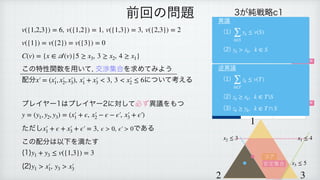
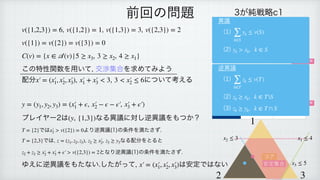
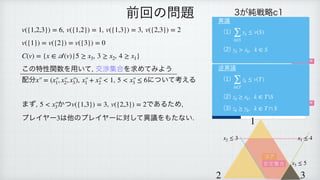
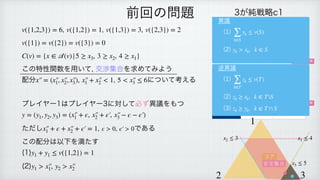
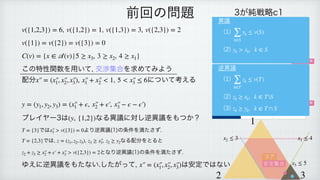
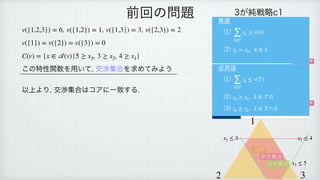


This document discusses game theory and bargaining sets. It begins by reviewing the definitions of objections and counter-objections in bargaining situations. It then proves that the bargaining set of a game is always non-empty using the relationship between the bargaining set and the core. As an example, it calculates the core and examines different allocations to determine which belong to the bargaining set for a specific characteristic function game.


