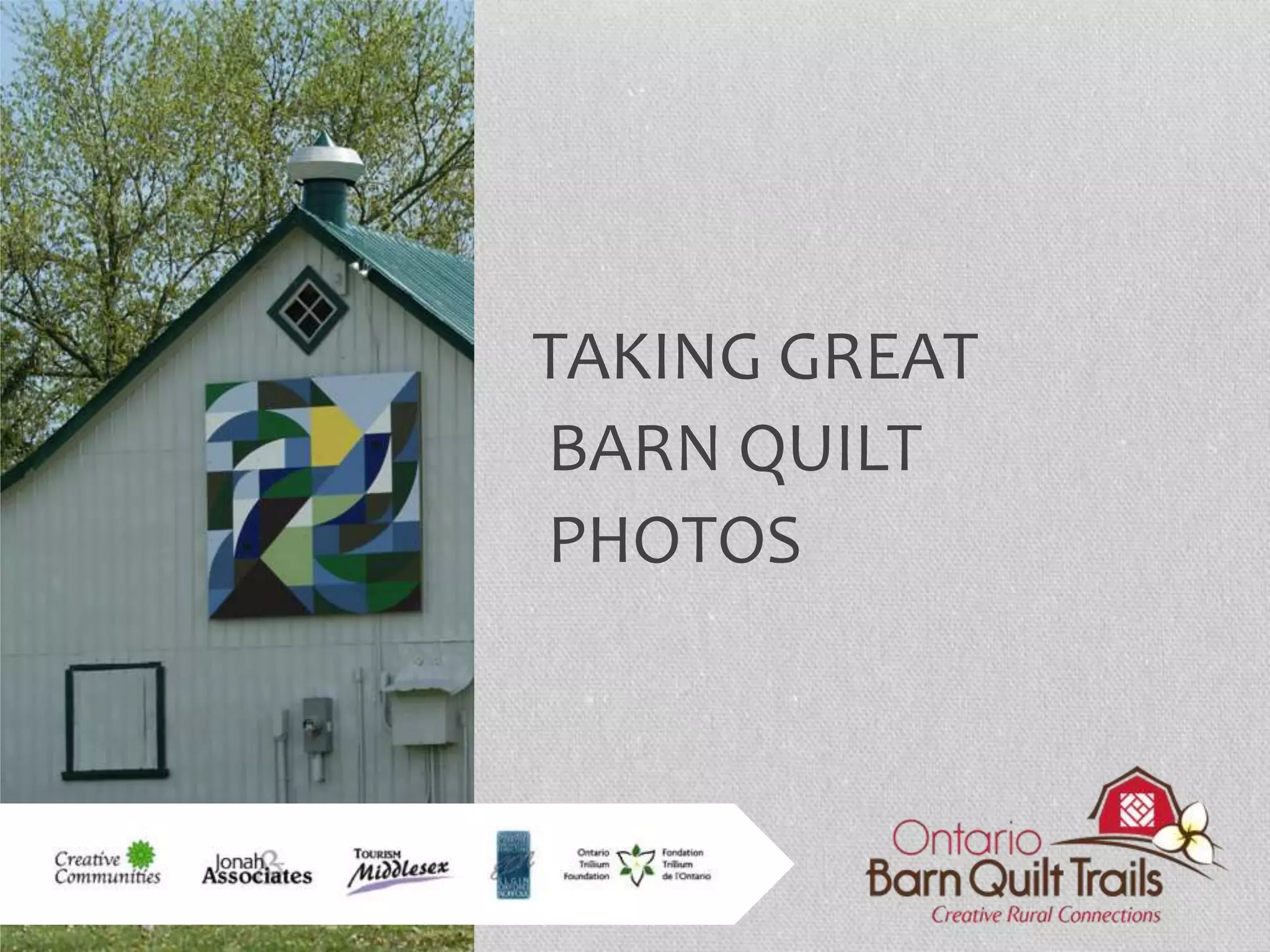
TAKING GREAT
BARN QUILT
PHOTOS
10 steps to take better pictures
By Glenda Cochran
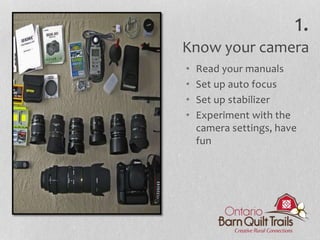
1.
Know your camera
• Read your manuals
• Set up auto focus
• Set up stabilizer
• Experiment with the
camera settings, have
fun
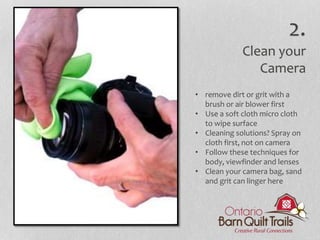
• remove dirt or grit with a
brush or air blower first
• Use a soft cloth micro cloth
to wipe surface
• Cleaning solutions? Spray on
cloth first, not on camera
• Follow these techniques for
body, viewfinder and lenses
• Clean your camera bag, sand
and grit can linger here
2.
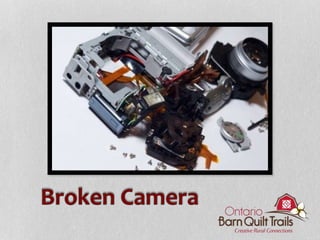
Clean your
Camera
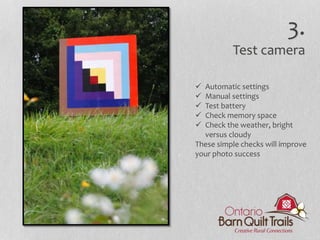
 Automatic settings
 Manual settings
 Test battery
 Check memory space
 Check the weather, bright
versus cloudy
These simple checks will improve
your photo success
3.
Test camera
• Always lock the focus before taking a picture.
• Frame, don’t aim
• Get Closer
• Use flash outdoors
• Shoot from a different angle
• Place the subject off-center
4.
TIPS FOR TAKING
GOOD POINT AND
SHOOT PHOTOS
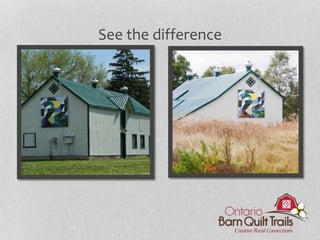
See the difference
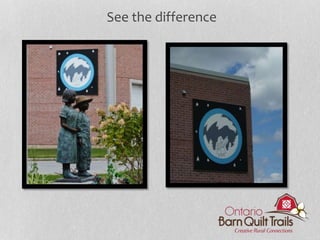
See the difference
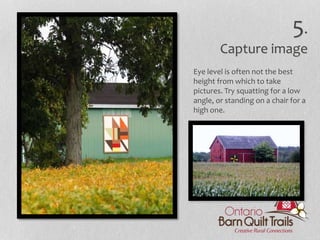
Eye level is often not the best
height from which to take
pictures. Try squatting for a low
angle, or standing on a chair for a
high one.
5.
Capture image
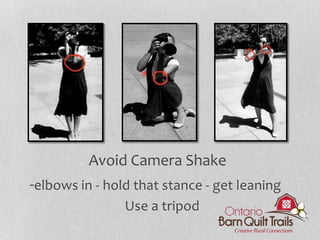
Avoid Camera Shake
-elbows in - hold that stance - get leaning
Use a tripod
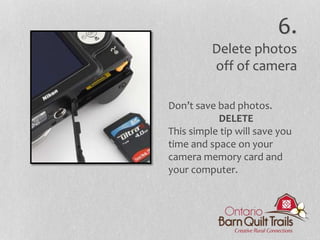
Don’t save bad photos.
DELETE
This simple tip will save you
time and space on your
camera memory card and
your computer.
6.
Delete photos
off of camera
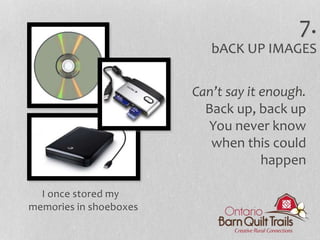
I once stored my
memories in shoeboxes
Can’t say it enough.
Back up, back up
You never know
when this could
happen
7.
bACK UP IMAGES
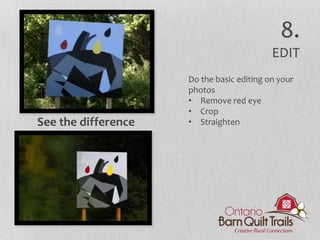
Do the basic editing on your
photos
• Remove red eye
• Crop
• Straighten
8.
EDIT
See the difference
9.
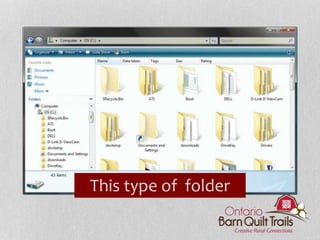
EXPORT TO
FOLDERS
I once stored my memories in
shoeboxes
This type of folder
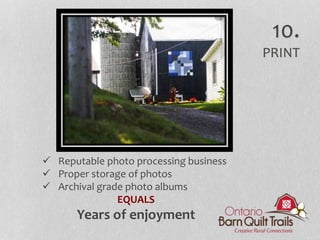
 Reputable photo processing business
 Proper storage of photos
 Archival grade photo albums
EQUALS
Years of enjoyment
10.
PRINT
Glenda Cochran and family

Barn Quilt Photos. Take you best shot the first time.

  • 1.
  • 2.
    10 steps totake better pictures By Glenda Cochran
  • 3.
    1. Know your camera •Read your manuals • Set up auto focus • Set up stabilizer • Experiment with the camera settings, have fun
  • 4.
    • remove dirtor grit with a brush or air blower first • Use a soft cloth micro cloth to wipe surface • Cleaning solutions? Spray on cloth first, not on camera • Follow these techniques for body, viewfinder and lenses • Clean your camera bag, sand and grit can linger here 2. Clean your Camera
  • 5.
     Automatic settings Manual settings  Test battery  Check memory space  Check the weather, bright versus cloudy These simple checks will improve your photo success 3. Test camera
  • 6.
    • Always lockthe focus before taking a picture. • Frame, don’t aim • Get Closer • Use flash outdoors • Shoot from a different angle • Place the subject off-center 4. TIPS FOR TAKING GOOD POINT AND SHOOT PHOTOS
  • 7.
  • 8.
  • 9.
    Eye level isoften not the best height from which to take pictures. Try squatting for a low angle, or standing on a chair for a high one. 5. Capture image
  • 10.
    Avoid Camera Shake -elbowsin - hold that stance - get leaning Use a tripod
  • 11.
    Don’t save badphotos. DELETE This simple tip will save you time and space on your camera memory card and your computer. 6. Delete photos off of camera
  • 12.
    I once storedmy memories in shoeboxes Can’t say it enough. Back up, back up You never know when this could happen 7. bACK UP IMAGES
  • 14.
    Do the basicediting on your photos • Remove red eye • Crop • Straighten 8. EDIT See the difference
  • 15.
    9. EXPORT TO FOLDERS I oncestored my memories in shoeboxes
  • 16.
  • 17.
     Reputable photoprocessing business  Proper storage of photos  Archival grade photo albums EQUALS Years of enjoyment 10. PRINT
  • 18.

Editor's Notes

  • #7 Tips for Taking Good Point-and-Shoot Photographs By Russell Hart Part of the Photography For Dummies Cheat Sheet Photography is about capturing and preserving images, and as a photographer, you want to take the best pictures you can. If you’re using a point-and-shoot camera, use these simple tricks to help improve your photographs: Always lock the focus before taking a picture. Frame, don’t aim. Use the whole viewfinder or viewing screen to compose your shot. With people pictures, place heads near the top rather than dead-center. Get closer. In most photographs, the main subject is too small — and getting closer when you shoot is the best way to make the subject bigger. Use flash outdoors. Set your point-and-shoot’s fill-flash mode whenever possible. It softens the unflattering facial shadows created by direct sunlight and brightens a subject lit from behind without washing out the background. Use a fast film. ISO 400 print film should be your standard film. If you like to zoom your lens way in to make the subject bigger, use ISO 800 film instead. These super-quality films lessen picture-wrecking blur and improve background detail in flash shots. Shoot from a different angle. Eye level is often not the best height from which to take pictures. Try squatting for a low angle, or standing on a chair for a high one. Place the subject off-center. This is an easy way to make your pictures more interesting. But off-center composition makes locking the focus all the more imperative!