n Sharker
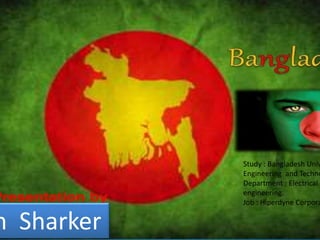
Study : Bangladesh Univ
Engineering and Techno
Department : Electrical a
engineering.
Job : Hiperdyne Corpora
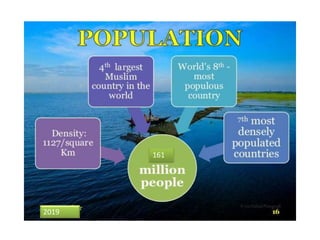
161
2019
2019
2019
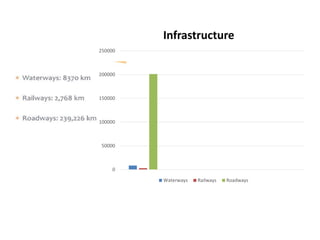
Infrastructure
0
50000
100000
150000
200000
250000
Waterways Railways Roadways
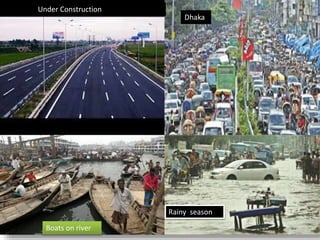
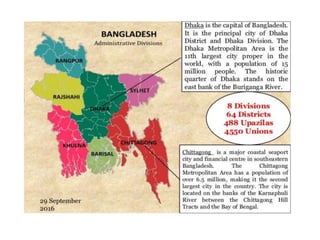
Dhaka
Under Construction
Rainy season
Boats on river
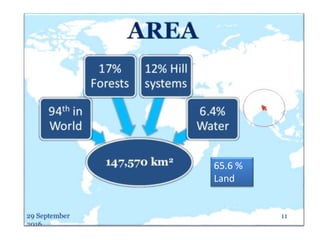
65.6 %
Land
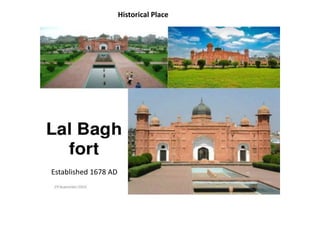
Established 1678 AD
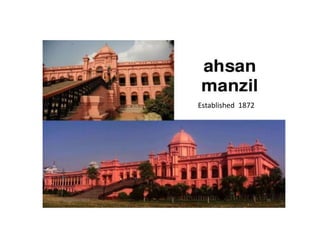
Historical Place
Established 1872
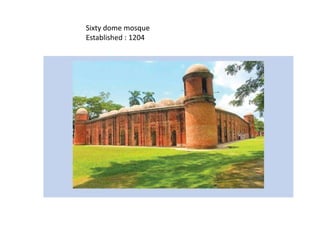
Sixty dome mosque
Established : 1204
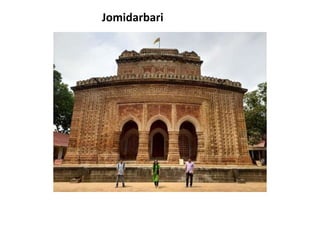
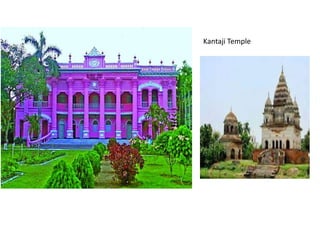
Jomidarbari
Chini Mosque
Kantaji Temple
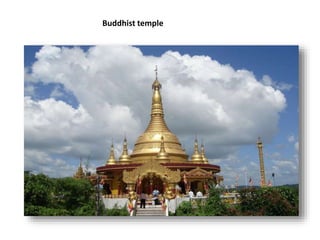
Buddhist temple
2019
1952 is the year when the nation Bengali had to sacrifice some valuable lives to achieve
"Bangla" as their mother tongue . This monument was built in 1963 . This is a
monument to recall the martyrs of our language movement .
Shaheed Miner , Dhaka
, Bangladesh
2019
2019
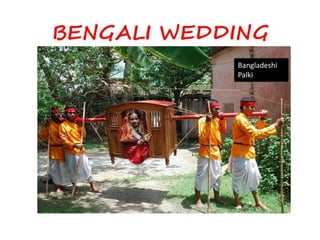
Bangladeshi
Palki
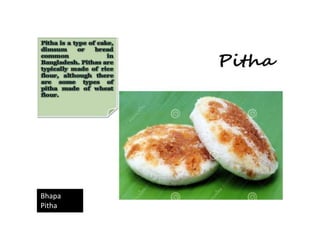
Bhapa
Pitha
2019
2019
Egg
Shrimp
Chicken
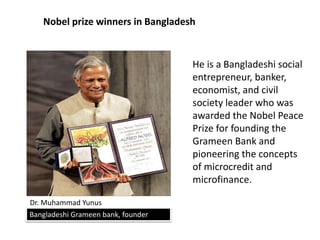
Nobel prize winners in Bangladesh
Dr. Muhammad Yunus
Bangladeshi Grameen bank, founder
He is a Bangladeshi social
entrepreneur, banker,
economist, and civil
society leader who was
awarded the Nobel Peace
Prize for founding the
Grameen Bank and
pioneering the concepts
of microcredit and
microfinance.
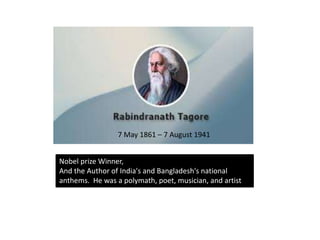
Nobel prize Winner,
And the Author of India's and Bangladesh's national
anthems. He was a polymath, poet, musician, and artist
7 May 1861 – 7 August 1941
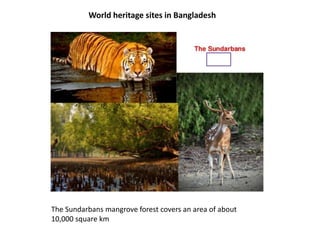
World heritage sites in Bangladesh
The Sundarbans mangrove forest covers an area of about
10,000 square km
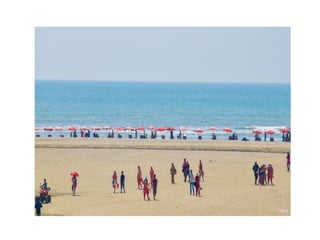
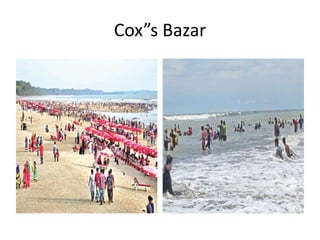
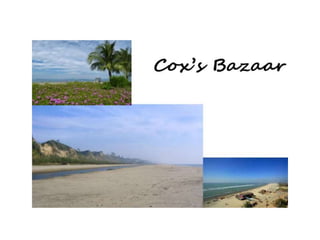
Cox”s Bazar
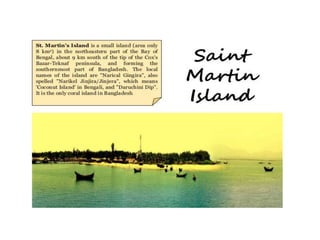
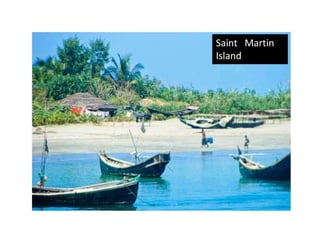
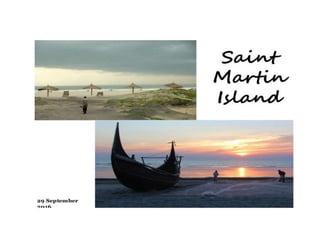
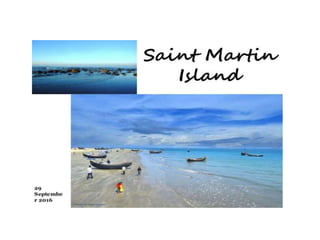
Saint Martin
Island
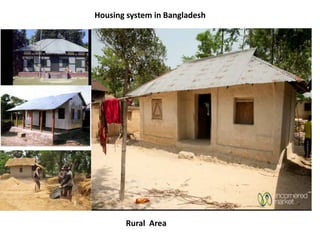
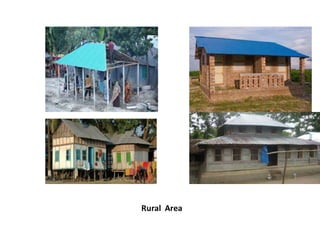
Housing system in Bangladesh
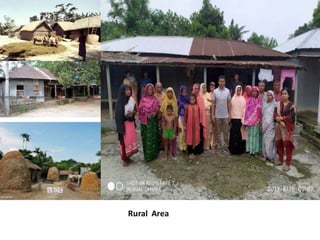
Rural Area
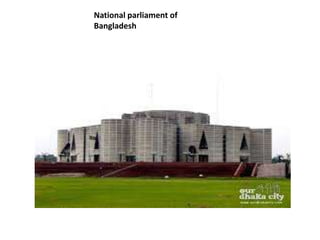
National parliament of
Bangladesh
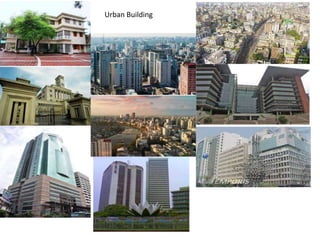
Urban Building
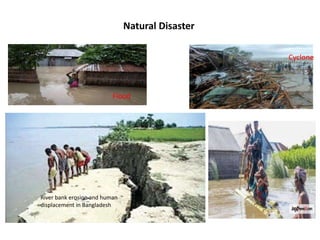
Natural Disaster
Cyclone
Flood
River bank erosion and human
displacement in Bangladesh
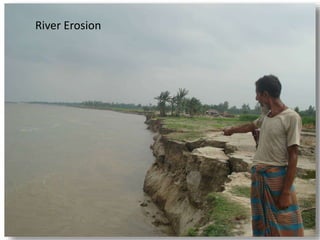
River Erosion
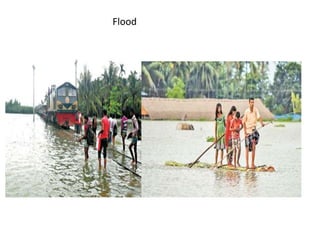
Flood
Agriculture Sector
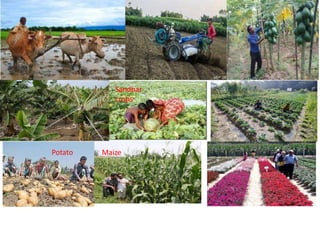
Sandbar
crops
MaizePotatoPotato
Pineapple
Jute (our golden
fiber
Jambol
Lotkon
Lichi
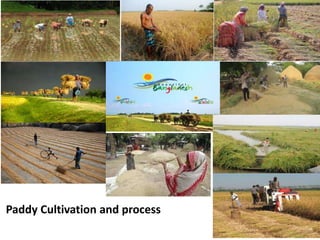
Paddy Cultivation and process
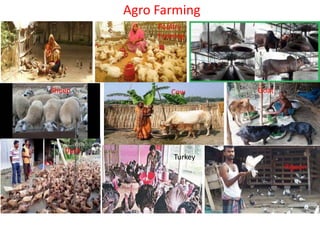
Agro Farming
Poultry
Farming
Sheep Goat
Duck
Cow
Turkey
Pigeon
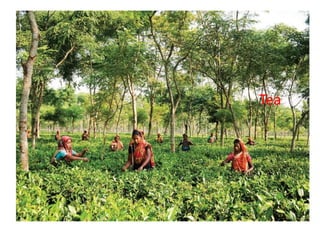
Tea
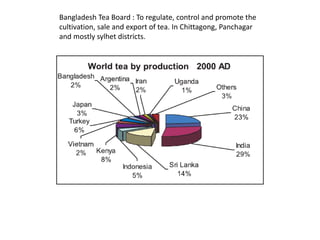
Bangladesh Tea Board : To regulate, control and promote the
cultivation, sale and export of tea. In Chittagong, Panchagar
and mostly sylhet districts.
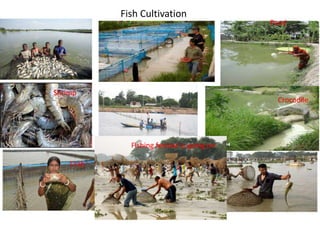
Pond
Fish Cultivation
Crocodile
Crab
Shrimp
Fishing festival is going on
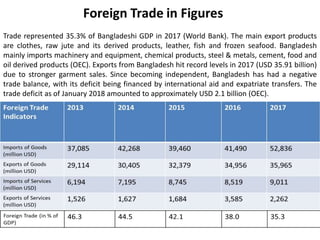
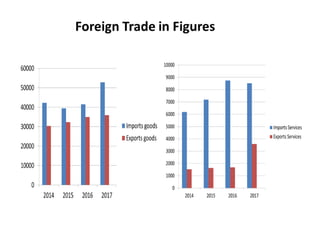
Trade represented 35.3% of Bangladeshi GDP in 2017 (World Bank). The main export products
are clothes, raw jute and its derived products, leather, fish and frozen seafood. Bangladesh
mainly imports machinery and equipment, chemical products, steel & metals, cement, food and
oil derived products (OEC). Exports from Bangladesh hit record levels in 2017 (USD 35.91 billion)
due to stronger garment sales. Since becoming independent, Bangladesh has had a negative
trade balance, with its deficit being financed by international aid and expatriate transfers. The
trade deficit as of January 2018 amounted to approximately USD 2.1 billion (OEC).
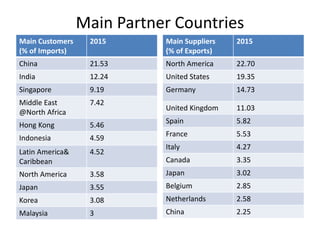
Main Partner Countries
Main Suppliers
(% of Exports)
2015
North America 22.70
United States 19.35
Germany 14.73
United Kingdom 11.03
Spain 5.82
France 5.53
Italy 4.27
Canada 3.35
Japan 3.02
Belgium 2.85
Netherlands 2.58
China 2.25
Main Customers
(% of Imports)
2015
China 21.53
India 12.24
Singapore 9.19
Middle East
@North Africa
7.42
Hong Kong 5.46
Indonesia 4.59
Latin America&
Caribbean
4.52
North America 3.58
Japan 3.55
Korea 3.08
Malaysia 3
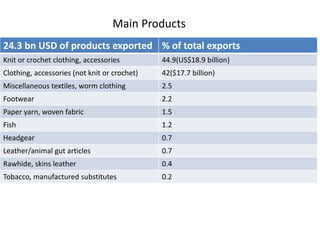
24.3 bn USD of products exported % of total exports
Knit or crochet clothing, accessories 44.9(US$18.9 billion)
Clothing, accessories (not knit or crochet) 42($17.7 billion)
Miscellaneous textiles, worm clothing 2.5
Footwear 2.2
Paper yarn, woven fabric 1.5
Fish 1.2
Headgear 0.7
Leather/animal gut articles 0.7
Rawhide, skins leather 0.4
Tobacco, manufactured substitutes 0.2
Main Products
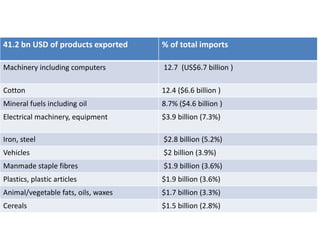
41.2 bn USD of products exported % of total imports
Machinery including computers 12.7 (US$6.7 billion )
Cotton 12.4 ($6.6 billion )
Mineral fuels including oil 8.7% ($4.6 billion )
Electrical machinery, equipment $3.9 billion (7.3%)
Iron, steel $2.8 billion (5.2%)
Vehicles $2 billion (3.9%)
Manmade staple fibres $1.9 billion (3.6%)
Plastics, plastic articles $1.9 billion (3.6%)
Animal/vegetable fats, oils, waxes $1.7 billion (3.3%)
Cereals $1.5 billion (2.8%)
Overview of Major Industries in Bangladesh
Industrialization is an essential prerequisite for rapid economic growth of a developing
country like Bangladesh. This study shows the major industrial growth of the country and
their impact on the national economic development, public safety, health and environment.
The capacity, productivity and export/import values of industrial products are used to
establish the baseline scenario. There are significant numbers of chemical intensive
industries such as textile, leather, food, fertilizer and pharmaceutical industry that have
direct impact on socio economic development of the country. It is worth noting that
Bangladesh is not only importing industrial products from other countries but also exporting
a substantial amount of product to over 100 countries of the world and shows an impressive
growth in industrial sectors Rapid industrial growth often offers a huge burden of
environmental pollution and associated risks. Thus, there are still lots of space for
Bangladesh to flourish in this sector.
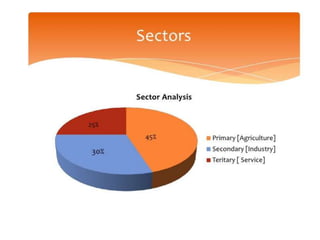
Percentage of Sector Wise Industries in
Bangladesh
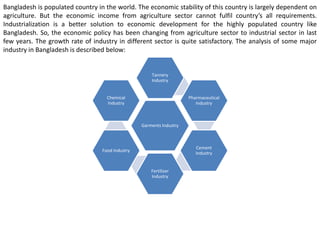
Bangladesh is populated country in the world. The economic stability of this country is largely dependent on
agriculture. But the economic income from agriculture sector cannot fulfil country’s all requirements.
Industrialization is a better solution to economic development for the highly populated country like
Bangladesh. So, the economic policy has been changing from agriculture sector to industrial sector in last
few years. The growth rate of industry in different sector is quite satisfactory. The analysis of some major
industry in Bangladesh is described below:
Garments Industry
Tannery
Industry
Pharmaceutical
Industry
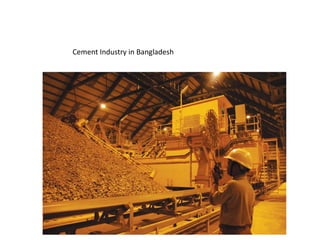
Cement
Industry
Fertilizer
Industry
Food Industry
Chemical
Industry
Garments Industry
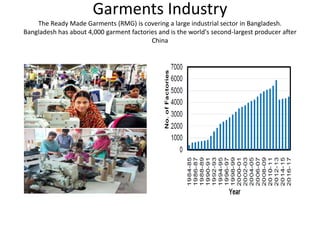
The Ready Made Garments (RMG) is covering a large industrial sector in Bangladesh.
Bangladesh has about 4,000 garment factories and is the world's second-largest producer after
China
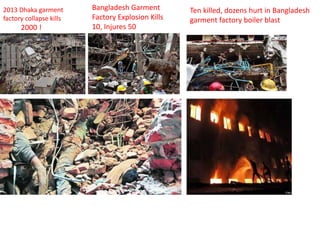
2013 Dhaka garment
factory collapse kills
2000 !
Bangladesh Garment
Factory Explosion Kills
10, Injures 50
Ten killed, dozens hurt in Bangladesh
garment factory boiler blast
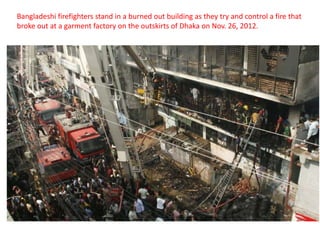
Bangladeshi firefighters stand in a burned out building as they try and control a fire that
broke out at a garment factory on the outskirts of Dhaka on Nov. 26, 2012.
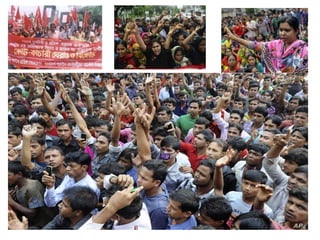
People console a woman whose relative was killed in a fire at a garment factory
outside Dhaka, Bangladesh, November 25, 2012.
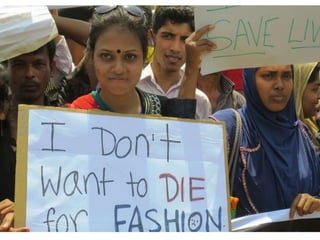
Garment workers block a road as they protest for higher wages in
Dhaka on January 12, 2019
Cement Industry in Bangladesh
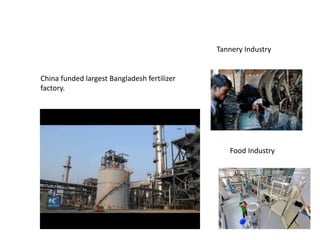
Tannery Industry
Food Industry
China funded largest Bangladesh fertilizer
factory.
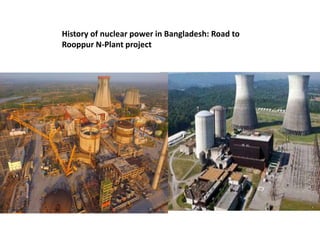
History of nuclear power in Bangladesh: Road to
Rooppur N-Plant project
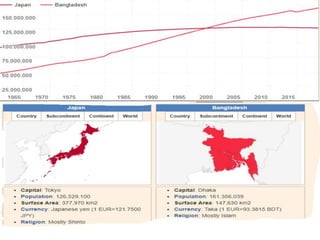
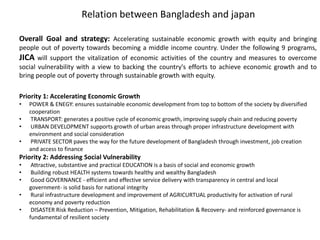
Relation between Bangladesh and japan
Overall Goal and strategy: Accelerating sustainable economic growth with equity and bringing
people out of poverty towards becoming a middle income country. Under the following 9 programs,
JICA will support the vitalization of economic activities of the country and measures to overcome
social vulnerability with a view to backing the country's efforts to achieve economic growth and to
bring people out of poverty through sustainable growth with equity.
Priority 1: Accelerating Economic Growth
• POWER & ENEGY: ensures sustainable economic development from top to bottom of the society by diversified
cooperation
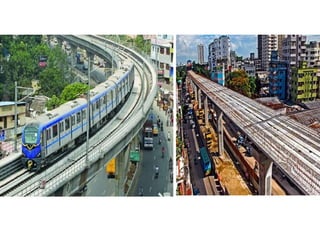
• TRANSPORT: generates a positive cycle of economic growth, improving supply chain and reducing poverty
• URBAN DEVELOPMENT supports growth of urban areas through proper infrastructure development with
environment and social consideration
• PRIVATE SECTOR paves the way for the future development of Bangladesh through investment, job creation
and access to finance
Priority 2: Addressing Social Vulnerability
• Attractive, substantive and practical EDUCATION is a basis of social and economic growth
• Building robust HEALTH systems towards healthy and wealthy Bangladesh
• Good GOVERNANCE - efficient and effective service delivery with transparency in central and local
government- is solid basis for national integrity
• Rural infrastructure development and improvement of AGRICURTUAL productivity for activation of rural
economy and poverty reduction
• DISASTER Risk Reduction – Prevention, Mitigation, Rehabilitation & Recovery- and reinforced governance is
fundamental of resilient society
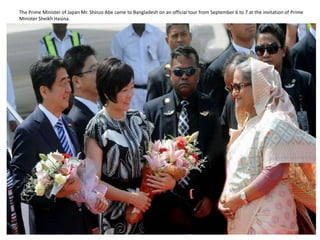
The Prime Minister of Japan Mr. Shinzo Abe came to Bangladesh on an official tour from September 6 to 7 at the invitation of Prime
Minister Sheikh Hasina.
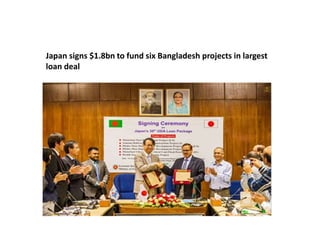
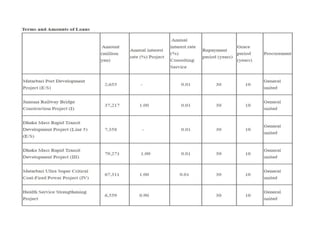
Japan signs $1.8bn to fund six Bangladesh projects in largest
loan deal
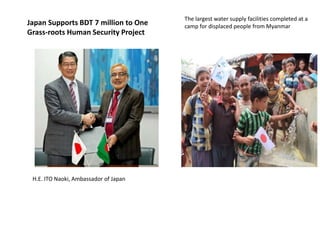
The largest water supply facilities completed at a
camp for displaced people from Myanmar
H.E. ITO Naoki, Ambassador of Japan
Japan Supports BDT 7 million to One
Grass-roots Human Security Project
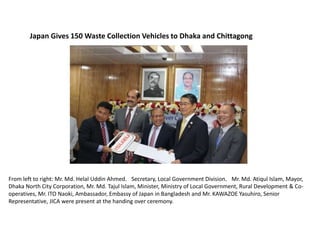
Japan Gives 150 Waste Collection Vehicles to Dhaka and Chittagong
From left to right: Mr. Md. Helal Uddin Ahmed,Secretary, Local Government Division,Mr. Md. Atiqul Islam, Mayor,
Dhaka North City Corporation, Mr. Md. Tajul Islam, Minister, Ministry of Local Government, Rural Development & Co-
operatives, Mr. ITO Naoki, Ambassador, Embassy of Japan in Bangladesh and Mr. KAWAZOE Yasuhiro, Senior
Representative, JICA were present at the handing over ceremony.
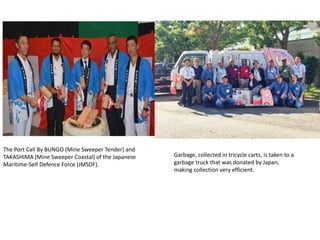
The Port Call By BUNGO (Mine Sweeper Tender) and
TAKASHIMA (Mine Sweeper Coastal) of the Japanese
Maritime-Self Defence Force (JMSDF).
Garbage, collected in tricycle carts, is taken to a
garbage truck that was donated by Japan,
making collection very efficient.
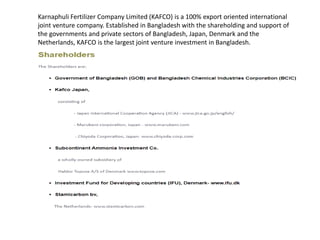
Karnaphuli Fertilizer Company Limited (KAFCO) is a 100% export oriented international
joint venture company. Established in Bangladesh with the shareholding and support of
the governments and private sectors of Bangladesh, Japan, Denmark and the
Netherlands, KAFCO is the largest joint venture investment in Bangladesh.
Analysing samples
Inspection and Repair
Bangladesh
Bangladesh
Bangladesh
Bangladesh

Bangladesh

  • 1.
    n Sharker Study :Bangladesh Univ Engineering and Techno Department : Electrical a engineering. Job : Hiperdyne Corpora
  • 5.
  • 12.
  • 23.
  • 31.
  • 34.
  • 35.
  • 38.
  • 39.
  • 40.
  • 41.
  • 42.
  • 43.
  • 44.
  • 48.
  • 50.
    1952 is theyear when the nation Bengali had to sacrifice some valuable lives to achieve "Bangla" as their mother tongue . This monument was built in 1963 . This is a monument to recall the martyrs of our language movement . Shaheed Miner , Dhaka , Bangladesh
  • 56.
  • 58.
  • 59.
  • 61.
  • 62.
  • 66.
  • 68.
  • 82.
    Nobel prize winnersin Bangladesh Dr. Muhammad Yunus Bangladeshi Grameen bank, founder He is a Bangladeshi social entrepreneur, banker, economist, and civil society leader who was awarded the Nobel Peace Prize for founding the Grameen Bank and pioneering the concepts of microcredit and microfinance.
  • 83.
    Nobel prize Winner, Andthe Author of India's and Bangladesh's national anthems. He was a polymath, poet, musician, and artist 7 May 1861 – 7 August 1941
  • 85.
    World heritage sitesin Bangladesh The Sundarbans mangrove forest covers an area of about 10,000 square km
  • 89.
  • 93.
  • 96.
    Housing system inBangladesh Rural Area
  • 99.
  • 100.
  • 101.
    Natural Disaster Cyclone Flood River bankerosion and human displacement in Bangladesh
  • 102.
  • 103.
  • 108.
  • 109.
  • 110.
  • 111.
  • 112.
  • 113.
  • 114.
    Bangladesh Tea Board: To regulate, control and promote the cultivation, sale and export of tea. In Chittagong, Panchagar and mostly sylhet districts.
  • 115.
  • 116.
    Trade represented 35.3%of Bangladeshi GDP in 2017 (World Bank). The main export products are clothes, raw jute and its derived products, leather, fish and frozen seafood. Bangladesh mainly imports machinery and equipment, chemical products, steel & metals, cement, food and oil derived products (OEC). Exports from Bangladesh hit record levels in 2017 (USD 35.91 billion) due to stronger garment sales. Since becoming independent, Bangladesh has had a negative trade balance, with its deficit being financed by international aid and expatriate transfers. The trade deficit as of January 2018 amounted to approximately USD 2.1 billion (OEC).
  • 118.
    Main Partner Countries MainSuppliers (% of Exports) 2015 North America 22.70 United States 19.35 Germany 14.73 United Kingdom 11.03 Spain 5.82 France 5.53 Italy 4.27 Canada 3.35 Japan 3.02 Belgium 2.85 Netherlands 2.58 China 2.25 Main Customers (% of Imports) 2015 China 21.53 India 12.24 Singapore 9.19 Middle East @North Africa 7.42 Hong Kong 5.46 Indonesia 4.59 Latin America& Caribbean 4.52 North America 3.58 Japan 3.55 Korea 3.08 Malaysia 3
  • 119.
    24.3 bn USDof products exported % of total exports Knit or crochet clothing, accessories 44.9(US$18.9 billion) Clothing, accessories (not knit or crochet) 42($17.7 billion) Miscellaneous textiles, worm clothing 2.5 Footwear 2.2 Paper yarn, woven fabric 1.5 Fish 1.2 Headgear 0.7 Leather/animal gut articles 0.7 Rawhide, skins leather 0.4 Tobacco, manufactured substitutes 0.2 Main Products
  • 120.
    41.2 bn USDof products exported % of total imports Machinery including computers 12.7 (US$6.7 billion ) Cotton 12.4 ($6.6 billion ) Mineral fuels including oil 8.7% ($4.6 billion ) Electrical machinery, equipment $3.9 billion (7.3%) Iron, steel $2.8 billion (5.2%) Vehicles $2 billion (3.9%) Manmade staple fibres $1.9 billion (3.6%) Plastics, plastic articles $1.9 billion (3.6%) Animal/vegetable fats, oils, waxes $1.7 billion (3.3%) Cereals $1.5 billion (2.8%)
  • 121.
    Overview of MajorIndustries in Bangladesh Industrialization is an essential prerequisite for rapid economic growth of a developing country like Bangladesh. This study shows the major industrial growth of the country and their impact on the national economic development, public safety, health and environment. The capacity, productivity and export/import values of industrial products are used to establish the baseline scenario. There are significant numbers of chemical intensive industries such as textile, leather, food, fertilizer and pharmaceutical industry that have direct impact on socio economic development of the country. It is worth noting that Bangladesh is not only importing industrial products from other countries but also exporting a substantial amount of product to over 100 countries of the world and shows an impressive growth in industrial sectors Rapid industrial growth often offers a huge burden of environmental pollution and associated risks. Thus, there are still lots of space for Bangladesh to flourish in this sector.
  • 122.
    Percentage of SectorWise Industries in Bangladesh
  • 123.
    Bangladesh is populatedcountry in the world. The economic stability of this country is largely dependent on agriculture. But the economic income from agriculture sector cannot fulfil country’s all requirements. Industrialization is a better solution to economic development for the highly populated country like Bangladesh. So, the economic policy has been changing from agriculture sector to industrial sector in last few years. The growth rate of industry in different sector is quite satisfactory. The analysis of some major industry in Bangladesh is described below: Garments Industry Tannery Industry Pharmaceutical Industry Cement Industry Fertilizer Industry Food Industry Chemical Industry
  • 124.
    Garments Industry The ReadyMade Garments (RMG) is covering a large industrial sector in Bangladesh. Bangladesh has about 4,000 garment factories and is the world's second-largest producer after China
  • 125.
    2013 Dhaka garment factorycollapse kills 2000 ! Bangladesh Garment Factory Explosion Kills 10, Injures 50 Ten killed, dozens hurt in Bangladesh garment factory boiler blast
  • 126.
    Bangladeshi firefighters standin a burned out building as they try and control a fire that broke out at a garment factory on the outskirts of Dhaka on Nov. 26, 2012.
  • 129.
    People console awoman whose relative was killed in a fire at a garment factory outside Dhaka, Bangladesh, November 25, 2012.
  • 130.
    Garment workers blocka road as they protest for higher wages in Dhaka on January 12, 2019
  • 133.
  • 134.
    Tannery Industry Food Industry Chinafunded largest Bangladesh fertilizer factory.
  • 135.
    History of nuclearpower in Bangladesh: Road to Rooppur N-Plant project
  • 136.
    Relation between Bangladeshand japan Overall Goal and strategy: Accelerating sustainable economic growth with equity and bringing people out of poverty towards becoming a middle income country. Under the following 9 programs, JICA will support the vitalization of economic activities of the country and measures to overcome social vulnerability with a view to backing the country's efforts to achieve economic growth and to bring people out of poverty through sustainable growth with equity. Priority 1: Accelerating Economic Growth • POWER & ENEGY: ensures sustainable economic development from top to bottom of the society by diversified cooperation • TRANSPORT: generates a positive cycle of economic growth, improving supply chain and reducing poverty • URBAN DEVELOPMENT supports growth of urban areas through proper infrastructure development with environment and social consideration • PRIVATE SECTOR paves the way for the future development of Bangladesh through investment, job creation and access to finance Priority 2: Addressing Social Vulnerability • Attractive, substantive and practical EDUCATION is a basis of social and economic growth • Building robust HEALTH systems towards healthy and wealthy Bangladesh • Good GOVERNANCE - efficient and effective service delivery with transparency in central and local government- is solid basis for national integrity • Rural infrastructure development and improvement of AGRICURTUAL productivity for activation of rural economy and poverty reduction • DISASTER Risk Reduction – Prevention, Mitigation, Rehabilitation & Recovery- and reinforced governance is fundamental of resilient society
  • 137.
    The Prime Ministerof Japan Mr. Shinzo Abe came to Bangladesh on an official tour from September 6 to 7 at the invitation of Prime Minister Sheikh Hasina.
  • 138.
    Japan signs $1.8bnto fund six Bangladesh projects in largest loan deal
  • 141.
    The largest watersupply facilities completed at a camp for displaced people from Myanmar H.E. ITO Naoki, Ambassador of Japan Japan Supports BDT 7 million to One Grass-roots Human Security Project
  • 142.
    Japan Gives 150Waste Collection Vehicles to Dhaka and Chittagong From left to right: Mr. Md. Helal Uddin Ahmed,Secretary, Local Government Division,Mr. Md. Atiqul Islam, Mayor, Dhaka North City Corporation, Mr. Md. Tajul Islam, Minister, Ministry of Local Government, Rural Development & Co- operatives, Mr. ITO Naoki, Ambassador, Embassy of Japan in Bangladesh and Mr. KAWAZOE Yasuhiro, Senior Representative, JICA were present at the handing over ceremony.
  • 143.
    The Port CallBy BUNGO (Mine Sweeper Tender) and TAKASHIMA (Mine Sweeper Coastal) of the Japanese Maritime-Self Defence Force (JMSDF). Garbage, collected in tricycle carts, is taken to a garbage truck that was donated by Japan, making collection very efficient.
  • 144.
    Karnaphuli Fertilizer CompanyLimited (KAFCO) is a 100% export oriented international joint venture company. Established in Bangladesh with the shareholding and support of the governments and private sectors of Bangladesh, Japan, Denmark and the Netherlands, KAFCO is the largest joint venture investment in Bangladesh.
  • 145.