Balancing the Equation:
Doing More Than Documentation
Jody Zolli
Jody.Zolli@gmail.com
How do we do our work?
 Analyze the audience and their needs
 Analyze the product, process, or interface
 Generate, organize, and deliver information in a highly
usable way
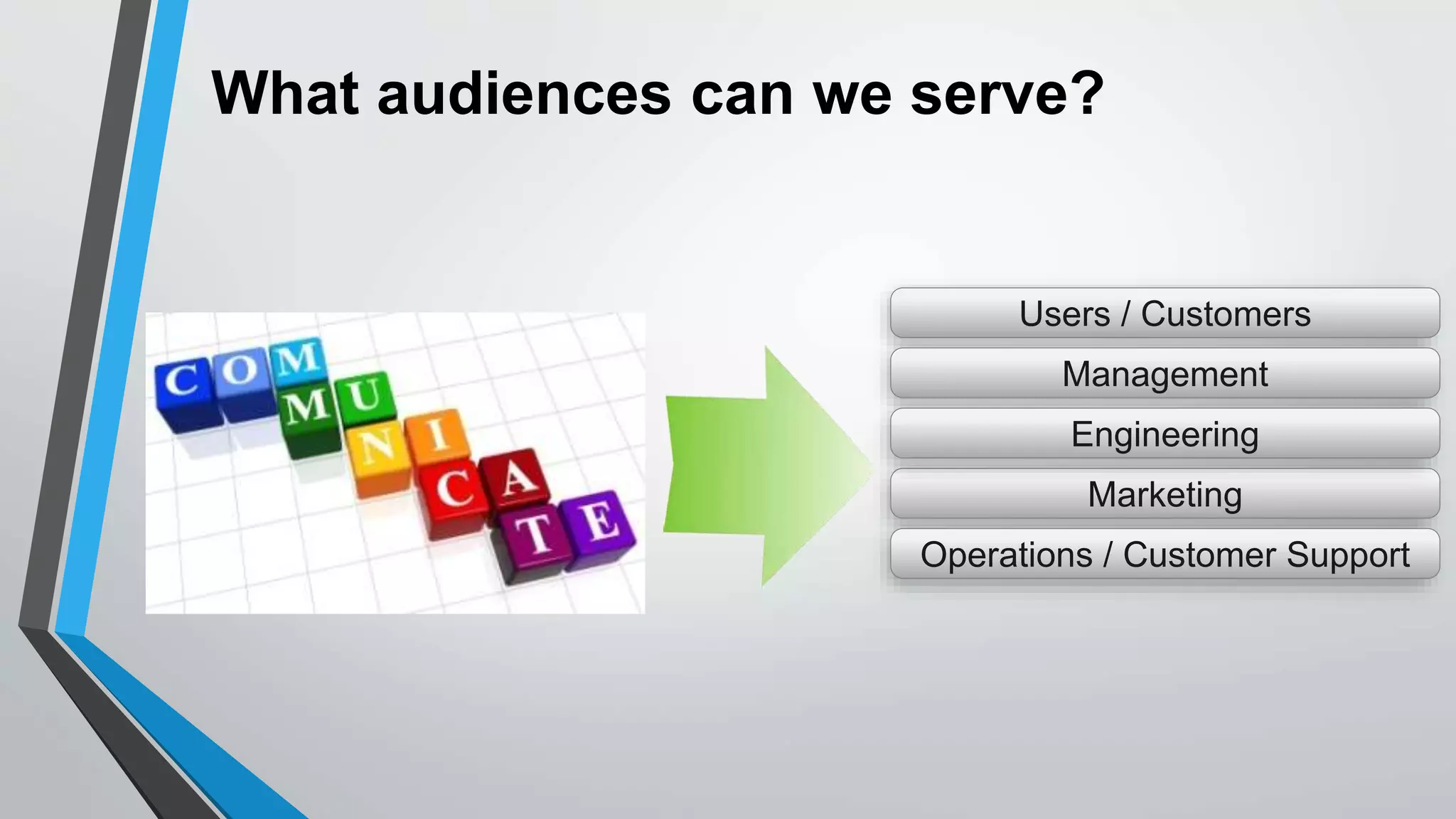
What audiences can we serve?
Marketing
Users / Customers
Management
Engineering
Operations / Customer Support
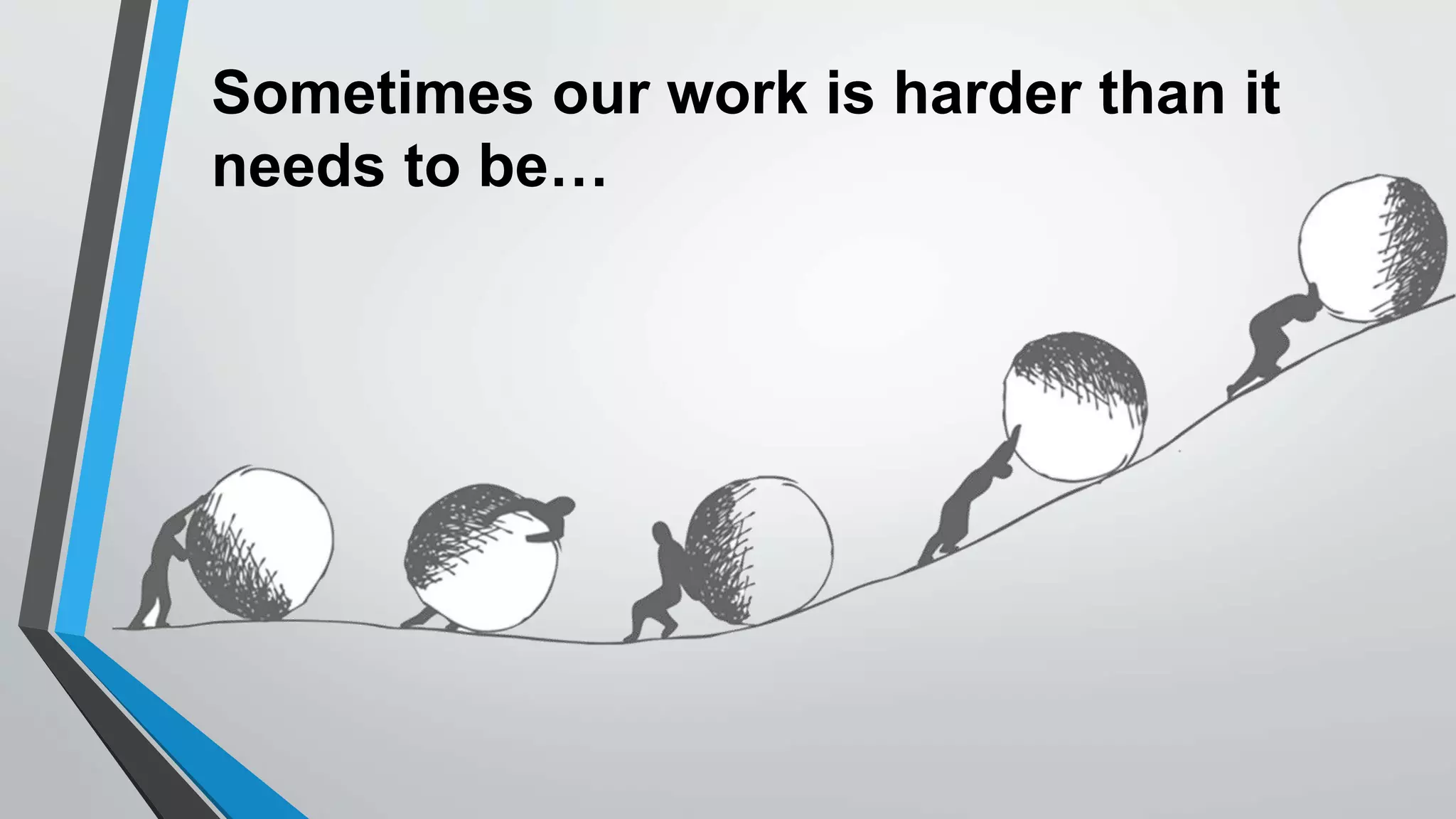
Sometimes our work is harder than it
needs to be…
At Some Companies…
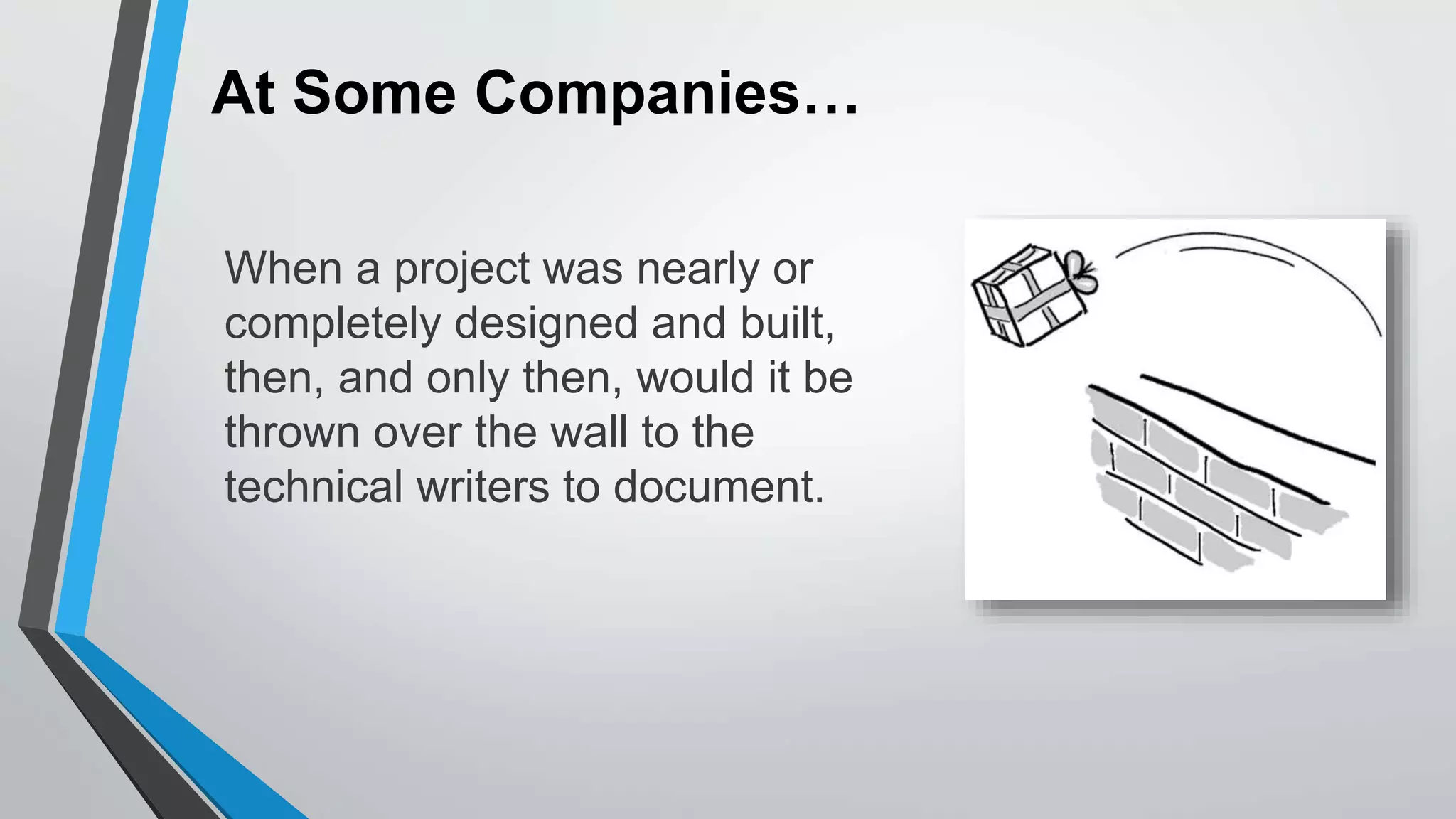
When a project was nearly or
completely designed and built,
then, and only then, would it be
thrown over the wall to the
technical writers to document.
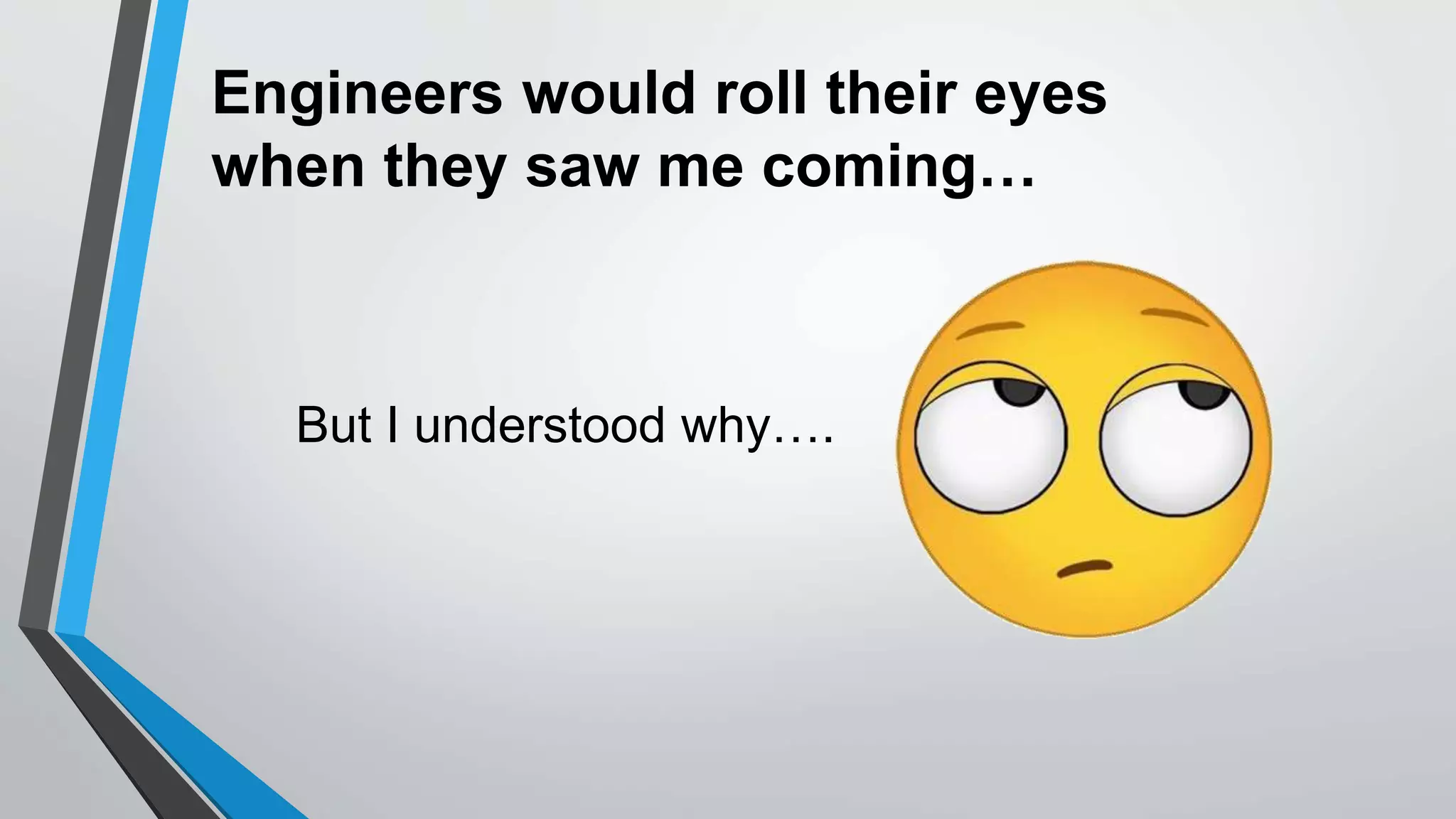
Engineers would roll their eyes
when they saw me coming…
But I understood why….
In the “Over the Wall” Scenario…
• Technical writers are very dependent on engineers
• Engineers need little, if anything, from tech
writers…
• We are seen as a time sink, a resource drain...
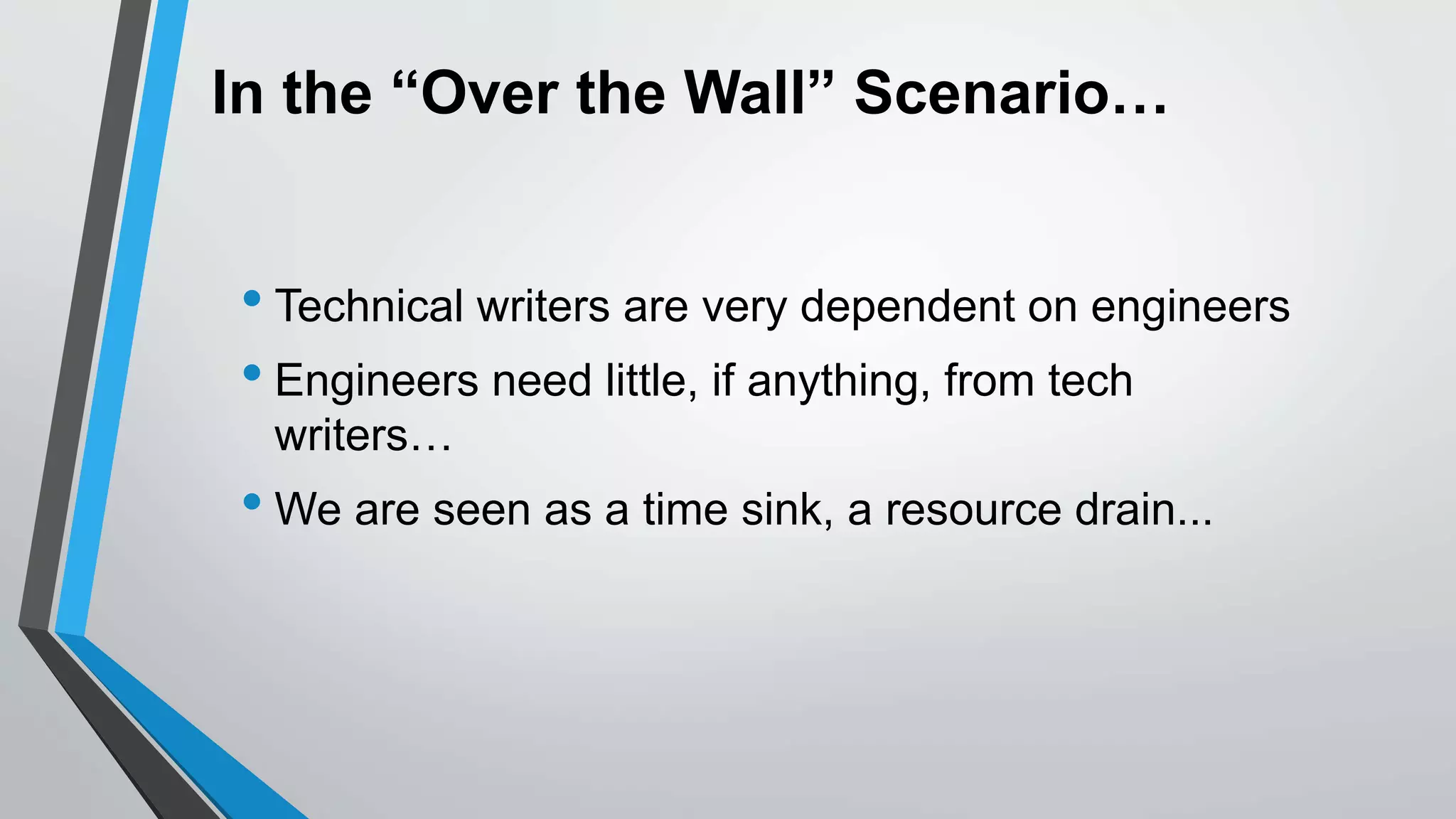
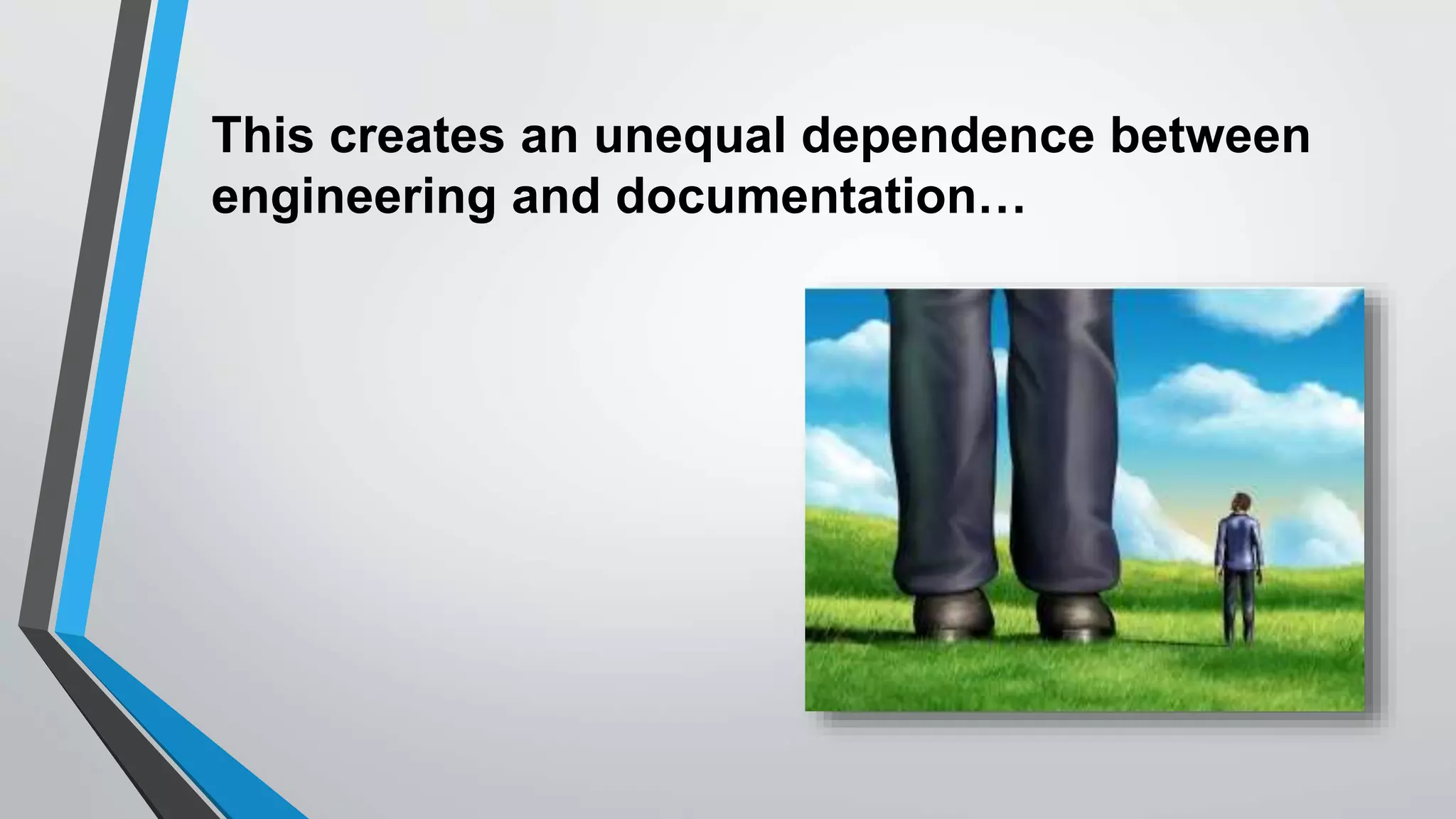
This creates an unequal dependence between
engineering and documentation…
But writers actually have a lot to offer
their companies…
Our skills enable us to contribute in many ways
outside of the documentation we write!
Why should we work outside the doc box?
Giving back benefits us in many ways
• It reduces the unequal dependency we naturally have with
engineering or other organizations so they see us more
positively
• It increases our value to the company
• It enables us to engage and contribute across organizations,
giving us a broader view and understanding of company
operations, products, and processes
• It increases our visibility and relevance to future work both
within and outside documentation
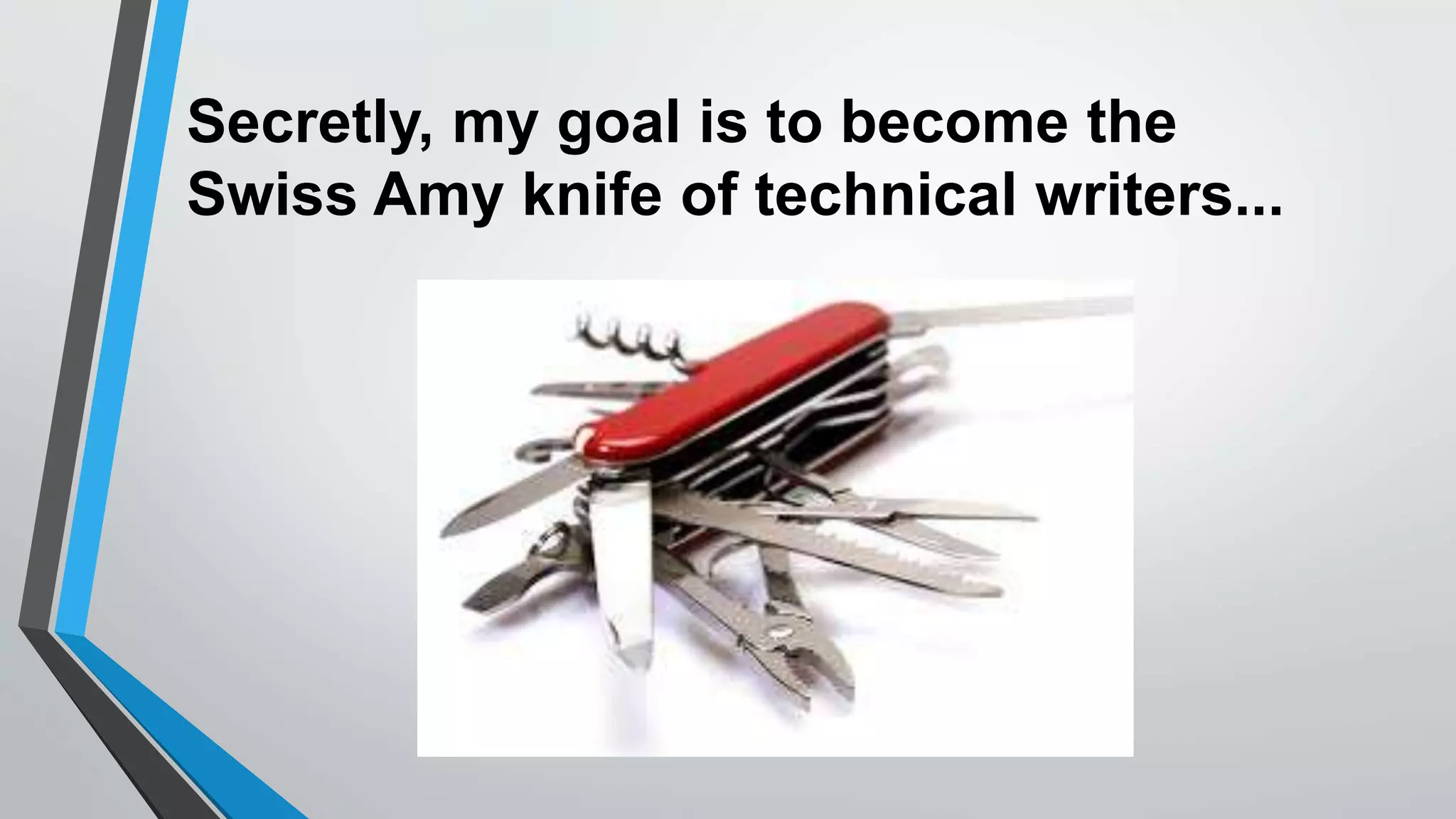
Secretly, my goal is to become the
Swiss Amy knife of technical writers...
What Types of Contributions Can We Make?
• Facilitate an increase in usability and improved user
experience
• Help define and improve processes
• Assist with graphics and illustrations
• Enhance, polish, and organize engineering documents
• Support instructional design and training efforts
• Assist with quality assurance testing
• Manage projects and initiatives
Improving Usability and the User Experience
Suggesting improvements to screen flow, layout, text, labels
What you Have:
• Audience and task knowledge
• Inherent user advocacy
• Polishing/clarification skills
• Ability to spot areas for improvement (inconsistent or
confusing flow, terminology, labeling)
• Access to designs/prototypes
Improving Usability and the User Experience
Suggesting improvements to screen flow, layout, text, labels
What you Need:
• Knowledge of usability test methods
(www.usability.gov)
• Knowledge of how to apply test results
• Knowledge of common heuristics/qualities of good
interface design
Process Definition and Improvement
Capturing and helping improve work processes and flows
What you Have:
• Skill at optimizing procedures
• Ability to capture and communicate work flows
• Ability to drive and gather consensus from
stakeholders
• Skills in analyzing the interaction between
complex processes
Process Definition and Improvement
Capturing and helping improve work processes and flows
What you Need:
• Understanding of how processes impact
teams/stakeholders (pain points)
• Knowledge of the processes in question
• Understanding of who does what
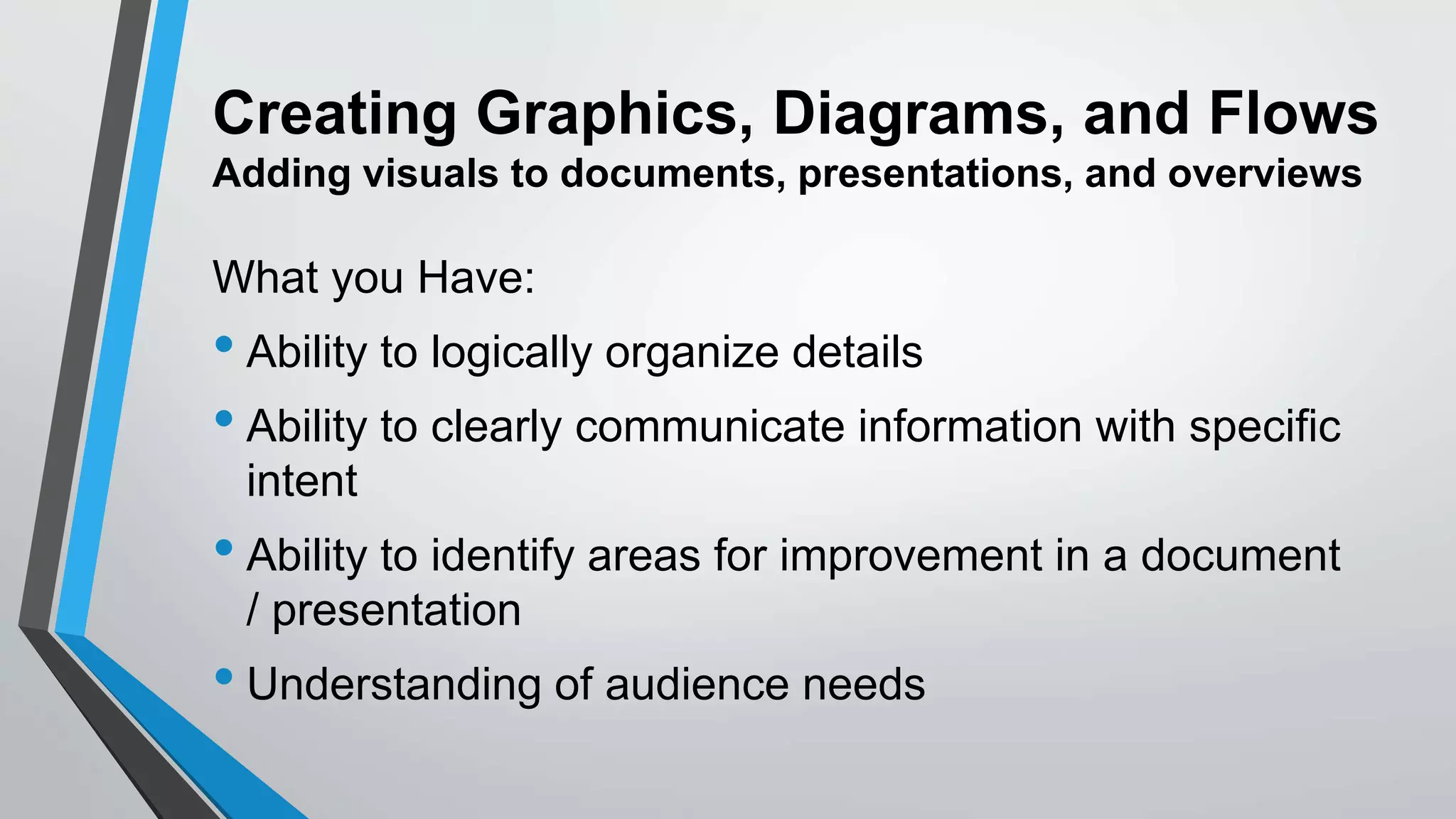
Creating Graphics, Diagrams, and Flows
Adding visuals to documents, presentations, and overviews
What you Have:
• Ability to logically organize details
• Ability to clearly communicate information with specific
intent
• Ability to identify areas for improvement in a document
/ presentation
• Understanding of audience needs
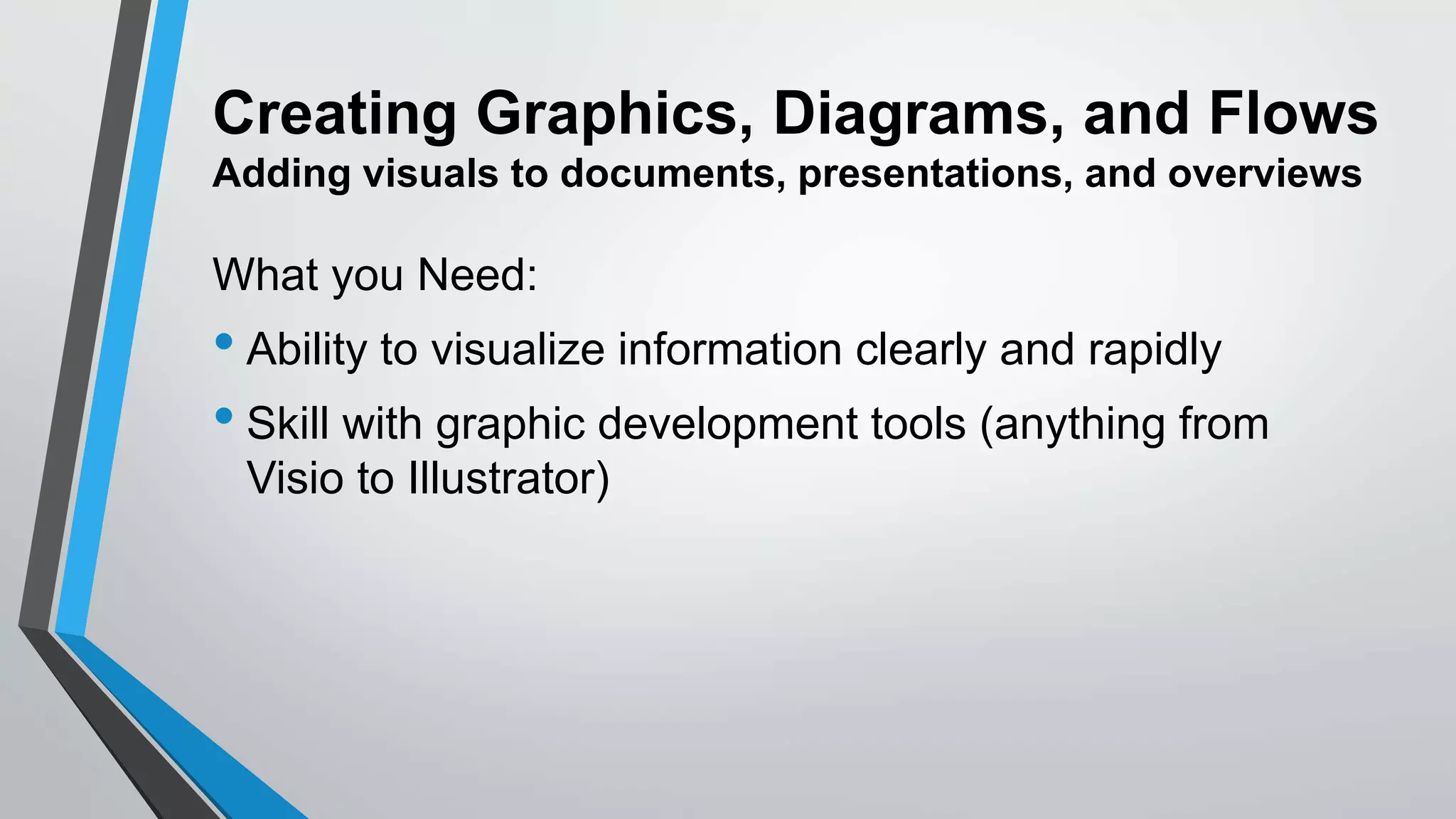
Creating Graphics, Diagrams, and Flows
Adding visuals to documents, presentations, and overviews
What you Need:
• Ability to visualize information clearly and rapidly
• Skill with graphic development tools (anything from
Visio to Illustrator)
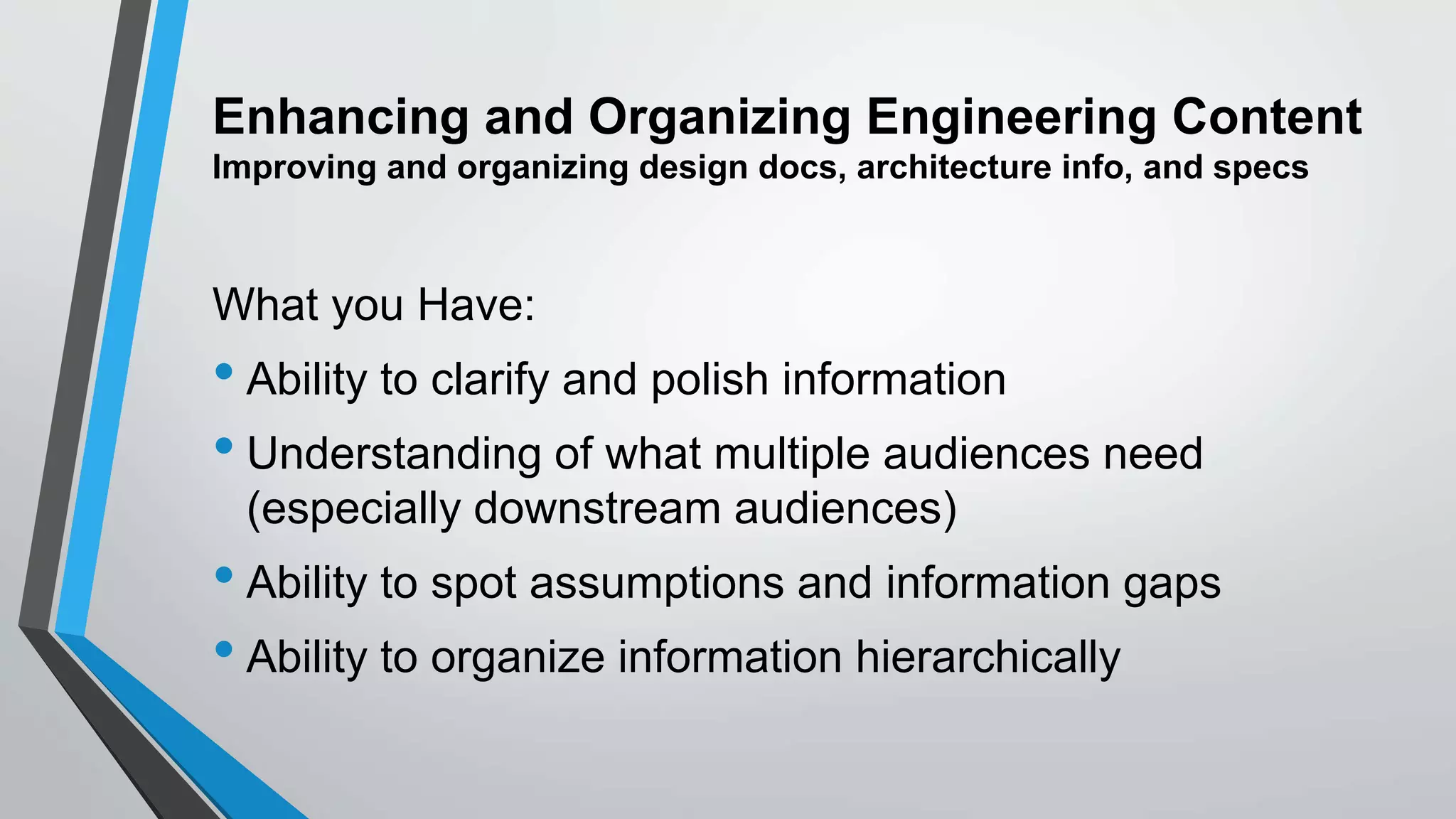
Enhancing and Organizing Engineering Content
Improving and organizing design docs, architecture info, and specs
What you Have:
• Ability to clarify and polish information
• Understanding of what multiple audiences need
(especially downstream audiences)
• Ability to spot assumptions and information gaps
• Ability to organize information hierarchically
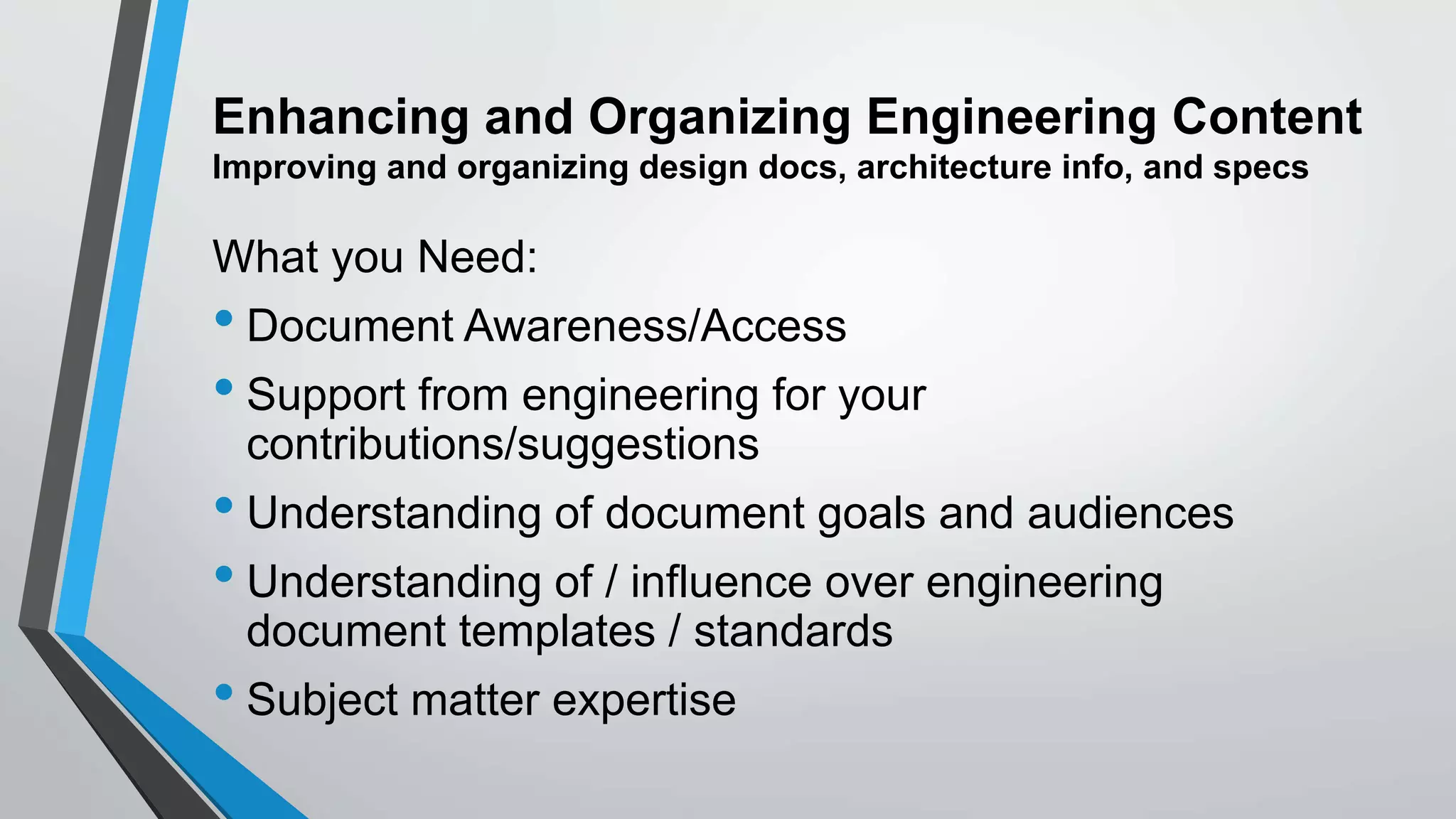
Enhancing and Organizing Engineering Content
Improving and organizing design docs, architecture info, and specs
What you Need:
• Document Awareness/Access
• Support from engineering for your
contributions/suggestions
• Understanding of document goals and audiences
• Understanding of / influence over engineering
document templates / standards
• Subject matter expertise
Creating and Delivering Training
Contributing to instructional design and delivery
What you Have:
• Product knowledge
• Procedure expertise
• Understanding of audience goals and needs
• Ability to identify knowledge gaps
• Clear communication skills for explaining new
concepts or procedures
Creating and Delivering Training
Contributing to instructional design and delivery
What you Need:
• Knowledge of instructional design principles (ADDIE, Cognitive
Load Theory)
• Ability to determine training objectives
• Storyboarding/script skills
• Tool skills if using something other than PowerPoint (Articulate,
Captivate, etc.)
• Desire to stand up in front of people and teach (if instructor led)
• Knowledge of how to assess / measure learning
Assisting with QA Testing
Testing product features and functionality to identify issues
What you Have:
• Product knowledge
• Procedure expertise
• Knowledge of user goals and behavior
• Access to the product/system
• Access to and knowledge of the bug tracking system
Assisting with QA Testing
Testing product features and functionality to identify issues
What you Need:
• Understanding of expected and unexpected user
behavior
• Understanding of expected and unexpected system
behavior
• Access to test cases (if doing this formally)
Project Management
Planning, organizing, and tracking projects and initiatives
What you Have:
• Process and progress tracking expertise
• Understanding the interaction of complex dependencies
• Adept at work breakdown and task ordering
• Risk assessment skills
• Skill with scheduling/dependencies
• Understanding of the definition of done / success criteria
• Skill at working across teams
Project Management
Planning, organizing, and tracking projects and initiatives
What you Need:
• Understanding of organizational operation
• Understanding of lifecycle process (agile vs waterfall)
• Knowledge of team capabilities, responsibilities, and
goals
• Understanding of Project Management
basics/foundations
So how do you get started?
It’s unlikely people will waltz into your office with opportunities to
do things outside of your usual work, so you would need to:
• Get buy-in from your manager, if needed
• Build bridges to relevant people and teams
• Volunteer to assist with what interests you
• (Gently) invite yourself to relevant meetings, discussions, or
reviews
• Initiate tasks or projects in small ways to get the ball rolling
Questions?
Jody.zolli@gmail.com

Balancing the Equation: Doing More than Documentation

  • 1.
    Balancing the Equation: DoingMore Than Documentation Jody Zolli Jody.Zolli@gmail.com
  • 2.
    How do wedo our work?  Analyze the audience and their needs  Analyze the product, process, or interface  Generate, organize, and deliver information in a highly usable way
  • 3.
    What audiences canwe serve? Marketing Users / Customers Management Engineering Operations / Customer Support
  • 4.
    Sometimes our workis harder than it needs to be…
  • 5.
    At Some Companies… Whena project was nearly or completely designed and built, then, and only then, would it be thrown over the wall to the technical writers to document.
  • 6.
    Engineers would rolltheir eyes when they saw me coming… But I understood why….
  • 7.
    In the “Overthe Wall” Scenario… • Technical writers are very dependent on engineers • Engineers need little, if anything, from tech writers… • We are seen as a time sink, a resource drain...
  • 8.
    This creates anunequal dependence between engineering and documentation…
  • 9.
    But writers actuallyhave a lot to offer their companies… Our skills enable us to contribute in many ways outside of the documentation we write!
  • 10.
    Why should wework outside the doc box? Giving back benefits us in many ways • It reduces the unequal dependency we naturally have with engineering or other organizations so they see us more positively • It increases our value to the company • It enables us to engage and contribute across organizations, giving us a broader view and understanding of company operations, products, and processes • It increases our visibility and relevance to future work both within and outside documentation
  • 11.
    Secretly, my goalis to become the Swiss Amy knife of technical writers...
  • 12.
    What Types ofContributions Can We Make? • Facilitate an increase in usability and improved user experience • Help define and improve processes • Assist with graphics and illustrations • Enhance, polish, and organize engineering documents • Support instructional design and training efforts • Assist with quality assurance testing • Manage projects and initiatives
  • 13.
    Improving Usability andthe User Experience Suggesting improvements to screen flow, layout, text, labels What you Have: • Audience and task knowledge • Inherent user advocacy • Polishing/clarification skills • Ability to spot areas for improvement (inconsistent or confusing flow, terminology, labeling) • Access to designs/prototypes
  • 14.
    Improving Usability andthe User Experience Suggesting improvements to screen flow, layout, text, labels What you Need: • Knowledge of usability test methods (www.usability.gov) • Knowledge of how to apply test results • Knowledge of common heuristics/qualities of good interface design
  • 15.
    Process Definition andImprovement Capturing and helping improve work processes and flows What you Have: • Skill at optimizing procedures • Ability to capture and communicate work flows • Ability to drive and gather consensus from stakeholders • Skills in analyzing the interaction between complex processes
  • 16.
    Process Definition andImprovement Capturing and helping improve work processes and flows What you Need: • Understanding of how processes impact teams/stakeholders (pain points) • Knowledge of the processes in question • Understanding of who does what
  • 17.
    Creating Graphics, Diagrams,and Flows Adding visuals to documents, presentations, and overviews What you Have: • Ability to logically organize details • Ability to clearly communicate information with specific intent • Ability to identify areas for improvement in a document / presentation • Understanding of audience needs
  • 18.
    Creating Graphics, Diagrams,and Flows Adding visuals to documents, presentations, and overviews What you Need: • Ability to visualize information clearly and rapidly • Skill with graphic development tools (anything from Visio to Illustrator)
  • 19.
    Enhancing and OrganizingEngineering Content Improving and organizing design docs, architecture info, and specs What you Have: • Ability to clarify and polish information • Understanding of what multiple audiences need (especially downstream audiences) • Ability to spot assumptions and information gaps • Ability to organize information hierarchically
  • 20.
    Enhancing and OrganizingEngineering Content Improving and organizing design docs, architecture info, and specs What you Need: • Document Awareness/Access • Support from engineering for your contributions/suggestions • Understanding of document goals and audiences • Understanding of / influence over engineering document templates / standards • Subject matter expertise
  • 21.
    Creating and DeliveringTraining Contributing to instructional design and delivery What you Have: • Product knowledge • Procedure expertise • Understanding of audience goals and needs • Ability to identify knowledge gaps • Clear communication skills for explaining new concepts or procedures
  • 22.
    Creating and DeliveringTraining Contributing to instructional design and delivery What you Need: • Knowledge of instructional design principles (ADDIE, Cognitive Load Theory) • Ability to determine training objectives • Storyboarding/script skills • Tool skills if using something other than PowerPoint (Articulate, Captivate, etc.) • Desire to stand up in front of people and teach (if instructor led) • Knowledge of how to assess / measure learning
  • 23.
    Assisting with QATesting Testing product features and functionality to identify issues What you Have: • Product knowledge • Procedure expertise • Knowledge of user goals and behavior • Access to the product/system • Access to and knowledge of the bug tracking system
  • 24.
    Assisting with QATesting Testing product features and functionality to identify issues What you Need: • Understanding of expected and unexpected user behavior • Understanding of expected and unexpected system behavior • Access to test cases (if doing this formally)
  • 25.
    Project Management Planning, organizing,and tracking projects and initiatives What you Have: • Process and progress tracking expertise • Understanding the interaction of complex dependencies • Adept at work breakdown and task ordering • Risk assessment skills • Skill with scheduling/dependencies • Understanding of the definition of done / success criteria • Skill at working across teams
  • 26.
    Project Management Planning, organizing,and tracking projects and initiatives What you Need: • Understanding of organizational operation • Understanding of lifecycle process (agile vs waterfall) • Knowledge of team capabilities, responsibilities, and goals • Understanding of Project Management basics/foundations
  • 27.
    So how doyou get started? It’s unlikely people will waltz into your office with opportunities to do things outside of your usual work, so you would need to: • Get buy-in from your manager, if needed • Build bridges to relevant people and teams • Volunteer to assist with what interests you • (Gently) invite yourself to relevant meetings, discussions, or reviews • Initiate tasks or projects in small ways to get the ball rolling
  • 28.