By. Carson R.
Language
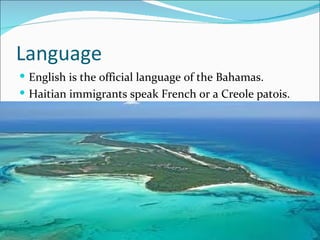
 English is the official language of the Bahamas.
 Haitian immigrants speak French or a Creole patois.
Music
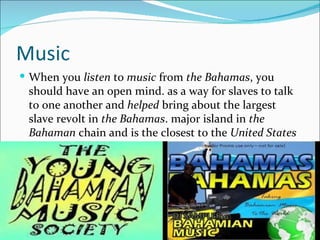
 When you listen to music from the Bahamas, you
 should have an open mind. as a way for slaves to talk
 to one another and helped bring about the largest
 slave revolt in the Bahamas. major island in the
 Bahaman chain and is the closest to the United States
 in terms.
Food
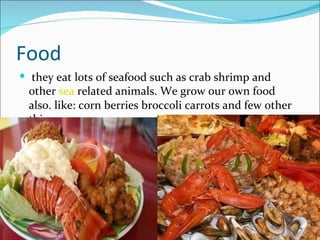
 they eat lots of seafood such as crab shrimp and
 other sea related animals. We grow our own food
 also. like: corn berries broccoli carrots and few other
 things.
Population
 The population of Bahamas in 2005 was estimated by
 the United Nations at 319,000, which placed it at
 number 167 in population among the 193 nations of
 the world. In 2005, approximately 5% of the
 population was over 65 years of age, with another
 30% of the population under 15 years of age
Climate
 The climate is pleasantly subtropical, with an average
 winter temperature of 23°c (73°f) and an average
 summer temperature of 27°c (81°f). Rainfall averages
 127 cm (50 in) and there are occasional hurricanes.
Current standard
 Tourism and financial services drive the Bahamas economy.
  Tourism, the mainstay of the economy, directly or indirectly
  involves about half of the population and accounts for about
  40% of GDP, with an additional 10% coming from tourism-
  related construction. More than five million tourists visited
  the Bahamas in 2004, 87% from the United States.
 The reliance on tourism, particularly from the United States,
  makes the Bahamas vulnerable not only to worldwide
  economic shocks such as the decline in travel that followed
  the 11 September 2001 attacks on the United States but also
  to cyclical slowdowns that occur in the US economy.
Bahamas

Bahamas

  • 1.
  • 2.
    Language  English isthe official language of the Bahamas.  Haitian immigrants speak French or a Creole patois.
  • 3.
    Music  When youlisten to music from the Bahamas, you should have an open mind. as a way for slaves to talk to one another and helped bring about the largest slave revolt in the Bahamas. major island in the Bahaman chain and is the closest to the United States in terms.
  • 4.
    Food  they eatlots of seafood such as crab shrimp and other sea related animals. We grow our own food also. like: corn berries broccoli carrots and few other things.
  • 5.
    Population  The populationof Bahamas in 2005 was estimated by the United Nations at 319,000, which placed it at number 167 in population among the 193 nations of the world. In 2005, approximately 5% of the population was over 65 years of age, with another 30% of the population under 15 years of age
  • 6.
    Climate  The climateis pleasantly subtropical, with an average winter temperature of 23°c (73°f) and an average summer temperature of 27°c (81°f). Rainfall averages 127 cm (50 in) and there are occasional hurricanes.
  • 7.
    Current standard  Tourismand financial services drive the Bahamas economy. Tourism, the mainstay of the economy, directly or indirectly involves about half of the population and accounts for about 40% of GDP, with an additional 10% coming from tourism- related construction. More than five million tourists visited the Bahamas in 2004, 87% from the United States.  The reliance on tourism, particularly from the United States, makes the Bahamas vulnerable not only to worldwide economic shocks such as the decline in travel that followed the 11 September 2001 attacks on the United States but also to cyclical slowdowns that occur in the US economy.