The Bahamas
By: Austin and Seth
Races
• The people who live in The Bahamas are
  predominantly of West African descent who
  were captured and forced to pick cotton.
• Mexican descents
• White
Resources
• Cotton, salt, aragonite, timber , arable land,
  wetlands, and freshwater resources.
All of the resources above are natural resources.
Cotton was picked early when there were
  slaves; and there were big cotton fields that
  multiple, or individual people owned.
Climate
• Mostly warm in the Bahamas, temperature
  around high 70’s to low 80 degrees. In certain
  parts of the Bahamas it is very swampy; which
  makes it very humid around there. There are
  also natural host springs scattered across the
  Bahamas.
Holidays
• Junkanoo carnival is a large contributor to the
  music of The Bahamas. It is a type of street carnival
  which occurs on Boxing Day (December 26) and
  New Year's Day (January 1). This traditional
  celebration was started with an African slave by the
  name of John Canoe. Slaves were given a special
  holiday at Christmas time, when they could leave
  the work of the plantation behind and celebrate.
  The parades are characterized by spectacular
  costumes made of crepe paper and powerful
  rhythms beaten traditionally on goatskin drums
  (accompanied more recently with tom-tom drums
Descendants
• Most white residents of the Bahamas are
  descendants of the first English settlers, who
  emigrated to Bermuda in 1647 to gain
  religious freedom and settled on the island of
  Eleuthera.
Agriculture
• Agriculture: mangrove forests, fruit crops
  (especially citrus), vegetables for export;
  livestock for local markets
• Because the Bahamas soil is so rich, it can
  grow many crops, and all of the rich fields can
  hold a wide variety of animals that can graze
  on those fields.
Economy
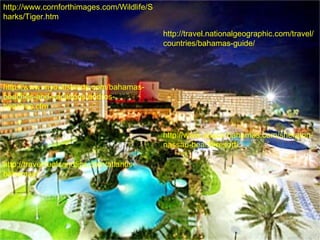
• Economy of Bahamas depends greatly on
  tourism and banking. With tourism also
  relates to airports. There are only four
  airports in all of the Bahamas! Those four
  airports most likely take in the most cash
  every year then anywhere else in the
  Bahamas. Most tourists bring lots of money
  for souvenirs, rental cars, and places to sleep.
  That helps the Bahamas banking.
http://www.cornforthimages.com/Wildlife/S
harks/Tiger.htm

                                            http://travel.nationalgeographic.com/travel/
                                            countries/bahamas-guide/


http://www.myoutislands.com/bahamas-
beaches-and-vacations/andros-
beaches.cfm


                                            http://www.abaco-bahamas.com/sheraton-
                                            nassau-beach-resort/

http://traveldealsandtips.com/atlantis-
bahamas/
The End

The bahamas

  • 1.
  • 2.
    Races • The peoplewho live in The Bahamas are predominantly of West African descent who were captured and forced to pick cotton. • Mexican descents • White
  • 3.
    Resources • Cotton, salt,aragonite, timber , arable land, wetlands, and freshwater resources. All of the resources above are natural resources. Cotton was picked early when there were slaves; and there were big cotton fields that multiple, or individual people owned.
  • 4.
    Climate • Mostly warmin the Bahamas, temperature around high 70’s to low 80 degrees. In certain parts of the Bahamas it is very swampy; which makes it very humid around there. There are also natural host springs scattered across the Bahamas.
  • 5.
    Holidays • Junkanoo carnivalis a large contributor to the music of The Bahamas. It is a type of street carnival which occurs on Boxing Day (December 26) and New Year's Day (January 1). This traditional celebration was started with an African slave by the name of John Canoe. Slaves were given a special holiday at Christmas time, when they could leave the work of the plantation behind and celebrate. The parades are characterized by spectacular costumes made of crepe paper and powerful rhythms beaten traditionally on goatskin drums (accompanied more recently with tom-tom drums
  • 6.
    Descendants • Most whiteresidents of the Bahamas are descendants of the first English settlers, who emigrated to Bermuda in 1647 to gain religious freedom and settled on the island of Eleuthera.
  • 7.
    Agriculture • Agriculture: mangroveforests, fruit crops (especially citrus), vegetables for export; livestock for local markets • Because the Bahamas soil is so rich, it can grow many crops, and all of the rich fields can hold a wide variety of animals that can graze on those fields.
  • 8.
    Economy • Economy ofBahamas depends greatly on tourism and banking. With tourism also relates to airports. There are only four airports in all of the Bahamas! Those four airports most likely take in the most cash every year then anywhere else in the Bahamas. Most tourists bring lots of money for souvenirs, rental cars, and places to sleep. That helps the Bahamas banking.
  • 9.
    http://www.cornforthimages.com/Wildlife/S harks/Tiger.htm http://travel.nationalgeographic.com/travel/ countries/bahamas-guide/ http://www.myoutislands.com/bahamas- beaches-and-vacations/andros- beaches.cfm http://www.abaco-bahamas.com/sheraton- nassau-beach-resort/ http://traveldealsandtips.com/atlantis- bahamas/
  • 10.