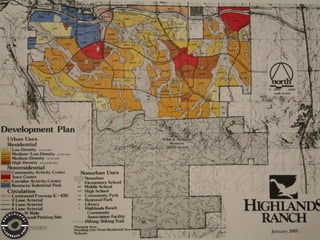
2000 OSCA PLAN
• Zoning Document
– What is allowed where
– Extensive studies
• Wildlife, Soil, Flood Plains, Habitats, Slopes, etc.

• Outlines Planning Areas
– The 1200 acres of the 8,200 that can be “developed.”
Management Implementation Plan
• Completed 2002
• SAIC –Environmental Consulting Firm
• Management goals, recommended property
uses/restrictions, and resources
Programs
• From the Management Plan
– Mission Statement
• … “Provide visitors with unprecedented opportunities to
enjoy nature near where they live, while protecting and
conserving natural, archaeological, historical, and cultural
resources for the enjoyment of future generations.”
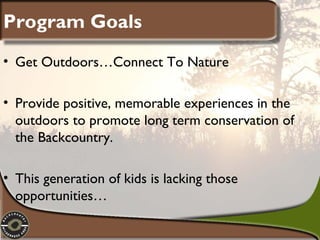
Program Goals
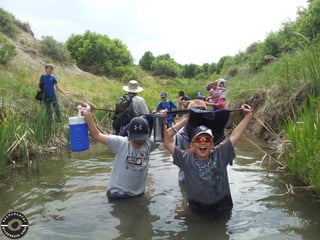
• Get Outdoors…Connect To Nature
• Provide positive, memorable experiences in the
outdoors to promote long term conservation of
the Backcountry.
• This generation of kids is lacking those
opportunities…
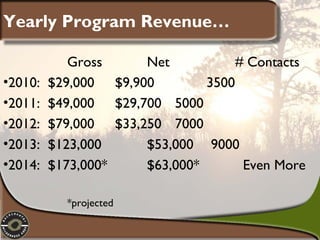
Yearly Program Revenue…
•2010:
•2011:
•2012:
•2013:
•2014:

Gross
Net
# Contacts
$29,000 $9,900
3500
$49,000 $29,700 5000
$79,000 $33,250 7000
$123,000
$53,000 9000
$173,000*
$63,000*
Even More
*projected
HABITAT MANAGEMENT
• Right now, it is good
– It’s not great, it’s not excellent…
• We have work to do

• Have owned the Backcountry for just over 4 years
now.
– Great strides
CONSULTATIONS/TOURS
• Over past year have developed strong relationships
with:
– Colorado Parks and Wildlife
• District Wildlife Manager
• Area Biologist
• Regional Habitat Specialist
– Natural Resource Conservation Service
• Area Range Management Specialist
• Area Biologist
• Private Lands Biologist
– CO Dept. of Agriculture
• State Weed Coordinator
• Noxious Weed Specialist
DEVELOPED PRIORITIES
•
•
•
•

Pasture Fencing
Brush and Forest Management
Weed Management
Water Development
FUNDING
Our Guiding Documents
• OSCA Plan –2000
• Management Plan –2002
MANAGEMENT PLAN
• Provides more detailed information on how to use
and manage the land.
– Where we put trails
– Areas we protect more

• Provides guidance in its mission statement:

“Provide
unprecedented opportunities to enjoy nature near where they live,
while protecting natural, archaeological, historical, and cultural
resources.”
History of Committees
•

•

•

•

1989-1996-2000
– Original OSCA Committee
• OSCA Plan
2002
– OSCA Strategic Planning Committee
• Developed Survey to determine possible uses for planning areas.
• 2002 Survey Results
2010-11
– Backcountry Planning Areas Committee
• Developed Community Involvement Process for possible projects in the Planning Areas
• Recommended Community Survey
2012
– Backcountry Planning Areas Advisory Committee
• Advise Board on projects related to Planning Areas
• Assist with Wildcat Regional Park processes
• Review future proposals and assist Board with implementation of Community Involvement Process
• Other tasks as assigned by Board
Purpose of Planning Areas
– FROM THE OSCA PLAN:
“Utilize the revenue to HRCA from the use of 1200 acres
to financially support the management of OSCA and/or
any other purposes deemed appropriate by the HRCA
Board of Directors that benefit the community.”
Planning Areas
• Outlined in 2000 OSCA Plan
• OSCA Plan included studies
– Habitats
– Geology
– Wildlife Corridors, uses

• Let the land “tell” how it should be utilized
• Planning Areas
–
–
–
–
–
–
–

Less than 15% slope
No Pine habitat
No rockfall hazard areas
No rock outcroppings
No 100 year floodplain
No “Best” wildlife areas
Good access and infrastructure availability
Planning Areas Ownership
BACKCOUNTRY WILDERNESS AREA OF HIGHLANDS RANCH: 8,200 acres or 12.8 square miles

•PLANNING AREAS:
•Planning Area A: 467 acres
•Planning Area B: 87 acres
•Planning Area C: 191 acres
•Planning Area D: 87 acres
•Planning Area E: 272 acres
•Planning Area F: 34 acres
•Planning Area G: 19 acres
•Planning Area H: 10 acres
•Planning Area I : 33 acres
•Planning Area J: 125 acres
–
–
–

OWNERSHIP
Backcountry Homeowners Association
HRCA
Douglas County
HRCA
HRCA
HRCA
HRCA
Douglas County School District
Highlands Ranch Law Enforcement Foundation

HRCA TOTAL:
OTHER TOTAL:
GRAND TOTAL:

•TOTAL ACREAGE OWNED BY HRCA:
–
–
–

499 Planning Area acres
6,755 Conserved acres
Total: 7,254 acres

499 acres (approximately 7% of total property owned by HRCA)
826 acres
1,325 acres 
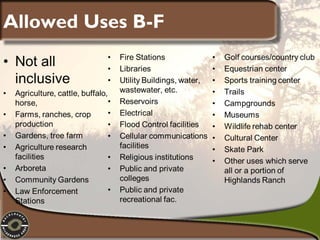
Allowed Uses B-F
Backcountry Planning Areas Advisory
Committee (BPAAC)
• Board established committee in 2010
• As a result of CCU

– Main Responsibilities:
• Thoroughly understand the existing documents governing the
use and development of the Backcountry.
• Become familiar with the Backcountry through tours and
study.
• Become familiar with Backcountry budget, Douglas County
Planning, Zoning, and Development, etc.
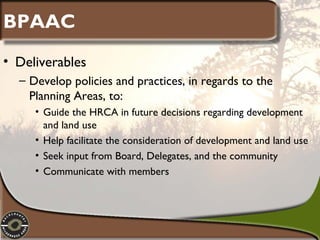
BPAAC
• Deliverables
– Develop policies and practices, in regards to the
Planning Areas, to:
• Guide the HRCA in future decisions regarding development
and land use
• Help facilitate the consideration of development and land use
• Seek input from Board, Delegates, and the community
• Communicate with members
Survey –November, 2012
–
–
–
–
–
–
–
–

90% support additional trails for hiking, biking, running, horseback riding
72% support fishing pond
73% support developing user fees and revenues from new programs
74% support nature center
68% support a ropes/challenge course
61% support outdoor amphitheater
62% support concerts, weddings, special events
57% support expanded camping

–
–
–

42% No recreational amenities of any kind, leave it as is
54% No development of any kind, leave it as is
57% No other uses of any kind, leave it as is

–
–
–
–

29% College/university
27% Cemetery/Memorial gardens
24% Private sports training facility
20% Sell or lease property to private entities
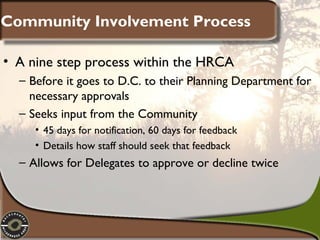
Community Involvement Process
• A nine step process within the HRCA
– Before it goes to D.C. to their Planning Department for
necessary approvals
– Seeks input from the Community
• 45 days for notification, 60 days for feedback
• Details how staff should seek that feedback

– Allows for Delegates to approve or decline twice
Community Involvement Process
• Nine Steps:
1. Formal proposal submitted to HRCA
2. Staff and BPAAC committee initial approval
3.BOD Review
4.Presentation to Delegates
5.Delegate Recommendation (worth proceeding or not, not an
endorsement at this time)
6.BOD Review #2
7.Community Notification and Feedback (85 days)
8.Delegate Vote
9.BOD Vote
Current Committee
• Seven Member Committee
–
–
–
–

Advisory body to the Board
Resource to the Community
Experts on Community Involvement Process
Continued education on Backcountry documents, D.C.
Planning, etc.
– Other duties as assigned by Board
Current Committee
• Members:
–
–
–
–
–

Len Abruzzo
Phillip Heiser
Rudy Lukez
Melissa Park
Josh Quist

• Currently two vacancies
Future Capital Expenditures?
•Whatever we do should promote our mission of providing
unprecedented opportunities in the outdoors
•And our goal to provide experiences in the outdoors that
foster an appreciation for the outdoors and promote
conservation.
Development is a bad word…
• Does not have to be
• Purpose of “development” is to produce revenue to
further protect, manage, and enhance the rest of the
property.
• Can be done with a small footprint and will be done
according to community desires as outlined in 2012 Survey.
Outdoor Mecca
• DEPENDENT UPON WILDCAT REGIONAL PARK:
–
–
–
–
–

Ropes/Challenge Course
Covered Pavilion
Archery Range
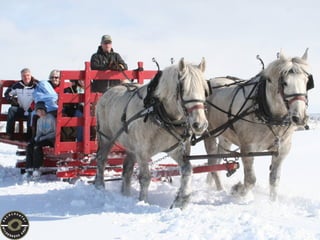
Horseback Riding Operation
Camping

• Youth Camp revenues increase
• Expansion of events, programs, rentals, races, tournaments, etc.
• Potential to allow the Backcountry to operate in the black, fund itself,
and do MORE to improve habitat in the sanctuary area.
Be the best…do more
• Goal is to create a habitat so pristine that it is used as a model of
conservation, education, and wildlife conservation, while providing
unique recreational and educational opportunities that not only
increase the value of our homes, but distinguish Highlands Ranch
from any other community in Colorado, or the Nation.

Backcountry Wilderness Area Presentation

  • 4.
    2000 OSCA PLAN •Zoning Document – What is allowed where – Extensive studies • Wildlife, Soil, Flood Plains, Habitats, Slopes, etc. • Outlines Planning Areas – The 1200 acres of the 8,200 that can be “developed.”
  • 5.
    Management Implementation Plan •Completed 2002 • SAIC –Environmental Consulting Firm • Management goals, recommended property uses/restrictions, and resources
  • 6.
    Programs • From theManagement Plan – Mission Statement • … “Provide visitors with unprecedented opportunities to enjoy nature near where they live, while protecting and conserving natural, archaeological, historical, and cultural resources for the enjoyment of future generations.”
  • 13.
    Program Goals • GetOutdoors…Connect To Nature • Provide positive, memorable experiences in the outdoors to promote long term conservation of the Backcountry. • This generation of kids is lacking those opportunities…
  • 19.
    Yearly Program Revenue… •2010: •2011: •2012: •2013: •2014: Gross Net #Contacts $29,000 $9,900 3500 $49,000 $29,700 5000 $79,000 $33,250 7000 $123,000 $53,000 9000 $173,000* $63,000* Even More *projected
  • 20.
    HABITAT MANAGEMENT • Rightnow, it is good – It’s not great, it’s not excellent… • We have work to do • Have owned the Backcountry for just over 4 years now. – Great strides
  • 21.
    CONSULTATIONS/TOURS • Over pastyear have developed strong relationships with: – Colorado Parks and Wildlife • District Wildlife Manager • Area Biologist • Regional Habitat Specialist – Natural Resource Conservation Service • Area Range Management Specialist • Area Biologist • Private Lands Biologist – CO Dept. of Agriculture • State Weed Coordinator • Noxious Weed Specialist
  • 22.
    DEVELOPED PRIORITIES • • • • Pasture Fencing Brushand Forest Management Weed Management Water Development
  • 23.
  • 24.
    Our Guiding Documents •OSCA Plan –2000 • Management Plan –2002
  • 25.
    MANAGEMENT PLAN • Providesmore detailed information on how to use and manage the land. – Where we put trails – Areas we protect more • Provides guidance in its mission statement: “Provide unprecedented opportunities to enjoy nature near where they live, while protecting natural, archaeological, historical, and cultural resources.”
  • 27.
    History of Committees • • • • 1989-1996-2000 –Original OSCA Committee • OSCA Plan 2002 – OSCA Strategic Planning Committee • Developed Survey to determine possible uses for planning areas. • 2002 Survey Results 2010-11 – Backcountry Planning Areas Committee • Developed Community Involvement Process for possible projects in the Planning Areas • Recommended Community Survey 2012 – Backcountry Planning Areas Advisory Committee • Advise Board on projects related to Planning Areas • Assist with Wildcat Regional Park processes • Review future proposals and assist Board with implementation of Community Involvement Process • Other tasks as assigned by Board
  • 28.
    Purpose of PlanningAreas – FROM THE OSCA PLAN: “Utilize the revenue to HRCA from the use of 1200 acres to financially support the management of OSCA and/or any other purposes deemed appropriate by the HRCA Board of Directors that benefit the community.”
  • 30.
    Planning Areas • Outlinedin 2000 OSCA Plan • OSCA Plan included studies – Habitats – Geology – Wildlife Corridors, uses • Let the land “tell” how it should be utilized
  • 31.
    • Planning Areas – – – – – – – Lessthan 15% slope No Pine habitat No rockfall hazard areas No rock outcroppings No 100 year floodplain No “Best” wildlife areas Good access and infrastructure availability
  • 33.
    Planning Areas Ownership BACKCOUNTRYWILDERNESS AREA OF HIGHLANDS RANCH: 8,200 acres or 12.8 square miles •PLANNING AREAS: •Planning Area A: 467 acres •Planning Area B: 87 acres •Planning Area C: 191 acres •Planning Area D: 87 acres •Planning Area E: 272 acres •Planning Area F: 34 acres •Planning Area G: 19 acres •Planning Area H: 10 acres •Planning Area I : 33 acres •Planning Area J: 125 acres – – – OWNERSHIP Backcountry Homeowners Association HRCA Douglas County HRCA HRCA HRCA HRCA Douglas County School District Highlands Ranch Law Enforcement Foundation Highlands Ranch Law Enforcement Foundation HRCA TOTAL: OTHER TOTAL: GRAND TOTAL: •TOTAL ACREAGE OWNED BY HRCA: – – – 499 Planning Area acres 6,755 Conserved acres Total: 7,254 acres 499 acres (approximately 7% of total property owned by HRCA) 826 acres 1,325 acres 
  • 34.
  • 35.
    Backcountry Planning AreasAdvisory Committee (BPAAC) • Board established committee in 2010 • As a result of CCU – Main Responsibilities: • Thoroughly understand the existing documents governing the use and development of the Backcountry. • Become familiar with the Backcountry through tours and study. • Become familiar with Backcountry budget, Douglas County Planning, Zoning, and Development, etc.
  • 36.
    BPAAC • Deliverables – Developpolicies and practices, in regards to the Planning Areas, to: • Guide the HRCA in future decisions regarding development and land use • Help facilitate the consideration of development and land use • Seek input from Board, Delegates, and the community • Communicate with members
  • 37.
    Survey –November, 2012 – – – – – – – – 90%support additional trails for hiking, biking, running, horseback riding 72% support fishing pond 73% support developing user fees and revenues from new programs 74% support nature center 68% support a ropes/challenge course 61% support outdoor amphitheater 62% support concerts, weddings, special events 57% support expanded camping – – – 42% No recreational amenities of any kind, leave it as is 54% No development of any kind, leave it as is 57% No other uses of any kind, leave it as is – – – – 29% College/university 27% Cemetery/Memorial gardens 24% Private sports training facility 20% Sell or lease property to private entities
  • 38.
    Community Involvement Process •A nine step process within the HRCA – Before it goes to D.C. to their Planning Department for necessary approvals – Seeks input from the Community • 45 days for notification, 60 days for feedback • Details how staff should seek that feedback – Allows for Delegates to approve or decline twice
  • 40.
    Community Involvement Process •Nine Steps: 1. Formal proposal submitted to HRCA 2. Staff and BPAAC committee initial approval 3.BOD Review 4.Presentation to Delegates 5.Delegate Recommendation (worth proceeding or not, not an endorsement at this time) 6.BOD Review #2 7.Community Notification and Feedback (85 days) 8.Delegate Vote 9.BOD Vote
  • 41.
    Current Committee • SevenMember Committee – – – – Advisory body to the Board Resource to the Community Experts on Community Involvement Process Continued education on Backcountry documents, D.C. Planning, etc. – Other duties as assigned by Board
  • 42.
    Current Committee • Members: – – – – – LenAbruzzo Phillip Heiser Rudy Lukez Melissa Park Josh Quist • Currently two vacancies
  • 44.
    Future Capital Expenditures? •Whateverwe do should promote our mission of providing unprecedented opportunities in the outdoors •And our goal to provide experiences in the outdoors that foster an appreciation for the outdoors and promote conservation.
  • 45.
    Development is abad word… • Does not have to be • Purpose of “development” is to produce revenue to further protect, manage, and enhance the rest of the property. • Can be done with a small footprint and will be done according to community desires as outlined in 2012 Survey.
  • 46.
    Outdoor Mecca • DEPENDENTUPON WILDCAT REGIONAL PARK: – – – – – Ropes/Challenge Course Covered Pavilion Archery Range Horseback Riding Operation Camping • Youth Camp revenues increase • Expansion of events, programs, rentals, races, tournaments, etc. • Potential to allow the Backcountry to operate in the black, fund itself, and do MORE to improve habitat in the sanctuary area.
  • 47.
    Be the best…domore • Goal is to create a habitat so pristine that it is used as a model of conservation, education, and wildlife conservation, while providing unique recreational and educational opportunities that not only increase the value of our homes, but distinguish Highlands Ranch from any other community in Colorado, or the Nation.