A u t o m a t i c T i m e t a b l e
G e n e r a t i o n S y s t e m
WITH MAN UAL AD JUS TM E N TS C APAB ILIT Y
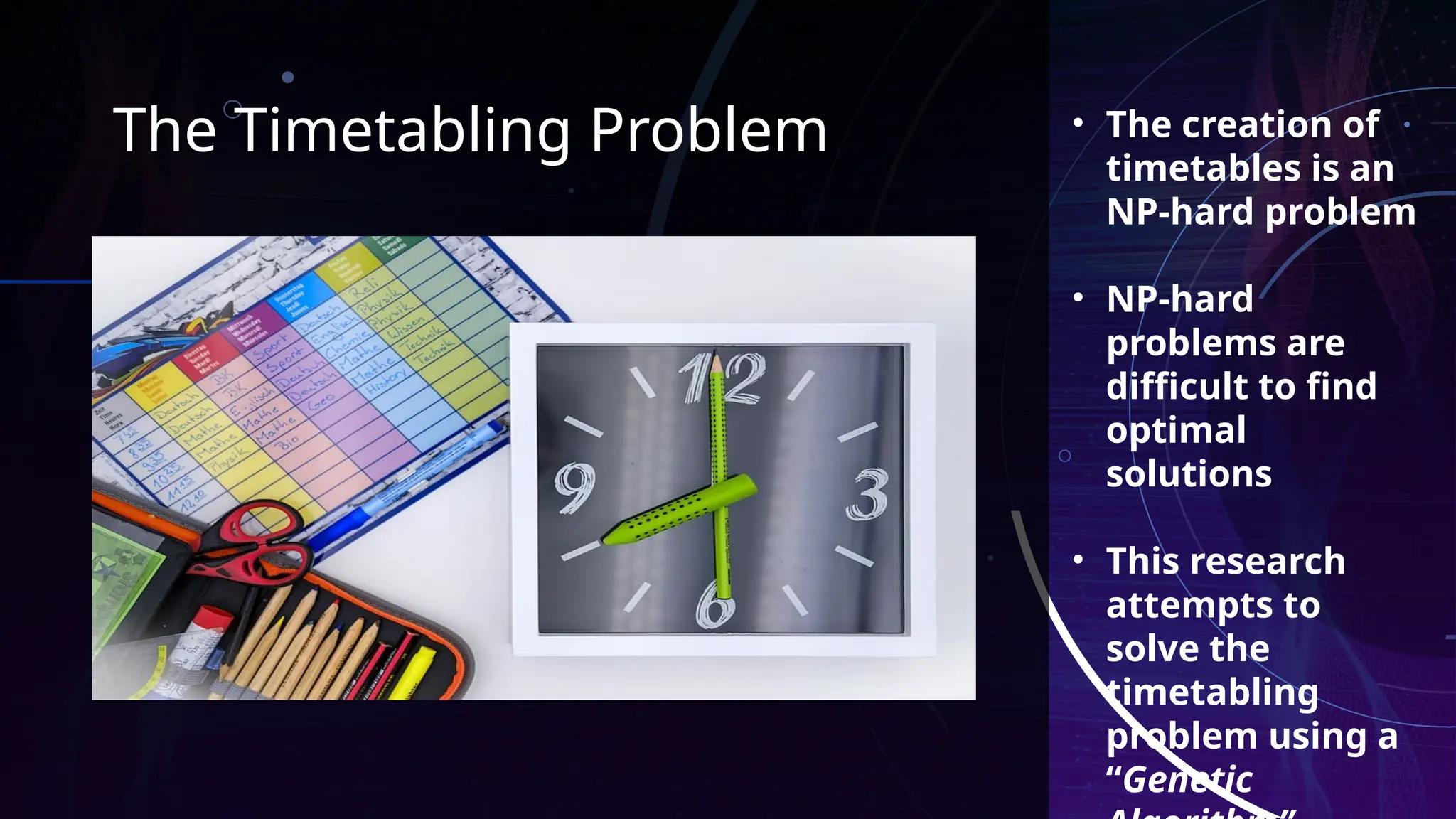
The Timetabling Problem • The creation of
timetables is an
NP-hard problem
• NP-hard
problems are
difficult to find
optimal
solutions
• This research
attempts to
solve the
timetabling
problem using a
“Genetic
Genetic Algorithms
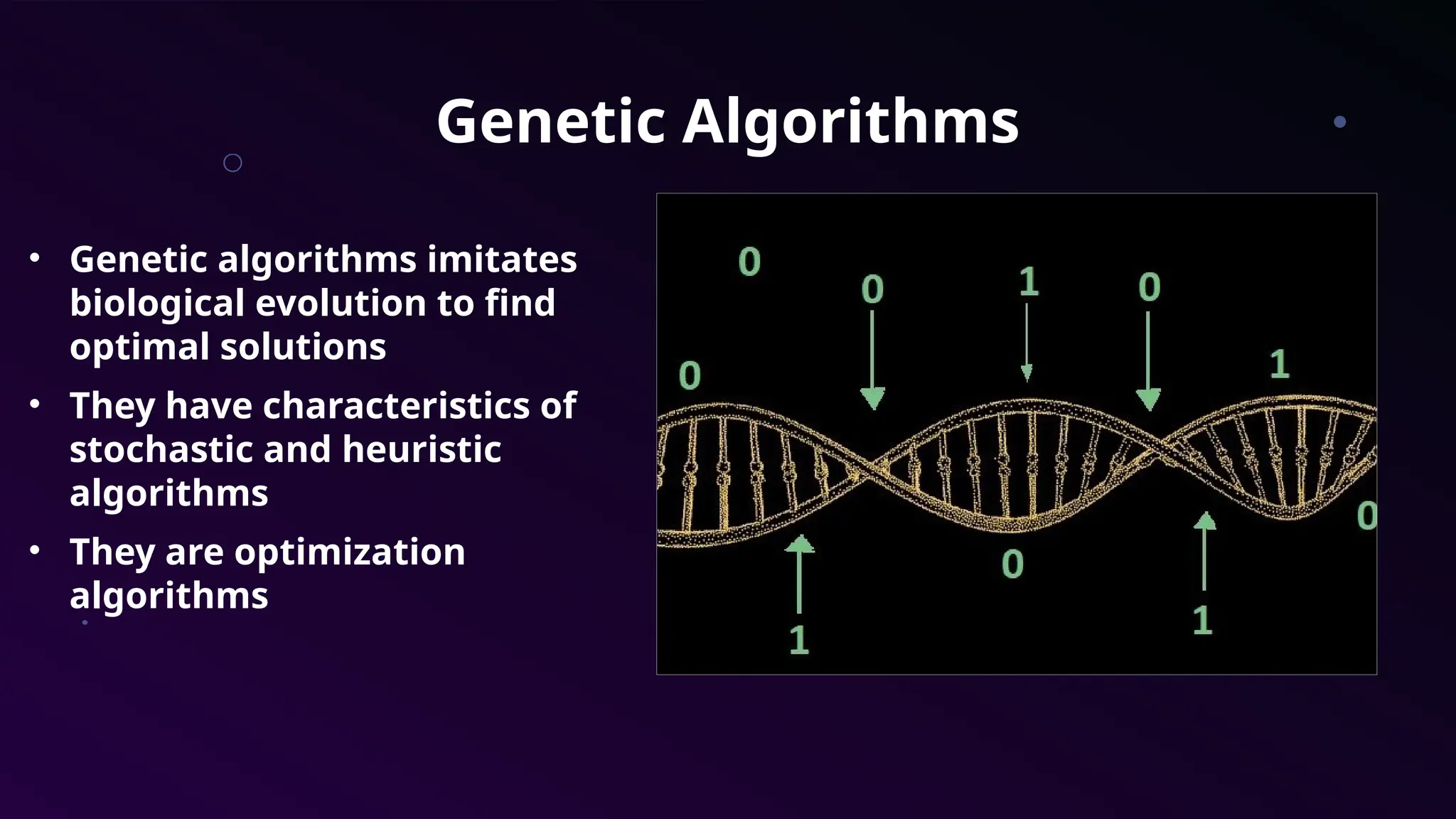
• Genetic algorithms imitates
biological evolution to find
optimal solutions
• They have characteristics of
stochastic and heuristic
algorithms
• They are optimization
algorithms
Processing Stage >>>
1. Genome 2. Chromosome 3. Mutation
4. Multipoint
Crossover
5. Fitness
Function
6. Population
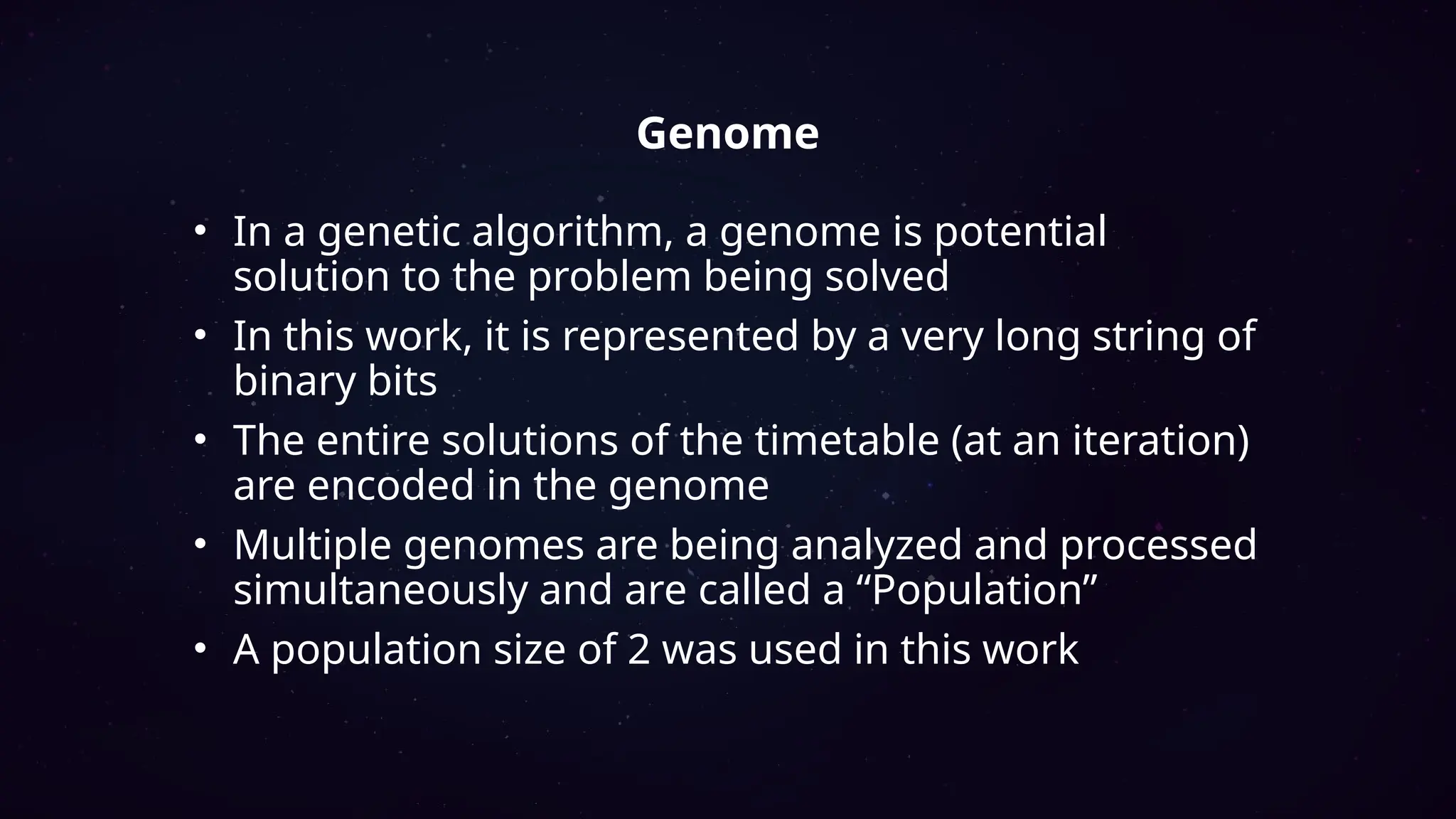
• In a genetic algorithm, a genome is potential
solution to the problem being solved
• In this work, it is represented by a very long string of
binary bits
• The entire solutions of the timetable (at an iteration)
are encoded in the genome
• Multiple genomes are being analyzed and processed
simultaneously and are called a “Population”
• A population size of 2 was used in this work
Genome
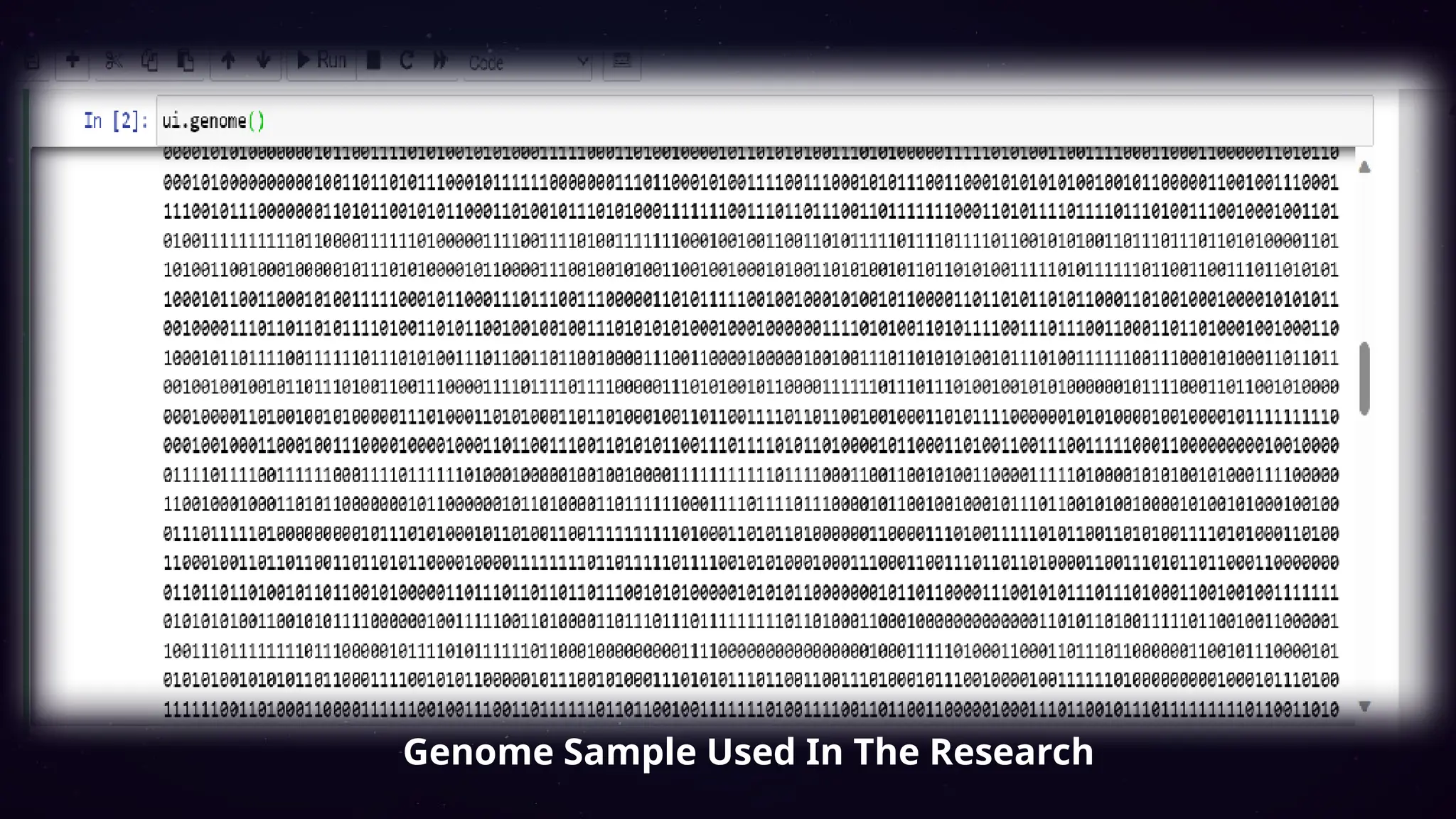
Genome Sample Used In The Research
Chromosome
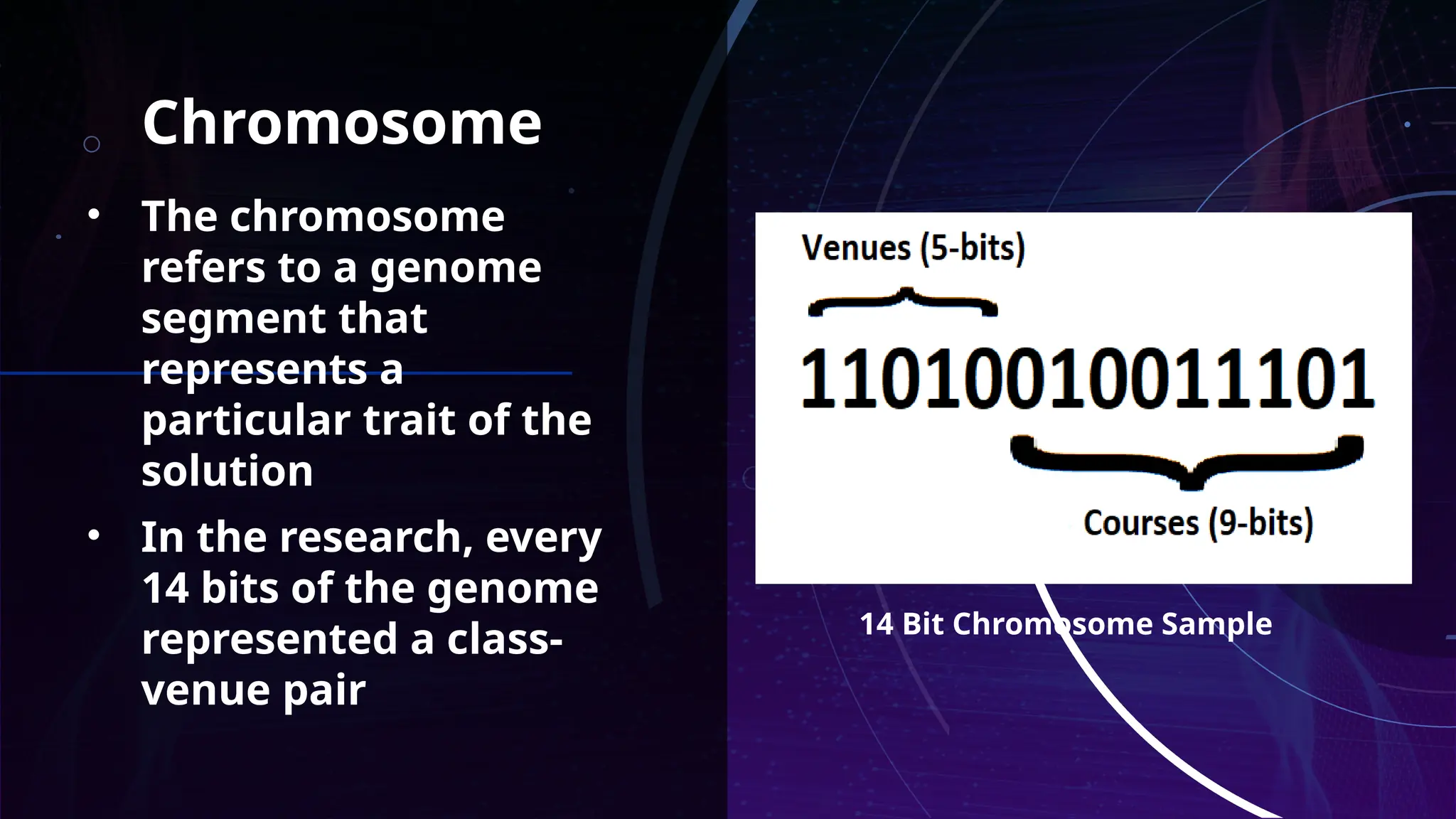
• The chromosome
refers to a genome
segment that
represents a
particular trait of the
solution
• In the research, every
14 bits of the genome
represented a class-
venue pair
14 Bit Chromosome Sample
Mutation
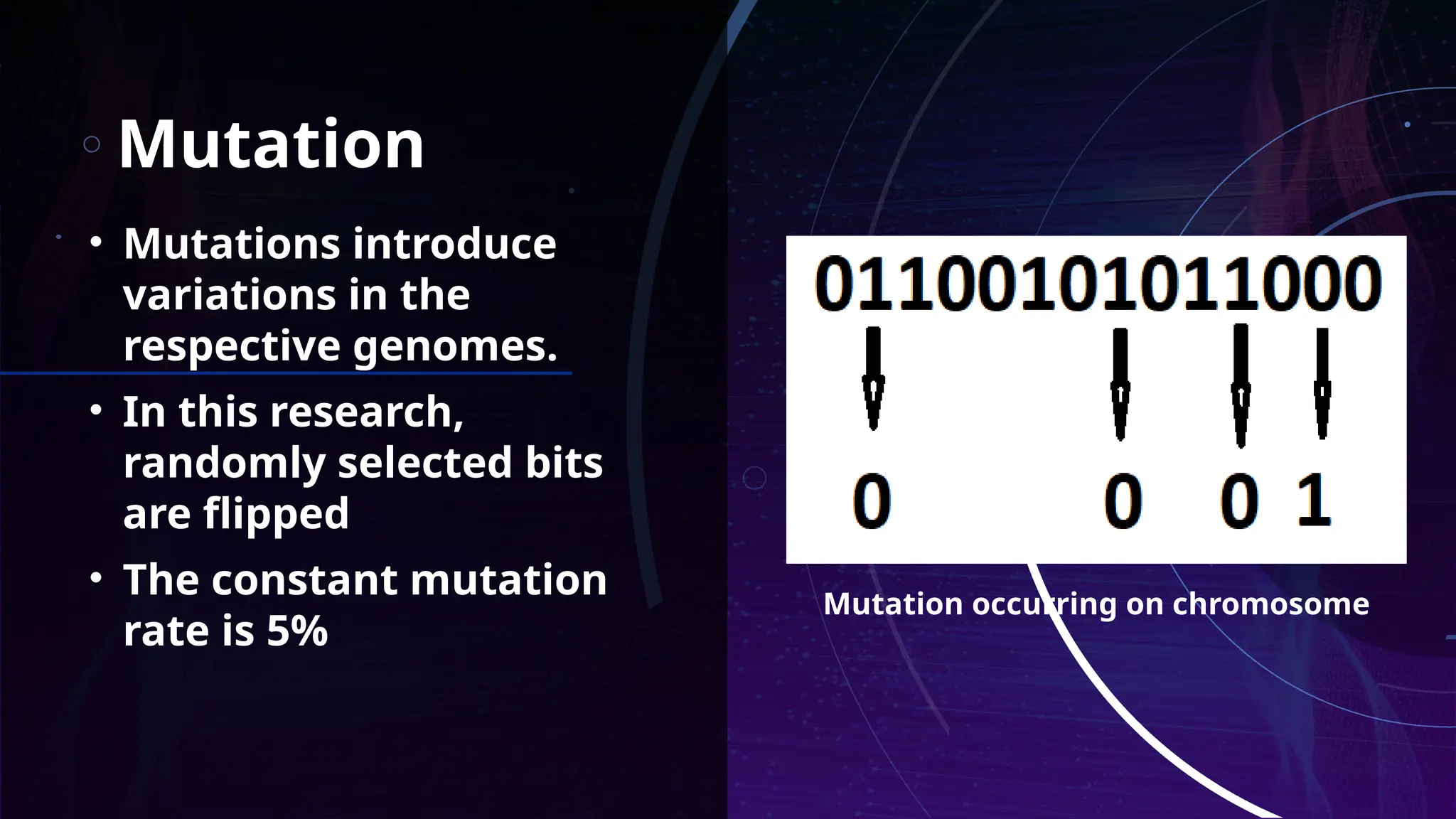
• Mutations introduce
variations in the
respective genomes.
• In this research,
randomly selected bits
are flipped
• The constant mutation
rate is 5%
Mutation occurring on chromosome
Multipoint
Crossover
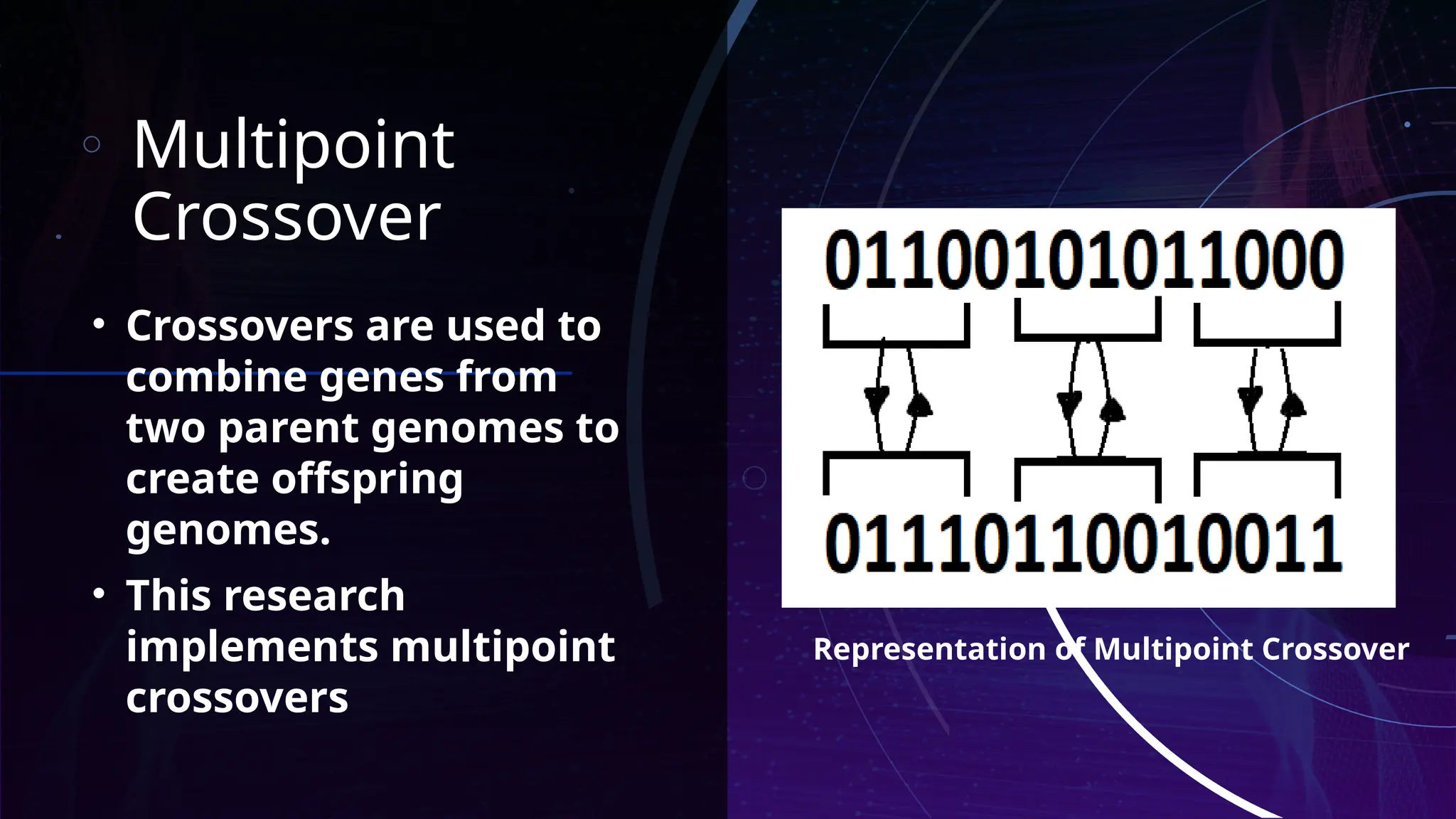
• Crossovers are used to
combine genes from
two parent genomes to
create offspring
genomes.
• This research
implements multipoint
crossovers
Representation of Multipoint Crossover
Fitness
Function
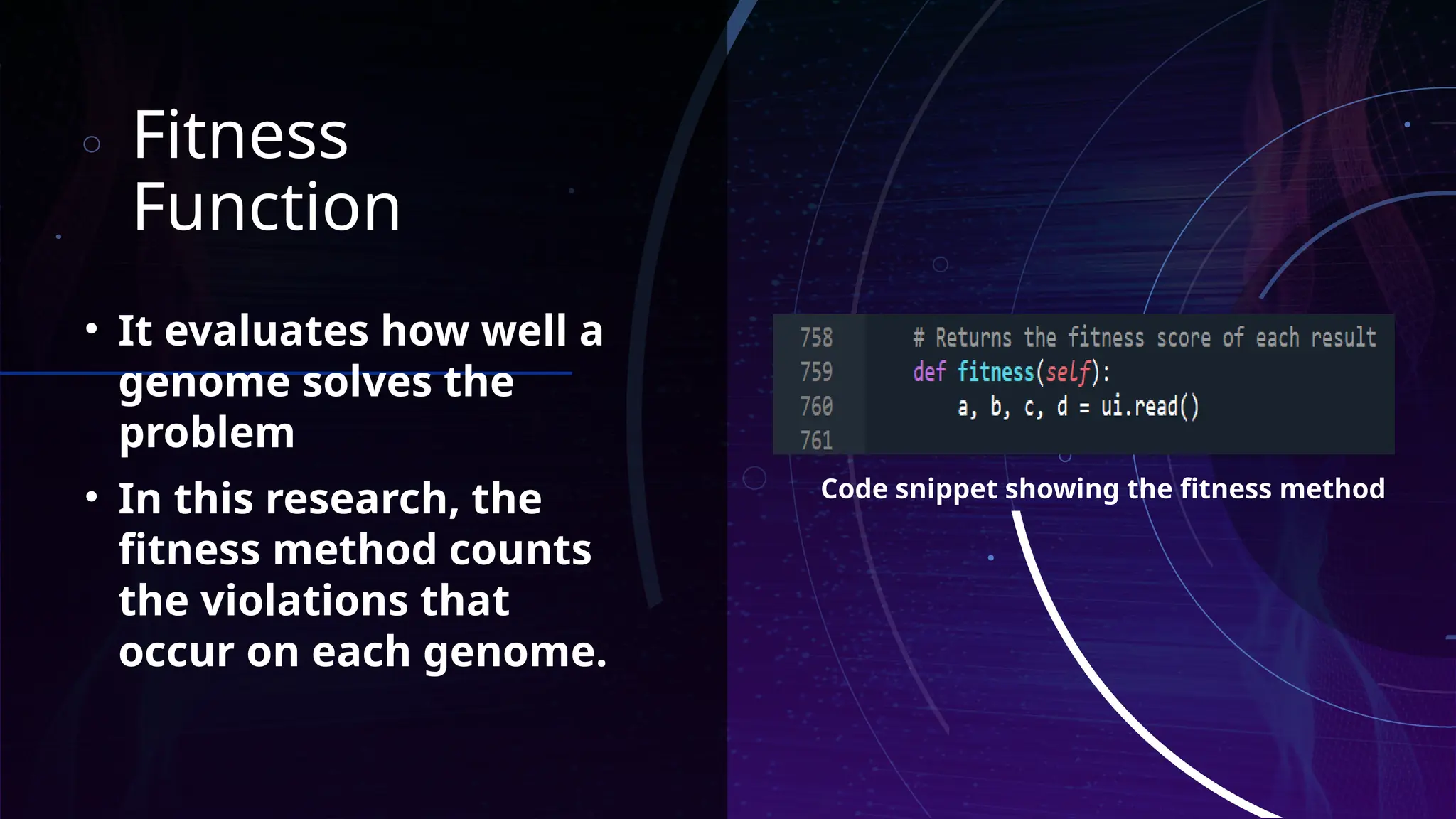
• It evaluates how well a
genome solves the
problem
• In this research, the
fitness method counts
the violations that
occur on each genome.
Code snippet showing the fitness method
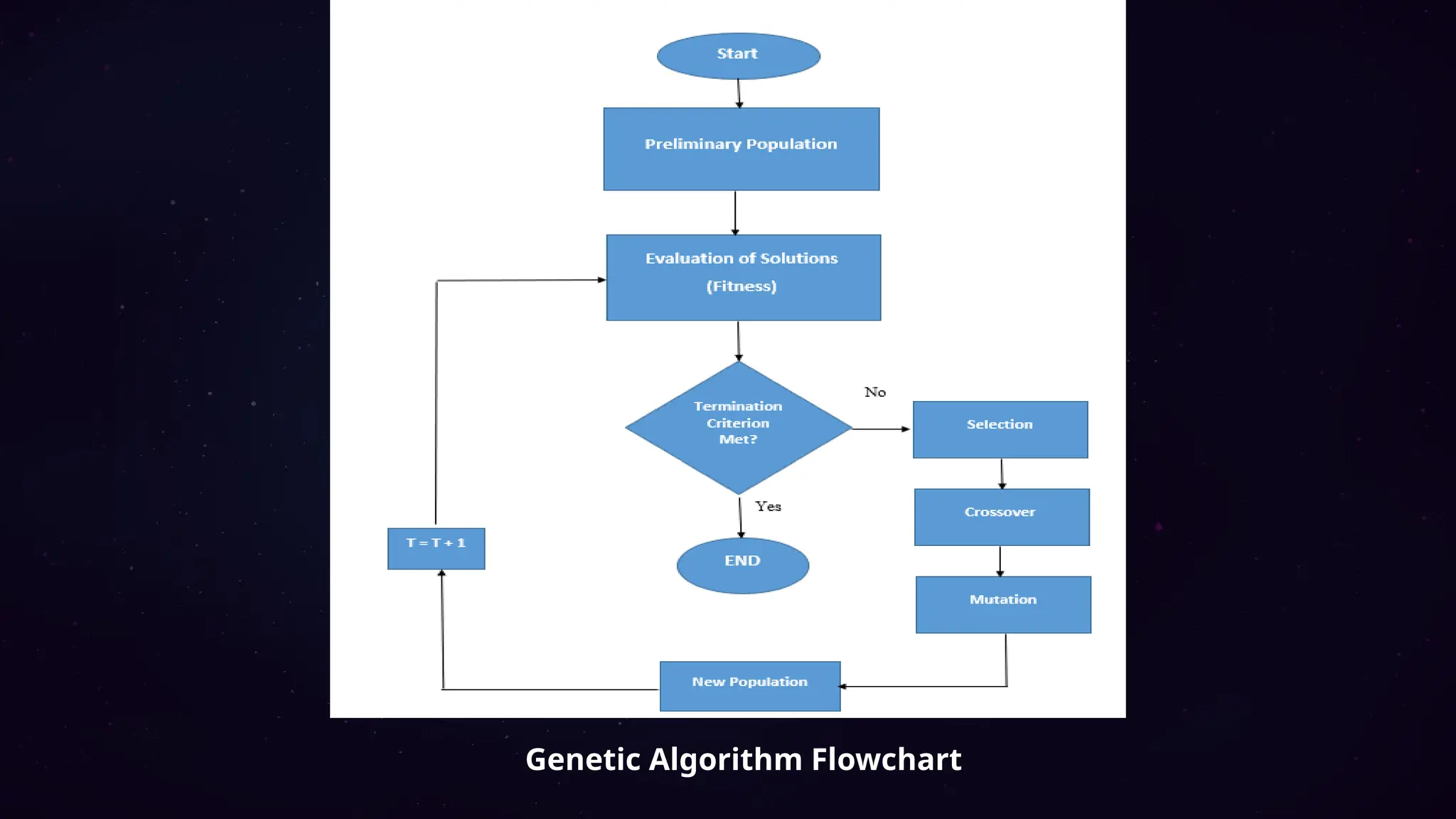
Genetic Algorithm Flowchart
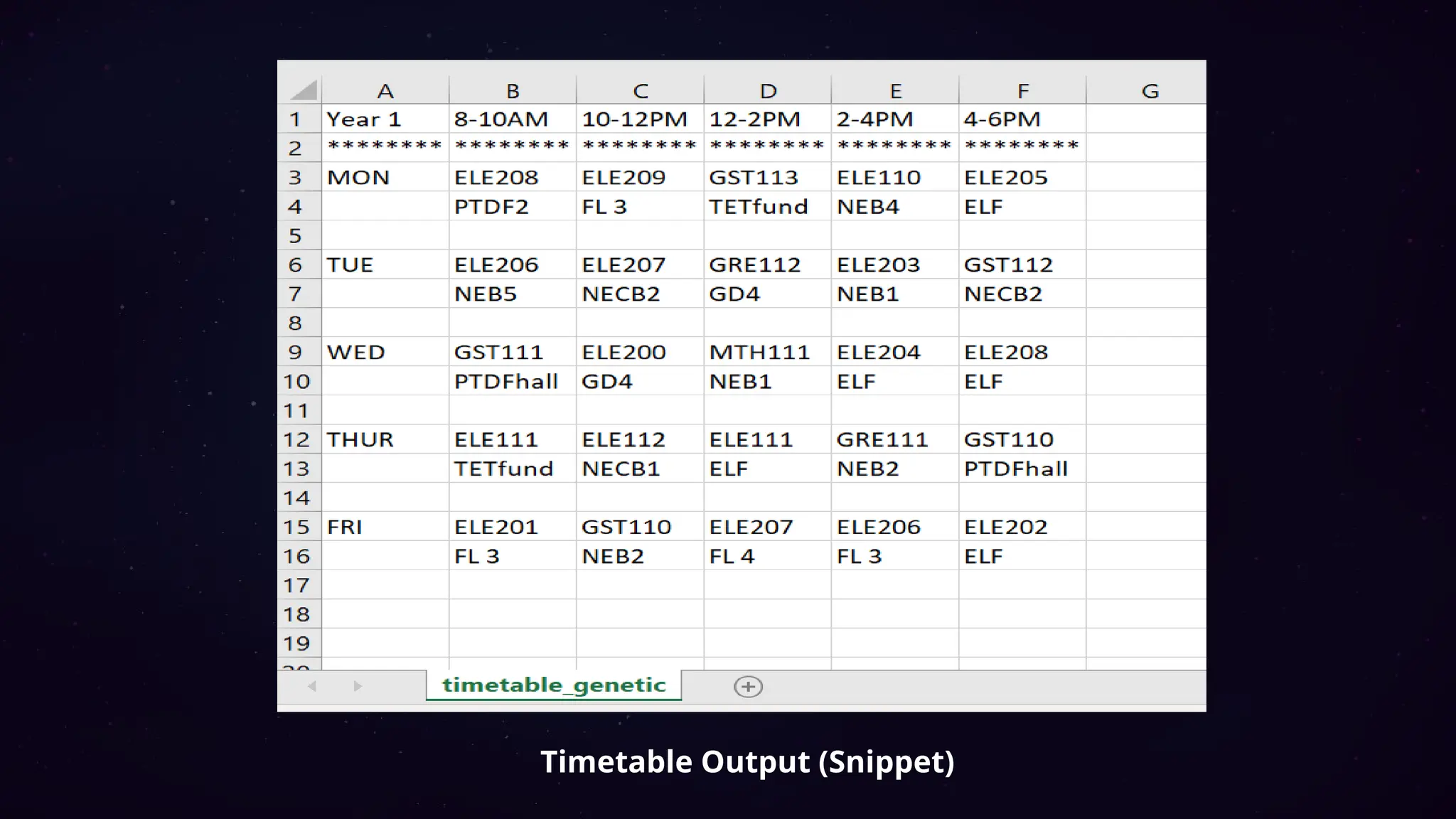
Result Output
• The timetable results (genomes) are
generated as list
• The list contents are converted to CSV file
• These can be displayed and manually adjusted
with spreadsheets such as MS Excel
Timetable Output (Snippet)
Thank you!

Automatic Timetable Generation System.pptx msbte campus

  • 1.
    A u to m a t i c T i m e t a b l e G e n e r a t i o n S y s t e m WITH MAN UAL AD JUS TM E N TS C APAB ILIT Y
  • 2.
    The Timetabling Problem• The creation of timetables is an NP-hard problem • NP-hard problems are difficult to find optimal solutions • This research attempts to solve the timetabling problem using a “Genetic
  • 3.
    Genetic Algorithms • Geneticalgorithms imitates biological evolution to find optimal solutions • They have characteristics of stochastic and heuristic algorithms • They are optimization algorithms
  • 4.
    Processing Stage >>> 1.Genome 2. Chromosome 3. Mutation 4. Multipoint Crossover 5. Fitness Function 6. Population
  • 5.
    • In agenetic algorithm, a genome is potential solution to the problem being solved • In this work, it is represented by a very long string of binary bits • The entire solutions of the timetable (at an iteration) are encoded in the genome • Multiple genomes are being analyzed and processed simultaneously and are called a “Population” • A population size of 2 was used in this work Genome
  • 6.
    Genome Sample UsedIn The Research
  • 7.
    Chromosome • The chromosome refersto a genome segment that represents a particular trait of the solution • In the research, every 14 bits of the genome represented a class- venue pair 14 Bit Chromosome Sample
  • 8.
    Mutation • Mutations introduce variationsin the respective genomes. • In this research, randomly selected bits are flipped • The constant mutation rate is 5% Mutation occurring on chromosome
  • 9.
    Multipoint Crossover • Crossovers areused to combine genes from two parent genomes to create offspring genomes. • This research implements multipoint crossovers Representation of Multipoint Crossover
  • 10.
    Fitness Function • It evaluateshow well a genome solves the problem • In this research, the fitness method counts the violations that occur on each genome. Code snippet showing the fitness method
  • 11.
  • 12.
    Result Output • Thetimetable results (genomes) are generated as list • The list contents are converted to CSV file • These can be displayed and manually adjusted with spreadsheets such as MS Excel
  • 13.
  • 14.