International Research Journal of Engineering and Technology (IRJET) e-ISSN: 2395 -0056
Volume: 04 Issue: 03 | Mar -2017 www.irjet.net p-ISSN: 2395-0072
© 2017, IRJET | Impact Factor value: 5.181 | ISO 9001:2008 Certified Journal | Page 1846
Automated Feature Selection and Churn Prediction using Deep
Learning Models
V. Umayaparvathi1, K. Iyakutti2
1 Research Scholar, Department of Computer Science, Bharathiar University, Coimbatore, Tamilnadu, India
2 Professor-Emeritus, Department of Physics and Nanotechnology, SRM University, Chennai, Tamilnadu, India
---------------------------------------------------------------------***---------------------------------------------------------------------
Abstract – In this competitive world, mobile
telecommunications market tends to reach a saturation state
and faces a fierce competition. This situation forces the
telecom companies to focus their attention on keeping the
customers intact instead of building a large customer base.
According to telecom market, the process of subscribers
(either prepaid or postpaid) switching from a serviceprovider
is called customer churn. Several predictive models have been
proposed in the literature for churn prediction.
The efficiency of any churn prediction model depends
highly on the selection of customer attributes (feature
selection) from the dataset for its model construction. These
traditional methods have two major problems: 1) With
hundreds of customer attributes, existing manual feature
engineering process is very tedious and time consuming and
often performed by a domain expert: 2) Often it is tailored to
specific dataset, hence we need to repeat the feature
engineering process for different datasets. Sincedeeplearning
algorithms automatically comes up with good features and
representation for the input data, we investigated their
applications for customer churn prediction problem. We
developed three deep neural network architectures and built
the corresponding churn prediction model using two telecom
dataset. Our experimental results show that deep-learning
based models are performing as good as traditional
classification models, without even using the hand-picked
features.
Key Words: Customer relationship management (CRM),
Data mining, Churn prediction, Predictive models, and Deep
learning.
1. INTRODUCTION
Today is the competitive world of communication
technologies. Customer Churn is the major issuethatalmost
all the TelecommunicationIndustriesintheworldfacesnow.
In telecommunication paradigm, Churn is defined to be the
activity of customersleaving thecompanyanddiscardingthe
services offered by it due to dissatisfaction of the services
and/or due to better offering from other network providers
within the affordable price tag of the customer. This leads to
a potential loss of revenue/profit to thecompany.Also,ithas
become a challenging task to retain the customers.
Therefore, companies are going behind introducing new
state of the art applications and technologies to offer their
customers as much better services as possible so astoretain
them intact. Before doing so, it is necessary to identify those
customers who are likely to leave the company in the near
future in advance because losing them would results in
significant loss of profit for the company. This process is
called Churn Prediction.
Data mining techniques are found to be more
effective in predicting customer churn from the researches
carried out during the past few years. The construction of
effective churn prediction model is a significant task which
involves lots of research right from the identification of
optimal predictor variables (features)fromthelargevolume
of available customer data to the selection of effective
predictive data mining technique that is suitable for the
feature set. Telecom Industries collect a voluminousamount
of data regarding customers such as Customer Profiling,
Calling pattern, Democratic data in addition to the network
data that are generated by them. Based on the history of the
customers calling pattern and the behavior, there is a
possibility to identify their mindset of either they will leave
or not.
The efficiency of any churn prediction model
depends highly on the selection of customer attributes
(feature selection) from the dataset for its model
construction. These traditional methods have two major
problems: 1) With hundreds of customer attributes,existing
manual feature engineering process is very tediousandtime
consuming and often performed by a domain expert: 2)
Often it is tailored to specific dataset, hence we need to
repeat the feature engineeringprocessfordifferentdatasets.
Since deep learning algorithms automaticallycomesupwith
good features and representation for the input data, we
investigated their applications for customer churn
prediction problem. We developed three deep neural
network architectures and built the corresponding churn
prediction model using two telecom dataset. Our
experimental results show that deep-learning basedmodels
are performing as good as traditional classification models,
without even using the hand-picked features.
The rest of the paper is organized as follows. In
Section 2, we review the existing predictive models
proposed in the literature for churn prediction. In Section 3,
we present the details about deep-learning networks. In
section 4, we present the architecture of the proposed deep-
International Research Journal of Engineering and Technology (IRJET) e-ISSN: 2395 -0056
Volume: 04 Issue: 03 | Mar -2017 www.irjet.net p-ISSN: 2395-0072
© 2017, IRJET | Impact Factor value: 5.181 | ISO 9001:2008 Certified Journal | Page 1847
learning models. In Section 5, we present the experimental
setup and results, followed by, in Section 6, we conclude the
paper with future directions of this research.
2. RELATED WORK
There are a lot of researches being carried out in the area
of customer churn prediction modeling. In this section, we
survey some of the researches carried out in this area in the
past few years.
Authors of [1] depict phasesof a generalchurnprediction
model such as data collection, preparation, classificationand
prediction. It also describes that identifying the right
grouping of variables has significant influence in improving
the percentage of true predictions (TP). A churn prediction
model was proposed by [1], which works in 5 steps: i)
problem identification; ii) dataset selection; iii)investigation
of data set; iv) classification; v) clustering, and vi) using the
knowledge. It seems to be a complete model. Classification
techniques are usedfordistinguishingChurners.Clusteringis
used for model evaluation. For classification, Decision tree,
Support vector machine and Neural Network are used. And
for clustering Simple K-Means was used. It concluded that
SVM was the best among the three methods in distinguishing
churners from non-churners.
Building an effective customer churn prediction model
using various techniques has become a significant topic for
business andacademics in recentyears[2].Theidentification
of why customers give up their relationships has been focus
of marketing research for the past few years [3]. Due to the
enormous growth of customer related data and call detail
data collectedand maintained by the companiesintherecent
years, more sophisticated metrics have evolved to describe
customer behaviourand better understandhowbehavioural
characteristics can be linked to customer retention and firm
performance [4].
Authors in [5] proposed a decision tree based Random
Forest method for feature extraction. From the original data
with Q features, exactly N samples with q < Q are randomly
selected for each tree to form a forest. The number of trees
depends on the number of features randomly combined for
each decision tree from the wholeQfeatures.Developmentof
a predictive model based on data-centric approach for
detecting the early warning signs of churn, and for
developing a Churn Score to identify subscribers who are
likely to end their relationship with the company was
discussed in [6], where the customer’scalling pattern played
the major role in predicting churn.
An overview of socially grouped users and their
behavioural pattern are elaborately identified in [7]. It also
explores the impact of centrality features among customers.
It concludes that when a customer in a group leaves the
network, there is a high probability of others in that group to
leave the network. It classifies the feature variables in two
types: i) dependent variables (call duration of in-degree and
out-degree), ii) independent variables (social forum like
services and the customer’s involvement in the forum). The
level of customer’s active participation was used as the
measure of probability of churn. Customers who are
members of multiple community forums areathighriskthan
those who are members in less number of forums.
In the recent past, deep learning algorithms have evolved
to provide outstanding results in computer vision compared
to the traditional classifiers. Authors of [8], applied deep
convolutional neural networks and auto-encoders for
building a churn prediction model. They transformed the
temporal behavior of customers into images and then they
modeledthechurnpredictionproblemasimageclassification
problem. Their experimental results show that their deep
learning model outperforms decision trees. Authors of [9]
also used deep learning models for churn prediction. They
applied auto encoders, deep belief networks and multi-layer
forward networks for churn prediction and showed that the
deep learning models achieves better accuracy compared to
random forests. In contrast with all these approaches, we
designed three deep learning models with increasing
complexity using simple and convolutional neural networks
for the churn prediction task. We trained our networks over
two public datasets and show that some datasets deep
learning networks are better than traditional classifiers but
not for all the datasets.
3. DEEP LEARNING MODELS
In this section, we first present an overview of deep
learning networks and then present the proposed deep
learning architectures for churn prediction task.
3.1 Overview of Deep Learning
Deep learningreferstoaclassofartificialneuralnetworks
(ANNs) composed of many processing layers. ANNs existed
formany decades,butattemptsattrainingdeeparchitectures
of ANNs failed until Geoffrey Hinton's breakthrough work of
the mid-2000s. In addition to algorithmic innovations, the
increase in computing capabilities using GPUs and the
collection of larger datasets are all factors that helped in the
recent surge of deep learning.
3.1.1 Artificial Neural Networks (ANNs)
Artificial neural networks (ANNs) are a familyofmachine
learning models inspired by biological neural networks.
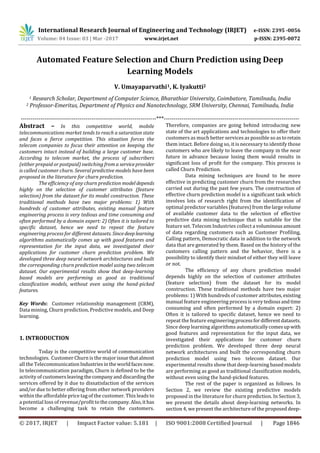
Artificial Neural Networks vs. Biological Neural Networks
Biological Neurons arethecorecomponentsofthehuman
brain. A neuron consists of a cell body, dendrites, and an
axon. It processes and transmit informationtootherneurons
by emitting electrical signals. Each neuron receives input
signals from its dendrites and produces output signals along
its axon. The axon branches out and connects viasynapsesto
dendrites of other neurons.
International Research Journal of Engineering and Technology (IRJET) e-ISSN: 2395 -0056
Volume: 04 Issue: 03 | Mar -2017 www.irjet.net p-ISSN: 2395-0072
© 2017, IRJET | Impact Factor value: 5.181 | ISO 9001:2008 Certified Journal | Page 1848
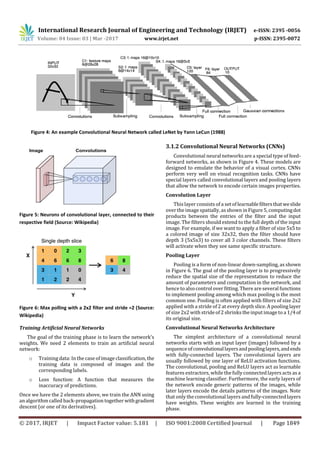
Figure 3: An example feedforward neural network with 2
hidden layers (Source: http://adilmoujahid.com)
A basic model for how the neurons work goes as follows:
Each synapse has a strength that is learnable and control the
strength of influence of oneneurononanother.Thedendrites
carry the signals to the target neuron's body where they get
summed. If the final sum is above a certain threshold, the
neuron get fired, sending a spike along its axon.
Artificial neurons are inspired by biological neurons, and
try to formulate the model explained above in a
computational form. An artificial neuron has a finite number
of inputs with weights associated to them, and an activation
function (also called transfer function). The output of the
neuron is the result of the activation function applied to the
weighted sum of inputs.Artificialneuronsareconnectedwith
each other’s to form artificial neural networks. Similarities
between biological neurons and artificial neurons are
illustrated in Figure 1.
Feedforward Neural Networks
Feedforward Neural Networks are the simplest form of
Artificial Neural Networks. These networks have 3 types of
layers: Input layer, hidden layer and output layer. In these
networks, data moves from the input layer through the
hidden nodes (if any) and to the output nodes. A fully-
connected feedforward neural network with 2 hidden layers
is shown in Figure 3.Fully-connectedmeansthateachnodeis
connected to all the nodes in the next layer. Note that, the
number of hidden layers and their size are the only free
parameters. The larger and deeper the hidden layers, the
more complex patterns we can model in theory.
Activation Functions
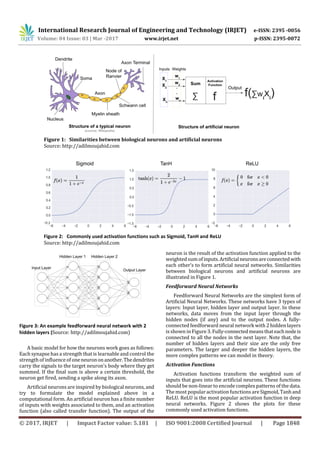
Activation functions transform the weighted sum of
inputs that goes into the artificial neurons. These functions
should be non-linear to encode complex patterns of the data.
The most popular activation functions areSigmoid,Tanhand
ReLU. ReLU is the most popular activation function in deep
neural networks. Figure 2 shows the plots for these
commonly used activation functions.
Figure 1: Similarities between biological neurons and artificial neurons
Source: http://adilmoujahid.com
Figure 2: Commonly used activation functions such as Sigmoid, TanH and ReLU
Source: http://adilmoujahid.com
International Research Journal of Engineering and Technology (IRJET) e-ISSN: 2395 -0056
Volume: 04 Issue: 03 | Mar -2017 www.irjet.net p-ISSN: 2395-0072
© 2017, IRJET | Impact Factor value: 5.181 | ISO 9001:2008 Certified Journal | Page 1849
Figure 5: Neurons of convolutional layer, connected to their
respective field (Source: Wikipedia)
Figure 6: Max polling with a 2x2 filter and stride =2 (Source:
Wikipedia)
Training Artificial Neural Networks
The goal of the training phase is to learn the network's
weights. We need 2 elements to train an artificial neural
network:
o Training data: In the case of image classification, the
training data is composed of images and the
corresponding labels.
o Loss function: A function that measures the
inaccuracy of predictions.
Once we have the 2 elements above, we train the ANN using
an algorithm called back-propagation togetherwithgradient
descent (or one of its derivatives).
3.1.2 Convolutional Neural Networks (CNNs)
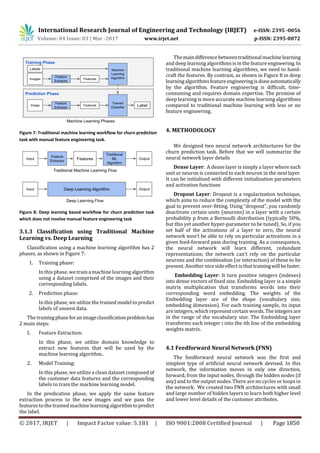
Convolutional neural networks are a special type of feed-
forward networks, as shown in Figure 4. These models are
designed to emulate the behavior of a visual cortex. CNNs
perform very well on visual recognition tasks. CNNs have
special layers called convolutional layers and pooling layers
that allow the network to encode certain images properties.
Convolution Layer
Thislayer consists of a set oflearnablefiltersthatweslide
over the image spatially, as shown in Figure 5,computingdot
products between the entries of the filter and the input
image. The filters should extend to the full depth of the input
image. For example, if we want to apply a filter of size 5x5 to
a colored image of size 32x32, then the filter should have
depth 3 (5x5x3) to cover all 3 color channels. These filters
will activate when they see same specific structure.
Pooling Layer
Pooling is a form of non-linear down-sampling, as shown
in Figure 6. The goal of the pooling layer is to progressively
reduce the spatial size of the representation to reduce the
amount of parameters and computation in the network, and
hence to alsocontrol over fitting. There are several functions
to implement pooling among which max pooling is the most
common one. Pooling is often applied with filters of size 2x2
applied with a stride of 2 at every depth slice. A pooling layer
of size 2x2 with strideof 2 shrinks the input image to a 1/4of
its original size.
Convolutional Neural Networks Architecture
The simplest architecture of a convolutional neural
networks starts with an input layer (images) followed by a
sequence ofconvolutionallayersandpoolinglayers,andends
with fully-connected layers. The convolutional layers are
usually followed by one layer of ReLU activation functions.
The convolutional, pooling and ReLU layers act as learnable
features extractors, while the fully connected layers acts as a
machine learning classifier. Furthermore, the early layers of
the network encode generic patterns of the images, while
later layers encode the details patterns of the images. Note
that only the convolutional layers and fully-connectedlayers
have weights. These weights are learned in the training
phase.
Figure 4: An example Convolutional Neural Network called LeNet by Yann LeCun (1988)
International Research Journal of Engineering and Technology (IRJET) e-ISSN: 2395 -0056
Volume: 04 Issue: 03 | Mar -2017 www.irjet.net p-ISSN: 2395-0072
© 2017, IRJET | Impact Factor value: 5.181 | ISO 9001:2008 Certified Journal | Page 1850
Figure 8: Deep learning based workflow for churn prediction task
which does not involve manual feature engineering task
3.1.3 Classification using Traditional Machine
Learning vs. Deep Learning
Classification using a machine learning algorithm has 2
phases, as shown in Figure 7:
1. Training phase:
In this phase, wetrain a machine learning algorithm
using a dataset comprised of the images and their
corresponding labels.
2. Prediction phase:
In this phase, we utilize the trained model to predict
labels of unseen data.
The trainingphaseforanimageclassificationproblemhas
2 main steps:
1. Feature Extraction:
In this phase, we utilize domain knowledge to
extract new features that will be used by the
machine learning algorithm..
2. Model Training:
In this phase, we utilize a clean dataset composed of
the customer data features and the corresponding
labels to train the machine learning model.
In the predication phase, we apply the same feature
extraction process to the new images and we pass the
features to the trained machine learning algorithmtopredict
the label.
Themaindifferencebetweentraditionalmachinelearning
and deep learningalgorithmsis in the featureengineering.In
traditional machine learning algorithms, we need to hand-
craft the features. By contrast, as shown in Figure 8 in deep
learningalgorithmsfeatureengineeringisdoneautomatically
by the algorithm. Feature engineering is difficult, time-
consuming and requires domain expertise. The promise of
deep learning is more accurate machine learning algorithms
compared to traditional machine learning with less or no
feature engineering.
4. METHODOLOGY
We designed two neural network architectures for the
churn prediction task. Before that we will summarize the
neural network layer details
Dense Layer: A dense layer is simply a layer where each
unit or neuron is connected to each neuron in the next layer.
It can be initialized with different initialization parameters
and activation functions
Dropout Layer: Dropout is a regularization technique,
which aims to reduce the complexity of the model with the
goal to prevent over-fitting. Using “dropout", you randomly
deactivate certain units (neurons) in a layer with a certain
probability p from a Bernoulli distribution (typically 50%,
but this yet another hyper-parameter to be tuned). So, if you
set half of the activations of a layer to zero, the neural
network won’t be able to rely on particular activations in a
given feed-forward pass during training. As a consequence,
the neural network will learn different, redundant
representations; the network can’t rely on the particular
neurons and the combination (or interaction) of these to be
present. Another nice sideeffect is that trainingwillbefaster.
Embedding Layer: It turn positive integers (indexes)
into dense vectors of fixed size. Embedding layer is a simple
matrix multiplication that transforms words into their
corresponding word embedding. The weights of the
Embedding layer are of the shape (vocabulary size,
embedding dimension). For each training sample, its input
are integers, which representcertain words.Theintegersare
in the range of the vocabulary size. The Embedding layer
transforms each integer i into the ith line of the embedding
weights matrix.
4.1 Feedforward Neural Network (FNN)
The feedforward neural network was the first and
simplest type of artificial neural network devised. In this
network, the information moves in only one direction,
forward, from the input nodes, through the hidden nodes (if
any) and to the output nodes. There are no cycles or loops in
the network. We created two FNN architectures with small
and large number of hidden layers to learn both higher level
and lower level details of the customer attributes.
Figure 7: Traditional machine learning workflow for churn prediction
task with manual feature engineering task.
International Research Journal of Engineering and Technology (IRJET) e-ISSN: 2395 -0056
Volume: 04 Issue: 03 | Mar -2017 www.irjet.net p-ISSN: 2395-0072
© 2017, IRJET | Impact Factor value: 5.181 | ISO 9001:2008 Certified Journal | Page 1851
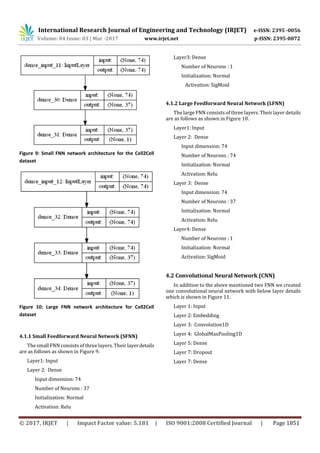
Figure 9: Small FNN network architecture for the Cell2Cell
dataset
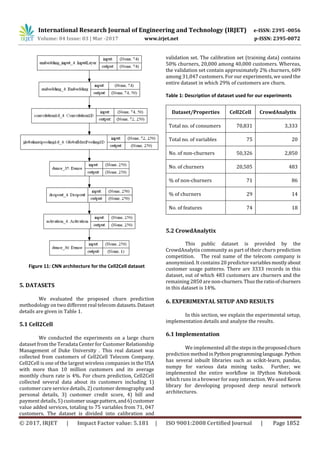
Figure 10: Large FNN network architecture for Cell2Cell
dataset
4.1.1 Small Feedforward Neural Network (SFNN)
The small FNNconsists of three layers. Their layerdetails
are as follows as shown in Figure 9.
Layer1: Input
Layer 2: Dense
Input dimension: 74
Number of Neurons : 37
Initialization: Normal
Activation: Relu
Layer3: Dense
Number of Neurons : 1
Initialization: Normal
Activation: SigMoid
4.1.2 Large Feedforward Neural Network (LFNN)
The large FNN consists of three layers. Their layer details
are as follows as shown in Figure 10.
Layer1: Input
Layer 2: Dense
Input dimension: 74
Number of Neurons : 74
Initialization: Normal
Activation: Relu
Layer 3: Dense
Input dimension: 74
Number of Neurons : 37
Initialization: Normal
Activation: Relu
Layer4: Dense
Number of Neurons : 1
Initialization: Normal
Activation: SigMoid
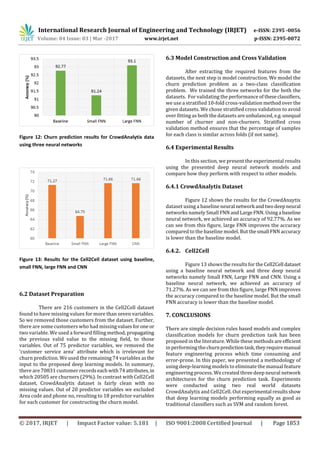
4.2 Convolutional Neural Network (CNN)
In addition to the above mentioned two FNN we created
one convolutional neural network with below layer details
which is shown in Figure 11.
Layer 1: Input
Layer 2: Embedding
Layer 3: Convolution1D
Layer 4: GlobalMaxPooling1D
Layer 5: Dense
Layer 7: Dropout
Layer 7: Dense
International Research Journal of Engineering and Technology (IRJET) e-ISSN: 2395 -0056
Volume: 04 Issue: 03 | Mar -2017 www.irjet.net p-ISSN: 2395-0072
© 2017, IRJET | Impact Factor value: 5.181 | ISO 9001:2008 Certified Journal | Page 1852
Figure 11: CNN architecture for the Cell2Cell dataset
5. DATASETS
We evaluated the proposed churn prediction
methodology on two different real telecom datasets.Dataset
details are given in Table 1.
5.1 Cell2Cell
We conducted the experiments on a large churn
dataset from the Teradata Center for Customer Relationship
Management of Duke University . This real dataset was
collected from customers of Cell2Cell Telecom Company.
Cell2Cell is one of the largest wireless companies in the USA
with more than 10 million customers and its average
monthly churn rate is 4%. For churn prediction, Cell2Cell
collected several data about its customers including 1)
customer care service details, 2) customer demography and
personal details, 3) customer credit score, 4) bill and
payment details, 5) customer usagepattern,and6)customer
value added services, totaling to 75 variables from 71, 047
customers. The dataset is divided into calibration and
validation set. The calibration set (training data) contains
50% churners, 20,000 among 40,000 customers. Whereas,
the validation set contain approximately 2% churners, 609
among 31,047 customers. For our experiments, we used the
entire dataset in which 29% of customers are churn.
Table 1: Description of dataset used for our experiments
Dataset/Properties Cell2Cell CrowdAnalytix
Total no. of consumers 70,831 3,333
Total no. of variables 75 20
No. of non-churners 50,326 2,850
No. of churners 20,505 483
% of non-churners 71 86
% of churners 29 14
No. of features 74 18
5.2 CrowdAnalytix
This public dataset is provided by the
CrowdAnalytix community as part of their churn prediction
competition. The real name of the telecom company is
anonymized. It contains 20 predictor variablesmostlyabout
customer usage patterns. There are 3333 records in this
dataset, out of which 483 customers are churners and the
remaining 2850 are non-churners.Thustheratioofchurners
in this dataset is 14%.
6. EXPERIMENTAL SETUP AND RESULTS
In this section, we explain the experimental setup,
implementation details and analyze the results.
6.1 Implementation
We implemented all thestepsintheproposedchurn
prediction methodinPythonprogramminglanguage.Python
has several inbuilt libraries such as scikit-learn, pandas,
numpy for various data mining tasks. Further, we
implemented the entire workflow in IPython Notebook
which runs in a browser for easy interaction. We used Keros
library for developing proposed deep neural network
architectures.
International Research Journal of Engineering and Technology (IRJET) e-ISSN: 2395 -0056
Volume: 04 Issue: 03 | Mar -2017 www.irjet.net p-ISSN: 2395-0072
© 2017, IRJET | Impact Factor value: 5.181 | ISO 9001:2008 Certified Journal | Page 1853
Figure 12: Churn prediction results for CrowdAnalytix data
using three neural networks
Figure 13: Results for the Cell2Cell dataset using baseline,
small FNN, large FNN and CNN
6.2 Dataset Preparation
There are 216 customers in the Cell2Cell dataset
found to have missing values for more than seven variables.
So we removed those customers from the dataset. Further,
there are some customers who had missing valuesforoneor
two variable. We used a forward filling method, propagating
the previous valid value to the missing field, to those
variables. Out of 75 predictor variables, we removed the
‘customer service area’ attribute which is irrelevant for
churn prediction. We used the remaining 74 variables asthe
input to the proposed deep learning models. In summary,
there are 70831 customer recordseachwith74 attributes,in
which 20505 are churners (29%). In contrast with Cell2Cell
dataset, CrowdAnalytix dataset is fairly clean with no
missing values. Out of 20 predictor variables we excluded
Area code and phone no, resulting to 18 predictor variables
for each customer for constructing the churn model.
6.3 Model Construction and Cross Validation
After extracting the required features from the
datasets, the next step is model construction. We model the
churn prediction problem as a two-class classification
problem. We trained the three networks for the both the
datasets. For validating the performance of theseclassifiers,
we use a stratified 10-fold cross-validation method over the
given datasets. We chose stratified cross validation to avoid
over fitting as both the datasets are unbalanced, e.g.unequal
number of churner and non-churners. Stratified cross
validation method ensures that the percentage of samples
for each class is similar across folds (if not same).
6.4 Experimental Results
In this section, we present the experimental results
using the presented deep neural network models and
compare how they perform with respect to other models.
6.4.1 CrowdAnalytix Dataset
Figure 12 shows the results for the CrowdAnaytix
dataset using a baseline neural network andtwodeepneural
networks namely Small FNN andLargeFNN.Usinga baseline
neural network, we achieved an accuracy of 92.77%. As we
can see from this figure, large FNN improves the accuracy
compared to the baseline model. But thesmall FNN accuracy
is lower than the baseline model.
6.4.2. Cell2Cell
Figure 13 shows the results for the Cell2Cell dataset
using a baseline neural network and three deep neural
networks namely Small FNN, Large FNN and CNN. Using a
baseline neural network, we achieved an accuracy of
71.27%. As we can see from this figure, large FNN improves
the accuracy compared to the baseline model. But the small
FNN accuracy is lower than the baseline model.
7. CONCLUSIONS
There are simple decision rules based models and complex
classification models for churn prediction task has been
proposed in the literature. While these methodsareefficient
in performing thechurnpredictiontask,theyrequiremanual
feature engineering process which time consuming and
error-prone. In this paper, we presented a methodology of
using deep-learning models to eliminate the manual feature
engineering process. We created three deep neural network
architectures for the churn prediction task. Experiments
were conducted using two real world datasets
CrowdAnalytix and Cell2Cell. Out experimental resultsshow
that deep learning models performing equally as good as
traditional classifiers such as SVM and random forest.
International Research Journal of Engineering and Technology (IRJET) e-ISSN: 2395 -0056
Volume: 04 Issue: 03 | Mar -2017 www.irjet.net p-ISSN: 2395-0072
© 2017, IRJET | Impact Factor value: 5.181 | ISO 9001:2008 Certified Journal | Page 1854
ACKNOWLEDGEMENT
Authors would like thank Teradata Center for
Customer Relationship Management (CCRM) of Duke
University and CrowdAnalytix community for providing the
churn prediction competition dataset for our research.
REFERENCES
[1] Liao, Shu-Hsien, Pei-Hui Chu, and Pei-Yuan Hsiao. "Data
mining techniques and applications–A decade review
from 2000 to 2011." Expert Systems with Applications
39, no. 12 (2012): 11303-11311.
[2] Kamalraj, N., and A. Malathi. "A survey on churn
prediction techniques in communication sector."
International Journal of Computer Applications64, no.5
(2013).
[3] N.Hashmi, N.ButtandM.Iqbal. Customer Churn
Prediction in Telecommunication A Decade Review and
Classification. International Journal of Com-puter
Science Vol.10(5),2013
[4] V. Umayaparvathi, K. Iyakutti, “ Applications of Data
Mining Techniques in Telecom Churn Prediction”,
International Journal of Computer Applications, Vol. 42,
No.20, 2012
[5] V. Umayaparvathi, K. Iyakutti,, “Attribute Selection and
Customer Churn Prediction in Telecom Industry”,
Proceedings of the IEEE International Conference On
Data Mining and Advanced Computing, 2016 (to be
appeared).
[6] Huang, Bingquan, Mohand Tahar Kechadi, and Brian
Buckley. "Customer churn prediction in
telecommunications." Expert SystemswithApplications
39, no. 1 (2012): 1414-1425
[7] Shaaban, Essam, Yehia Helmy, Ayman Khedr, and Mona
Nasr. "A proposed churn prediction model." IJERA 2
(2012): 693-697.
[8] Wangperawong, Artit, Cyrille Brun, Olav Laudy, and
Rujikorn Pavasuthipaisit. "Churn analysis using deep
convolutional neural networksandautoencoders."arXiv
preprint arXiv:1604.05377 (2016).
[9] Castanedo, Federico, Gabriel Valverde, JaimeZaratiegui,
and Alfonso Vazquez. "Using deep learning to predict
customer churn in a mobile telecommunication
network." (2014).

Automated Feature Selection and Churn Prediction using Deep Learning Models

  • 1.
    International Research Journalof Engineering and Technology (IRJET) e-ISSN: 2395 -0056 Volume: 04 Issue: 03 | Mar -2017 www.irjet.net p-ISSN: 2395-0072 © 2017, IRJET | Impact Factor value: 5.181 | ISO 9001:2008 Certified Journal | Page 1846 Automated Feature Selection and Churn Prediction using Deep Learning Models V. Umayaparvathi1, K. Iyakutti2 1 Research Scholar, Department of Computer Science, Bharathiar University, Coimbatore, Tamilnadu, India 2 Professor-Emeritus, Department of Physics and Nanotechnology, SRM University, Chennai, Tamilnadu, India ---------------------------------------------------------------------***--------------------------------------------------------------------- Abstract – In this competitive world, mobile telecommunications market tends to reach a saturation state and faces a fierce competition. This situation forces the telecom companies to focus their attention on keeping the customers intact instead of building a large customer base. According to telecom market, the process of subscribers (either prepaid or postpaid) switching from a serviceprovider is called customer churn. Several predictive models have been proposed in the literature for churn prediction. The efficiency of any churn prediction model depends highly on the selection of customer attributes (feature selection) from the dataset for its model construction. These traditional methods have two major problems: 1) With hundreds of customer attributes, existing manual feature engineering process is very tedious and time consuming and often performed by a domain expert: 2) Often it is tailored to specific dataset, hence we need to repeat the feature engineering process for different datasets. Sincedeeplearning algorithms automatically comes up with good features and representation for the input data, we investigated their applications for customer churn prediction problem. We developed three deep neural network architectures and built the corresponding churn prediction model using two telecom dataset. Our experimental results show that deep-learning based models are performing as good as traditional classification models, without even using the hand-picked features. Key Words: Customer relationship management (CRM), Data mining, Churn prediction, Predictive models, and Deep learning. 1. INTRODUCTION Today is the competitive world of communication technologies. Customer Churn is the major issuethatalmost all the TelecommunicationIndustriesintheworldfacesnow. In telecommunication paradigm, Churn is defined to be the activity of customersleaving thecompanyanddiscardingthe services offered by it due to dissatisfaction of the services and/or due to better offering from other network providers within the affordable price tag of the customer. This leads to a potential loss of revenue/profit to thecompany.Also,ithas become a challenging task to retain the customers. Therefore, companies are going behind introducing new state of the art applications and technologies to offer their customers as much better services as possible so astoretain them intact. Before doing so, it is necessary to identify those customers who are likely to leave the company in the near future in advance because losing them would results in significant loss of profit for the company. This process is called Churn Prediction. Data mining techniques are found to be more effective in predicting customer churn from the researches carried out during the past few years. The construction of effective churn prediction model is a significant task which involves lots of research right from the identification of optimal predictor variables (features)fromthelargevolume of available customer data to the selection of effective predictive data mining technique that is suitable for the feature set. Telecom Industries collect a voluminousamount of data regarding customers such as Customer Profiling, Calling pattern, Democratic data in addition to the network data that are generated by them. Based on the history of the customers calling pattern and the behavior, there is a possibility to identify their mindset of either they will leave or not. The efficiency of any churn prediction model depends highly on the selection of customer attributes (feature selection) from the dataset for its model construction. These traditional methods have two major problems: 1) With hundreds of customer attributes,existing manual feature engineering process is very tediousandtime consuming and often performed by a domain expert: 2) Often it is tailored to specific dataset, hence we need to repeat the feature engineeringprocessfordifferentdatasets. Since deep learning algorithms automaticallycomesupwith good features and representation for the input data, we investigated their applications for customer churn prediction problem. We developed three deep neural network architectures and built the corresponding churn prediction model using two telecom dataset. Our experimental results show that deep-learning basedmodels are performing as good as traditional classification models, without even using the hand-picked features. The rest of the paper is organized as follows. In Section 2, we review the existing predictive models proposed in the literature for churn prediction. In Section 3, we present the details about deep-learning networks. In section 4, we present the architecture of the proposed deep-
  • 2.
    International Research Journalof Engineering and Technology (IRJET) e-ISSN: 2395 -0056 Volume: 04 Issue: 03 | Mar -2017 www.irjet.net p-ISSN: 2395-0072 © 2017, IRJET | Impact Factor value: 5.181 | ISO 9001:2008 Certified Journal | Page 1847 learning models. In Section 5, we present the experimental setup and results, followed by, in Section 6, we conclude the paper with future directions of this research. 2. RELATED WORK There are a lot of researches being carried out in the area of customer churn prediction modeling. In this section, we survey some of the researches carried out in this area in the past few years. Authors of [1] depict phasesof a generalchurnprediction model such as data collection, preparation, classificationand prediction. It also describes that identifying the right grouping of variables has significant influence in improving the percentage of true predictions (TP). A churn prediction model was proposed by [1], which works in 5 steps: i) problem identification; ii) dataset selection; iii)investigation of data set; iv) classification; v) clustering, and vi) using the knowledge. It seems to be a complete model. Classification techniques are usedfordistinguishingChurners.Clusteringis used for model evaluation. For classification, Decision tree, Support vector machine and Neural Network are used. And for clustering Simple K-Means was used. It concluded that SVM was the best among the three methods in distinguishing churners from non-churners. Building an effective customer churn prediction model using various techniques has become a significant topic for business andacademics in recentyears[2].Theidentification of why customers give up their relationships has been focus of marketing research for the past few years [3]. Due to the enormous growth of customer related data and call detail data collectedand maintained by the companiesintherecent years, more sophisticated metrics have evolved to describe customer behaviourand better understandhowbehavioural characteristics can be linked to customer retention and firm performance [4]. Authors in [5] proposed a decision tree based Random Forest method for feature extraction. From the original data with Q features, exactly N samples with q < Q are randomly selected for each tree to form a forest. The number of trees depends on the number of features randomly combined for each decision tree from the wholeQfeatures.Developmentof a predictive model based on data-centric approach for detecting the early warning signs of churn, and for developing a Churn Score to identify subscribers who are likely to end their relationship with the company was discussed in [6], where the customer’scalling pattern played the major role in predicting churn. An overview of socially grouped users and their behavioural pattern are elaborately identified in [7]. It also explores the impact of centrality features among customers. It concludes that when a customer in a group leaves the network, there is a high probability of others in that group to leave the network. It classifies the feature variables in two types: i) dependent variables (call duration of in-degree and out-degree), ii) independent variables (social forum like services and the customer’s involvement in the forum). The level of customer’s active participation was used as the measure of probability of churn. Customers who are members of multiple community forums areathighriskthan those who are members in less number of forums. In the recent past, deep learning algorithms have evolved to provide outstanding results in computer vision compared to the traditional classifiers. Authors of [8], applied deep convolutional neural networks and auto-encoders for building a churn prediction model. They transformed the temporal behavior of customers into images and then they modeledthechurnpredictionproblemasimageclassification problem. Their experimental results show that their deep learning model outperforms decision trees. Authors of [9] also used deep learning models for churn prediction. They applied auto encoders, deep belief networks and multi-layer forward networks for churn prediction and showed that the deep learning models achieves better accuracy compared to random forests. In contrast with all these approaches, we designed three deep learning models with increasing complexity using simple and convolutional neural networks for the churn prediction task. We trained our networks over two public datasets and show that some datasets deep learning networks are better than traditional classifiers but not for all the datasets. 3. DEEP LEARNING MODELS In this section, we first present an overview of deep learning networks and then present the proposed deep learning architectures for churn prediction task. 3.1 Overview of Deep Learning Deep learningreferstoaclassofartificialneuralnetworks (ANNs) composed of many processing layers. ANNs existed formany decades,butattemptsattrainingdeeparchitectures of ANNs failed until Geoffrey Hinton's breakthrough work of the mid-2000s. In addition to algorithmic innovations, the increase in computing capabilities using GPUs and the collection of larger datasets are all factors that helped in the recent surge of deep learning. 3.1.1 Artificial Neural Networks (ANNs) Artificial neural networks (ANNs) are a familyofmachine learning models inspired by biological neural networks. Artificial Neural Networks vs. Biological Neural Networks Biological Neurons arethecorecomponentsofthehuman brain. A neuron consists of a cell body, dendrites, and an axon. It processes and transmit informationtootherneurons by emitting electrical signals. Each neuron receives input signals from its dendrites and produces output signals along its axon. The axon branches out and connects viasynapsesto dendrites of other neurons.
  • 3.
    International Research Journalof Engineering and Technology (IRJET) e-ISSN: 2395 -0056 Volume: 04 Issue: 03 | Mar -2017 www.irjet.net p-ISSN: 2395-0072 © 2017, IRJET | Impact Factor value: 5.181 | ISO 9001:2008 Certified Journal | Page 1848 Figure 3: An example feedforward neural network with 2 hidden layers (Source: http://adilmoujahid.com) A basic model for how the neurons work goes as follows: Each synapse has a strength that is learnable and control the strength of influence of oneneurononanother.Thedendrites carry the signals to the target neuron's body where they get summed. If the final sum is above a certain threshold, the neuron get fired, sending a spike along its axon. Artificial neurons are inspired by biological neurons, and try to formulate the model explained above in a computational form. An artificial neuron has a finite number of inputs with weights associated to them, and an activation function (also called transfer function). The output of the neuron is the result of the activation function applied to the weighted sum of inputs.Artificialneuronsareconnectedwith each other’s to form artificial neural networks. Similarities between biological neurons and artificial neurons are illustrated in Figure 1. Feedforward Neural Networks Feedforward Neural Networks are the simplest form of Artificial Neural Networks. These networks have 3 types of layers: Input layer, hidden layer and output layer. In these networks, data moves from the input layer through the hidden nodes (if any) and to the output nodes. A fully- connected feedforward neural network with 2 hidden layers is shown in Figure 3.Fully-connectedmeansthateachnodeis connected to all the nodes in the next layer. Note that, the number of hidden layers and their size are the only free parameters. The larger and deeper the hidden layers, the more complex patterns we can model in theory. Activation Functions Activation functions transform the weighted sum of inputs that goes into the artificial neurons. These functions should be non-linear to encode complex patterns of the data. The most popular activation functions areSigmoid,Tanhand ReLU. ReLU is the most popular activation function in deep neural networks. Figure 2 shows the plots for these commonly used activation functions. Figure 1: Similarities between biological neurons and artificial neurons Source: http://adilmoujahid.com Figure 2: Commonly used activation functions such as Sigmoid, TanH and ReLU Source: http://adilmoujahid.com
  • 4.
    International Research Journalof Engineering and Technology (IRJET) e-ISSN: 2395 -0056 Volume: 04 Issue: 03 | Mar -2017 www.irjet.net p-ISSN: 2395-0072 © 2017, IRJET | Impact Factor value: 5.181 | ISO 9001:2008 Certified Journal | Page 1849 Figure 5: Neurons of convolutional layer, connected to their respective field (Source: Wikipedia) Figure 6: Max polling with a 2x2 filter and stride =2 (Source: Wikipedia) Training Artificial Neural Networks The goal of the training phase is to learn the network's weights. We need 2 elements to train an artificial neural network: o Training data: In the case of image classification, the training data is composed of images and the corresponding labels. o Loss function: A function that measures the inaccuracy of predictions. Once we have the 2 elements above, we train the ANN using an algorithm called back-propagation togetherwithgradient descent (or one of its derivatives). 3.1.2 Convolutional Neural Networks (CNNs) Convolutional neural networks are a special type of feed- forward networks, as shown in Figure 4. These models are designed to emulate the behavior of a visual cortex. CNNs perform very well on visual recognition tasks. CNNs have special layers called convolutional layers and pooling layers that allow the network to encode certain images properties. Convolution Layer Thislayer consists of a set oflearnablefiltersthatweslide over the image spatially, as shown in Figure 5,computingdot products between the entries of the filter and the input image. The filters should extend to the full depth of the input image. For example, if we want to apply a filter of size 5x5 to a colored image of size 32x32, then the filter should have depth 3 (5x5x3) to cover all 3 color channels. These filters will activate when they see same specific structure. Pooling Layer Pooling is a form of non-linear down-sampling, as shown in Figure 6. The goal of the pooling layer is to progressively reduce the spatial size of the representation to reduce the amount of parameters and computation in the network, and hence to alsocontrol over fitting. There are several functions to implement pooling among which max pooling is the most common one. Pooling is often applied with filters of size 2x2 applied with a stride of 2 at every depth slice. A pooling layer of size 2x2 with strideof 2 shrinks the input image to a 1/4of its original size. Convolutional Neural Networks Architecture The simplest architecture of a convolutional neural networks starts with an input layer (images) followed by a sequence ofconvolutionallayersandpoolinglayers,andends with fully-connected layers. The convolutional layers are usually followed by one layer of ReLU activation functions. The convolutional, pooling and ReLU layers act as learnable features extractors, while the fully connected layers acts as a machine learning classifier. Furthermore, the early layers of the network encode generic patterns of the images, while later layers encode the details patterns of the images. Note that only the convolutional layers and fully-connectedlayers have weights. These weights are learned in the training phase. Figure 4: An example Convolutional Neural Network called LeNet by Yann LeCun (1988)
  • 5.
    International Research Journalof Engineering and Technology (IRJET) e-ISSN: 2395 -0056 Volume: 04 Issue: 03 | Mar -2017 www.irjet.net p-ISSN: 2395-0072 © 2017, IRJET | Impact Factor value: 5.181 | ISO 9001:2008 Certified Journal | Page 1850 Figure 8: Deep learning based workflow for churn prediction task which does not involve manual feature engineering task 3.1.3 Classification using Traditional Machine Learning vs. Deep Learning Classification using a machine learning algorithm has 2 phases, as shown in Figure 7: 1. Training phase: In this phase, wetrain a machine learning algorithm using a dataset comprised of the images and their corresponding labels. 2. Prediction phase: In this phase, we utilize the trained model to predict labels of unseen data. The trainingphaseforanimageclassificationproblemhas 2 main steps: 1. Feature Extraction: In this phase, we utilize domain knowledge to extract new features that will be used by the machine learning algorithm.. 2. Model Training: In this phase, we utilize a clean dataset composed of the customer data features and the corresponding labels to train the machine learning model. In the predication phase, we apply the same feature extraction process to the new images and we pass the features to the trained machine learning algorithmtopredict the label. Themaindifferencebetweentraditionalmachinelearning and deep learningalgorithmsis in the featureengineering.In traditional machine learning algorithms, we need to hand- craft the features. By contrast, as shown in Figure 8 in deep learningalgorithmsfeatureengineeringisdoneautomatically by the algorithm. Feature engineering is difficult, time- consuming and requires domain expertise. The promise of deep learning is more accurate machine learning algorithms compared to traditional machine learning with less or no feature engineering. 4. METHODOLOGY We designed two neural network architectures for the churn prediction task. Before that we will summarize the neural network layer details Dense Layer: A dense layer is simply a layer where each unit or neuron is connected to each neuron in the next layer. It can be initialized with different initialization parameters and activation functions Dropout Layer: Dropout is a regularization technique, which aims to reduce the complexity of the model with the goal to prevent over-fitting. Using “dropout", you randomly deactivate certain units (neurons) in a layer with a certain probability p from a Bernoulli distribution (typically 50%, but this yet another hyper-parameter to be tuned). So, if you set half of the activations of a layer to zero, the neural network won’t be able to rely on particular activations in a given feed-forward pass during training. As a consequence, the neural network will learn different, redundant representations; the network can’t rely on the particular neurons and the combination (or interaction) of these to be present. Another nice sideeffect is that trainingwillbefaster. Embedding Layer: It turn positive integers (indexes) into dense vectors of fixed size. Embedding layer is a simple matrix multiplication that transforms words into their corresponding word embedding. The weights of the Embedding layer are of the shape (vocabulary size, embedding dimension). For each training sample, its input are integers, which representcertain words.Theintegersare in the range of the vocabulary size. The Embedding layer transforms each integer i into the ith line of the embedding weights matrix. 4.1 Feedforward Neural Network (FNN) The feedforward neural network was the first and simplest type of artificial neural network devised. In this network, the information moves in only one direction, forward, from the input nodes, through the hidden nodes (if any) and to the output nodes. There are no cycles or loops in the network. We created two FNN architectures with small and large number of hidden layers to learn both higher level and lower level details of the customer attributes. Figure 7: Traditional machine learning workflow for churn prediction task with manual feature engineering task.
  • 6.
    International Research Journalof Engineering and Technology (IRJET) e-ISSN: 2395 -0056 Volume: 04 Issue: 03 | Mar -2017 www.irjet.net p-ISSN: 2395-0072 © 2017, IRJET | Impact Factor value: 5.181 | ISO 9001:2008 Certified Journal | Page 1851 Figure 9: Small FNN network architecture for the Cell2Cell dataset Figure 10: Large FNN network architecture for Cell2Cell dataset 4.1.1 Small Feedforward Neural Network (SFNN) The small FNNconsists of three layers. Their layerdetails are as follows as shown in Figure 9. Layer1: Input Layer 2: Dense Input dimension: 74 Number of Neurons : 37 Initialization: Normal Activation: Relu Layer3: Dense Number of Neurons : 1 Initialization: Normal Activation: SigMoid 4.1.2 Large Feedforward Neural Network (LFNN) The large FNN consists of three layers. Their layer details are as follows as shown in Figure 10. Layer1: Input Layer 2: Dense Input dimension: 74 Number of Neurons : 74 Initialization: Normal Activation: Relu Layer 3: Dense Input dimension: 74 Number of Neurons : 37 Initialization: Normal Activation: Relu Layer4: Dense Number of Neurons : 1 Initialization: Normal Activation: SigMoid 4.2 Convolutional Neural Network (CNN) In addition to the above mentioned two FNN we created one convolutional neural network with below layer details which is shown in Figure 11. Layer 1: Input Layer 2: Embedding Layer 3: Convolution1D Layer 4: GlobalMaxPooling1D Layer 5: Dense Layer 7: Dropout Layer 7: Dense
  • 7.
    International Research Journalof Engineering and Technology (IRJET) e-ISSN: 2395 -0056 Volume: 04 Issue: 03 | Mar -2017 www.irjet.net p-ISSN: 2395-0072 © 2017, IRJET | Impact Factor value: 5.181 | ISO 9001:2008 Certified Journal | Page 1852 Figure 11: CNN architecture for the Cell2Cell dataset 5. DATASETS We evaluated the proposed churn prediction methodology on two different real telecom datasets.Dataset details are given in Table 1. 5.1 Cell2Cell We conducted the experiments on a large churn dataset from the Teradata Center for Customer Relationship Management of Duke University . This real dataset was collected from customers of Cell2Cell Telecom Company. Cell2Cell is one of the largest wireless companies in the USA with more than 10 million customers and its average monthly churn rate is 4%. For churn prediction, Cell2Cell collected several data about its customers including 1) customer care service details, 2) customer demography and personal details, 3) customer credit score, 4) bill and payment details, 5) customer usagepattern,and6)customer value added services, totaling to 75 variables from 71, 047 customers. The dataset is divided into calibration and validation set. The calibration set (training data) contains 50% churners, 20,000 among 40,000 customers. Whereas, the validation set contain approximately 2% churners, 609 among 31,047 customers. For our experiments, we used the entire dataset in which 29% of customers are churn. Table 1: Description of dataset used for our experiments Dataset/Properties Cell2Cell CrowdAnalytix Total no. of consumers 70,831 3,333 Total no. of variables 75 20 No. of non-churners 50,326 2,850 No. of churners 20,505 483 % of non-churners 71 86 % of churners 29 14 No. of features 74 18 5.2 CrowdAnalytix This public dataset is provided by the CrowdAnalytix community as part of their churn prediction competition. The real name of the telecom company is anonymized. It contains 20 predictor variablesmostlyabout customer usage patterns. There are 3333 records in this dataset, out of which 483 customers are churners and the remaining 2850 are non-churners.Thustheratioofchurners in this dataset is 14%. 6. EXPERIMENTAL SETUP AND RESULTS In this section, we explain the experimental setup, implementation details and analyze the results. 6.1 Implementation We implemented all thestepsintheproposedchurn prediction methodinPythonprogramminglanguage.Python has several inbuilt libraries such as scikit-learn, pandas, numpy for various data mining tasks. Further, we implemented the entire workflow in IPython Notebook which runs in a browser for easy interaction. We used Keros library for developing proposed deep neural network architectures.
  • 8.
    International Research Journalof Engineering and Technology (IRJET) e-ISSN: 2395 -0056 Volume: 04 Issue: 03 | Mar -2017 www.irjet.net p-ISSN: 2395-0072 © 2017, IRJET | Impact Factor value: 5.181 | ISO 9001:2008 Certified Journal | Page 1853 Figure 12: Churn prediction results for CrowdAnalytix data using three neural networks Figure 13: Results for the Cell2Cell dataset using baseline, small FNN, large FNN and CNN 6.2 Dataset Preparation There are 216 customers in the Cell2Cell dataset found to have missing values for more than seven variables. So we removed those customers from the dataset. Further, there are some customers who had missing valuesforoneor two variable. We used a forward filling method, propagating the previous valid value to the missing field, to those variables. Out of 75 predictor variables, we removed the ‘customer service area’ attribute which is irrelevant for churn prediction. We used the remaining 74 variables asthe input to the proposed deep learning models. In summary, there are 70831 customer recordseachwith74 attributes,in which 20505 are churners (29%). In contrast with Cell2Cell dataset, CrowdAnalytix dataset is fairly clean with no missing values. Out of 20 predictor variables we excluded Area code and phone no, resulting to 18 predictor variables for each customer for constructing the churn model. 6.3 Model Construction and Cross Validation After extracting the required features from the datasets, the next step is model construction. We model the churn prediction problem as a two-class classification problem. We trained the three networks for the both the datasets. For validating the performance of theseclassifiers, we use a stratified 10-fold cross-validation method over the given datasets. We chose stratified cross validation to avoid over fitting as both the datasets are unbalanced, e.g.unequal number of churner and non-churners. Stratified cross validation method ensures that the percentage of samples for each class is similar across folds (if not same). 6.4 Experimental Results In this section, we present the experimental results using the presented deep neural network models and compare how they perform with respect to other models. 6.4.1 CrowdAnalytix Dataset Figure 12 shows the results for the CrowdAnaytix dataset using a baseline neural network andtwodeepneural networks namely Small FNN andLargeFNN.Usinga baseline neural network, we achieved an accuracy of 92.77%. As we can see from this figure, large FNN improves the accuracy compared to the baseline model. But thesmall FNN accuracy is lower than the baseline model. 6.4.2. Cell2Cell Figure 13 shows the results for the Cell2Cell dataset using a baseline neural network and three deep neural networks namely Small FNN, Large FNN and CNN. Using a baseline neural network, we achieved an accuracy of 71.27%. As we can see from this figure, large FNN improves the accuracy compared to the baseline model. But the small FNN accuracy is lower than the baseline model. 7. CONCLUSIONS There are simple decision rules based models and complex classification models for churn prediction task has been proposed in the literature. While these methodsareefficient in performing thechurnpredictiontask,theyrequiremanual feature engineering process which time consuming and error-prone. In this paper, we presented a methodology of using deep-learning models to eliminate the manual feature engineering process. We created three deep neural network architectures for the churn prediction task. Experiments were conducted using two real world datasets CrowdAnalytix and Cell2Cell. Out experimental resultsshow that deep learning models performing equally as good as traditional classifiers such as SVM and random forest.
  • 9.
    International Research Journalof Engineering and Technology (IRJET) e-ISSN: 2395 -0056 Volume: 04 Issue: 03 | Mar -2017 www.irjet.net p-ISSN: 2395-0072 © 2017, IRJET | Impact Factor value: 5.181 | ISO 9001:2008 Certified Journal | Page 1854 ACKNOWLEDGEMENT Authors would like thank Teradata Center for Customer Relationship Management (CCRM) of Duke University and CrowdAnalytix community for providing the churn prediction competition dataset for our research. REFERENCES [1] Liao, Shu-Hsien, Pei-Hui Chu, and Pei-Yuan Hsiao. "Data mining techniques and applications–A decade review from 2000 to 2011." Expert Systems with Applications 39, no. 12 (2012): 11303-11311. [2] Kamalraj, N., and A. Malathi. "A survey on churn prediction techniques in communication sector." International Journal of Computer Applications64, no.5 (2013). [3] N.Hashmi, N.ButtandM.Iqbal. Customer Churn Prediction in Telecommunication A Decade Review and Classification. International Journal of Com-puter Science Vol.10(5),2013 [4] V. Umayaparvathi, K. Iyakutti, “ Applications of Data Mining Techniques in Telecom Churn Prediction”, International Journal of Computer Applications, Vol. 42, No.20, 2012 [5] V. Umayaparvathi, K. Iyakutti,, “Attribute Selection and Customer Churn Prediction in Telecom Industry”, Proceedings of the IEEE International Conference On Data Mining and Advanced Computing, 2016 (to be appeared). [6] Huang, Bingquan, Mohand Tahar Kechadi, and Brian Buckley. "Customer churn prediction in telecommunications." Expert SystemswithApplications 39, no. 1 (2012): 1414-1425 [7] Shaaban, Essam, Yehia Helmy, Ayman Khedr, and Mona Nasr. "A proposed churn prediction model." IJERA 2 (2012): 693-697. [8] Wangperawong, Artit, Cyrille Brun, Olav Laudy, and Rujikorn Pavasuthipaisit. "Churn analysis using deep convolutional neural networksandautoencoders."arXiv preprint arXiv:1604.05377 (2016). [9] Castanedo, Federico, Gabriel Valverde, JaimeZaratiegui, and Alfonso Vazquez. "Using deep learning to predict customer churn in a mobile telecommunication network." (2014).