
Qatar University College of Engineering Department of Architecture and Urban Planning Course Title: ARCT 211 - Architectural Design Studio I (Fall 2010) Instructor: Dr. Yasser Mahgoub, Associate Professor
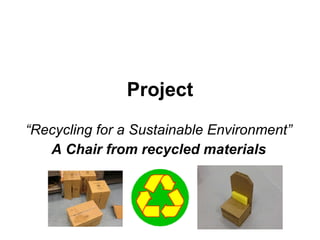
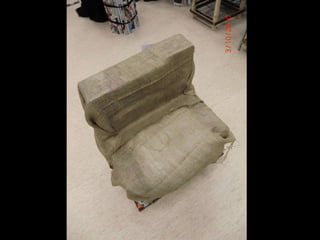
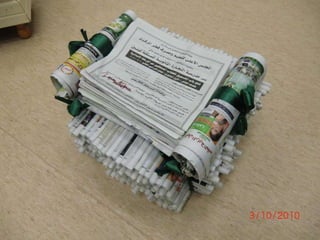
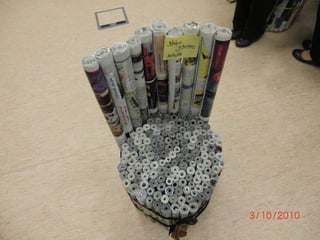
Project “ Recycling for a Sustainable Environment” A Chair from recycled materials
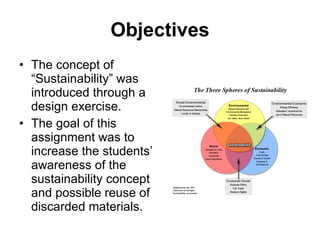
Objectives The concept of “Sustainability” was introduced through a design exercise. The goal of this assignment was to increase the students’ awareness of the sustainability concept and possible reuse of discarded materials.
The 3 Rs:  Recycle - Reduce - Reuse Recycle  means to process old, used items in order that the material can be used to make new products, i.e. glass, plastic, newspapers, aluminum cans, and plastic bottles.  Reduce  refers to lessening the amount of items or resources that are consumed, using only the amount that is needed, and looking for alternatives that will lessen our use.  Reuse  means extending the 'life' or repurposing an item rather than discarding or throwing it away.
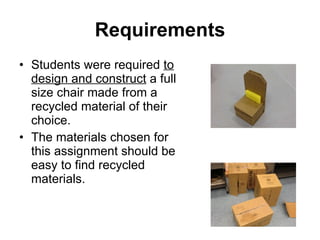
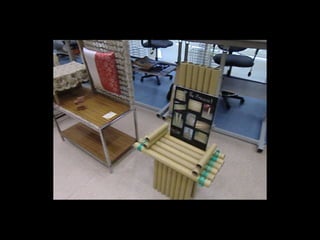
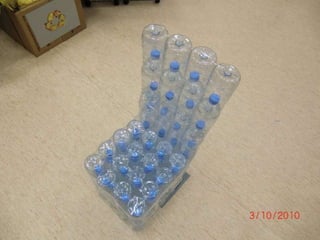
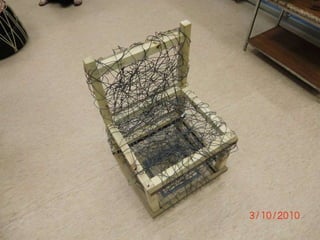
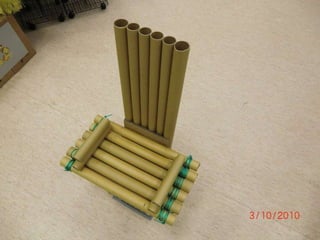
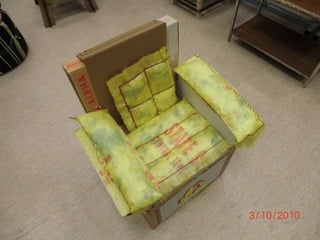
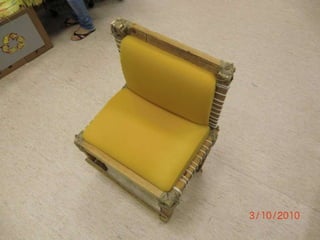
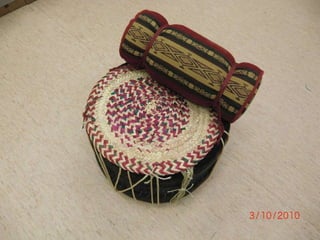
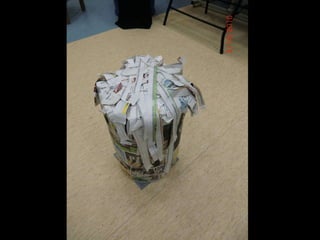
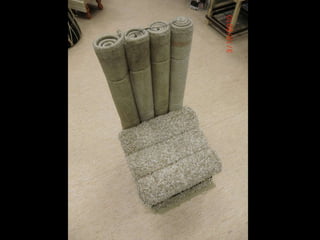
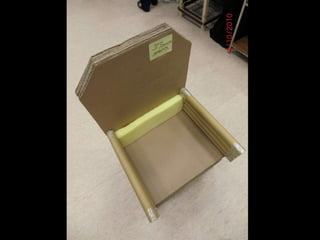
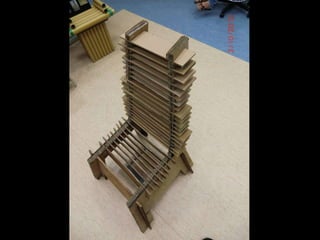
Requirements Students were required  to design and construct  a full size chair made from a recycled material of their choice. The materials chosen for this assignment should be easy to find recycled materials.
Requirements The constraint of the assignment were: To use  one primary  and  one secondary  available materials. Minimum glue, tape, adhesive or bonding materials should be used.  The chair must be able to hold an average size person (70 KGs).
Educational Objectives Understanding - Vitrovian aspects of architecture:  Utility ,  Firmness  and  Delight Understanding - Human factors involved in the design of a chair; human dimensions and ergonomics  Ability - Design Process & Product Ability - Problem Analysis, Alternatives Generation, Design Development, Construction. Skills  - Scaled and Full-size model making skills. Skills  - Hands-on experience of the use of materials and assembly requirements.
Course Information Duration:  2-Weeks. Level of Effort:  Individual. Submissions:  A full size prototype model. Grading Criteria Use  25% Structure  25% Aesthetics  25% Workmanship  25%
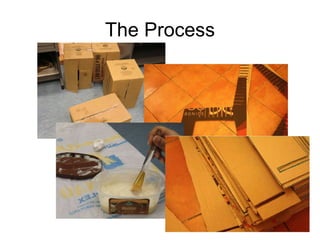
The Process


Thank You

AUP-QGBC Seminar Presentation

  • 1.
    Qatar University Collegeof Engineering Department of Architecture and Urban Planning Course Title: ARCT 211 - Architectural Design Studio I (Fall 2010) Instructor: Dr. Yasser Mahgoub, Associate Professor
  • 2.
    Project “ Recyclingfor a Sustainable Environment” A Chair from recycled materials
  • 3.
    Objectives The conceptof “Sustainability” was introduced through a design exercise. The goal of this assignment was to increase the students’ awareness of the sustainability concept and possible reuse of discarded materials.
  • 4.
    The 3 Rs: Recycle - Reduce - Reuse Recycle means to process old, used items in order that the material can be used to make new products, i.e. glass, plastic, newspapers, aluminum cans, and plastic bottles. Reduce refers to lessening the amount of items or resources that are consumed, using only the amount that is needed, and looking for alternatives that will lessen our use. Reuse means extending the 'life' or repurposing an item rather than discarding or throwing it away.
  • 5.
    Requirements Students wererequired to design and construct a full size chair made from a recycled material of their choice. The materials chosen for this assignment should be easy to find recycled materials.
  • 6.
    Requirements The constraintof the assignment were: To use one primary and one secondary available materials. Minimum glue, tape, adhesive or bonding materials should be used. The chair must be able to hold an average size person (70 KGs).
  • 7.
    Educational Objectives Understanding- Vitrovian aspects of architecture: Utility , Firmness and Delight Understanding - Human factors involved in the design of a chair; human dimensions and ergonomics Ability - Design Process & Product Ability - Problem Analysis, Alternatives Generation, Design Development, Construction. Skills - Scaled and Full-size model making skills. Skills - Hands-on experience of the use of materials and assembly requirements.
  • 8.
    Course Information Duration: 2-Weeks. Level of Effort: Individual. Submissions: A full size prototype model. Grading Criteria Use 25% Structure 25% Aesthetics 25% Workmanship 25%
  • 9.
  • 10.
  • 11.
  • 12.
  • 13.
  • 14.
  • 15.
  • 16.
  • 17.
  • 18.
  • 19.
  • 20.
  • 21.
  • 22.
  • 23.
  • 24.