ATHEROSCLEROSIS
MEDICAL SURGICAL NURSING
AGENDA
 INTRODUCTION
 DEFINITION
 ETIOLOGY
 STAGES
 CLINICAL
MENIFESTATION
 DIAGNOSTIC TEST
 TREATMENT
 MANAGEMENT
• MEDICAL
MANAGEMENT
• SURGICAL
MANAGEMENT
INTRODUCTION
• ATHEROSCLEROSIS also
called arteriosclerosis.
• It is a disease in which plaque
builds up inside your arteries.
• Plaque is a sticky substance
made up of cholesterol,
calcium, and other
substances found n the blood.
• Overtime, plaque hardens
and narrows your arteries that
limits the flow of oxygen rich
blood to your body.
20XX presentation title 3
DEFINITION
• Also called atherosclerotic
cardiovascular disease.
• The build up of fats, cholesterol
and other substances in and on the
artery walls.
• A build up of cholesterol plaque in
the walls of arteries, causing
obstruction of blood flow. Plaques
may rupture , causing acute
occlusion of the artery by clot.
20XX presentation title 4
etiology
• High blood pressure
• High cholesterol
• High triglycerides, a type of fat (lipid) in the blood.
• Smoking or chewing tobacco
• Diabetes
• Insulin resistance
• Obesity
• Inflammation from an unknown cause or from diseases
such as arthritis or inflammatory bowel diseases.
20XX presentation title 5
This Photo by Unknown Author is licensed under CC BY
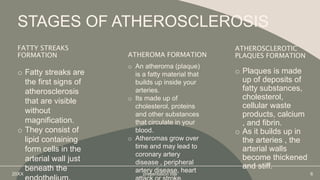
FATTY STREAKS
FORMATION
o Fatty streaks are
the first signs of
atherosclerosis
that are visible
without
magnification.
o They consist of
lipid containing
form cells in the
arterial wall just
beneath the
ATHEROMA FORMATION
o An atheroma (plaque)
is a fatty material that
builds up inside your
arteries.
o Its made up of
cholesterol, proteins
and other substances
that circulate in your
blood.
o Atheromas grow over
time and may lead to
coronary artery
disease , peripheral
artery disease, heart
20XX presentation title 6
STAGES OF ATHEROSCLEROSIS
ATHEROSCLEROTIC
PLAQUES FORMATION
o Plaques is made
up of deposits of
fatty substances,
cholesterol,
cellular waste
products, calcium
, and fibrin.
o As it builds up in
the arteries , the
arterial walls
become thickened
and stiff.
Stages of atherosclerosis
20XX presentation title 7
20XX presentation title 8
Signs and symptoms
• Pain – can be on the chest (if
coronary artery is affected)
• Shortness of breath,
dyspnea.
• Tachycardia
• Hypertension
• Tachypnea
• Fatigue
• Weakness
20XX presentation title 9
20XX presentation title 10
Warning signs of atherosclerosis
• Chest discomfort during exercise or
emotional stress.
• Leg cramps when walking.
• Shortness of breath with light
activity.
This Photo by Unknown Author is licensed under CC BY-SA
20XX presentation title 11
Diagnostic tests
• ANGIOGRAPHY uses special x-rays to locate and measure
blockages.
• BRACHIAL INDEX compares the blood pressure in you ankle to
the pressure in your arm to measure blood flow in your arms
and legs.
• CHEST X RAY takes pictures inside your chest.
• CT SCAN takes pictures inside of your body and can show any
hardening and narrowing of your large arteries.
• ECHOCARDIOGRAM (ECHO) takes pictures of your heart
valves and chambers and measures how well your heart is
pumping.
• ELECTROCARDIOGRAM (EKG) measures your heart electrical
activity, rate and rhythm.
Specialists need to see for
atherosclerois
CARDIOLOGIST NEPHROLOGIST NEUROLOGIST
VASCULAR
SURGEON
Specializes in heart Specializes in kidneys Specializes in
nervous system (
brain and spine)
Specializes in blood
vessels
20XX presentation title 12
This Photo by Unknown Author is licensed
under CC BY-NC-ND
This Photo by Unknown Author is licensed
under CC BY-SA-NCneurologist
This Photo by Unknown Author is licensed
under CC BY-SA
TREATMENT
• Lifestyle changes, such as eating a healthy diet
and exercising , may be all that is needed to
treat atherosclerosis.
• But sometimes, medications or surgical
procedures may be needed..
• Many different drugs are also available to slow
-or even reverse-the effects of atherosclerosis.
20XX presentation title 13
This Photo by Unknown Author is licensed under CC BY
MEDICAL MANAGEMENT
• STATINS are commonly used to lower
cholesterol , improve artery health and
prevent atherosclerosis.
• There are many other types of
cholesterol- lowering dugs.
• They include niacin, fibrates and
bile acid sequestrants.
20XX presentation title 14
This Photo by Unknown Author is licensed under CC BY
Surgical management
• Percutaneous coronary intervention (PCI) ,
also known as coronary angioplasty.
• It is a procedure that is used to open blocked
or narrowed coronary ( heart ) arteries.
• PCI can improve blood flow to the heart
and relieve chest pain.
20XX presentation title 15
This Photo by Unknown Author is licensed under CC BY
Nursing management
• Nurses should educate patients about the
effect of smoking on the arterial system.
• Encourage adherence of cholesterol lowering
medications and other medications.
• Recommend follow up of patients on stains to
monitor required lowering cholesterol.
• Accompany any prescription of medication
with dietary control.
20XX presentation title 16
THANK YOU…
BY : DIKSHA
22BNG10094

ATHEROSCLEROSIS.pptx

  • 1.
  • 2.
    AGENDA  INTRODUCTION  DEFINITION ETIOLOGY  STAGES  CLINICAL MENIFESTATION  DIAGNOSTIC TEST  TREATMENT  MANAGEMENT • MEDICAL MANAGEMENT • SURGICAL MANAGEMENT
  • 3.
    INTRODUCTION • ATHEROSCLEROSIS also calledarteriosclerosis. • It is a disease in which plaque builds up inside your arteries. • Plaque is a sticky substance made up of cholesterol, calcium, and other substances found n the blood. • Overtime, plaque hardens and narrows your arteries that limits the flow of oxygen rich blood to your body. 20XX presentation title 3
  • 4.
    DEFINITION • Also calledatherosclerotic cardiovascular disease. • The build up of fats, cholesterol and other substances in and on the artery walls. • A build up of cholesterol plaque in the walls of arteries, causing obstruction of blood flow. Plaques may rupture , causing acute occlusion of the artery by clot. 20XX presentation title 4
  • 5.
    etiology • High bloodpressure • High cholesterol • High triglycerides, a type of fat (lipid) in the blood. • Smoking or chewing tobacco • Diabetes • Insulin resistance • Obesity • Inflammation from an unknown cause or from diseases such as arthritis or inflammatory bowel diseases. 20XX presentation title 5 This Photo by Unknown Author is licensed under CC BY
  • 6.
    FATTY STREAKS FORMATION o Fattystreaks are the first signs of atherosclerosis that are visible without magnification. o They consist of lipid containing form cells in the arterial wall just beneath the ATHEROMA FORMATION o An atheroma (plaque) is a fatty material that builds up inside your arteries. o Its made up of cholesterol, proteins and other substances that circulate in your blood. o Atheromas grow over time and may lead to coronary artery disease , peripheral artery disease, heart 20XX presentation title 6 STAGES OF ATHEROSCLEROSIS ATHEROSCLEROTIC PLAQUES FORMATION o Plaques is made up of deposits of fatty substances, cholesterol, cellular waste products, calcium , and fibrin. o As it builds up in the arteries , the arterial walls become thickened and stiff.
  • 7.
    Stages of atherosclerosis 20XXpresentation title 7
  • 8.
  • 9.
    Signs and symptoms •Pain – can be on the chest (if coronary artery is affected) • Shortness of breath, dyspnea. • Tachycardia • Hypertension • Tachypnea • Fatigue • Weakness 20XX presentation title 9
  • 10.
    20XX presentation title10 Warning signs of atherosclerosis • Chest discomfort during exercise or emotional stress. • Leg cramps when walking. • Shortness of breath with light activity. This Photo by Unknown Author is licensed under CC BY-SA
  • 11.
    20XX presentation title11 Diagnostic tests • ANGIOGRAPHY uses special x-rays to locate and measure blockages. • BRACHIAL INDEX compares the blood pressure in you ankle to the pressure in your arm to measure blood flow in your arms and legs. • CHEST X RAY takes pictures inside your chest. • CT SCAN takes pictures inside of your body and can show any hardening and narrowing of your large arteries. • ECHOCARDIOGRAM (ECHO) takes pictures of your heart valves and chambers and measures how well your heart is pumping. • ELECTROCARDIOGRAM (EKG) measures your heart electrical activity, rate and rhythm.
  • 12.
    Specialists need tosee for atherosclerois CARDIOLOGIST NEPHROLOGIST NEUROLOGIST VASCULAR SURGEON Specializes in heart Specializes in kidneys Specializes in nervous system ( brain and spine) Specializes in blood vessels 20XX presentation title 12 This Photo by Unknown Author is licensed under CC BY-NC-ND This Photo by Unknown Author is licensed under CC BY-SA-NCneurologist This Photo by Unknown Author is licensed under CC BY-SA
  • 13.
    TREATMENT • Lifestyle changes,such as eating a healthy diet and exercising , may be all that is needed to treat atherosclerosis. • But sometimes, medications or surgical procedures may be needed.. • Many different drugs are also available to slow -or even reverse-the effects of atherosclerosis. 20XX presentation title 13 This Photo by Unknown Author is licensed under CC BY
  • 14.
    MEDICAL MANAGEMENT • STATINSare commonly used to lower cholesterol , improve artery health and prevent atherosclerosis. • There are many other types of cholesterol- lowering dugs. • They include niacin, fibrates and bile acid sequestrants. 20XX presentation title 14 This Photo by Unknown Author is licensed under CC BY
  • 15.
    Surgical management • Percutaneouscoronary intervention (PCI) , also known as coronary angioplasty. • It is a procedure that is used to open blocked or narrowed coronary ( heart ) arteries. • PCI can improve blood flow to the heart and relieve chest pain. 20XX presentation title 15 This Photo by Unknown Author is licensed under CC BY
  • 16.
    Nursing management • Nursesshould educate patients about the effect of smoking on the arterial system. • Encourage adherence of cholesterol lowering medications and other medications. • Recommend follow up of patients on stains to monitor required lowering cholesterol. • Accompany any prescription of medication with dietary control. 20XX presentation title 16
  • 17.
    THANK YOU… BY :DIKSHA 22BNG10094