Assignment-1-Case Study
Assignment Question:
Please read the Case-4.2 “The Home Improvement Project.”
from Chapter 4 “Defining the Project” given in your textbook –
Project Management: The Managerial Process 8th edition by
Larson and Gray page no: 132 also refer to specific concepts
you have learned from the chapter to support your answers.
Answer the following questions with 500 Words limit.
1. What factors and forces contributed to scope creep in this
case?
2. Is this an example of good or bad scope creep? Explain.
3. How could scope creep have been better managed by the
Nelsons?
Answers:
1.
2.
3.
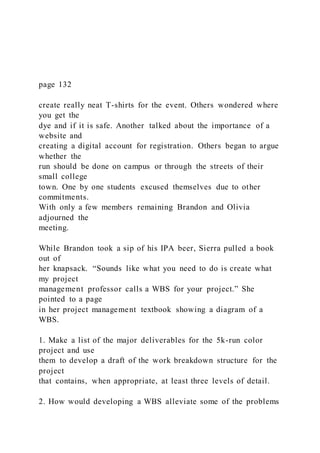
page 132
create really neat T-shirts for the event. Others wondered where
you get the
dye and if it is safe. Another talked about the importance of a
website and
creating a digital account for registration. Others began to argue
whether the
run should be done on campus or through the streets of their
small college
town. One by one students excused themselves due to other
commitments.
With only a few members remaining Brandon and Olivia
adjourned the
meeting.
While Brandon took a sip of his IPA beer, Sierra pulled a book
out of
her knapsack. “Sounds like what you need to do is create what
my project
management professor calls a WBS for your project.” She
pointed to a page
in her project management textbook showing a diagram of a
WBS.
1. Make a list of the major deliverables for the 5k-run color
project and use
them to develop a draft of the work breakdown structure for the
project
that contains, when appropriate, at least three levels of detail.
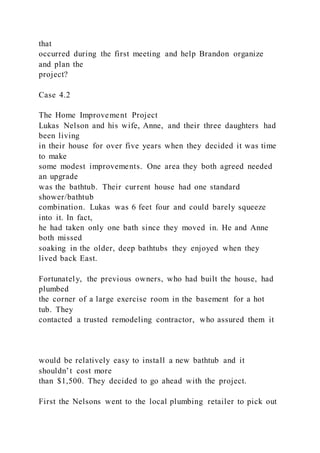
2. How would developing a WBS alleviate some of the problems
that
occurred during the first meeting and help Brandon organize
and plan the
project?
Case 4.2
The Home Improvement Project
Lukas Nelson and his wife, Anne, and their three daughters had
been living
in their house for over five years when they decided it was time
to make
some modest improvements. One area they both agreed needed
an upgrade
was the bathtub. Their current house had one standard
shower/bathtub
combination. Lukas was 6 feet four and could barely squeeze
into it. In fact,
he had taken only one bath since they moved in. He and Anne
both missed
soaking in the older, deep bathtubs they enjoyed when they
lived back East.
Fortunately, the previous owners, who had built the house, had
plumbed
the corner of a large exercise room in the basement for a hot
tub. They
contacted a trusted remodeling contractor, who assured them it
would be relatively easy to install a new bathtub and it
shouldn’t cost more
than $1,500. They decided to go ahead with the project.
First the Nelsons went to the local plumbing retailer to pick out
a tub.
They soon realized that for a few hundred dollars more they
could buy a big
tub with water jets (a Jacuzzi). With old age on the horizon a
Jacuzzi
seemed like a luxury that was worth the extra money.
Originally the plan was to install the tub using the simple
plastic frame
the bath came with and install a splash guard around the tub.
Once Anne
saw the tub, frame, and splashguard in the room she balked. She
did not like
how it looked with the cedar paneling in the exercise room.
After
significant debate, Anne won out, and the Nelsons agreed to pay
extra to
have a cedar frame built for the tub and use attractive tile
instead of the
plastic splashguard. Lukas rationalized that the changes would
pay for
themselves when they tried to sell the house.
The next hiccup occurred when it came time to address the
flooring
issue. The exercise room was carpeted, which wasn’t ideal when
getting out
of a bathtub. The original idea was to install relatively cheap
laminated
flooring in the drying and undressing area adjacent to the tub.
However, the
Nelsons couldn’t agree on the pattern to use. One of Anne’s
friends said it
would be a shame to put such cheap flooring in such a nice
room. She felt
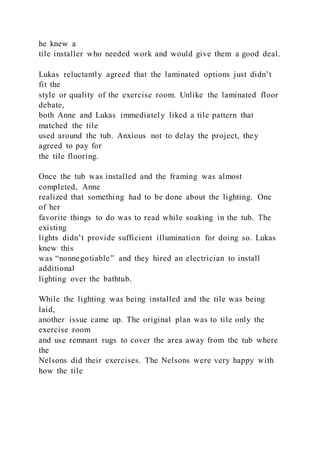
they should consider using tile. The contractor agreed and said
he knew a
tile installer who needed work and would give them a good deal.
Lukas reluctantly agreed that the laminated options just didn’t
fit the
style or quality of the exercise room. Unlike the laminated floor
debate,
both Anne and Lukas immediately liked a tile pattern that
matched the tile
used around the tub. Anxious not to delay the project, they
agreed to pay for
the tile flooring.
Once the tub was installed and the framing was almost
completed, Anne
realized that something had to be done about the lighting. One
of her
favorite things to do was to read while soaking in the tub. The
existing
lights didn’t provide sufficient illumination for doing so. Lukas
knew this
was “nonnegotiable” and they hired an electrician to install
additional
lighting over the bathtub.
While the lighting was being installed and the tile was being
laid,
another issue came up. The original plan was to tile only the
exercise room
and use remnant rugs to cover the area away from the tub where
the
Nelsons did their exercises. The Nelsons were very happy with
how the tile
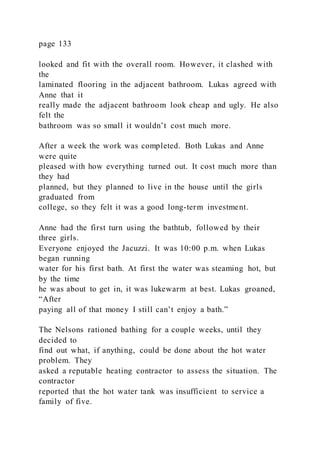
page 133
looked and fit with the overall room. However, it clashed with
the
laminated flooring in the adjacent bathroom. Lukas agreed with
Anne that it
really made the adjacent bathroom look cheap and ugly. He also
felt the
bathroom was so small it wouldn’t cost much more.
After a week the work was completed. Both Lukas and Anne
were quite
pleased with how everything turned out. It cost much more than
they had
planned, but they planned to live in the house until the girls
graduated from
college, so they felt it was a good long-term investment.
Anne had the first turn using the bathtub, followed by their
three girls.
Everyone enjoyed the Jacuzzi. It was 10:00 p.m. when Lukas
began running
water for his first bath. At first the water was steaming hot, but
by the time
he was about to get in, it was lukewarm at best. Lukas groaned,
“After
paying all of that money I still can’t enjoy a bath.”
The Nelsons rationed bathing for a couple weeks, until they
decided to
find out what, if anything, could be done about the hot water
problem. They
asked a reputable heating contractor to assess the situation. The
contractor
reported that the hot water tank was insufficient to service a
family of five.
This had not been discovered before because baths were rarely
taken in the past. The contractor said it would cost $2,200 to
replace the existing water heater with a larger one that would
meet their
needs. The heating contractor also said if they wanted to do it
right they
should replace the existing furnace with a more energy-efficient
one. A new
furnace would not only heat the house but also indirectly heat
the water
tank. Such a furnace would cost $7,500, but with the improved
efficiency
and savings in the gas bill, the furnace would pay for itself in
10 years.
Besides, the Nelsons would likely receive tax credits for the
more fuel-
efficient furnace.
Three weeks later, after the new furnace was installed, Lukas
settled
into the new bathtub. He looked around the room at all the
changes that had
been made and muttered to himself, “And to think that all I
wanted was to
soak in a nice, hot bath.”
1. What factors and forces contributed to scope creep in this
case?
2. Is this an example of good or bad scope creep? Explain.
3. How could scope creep have been better managed by the
Nelsons?
Design elements: Snapshot from Practice, Highlight box, Case
icon: ©Sky
Designs/Shutterstock
1The limitations of the waterfall method for software
development have led to the
emergence of Agile project management methods that are the
subject of Chapter 15.
2 For a more elaborate scheme for assessing stakeholders, see:
Bourne, L. Stakeholder
Relationship Management (Farnham, UK: Gower, 2009).

Assignment 1-case study assignment question

  • 1.
    Assignment-1-Case Study Assignment Question: Pleaseread the Case-4.2 “The Home Improvement Project.” from Chapter 4 “Defining the Project” given in your textbook – Project Management: The Managerial Process 8th edition by Larson and Gray page no: 132 also refer to specific concepts you have learned from the chapter to support your answers. Answer the following questions with 500 Words limit. 1. What factors and forces contributed to scope creep in this case? 2. Is this an example of good or bad scope creep? Explain. 3. How could scope creep have been better managed by the Nelsons? Answers: 1. 2. 3.
  • 2.
    page 132 create reallyneat T-shirts for the event. Others wondered where you get the dye and if it is safe. Another talked about the importance of a website and creating a digital account for registration. Others began to argue whether the run should be done on campus or through the streets of their small college town. One by one students excused themselves due to other commitments. With only a few members remaining Brandon and Olivia adjourned the meeting. While Brandon took a sip of his IPA beer, Sierra pulled a book out of her knapsack. “Sounds like what you need to do is create what my project management professor calls a WBS for your project.” She pointed to a page in her project management textbook showing a diagram of a WBS. 1. Make a list of the major deliverables for the 5k-run color project and use them to develop a draft of the work breakdown structure for the project that contains, when appropriate, at least three levels of detail. 2. How would developing a WBS alleviate some of the problems
  • 3.
    that occurred during thefirst meeting and help Brandon organize and plan the project? Case 4.2 The Home Improvement Project Lukas Nelson and his wife, Anne, and their three daughters had been living in their house for over five years when they decided it was time to make some modest improvements. One area they both agreed needed an upgrade was the bathtub. Their current house had one standard shower/bathtub combination. Lukas was 6 feet four and could barely squeeze into it. In fact, he had taken only one bath since they moved in. He and Anne both missed soaking in the older, deep bathtubs they enjoyed when they lived back East. Fortunately, the previous owners, who had built the house, had plumbed the corner of a large exercise room in the basement for a hot tub. They contacted a trusted remodeling contractor, who assured them it would be relatively easy to install a new bathtub and it shouldn’t cost more than $1,500. They decided to go ahead with the project. First the Nelsons went to the local plumbing retailer to pick out
  • 4.
    a tub. They soonrealized that for a few hundred dollars more they could buy a big tub with water jets (a Jacuzzi). With old age on the horizon a Jacuzzi seemed like a luxury that was worth the extra money. Originally the plan was to install the tub using the simple plastic frame the bath came with and install a splash guard around the tub. Once Anne saw the tub, frame, and splashguard in the room she balked. She did not like how it looked with the cedar paneling in the exercise room. After significant debate, Anne won out, and the Nelsons agreed to pay extra to have a cedar frame built for the tub and use attractive tile instead of the plastic splashguard. Lukas rationalized that the changes would pay for themselves when they tried to sell the house. The next hiccup occurred when it came time to address the flooring issue. The exercise room was carpeted, which wasn’t ideal when getting out of a bathtub. The original idea was to install relatively cheap laminated flooring in the drying and undressing area adjacent to the tub. However, the Nelsons couldn’t agree on the pattern to use. One of Anne’s friends said it would be a shame to put such cheap flooring in such a nice room. She felt they should consider using tile. The contractor agreed and said
  • 5.
    he knew a tileinstaller who needed work and would give them a good deal. Lukas reluctantly agreed that the laminated options just didn’t fit the style or quality of the exercise room. Unlike the laminated floor debate, both Anne and Lukas immediately liked a tile pattern that matched the tile used around the tub. Anxious not to delay the project, they agreed to pay for the tile flooring. Once the tub was installed and the framing was almost completed, Anne realized that something had to be done about the lighting. One of her favorite things to do was to read while soaking in the tub. The existing lights didn’t provide sufficient illumination for doing so. Lukas knew this was “nonnegotiable” and they hired an electrician to install additional lighting over the bathtub. While the lighting was being installed and the tile was being laid, another issue came up. The original plan was to tile only the exercise room and use remnant rugs to cover the area away from the tub where the Nelsons did their exercises. The Nelsons were very happy with how the tile
  • 6.
    page 133 looked andfit with the overall room. However, it clashed with the laminated flooring in the adjacent bathroom. Lukas agreed with Anne that it really made the adjacent bathroom look cheap and ugly. He also felt the bathroom was so small it wouldn’t cost much more. After a week the work was completed. Both Lukas and Anne were quite pleased with how everything turned out. It cost much more than they had planned, but they planned to live in the house until the girls graduated from college, so they felt it was a good long-term investment. Anne had the first turn using the bathtub, followed by their three girls. Everyone enjoyed the Jacuzzi. It was 10:00 p.m. when Lukas began running water for his first bath. At first the water was steaming hot, but by the time he was about to get in, it was lukewarm at best. Lukas groaned, “After paying all of that money I still can’t enjoy a bath.” The Nelsons rationed bathing for a couple weeks, until they decided to find out what, if anything, could be done about the hot water problem. They asked a reputable heating contractor to assess the situation. The contractor reported that the hot water tank was insufficient to service a family of five.
  • 7.
    This had notbeen discovered before because baths were rarely taken in the past. The contractor said it would cost $2,200 to replace the existing water heater with a larger one that would meet their needs. The heating contractor also said if they wanted to do it right they should replace the existing furnace with a more energy-efficient one. A new furnace would not only heat the house but also indirectly heat the water tank. Such a furnace would cost $7,500, but with the improved efficiency and savings in the gas bill, the furnace would pay for itself in 10 years. Besides, the Nelsons would likely receive tax credits for the more fuel- efficient furnace. Three weeks later, after the new furnace was installed, Lukas settled into the new bathtub. He looked around the room at all the changes that had been made and muttered to himself, “And to think that all I wanted was to soak in a nice, hot bath.” 1. What factors and forces contributed to scope creep in this case? 2. Is this an example of good or bad scope creep? Explain. 3. How could scope creep have been better managed by the Nelsons?
  • 8.
    Design elements: Snapshotfrom Practice, Highlight box, Case icon: ©Sky Designs/Shutterstock 1The limitations of the waterfall method for software development have led to the emergence of Agile project management methods that are the subject of Chapter 15. 2 For a more elaborate scheme for assessing stakeholders, see: Bourne, L. Stakeholder Relationship Management (Farnham, UK: Gower, 2009).